Tag: review

  • Books in 2023

    Books in 2023

    My books read have an inverse correlation to how many children I have. 58 in 2020, 45 in 2021, 26 in 2022, 21 in 2023, and in 2024 I’m on pace to finish 15. I miss reading 50 books in a year, but I have the best distractions.

    This is the third year I’ve made a list of all the books I read. Click to see lists for 2021 and 2022.

    2023’s book list comes with even more of a disclaimer than usual. You may have noticed I’m posting 2023’s list at the end of 2024. It’s been at least a year since I’ve read most of these books. This made it difficult to remember the finer details of the individual books. Add the fact that I packed all these books away so I can’t review my highlights, and I struggled a bit remembering each individual book.

    Still, it might mean the list even better represents what books I liked because the list will partially indicate the most memorable books from last year.

    So, here is the order of my most enjoyable reads from 2023.

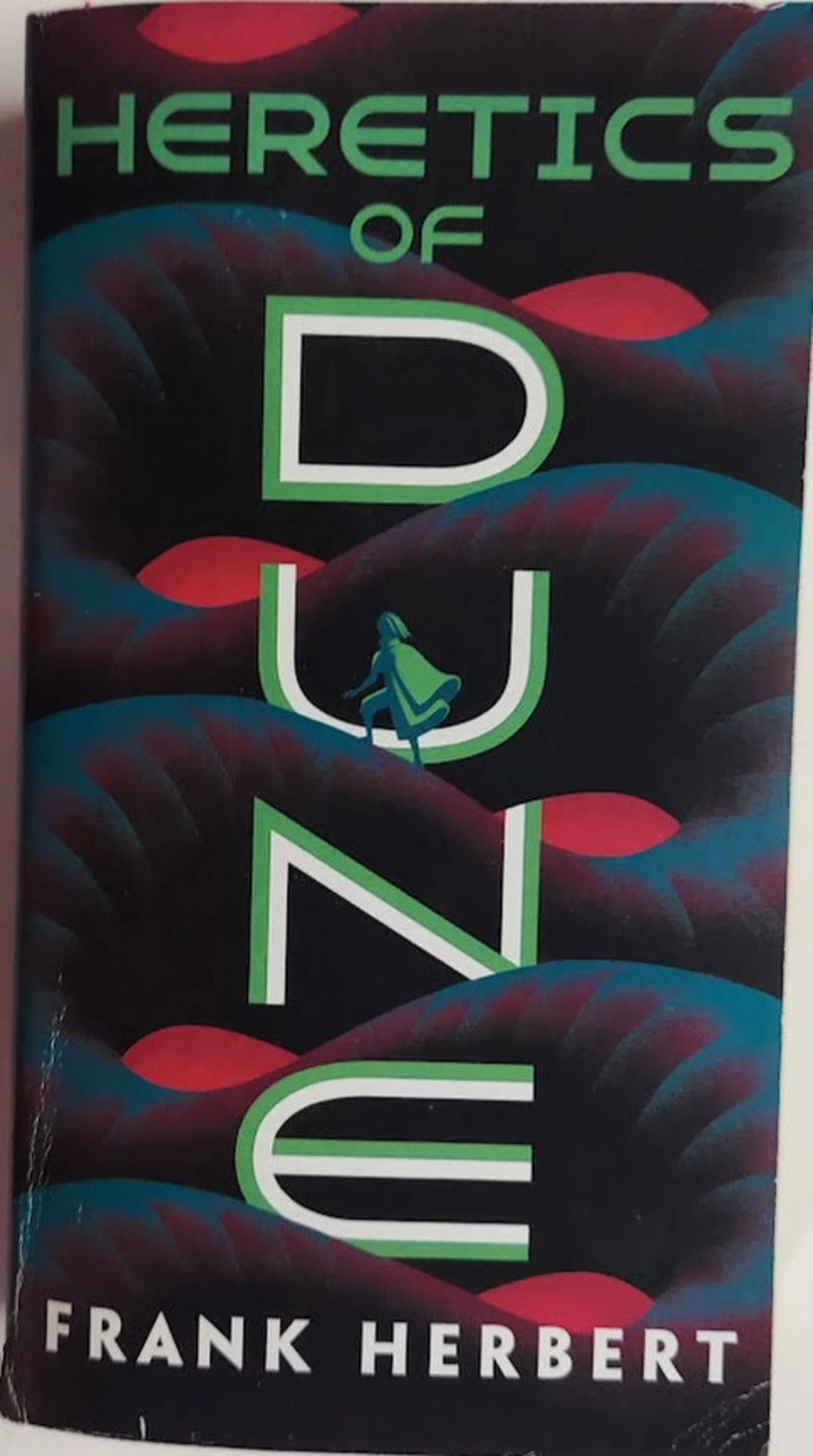
    1. Heretics of Dune by Frank Herbert
      • The fifth book in the Dune series, I must show respect for what Frank Herbert created in the Dune universe by ranking this book this high. I love this series. I loved this book. I love his universe. I love his writing. Best series I’ve read since Harry Potter, hands down.
    2. The Silkworm by Robert Galbraith (aka J.K. Rowling)
      • I loved this book, the second book in the Strike detective novel series. JK Rowling is the greatest author of our generation. This list doesn’t even have a Harry Potter book on it and yet Harry Potter was mentioned in the top two books. Anyways…
    3. Mandy’s Promise by Frank Leach
      • This book has a special place in my heart as it was written by my grandpa. Re-reading the synopsis of the book gave me chills because it really was a great story. I loved this book.
    4. The Man Who Broke into Auschwitz by Denis Avey
      • This was a phenomenal book. I just read the Wikipedia page on it and learned some of the story might have been embellished. Well, yeah, welcome to story-telling. It’s an extraordinary tale of a man who tried to get into Auschwitz and eventually survived being an Allied prisoner of the Second World War.
    5. Ancient America and the Book of Mormon by Thomas Stuart Ferguson and Milton R Hunter
    6. Outliers by Malcom Gladwell
      • This book was great, really made me think about how our situations and often some luck impact our potential growth and abilities. Must read for someone wanting to understand the outliers or overperformers in our society.
    7. Hugh Nibley’s semester one on the Book of Mormon
      • This is a transcription of all lectures from a Book of Mormon class Hugh Nibley taught from 1988-1990 at BYU. Don’t ask me how I found it, but I did, and I immediately downloaded and saved all of them. These are insightful, his understanding of history is off the charts, so many extraordinary insights that grew my testimony in the Book of Mormon and God’s hand in the history of all things. If you want a copy, let me know and I’ll send it to you. Invaluable.
    8. Career of Evil by Robert Galbraith
      • Book three of the Strike detective series. This book is ranked a little lower than Silkworm because it dragged a little more with a lot more developing characters and drawn-out suspicion. The end was well-worth the wait though.
    9. Songs of the Morning Stars by Sarah Hinze
      • This is a collection of stories about children visiting their families before they were born. Legend has it my dad dreamt of all of us before we came. He knew all our genders. So this one hits close to home.
    10. Thinking, Fast and Slow by Daniel Kahneman
      • This book was about how our minds work and about our fast or slow reactions or decisions. It explores thinking and ways to improve our decision-making.
    11. Go Forward with Faith by Sheri L. Dew
    12. Room by Emma Donoghue
      • I actually started this book once years ago and never finished it. That was back when I sometimes didn’t finish books. I enjoyed it this time. This is the story of a young boy born in captivity. Fascinating thought experiment about life, freedom, and experience. Also became a movie.
    13. Doctrine and Covenants Commentary by Hyrum M Smith and Janne M Sjodahl
      • This book was a 1200-page church history grind, but extremely rewarding to finish.
    14. Malachi and the Great and Dreadful Day by Mark E. Petersen
      • Malachi is a lesser-known prophet which means there is less content for the author to provide but also more I didn’t know about Malachi to be learned. I enjoyed this book. Other books I’ve read in the series included Moses (#24 from 2021) and Joshua (#22 from 2022).
    15. Book of Lost Tales Vol 3 Lays of Beleriand by J.R.R. Tolkien
      • By book three it felt like I was reading the same legends over again, with extra commentary about where words came from that didn’t super interest me. I still love reading Tolkien’s tales but didn’t love these as much.
    16. Liberty and Tyranny: A Conservative Manifesto by Mark. R. Levin
      • Without revealing too much about my political beliefs, I enjoyed this book.
    17. The Shaping of Middle-Earth (Vol 4) by Christopher Tolkien
      • See above commentary on Vol 3, lots of repetition, still fun to read Tolkien’s legend.
    18. Way to Be by Gordon B. Hinckley
      • Gordon B. Hinckley had a way of speaking and it comes out in this book. It was full of witty and funny stories amidst spiritual guidance and advice from a prophet of God.
    19. Gospel Symbolism by Joseph Fielding McConkie
      • I don’t remember this book super well, but it was all about the significance of symbolism in the scriptures and in the temple.
    20. Tao Te Ching by Lao-Tzu
      • “The Way.” This book was like reading Proverbs from the Bible: insightful but dry. Most interesting thought I got from this book was to make me consider the strength of babies.
    21. Mormonism and the Negro by John J. Stewart
      • This book was full of outdated and inaccurate information.
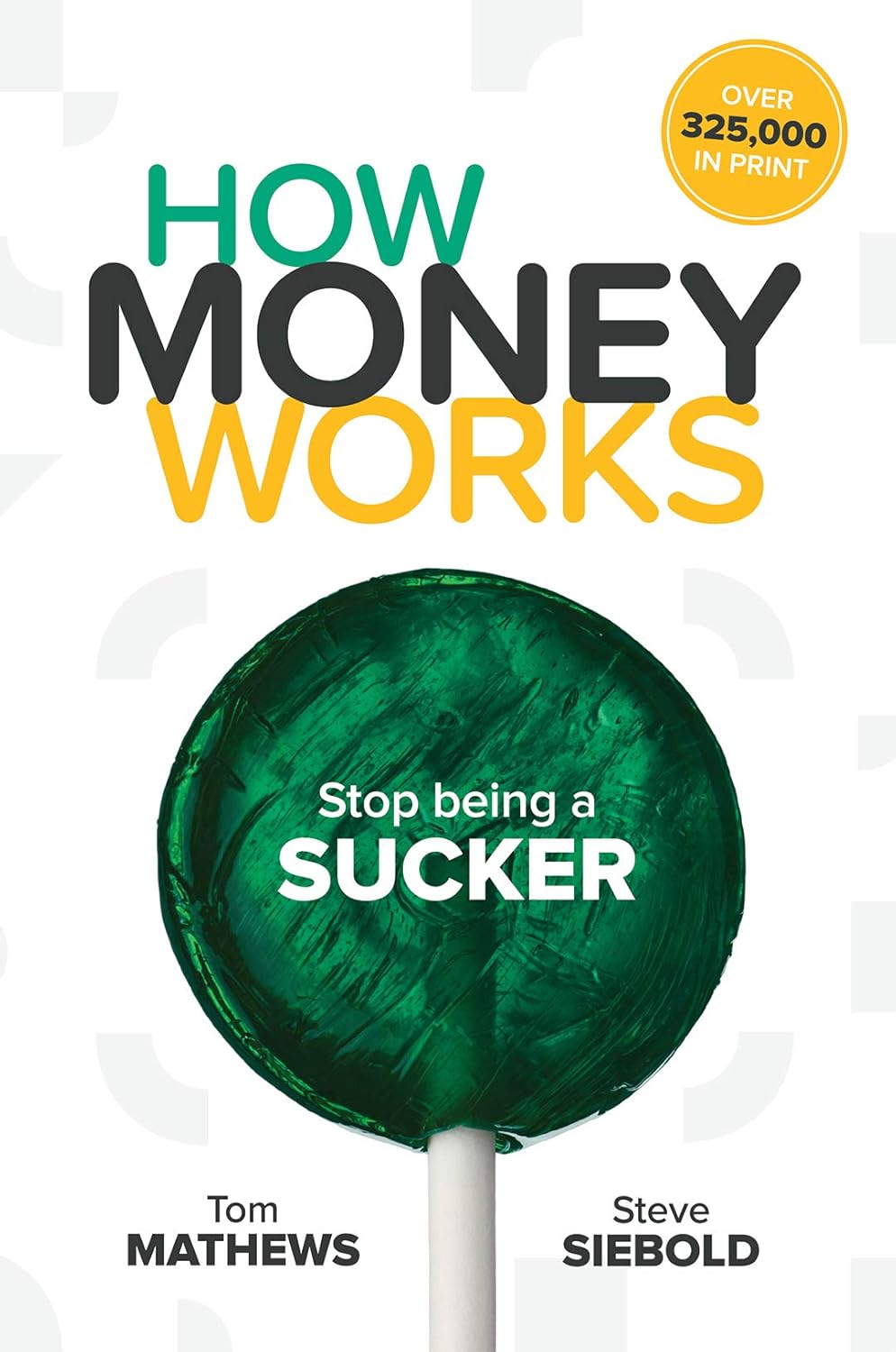
  • Book Review: How Money Works – Stop being a Sucker

    Book Review: How Money Works – Stop being a Sucker

    How Money Works – Stop Being a Sucker
    By: Tom Mathews and Steve Siebold
    Copyright 2019

    This book was given to me to help me understand finances. I’m still pretty much hopeless in this category. This book could be described as “a short read that covers financial concepts that should be taught In school, but are not.”  There are so many financial concepts not covered in school that are important. 

    As a known financial sucker, I was grateful for this book. I seriously think everybody could benefit from reading this book. The most important thing it brought to my attention was how poorly I was handing my money and how important time was when setting up for financial stability in the future.

    The book is written in a fun, comic book-like setup. There are pictures throughout. There are characters you’re introduced to in the beginning that the book uses to have conversations with and teach financial concepts without putting you to sleep. I appreciated this structure a lot. As someone who struggles looking into these financial concepts because of all the words I don’t understand, concepts I’m unfamiliar with, and it’s sooo boring, this book helped to easily and quickly give the overview of what important information I needed to know. 

    I found myself relating to two of the characters for various reasons.

    Clark –

    And

    George –

    Clark because I have lots of brilliant ideas (and he’s kind of the dummy character in the book) and George because I think I’m already a grumpy old person facepalming over teenagers.

    I’m lucky to have people in my life who have already started helping me get my finances organized and make money “work for me” better. We’d all like to retire at some point. Moving forward, social security is an uncertainty. It’s up to us to prepare for our retirement.

    As I have a third daughter on the way, life insurance has gone from something I laughed at to something that seems absurd not to have. I couldn’t imagine passing away and leaving my wife and daughters with nothing, let alone with potential debts and financial responsibilities to take care of.

    If you don’t have a life insurance policy – get this book and then get one. It doesn’t matter if you’re 20 years old. In fact, it’s better if you’re 20 years old. The earlier the better. The book did a great job of showing this principle with graphs. The earlier you invest even a small amount of money, the more time it has to grow, with no work on your end. 

    Here’s an interview with the author on Good Morning Texas:

    https://www.youtube.com/watch?v=LChhrYkRLuw

    Here’s a sample from the book itself:

    Check it out. It’s an easy and helpful read.

  • The Last Juror

    The Last Juror

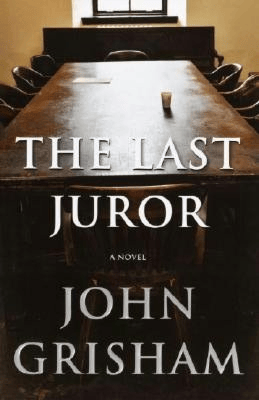
    The Last Juror was written by John Grisham in 2004. It is his 18th novel written. I read a lot of nonfiction so a break into a fictional story is always a breath of fresh of air.  But diving into a book from an experienced novelist like Grisham is particularly refreshing.

    This is the first novel from Grisham based in Ford County, Mississippi since his first novel ever written, A Time to Kill which was published in 1989.

    I enjoyed this book a lot and finished the 355 pages in a handful of sittings.  It’s one of those books where it’s difficult to stop because at every stopping point there’s some sort of cliffhanger that keeps you reading.  You expect something like that from such a great writer. It’s amazing to read a Stephen King or John Grisham and spend half the time enjoying the book and the other half marveling at their literary capabilities.

    The plot of the story is an interesting one.  It is based around a 23-year old college dropout that purchases a failing newspaper and the story that goes with his maturation as a small business owner and only provider of news in a small town.  I wonder if the name “John Grisham” weren’t attached to this book if a publisher would ever give it a second glance.  The plot doesn’t scream thriller, but when you’re a talented writer anything can become an entertaining journey. A name goes a long way when you’ve shown the sort of success Grisham has shown.

    Like I said, I enjoyed the story.  It kept me engaged.  I was interested.  I never felt bored or dragged along.  I was always interested in what was going to come next.  That said, I don’ think everyone would enjoy this book.  I could easily see most readers becoming bored with the story.  Some readers may feel the story is particularly slow through stretches in the middle.  With reading so much nonfiction, I’ve become so used to reading through slow or dry parts of books.  It’s hard to say if this is truly a page-turning fiction or if my perception has been skewed. 

    If someone is going to read one book a year, find another more acclaimed book.  There are so many phenomenal books out there, options are endless.  If anything, read Grisham’s first couple books. I haven’t read his first books (yet), but I imagine they are great given how many novels and movies have followed.

    I wouldn’t read this book a second time but I’m glad I read it once.  It was an interesting and engaging story to me.  I look forward to reading some of Grisham’s earlier novels as time goes by.

    After writing this my curiosity took me to the internet to see how others felt about this book.  Obviously, feelings about a book will vary wildly depending on the source, but what I found is this novel is generally well received.  Of the 3 dozen or so novels Grisham has written this is often rated as one of his better books. 

    Maybe my fiction-good-book-radar isn’t as messed up as I thought it was.

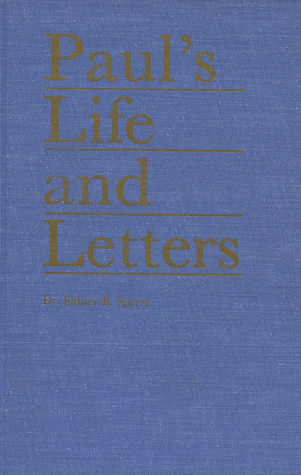
  • Paul’s Life and Letters

    Paul’s Life and Letters

    Book Review: Paul’s Life and Letters

    By Dr. Sidney B. Sperry

    Copyright 1955

    __________________

    This book was a breakdown of Paul’s life and everything he ever wrote – thus the title.  I haven’t read the New Testament beginning to end.  I want to finish the Old Testament first.  This book helped me get a better understanding of Paul’s writings.  His writing was deep and powerful.  I also think his writings have always been and are increasingly misunderstood.

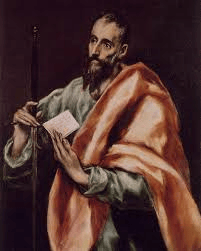
    Paul was such a fascinating figure.  I’ve long wondered what it would have been like to be alongside him.  Everything he did he did with such zeal.  Reading and learning about him, I’m awed by his work ethic.  He’s somebody to be admired for his hard work.  The fervor with which he did whatever he put his mind to.  It’s motivating on one hand and terrifying on the other.  Few can live up to the devotion Paul had to what he was passionate for.  We are lucky his passion turned towards the Gospel of Jesus Christ and worship of God as we’ve seen how his efforts against the early saints caused much pain and suffering.

    The book starts with a history of Paul.  Where he was from, who he was, how he became who he became.  The beginning was basically a historical biography of who Paul was.  As Paul got into the portion of his life where he was writing so much, the book transitions.

    This book is one I will refer back to often as I continue to study scripture.  It had a great breakdown of Paul’s individual epistles and when they were estimated to be written.  For example, chapter 13 was “Paul’s third missionary journey (continued).”  It gave a detailed breakdown of the epistle to the Galatians including everything Paul said, the authenticity, importance, style, and doctrine from that epistle.  I would find myself marking entire pages during these chapters. 

    There were many notable things I learned about Paul from this book.  One was that he worked throughout his missionary ministry.  Despite travelling all over the ancient world and spending many, many years as a full-time missionary, it never appears that Paul was paid for his ministry.  He was given “gifts” from church members from time to time.  But it seems very clear that Paul always worked.  The predominant theory is that he was a tent builder.  I found this very interesting given that many modern-day ministers point to Paul’s writings as proof that Paul advocated a paid ministry. 

    One amazing thing about this book was the feeling I had while reading it.  Especially while reading the breakdown of Paul’s letters.  There were moments where I’d pause and ask myself what I was feeling.  This isn’t normally something I do, but I was aware I was feeling something.  It was joy.  It was a feeling like, ‘what is this earth and what does it really matter but to be a test for something greater?  Live righteously and prepare to live with Christ and God forever.’  While reading his writings everything seemed so clear and simple.  It was a feeling in my chest while reading his messages.  Pure joy.  Pure peace.  Pure comfort in the future if I am faithful.  Motivation to be faithful.  As long as I am obedient and keep faith, I truly have nothing to fear.  It’s a similar feeling to what I get when I read the Book of Mormon.  That testified and made it so clear to me that what I was reading was the word of God, meant to lift up and inspire.

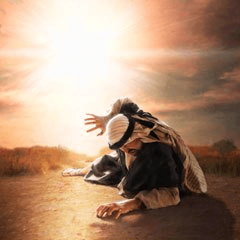
    I’m grateful for this book and the understanding it gave me of Paul and his writings.  As I mentioned, I know I’ll be using this book often as I continue to read scripture and one day study Paul’s writings more intently.  The principles Paul taught were pure.  He was called by Jesus Christ Himself which tells us of the importance of Paul’s work.  The missionary effort Paul put forth and his contribution to building God’s kingdom is inspiring.  He has the greatest conversion story of all time.  We could all be better if we spent more time aspiring to be like Paul the Apostle.

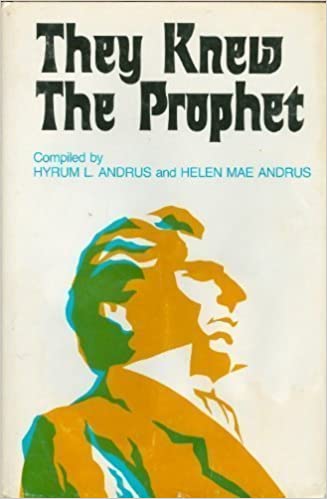
  • Book Review: They Knew the Prophet

    Book Review: They Knew the Prophet

    Book review:  They Knew the Prophet compiled by Hyrum L. and Helen Mae Andrus Copyright 1974

    I just finished a book I really enjoyed called They Knew the Prophet. 

    The book is a collection of first-hand accounts of people’s interactions with the Prophet, Joseph Smith.  I think this book could be of interest to anyone, whether a member of the Church of Jesus Christ of Latter-day Saints or not.  Even if you know nothing about the Church, you get a grasp of how respected and revered Joseph Smith was by his followers. This man with zero education started a religion.  In 1830, less than 200 years ago, six people gathered together to formally organize the church. That group of six has turned into over 16 million. For this reason, even people not of the faith of the Church of Jesus Christ could be fascinated by and should be interested in the historical character that Joseph Smith was.

    If you are a member of the Church, I highly recommend this book.  It was an easy read. Each first-hand account is brief. The longest individual account was 10 pages but that was an outlier.  The book is 193 pages long and there are a total of 98 unique accounts. Fun fact—the 10-page account was from my great-great grandfather, Benjamin F. Johnson.  The book is organized so you move through the prophet’s life. It starts from the beginning with someone who lived near his family and hired young Joseph to help on his farm.  It moves slowly until the end where first-hand accounts are given of his death. I’ve previously read a decent amount on the death of the Prophet and some of what I read at the end was still new to me.

    It’s interesting to see the progression from people describing Joseph Smith early on as ineloquent to later in the book people describing him as the most powerful man and speaker they ever encountered.  It’s truly fascinating to see that progression through the eyes of those who knew him.

    I will avoid giving away too much and thus ruining the book for anyone that may want to read it.  I will share an excerpt from my favorite account. It was written by Howard Coray. He was speaking about all the learned men that would come and try to contend with and confound Joseph.  He wrote:

    “Among other great men who called to see him was Cyrus Walker, a lawyer of much note.  He tried to sound the Prophet, and see how deep he was. Well, it was with Walker as it had been with all the others.  He soon got enough, found Joseph too deep for his lead and line, and gave up the enterprise. Thus it was in every instance that came under my observation.  How could we expect it to be otherwise-for any man who had never peered into heaven and seen heavenly things to be a match for one who had had a half score or more heavenly messengers for teachers.”

    That passage made me think of Joseph Smith in a new way.  Thinking about myself, in the last four years since coming back to Church and actively studying the gospel, I’ve felt I’ve grown so much.  The knowledge and understanding I have today is so far from where I was just four years ago. Joseph was being visited, tutored, and taught by the leaders of past dispensations.  He was being taught by Jesus Christ Himself. His progression from an un-learned farm hand to eloquent orator of gospel principles was at such an accelerated pace. I love that story and it perfectly illustrates what I enjoyed about this book.

    It did get a bit repetitive near the very end and I found myself having a hard time finishing it.  Until the conclusion came. Reading of the end of the Prophet’s life is always emotional and gives me an appreciation for Joseph Smith and what he was willing to give for his testimony:  everything. 

    You can find a copy of the book online for ~$28.  If anyone is interested in borrowing my copy, just let me know!  

    I highly recommend this book.  As the inside cover said, “more than any other book it will make the reader feel that (they) too knew the prophet.”  He was the Moses of our dispensation. There’s no better way to try to understand who he was than through the eyes of those who knew him.