Tag: righteous

  • Satan is Jesus’s Older Brother

    Satan is Jesus’s Older Brother

    Stay with me.

    Before I go down this path let me acknowledge some things:

    1. We don’t understand how time works in eternity. It’s likely everything I’m about to say is nonsense from the eternal perspective. Still, have some fun with me. I know I got your attention with that title.
      • It’s very possible that God “adopted” billions of intelligences at the same time. Meaning, It didn’t go Satan, then Jesus, then Moses, then you, then me, etc. It’s probably not that simple. Anyways…

    Now that’s out of the way, I think there is a fun thought experiment/argument to be had that despite Jesus Christ having the title of “Firstborn”, Satan might be “older” than Jesus.

    Everything in this world symbolizes Jesus Christ. Everything points to Him (Moses 6:63, 2 Nephi 11:4). 

    There are some individuals from history that are clear types and shadows of Jesus Christ.

    Examples:

    1. Joseph of Egypt
      • Savior of his people and all of Egypt
    2. Moses
      • Liberator of Israel
    3. Nephi
      • Led his people to the Promised Land
    4. David
      • King of Israel
    5. Isaac
      • Inheritor of all that Abraham had and father of Israel (Jacob)
    6. Jacob (Israel)
      • Father of the covenant people of Earth
    7. Joseph Smith
      • Restorer of the Gospel on Earth (through Jesus Christ, of course)
    8. Peter
      • Leader of Christ’s church after Christ’s ascension
    9. Abel
      • In the likeness of his father, hearkened to the voice of the Lord
    10. Ephraim
      • Received the birthright, descendents are responsible for the gathering of Israel

    All of these men represent Jesus Christ in different but very clear and obvious ways. 

    What do all these men have in common? None of them are the oldest in their family. None of them are the firstborn.

    Interesting, right?

    “Well, but, the scriptures say Jesus Christ is the firstborn of God. Clear as day,” said a hypothetical someone arguing against my point.

    What if “firstborn” has meaning closer to heir, covenant son, preeminent one?

    Psalm 89:27 speaking of David, King of Israel, reads:

    “I will make him my firstborn, higher than the kings of the earth.”

    David was the youngest son in his family.

    In Genesis 22:2 God says to Abraham:

    “Take now thy son, thine only son Isaac, whom thou lovest…”  

    But Isaac wasn’t Abraham’s only son. He also had Ishmael. Maybe Isaac was his covenant son. 

    Jeremiah 31:9 reads:

    “For I am a father to Israel, and Ephraim is my firstborn.”

    None of Ephraim, David, or Isaac were the firstborn. Yet they were each described as such in varying ways.

    Now Jesus’s words about Himself:

    “I was in the beginning with the Father, and am the Firstborn” (D&C 93).

    This is a captivating feature of scripture. There is a repeated theme of an older brother rejecting His younger brother who receives stewardship over him. 

    Cain opposed Abel.

    Ishmael yielded to Isaac.

    Esau opposeed Jacob.

    Joseph of Egypt was rejected by his older brothers.

    David was initially overlooked by his older brothers.

    Are these older brothers representative of Satan, the way the younger brother is representative of Jesus?

    Sound familiar? (Satan’s Story and Satan’s Story Continued)

    Maybe all these examples are meant to teach us something. It’s hard to be an older brother and yield leadership to your younger brother. What if Satan had taken another route and humbly accepted Jesus Christ? What if he accepted Jesus Christ’s position as “firstborn of the Father”, the chosen one, God’s beloved? What if Cain didn’t oppose Abel? Where would Cain be now?

    Also, what if Joseph of Egypt’s brothers accepted his position of power over them from the beginning? Joseph wouldn’t have been able to complete his earthly mission of saving all of Egypt. Sometimes, maybe, we need opposition (2 Nephi 11).

    But what happens when older brothers do humbly yield to their younger brother? Joseph Smith’s older brothers were legendarily supportive of his calling as God’s prophet. Esau famously humbled himself and reconciled with Jacob. Moses’s older brother Aaron appears to have accepted Moses’s role as prophet most of the time. Amazing things happen when older brothers can humble themselves.

    What if Laman and Lemuel could have humbled themselves before Nephi? Think of the love, peace, and prosperity that could have existed among the Nephites in the Americas. But then we wouldn’t have had all the lessons the Book of Mormon teaches us about opposition.

    God’s plan is perfect.

    It’s fascinating to look at scripture from a broader perspective, look for patterns, and try to grasp all that God wants us to learn and understand.

    While I prefaced this post saying it could be somewhat silly of an exercise, I stand by it. I think it’s a good exercise to review the scriptures in out-of-the-box ways and try to see the patterns God may be trying to teach us.

    Wherever in the birth order Jesus Christ and Satan landed, we know they were “older.” We know that God chose Jesus Christ to be His Son, the Redeemer of the world, the Savior of mankind. We know God doesn’t make mistakes. I’m grateful for what the scriptures teach me about Jesus Christ and that they can constantly strengthen my testimony of Him and all that He did for me.
  • Wheat and Tares

    Wheat and Tares

    Christ gives the parable of wheat and tares in Matthew 13:24-30:

    24 Another parable put he forth unto them, saying, The kingdom of heaven is likened unto a man which sowed good seed in his field:

    25 But while men slept, his enemy came and sowed tares among the wheat, and went his way.

    26 But when the blade was sprung up, and brought forth fruit, then appeared the tares also.

    27 So the servants of the householder came and said unto him, Sir, didst not thou sow good seed in thy field? from whence then hath it tares?

    28 He said unto them, An enemy hath done this. The servants said unto him, Wilt thou then that we go and gather them up?

    29 But he said, Nay; lest while ye gather up the tares, ye root up also the wheat with them.

    30 Let both grow together until the harvest: and in the time of harvest I will say to the reapers, Gather ye together first the tares, and bind them in bundles to burn them: but gather the wheat into my barn.

    In Doctrine and Covenants section 86 Christ gave an explanation of this parable. Here are His words:

    Verily, thus saith the Lord unto you my servants, concerning the parable of the wheat and of the tares:

    Behold, verily I say, the field was the world, and the apostles were the sowers of the seed;

    And after they have fallen asleep the great persecutor of the church, the apostate, the whore, even Babylon, that maketh all nations to drink of her cup, in whose hearts the enemy, even Satan, sitteth to reign—behold he soweth the tares; wherefore, the tares choke the wheat and drive the dchurch into the wilderness.

    But behold, in the last days, even now while the Lord is beginning to bring forth the word, and the blade is springing up and is yet tender—

    Behold, verily I say unto you, the angels are crying unto the Lord day and night, who are ready and waiting to be sent forth to reap down the fields;

    But the Lord saith unto them, pluck not up the tares while the blade is yet tender (for verily your faith is weak), lest you destroy the wheat also.

    Therefore, let the wheat and the tares grow together until the harvest is fully ripe; then ye shall first gather out the wheat from among the tares, and after the gathering of the wheat, behold and lo, the tares are bound in bundles, and the field remaineth to be burned.

    Quick rundown:

    Verses 1-3 explains the great apostasy that occurred to the church after the apostles “have fallen asleep” (aka were killed).

    Verse 4 reminds us that we’re now speaking of our day.

    Verse 5 tells us, “the angels are crying unto the Lord… to reap down the fields.” That can be interpreted different ways but basically the angels want to start with the harvest. The harvest can be considered the gathering of souls at the end of times. This leads to

    Verse 6 where the Lord tells the angels to hold off on the harvest because He doesn’t want to destroy the wheat. The wheat are the righteous, those followers of the Lord. The tares are those who oppose God.

    Verse 7 we learn that wheat will grow alongside tares until the end. Then the wheat will be separated from the tares, and the tares will be burned.

    I believe the most telling part of those verses is in verse 6 where it says, “for verily your faith is weak.”

    The Lord doesn’t want to pull up the tares because the wheat is still “tender” with weak faith.

    I’ve heard this parable many times but for the first time a thought occurred to me. What would it mean for the angels to reap the harvest and pull up the tares while the wheat is still weak? The tares being pulled up signifies the evil people of the world being taken away. The wheat would be too weak to handle this, the wheat is too intertwined with the tares. Wheat and tares, of course, represent people. What does it mean that the wheat is too tender for the tares to be taken? The thought that occurred to me was that the wheat, or faithful people, would have their faith shattered if the tares around them were taken. Could this represent the tares of some friends, family, and people we care about? What if God let loose the angels and took up the tares. How many faithful people would lose loved ones? 

    Are you a wheat or a tare?

    Is our faith weak or strong?

    In Matthew 13:38 Christ says

    “The good seed are the children of the kingdom; but the tares are the children of the wicked one”.

    Christ doesn’t detail the ok seed or the middle ground seed. We are good seeds or we are tares. We are working for Christ or working against Him. We are faithful or we lack faith.

    One day the wheat will be separated from the tares and the end will come. When that day comes, which side will we be on? The side of the wheat or the side of the tares? It’s not enough to be lukewarm as the adversary intensifies his attack. Wheat is nourishing, tares are not. There’s no middle ground. You are either a wheat or a tare.

    Which are you?

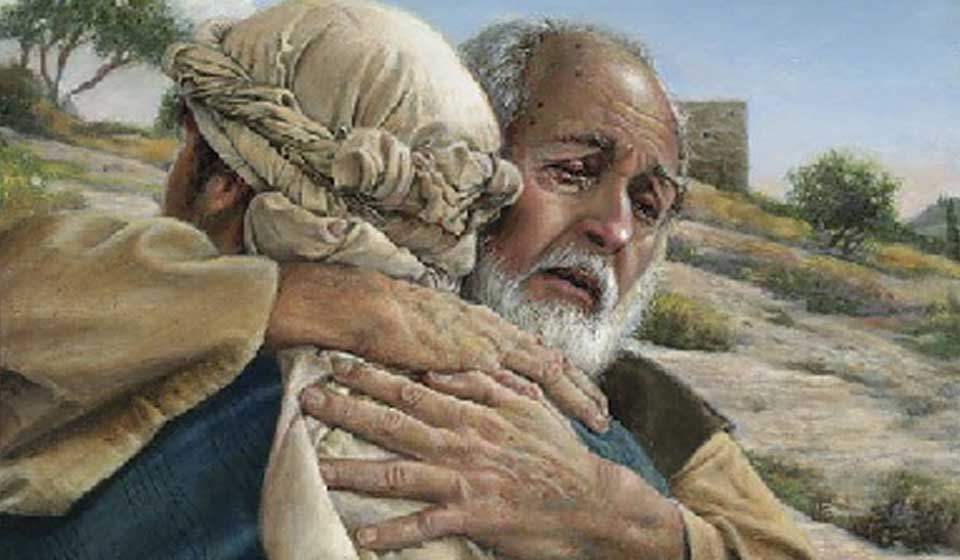
  • Prodigal Son

    Prodigal Son

    The story of the Prodigal Son is well known.  For those who have not read it before or haven’t read it recently it can be found in Luke 15:11-32.

    The story of the Prodigal Son has always hit close to home for me.  Obviously, it’s easy for me to relate to the younger son.  You should read Luke chapter 15 above but a quick summary: there were two sons.  They will be referred to as the elder/older son and the younger son as I write.  The two sons were given their inheritances.  The younger son left his home and went to a faraway city.  There he squandered his inheritance on “riotous living.”  When he hit the lowest of lows, the younger son returned home to beg his father to allow him to be a servant.  The father, instead of showing anger, welcomed his son home, killed the fatted calf, put a robe on his son, gave him a ring, put shoes on his feet, and threw a huge party in celebration of his return.

    The older son, upon hearing of his brother’s return and the subsequent party, was angry.

    This story is often told in such a way that the primary lesson is about the Prodigal Son and his father’s reaction to his return. The story is called “the prodigal son” after all.  That lesson being that no matter how we stray, how far gone are, and how many mistakes we make our Heavenly Father (the father in the story) will always welcome us back.  In fact, Heavenly Father rejoices at our repentance:

    “I say unto you, that likewise joy shall be in heaven over one sinner that repenteth, more than over ninety and nine just persons, which need no repentance.”

    Luke 15:7

    All Prodigal Sons like myself rejoice at this story.

    I once heard a different perspective on this story, and I’d like to share it.  There is a great lesson to be learned in the story of the Prodigal Son by looking at a secondary character: the older brother.

    A great question to ask yourself before reading any of Christ’s parables is “who was He speaking to?”  Another good question is “What was He trying to teach?”  If you look at the parable from the perspective of the Prodigal Son, you can say Christ was teaching those who have sinned that they can always repent and return to the light of their Heavenly Father’s love.

    Who was Christ speaking to when he gave this parable? He was speaking to those looking for the message of God.   He was speaking to the listeners.  These were the ones looking for the message of God.  When giving this parable Christ was speaking to the saints.

    Consider what can be learned from the older brother.  The older brother never left.  The older brother never sinned.  The older brother respected and worked for his father.  Many say, and I always thought, he was justified in his reaction.  His exact words in verses 29 and 30:

    “And he answering said to his father, Lo, these many years do I serve thee, neither transgressed I at any time thy commandment: and yet thou never gavest me a kid (fatted calf), that I might make merry with my friends:

    But as soon as this thy son was come, which hath devoured thy living with harlots, thou hast killed for him the fatted calf.”

    This appears to be a natural reaction.  He had always been there.  He had always done right.  Only for his corrupt brother to return and receive honor.

    Why did the older son stay and work hard for his father?  Why did he keep his commandments?  Was he simply looking forward to the inheritance he was to receive?

    A Crucial Lesson from the Brother of the Prodigal Son « Meridian Magazine

    Why do you serve God and keep his commandments?  Are you looking forward to your mansion?  Do you serve God so you can inherit His glory?  Are you serving Him for YOUR benefit?

    We should serve God because we love God.  We should serve God because we love those around us.  Our service to God shouldn’t be for the blessings and honors He can give us.  Our hearts should serve for love and not for our inheritances.

    Jesus didn’t tell this story only to get sinners to repent.  He also told this story to get the saints to repent.  The Prodigal Son went out to experience life and disregarded his father’s possessions.  The older son on the other hand stuck around, but he was working to please his father.  He looked at himself as moral and worthy.  He was after his father’s possessions.  That’s what he concerned himself with.  The elder son was keeping score.  He was trying to earn his father’s love and inheritance.

    Sometimes we are like the Prodigal Son: sinning and needing to return home.  Sometimes we are like the older brother: serving for the glory of the world. 

    Often we are like the older son in our envy and jealousy.  When someone returns to the fold do we judge them for their past?  Or, like the father in the parable and our Heavenly Father, do we rejoice at someone’s return?

    Elder Holland in his talk, The Other Prodigal, said:

    “I testify that no one of us is less treasured or cherished of God than another.  I testify that He loves each of us-insecurities, anxieties, self-image, and all.  He doesn’t measure our talents or our looks; He doesn’t measure our profession or our possessions.  He cheers on every runner, calling out that the race is against sin, not against each other.  I know that if we will be faithful, there is a perfectly tailored robe of righteousness ready and waiting for everyone, “robes…made…white in the blood of the Lamb.”  May we encourage each other in our effort to win that prize is my earnest prayer.”

    Let us not compare our blessings to the blessings of others, what we have to the possessions of others.  Let us support and help each other to all return to our Heavenly Father.  Jealousy is of Satan.  We should never look down on somebody who made mistakes and is trying to return to God, because then we are the sinner.  We can learn from every character in Christ’s great parable.  Be like the Prodigal Son and repent, humble ourselves, and return home.  Be like the elder son and don’t envy but welcome our wayward brothers and sisters back home with joy and love.  And be like the father, loving all those around us, embracing the sinner and the saint alike.  I believe this is God’s hope for us and what Christ was teaching us through this story.

    __________________________

    Here is a link to Jeffery R. Holland’s talk, The Other Prodigal:

    https://www.churchofjesuschrist.org/study/general-conference/2002/04/the-other-prodigal?lang=eng

  • Letter to a Sinner

    Letter to a Sinner

    I write this with as much humility as possible.  Fully knowing and understanding my weaknesses have given me perspective.  It is my faults and errors that make me feel like I can write this letter. 

    I remember when I came back to church I was asked to not take the sacrament for three weeks.  It was one of the more difficult things I had to do, although it doesn’t sound like much.  I think it was the moment I realized I had changed.  Something that in the past might not have affected me too much, really hurt.  It was difficult coming back and immediately feeling like maybe I’m not enough.  Maybe I could have gone the route of resentment.  Instead I realized how much I didn’t want to have to go through that again.

    I don’t in any way imply I’m better than someone who can’t take the sacrament and does feel resentment.  We all have our own paths.  Mine was of being completely away, coming back, and realizing I deserved my three weeks.  Some are never officially away so that state of probation seems unfair or not right.  I understand that.

    This is my letter to the sinner.  A reminder, that includes all of us.  This is the sinner who has made mistakes.  This particular sinner might come from a perfect family and part of their struggle is feeling like they don’t fit in in the one place they should feel welcome.  This sinner might feel judged by the very people that should love them the most.  It doesn’t matter if those family, friends, and caring loved ones are right or wrong.  It matters how the sinner interprets things.  We all live our own experiences and encounter the world in different ways.  We must, to the best our abilities, see the world in perfect light and perfect truth.

    Here is my letter to a hypothetical sinner:

    You will never be like the “perfect” people you see around you.  You won’t.  Your path has been set.  Your path has been set partly by different “luck,” different experiences.  Partly by your choices.  My life was set by very bad choices.  But now that I’ve come out of the other side, my joy is greater than I could have ever imagined.  You won’t be “perfect”, but you’ll be who Heavenly Father sees you can be.  You won’t be “better” than those who never made the mistakes you made, but you might be stronger.  Your path will lead you somewhere wholly different.  And if you decide you want to come through to the other side: to truly know your Savior, to know forgiveness, to know what being welcomed home feels like even if you don’t think you’ll ever deserve it – if you come to that other side with that relationship with your Savior, your testimony will be welded in steel, as hard as diamond.  You’ll have gone through the refiner’s fire and come out united with He who gives all strength.  This is no excuse to continue to sin.  You know the light.  You’ve seen and felt the light.  I knew the light and I turned from it.  I hope to help anyone not make the same mistake.

    You will make mistakes.  You will sin.  But no matter what, you have to remember Jesus Christ.  Because while the world will judge you and you’ll have to struggle with that, He will judge you with a perfect love and comprehension.  Remember that those around you are trying to judge you with love.  They’re trying to love you righteously.  Jesus Christ doesn’t try.  He is perfect love.  Don’t forget it.  Don’t forget that those around you whose points of view you can’t understand, they’re trying to be like Jesus Christ.  They may be falling short.  But that’s not for you to judge.  Just as they can’t judge you, you can’t judge their intentions or efforts.  Just love and do your best. 

    I’m sorry you have to go through trials.  But do not lose sight of Jesus Christ.  Do not.  He is the only person true peace can come from.  Whatever you do, whatever mistakes you make, do not forget HIM.  He won’t forget you.  I promise.

    At this point I must apologize.  Throughout this letter I’ve referred to you as “the sinner.”  I know that phrase hurt the whole way through.  I know it because I’ve felt it.  I did it throughout the whole letter to get to this point.  I want to remind you, “sinner” is not who you are.  It will never be who you are.  We all sin but that’s not what God and Jesus Christ see in us.  No matter how many mistakes we make.  No matter how many slip ups or downright wrong things you do, you are not a sinner.  You are a child of Heavenly Father.  You are growing.  You are learning.  I reiterate something I said earlier, this does not excuse your sin.  Sin is wrong, you know that.  Christ will see your sin.  What means much more to Him is your repentance.  He doesn’t see who you were but who you will be. 

    “God cares a lot more about who we are and who we are becoming than about who we once were. He cares that we keep trying.”

    Elder Dale G. Renlund in April 2015 Conference talk “Latter-day Saints Keep on Trying”
  • Rameumptom

    Rameumptom

    It’s amazing to read the Book of Mormon and compare those people to our day.  One story from the Book of Mormon that recently stood out to me was the story of the Zoramites and the rameumptom.

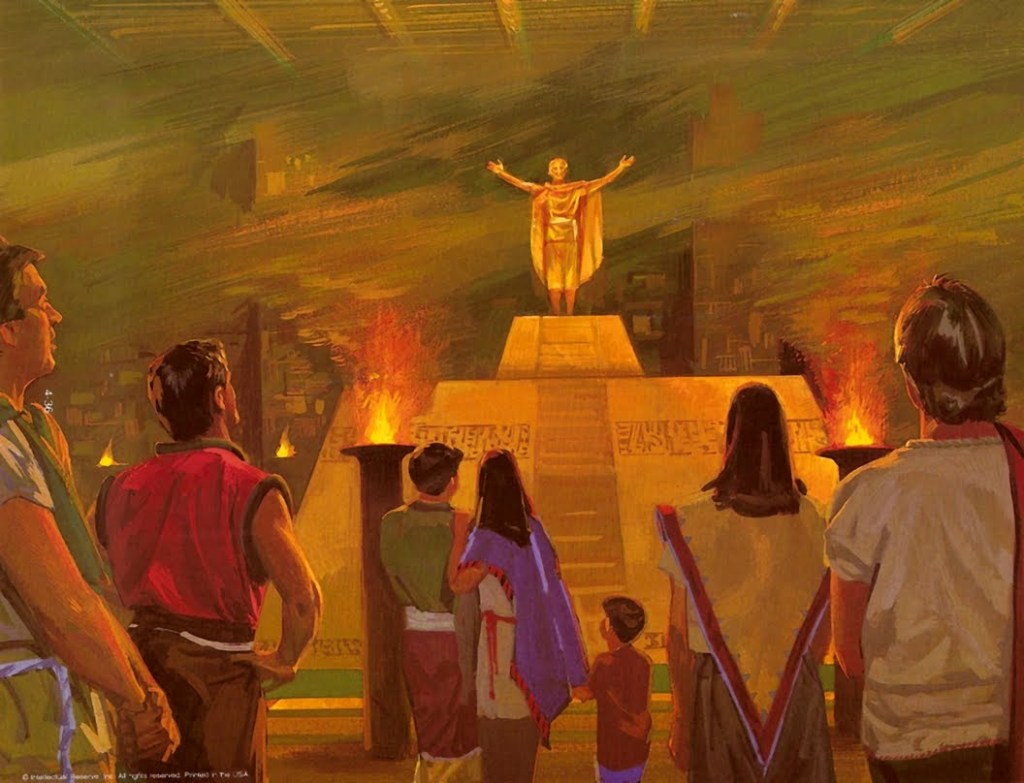
    The Zoramites were a people who corrupted religion in many ways.  They built a large tower.  This tower was called a rameumptom and it was used for prayer.  People would go to the top of the tower and loudly proclaim a rehearsed prayer.  In the prayer they would thank God that He chose them.  They would thank God that He had enlightened them and saved them while He would damn all the others to hell for their false beliefs.  They would say their prayer, leave the tower, and go about their week without another thought towards God.  They would use their week to serve no one but themselves. 

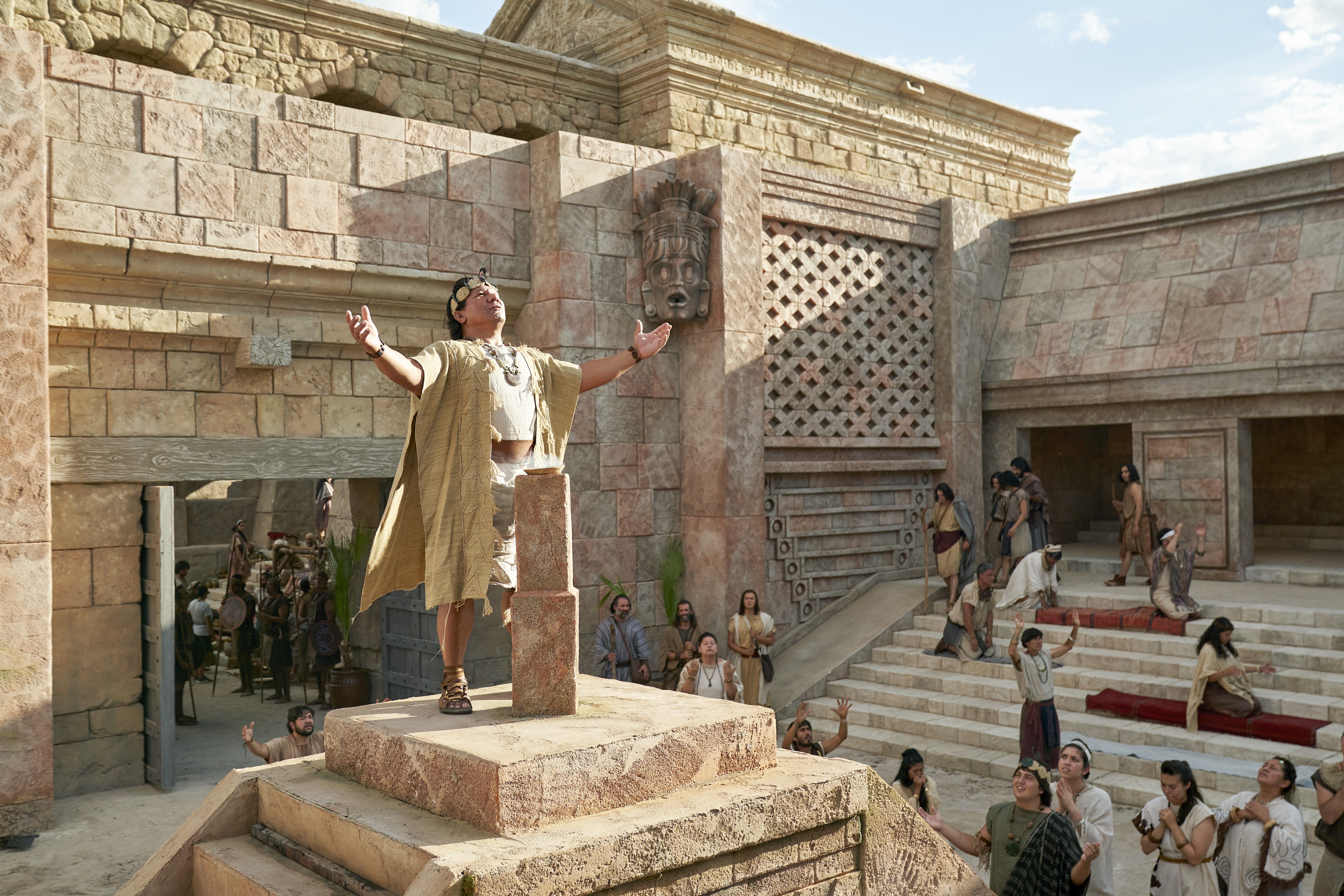
    A Zoramite man prays on the Rameumptom in the land of Antionum.

    Let’s compare the many false beliefs of the Zoramites to our society today.

    First, praying on the rameumptom.  What good deed is done today without proclaiming it to the world?  We’re all guilty of it.  Social media is our modern day rameumptom.  It is where we proudly shout our greatest deeds for the world to see.  Prayer and good deeds should be done in private.  Let not thy left hand know what thy right hand doeth.

    Second, the Zoramites had a temple that only the rich were able to go to.  Churches today have become much more about prestige and power than about humility and kindness.

    Third, rehearsed prayer.  The Zoramites used a rehearsed, scripted prayer to talk to God.  There are many problems with this.  It takes any effort from the procedure.  The prayer has no thought or feeling to it, it’s like reading in class.  There’s no genuine questions, no genuine requests, no genuine gratitude. It is a script.  We see this in many churches today.

    Fourth, prayer without action.  This is a byproduct of rehearsed prayer.  What does prayer without effort lead to?  Life without effort.  The Zoramites loudly spoke their prayers from their tower, stepped down, and that was the extent of their worship.  They wouldn’t speak to God again until the next week when they would give their five minute rehearsed prayer and move on with their life.  This is the worship of our society today.  With all God has given us we can’t even give Him a day of worship in return.  Most don’t go to church at all.  Many who do go, go on Sunday, listen for an hour, and the rest of the week don’t do a selfless act.  Christ was our example.  He taught us to pray always, serve others, and love others.  If we aren’t doing that, we aren’t of Him, no matter how loud our prayer.

    Fifth, the Zoramites thanked God that they were chosen by Him.  They thanked Him for enlightening them and turning them away from the foolish traditions of their fathers and neighbors.  They were selected by God and would be saved.  All others were fools who would burn in hell.  Sound familiar?  Many churches today believe you will only be saved if you follow their beliefs or belong to their church.  What kind of selective God is this?  It spits in the face of a loving, caring Heavenly Father who is no respecter of persons. This is a blasphemous and poisonous teaching that goes back to the pride and selective nature of churches.  God loves all His children and will provide a way for all of them to attain as much glory as they desire.  The doctrine of Jesus Christ taught by the Church of Jesus Christ of Latter-day Saints teaches that there are many mansions in heaven and God’s wonderful plan has provided a way for a vast majority, almost all of His children to go to Heaven.  All that repent,  follow His commandments, and believe in His Son will find a place worthy of their righteous hearts.  This is truth.

    I have a close friend of a different Christian faith.  We have many good religious conversations.  One day the topic of heaven came up.  He told me that surely I didn’t believe he would go to heaven as he wasn’t a member of the Church of Jesus Christ of Latter-day Saints, my church.  This made me so sad.  I told him with complete sincerity and 100% certainty that I knew he was going to heaven.  Whether he joined the Church (my church) or not, I knew he was a good person.  I knew he loved Jesus Christ.  I knew he tried every day to seek Christ and to do good.  I knew he sought God with all his heart.  I knew he was kind and liked to help people.  I know, without a doubt in my mind, that there is a place in heaven for him.  I know this because I know God.  I know he loves all of us.  I told this to my friend, and I’ll never forget the look on his face.  A little shock, a little awe.  I know that he believes I am going to hell, he has told me so.  He believes I have been fooled and I will have to pay for my ignorance.

    I know that God loves him, and I know that God loves me.  I know that Jesus Christ is the perfect judge.  We will be judged perfectly.  Even those who are fooled will be given mercy and love from God.  That’s the God I know.  I feel sad for those who don’t know that same God.

    False teachings have corrupted and destroyed religion.  False teachings have turned many away from the truth and light that religion should provide.

    I have an invitation to anyone who read this and thought “I do hate how churches say everyone who doesn’t do this or that is going to hell,” or “I’ve never understood rehearsed prayers,” or “I can’t stand the hypocritical church goers who are the meanest people during the week.”  My invitation is to come and see.  Come and learn of the Gospel of Jesus Christ. Come and learn what Christ intended for us.  Come and learn true principles and ordinances of Christ’s gospel.  Come serve with us, come worship with us, come pray with us, come be with us.  The Church of Jesus Christ of Latter-day Saints is not perfect, not yet.  Not until Christ returns.  We can still be hypocrites but we’re trying.  Christ’s Gospel is perfect and we’re working toward it.  Come and see.