Tag: Sabbath day

  • Ministering

    Ministering

    Alma 35:7

    “And it came to pass that Alma and his brethren did minister unto them.”

    This is referring to the poor people of the Zoramites who had been forced to leave their homes and their city because they believed in Jesus Christ. These poor Zoramites were welcomed to the city of Jershon by the Ammonites, a recently converted group of Lamanites. I’ve written about the corruption of the Zoramites before.

    The Zoramites were so mad at these poor members of their society that they had already banished that they told the Ammonites in Jershon to not allow these poor individuals to live in their city. The people of Ammon, being decent human beings, ignored the demand from the wealthy Zoramites to cast out these poor people again.

    This is where the verse quoted, verse 7, comes in.

    Alma and his brethren ministered to these poor Zoramites. It was Alma and his brethren who preached to the poor Zoramites which ultimately led to them being cast from their homes. The people of Ammon also ministered to these people.

    Doesn’t this seem like an obvious thing? To take care of an innocent group of already poor people who were forced to leave their homes?

    If there was any question whether the teachings of the rich Zoramites were corrupt and had their roots in an evil nature, this behavior seems to confirm this fact. By their fruits you shall know them.

    And what’s up with the rich Zoramites that made them leave? It wasn’t enough that they forced these people out, making them pack up and go with what little they had to another town? They had to follow these people and try to get another town to not allow them to be there? How petty is this? This makes me think of some who leave the Church. Isn’t it enough to just leave? Do you have to follow the Church around bashing it, hating it, trying to destroy it?

    It is said that adherence of the sabbath day is what separated the Jews from the rest of the world and today respecting and keeping holy the sabbath day should be a mark of Christians, though that has unfortunately changed. That was the sign in ancient sign. What is the sign today?

    What sets apart Christ’s true church? It should be ministering to the one. Christ’s church should have a clear focus on ministering to one another, and to others.

    Christ’s church is not vindictive, it is loving. Christ’s church is not exclusive, it is inclusive. Christ’s church should be a community of saints supporting each other in every physical, emotional, and spiritual way possible. Christ’s church should be like Christ’s ministry. It should be a church of ministering to the one and to the all.

    The Ammonites are an extraordinary example of ministering. “And [they] did minister unto them.” Even with the threat of war, they still ministered. Even with the threat of murder, they ministered.

    What is our excuse as members of the Church of Jesus Christ if we aren’t ministering to each other? The Church of Jesus Christ has an organized, cohesive, important program of ministering. If we aren’t doing our part to minister to one another then we aren’t doing our part in separating ourselves from the world.

    I’m grateful that Christ’s church has an organized emphasis on ministering. I’m grateful I get to be a part of it. I’m grateful that Jesus Christ was the example of a perfect minister.

  • Beth’s Talk on Mosiah 3:19 (January)

    Beth’s Talk on Mosiah 3:19 (January)

    This is a talk, exactly as written, by Beth, that she gave in church in January. She rehearsed the talk verbally to me multiple times before I heard it in church. Of course, through hearing it I knew it was a great talk, but it wasn’t until proofreading and preparing to post this that I was struck by how phenomenal a talk this really was. Hope you enjoy reading it as much as much as I did. And now, Beth –

    Mosiah 3:19 Talk
    January 9, 2022
    Good morning brothers and sisters.
    I wanted to start by introducing my family as we are one of the families that were blended into this ward with the recent changes in the stake. My name is Elisabeth Quackenbush. My husband is Brayden Quackenbush. We met in the Scottsdale Young Single Adult Ward in 2017 and have been married for over 2 years. We have a one year old daughter named Ivy. You’ll see her running around Sunday School for another 5 months but she is very excited to start nursery after that.

    The topic I was given to speak on this morning is the scripture Mosiah 3:19. When I was informed this was my assignment I wasn’t really surprised. This scripture comes into my mind a lot and is brought up in conversations about life all the time when I’m chatting with my husband. I think it sticks in my mind because it stands in such contrast to a lot of the attitudes of the world these days.

    For those of you that memorized scripture mastery back in the day you may remember this scripture, but as a reminder, this scripture is King Benjamin speaking to his people in the Book of Mormon. It reads,

    “For the natural man is an enemy to God, and has been from the fall of Adam, and will be, forever and ever, unless he yields to the enticings of the Holy Spirit, and putteth off the natural man and becometh a saint through the atonement of Christ the Lord, and becometh as a child, submissive, meek, humble, patient, full of love, willing to submit to all things which the Lord seeth fit to inflict upon him, even as a child doth submit to his father.”

    When we break down this verse, we can derive meaning in a variety of ways. The first that I noted is that the natural man is inherently selfish. The second is the importance of change to the Eternal Plan of Happiness.

    Boyd K Packer stated in his 1990 talk, “Put Off the Natural Man, and Come Off
    Conqueror”:
    “Unchecked selfishness [of the natural man] stubbornly blocks the way for developing all of the divine qualities: love, mercy, patience, long-suffering, kindness, graciousness, goodness, and gentleness. Any tender sprouts from these virtues are sheared off by sharp selfishness. Contrariwise, I cannot think of a single gospel covenant the keeping of which does not shear off selfishness from us.”

    Through the influence of the Holy Ghost, and the atonement of Jesus Christ, we can and should change from the narrow focus of the natural man and become, “submissive, meek, humble, patient, full of love, and willing to submit to the will of God.”

    This idea of our ability and strength to change stands in stark contrast to the pervasive attitude of our society. This attitude states that we are born a certain way. We can’t change, and even shouldn’t want to change. If we do change, we are inauthentic. On the surface, this has a false sense of empowerment, I think. However, this idea that change is bad and that we must only be one way for the rest of our life is truly limiting, almost an eternal purgatory of mediocrity. Compare this to the freedom and growth permitted to us through Jesus Christ’s suffering, that we may improve and become like our Heavenly Father and Savior, Jesus Christ.

    My husband and I have had the opportunity to have many deep, religious
    conversations with friends of a variety of backgrounds. We often come across
    criticism of our faith’s belief that we can take steps, including repentance, baptism, and participating in temple ordinances, to change and become like God. We are accused of valuing works and forgetting the grace provided through Jesus Christ. On the contrary… His grace is the key element that permits us TO become new beings.

    In 2 Corinthians 5:17 we read, “Therefore if any man be in Christ, he is a new
    creature: old things are passed away; behold, all things are become new.”

    Brad Wilcox does a beautiful job in his BYU talk, “His Grace is Sufficient” at outlining how the Atonement of Jesus Christ, through His death and resurrection, provides us the need to change… (forgive me for this lengthy quote but as many of you know, this talk is incredible…)

    “[Yes, we are saved by Grace but] Have you been changed by grace? [We] are so excited about being saved that we are not thinking enough about what comes next. We are so happy the debt is paid that we may not have considered why the debt existed in the first place. Latter-day Saints know not only what Jesus has saved us from but also what He has saved us for.

    “A life impacted by grace eventually begins to look like Christ’s life. While many Christians view Christ’s suffering as only a huge favor He did for us,
    Latter-day Saints also recognize it as a huge investment He made in us.

    “As Moroni puts it, grace isn’t just about being saved. It is also about becoming like the Savior. The miracle of the Atonement is not just that we can live after we die but that we can live more abundantly. The miracle of the Atonement is not just that we can be cleansed and consoled but that we can be transformed.“

    Again, just think for a minute… how does that compare to what we are being taught by the world? I can’t change, I shouldn’t change…

    HOW DO WE PUT OFF THE NATURAL MAN AND BECOME LIKE CHRIST?

    We can actively seek this positive change…

    In her 1998 BYU Speech, Wendy Watson, now well known as Wendy Nelson, lists some ways. One is reflection. She notes how Alma directs this type of reflection:

    “Just how does Alma invite these change-inducing reflections? One way is through his use of questions. In Alma 5 alone, more than 40 questions are offered—questions like:
    Have ye received his image in your countenances? Have ye experienced this mighty change in your hearts? . . .
    . . . If ye have experienced a change of heart, and if ye have felt to sing the song of redeeming love, I would ask, can ye feel so now?‘ [Alma 5:14, 26]. Through the process of persistent questioning, Alma invites us to reflect over and over again: on our status with the Lord, on our spiritual growth and development, on things that need to change or have changed—and before we know it our desire for more change increases.”

    Another idea is to listen to the uplifting voices of authority in your life remembering, “As helpful as human voices of authority are, none can or should replace the ultimate voice of authority—the Word himself: the Savior Jesus Christ. What are you doing to hear his voice in your life? What are you doing to establish his voice as the voice of authority for you?”

    Other ways we can develop this change to become more like Him… Consistently and earnestly repent, seek out holy places, take steps of faith, pray to Him daily.”

    Sometimes change finds us…whether it be through loss, grief, depression, or trials in life, change is often thrust upon us in this mortal life. Again, the world finds few answers as to why there is such suffering and grief in the world. His eternal plan of growth and development is sometimes the only answer that makes sense. If we are to become like Christ, our innocent brother that felt all the sufferings of the world, how can we expect to be truly changed without some suffering of our own?

    Peter in speaking of [trials], said: “Beloved, think it not strange concerning the fiery trial which is to try you, as though some strange thing happened unto you: But rejoice, inasmuch as ye are partakers of Christ’s sufferings; that, when his glory shall be revealed, ye may be glad also with exceeding joy.”

    When we endure this life, put off the natural man, and develop into more Christ-like beings, we set ourselves up to feel an even greater degree of joy in this life and in eternity.

    This topic makes me think of a time when I came back to church after living a life that was not in line with what I knew to be right. I made many positive changes when I started coming back and attending the Scottsdale Young Single Adult ward. I starting observing the sabbath day, stopped a lifestyle of college partying, broke off a serious relationship, and made several other difficult but important decisions.

    However, with all this positive change and shunning of the enticings of the natural man, I still felt like I wasn’t receiving the blessings I thought I would. I wallowed in self pity over my own suffering for a while because of this and even wondered if all of my change was for nothing.

    However, I eventually decided I would stop focusing on what I needed and instead turned outward. I made it my mission to seek anyone in my ward that seemed lonely as I was. I sought opportunities to serve those that were also going through a variety of trials. And a miracle happened! The less I focused on my pain, my loneliness, my loss, and focused on loving those around me as Christ did, I really came to find true joy.

    I couldn’t believe how sincerely I loved everyone around me. I didn’t feel lonely. I developed new, Christ-like attributes. And ultimately, I shunned the ultimate trait of the natural man – selfishness. What a blessing that lesson was for my life.

    I know how hard it can be to put off the feelings we have as humans in a difficult mortal journey. It is something we will actively have to work for as long as we live. However, I know that when we let ourselves change and take on the characteristics of Christ we will prepare ourselves to find real joy in eternity. We will truly have cause to rejoice in his second coming.

    I say these things in the name of Jesus Christ, amen.
  • Rameumptom

    Rameumptom

    It’s amazing to read the Book of Mormon and compare those people to our day.  One story from the Book of Mormon that recently stood out to me was the story of the Zoramites and the rameumptom.

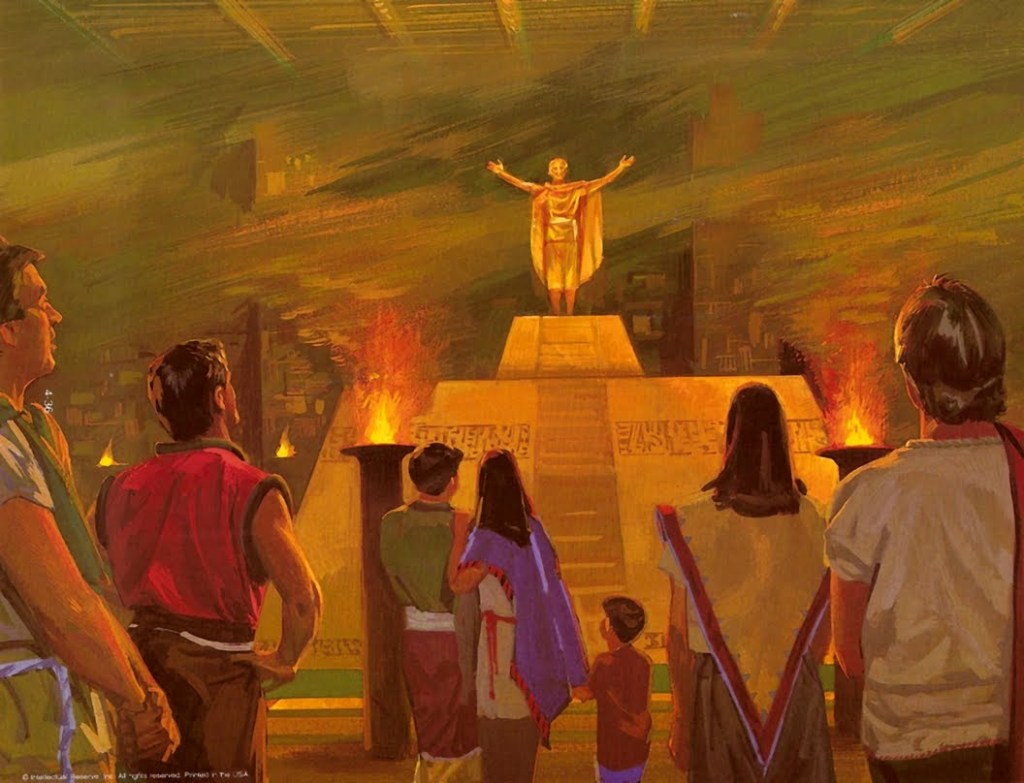
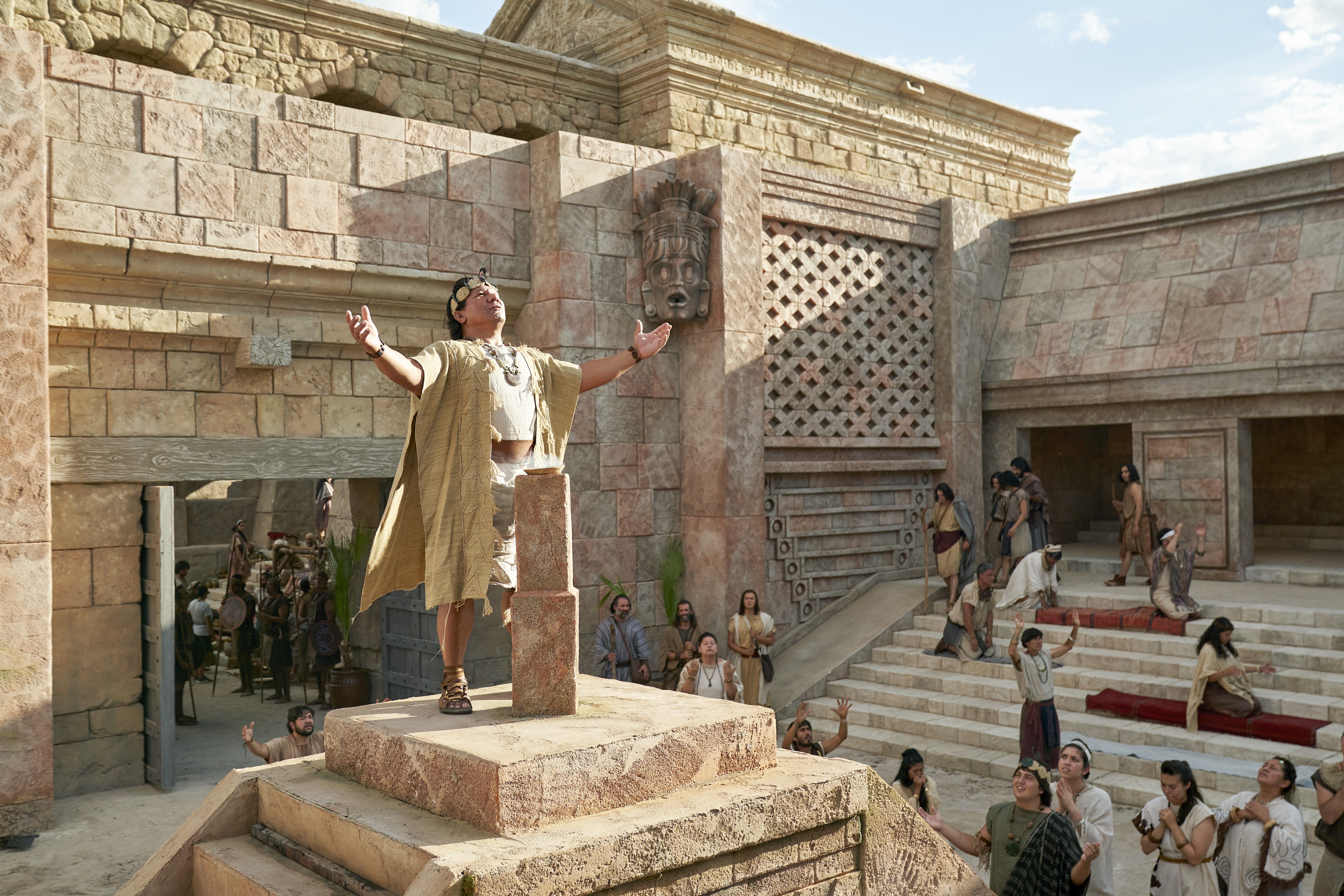
    The Zoramites were a people who corrupted religion in many ways.  They built a large tower.  This tower was called a rameumptom and it was used for prayer.  People would go to the top of the tower and loudly proclaim a rehearsed prayer.  In the prayer they would thank God that He chose them.  They would thank God that He had enlightened them and saved them while He would damn all the others to hell for their false beliefs.  They would say their prayer, leave the tower, and go about their week without another thought towards God.  They would use their week to serve no one but themselves. 

    A Zoramite man prays on the Rameumptom in the land of Antionum.

    Let’s compare the many false beliefs of the Zoramites to our society today.

    First, praying on the rameumptom.  What good deed is done today without proclaiming it to the world?  We’re all guilty of it.  Social media is our modern day rameumptom.  It is where we proudly shout our greatest deeds for the world to see.  Prayer and good deeds should be done in private.  Let not thy left hand know what thy right hand doeth.

    Second, the Zoramites had a temple that only the rich were able to go to.  Churches today have become much more about prestige and power than about humility and kindness.

    Third, rehearsed prayer.  The Zoramites used a rehearsed, scripted prayer to talk to God.  There are many problems with this.  It takes any effort from the procedure.  The prayer has no thought or feeling to it, it’s like reading in class.  There’s no genuine questions, no genuine requests, no genuine gratitude. It is a script.  We see this in many churches today.

    Fourth, prayer without action.  This is a byproduct of rehearsed prayer.  What does prayer without effort lead to?  Life without effort.  The Zoramites loudly spoke their prayers from their tower, stepped down, and that was the extent of their worship.  They wouldn’t speak to God again until the next week when they would give their five minute rehearsed prayer and move on with their life.  This is the worship of our society today.  With all God has given us we can’t even give Him a day of worship in return.  Most don’t go to church at all.  Many who do go, go on Sunday, listen for an hour, and the rest of the week don’t do a selfless act.  Christ was our example.  He taught us to pray always, serve others, and love others.  If we aren’t doing that, we aren’t of Him, no matter how loud our prayer.

    Fifth, the Zoramites thanked God that they were chosen by Him.  They thanked Him for enlightening them and turning them away from the foolish traditions of their fathers and neighbors.  They were selected by God and would be saved.  All others were fools who would burn in hell.  Sound familiar?  Many churches today believe you will only be saved if you follow their beliefs or belong to their church.  What kind of selective God is this?  It spits in the face of a loving, caring Heavenly Father who is no respecter of persons. This is a blasphemous and poisonous teaching that goes back to the pride and selective nature of churches.  God loves all His children and will provide a way for all of them to attain as much glory as they desire.  The doctrine of Jesus Christ taught by the Church of Jesus Christ of Latter-day Saints teaches that there are many mansions in heaven and God’s wonderful plan has provided a way for a vast majority, almost all of His children to go to Heaven.  All that repent,  follow His commandments, and believe in His Son will find a place worthy of their righteous hearts.  This is truth.

    I have a close friend of a different Christian faith.  We have many good religious conversations.  One day the topic of heaven came up.  He told me that surely I didn’t believe he would go to heaven as he wasn’t a member of the Church of Jesus Christ of Latter-day Saints, my church.  This made me so sad.  I told him with complete sincerity and 100% certainty that I knew he was going to heaven.  Whether he joined the Church (my church) or not, I knew he was a good person.  I knew he loved Jesus Christ.  I knew he tried every day to seek Christ and to do good.  I knew he sought God with all his heart.  I knew he was kind and liked to help people.  I know, without a doubt in my mind, that there is a place in heaven for him.  I know this because I know God.  I know he loves all of us.  I told this to my friend, and I’ll never forget the look on his face.  A little shock, a little awe.  I know that he believes I am going to hell, he has told me so.  He believes I have been fooled and I will have to pay for my ignorance.

    I know that God loves him, and I know that God loves me.  I know that Jesus Christ is the perfect judge.  We will be judged perfectly.  Even those who are fooled will be given mercy and love from God.  That’s the God I know.  I feel sad for those who don’t know that same God.

    False teachings have corrupted and destroyed religion.  False teachings have turned many away from the truth and light that religion should provide.

    I have an invitation to anyone who read this and thought “I do hate how churches say everyone who doesn’t do this or that is going to hell,” or “I’ve never understood rehearsed prayers,” or “I can’t stand the hypocritical church goers who are the meanest people during the week.”  My invitation is to come and see.  Come and learn of the Gospel of Jesus Christ. Come and learn what Christ intended for us.  Come and learn true principles and ordinances of Christ’s gospel.  Come serve with us, come worship with us, come pray with us, come be with us.  The Church of Jesus Christ of Latter-day Saints is not perfect, not yet.  Not until Christ returns.  We can still be hypocrites but we’re trying.  Christ’s Gospel is perfect and we’re working toward it.  Come and see.

  • The Chance of Faith

    The Chance of Faith

    One Sunday I was in my car with a friend, CJ Matthews.  We were driving after church to go do something.  I can’t remember what it was.  Visit someone or give a blessing or something that like.

    A few minutes into the drive I realized I was out of gas. I remembered I’d been out of gas since I left my home that morning to drive to church.  It was 20 minutes to our location. It would be 20 minutes there, 20 minutes back to CJ’s car. Then the drive home. No way I could make it without getting gas.

    Which Gasoline Should You Buy?
    Not me on a Sunday unless CJ is in the car.

    I informed CJ of our dilemma.  I let him know I wouldn’t be getting gas on a Sunday.  God would get us there and get us back.  If you could see the look on CJ’s face!  It was great.  His response, “Is God going to turn air into gasoline for you to return?  Pull over and get gas.  I’m not walking to a gas station.”

    I eventually complied with his request, though begrudgingly.  I had the faith that God would help us accomplish what we needed to accomplish without having to stop for gas.

    This is a topic my wife and I playfully debate often.  I try to say that I have no concern about my life or well-being.  If I’m meant to die, I will die when God needs me back and not a second sooner.  I joke often that the best way to die would be by lightning at the top of a mountain.  That would clearly indicate an urgent need God had for me to return and start serving Him on the other side.

    My wife is in the other school of thought.  She agrees with CJ.  Don’t put yourself in harm’s way.  Don’t put yourself at risk.  Don’t be stupid. Boring!  I’m inclined to be stupid. Sometimes I consider it my way of showing God I have faith. I know, my wife has already told me I’m stupid.

    Anyways.

    I’ve made this a joking introduction but it’s something I truly struggle with. 

    Where does faith end and wise action start?

    The principle is told in a story that I love and think about often.  The story goes like this, I’ll tell my version.

    Flood. Man on the roof of his house

    A great flood comes, and a man gets on top of the roof of his house.  A man comes by in a canoe.  “Hop in!”  he yells.  The man on the roof calmly tells him no thanks.  The water gets higher.  A couple in a boat comes by.  “Get in!  The water is rising!”  The man on the roof calmly denies the gesture and stays on his roof.  The water gets higher.  The man on the roof is close to being overtaken by the water.  A helicopter comes by and throws a rope down.  The man on the roof waves it away.

    The man on the roof is finally overtaken by the water and drowns.

    When in heaven he looks to God and asks, “I prayed the whole time I was on the roof.  Why didn’t you help me?”

    God replies, “I sent you a canoe, a boat, and a helicopter!  What else did you want from me?”

    I know what the scriptures tell us.  I know God wants wise servants.  I know he wants us to be prepared.  I know He wants us to work problems out in our minds and learn to problem solve.  I know we’re here to learn to make good choices. 

    But I also know we’re here to learn faith.  We’re here to learn obedience.  We’re here to learn to trust God.

    I hope I live my life with a firm belief that God will guide me wherever He needs me as long as I do my part.  I often joke about how God holds my hand and guides me to places, decisions, people.  I often joke how God has been there with me every step of the way.  He has blessed me in so many profound ways I can’t deny His loving guidance in every moment of my life.

    I know that God still wants me to do my part.

    So, I put my faith forward.  God will get me there!  Or does God put a gas station directly on my journey so I can get gas?  How often is God up there, exasperated, “I put the gas station right along the way!”  Or even better, “I put CJ and Beth around you to balance out your silly refusal to take care of yourself!”

    I wonder how often I’m turning away the canoe, boat, and helicopter.  I only hope I’m ultimately doing what God wants me to do.  I think that’s the best any of us can do.