Tag: saints

  • Why Do I Care?

    Why Do I Care?

    I’ve been thinking recently. Why I care about this?

    This being – the Gospel, the Church of Jesus Christ, the Church of Jesus Christ of Latter-day Saints, Jesus Christ in general.

    Let’s start with Jesus Christ in general. I feel like I write about this constantly and it’s the constant conclusion to one of my posts, so I’ll be brief here. I care about Jesus Christ in general because He has given me everything. The least I can do in return is share Him, follow Him, try my best to be like Him.

    Let’s go broader. Why do I care about the Gospel and the Church of Jesus Christ? That, I think goes in line with why I care about Jesus Christ Himself. If I care about Him, then I would care about His church, and I’d want to share His gospel. That lines up.

    You’ll notice I distinguished the Church of Jesus Christ with the Church of Jesus Christ of Latter-day Saints. This is what I want to focus on and think about here.

    Why do I care to share that I’m a member of the Church of Jesus Christ of Latter-day Saints? Why do I invite people to church? Why do I invite people to activities? Why do I share Book of Mormons? Why do I invite people to meet with the missionaries? Why do I share being a latter-day saint? Why do I talk about it? Why does it matter? Why do I care? Why do I keep doing it with such little success?

    It’s something I think about relatively often. The why?

    How do I stay motivated to write spiritually themed blog posts every week not very many read and fewer still are interested in?

    Why do I keep having gospel discussions with people and trying to convince them that this is the restored Church of Jesus Christ – when everyone I talk to disagrees, or worse, doesn’t care?

    Why do I keep inviting people to church and activities when they never come?

    Why do I keep sharing scriptures and conference talks that no one reads or listens to?

    Why is being a “Mormon” important?

    Hmm.

    Sounds depressing right? Sometimes it’s hard. Being a member missionary is hard. It’s discouraging. It seems like an endlessly fruitless effort.

    And yet I’m not being persecuted or crucified so I have really nothing to complain about compared to saints from earlier times.

    So, I’ve distinguished “The Church of Jesus Christ of Latter-day Saints” from “The Church of Jesus Christ” but that’s really the answer to the question of why. I do all these things, no matter how hard or discouraging, because I believe the Church of Jesus Christ of Latter-day Saints is the Church of Jesus Christ. I believe they are one and the same. I believe this is Christ’s restored church. I believe it is the way back to Him. I believe I was called and sent here to share it. That’s why I do it. That’s why I care.

    I have a friend who converted to this church who once said something I found fascinating. He said, basically, “Whether it’s true or not, I don’t care. This church brings me happiness. It’s made my life better. It’s made me a better person. It’s made me feel closer to God. Is it true? Is it the One True Church? I don’t know. Really, I don’t care.”

    He doesn’t care because for him it’s about his well-being. This church has helped his life and brought him joy. What does he care about the rest of it? While I think in a completely different way, I can appreciate this line of logic, this way of thinking. This person is an extreme pragmatist. So when he said this statement, it told me a lot about him.

    Does what this individual said make him any less of a latter-day saint and disciple of Christ than me? I’ll say, I think it could, but it doesn’t. This person is still one of the most faithful, serving, selfless, Christ-like individuals I know. Ultimately his why doesn’t matter as much as who he is becoming, which is more like Jesus Christ.

    I consider that person’s why somewhat temporal. ‘This church has been good to me and brought me joy, I’m for it.’

    My why is different.

    My question is, what if the church doesn’t bring you joy? What if it makes your life worse? This friend of mine might leave if that were the case. Right now he has no reason to leave.

    Maybe this is why so many leave. They don’t see how the church is benefitting them.

    This friend and I have a mutual friend. The mutual friend is very interested in religion and so we’ve had religious conversations together. After a few discussions, my friend said the mutual friend would never join the church. He said the mutual friend had too much to lose. His family would disown him, his wife would hate him, his whole life would change. It would be too hard. Should that person join the church?

    My friend would say no.

    Again, my why is different.

    I look at that and say, “Is it true?”

    Response from hypothetical person, “Well…”

    “No well, is it true?”

    If it’s true, if God sent a prophet, and that prophet established a church, and it’s Christ’s church – if it’s true – what else matters?

    Is it true?

    I believe it is.

    That’s why it matters. That’s why I care. That’s why it’s so important to me.

    I’ll write more on the temporal vs spiritual benefits of the church another time. But for now, I wanted to share that.

    Is it true?

    Yes.

    Then it matters. It matters more than anything else on this entire earth.
  • Agency and Mistakes: Was Brigham Young Wrong?

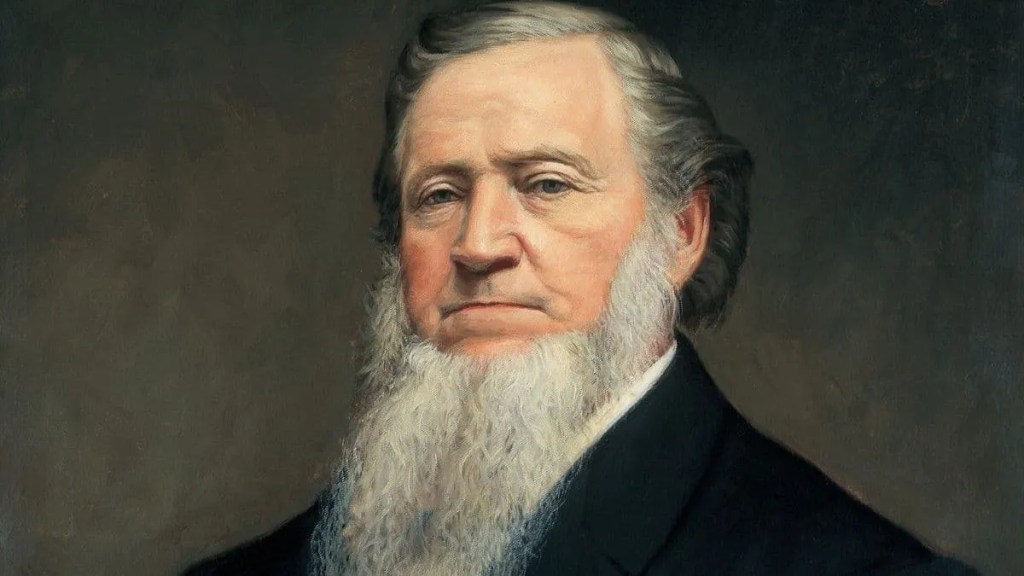
    Agency and Mistakes: Was Brigham Young Wrong?

    Let’s start with an assumption.

    What if Brigham Young incorrectly instituted the practice of the priesthood ban for black people?

    We always think in this way that God can do anything, however He wants to. Why didn’t He fix the priesthood ban for blacks issue immediately after Brigham Young if it was in fact a mistake by Brigham Young?

    We sometimes neglect to think that, if God were to fix things however He wants to, that would likely supersede our agency. This whole life is about us making choices. It would be a problem if God started correcting everything on this earth, especially with our many mistakes and shortcomings as mortals. It was never in God’s plan to supersede our agency, that was Lucifer’s plan.

    But let’s take a bigger perspective on this.

    What if God did correct this issue of black men not receiving the priesthood in the 1800s and early 1900s? What if He corrected it an eternity ago, when He created the Plan? God’s plan is perfect. God doesn’t always fix things the way we think He should fix things. In fact, He probably never fixes things the way we think they should be fixed. That’s what makes Him God and us tiny mortals trying with all our might to be like Him, but inevitably falling short.

    God’s Plan was established well before black men were denied the priesthood through Earth’s late 19th and early 20th centuries. His plan allows all those who would have faithfully accepted the priesthood while in this life to lose out on nothing. This is in precisely the same way His plan accounts for His countless children who didn’t have access to the saving ordinances of the Gospel in life, whether that be due to the gospel not being present on earth, never hearing about it, or a child dying before reaching the age of accountability. God’s plan is perfect. He’s already thought it through. I assume those who have an issue with the delay in the Church allowing black men to have the priesthood also have an issue with the tens of millions of infant deaths each year. In that case, your issue is with your faith in God, not in any church policy.

    I understand that these things are hard to understand while here. Some reading this may respond, “Yes, that’s precisely the issue I have: That many noble and worthy men weren’t allowed the priesthood and the millions of innocent children that die unfairly.” I understand this challenge. This is where faith comes in. I have faith in God, His Plan, His love, and that He will make all these things we don’t understand right. If we don’t have faith in those things, then yes, God is a monster that we should not worship. The God I know loves us and one day all these things will be understood.

    Something to us, here, simple and short-minded on earth, that looks like a huge mistake – it’s not a mistake to God. All those who couldn’t get the priesthood due to an incorrect policy will receive it.

    What if Brigham Young did make a mistake and what if the Church really would have collapsed if that mistake was corrected in the 1860s? THEN God’s church wouldn’t be on the earth. That seems like a real mistake. Again, God has thought these things through.

    We have an example of this principle in the policy change instituted by Wilford Woodruff banning plural marriage. In Official Declaration 1 of 1890, now in the Doctrine and Covenants, Wilford Woodruff says,

    “The question is this: Which is the wisest course for the Latter-day Saints to pursue—to continue to attempt to practice plural marriage, with the laws of the nation against it and the opposition of sixty millions of people, and at the cost of the confiscation and loss of all the Temples, and the stopping of all the ordinances therein, both for the living and the dead, and the imprisonment of the First Presidency and Twelve and the heads of families in the Church, and the confiscation of personal property of the people (all of which of themselves would stop the practice); or, after doing and suffering what we have through our adherence to this principle to cease the practice and submit to the law, and through doing so leave the Prophets, Apostles and fathers at home, so that they can instruct the people and attend to the duties of the Church, and also leave the Temples in the hands of the Saints, so that they can attend to the ordinances of the Gospel, both for the living and the dead?

    “The Lord showed me by vision and revelation exactly what would take place if we did not stop this practice. If we had not stopped it, you would have had no use for … any of the men in this temple at Logan; for all ordinances would be stopped throughout the land of Zion. Confusion would reign throughout Israel, and many men would be made prisoners. This trouble would have come upon the whole Church, and we should have been compelled to stop the practice. Now, the question is, whether it should be stopped in this manner, or in the way the Lord has manifested to us, and leave our Prophets and Apostles and fathers free men, and the temples in the hands of the people, so that the dead may be redeemed.”

    Sometimes we live with this thinking that God can do whatever so why doesn’t He? This, I think, is the basis of so many losing faith in Him. I look forward to the day when we are all reminded that we came to earth willingly, that we knew the Plan, and that we were eternally grateful for the opportunity to have freedom of choice and to learn right from wrong, away from Him (God), where it was completely up to us to make choices.

    Again, we fall into this thinking, I think, that God can do anything He wants however He wants. Maybe. But God still works through us. God still gives us our agency. God still lives by laws. God said He allows plural marriage in the case where he wants to raise a righteous generation unto Himself (Jacob 2). What would we have had God do if He needed to grow the church membership in one generation? Import a couple hundred thousand men and women from space? The answer is – God works with us. He works within the world He has given us.

    God allows us the bounds to make mistakes. Within those mistakes, God’s Plan works. I have faith in the truth of that. God takes our worst, and it becomes part of the Plan. He prefers our best, but He knows us better than we know ourselves.

    On the question of if Brigham Young did make a mistake – again, maybe the answer is yes, but I will refer again to the Official Declaration 1 – this was Wilford Woodruff speaking, “The Lord will never permit me or any other man who stands as President of this Church to lead you astray. It is not in the programme. It is not in the mind of God” (emphasis added).

    It is not in the program. It is not in the mind of God.  

    I believe in giving God all the power we actually try to take away from His power. God doesn’t watch things unfold her and go, “Oh crap, I need a righteous generation, let’s implement polygamy.”  Or, “Oh man, Brigham isn’t listening, this is bad.” This was worked out long ago. Just because we don’t like the way God did things makes it all the more likely He did it perfectly, because we are dumb, and so limited in our view. We cannot comprehend the workings of God.

    Did Brigham Young make a mistake? I don’t know.

    I know who didn’t make a mistake. That’s where I put my faith.

  • A Scripture as important to Latter-day Saints as it would be to the Ancient Jews

    A Scripture as important to Latter-day Saints as it would be to the Ancient Jews

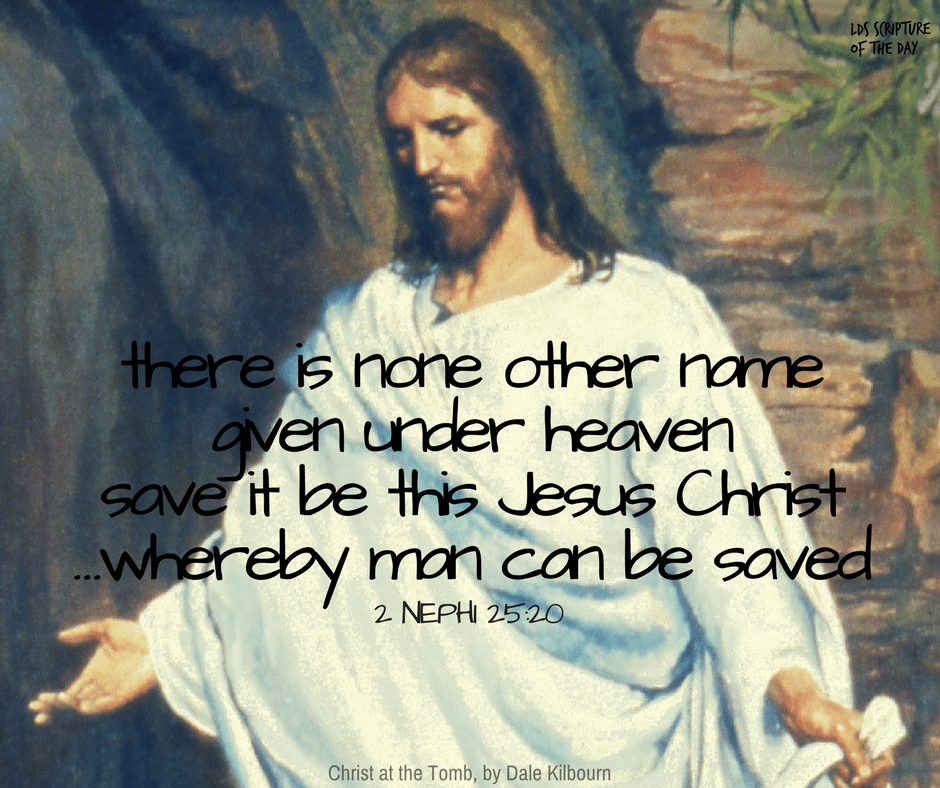
    One of my favorite scriptures of all time is 2 Nephi 25:26 which reads:

    And we talk of Christ, we rejoice in Christ, we preach of Christ, we prophesy of Christ, and we write according to our prophesies, that our children may know to what source they may look for a remission of their sins.”

    A common criticism that the Church of Jesus Christ of Latter-day Saints receives from other sects of Christianity, often Protestant groups, is that the Church teaches works as a form of salvation taking precedence over faith.

    As I read the Book of Mormon with this criticism in mind, I’m struck by how clearly the Book of Mormon teaches this principle – that faith in Jesus Christ is the most important thing.  The Church of Jesus Christ of Latter-day Saints is (as far as I know, open to correction) the only church with an explanation on how faith in Jesus Christ alone can result in being saved. 

    Saved, or immortality, is different from Eternal life and salvation.  All of God’s children who choose to be saved, will be saved, for He loves us all.  You can be saved by simply having faith in Jesus Christ, no works needed.  To attain all that the Father has to give, eternal life and salvation in His Kingdom for eternity, you must follow Him, and do what He asks of you.  For without works faith is dead (James 2:26).

    Sometimes I think the members of the Church of Jesus Christ of Latter-day Saints would be benefitted immensely by reading verses 26 and 27 of 2 Nephi chapter 25 every single day.  I think if we each did this, it would help us to re-orient ourselves and never lose sight of what is most important – faith in the Lord, or Savior, Jesus Christ. 

    The below scripture is what I am referring to in the title of this post.  This scripture is as important to latter-day saints today as it was to the ancient Jews:

    Wherefore, we speak concerning the law that our children may know the deadness of the law; and they, by knowing the deadness of the law, may look forward unto that life which is in Christ, and know for what end the law was given. And after the law is fulfilled in Christ, that they need not harden their hearts against him when the law ought to be done away.”

    2 Nephi 25:27

    I believe this scripture to be extremely important to latter-day saints.  The ancient Jews lost sight of Jesus Christ.  They looked to the law for salvation.

    I bear my testimony that I do not believe the Church of Jesus Christ of Latter-day Saints has lost sight of Jesus Christ.  His name is the name of our church, His prophet has implored us to use His name, our leaders preach of Jesus Christ, prophesy of Jesus Christ, teach of Jesus Christ, emphasize Jesus Christ.  The Church of Jesus Christ of Latter-day Saints points us to Jesus Christ.

    It is we, the members, I think, that need to read verse 27 often.  What is the law without Jesus Christ?  I fear that sometimes church members become focused on the wrong things.  Temple attendance for temple attendance’s sake.  Church service because it’s their duty.  Serving in church callings to keep up appearance as a faithful latter-day saint.  Partaking of the sacrament in a rote, mindless manner, not considering what it really means.

    I know I am at fault when it comes to some of the things I’ve just listed.  Sometimes I lose sight of Jesus Christ.  Sometimes I lose sight of what this is all really about.

    I’ve been back in church activity for 5 years now.  My first couple years of returned church activity were so Christ focused.  They were Christ focused because it was all I had.  He was all I had.  He was my strength, and He was everything.  I felt His forgiveness so potently because I’d so recently experienced it with such power.  As my church activity has steadied and become consistent, I’ve found myself relying on church activities, social events, friendships, and making my appearance as a faithful member.  These things aren’t necessarily bad, but they can be.  If they distract from Jesus Christ, they distract from the point.  If I get distracted from Jesus Christ, I am missing the mark.

    What is the law without faith in He who the law points to?

    I think we could all benefit from a consistent study of verse 2 Nephi 25:27.

    Why do we do what we do?  Is it for love?  Is it to serve Jesus Christ?  Is it to remember Jesus Christ, worship Jesus Christ, thank Jesus Christ?

    When is the last time you thought about all your sins and what Jesus Christ did for you at Gethsemane and on the cross?  For me, it’s been far too long since I’ve been brought to tears considering that event.  I’m glad I’m writing this because in doing exactly that, remembering what He’s done for me, and feeling it in my heart, tears are inevitable. 

    Remember why we go to church, the temple, and serve.  It’s for Him.  Not because we have to but because we want to.  Not because it will get us into heaven but because we love Him.  Salvation is through Jesus Christ.  If we go to the temple 5 days a week without Him in mind, we are wasting our time.

    Without Jesus Christ, all of it: temple worship, baptism, sacrament, service; it’s all for naught.  All these things point to Him.  Without Him as our focus all the items listed above are dead works.  

    This is the misconception of other faiths, that we go to the temple to substitute for Jesus Christ.  That couldn’t be farther from the truth.  We go to the temple because of Jesus Christ.

    I think every once in a while, it’s important we re-center our focus and remember what it’s all about.

    I hope and pray that we continue to steadfastly talk of Christ, rejoice in Christ, preach of Christ, prophesy of Christ, and bring others unto Christ, that we always remember to what source we may look for a remission of our sins.

  • Prodigal Son

    Prodigal Son

    The story of the Prodigal Son is well known.  For those who have not read it before or haven’t read it recently it can be found in Luke 15:11-32.

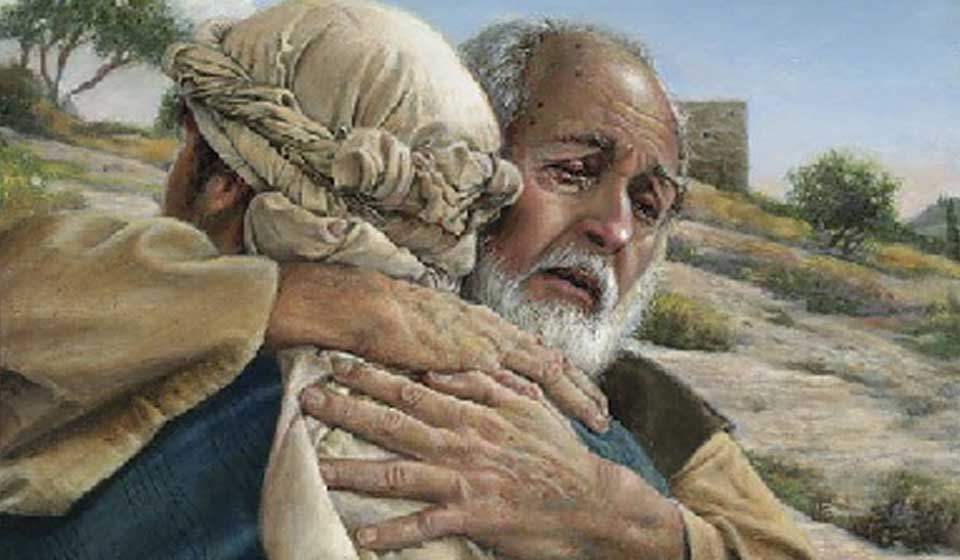
    The story of the Prodigal Son has always hit close to home for me.  Obviously, it’s easy for me to relate to the younger son.  You should read Luke chapter 15 above but a quick summary: there were two sons.  They will be referred to as the elder/older son and the younger son as I write.  The two sons were given their inheritances.  The younger son left his home and went to a faraway city.  There he squandered his inheritance on “riotous living.”  When he hit the lowest of lows, the younger son returned home to beg his father to allow him to be a servant.  The father, instead of showing anger, welcomed his son home, killed the fatted calf, put a robe on his son, gave him a ring, put shoes on his feet, and threw a huge party in celebration of his return.

    The older son, upon hearing of his brother’s return and the subsequent party, was angry.

    This story is often told in such a way that the primary lesson is about the Prodigal Son and his father’s reaction to his return. The story is called “the prodigal son” after all.  That lesson being that no matter how we stray, how far gone are, and how many mistakes we make our Heavenly Father (the father in the story) will always welcome us back.  In fact, Heavenly Father rejoices at our repentance:

    “I say unto you, that likewise joy shall be in heaven over one sinner that repenteth, more than over ninety and nine just persons, which need no repentance.”

    Luke 15:7

    All Prodigal Sons like myself rejoice at this story.

    I once heard a different perspective on this story, and I’d like to share it.  There is a great lesson to be learned in the story of the Prodigal Son by looking at a secondary character: the older brother.

    A great question to ask yourself before reading any of Christ’s parables is “who was He speaking to?”  Another good question is “What was He trying to teach?”  If you look at the parable from the perspective of the Prodigal Son, you can say Christ was teaching those who have sinned that they can always repent and return to the light of their Heavenly Father’s love.

    Who was Christ speaking to when he gave this parable? He was speaking to those looking for the message of God.   He was speaking to the listeners.  These were the ones looking for the message of God.  When giving this parable Christ was speaking to the saints.

    Consider what can be learned from the older brother.  The older brother never left.  The older brother never sinned.  The older brother respected and worked for his father.  Many say, and I always thought, he was justified in his reaction.  His exact words in verses 29 and 30:

    “And he answering said to his father, Lo, these many years do I serve thee, neither transgressed I at any time thy commandment: and yet thou never gavest me a kid (fatted calf), that I might make merry with my friends:

    But as soon as this thy son was come, which hath devoured thy living with harlots, thou hast killed for him the fatted calf.”

    This appears to be a natural reaction.  He had always been there.  He had always done right.  Only for his corrupt brother to return and receive honor.

    Why did the older son stay and work hard for his father?  Why did he keep his commandments?  Was he simply looking forward to the inheritance he was to receive?

    A Crucial Lesson from the Brother of the Prodigal Son « Meridian Magazine

    Why do you serve God and keep his commandments?  Are you looking forward to your mansion?  Do you serve God so you can inherit His glory?  Are you serving Him for YOUR benefit?

    We should serve God because we love God.  We should serve God because we love those around us.  Our service to God shouldn’t be for the blessings and honors He can give us.  Our hearts should serve for love and not for our inheritances.

    Jesus didn’t tell this story only to get sinners to repent.  He also told this story to get the saints to repent.  The Prodigal Son went out to experience life and disregarded his father’s possessions.  The older son on the other hand stuck around, but he was working to please his father.  He looked at himself as moral and worthy.  He was after his father’s possessions.  That’s what he concerned himself with.  The elder son was keeping score.  He was trying to earn his father’s love and inheritance.

    Sometimes we are like the Prodigal Son: sinning and needing to return home.  Sometimes we are like the older brother: serving for the glory of the world. 

    Often we are like the older son in our envy and jealousy.  When someone returns to the fold do we judge them for their past?  Or, like the father in the parable and our Heavenly Father, do we rejoice at someone’s return?

    Elder Holland in his talk, The Other Prodigal, said:

    “I testify that no one of us is less treasured or cherished of God than another.  I testify that He loves each of us-insecurities, anxieties, self-image, and all.  He doesn’t measure our talents or our looks; He doesn’t measure our profession or our possessions.  He cheers on every runner, calling out that the race is against sin, not against each other.  I know that if we will be faithful, there is a perfectly tailored robe of righteousness ready and waiting for everyone, “robes…made…white in the blood of the Lamb.”  May we encourage each other in our effort to win that prize is my earnest prayer.”

    Let us not compare our blessings to the blessings of others, what we have to the possessions of others.  Let us support and help each other to all return to our Heavenly Father.  Jealousy is of Satan.  We should never look down on somebody who made mistakes and is trying to return to God, because then we are the sinner.  We can learn from every character in Christ’s great parable.  Be like the Prodigal Son and repent, humble ourselves, and return home.  Be like the elder son and don’t envy but welcome our wayward brothers and sisters back home with joy and love.  And be like the father, loving all those around us, embracing the sinner and the saint alike.  I believe this is God’s hope for us and what Christ was teaching us through this story.

    __________________________

    Here is a link to Jeffery R. Holland’s talk, The Other Prodigal:

    https://www.churchofjesuschrist.org/study/general-conference/2002/04/the-other-prodigal?lang=eng