Tag: Savior

  • Jesus Christ

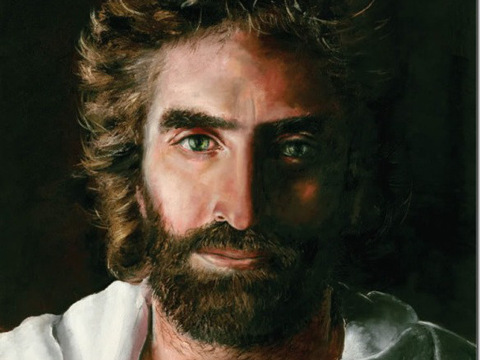
    Jesus Christ

    At church last week, we had an uplifting meeting focused on music. Ivy and Sage even participated, singing my new favorite song:

    That evening, the Church of Jesus Christ of Latter-day Saints hosted an interfaith concert. Beth and I took Ivy as a special treat for being such a big kid lately. It was a sufficiently uplifting Sunday.

    This is Holy Week.

    Latter-day Saint traditions haven’t normally had a big focus on Holy Week (not sure if that’s supposed to be capitalized…).. I don’t even really know what it means. The Church of Jesus Christ of Latter-day Saints has asked its members to have a little more focus on Easter this and recent years.

    I had a blog post already prepared for this week. I rarely stray from my plans. But during church on Sunday, a thought came to me:

    When was the last time I wrote a post completely focused on Jesus Christ?

    I hope my blog is Christ-centered. I think pretty much every post should have something to do with Him. But I realized I hadn’t given my simple testimony of Him in some time.

    I don’t have anything extraordinary to say since this wasn’t planned. Except that everything about Jesus Christ is extraordinary.

    This is my humble testimony and my small reminder to the world.

    Jesus Christ, under the direction of God the Father, created this Earth that we now reside on. He was our Brother. We were part of the council that decided to come to Earth.

    Jesus Christ was born to a virgin in Bethlehem. He was the Creator of this Earth. He could have been born anywhere. Instead of being born in a royal palace, He was born in a manger, amidst farm animals, in the humblest of circumstances.

    I marvel that He would descend from His throne divine
    To rescue a soul so rebellious and proud as mine,
    That He should extend His great love unto such as I,
    Sufficient to own, to redeem, and to justify.

    Jesus Christ lived and grew, just like us. He walked this Earth that He had created. Then He began to preach.

    Jesus Christ quickly amassed followers and a reputation for His powerful words, teachings, and miracles.

    Jesus Christ went to a garden called Gethsemane. There He began the process we now call the Atonement. 

    Atonement: Reparation for a wrong or injury.
    Atonement: the reconciliation of God and humankind through Jesus Christ.

    He paid for every sin. He paid for every wrongdoing. He felt every suffering, injustice, pain, sickness, heartache, loneliness, fear, hurt, and tear. He experienced it like it was His own. The sheer weight of this task made Him bleed from every pore in His body. A mortal body with an immortal soul. Our Brother.

    I stand all amazed at the love Jesus offers me,
    Confused at the grace that so fully He proffers me.
    I tremble to know that for me He was crucified,
    That for me, a sinner, He suffered, He bled and died.

    As if this weren’t enough, He allowed Himself to be arrested, spit upon, and beaten. He carried the cross that would be used to kill Him.

    He allowed Himself to be nailed to a cross. Nails through His feet. Nails through His hands. Nails through His wrists. 

    I think of His hands pierced and bleeding to pay the debt!
    Such mercy, such love and devotion can I forget?
    No, no, I will praise and adore at the mercy seat,
    Until at the glorified throne I kneel at His feet.

    He suffered and died so we could be reconciled to God. He suffered and died so we could one day go home with Him.

    Then the glorious, most fantastic, most amazing news the Earth had ever heard. Death isn’t the end.

    Three days after His death Jesus Christ raised up the body He allowed to die. 

    He keeps the nail marks in a resurrected and perfected body. Why? I ask my daughters this often. Why does Jesus Christ keep the marks of the nails in His perfect body? “To remind us that He always remembers us.”

    Oh, it is wonderful that He should care for me
    Enough to die for me!
    Oh, it is wonderful, wonderful to me!

    He lives.

    Our Savior. Our King.

  • The Ladder of the Atonement

    The Ladder of the Atonement

    When we came to earth and committed our first sin, knowing right and wrong, we fell. Coming to Earth was an inevitable fall. Why then did we shout for joy when the plan was laid forth and we were told we would be coming to Earth? Coming to Earth to fall below our current status, to fall into a pit, in a way. So why were we excited to enter this pit?

    Well, for a couple reasons. One reason would be that we would receive a body. Another reason was we knew we could become like our Father, who we loved and admired. All it required was this scary step.

    I think this might be why so many didn’t come to earth. We are told that one third of our brothers and sisters in heaven didn’t make the jump. They were content where they were at. Why fall and risk not getting back to the point they were already at? I think we see this mindset with a lot of people on earth now. Why push yourself? Why come out of your comfort zone? Why do difficult things? Why do anything for anyone else? What’s the point? The point is growth and progression. If we’re not growing we’re not doing anything.

    So, we fell into this pit called earth. And how were we supposed to get out? We would be stuck in a pit. We would need something completely out of our power and ability to save us. A ladder would need to be extended to us. And from this ladder we could ascend not only out of the pit and back to our original standing before we came to earth. We could ascend all the way to be like our Father, the one we admired and desperately wanted to be like.

    The Atonement is that ladder. From the pit, there was nothing we could do to attain this ladder. It was given to us by the grace of Jesus Christ alone. He brought the ladder, He did the hard work (bleeding from every pore, broken body) of carrying that ladder to us. Then He extended the ladder down.

    It was then up to us to decide if we wanted to use the ladder. God won’t ever force us to do anything. We would have to choose to use the ladder. We would have to choose to take step by step, rung by rung to come up to the level of our Savior, Jesus Christ. Again, without the ladder, we could do nothing. With the ladder, we could be like Him.

    What is the ladder? The ladder is faith in Jesus Christ and His Atoning sacrifice for our sins, for our fallen state. Every time we repent and try to be better, we are taking a step up the ladder Jesus Christ has provided us. Every step up the ladder is service and love. Every step up the ladder is trying to be like Jesus Christ, by using the ladder to get closer to Him.

  • Why can’t Anyone go in an LDS Temple?

    Why can’t Anyone go in an LDS Temple?

    In the Church of Jesus Christ of Latter-day Saints, our temples are sacred. Many people know this by the fact that they aren’t allowed in. This can, understandably, cause some negative emotions. Nobody likes to be excluded from anything.

    I heard an anecdote that really stuck with me.

    A man was telling a story about when he was a missionary and held Q&A sessions with local churches in the Bible Belt south. One of these sessions, a nice little elderly woman asked a not so nice question, “Why is your church exclusionary and doesn’t let people into your temples?”

    The man explained that he immediately realized this woman wasn’t able to attend the sealing of someone she cared about, which created this understandable animosity. He asked the old woman and learned she wasn’t able to attend the temple sealing of a beloved granddaughter.

    A somewhat standard response to this question is that it is about worthiness, that you must be worthy to enter the temple. Many Biblical examples can be used to illustrate this point.

    As the man was about to respond this way, he felt an impression to not give this standard response. He realized talking about worthiness wouldn’t be right with this woman. This was a Bible loving, Christ loving, Bible belt evangelical Christian. Telling her she wasn’t worthy wouldn’t be fair.

    Personally, I would have explained covenants in this moment. That one needs to make sacred covenants to enter certain places. This man received an altogether different impression, and this is the part that struck me.

    He asked her, “Do you believe that the Book of Mormon is the word of God.”

    She replied, “No offense, but no.”

    He asked her, “Do you believe this is Christ’s true church on the face of the earth?”

    She replied, “No offense, no, I don’t believe that.”

    He asked her, “Do you believe that Joseph Smith is a prophet?”

    She replied, “No offense, no.”

    Each time he told her he didn’t blame her for not believing it. That if it weren’t for the witness of the spirit to him, he wouldn’t believe it himself. He then asked her, “Do you believe that ancient prophets came to earth to bestow the keys of the sealing power to bind on earth what is bound in heaven as Matthew details in chapter 16?”

    She replied, “That’s in Matthew 16? I never thought of that. But no, I don’t believe that.”

    The man told her that’s OK, but he does believe all those things. Then he transitioned somewhere I did not expect, the story of Jairus’s daughter being raised from the dead (Mark 5:22-43, Luke 8:40-56).

    The man asked her if she knew the story and of course this avid Bible studier knew it.

    He directed her attention to the moment when Christ arrived at the home. The girl was dead. Those there mourning mocked Christ when He said she was just sleeping.

    Then what did Christ do?

    He “put them all out.”

    Christ had to remove all the lack of faith from the room. Christ, the Master. He let Peter, James, and John stay. He let the mother and the father stay. They had faith. He removed all those that didn’t believe.

    The man explained that when he goes to a temple, it’s not a marriage ceremony. It’s not until death do us part. Just like when Christ brought that girl back from the dead, telling death that it had no power before Him, the same is happening in temples. The priesthood power of temple sealing is telling death, “You can’t have this couple. This couple is protected. This couple is sealed. Even in death, death can not split them up. They are one. They are united.” It’s as if Christ Himself is saying, “They are mine, and you cannot have them.”

    That is what happens in Christ’s temples. Couples are sealed.

    The man then explained that when he attends a temple sealing, his faith becomes part of it. He contributes his faith to that couple. His provides his belief that they will be sealed for eternity.

    He then explained, “You admitted you don’t believe these things. Would you mingle your lack of belief in a place of faith? Would you have Christ keep the nonbelievers in the room to see the miracle?”

    Now, this isn’t the only reason people who aren’t members of the Church of Jesus Christ of Latter-day Saints can’t enter temples. Worthiness is a part of it. As I already mentioned, covenants are a part of it.

    But I loved this part I’d never thought about, faith is also part of it.

    I am grateful that God provided a plan and His Son so that I can be sealed to my family for eternity. I love my family. I never want to leave them. Now I look at Ivy, Sage, Beth. I can’t fathom a life without them. They are everything. I thank God every day for the sealing power and the gift He has allowed me to be sealed to them for time and all eternity.

  • Lehi’s Dream

    Lehi’s Dream

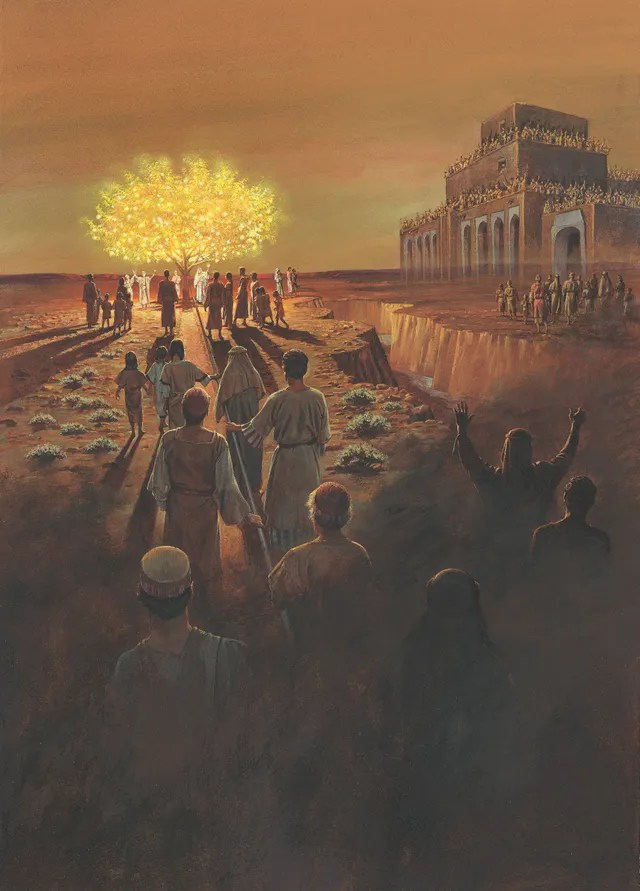
    Some thoughts I had while reading about Lehi’s dream. I will not relate every detail of the dream so for those who are unfamiliar, it can be read in 1 Nephi chapter 8.

    The first thing I noticed is the location where Lehi starts in his dream. The people he sees later all start at the head of a fountain of water. It could be this is where they started or this is where Lehi first sees them. What seems significant to me is this: Lehi is wandering blindly through the dark and dreary wilderness (verse 4). It is then that Lehi encounters a man dressed in a white robe who bade Lehi to follow (verses 5, 6).

    What I find significant is that later in the dream Lehi beckons Sam, Sariah, and Nephi, along with others, to come to the tree. Where is their man in a white robe? I think what we’re learning here is the significance of prophets in God’s plan. Lehi was led to the Tree of Life, the fruit, the gospel of Jesus Christ by a man in a white robe. Let’s assume the being in the white robe is Jesus Christ Himself (Sidenote: Let’s be clear, in Lehi’s dream I don’t know that the man in the white robe is necessarily Jesus Christ. It could be someone Christ sent like Gabriel or Adam to lead Lehi. But the principle stands and for simplicity, I’ll refer to the white-robed being as Christ). So, Christ leads Lehi to the gospel. It’s then that Lehi guides others there. Not to say that others don’t have a personal relationship with Jesus Christ, just that if we follow the guidance of and heed the prophet, he will guide us to the Gospel of Christ and keep us connected to the iron rod.

    The significance of a prophet is further illustrated by verse 8. Lehi doesn’t encounter Christ and immediately show up at the Tree. He “traveled for the space of many hours in darkness.” I think this represents the trials and tribulations Lehi had to go through. He was scorned, threatened death, and ultimately had to leave his home for his testimony of Christ. Prophets don’t become prophets overnight. They’re often the most persecuted among us. Then Lehi “began to pray unto the Lord that he would have mercy on me, according to the multitude of his tender mercies” (verse 8). It was when Lehi humbly cried out that he beheld “a tree, whose fruit was desirable to make one happy” (verse 10).

    Lehi is led to the gospel. In a way I think he is ordained a prophet in that moment. From there he beckons and leads others to the fruit.

    Another way this can be looked at is that anyone who leads others to the tree of life, like Lehi led his family, can be a type and shadow of Christ. If you are an example to someone of Christ-like love and lead someone to come closer to Jesus Christ, you are acting in the role of the white-robed person, or Jesus Christ. You become a Savior on Mount Zion.

    Another significant feature of Lehi’s dream is the river of water. It can become confusing what exactly the river of water represents if you read Lehi’s dream, then Nephi’s interpretation of it. In chapters 12 and 15 Nephi is clear, the water was filthy and represents the depths of hell (12:16). If you read 11:25 it reads, “the rod of iron…led to the fountain of living waters, or to the tree of life.” I think the significance here is the water is “living water” as it approaches the tree of life. As the water distances from the Tree of Life it becomes filthy. Therefore, at the head of the river, away from the Tree of Life, it was filthy and represented hell.

    Those in the great and spacious building mocked those who sought the Tree of Life. I think one interpretation could be that those in the building were products of ignorance. They knew no better. They were deceived by the “wisdom thereof, the pride of the world.” Laman and Lemuel can not plead ignorance. They had seen an angel (1 Nephi 3). Their father was a prophet. They started from a different point than someone who ended up in the great and spacious building. When Laman and Lemuel denied what they knew and denied all the light they’d been given, they were swept away. To whom much is given, much is required (Luke 12:48). “He who sins against the greater light shall receive the greater condemnation” (D&C 82:3).

    1 Nephi 12:18 “the large and spacious building…is the vain imaginations and the pride of the children of men. And a great and a terrible gulf divideth them; yea, even the word of the justice of the Eternal God, and the Messiah who is the Lamb of God.”

    The gulf that separates the people in the great and spacious building from the Tree of Life is their ignorance, not always of their own fault. Their upbringing might have brought them to the building. They may have been more easily deceived by Satan because of their upbringing and experiences. They may have started with an unfair disadvantage that made them unable to accept the gospel, “a terrible gulf” that made it too difficult to understand “the word of the justice of the Eternal God.” If they only understood how kind and loving their Father in Heaven is, or even that He is their Father, they likely wouldn’t laugh and scoff at those who embrace this great truth and find comfort from this truth.

    That’s why it’s so important that this message is shared with the world.

    This, I believe, is also why we must never judge others. We don’t know the experiences of others. It may be that if we were raised in a certain house, with a certain culture, with a certain understanding, with a certain life, with certain experiences, we would be just like the individual who scoffs at the Gospel. We don’t know the circumstances of someone else. We don’t know why they are the way they are. In their shoes, we may be no different. This is why it is to our greater condemnation to judge others. Don’t judge someone. You can’t comprehend all there is to know about them. Only one person can do that. He will rightfully and righteously judge them.

    Back to Laman and Lemuel and the filthy water that sweeps them away – as said, they are worse off. This is also why those who partake of the fruit and are brought to be ashamed by the scorn of the world “fell away into forbidden paths and were lost.” They didn’t make it to the spacious building. They were lost to wander forbidden paths. Once you’ve tasted the sweet truth of the Gospel of Jesus Christ there is no going back. You can try to go back to the world, but most find they are more lost than ever. There are so many examples of individuals who leave the church but can’t ever really leave it. They become lost, always seeking to find something to fill the void the Church of Jesus Christ left. They can’t fill the void so they end up attacking it.

    11:35 reads, “The multitude of the earth was gathered together; and I beheld that they were in a large and spacious building, like unto the building which my father saw. And the angel of the Lord spake unto me again, saying: Behold the world and the wisdom thereof; yea behold the house of Israel hath gathered together to fight against the twelve apostles of the Lamb.”

    Many of these people are deceived, and therefore they fight against God, unknowingly sometimes. The wisdom and pride of the world can be churches that look at the poor and needy and manipulate them. Or it can be individuals who look at any other church and scoff and mock. Oftentimes, these actions are done in the guise of defending God. More evil has been perpetuated under the guise of doing what’s right than just about anything. God needs us to defend Him by our kind actions and good examples, not by slandering, judging, or hating others. Many today of other faiths openly mock what they don’t realize is Christ’s true and living church. They have been deceived by the wisdom of the world. And in mocking “they never knew Him” (JST Matt. 7:33).

    These are just a few of my thoughts from Lehi’s dream of the Tree of Life. I feel there is so much to learn from this simple story. As with all things in the Book of Mormon, this points to Jesus Christ and helps point me in the direction of trying to be more like Him.

  • God Loves a Returned Sinner

    God Loves a Returned Sinner

    Luke 15:7 reads:

    “I say unto you, that likewise joy shall be in heaven over one sinner that repenteth, more than over ninety and nine just persons, which need no repentance.”

    Why does heaven rejoice over a returned sinner?

    Why does Christ love a returned sinner? This should be obvious. Christ loves a returned sinner because they’re utilizing His Atonement, the great gift He gave them. He suffered for that gift. Why wouldn’t He rejoice over it being used?

    It’s very important to point out that this doesn’t make the returned sinner any better than the constantly faithful. Do you think God is up there thinking, “you were always upright. Too bad you didn’t sin some more so I could have increased joy”? Of course not. God loves the consistently faithful. I think another important point here is that we’re all sinners. So, by this scripture we can know, that God loves all who repent of sins. We all sin.

    An individual from history who was a clear sinner, making evil choices, even if he didn’t realize it, was Paul. Paul ended up being one of the greatest missionaries ever but started as the greatest persecutor of the church. Paul received a miraculous visit from Jesus Christ. This converted him and he instantly changed his ways. As we read the scriptures, Paul’s change seems instant. But I believe there was a reason he had to travel blind for three days. I believe his change was actually slow and required a lot of humility.

    Paul became an obvious example of Luke 15:7, heaven rejoicing. Paul was such a go-getter of persecution; the Heavens must have been excited to have him on their team once he converted. Imagine how the angels rejoiced when Paul turned to the Lord because they now knew how ferocious he would be for the Lord.

    Peter can be seen as another example of someone who didn’t always make the right choices. Isn’t it amazing to read the New Testament and consider how flawed the individuals were who Christ chose to spread His word and be His ministers? Peter was no exception. You can look to Peter’s three denials of Christ as a great scriptural moment representing needing to learn a lesson, repent, and double down on conversion and commitment.

    Peter made a huge, and life-altering mistake by denying Christ those three times. It was life-altering for how it helped Peter change his life. It could have been life-altering in how it turned Peter away from Christ. He could have gone the other way. Christ knew He wouldn’t. That’s why Christ picked Peter.

    The show “The Chosen” does an interesting job of depicting Peter. What if Peter was kind of a bad guy? Not a bad heart, but did some bad things. A rough guy. A guy that made a lot of mistakes before he met Jesus and fell in as one of his apostles. Then, slowly, over much time around the Master, Peter became His primary apostle. Peter eventually became the president of Christ’s church.

    The student manual for the book of Mark notes:

    “Mark, more than the other Gospel writers, recorded the disciples’ shortcomings (see Mark 4:36-41; 6:52; 8:14-21). The disciples’ weaknesses stand in contrast to their greath faith and successes, which are depicted in the book of Acts, helping us appreciate the transformation brought about by the Resurrection and the outpouring of the Holy Ghost.”

    Never judge a sinner. They can become the most kind, most gentle, most Godly person. We all have Godhood in us. One day our sins will be in great contrast to our faith and successes when we ultimately attain our full potential.

    The Bible Dictionary definition of “conversion” states:

    Denotes changing one’s views, in a conscious acceptance of the will of God (emphasis added, Acts 3:19). If followed by continued faith in the Lord Jesus Christ, repentance, baptism in water for the remission of sins, and the reception of the Holy Ghost by the laying on of hands, conversion will become complete and will change a natural man into a sanctified, born again, purified person-a new creature in Christ Jesus (see 2 Cor. 5:17). Complete conversion comes after many trials and much testing (emphasis added, see Luke 22:32; D&C 112:12-13). To labor for the conversion of one’s self and others is a noble task, as in Ps. 51:13; Dan. 12:3; James 5:19-20; Alma 26; D&C 18:15-16.”

    The part that stood out to me most from that definition was that complete conversion comes after many trials. I know it did for me. I had to experience the bitter to appreciate the sweet. I had to see how dark life could feel to appreciate Christ’s light. I know my testimony is stronger because I had to learn how dark it can be.

    Did Peter experience his change through trials? Did Paul? I think they did. Those who go through the greatest trials and then turn to the Lord become his most devout followers. Paul was blind. That’s quite a trial. But when he saw the light, he never turned away from it again.

    We all don’t receive miraculous visitations from Jesus Christ like Paul did, or get to work with Christ side-by-side like Peter, but we can still feel His presence, serve Him, and feel what it’s like to have Him by our side. Imagine how different your actions would be day-to-day if Christ was with you? Well, He is.

    Sometimes I worry that faithful, day-one-never-wander latter-day saints are missing this. This devotion to the cause. This understanding of how much you need Him. It’s why trials happen. Otherwise, we’d all walk merrily through this life, never understanding the true depth of the Atonement and how desperately we need Him.

    Now, trials come in all shapes and sizes. Just because someone appears to never have gone through “it”, doesn’t mean they’ve never gone through it. We never know the internal struggles, challenges, and difficulties someone faces in their faith. It’s usually not on the outside. But if you see a devoted person to God, you can assume they’ve been through something. It’s those somethings that bring us to Him.

    God loves a returned sinner. Remember that whenever you make a mistake. While we don’t want to make mistakes, we always want to do our best, God will welcome us back with open arms when we make mistakes and repent. It’s a comforting thought whenever we mess up. God knows our heart. Part of making mistakes and repenting is truly regretting it. This doesn’t mean beating yourself up about it or getting too down on yourself, but it does mean truly feeling regret and remorse for mistakes. This can’t be faked. God knows your heart.

    I think we can learn something really neat from examples like Peter and Paul. No matter how far we stray, God has a place for us. God doesn’t look at what we’ve been or what we are, but what we will be. He knows what we will be. He sees that in us. I’d guess it’s His greatest desire that we see in ourselves what He already knows is there.

    Be like Peter and Paul. Be someone Christ can pick.

    God loves a returned sinner.