Tag: scripture

  • God Loves a Returned Sinner

    God Loves a Returned Sinner

    Luke 15:7 reads:

    “I say unto you, that likewise joy shall be in heaven over one sinner that repenteth, more than over ninety and nine just persons, which need no repentance.”

    Why does heaven rejoice over a returned sinner?

    Why does Christ love a returned sinner? This should be obvious. Christ loves a returned sinner because they’re utilizing His Atonement, the great gift He gave them. He suffered for that gift. Why wouldn’t He rejoice over it being used?

    It’s very important to point out that this doesn’t make the returned sinner any better than the constantly faithful. Do you think God is up there thinking, “you were always upright. Too bad you didn’t sin some more so I could have increased joy”? Of course not. God loves the consistently faithful. I think another important point here is that we’re all sinners. So, by this scripture we can know, that God loves all who repent of sins. We all sin.

    An individual from history who was a clear sinner, making evil choices, even if he didn’t realize it, was Paul. Paul ended up being one of the greatest missionaries ever but started as the greatest persecutor of the church. Paul received a miraculous visit from Jesus Christ. This converted him and he instantly changed his ways. As we read the scriptures, Paul’s change seems instant. But I believe there was a reason he had to travel blind for three days. I believe his change was actually slow and required a lot of humility.

    Paul became an obvious example of Luke 15:7, heaven rejoicing. Paul was such a go-getter of persecution; the Heavens must have been excited to have him on their team once he converted. Imagine how the angels rejoiced when Paul turned to the Lord because they now knew how ferocious he would be for the Lord.

    Peter can be seen as another example of someone who didn’t always make the right choices. Isn’t it amazing to read the New Testament and consider how flawed the individuals were who Christ chose to spread His word and be His ministers? Peter was no exception. You can look to Peter’s three denials of Christ as a great scriptural moment representing needing to learn a lesson, repent, and double down on conversion and commitment.

    Peter made a huge, and life-altering mistake by denying Christ those three times. It was life-altering for how it helped Peter change his life. It could have been life-altering in how it turned Peter away from Christ. He could have gone the other way. Christ knew He wouldn’t. That’s why Christ picked Peter.

    The show “The Chosen” does an interesting job of depicting Peter. What if Peter was kind of a bad guy? Not a bad heart, but did some bad things. A rough guy. A guy that made a lot of mistakes before he met Jesus and fell in as one of his apostles. Then, slowly, over much time around the Master, Peter became His primary apostle. Peter eventually became the president of Christ’s church.

    The student manual for the book of Mark notes:

    “Mark, more than the other Gospel writers, recorded the disciples’ shortcomings (see Mark 4:36-41; 6:52; 8:14-21). The disciples’ weaknesses stand in contrast to their greath faith and successes, which are depicted in the book of Acts, helping us appreciate the transformation brought about by the Resurrection and the outpouring of the Holy Ghost.”

    Never judge a sinner. They can become the most kind, most gentle, most Godly person. We all have Godhood in us. One day our sins will be in great contrast to our faith and successes when we ultimately attain our full potential.

    The Bible Dictionary definition of “conversion” states:

    Denotes changing one’s views, in a conscious acceptance of the will of God (emphasis added, Acts 3:19). If followed by continued faith in the Lord Jesus Christ, repentance, baptism in water for the remission of sins, and the reception of the Holy Ghost by the laying on of hands, conversion will become complete and will change a natural man into a sanctified, born again, purified person-a new creature in Christ Jesus (see 2 Cor. 5:17). Complete conversion comes after many trials and much testing (emphasis added, see Luke 22:32; D&C 112:12-13). To labor for the conversion of one’s self and others is a noble task, as in Ps. 51:13; Dan. 12:3; James 5:19-20; Alma 26; D&C 18:15-16.”

    The part that stood out to me most from that definition was that complete conversion comes after many trials. I know it did for me. I had to experience the bitter to appreciate the sweet. I had to see how dark life could feel to appreciate Christ’s light. I know my testimony is stronger because I had to learn how dark it can be.

    Did Peter experience his change through trials? Did Paul? I think they did. Those who go through the greatest trials and then turn to the Lord become his most devout followers. Paul was blind. That’s quite a trial. But when he saw the light, he never turned away from it again.

    We all don’t receive miraculous visitations from Jesus Christ like Paul did, or get to work with Christ side-by-side like Peter, but we can still feel His presence, serve Him, and feel what it’s like to have Him by our side. Imagine how different your actions would be day-to-day if Christ was with you? Well, He is.

    Sometimes I worry that faithful, day-one-never-wander latter-day saints are missing this. This devotion to the cause. This understanding of how much you need Him. It’s why trials happen. Otherwise, we’d all walk merrily through this life, never understanding the true depth of the Atonement and how desperately we need Him.

    Now, trials come in all shapes and sizes. Just because someone appears to never have gone through “it”, doesn’t mean they’ve never gone through it. We never know the internal struggles, challenges, and difficulties someone faces in their faith. It’s usually not on the outside. But if you see a devoted person to God, you can assume they’ve been through something. It’s those somethings that bring us to Him.

    God loves a returned sinner. Remember that whenever you make a mistake. While we don’t want to make mistakes, we always want to do our best, God will welcome us back with open arms when we make mistakes and repent. It’s a comforting thought whenever we mess up. God knows our heart. Part of making mistakes and repenting is truly regretting it. This doesn’t mean beating yourself up about it or getting too down on yourself, but it does mean truly feeling regret and remorse for mistakes. This can’t be faked. God knows your heart.

    I think we can learn something really neat from examples like Peter and Paul. No matter how far we stray, God has a place for us. God doesn’t look at what we’ve been or what we are, but what we will be. He knows what we will be. He sees that in us. I’d guess it’s His greatest desire that we see in ourselves what He already knows is there.

    Be like Peter and Paul. Be someone Christ can pick.

    God loves a returned sinner.

  • Are Women more Faithful than Men?

    Are Women more Faithful than Men?

    Why are women more faithful than men?

    I’ve often wondered this. Others may disagree, but in my experience, generally, it is true. Why is it that women are more faithful than men?

    There are countless examples of faithful men in the scriptures. There are also examples of faithful women in the scriptures, though less countless. Where the LDS church does have countless examples of women with great faith is in our pioneer stories. There are so many.

    Some of the examples of faithful women in the scriptures include Elizabeth, the mother of John the Baptist, Mary, the mother of Christ, and Mary Magdalene. I think often it is mothers that convert while fathers fight.

    From what I’ve seen today, in modern times, women have more faith than men. Women are more open to spiritual experiences.

    I think this is somewhat due to the “natural man.” In my opinion, man is much more natural than woman.

    I also think it has to do with Christ’s admonition, “be ye as little children” (Matthew 18:3).

    Don’t women possess more of the good qualities of children than most men? Women are generally more humble, meek, kind, caring, and gentle than men. I think few would disagree with this. Women possess more quantities of all the positive attributes of little children that most men lack. It doesn’t make men necessarily bad. I think it does create a gulf between us (males) and God, though.

    If men can learn to be what we are with a positive light, and attain the meekness and humility of little children, we draw closer to God. I think this is what the Priesthood is meant to help us to do. We are to learn to be humble with authority. Learn to be meek with power.

    What was Christ but complete humility with complete power?

    The Priesthood of God can not be wrought with unrighteous dominion (Doctrine and Covenants 121:37).

    We must be as little children. Meek and humble, and let our faith be as the women who surround us, who often far surpass our ability to trust, believe, hope, and have faith.

  • Suzerain and Vassal: The Father and the Son

    Suzerain and Vassal: The Father and the Son

    Mosiah 15:1-2 reads:

    1 And now Abinadi said unto them: I would that ye should understand that God himself shall come down among the children of men, and shall redeem his people.

    2 And because he dwelleth in flesh he shall be called the Son of God, and having subjected the flesh to the will of the Father, being the Father and the Son…

    How can Christ be both the father and the son? It’s a question that has troubled Christianity since before it was called Christianity. How can there be the one true God (Jehovah) and yet Jesus Christ (Jehovah) pray to His father who is in heaven?

    How can Christ be both the father and the son? Well, how are you, reading this a father (or mother) and a son (or daughter)? Sometimes we might overcomplicate the simplest things.

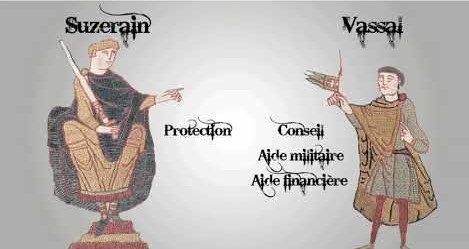
    In the ancient near east there existed a system wherein covenants could be made. That system could be described as a Suzerain Vassal covenant or treaty. In this sort of agreement one of the parties would be greater or more powerful than the other. The suzerain would be the powerful entity. The vassal would be the subservient, or lesser, or learning entity. In this sort of treaty, the vassal would pay tribute or show some form of loyalty to its suzerain. In return, the suzerain would provide protection or some other sort of benefit to its vassal. There could only be one suzerain/vassal connection. Meaning, a vassal couldn’t have two suzerains. This would basically be treason. You can only serve one lord.

    From this article on the suzerain/vassal covenant relationship:

    “The covenant Yahweh established with Israel at Mount Sinai exhibits striking parallels with Hittite suzerain/vassal treaties, which had six basic features: 1) a preamble that identifies the suzerain; 2) a historical prologue that recounts the previous relationship between the parties; 3) covenant stipulations to which the vassal must agree; 4) provisions for periodic reading and safekeeping of the covenant; 5) witnesses to the covenant; and 6) blessings and curses should the vassal either keep or fail to keep the covenant. The Sinaitic covenant contains all six of these characteristics.”

    In his book, The Last Days: Types and Shadows from the Bible and the Book of Mormon, Avraham Gileadi states:

    “the idea of Israel’s suzerain or Lord [Jehovah] assuming vassal or servant status in order to answer to his suzerain [God the Father] for his people’s rebelliousness introduces the concept of a God higher than Israel’s God. That is, Jehovah, the God of Israel, is a “Son” to God the “Father” (3 Nephi 11:7,11,32; compare 15:4-5). That concept does not appear explicitly in the Old Testament. Many Jews, therefore, insist that God is but “one” (Hebrew ehad; Deuteronomy 6:4); other than the Lord, they assume, no God exists (see Isaiah 44:6,8; 45:21-22). However, the idea of “the Father” and “the Son” makes perfect sense in light of ancient Near Eastern suzerain (Lord)–vassal (servant) covenant relationships.

         “Abinadi (and every prophet who teaches God’s redemption of humanity) here enlightens us. Abinadi says that God, who redeems his people, is both “the Father and the Son” (Mosiah 15:1-3; compare Alma 11;38-39; Ether 3:14). That abstruse statement seems at first glance to contradict the careful distinction between the Father and the Son that other scriptures teach. But when viewed from the ancient Near Eastern suzerain (lord)–vassal (servant) covenant relationship, we gain insight on how the Lord can serve as a suzerain or Father to his people Israel, but also can serve as a vassal or Son to his Father or suzerain. To Israel, the Lord is Father, and they become his sons or vassals. To God the Father, the Lord is the Son, subjecting his will to the Father in order to merit Israel’s salvation (Mosiah 15:2,7).

         “Moreover, as the literal and loyal Son of a divine Father–as the Son of a righteous [covenant suzerain “Father”]–the Lord is not subject to death unless he himself consents to die (See the type of Isaac’s consenting to let Abraham sacrifice him–Genesis 22:9) Even if he does die, the Father must come to the aid of his vassal and deliver his Son from death. In ancient Near Eastern literatures there is the concept of the god who dies only to revive and assume the throne of a senior deity. Thus “God breaketh he bands of death . . . giving the Son power to make intercession for the children of men” (Mosiah 15:8). What the Father does for the Son, the Son does for his sons and daughters: when “the Son reigneth, and hath power over the dead . . . he bringeth to pass the resurrection of the dead” (Mosiah 15:20).

         “Moreover, the moment one introduces the idea of the Father and the Son, one also introduces the concept of spiritual progression. That constitutes as much a part of the “good news,” or gospel, as does redemption from death itself (see Mosiah 15:10-19). Inherent in a Father/suzerain–Son/vassal relationship with God is the assuming of divine attributes–becoming God-like…”

    So we see that this Near Eastern tradition of suzerain and vassal treaties and covenants perfectly aligns with how we relate to Jesus Christ. He is our suzerain, making us His children. God is His suzerain. Through our covenant relationship with Christ, we receive protection from both Christ and His Father and our Father, God the Father.

    Another interesting thought from that note is how Christ conquered death. It was by His relationship with the Father that He was able to conquer death. He in turn allows us the same opportunity when we link ourselves to His will and power. Christ received His divine identity from His Father. We can receive our divine identity through Jesus Christ’s Atonement and conquering of death. This is why we only come to the Father through the Son. Christ is our protector, our Suzerain. As we serve Him, we receive that protection as His vassals.

    In addition, another way that Christ is our father is through the resurrection. It is due to Christ’s atonement and resurrection that we are able to be resurrected. This makes Christ the father of our bodies. For we wouldn’t have our bodies without His resurrection and the gift that we can be resurrected into our bodies. God the Father is still the father of our spirits. Whether that be through adoption, some measure of creation, or some other way, we’ll one day know.

    A last note I wanted to make that I liked from this article:

    “The basis of the covenant was Yahweh’s gracious acts toward Israel, not their obedience to him.”

    Our covenant relationship with Christ is a reminder that His grace saves us. It doesn’t matter how obedient we are. We needed His grace to save us. As our Suzerain, His covenant with us is based so much more on how He loves us and all He is willing to do for us than anything we can do for Him. We can never properly repay Christ for all He’s done for us. He is the Suzerain. He has the power to save us.

    This is the good news of the Gospel. Because Christ conquered all, we can become like Him, and in turn, become like our Father in Heaven.

  • Forgiveness

    Forgiveness

    Forgiveness can be so hard. There’s a reason Christ emphasized it so differently from normal human traditions. Human thinking is, “I can’t forgive them that many times.” God’s response is, “how many times have I forgiven you?”

    That point is brought home in Matthew chapter 18. In verses 21-23, Peter asks that question we’re all tempted to ask. How many times must I forgive? Seven? Surely seven is good. It’s 4 more times than the Hebrew law dictated at the time. Christ’s famous response,

    “I say not unto thee, until seven times; but, until seventy times seven.”

    Christ expounded upon this with the parable of the servant who owed a king a large sum. When brought forward to pay the sizeable debt, the servant fell down before the king and begged for patience. In great mercy, the king waived the debt.

    That same servant then went out and grabbed another servant, demanding that a tiny amount be paid back. The second servant asked for patience and the same servant who had just been shown so much mercy had the second servant thrown into prison.

    When the king heard this he “was wroth, and delivered him to the tormentors, till he should pay all that was due to him” (Matthew 18:34).

    It seems so easy here on earth not to forgive others. What does it hurt us to not forgive? How does that person who wronged me deserve my forgiveness?There is a story from the book Return from Tomorrow. A holocaust survivor is found in a concentration camp. When he is liberated by the soldiers, he is put to work helping with the sick and dying around him. He is energetic and relatively healthy. The soldiers finally say to him, “you must have been lucky. You haven’t been here long, huh?” The man tells them how many years he’d been at the concentration camp; a long time. They marvel at his health. How can it be?

    The man tells them that early in the war, his wife and children were murdered before his eyes. He desperately wanted to hate these men, hate this war, hate this world, hate God. He had every reason to. But, the survivor made a decision. He decided he would not carry that hate with him. He decided he wouldn’t poison himself with hate. Forgiveness saved his life.

    Elder David E. Sorensen said, “When someone has hurt us or those we care about, that pain can almost be overwhelming. It can feel as if the pain or the injustice is the most important thing in the world and that we have no choice but to seek vengeance. But Christ, the Prince of Peace, teaches us a better way. It can be very difficult to forgive someone the harm they’ve done us, but when we do, we open ourselves up to a better future. No longer does someone else’s wrongdoing control our course. When we forgive others, it frees us to choose how we will live our own lives. Forgiveness means that problems of the past no longer dictate our destinies, and we can focus on the future with God’s love in our hearts.”

    We may think not forgiving others is harmless, but hate is poison. Holding onto grievances and refusing to forgive only poisons ourselves.

    In the book, Surprised by Hope, N. T. Wright said: “If you lock up the piano because you don’t want to play to somebody else, how can God play to you?“

    Reading back on the story of the king and the foolish servant who would be forgiven his great debt then demand payment from another. We read that and scoff at the hypocrisy. Yet we all have this same hypocrisy in us. And God is our king, having forgiven us all, and wroth when we can’t extend the same favor to our fellow brothers and sisters.

    Verse 35 concludes that story:

    So likewise shall my heavenly Father do also unto you, if ye from your hearts forgive not every one his brother their trespasses.

    Going along with what Elder Sorensen said, from this link: “I think it is helpful to recognize that offences and injuries are always bottled in our past. So, forgiveness requires us to deal with our past – not our present or future. We have to let go of our past in order to fill up the present and bless the future. When we fail to deal properly with our past, we are like someone whose elastic belt is caught on a barbed wire fence; we can make very little forward progress until we unhook ourselves from our pain and injustice in our past.”

    That quote is perfect in explaining how that man from the concentration camp survived. That man, if he hated, would have been stuck in the past, attached to a barbed wire. Never being able to progress to his future. Instead, he chose to forgive, free himself, and save himself. That is the true power of forgiveness.

    We have all been wronged. We have all wronged others. Some of us have been wronged worse than others. But life isn’t a ledger book. Life isn’t a tally of who has been wronged the most. There is always someone that has been wronged worse than you have. The book The Shack talks about this eternal idea of “being wronged.” If you refuse to forgive someone, and that someone refuses to forgive their father who made them that way, and their father refuses to forgive his father who made him that way: on and on for eternity. Grievances go back to the beginning of time. Forgiveness ends the vicious cycle of hate. 

    Forgive our trespasses as we forgive those who trespass against us.

    There was a point in my life when I realized I’d been carrying around poison for far too long. There was a day I realized I had to forgive some people from my past so that I could move forward. I reached out to some people I hadn’t spoken to for so long. It helped me. I felt that feeling, of getting a weight off your shoulders. For me, it was more a feeling of getting poison out of my system. I thought I’d forgiven. It wasn’t until I actually said it, to the person that needed to hear it, and apologized for my part in pain that was caused, that I realized the burden I’d been carrying for so long.

    We all must forgive.

    Again, I know that sometimes such heinous wrongs are committed that some people feel they have the right to shout, “But I’ve never hurt someone like they hurt me!”

    In those moments think about the person from the concentration camp who refused to hate. He chose to forgive. It saved his life. He had more reason to hate than just about anyone ever has. He chose not to. There’s always someone that deserves to hate more. Choose to love instead.

    Let go of the hate you harbor and forgive. Do you want to come before God and Him to ask, “how can I forgive you, when you never forgave?”

    We all do wrong, and we all get wronged. Remove yourself from the past and progress.

    A forgiveness post would be lacking if it didn’t mention where all forgiveness originates. Always remember, there is only one person who can truly break the vicious cycle of pain and hate. Jesus Christ is the ultimate giver of grace and mercy. If you feel you truly can’t forgive, lean on Him. He felt the pain, He felt all of it, and He has forgiven us. He’s forgiven all of us. He died so that we can experience the true feeling of freedom that He allows. His blood paid our debt, all of it. As we rely on Him, we will find the forgiveness our hearts desperately need.

  • The Life Beyond

    The Life Beyond

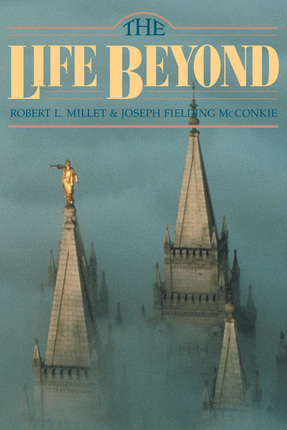
    The Life Beyond by Robert L. Millett and Joseph Fielding McConkie Copyright 1986.

    I recently was asked by two friends who have different religious beliefs from me, what do you believe happens to a person when they die?

    This is the great question right?  One of the 3 great questions.

    1. Where did I come from?
    2. Why I am I here?
    3. Where am I going?

    What a world we’d live in if every conversation we ever had started with that question:

    Hi, my name is Brayden.  Say, what do you think happens to us when we die?

    Wouldn’t that be great!  Less discussion about politics, sports, and tv.  What amazing conversations could come about from that question.

    It amazes me how many people in the world float through life without knowing any sort of answer to these questions.  It’s no wonder we’re in a world that seems untethered from any understanding, sense of reality, or sense of meaning.  What’s worse than all those who don’t know the answer to these questions is those that don’t even ask the question.  It baffles my mind that so many live on this earth, day by day, moment by moment, without daily stopping to ponder: why am I here?

    I believe the reason for this attitude by many people and much of society is due to a feeling that there is no answer.  No one can know so why ask?  I believe every person has asked these questions at some point.  They eventually determine it’s unknowable and move on.  I believe this cuts us off from growth.  How can we grow to our full potential if we have no understanding of our true potential?  How can we reach our true potential if we believe this whole life is for no purpose or reason?  How can we reach our full potential if we don’t even know if there’s something after all this?  In that case, what’s the point?

    That’s why when this question comes up I internally jump for joy.  I know many skeptics, doubters – ye with little faith – still say, “you can’t really know.”  I don’t care.  I know!  I know where I come from.  I know why I’m here.  I know where I’m going.

    It’s one of my greatest wishes that every person on this earth knew the same.  I believe it would make people happier.  I believe it would make the world a better place.  It’s why I’m writing this.  To share what I know.

    The Life Beyond is a book I recently finished by one of my favorite scholars.  Robert Millet was a panelist on the youtube video series I’ve used to study the lectures on faith.  I’ve seen Joseph Fielding McConkie on many of the books I intend to read.

    This book details everything we know about The Life Beyond.  Through scripture, modern revelation, prophets, and all other light and knowledge we’ve received, they go into great detail about what happens after we die.

    Could there be a more important book?

    Can you believe this book exists?  Can you believe you’re not reading it right now?

    Hundreds of millions stumble around in darkness, with fear of death and wonderment about life.  Here is scripture, from God, light and knowledge, revelation, that answers the most important questions in this life.

    For those with little understanding of the Gospel of Jesus Christ, this book would be like feeding a steak to a newborn.  Milk before meat.  I understand that.  Still, why isn’t everyone reading it?  If anyone reading this has ever asked, why am I here?  I invite you to read this book.  Then ask questions.  It can change your life.

    To conclude I’ll share one excerpt from the book that I enjoyed. 

    “The Family Unit Beyond the Veil

    Paul said, ‘I bow my knees,’ as do we all, ‘unto the Father of our Lord Jesus Christ, of whom the whole family in heaven and earth is named” (Ephesians 3:14-15).  In a manifestation to Brigham Young after his death, Joseph Smith told his successor to be sure to instruct the Saints to keep the Spirit of the Lord, promising that if they would do so, ‘they will find themselves just as they were organized by our Father in Heaven before they came into the world.  Our Father in Heaven organized the human family, but they are all disorganized and in confusion.’  Brigham also said that Joseph showed him the pattern, ‘how they were in the beginning.’  He said that he could not describe it but that there must yet be ‘a perfect chain from Father Adam to his latest posterity.’

    During an illness, Jedediah M. Grant visited the spirit world two nights in succession.  He reported a perfect order and government that existed there, saying that the ‘righteous gathered together,’ that there were ‘no wicked spirits among them,’ and that they were ‘organized in family capacities.’  ‘To my astonishment,’ he said, ‘when I looked at families, there was a deficiency in some, there was a lack, for I saw families that would not be permitted to come and dwell together, because they had not honored their calling here.’” (Emphasis added)

    What a marvel it is we have these truths and how lucky we are.  May we all fulfill our callings here, and start by asking, why am I here?