I was listening to the story of a guy who was riding his motorcycle 140mph when he lost control and crashed. His body skidded across the pavement at an unknowable speed when he hit a pole. I won’t go into the details of his injuries or how he survived. I’ll only say that he survived, and his injuries were extensive. He’s missing parts of his body, can’t use the restroom, his body is destroyed.
This led me to a thought: was it a sin for him to drive his motorcycle at that ridiculous speed?
What separates sin and stupidity?
Let’s break down that first question a little more, was it a sin to drive a motorcycle at an unsafe speed? Is it a sin to break the speed limit? Is it a sin to break a law? The answer is no, it is not necessarily a sin to break the law. Men and governments make laws and men and governments are corrupt. I could elaborate on this, but I think we all agree. There were some “laws” in WW2 Germany that were evil. Enough said there.
So it wasn’t a sin to speed on a motorcycle.
But was it stupid?
I think the answer is a resounding YES. It was stupid to drive a motorcycle at 140mph.
Was it a sin to put his body, a gift from God, in such a dangerous position? His decisions that led to destroying a gift from God, were those sinful decisions?
When I had my ATV accident was I sinning? No, I don’t think I was…and yet… Yet, was it stupid to be on an ATV without a helmet? In hindsight, of course. Most would say of course even without hindsight.
Is it a sin to do something stupid, knowing it’s stupid, and not caring? I don’t know… I think I knew it was stupid to ride on an ATV without a helmet, and I still did it. Am I stupid or was I sinning? Or both?
I return to the question, was it a sin for someone to make decisions that he knew were dangerous and ultimately led to destroying a gift from God?
I think the answer is no. I think that’s the answer because he didn’t know he was going to destroy his body and that wasn’t ultimately his goal. I didn’t know not wearing a helmet that day would actually risk my life, even if I knew there was a chance, I didn’t know it would flip and I would get seriously injured.
Here’s where an important line is drawn. Sin is knowingly doing something wrong, knowing that what one is doing is wrong, and still doing it. Sin is conscious, intentional wrongdoing.
An interesting point to make is that sin is always stupid. This is true on so many levels. Sin is knowing an all-loving Father who only wants your best has advised you of something, and you ignore it, whether due to a belief that you know more than Him or simple disobedience. This assumes a person understands that God loves them and wants the best for them. If the person doesn’t understand that, it makes their decisions less likely to be sins. This is where the principle of: with added light and knowledge comes added responsibility, comes in. More light and knowledge means more awareness of how decisions are sins.
I believe this is why some in the church feel an overwhelming feeling of guilt that they often blame the church for. Blaming the church is kind of like blaming God. They are mad that they know what they’re doing is wrong, they still want to do it, and this causes a conflict in their soul. This is why many might leave the church.
Back to the topic.
Stupidity is not always sin.
This led me to thinking more about sin. Sin is always stupid. No matter what, sin is stupid. Sin leads to hurting yourself or others in some way.
Stupid decisions aren’t necessarily sins. Sins are always stupid decisions.
This is why God has given us this life. It’s a training ground. It’s a chance to prove ourselves worthy of more. If we can’t handle the trials and challenges of this testing ground, how can we be trusted with more in eternity?
I’m grateful for the life and the opportunity it gives me to be tested, with less at stake. My soul is safe because it is in the hands of Christ. All my mistakes will be paid for by Christ, they have been paid for. I just need to turn to Him. I’m immensely grateful for that.
Before I share this, I will state the obvious. Hitler the man did heinous, horrible acts. He caused as much pain and heartache as any soul ever has on this earth. In writing this silly thought experiment I in no way intend to make light of the horrible choices of others. I believe I will have a hard time forgiving some of the acts I see during life reviews at the great judgment. Forgiveness, thankfully, won’t be for me to decide. I don’t know who will be forgiven for what. I know some will need to ask for forgiveness and likely won’t. I know some will receive forgiveness that we can’t comprehend. I trust in God. Now onto my silly post. Please don’t take the main character too seriously.
I had a thought while I was in the shower, and it stemmed from this question – will Hitler be forgiven? The mere mention of the idea is enough to get me canceled.
The beauty of the plan of salvation and something only the Church of Jesus Christ proposes an answer to, is that God will save all His children and how that could be accomplished.
The thought I had in answer to this question was – maybe Hitler will be forgiven, only God knows. If someone like Hitler could be forgiven, what change would need to take place in a soul like that for that to happen?
We see momentous changes in mortality. We can see transformations over small courses of time. Think of someone you’ve seen change over the course of 5, 10, or 50 years. A lot of changes can happen to a spirit over the course of 50 years. Now imagine 1000, 5000, and 10,000 years. How about 3 billion years? Those numbers are hard to imagine. What amount of change could happen in a millennium? A lot, I imagine.
On the other hand, that amount of time can also show the great weaknesses of a character. A lot of change can happen in a billion years and if there are any flaws in character, cracks become gulfs. Eternity is a long time so luckily we have a long time to change. But if we aren’t working toward perfection, our flaws will grow.
I have read comments in near-death experiences about the malleability of the soul during mortality compared to after death. I’ve read analogies that compare the soul while here on earth to wet cement while the soul post-death being like settled cement. I believe that’s what makes mortality so critical. Our lack of knowledge and need for faith one way or the other, in a way I don’t understand, allows us to change in ways not possible once this life is over.
The beauty of the plan of salvation is that God will save all His children that want to be saved. That’s the critical part. The desire to be saved. That’s also something becoming increasingly scarce in our society, the ability to forgive.
Christ and God will know and understand all, and they will be forgiving beyond all measure.
Which leads to the question, if we’re going to use Hitler as our abstract understanding of evil: will Hitler want to be saved? Will Hitler want to stand before God and Jesus Christ, Jesus Christ, the one who had to suffer for Hitler’s sins, who had to suffer for all the pain Hitler caused? Will Hitler want to stand before Jesus Christ? Will he have the humility to seek that forgiveness? If the evils of Satan touched his heart and soul as deeply as they seemed to – desire for power, hate, etc., will Hitler want to stand before them?
Will Satan want to be forgiven? No. He won’t. Envy, evil, and hatred have poisoned his once angelic soul (Isaiah 14:12).
No one can be forgiven if they willingly continue to deny Christ and ”crucify” Him anew.
Will Hitler have the humility to bow before Christ and beg His forgiveness?
I can’t imagine that level of change. It’s hard for me to picture that from someone who did such horrible things and strayed so far from the light. That is millenniums of change which is change my mind can’t fathom.
What I also can’t imagine is how I can ever be made perfect. Me, with all my flaws, judgements, unkindnesses, shortcomings, deceits, greed, and selfishness. How can I be made perfect? I believe it will take a long time.
Maybe Hitler will change and be forgiven for his sins. I believe if that’s possible it will take time.
If we love the gospel plan and Heavenly Father and Jesus Christ’s ability to forgive us for our mistakes, we have to accept that they will forgive others too.
The gospel plan is beautiful. For one and all.
None of us deserve the redeeming love and a sacrifice willingly given of a God. Jesus Christ, spit upon and bleeding, shed his mortal blood and gave up his immortal spirit so we can live again. I am grateful for what He did for me and I recognize every day that I don’t deserve it. It makes me love Him all the more.
Forgiveness isn’t something that should be taken lightly. It is serious.
But when I stand before Him, and I humbly kneel, I believe He will forgive me. And for that moment, I’ll give anything.
“I say unto you, that likewise joy shall be in heaven over one sinner that repenteth, more than over ninety and nine just persons, which need no repentance.”
Why does heaven rejoice over a returned sinner?
Why does Christ love a returned sinner? This should be obvious. Christ loves a returned sinner because they’re utilizing His Atonement, the great gift He gave them. He suffered for that gift. Why wouldn’t He rejoice over it being used?
It’s very important to point out that this doesn’t make the returned sinner any better than the constantly faithful. Do you think God is up there thinking, “you were always upright. Too bad you didn’t sin some more so I could have increased joy”? Of course not. God loves the consistently faithful. I think another important point here is that we’re all sinners. So, by this scripture we can know, that God loves all who repent of sins. We all sin.
An individual from history who was a clear sinner, making evil choices, even if he didn’t realize it, was Paul. Paul ended up being one of the greatest missionaries ever but started as the greatest persecutor of the church. Paul received a miraculous visit from Jesus Christ. This converted him and he instantly changed his ways. As we read the scriptures, Paul’s change seems instant. But I believe there was a reason he had to travel blind for three days. I believe his change was actually slow and required a lot of humility.
Paul became an obvious example of Luke 15:7, heaven rejoicing. Paul was such a go-getter of persecution; the Heavens must have been excited to have him on their team once he converted. Imagine how the angels rejoiced when Paul turned to the Lord because they now knew how ferocious he would be for the Lord.
Peter can be seen as another example of someone who didn’t always make the right choices. Isn’t it amazing to read the New Testament and consider how flawed the individuals were who Christ chose to spread His word and be His ministers? Peter was no exception. You can look to Peter’s three denials of Christ as a great scriptural moment representing needing to learn a lesson, repent, and double down on conversion and commitment.
Peter made a huge, and life-altering mistake by denying Christ those three times. It was life-altering for how it helped Peter change his life. It could have been life-altering in how it turned Peter away from Christ. He could have gone the other way. Christ knew He wouldn’t. That’s why Christ picked Peter.
The show “The Chosen” does an interesting job of depicting Peter. What if Peter was kind of a bad guy? Not a bad heart, but did some bad things. A rough guy. A guy that made a lot of mistakes before he met Jesus and fell in as one of his apostles. Then, slowly, over much time around the Master, Peter became His primary apostle. Peter eventually became the president of Christ’s church.
The student manual for the book of Mark notes:
“Mark, more than the other Gospel writers, recorded the disciples’ shortcomings (see Mark 4:36-41; 6:52; 8:14-21). The disciples’ weaknesses stand in contrast to their greath faith and successes, which are depicted in the book of Acts, helping us appreciate the transformation brought about by the Resurrection and the outpouring of the Holy Ghost.”
Never judge a sinner. They can become the most kind, most gentle, most Godly person. We all have Godhood in us. One day our sins will be in great contrast to our faith and successes when we ultimately attain our full potential.
The Bible Dictionary definition of “conversion” states:
“Denotes changing one’s views, in a conscious acceptance of the will of God (emphasis added, Acts 3:19). If followed by continued faith in the Lord Jesus Christ, repentance, baptism in water for the remission of sins, and the reception of the Holy Ghost by the laying on of hands, conversion will become complete and will change a natural man into a sanctified, born again, purified person-a new creature in Christ Jesus (see 2 Cor. 5:17). Complete conversion comes after many trials and much testing (emphasis added, see Luke 22:32; D&C 112:12-13). To labor for the conversion of one’s self and others is a noble task, as in Ps. 51:13; Dan. 12:3; James 5:19-20; Alma 26; D&C 18:15-16.”
The part that stood out to me most from that definition was that complete conversion comes after many trials. I know it did for me. I had to experience the bitter to appreciate the sweet. I had to see how dark life could feel to appreciate Christ’s light. I know my testimony is stronger because I had to learn how dark it can be.
Did Peter experience his change through trials? Did Paul? I think they did. Those who go through the greatest trials and then turn to the Lord become his most devout followers. Paul was blind. That’s quite a trial. But when he saw the light, he never turned away from it again.
We all don’t receive miraculous visitations from Jesus Christ like Paul did, or get to work with Christ side-by-side like Peter, but we can still feel His presence, serve Him, and feel what it’s like to have Him by our side. Imagine how different your actions would be day-to-day if Christ was with you? Well, He is.
Sometimes I worry that faithful, day-one-never-wander latter-day saints are missing this. This devotion to the cause. This understanding of how much you need Him. It’s why trials happen. Otherwise, we’d all walk merrily through this life, never understanding the true depth of the Atonement and how desperately we need Him.
Now, trials come in all shapes and sizes. Just because someone appears to never have gone through “it”, doesn’t mean they’ve never gone through it. We never know the internal struggles, challenges, and difficulties someone faces in their faith. It’s usually not on the outside. But if you see a devoted person to God, you can assume they’ve been through something. It’s those somethings that bring us to Him.
God loves a returned sinner. Remember that whenever you make a mistake. While we don’t want to make mistakes, we always want to do our best, God will welcome us back with open arms when we make mistakes and repent. It’s a comforting thought whenever we mess up. God knows our heart. Part of making mistakes and repenting is truly regretting it. This doesn’t mean beating yourself up about it or getting too down on yourself, but it does mean truly feeling regret and remorse for mistakes. This can’t be faked. God knows your heart.
I think we can learn something really neat from examples like Peter and Paul. No matter how far we stray, God has a place for us. God doesn’t look at what we’ve been or what we are, but what we will be. He knows what we will be. He sees that in us. I’d guess it’s His greatest desire that we see in ourselves what He already knows is there.
Be like Peter and Paul. Be someone Christ can pick.
I’ve heard of the “Adam-God Theory” but never looked into it. Until recently, I really didn’t know what exactly it referred to. Here is my research into the Adam-God theory for those interested and especially for those who may have concerns about this theory and its history in the restored Church of Jesus Christ.
Before I begin, almost all my thoughts come from this link:
It was a great resource on this topic and I recommend it if you want to learn more.
If you want a quick, short video that sums up the whole history of the Adam-God theory, watch this video:
Now, my thoughts.
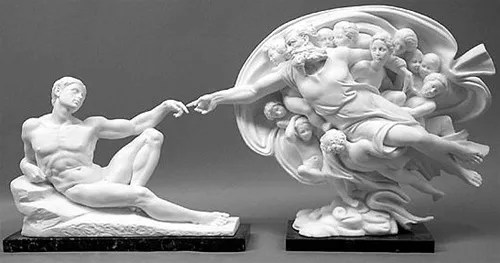
The Adam-God theory is the theory that Adam and God the Father are the same person. This theory was mentioned by Brigham Young.
First – Adam is not God the Father. Adam is not who we pray to. This does not fit the teachings of the scriptures, does not fit modern revelation, is not a doctrine of the restored gospel. So why are we talking about it, you ask?
Second – Yes, Brigham Young did make some bold statements about Adam being God. He also made countless statements contradicting that statement. Brigham Young was a convert and a prophet. Try to imagine the dichotomy of those positions. Try to imagine someone a few years into the faith trying to lead the entire church. Is it so shocking that there were erroneous statements made, especially when we consider and understand the personality and boldness of the prophet who led the saints across the rugged wilderness of the West?
Third – Because Brigham Young made incorrect statements does not mean he was a false prophet. It means he was learning line upon line, and he made false statements. He has made statements to try to help us, the people of the church, reconcile some of his more questionable comments. For example, when speaking generally about who Adam was and proposing some thoughts about Adam, Brigham started by saying, “I propose to speak upon a subject that does not immediately concern yours or my welfare….I do not pretend to say that the items of doctrine and ideas I shall advance are necessary for the people to know, or that they should give themselves any trouble about them whatever.. (Brigham Young, Oct 8, 1851). If it does not concern our welfare, don’t get too hung up on it. The church was young and growing when Brigham was prophet. God has always worked through us, mortals, to fulfill His works. This has always resulted in fallibility. Brigham Young was a prophet, even if he made mistakes in the thousands of public discourses he gave during his learning period as a prophet/convert.
Fourth – Because prophets are fallible does not mean we cannot trust and follow them. As The Church has grown out of its infancy, it has strengthened itself in countless ways. One of those strengths has become the checks and balances of the church organization. The First Presidency and Quorum of the Twelve Apostles must be unanimous in any declaration of doctrine. President Nelson speaks hundreds of times a year. Not every word from his mouth (in my opinion) is scripture. It is guidance and direction from God’s anointed prophet, yes, but not scripture. But when President Nelson, the First Presidency, and the Quorum of the Twelve sign their names to a declaration, it becomes binding guidance on doctrine, church policy, etc. Such was the case with “The Family: A Proclamation to the World” for example.
Now, the statement made by Brigham that when Adam and Eve came to the Garden of Eden they already had celestial, resurrected bodies is interesting. I more think they came with perfect bodies as they came directly from the Father and hadn’t yet been corrupted by the fall, not that they were necessarily resurrected bodies yet. Celestial, maybe, resurrected, I don’t think so. That’s all I will say on this matter, though, to support my point earlier that things that distract from our salvation should be discussed with caution. I haven’t done enough research, pondering, or praying to comment on this with much confidence and would hate for my children 150 years from now to claim I believed Adam was already resurrected when put in the Garden of Eden. See how these small comments can be blown out of proportion? Grateful I’m not a prophet.
Another thought – the eternal nature of the plan of happiness is not something we can begin to comprehend. If it ultimately distracts us from our current efforts towards salvation, we should tread with ultimate caution. Such is the thinking about if Adam lived on another planet before he came here and countless other thought experiments that might distract from what is important, which is, Jesus Christ performed the ultimate atoning sacrifice for my sins. He died so that I can live. He suffered so I can be forgiven and can live with God, my Father, again. All other questions, while interesting and can expand our minds and thinking, if they distract from the ultimate source of our salvation – the Plan of Salvation and Christ’s personal role in it for us – should be avoided.
Those are my thoughts on this from my research. Here are some final items to really, I hope, put this theory and any issues involved with it, to rest.
As mentioned, Brigham contradicted himself many times on the idea that Adam was God. While he mentioned the idea a couple times in public, there are many other instances of Brigham Young speaking where he clearly separated Adam and God the Father as two separate individuals.
BYU professor Stephen E. Robinson sums it up well:
“Yet another way in which anti-Mormon critics often misrepresent LDS doctrine is in the presentation of anomalies as though they were the doctrine of the Church. Anomalies occur in every field of human endeavor, even in science. An anomaly is something unexpected that cannot be explained by the existing laws or theories, but which does not constitute evidence for changing the laws and theories. An anomaly is a glitch…. A classic example of an anomaly in the LDS tradition is the so-called “Adam-God theory.” During the latter half of the nineteenth century Brigham Young made some remarks about the relationship between Adam and God that the Latter-day Saints have never been able to understand. The reported statements conflict with LDS teachings before and after Brigham Young, as well as with statements of President Young himself during the same period of time. So how do Latter-day Saints deal with the phenomenon? We don’t; we simply set it aside. It is an anomaly. On occasion my colleagues and I at Brigham Young University have tried to figure out what Brigham Young might have actually said and what it might have meant, but the attempts have always failed. The reported statements simply do not compute—we cannot make sense out of them. This is not a matter of believing it or disbelieving it; we simply don’t know what “it” is. If Brigham Young were here we could ask him what he actually said and what he meant by it, but he is not here…. For the Latter-day Saints, however, the point is moot, since whatever Brigham Young said, true or false, was never presented to the Church for a sustaining vote. It was not then and is not now a doctrine of the Church, and…the Church has merely set the phenomenon aside as an anomaly.”
“As far as can be determined, none of Brigham Young’s successors in the presidency of the Church continued this teaching in public, and by the presidency of Joseph F. Smith (1901–18) there were active moves to censure small groups that taught Adam-God.
One of the earliest statements from the Church rejecting Adam-God teachings was made by Charles W. Penrose in 1902:
‘The Church of Jesus Christ of Latter-day Saints has never formulated or adopted any theory concerning the subject treated upon by President Young as to Adam.‘
In October 1976 general conference, Spencer W. Kimball declared the Church’s official position on Adam-God:
‘We warn you against the dissemination of doctrines which are not according to the Scriptures and which are alleged to have been taught by some of the General Authorities of past generations. Such, for instance, is the Adam-God theory. We denounce that theory and hope that everyone will be cautioned against this and other kinds of false doctrine.‘”
Other statements by future general authorities refuting Brigham Young’s opinions:
Bruce R. McConkie – “What I am saying is that Brigham Young, contradicted Brigham Young, and the issue becomes one of which Brigham Young we will believe. The answer is we will believe the expressions that accord with the teachings of the Standard Works.”
And Brigham Young himself – “I am more afraid that this people have so much confidence in their leaders that they will not inquire for themselves of God whether they are led by Him. … Let every man and woman know, by the whisperings of the Spirit of God to themselves, whether their leaders are walking in the path the Lord dictates, or not.”
Finally, while some might consider everything said here to be a sign that the church changes and is “wrong,” I would completely refute that. The church is changing. The church is growing. The church is living.
Doctrine and Covenants 1:30 is Christ speaking and reads “And also those to whom these commandments were given, might have power to lay the foundation of this church, and to bring it forth out of obscurity and out of darkness, the only true and living church upon the face of the whole earth, with which I, the Lord, am well pleased, speaking unto the church collectively and not individually.”
While so many would criticize the Church of Jesus Christ of Latter-day Saints for changing, the Lord describes it as living. The only living church on the face of the earth. This is a power of Christ’s church- not a weakness.
The story of the Prodigal Son is well known. For those who have not read it before or haven’t read it recently it can be found in Luke 15:11-32.
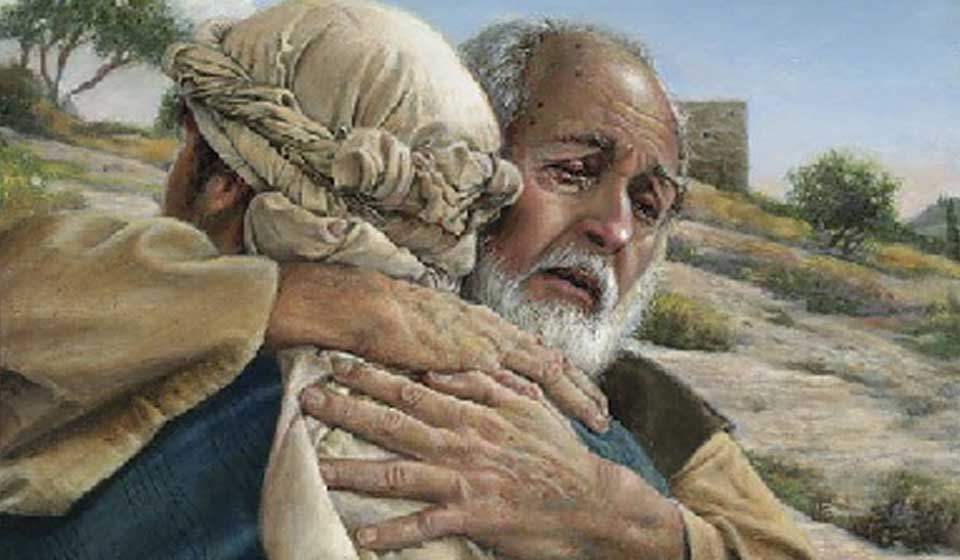
The story of the Prodigal Son has always hit close to home for me. Obviously, it’s easy for me to relate to the younger son. You should read Luke chapter 15 above but a quick summary: there were two sons. They will be referred to as the elder/older son and the younger son as I write. The two sons were given their inheritances. The younger son left his home and went to a faraway city. There he squandered his inheritance on “riotous living.” When he hit the lowest of lows, the younger son returned home to beg his father to allow him to be a servant. The father, instead of showing anger, welcomed his son home, killed the fatted calf, put a robe on his son, gave him a ring, put shoes on his feet, and threw a huge party in celebration of his return.
The older son, upon hearing of his brother’s return and the subsequent party, was angry.
This story is often told in such a way that the primary lesson is about the Prodigal Son and his father’s reaction to his return. The story is called “the prodigal son” after all. That lesson being that no matter how we stray, how far gone are, and how many mistakes we make our Heavenly Father (the father in the story) will always welcome us back. In fact, Heavenly Father rejoices at our repentance:
“I say unto you, that likewise joy shall be in heaven over one sinner that repenteth, more than over ninety and nine just persons, which need no repentance.”
All Prodigal Sons like myself rejoice at this story.
I once heard a different perspective on this story, and I’d like to share it. There is a great lesson to be learned in the story of the Prodigal Son by looking at a secondary character: the older brother.
A great question to ask yourself before reading any of Christ’s parables is “who was He speaking to?” Another good question is “What was He trying to teach?” If you look at the parable from the perspective of the Prodigal Son, you can say Christ was teaching those who have sinned that they can always repent and return to the light of their Heavenly Father’s love.
Who was Christ speaking to when he gave this parable? He was speaking to those looking for the message of God. He was speaking to the listeners. These were the ones looking for the message of God. When giving this parable Christ was speaking to the saints.
Consider what can be learned from the older brother. The older brother never left. The older brother never sinned. The older brother respected and worked for his father. Many say, and I always thought, he was justified in his reaction. His exact words in verses 29 and 30:
“And he answering said to his father, Lo, these many years do I serve thee, neither transgressed I at any time thy commandment: and yet thou never gavest me a kid (fatted calf), that I might make merry with my friends:
But as soon as this thy son was come, which hath devoured thy living with harlots, thou hast killed for him the fatted calf.”
This appears to be a natural reaction. He had always been there. He had always done right. Only for his corrupt brother to return and receive honor.
Why did the older son stay and work hard for his father? Why did he keep his commandments? Was he simply looking forward to the inheritance he was to receive?
Why do you serve God and keep his commandments? Are you looking forward to your mansion? Do you serve God so you can inherit His glory? Are you serving Him for YOUR benefit?
We should serve God because we love God. We should serve God because we love those around us. Our service to God shouldn’t be for the blessings and honors He can give us. Our hearts should serve for love and not for our inheritances.
Jesus didn’t tell this story only to get sinners to repent. He also told this story to get the saints to repent. The Prodigal Son went out to experience life and disregarded his father’s possessions. The older son on the other hand stuck around, but he was working to please his father. He looked at himself as moral and worthy. He was after his father’s possessions. That’s what he concerned himself with. The elder son was keeping score. He was trying to earn his father’s love and inheritance.
Sometimes we are like the Prodigal Son: sinning and needing to return home. Sometimes we are like the older brother: serving for the glory of the world.
Often we are like the older son in our envy and jealousy. When someone returns to the fold do we judge them for their past? Or, like the father in the parable and our Heavenly Father, do we rejoice at someone’s return?
Elder Holland in his talk, The Other Prodigal, said:
“I testify that no one of us is less treasured or cherished of God than another. I testify that He loves each of us-insecurities, anxieties, self-image, and all. He doesn’t measure our talents or our looks; He doesn’t measure our profession or our possessions. He cheers on every runner, calling out that the race is against sin, not against each other. I know that if we will be faithful, there is a perfectly tailored robe of righteousness ready and waiting for everyone, “robes…made…white in the blood of the Lamb.” May we encourage each other in our effort to win that prize is my earnest prayer.”
Let us not compare our blessings to the blessings of others, what we have to the possessions of others. Let us support and help each other to all return to our Heavenly Father. Jealousy is of Satan. We should never look down on somebody who made mistakes and is trying to return to God, because then we are the sinner. We can learn from every character in Christ’s great parable. Be like the Prodigal Son and repent, humble ourselves, and return home. Be like the elder son and don’t envy but welcome our wayward brothers and sisters back home with joy and love. And be like the father, loving all those around us, embracing the sinner and the saint alike. I believe this is God’s hope for us and what Christ was teaching us through this story.
__________________________
Here is a link to Jeffery R. Holland’s talk, The Other Prodigal:




 No Coincidences