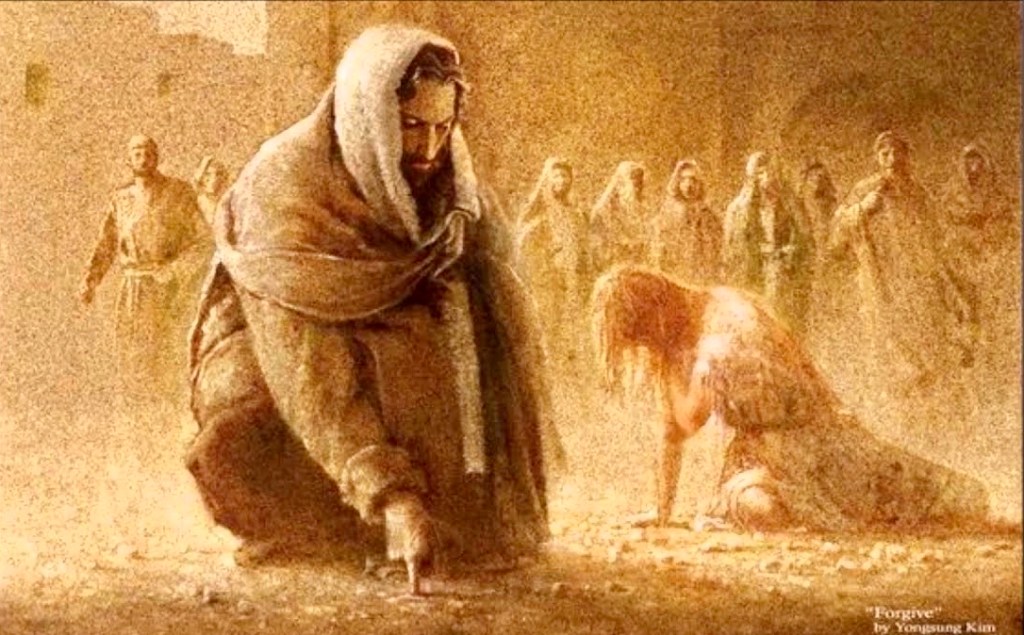
Tag: Sinner

  • God Loves a Returned Sinner

    God Loves a Returned Sinner

    Luke 15:7 reads:

    “I say unto you, that likewise joy shall be in heaven over one sinner that repenteth, more than over ninety and nine just persons, which need no repentance.”

    Why does heaven rejoice over a returned sinner?

    Why does Christ love a returned sinner? This should be obvious. Christ loves a returned sinner because they’re utilizing His Atonement, the great gift He gave them. He suffered for that gift. Why wouldn’t He rejoice over it being used?

    It’s very important to point out that this doesn’t make the returned sinner any better than the constantly faithful. Do you think God is up there thinking, “you were always upright. Too bad you didn’t sin some more so I could have increased joy”? Of course not. God loves the consistently faithful. I think another important point here is that we’re all sinners. So, by this scripture we can know, that God loves all who repent of sins. We all sin.

    An individual from history who was a clear sinner, making evil choices, even if he didn’t realize it, was Paul. Paul ended up being one of the greatest missionaries ever but started as the greatest persecutor of the church. Paul received a miraculous visit from Jesus Christ. This converted him and he instantly changed his ways. As we read the scriptures, Paul’s change seems instant. But I believe there was a reason he had to travel blind for three days. I believe his change was actually slow and required a lot of humility.

    Paul became an obvious example of Luke 15:7, heaven rejoicing. Paul was such a go-getter of persecution; the Heavens must have been excited to have him on their team once he converted. Imagine how the angels rejoiced when Paul turned to the Lord because they now knew how ferocious he would be for the Lord.

    Peter can be seen as another example of someone who didn’t always make the right choices. Isn’t it amazing to read the New Testament and consider how flawed the individuals were who Christ chose to spread His word and be His ministers? Peter was no exception. You can look to Peter’s three denials of Christ as a great scriptural moment representing needing to learn a lesson, repent, and double down on conversion and commitment.

    Peter made a huge, and life-altering mistake by denying Christ those three times. It was life-altering for how it helped Peter change his life. It could have been life-altering in how it turned Peter away from Christ. He could have gone the other way. Christ knew He wouldn’t. That’s why Christ picked Peter.

    The show “The Chosen” does an interesting job of depicting Peter. What if Peter was kind of a bad guy? Not a bad heart, but did some bad things. A rough guy. A guy that made a lot of mistakes before he met Jesus and fell in as one of his apostles. Then, slowly, over much time around the Master, Peter became His primary apostle. Peter eventually became the president of Christ’s church.

    The student manual for the book of Mark notes:

    “Mark, more than the other Gospel writers, recorded the disciples’ shortcomings (see Mark 4:36-41; 6:52; 8:14-21). The disciples’ weaknesses stand in contrast to their greath faith and successes, which are depicted in the book of Acts, helping us appreciate the transformation brought about by the Resurrection and the outpouring of the Holy Ghost.”

    Never judge a sinner. They can become the most kind, most gentle, most Godly person. We all have Godhood in us. One day our sins will be in great contrast to our faith and successes when we ultimately attain our full potential.

    The Bible Dictionary definition of “conversion” states:

    Denotes changing one’s views, in a conscious acceptance of the will of God (emphasis added, Acts 3:19). If followed by continued faith in the Lord Jesus Christ, repentance, baptism in water for the remission of sins, and the reception of the Holy Ghost by the laying on of hands, conversion will become complete and will change a natural man into a sanctified, born again, purified person-a new creature in Christ Jesus (see 2 Cor. 5:17). Complete conversion comes after many trials and much testing (emphasis added, see Luke 22:32; D&C 112:12-13). To labor for the conversion of one’s self and others is a noble task, as in Ps. 51:13; Dan. 12:3; James 5:19-20; Alma 26; D&C 18:15-16.”

    The part that stood out to me most from that definition was that complete conversion comes after many trials. I know it did for me. I had to experience the bitter to appreciate the sweet. I had to see how dark life could feel to appreciate Christ’s light. I know my testimony is stronger because I had to learn how dark it can be.

    Did Peter experience his change through trials? Did Paul? I think they did. Those who go through the greatest trials and then turn to the Lord become his most devout followers. Paul was blind. That’s quite a trial. But when he saw the light, he never turned away from it again.

    We all don’t receive miraculous visitations from Jesus Christ like Paul did, or get to work with Christ side-by-side like Peter, but we can still feel His presence, serve Him, and feel what it’s like to have Him by our side. Imagine how different your actions would be day-to-day if Christ was with you? Well, He is.

    Sometimes I worry that faithful, day-one-never-wander latter-day saints are missing this. This devotion to the cause. This understanding of how much you need Him. It’s why trials happen. Otherwise, we’d all walk merrily through this life, never understanding the true depth of the Atonement and how desperately we need Him.

    Now, trials come in all shapes and sizes. Just because someone appears to never have gone through “it”, doesn’t mean they’ve never gone through it. We never know the internal struggles, challenges, and difficulties someone faces in their faith. It’s usually not on the outside. But if you see a devoted person to God, you can assume they’ve been through something. It’s those somethings that bring us to Him.

    God loves a returned sinner. Remember that whenever you make a mistake. While we don’t want to make mistakes, we always want to do our best, God will welcome us back with open arms when we make mistakes and repent. It’s a comforting thought whenever we mess up. God knows our heart. Part of making mistakes and repenting is truly regretting it. This doesn’t mean beating yourself up about it or getting too down on yourself, but it does mean truly feeling regret and remorse for mistakes. This can’t be faked. God knows your heart.

    I think we can learn something really neat from examples like Peter and Paul. No matter how far we stray, God has a place for us. God doesn’t look at what we’ve been or what we are, but what we will be. He knows what we will be. He sees that in us. I’d guess it’s His greatest desire that we see in ourselves what He already knows is there.

    Be like Peter and Paul. Be someone Christ can pick.

    God loves a returned sinner.
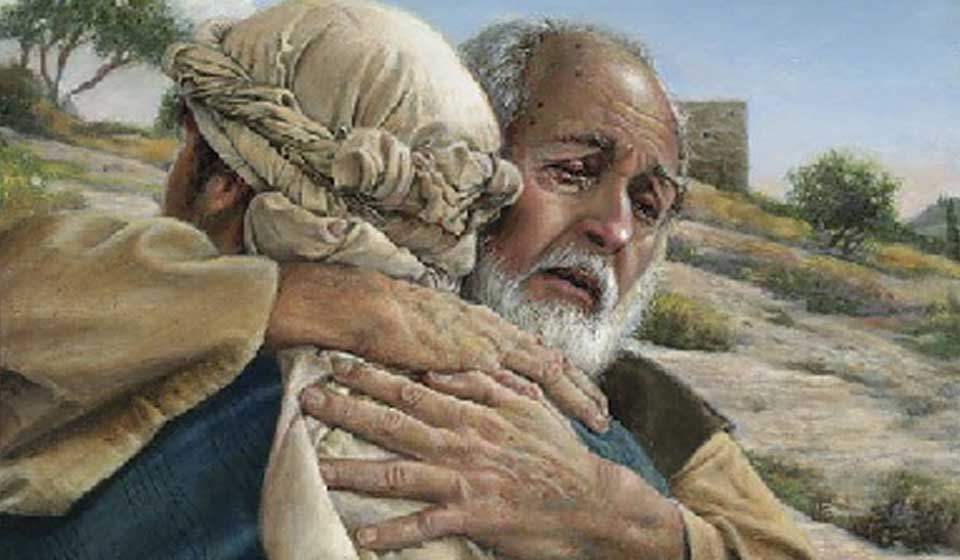
  • Prodigal Son

    Prodigal Son

    The story of the Prodigal Son is well known.  For those who have not read it before or haven’t read it recently it can be found in Luke 15:11-32.

    The story of the Prodigal Son has always hit close to home for me.  Obviously, it’s easy for me to relate to the younger son.  You should read Luke chapter 15 above but a quick summary: there were two sons.  They will be referred to as the elder/older son and the younger son as I write.  The two sons were given their inheritances.  The younger son left his home and went to a faraway city.  There he squandered his inheritance on “riotous living.”  When he hit the lowest of lows, the younger son returned home to beg his father to allow him to be a servant.  The father, instead of showing anger, welcomed his son home, killed the fatted calf, put a robe on his son, gave him a ring, put shoes on his feet, and threw a huge party in celebration of his return.

    The older son, upon hearing of his brother’s return and the subsequent party, was angry.

    This story is often told in such a way that the primary lesson is about the Prodigal Son and his father’s reaction to his return. The story is called “the prodigal son” after all.  That lesson being that no matter how we stray, how far gone are, and how many mistakes we make our Heavenly Father (the father in the story) will always welcome us back.  In fact, Heavenly Father rejoices at our repentance:

    “I say unto you, that likewise joy shall be in heaven over one sinner that repenteth, more than over ninety and nine just persons, which need no repentance.”

    Luke 15:7

    All Prodigal Sons like myself rejoice at this story.

    I once heard a different perspective on this story, and I’d like to share it.  There is a great lesson to be learned in the story of the Prodigal Son by looking at a secondary character: the older brother.

    A great question to ask yourself before reading any of Christ’s parables is “who was He speaking to?”  Another good question is “What was He trying to teach?”  If you look at the parable from the perspective of the Prodigal Son, you can say Christ was teaching those who have sinned that they can always repent and return to the light of their Heavenly Father’s love.

    Who was Christ speaking to when he gave this parable? He was speaking to those looking for the message of God.   He was speaking to the listeners.  These were the ones looking for the message of God.  When giving this parable Christ was speaking to the saints.

    Consider what can be learned from the older brother.  The older brother never left.  The older brother never sinned.  The older brother respected and worked for his father.  Many say, and I always thought, he was justified in his reaction.  His exact words in verses 29 and 30:

    “And he answering said to his father, Lo, these many years do I serve thee, neither transgressed I at any time thy commandment: and yet thou never gavest me a kid (fatted calf), that I might make merry with my friends:

    But as soon as this thy son was come, which hath devoured thy living with harlots, thou hast killed for him the fatted calf.”

    This appears to be a natural reaction.  He had always been there.  He had always done right.  Only for his corrupt brother to return and receive honor.

    Why did the older son stay and work hard for his father?  Why did he keep his commandments?  Was he simply looking forward to the inheritance he was to receive?

    A Crucial Lesson from the Brother of the Prodigal Son « Meridian Magazine

    Why do you serve God and keep his commandments?  Are you looking forward to your mansion?  Do you serve God so you can inherit His glory?  Are you serving Him for YOUR benefit?

    We should serve God because we love God.  We should serve God because we love those around us.  Our service to God shouldn’t be for the blessings and honors He can give us.  Our hearts should serve for love and not for our inheritances.

    Jesus didn’t tell this story only to get sinners to repent.  He also told this story to get the saints to repent.  The Prodigal Son went out to experience life and disregarded his father’s possessions.  The older son on the other hand stuck around, but he was working to please his father.  He looked at himself as moral and worthy.  He was after his father’s possessions.  That’s what he concerned himself with.  The elder son was keeping score.  He was trying to earn his father’s love and inheritance.

    Sometimes we are like the Prodigal Son: sinning and needing to return home.  Sometimes we are like the older brother: serving for the glory of the world. 

    Often we are like the older son in our envy and jealousy.  When someone returns to the fold do we judge them for their past?  Or, like the father in the parable and our Heavenly Father, do we rejoice at someone’s return?

    Elder Holland in his talk, The Other Prodigal, said:

    “I testify that no one of us is less treasured or cherished of God than another.  I testify that He loves each of us-insecurities, anxieties, self-image, and all.  He doesn’t measure our talents or our looks; He doesn’t measure our profession or our possessions.  He cheers on every runner, calling out that the race is against sin, not against each other.  I know that if we will be faithful, there is a perfectly tailored robe of righteousness ready and waiting for everyone, “robes…made…white in the blood of the Lamb.”  May we encourage each other in our effort to win that prize is my earnest prayer.”

    Let us not compare our blessings to the blessings of others, what we have to the possessions of others.  Let us support and help each other to all return to our Heavenly Father.  Jealousy is of Satan.  We should never look down on somebody who made mistakes and is trying to return to God, because then we are the sinner.  We can learn from every character in Christ’s great parable.  Be like the Prodigal Son and repent, humble ourselves, and return home.  Be like the elder son and don’t envy but welcome our wayward brothers and sisters back home with joy and love.  And be like the father, loving all those around us, embracing the sinner and the saint alike.  I believe this is God’s hope for us and what Christ was teaching us through this story.

    __________________________

    Here is a link to Jeffery R. Holland’s talk, The Other Prodigal:

    https://www.churchofjesuschrist.org/study/general-conference/2002/04/the-other-prodigal?lang=eng

  • Letter to a Sinner

    Letter to a Sinner

    I write this with as much humility as possible.  Fully knowing and understanding my weaknesses have given me perspective.  It is my faults and errors that make me feel like I can write this letter. 

    I remember when I came back to church I was asked to not take the sacrament for three weeks.  It was one of the more difficult things I had to do, although it doesn’t sound like much.  I think it was the moment I realized I had changed.  Something that in the past might not have affected me too much, really hurt.  It was difficult coming back and immediately feeling like maybe I’m not enough.  Maybe I could have gone the route of resentment.  Instead I realized how much I didn’t want to have to go through that again.

    I don’t in any way imply I’m better than someone who can’t take the sacrament and does feel resentment.  We all have our own paths.  Mine was of being completely away, coming back, and realizing I deserved my three weeks.  Some are never officially away so that state of probation seems unfair or not right.  I understand that.

    This is my letter to the sinner.  A reminder, that includes all of us.  This is the sinner who has made mistakes.  This particular sinner might come from a perfect family and part of their struggle is feeling like they don’t fit in in the one place they should feel welcome.  This sinner might feel judged by the very people that should love them the most.  It doesn’t matter if those family, friends, and caring loved ones are right or wrong.  It matters how the sinner interprets things.  We all live our own experiences and encounter the world in different ways.  We must, to the best our abilities, see the world in perfect light and perfect truth.

    Here is my letter to a hypothetical sinner:

    You will never be like the “perfect” people you see around you.  You won’t.  Your path has been set.  Your path has been set partly by different “luck,” different experiences.  Partly by your choices.  My life was set by very bad choices.  But now that I’ve come out of the other side, my joy is greater than I could have ever imagined.  You won’t be “perfect”, but you’ll be who Heavenly Father sees you can be.  You won’t be “better” than those who never made the mistakes you made, but you might be stronger.  Your path will lead you somewhere wholly different.  And if you decide you want to come through to the other side: to truly know your Savior, to know forgiveness, to know what being welcomed home feels like even if you don’t think you’ll ever deserve it – if you come to that other side with that relationship with your Savior, your testimony will be welded in steel, as hard as diamond.  You’ll have gone through the refiner’s fire and come out united with He who gives all strength.  This is no excuse to continue to sin.  You know the light.  You’ve seen and felt the light.  I knew the light and I turned from it.  I hope to help anyone not make the same mistake.

    You will make mistakes.  You will sin.  But no matter what, you have to remember Jesus Christ.  Because while the world will judge you and you’ll have to struggle with that, He will judge you with a perfect love and comprehension.  Remember that those around you are trying to judge you with love.  They’re trying to love you righteously.  Jesus Christ doesn’t try.  He is perfect love.  Don’t forget it.  Don’t forget that those around you whose points of view you can’t understand, they’re trying to be like Jesus Christ.  They may be falling short.  But that’s not for you to judge.  Just as they can’t judge you, you can’t judge their intentions or efforts.  Just love and do your best. 

    I’m sorry you have to go through trials.  But do not lose sight of Jesus Christ.  Do not.  He is the only person true peace can come from.  Whatever you do, whatever mistakes you make, do not forget HIM.  He won’t forget you.  I promise.

    At this point I must apologize.  Throughout this letter I’ve referred to you as “the sinner.”  I know that phrase hurt the whole way through.  I know it because I’ve felt it.  I did it throughout the whole letter to get to this point.  I want to remind you, “sinner” is not who you are.  It will never be who you are.  We all sin but that’s not what God and Jesus Christ see in us.  No matter how many mistakes we make.  No matter how many slip ups or downright wrong things you do, you are not a sinner.  You are a child of Heavenly Father.  You are growing.  You are learning.  I reiterate something I said earlier, this does not excuse your sin.  Sin is wrong, you know that.  Christ will see your sin.  What means much more to Him is your repentance.  He doesn’t see who you were but who you will be. 

    “God cares a lot more about who we are and who we are becoming than about who we once were. He cares that we keep trying.”

    Elder Dale G. Renlund in April 2015 Conference talk “Latter-day Saints Keep on Trying”