Tag: Son of God

  • Profession of Faith

    Profession of Faith

    *Before I post this I want to unequivocably say that I respect any church and its teachings, especially if they bring people and families closer to Jesus Christ. I don’t get to interact with teenagers much outside of coaching, but from what I’ve seen with the girls I’ve gotten to coach at two catholic schools, they are kind, compassionate, intelligent, awesome young women.

    When I started coaching basketball at my second catholic high school, I had to sign a Profession of Faith.

    I started reading through the document.

    I believe in one God, the Father almighty, maker of heaven and earth, of all things visible and invisible.”

    Okay, yeah, I can get behind that, we’re off to a good start.

    “I believe in one Lord Jesus Christ, the Only Begotten Son of God, born of the Father before all ages.”

    We’re good here. This is going to be easier than I thought!

    “God from God, Light from Light, true God from true God, begotten, not made, consubstantial with the Father;”

    Wait, hold on, what’s that word mean?

    Consubstantial: “Of the same substance or essence (used especially of the three persons of the Trinity in Christian theology).

    Uh oh.

    But wait. Didn’t I just say I believe in one God, the Father almighty? Also, I believe in one Lord Jesus Christ, the Only Begotten Son of God?

    “through him all things were made. For us men and for our salvation he came down from heaven, and by the Holy Spirit was incarnate of the Virgin Mary, and became man. For our sake he was crucified under Pontius Pilate, he suffered death and was buried, and rose again on the third day in accordance with the Scriptures. He ascended into heaven and is seated at the right hand of the Father.”

    Yes! Exactly. Seated at the right hand of the Father. Okay, we’re back on track again.

    “He will come again in glory to judge the living and the dead and his kingdom will have no end. I believe in the Holy Spirit, the Lord, the giver of life, who proceeds from the Father and the Son, who with the Father and the Son is adored and glorified, who has spoken through the prophets.”

    Yeah! Okay, this is great!

    “I believe in one, holy, catholic and apostolic Church.”

    Uh oh.

    “I confess one Baptism for the forgiveness of sins and I look forward to the resurrection of the dead and the life of the world to come. Amen.”

    I wholeheartedly agree (does the Catholic Church have one baptism? I personally don’t know, I’m curious… to Google we go… quick Google search says no, the Catholic Church does not have one method of baptism).

    “With firm faith I also believe everything contained in God’s word, written or handed down in tradition and proposed by the Church, whether by way of solemn judgment or through the ordinary and universal magisterium, as divinely revealed and calling for faith.”

    Another word I have to look up, let’s see.

    Magisterium: “the teaching authority of the Roman Catholic Church, especially as exercised by bishops or the Pope.”

    Hmm.

    I also firmly accept and hold each and every thing that is proposed definitively by the Church regarding teaching on faith and morals.”

    Uhm, I’m not sure. But I hope we can agree on principles of faith and morals.

    “Moreover, I shall always teach in accord with the Official Magisterium of the Church as it is proclaimed by the Pope and the College of Bishops.

    I then re-read it to see if I could make it work. I kept coming back to this:

    “God from God, Light from Light, true God from true God, begotten, not made, consubstantial with the Father; through him all things were made. For us men and for our salvation he came down from heaven, and by the Holy Spirit was incarnate of the Virgin Mary, and became man. For our sake he was crucified under Pontius Pilate, he suffered death and was buried, and rose again on the third day in accordance with the Scriptures. He ascended into heaven and is seated at the right hand of the Father.

    How can Christ be consubstantial with the Father and then sit on His right hand?

    “I believe in one, holy, catholic and apostolic Church.”

    That one I couldn’t wiggle around. I don’t believe that.

    This wasn’t going to work. I couldn’t sign this. I so looked forward to coaching at this new school. I looked forward to continuing our work as a coaching staff. I looked forward to a new group and new challenges, though I’d miss my girls at St. Mary’s so much. I was excited to coach closer to home. I was excited to start taking Ivy to practice with me so she could hopefully start to develop a love for basketball like I had.

    I had to call Patricia and tell her we had a problem, that I couldn’t sign the Profession of Faith.

    I picked up my phone to call Patricia to see if there were any options available to us. I hit dial. The phone rang. I scrolled down a little bit more on my  screen and saw this:

    “FOR NON-CATHOLICS

    Roman Catholic Diocese of Phoenix
    Division of Education and Evangelization
    Profession of Faith

    I accept and hold each and every thing that is proposed definitively by the Catholic Church regarding teaching on faith and morals.

    Patricia answered.

    “Never mind, we’re in the clear!”

    She was confused. I explained. All I had to do was enter the church I belonged to and I was good.

    How grateful I was for that last part, that I could submit my belief and move on. Was I prepared to refuse to sign that Profession of Faith? Yes, I was. I could not deny what I know. I couldn’t sign something I didn’t believe to be true.

    As I thought more about this, I thought more about the United States of America. How grateful I am to belong to a free country. How grateful I am to have the first amendment of the U.S. Constitution which grants me freedom of religion. How grateful I am that, even at a Catholic high school, which I just detailed might have some strong opinions about my beliefs, I can still click “other religion,” enter what church I belong to, and an institution with different beliefs accepts that. I am grateful for different beliefs. I am grateful for different opinions. I am grateful for debate and disagreement – as long as it is done with love. I am grateful for freedom.

    I’ve now coached three seasons at this new school. Of course there have been no issues. I hope through my example and love I can teach these girls about becoming great young women. I don’t proselytize them.

    It’s ended up being an amazing transition and I’m glad I’ve gotten to coach at a great Catholic high school. Andddd I checked with Patricia before posting this, just to be safe.

  • A Kingdom Divided

    A Kingdom Divided

    The first step for Zion is to stop distinguishing ourselves from one another. We are first Children of God.

    President Russell M. Nelson has been clear about the three primary identities we should all focus on for ourselves. Those three identities are:

    First – children of God.

    The first identity is for every person on the face of the earth. Whether they realize it or not, every person is a child or God. The second and third identities are for members of the Church of Jesus Christ of Latter-day Saints. But this does not exclude anyone. The second and third identities are an invitation to the world.

    The second identity is child of the covenant.

    The third identity is disciple of Jesus Christ.

    President Nelson has stressed that anything we give precedence over these three identities distracts from our true potential. As children of God, children of the covenant, and disciples of Jesus Christ, we have a divine inheritance and royal home to return to. Any other worldly designation distracts from our ultimate goal of becoming everything we can be.

    Some of the other designations the world assigns include sexuality, status, race, and political affiliation. There are countless self-defined categories we assign ourselves. None of these things matter, they won’t matter at all when the veil is lifted, and we are reminded of what we always were.

    Zion are the pure in heart (D&C 97:21), Zion are one.

    All who believe in Christ are the children of Christ. But how is Zion established? How can there be unity in Christ given the divisive nature of the world and Christianity?

    A search for all the sects of Christianity brings up THOUSANDS of results. Thousands. How can one know the truth when there are so many claiming to be true? How can Christianity be united under Christ when there are thousands battling for attention, power, and patrons.

    How can God be a God of such confusion and disorder?

    In Luke 11:17 Jesus Christ says:

    Every kingdom divided against itself is brought to desolation; and a house divided against a house falleth.

    How would Jesus Christ feel about the state of the religion that espouses His name?

    I’ve heard it said that Christianity is united, despite its differences, in its faith in Christ. I think this is an admirable way to look at it. In fact, it’s how I try to look at it. It’s my opinion and belief that our faith in Jesus Christ is important and unites us. That said, what really unites us? What enduring principle is it that unites all Christians?

    Is it our belief in what Christ taught? There are a million different interpretations of what Christ taught.  

    Is it our belief in who Christ was? That couldn’t be a more divisive topic. Was He who He claimed to be? Was He the Son of God or wasn’t he?

    Is it our belief in the Atonement of Jesus Christ and what it accomplished? Again, there are different interpretations of Christ’s Atonement, why it was needed, and what it accomplished.

    Surely we can agree on Christ’s resurrection? Was Christ resurrected with His body or wasn’t He? Was there significance to Him eating fish with His disciples after His resurrection? Again, there is contention on this topic.

    What can Christianity be united on? It seems nothing.

    I believe the Church of Jesus Christ of Latter-day Saints provides the only solution to this problem. What Christianity can be united on is a connection to Jesus Christ. A real connection. Not a belief in Him, what He taught, or who He was. The connection must be real and tangible. The connection must be a welding link. The connection must have veracity on earth and in heaven (Matthew 18:18). That connection must be through a covenant.

    A covenant is a two-way promise.

    A covenant binds us to Him.

    When we get baptized, we promise to take upon us the name of Christ, and He becomes our shepherd. From that point on we are inseparably linked with Him.

    Latter-day Saints are a covenant people. The saints of God have always been covenant keepers.

    In the podcast Church History Matters, the hosts were speaking about the early history of temples in the Church of Jesus Christ. Something they said stood out to me as I’ve been working on writing this post.

    “…through the ordinances given to both men and women, living and dead, the human family is being knit or woven or let’s just use the word sealed together into one eternal holy order which we can call the family of God, we can call it the Kingdom of God, we can call it the Church of the Firstborn, we can call it the Celestial Kingdom, or simply the priesthood.”

    In the most recent General Conference of the Church of Jesus Christ of Latter-day Saints, Elder McCune of the Seventy said:

    Joy and eternal perspective come through being bound to the Savior by making and keeping covenants through Christlike discipleship.

    Adam, Abraham, Moses, and Peter; they made covenants with the great Jehovah and became His, and received of His power. Over time, they became more like Him. Over time they became one with Him. Enoch created Zion and was so connected to the Lord that he and his city were taken up to Him. This connection is made through covenants.

    What can unite Christianity? It is a covenant with Jesus Christ.

    Christ’s Church has temples where these covenants can be made.

    We must strive to be one with our brothers and sisters. We can only truly be one as we are united under one banner. The disjointed nature of Christianity is unacceptable. Covenants are needed. It is the banner of covenants with Jesus Christ that will unite Christianity, and nothing else. He died for us. In return, He asked us to believe in Him, follow Him, repent, and be baptized. That was His request of us. There is only one baptism that is acceptable to God the Father and that is the baptism with His authority in the name of His Son. No other baptism is acceptable to Him because it is a baptism not by His authority.

    I wish the Christian world could see that it is covenants that unite us to God. It is covenants that can re-unite us.

    I know as the Millenium approaches that one day all knees will bow and every tongue confess. At some future date the children of God will know and understand the covenants needed to unite the heavenly and eternal family.

    It is here for us now. But the world does not listen. Jesus was sent to this world, but He was not of it. This world struggles with the eternal nature of what God has in store for us. One day the world will have to understand what was always offered to us. What is offered to us is unity under Christ. Eternal families, eternal potential, eternal happiness, eternal inheritance. That is what will come when the world covenants to join with Jesus Christ and be Zion.

  • Suzerain and Vassal: The Father and the Son

    Suzerain and Vassal: The Father and the Son

    Mosiah 15:1-2 reads:

    1 And now Abinadi said unto them: I would that ye should understand that God himself shall come down among the children of men, and shall redeem his people.

    2 And because he dwelleth in flesh he shall be called the Son of God, and having subjected the flesh to the will of the Father, being the Father and the Son…

    How can Christ be both the father and the son? It’s a question that has troubled Christianity since before it was called Christianity. How can there be the one true God (Jehovah) and yet Jesus Christ (Jehovah) pray to His father who is in heaven?

    How can Christ be both the father and the son? Well, how are you, reading this a father (or mother) and a son (or daughter)? Sometimes we might overcomplicate the simplest things.

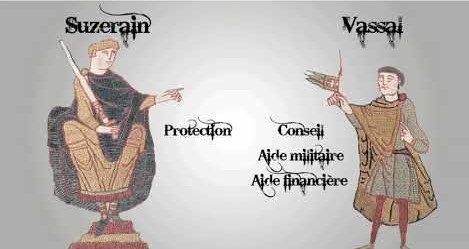
    In the ancient near east there existed a system wherein covenants could be made. That system could be described as a Suzerain Vassal covenant or treaty. In this sort of agreement one of the parties would be greater or more powerful than the other. The suzerain would be the powerful entity. The vassal would be the subservient, or lesser, or learning entity. In this sort of treaty, the vassal would pay tribute or show some form of loyalty to its suzerain. In return, the suzerain would provide protection or some other sort of benefit to its vassal. There could only be one suzerain/vassal connection. Meaning, a vassal couldn’t have two suzerains. This would basically be treason. You can only serve one lord.

    From this article on the suzerain/vassal covenant relationship:

    “The covenant Yahweh established with Israel at Mount Sinai exhibits striking parallels with Hittite suzerain/vassal treaties, which had six basic features: 1) a preamble that identifies the suzerain; 2) a historical prologue that recounts the previous relationship between the parties; 3) covenant stipulations to which the vassal must agree; 4) provisions for periodic reading and safekeeping of the covenant; 5) witnesses to the covenant; and 6) blessings and curses should the vassal either keep or fail to keep the covenant. The Sinaitic covenant contains all six of these characteristics.”

    In his book, The Last Days: Types and Shadows from the Bible and the Book of Mormon, Avraham Gileadi states:

    “the idea of Israel’s suzerain or Lord [Jehovah] assuming vassal or servant status in order to answer to his suzerain [God the Father] for his people’s rebelliousness introduces the concept of a God higher than Israel’s God. That is, Jehovah, the God of Israel, is a “Son” to God the “Father” (3 Nephi 11:7,11,32; compare 15:4-5). That concept does not appear explicitly in the Old Testament. Many Jews, therefore, insist that God is but “one” (Hebrew ehad; Deuteronomy 6:4); other than the Lord, they assume, no God exists (see Isaiah 44:6,8; 45:21-22). However, the idea of “the Father” and “the Son” makes perfect sense in light of ancient Near Eastern suzerain (Lord)–vassal (servant) covenant relationships.

         “Abinadi (and every prophet who teaches God’s redemption of humanity) here enlightens us. Abinadi says that God, who redeems his people, is both “the Father and the Son” (Mosiah 15:1-3; compare Alma 11;38-39; Ether 3:14). That abstruse statement seems at first glance to contradict the careful distinction between the Father and the Son that other scriptures teach. But when viewed from the ancient Near Eastern suzerain (lord)–vassal (servant) covenant relationship, we gain insight on how the Lord can serve as a suzerain or Father to his people Israel, but also can serve as a vassal or Son to his Father or suzerain. To Israel, the Lord is Father, and they become his sons or vassals. To God the Father, the Lord is the Son, subjecting his will to the Father in order to merit Israel’s salvation (Mosiah 15:2,7).

         “Moreover, as the literal and loyal Son of a divine Father–as the Son of a righteous [covenant suzerain “Father”]–the Lord is not subject to death unless he himself consents to die (See the type of Isaac’s consenting to let Abraham sacrifice him–Genesis 22:9) Even if he does die, the Father must come to the aid of his vassal and deliver his Son from death. In ancient Near Eastern literatures there is the concept of the god who dies only to revive and assume the throne of a senior deity. Thus “God breaketh he bands of death . . . giving the Son power to make intercession for the children of men” (Mosiah 15:8). What the Father does for the Son, the Son does for his sons and daughters: when “the Son reigneth, and hath power over the dead . . . he bringeth to pass the resurrection of the dead” (Mosiah 15:20).

         “Moreover, the moment one introduces the idea of the Father and the Son, one also introduces the concept of spiritual progression. That constitutes as much a part of the “good news,” or gospel, as does redemption from death itself (see Mosiah 15:10-19). Inherent in a Father/suzerain–Son/vassal relationship with God is the assuming of divine attributes–becoming God-like…”

    So we see that this Near Eastern tradition of suzerain and vassal treaties and covenants perfectly aligns with how we relate to Jesus Christ. He is our suzerain, making us His children. God is His suzerain. Through our covenant relationship with Christ, we receive protection from both Christ and His Father and our Father, God the Father.

    Another interesting thought from that note is how Christ conquered death. It was by His relationship with the Father that He was able to conquer death. He in turn allows us the same opportunity when we link ourselves to His will and power. Christ received His divine identity from His Father. We can receive our divine identity through Jesus Christ’s Atonement and conquering of death. This is why we only come to the Father through the Son. Christ is our protector, our Suzerain. As we serve Him, we receive that protection as His vassals.

    In addition, another way that Christ is our father is through the resurrection. It is due to Christ’s atonement and resurrection that we are able to be resurrected. This makes Christ the father of our bodies. For we wouldn’t have our bodies without His resurrection and the gift that we can be resurrected into our bodies. God the Father is still the father of our spirits. Whether that be through adoption, some measure of creation, or some other way, we’ll one day know.

    A last note I wanted to make that I liked from this article:

    “The basis of the covenant was Yahweh’s gracious acts toward Israel, not their obedience to him.”

    Our covenant relationship with Christ is a reminder that His grace saves us. It doesn’t matter how obedient we are. We needed His grace to save us. As our Suzerain, His covenant with us is based so much more on how He loves us and all He is willing to do for us than anything we can do for Him. We can never properly repay Christ for all He’s done for us. He is the Suzerain. He has the power to save us.

    This is the good news of the Gospel. Because Christ conquered all, we can become like Him, and in turn, become like our Father in Heaven.

  • Am I a Christian?

    Am I a Christian?

    I was told I’m not a Christian.

    I was looking to attend a Christian University and when the counselor I was speaking to heard I was a member of the Church of Jesus Christ of Latter-day Saints she got kind of upset.  She seemed truly disappointed to break the news to me.  “You can’t attend this university if you are not Christian.”

    Yes!

    I was so excited to respond to that.

    “I’m sorry if there’s confusion, but I am very Christian.  The Church of Jesus Christ of Latter-day Saints.” I emphasized.

    She didn’t seem convinced.

    “I believe Jesus Christ is the Son of God, He is the Savior of the world, He is my Savior.  He died so I can live.  He came to this earth to sacrifice His mortal life for me.  Christ has always been and will always be my Savior.”

    We went around in circles like this for a bit.

    Finally, she said with exasperation, “Do you believe Jesus Christ visited the Americas?”

    An emphatic, “Yes, I do.”

    Her reply, “Oh you see, we don’t believe there is any evidence of this in the Bible.  I’m sorry.  You don’t believe in the same Christ we do.”

    The same Christ?

    Speaking of “evidence” in the Bible that Christ may have visited the Americas leads me to Ezekiel 37:16 which reads:

    “Moreover, thou son of man, take thee one stick, and write upon it, for Judah, and for the children of Israel his companions: then take another stick, and write upon it, For Joseph, the stick of Ephraim and for all the house of Israel his companions.”

    These sticks are the Book of Mormon and the Bible.  One from Judah and one from Joseph. 

    More “evidence” in John 10:16:

    “And other sheep I have, which are not of this fold: them also I must bring, and they shall hear my voice; and there shall be one fold, and one shepherd.”

    I put quotes around “evidence” because evidence is a funny thing.  Anyone can read those two scriptures and explain them away.  The real evidence is in the Book of Mormon.  Read it.

    How can someone who has never read the Book of Mormon with its constant references to Jesus Christ, its beautiful and simple doctrine of Jesus Christ, and its eloquent teachings of Jesus Christ, tell me I’m not Christian?  By their fruits you shall know them.

    Do other Christians think Christ wouldn’t visit all His children across the globe?  Do other Christians think Christ didn’t have time to show love to His other sheep?  Do other Christians think Christ only loved the Jews in Israel?

    Maybe we don’t believe in the same Christ.

    But I do know that we believe in the same Christ.  I know other Christians are confused about the nature of Jesus Christ and I know the Book of Mormon can shed light on His true nature and teach “Christianity” so much about our Savior whom they profess.  He is everyone’s Savior.  That is why I was so anxious to tell her about the Book of Mormon and explain to her that the Bible DOES testify of the Book of Mormon and show evidence that Christ visited the Americas.

    I know she didn’t hear all of what I was trying to say that day.  I know she was clouded by biases and preconceived notions.  That’s ok.  I know she’ll get a chance to learn about Jesus Christ’s love for all His children and His visit to the Americas.  Someday.

    Read the Book of Mormon for yourself.  Let me know if it’s not the purest, most beautiful, most amazing description of the Gospel of Jesus Christ on the earth today.

  • The Redemption of the Jews

    The Redemption of the Jews

    How will God convince the Jews that Jesus is the Redeemer, the Messiah, the Son of God?

    Is the Jewish nation to wait for Christ to return in His glory for them to realize the truth?  Will God’s chosen people be left to learn of Christ’s divinity at the same moment that the rest of the world does, when Christ returns?

    Will the Jewish nation learn of the divinity of Jesus Christ when they see Him come down in glory, and behold the prints in His hands and feet?

    Has God provided a tool for the redemption of His people?  A second witness?

    I don’t think God would leave only one witness of such an important thing.  Especially when it concerns not only all His children, but His chosen people.

    So, what is that tool?  What is the second witness?

    Obviously, it is the Book of Mormon.

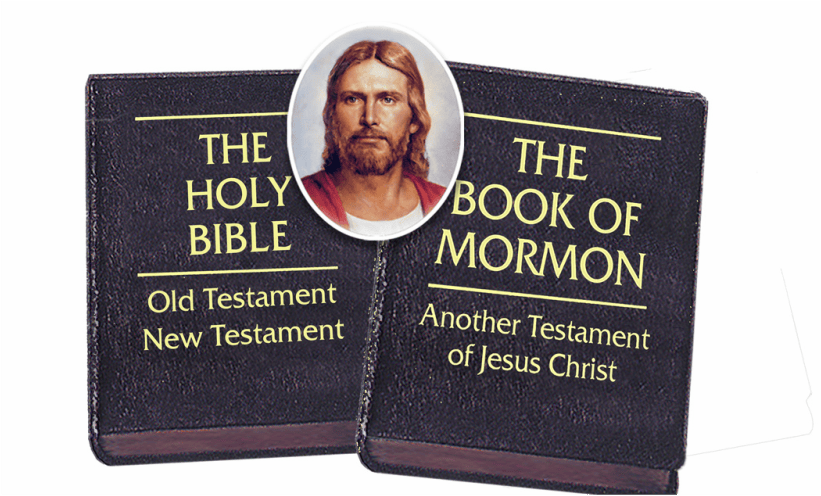
    Another testament of Jesus Christ. 

    I had this realization recently and wanted to share.  It’s easy to take for granted what the Book of Mormon is.  Another testament of Jesus Christ.  Another book of scripture.  Another witness.  More proof that Jesus was and is the Christ.  Jesus is the Savior.  Jesus is where our redemption lies. 

    What a blessing to live in a time where we have further evidence.  What a blessing that we have additional scripture.  I look forward, as the dispensation of the fullness of times continues to expand, for more scripture to be revealed.  I look forward to receiving more of God’s word.  Will the world reject future scripture just as they’ve rejected the Book of Mormon?  Surely God isn’t done with us.  Surely, He still speaks to us.

    I’m grateful for the Book of Mormon.