
Tag: Spencer W. Kimball

  • Suffering, a Moment, a Breakdown

    Suffering, a Moment, a Breakdown

    I want to share a story that just happened to me.

    I don’t know why it happened. I don’t know what happened. That’s why I’m writing it. Maybe writing it down will help me to understand.

    It’s 1/2/25 at 9:00 in the morning. It’s my first day back at work in something like 2 weeks. I’m driving to a client’s office. I’m listening to a podcast called Y Religion. They’re discussing 50 relics of the restoration; 50 items from the time the gospel of Jesus Christ was being restored.

    They mention a microphone used by Spencer W. Kimball. I love Spencer W. Kimball. He is one of my favorite prophets.

    As I’m writing this, I’m remembering what they talked about before this microphone. What they talked about before this microphone was the original manuscript of Jesus the Christ written by James E. Talmage. They emphasized that the writing of Jesus the Christ, one of the most impactful books of my life, was inspired by the Church of Jesus Christ of Latter-day Saints attempting to re-emphasize its focus on what is most important: Jesus Christ.

    The podcasters said sometimes the culture needs to be reminded of what our most important focus is.

    I wondered if the Church needs that reminder again today.

    I remember thinking that President Russell M. Nelson, a prophet today, is trying.

    They talked about the microphone. Brad Wilcox, the provider of one of my all-time favorite talks/speeches/dissertations (His Grace is Sufficient) started talking about Spencer W. Kimball. He shared a story from when he was on his mission and for the first time would hear a radio broadcast of General Conference. Back in those days, certain countries only got Conference in written word months after Conference completed. Brad Wilcox as a young missionary was disappointed when the radio turned on and he realized it was just a translator. Of course it was a translator. The message needed to be broadcast to this particular area in Spanish.

    Then, he said, Spencer W. Kimball came on the radio with his telltale, well-known scratchy voice. The small group of saints asked Brad, “Who is that????”

    He replied, and as he told the story he choked up, “That is the prophet of God.”

    On the podcast, they then started to discuss the sacrifice that Spencer Kimball went through – losing his vocal cords and continuing to preach, speak regularly, and guide God’s church.

    I thought about that sacrifice.

    What have we gone through?

    Have we lost our vocal cords and then been asked to continue to preach?

    I thought about that sacrifice. I thought about that prophet of God. I thought about that voice.

    And while I was driving in the car, I was crying. I didn’t even know I was crying. I didn’t know why I was crying. I still don’t know why I was crying.

    I started thinking about why I was crying.

    They talked about the kindness of Spencer W. Kimball and how losing his vocal cords made him so gentle, so empathetic to the suffering of others.

    I thought about my current calling as Elders Quorum President.

    I thought about how much I fall short in that calling.

    I thought about telling my quorum that I’m a bad ministering brother. But I try. And asking them, who are also bad ministering brothers, to also try.

    I thought about all the suffering I’ve learned about in our ward since becoming president. I thought about all the loneliness and sickness and illness and suffering and heartache.

    I thought about my daughters.

    I thought about the client I was about to see and some of the personal things he had told me about his family when he invited me to a Suns game once.

    I thought about the suffering of his family.

    I thought about all the suffering my daughters would have to endure in this life.

    And I asked why.

    And I cried harder.

    And I reminded myself of why.

    We know the why. Luckily, I know the why. I’ve written about it here a hundred times.

    And then I pulled up to a light. And I looked directly at a homeless man. And I thought about giving him a dollar. And I wondered if the light was going to change. And I thought about how I didn’t want him to have to limp over to me for a dollar. Then he started to limp over to me. And I let him pass. And I let him walk back by me. And I wondered if he had a drug addiction.

    And I thought about all the suffering in the world.

    And I cried.

    I wrote this. And I still don’t know quite what it means.

    I know the world is going to get a lot harder and there’s going to be a lot of suffering.

    And I’m going to ask why, despite knowing the answer.

    And I realize that sometimes knowing why will make it easier, maybe even help, and sometimes, maybe it won’t.

    And I worry about my daughters.

    And I worry about this world.

    And I worry about all the lost and lonely people.

    And I wonder why.

    And I want Jesus Christ to come back so it can stop. I want to help. But my efforts seem so small and fruitless. I’m a bad ministering brother and a bad Elders Quorum President and I wonder, I can’t possibly be who God needs in this position now.

    And I feel so small.

    And I just want Christ to come back and fix it all.

    But I know before that happens this all has to get a lot harder. It has to get so much harder.

    And I worry.

    And I have faith.

    And I wonder if my faith is enough.

    And I cry.

    So I wipe my eyes and blow my nose, hoping the client can’t tell that I’ve been crying. And I go about my day, always with why in the back of my mind.
  • Adam-God Theory

    Adam-God Theory

    I’ve heard of the “Adam-God Theory” but never looked into it. Until recently, I really didn’t know what exactly it referred to. Here is my research into the Adam-God theory for those interested and especially for those who may have concerns about this theory and its history in the restored Church of Jesus Christ.

    Before I begin, almost all my thoughts come from this link:

    https://www.fairlatterdaysaints.org/answers/Mormonism_and_doctrine/Repudiated_concepts/Adam-God_theory#Question:_What_is_the_Adam-God_Theory.3F

    It was a great resource on this topic and I recommend it if you want to learn more.

    If you want a quick, short video that sums up the whole history of the Adam-God theory, watch this video:

    Now, my thoughts.

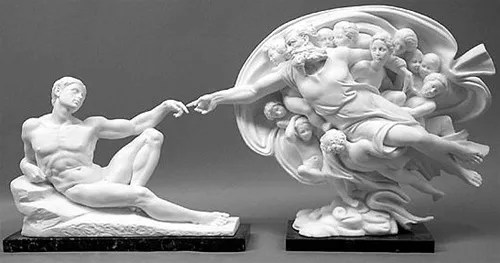
    The Adam-God theory is the theory that Adam and God the Father are the same person. This theory was mentioned by Brigham Young.

    First – Adam is not God the Father. Adam is not who we pray to. This does not fit the teachings of the scriptures, does not fit modern revelation, is not a doctrine of the restored gospel. So why are we talking about it, you ask?

    Second – Yes, Brigham Young did make some bold statements about Adam being God. He also made countless statements contradicting that statement. Brigham Young was a convert and a prophet. Try to imagine the dichotomy of those positions. Try to imagine someone a few years into the faith trying to lead the entire church. Is it so shocking that there were erroneous statements made, especially when we consider and understand the personality and boldness of the prophet who led the saints across the rugged wilderness of the West?

    Third – Because Brigham Young made incorrect statements does not mean he was a false prophet. It means he was learning line upon line, and he made false statements. He has made statements to try to help us, the people of the church, reconcile some of his more questionable comments. For example, when speaking generally about who Adam was and proposing some thoughts about Adam, Brigham started by saying, “I propose to speak upon a subject that does not immediately concern yours or my welfare….I do not pretend to say that the items of doctrine and ideas I shall advance are necessary for the people to know, or that they should give themselves any trouble about them whatever.. (Brigham Young, Oct 8, 1851). If it does not concern our welfare, don’t get too hung up on it. The church was young and growing when Brigham was prophet. God has always worked through us, mortals, to fulfill His works. This has always resulted in fallibility. Brigham Young was a prophet, even if he made mistakes in the thousands of public discourses he gave during his learning period as a prophet/convert.

    Fourth – Because prophets are fallible does not mean we cannot trust and follow them. As The Church has grown out of its infancy, it has strengthened itself in countless ways. One of those strengths has become the checks and balances of the church organization. The First Presidency and Quorum of the Twelve Apostles must be unanimous in any declaration of doctrine. President Nelson speaks hundreds of times a year. Not every word from his mouth (in my opinion) is scripture. It is guidance and direction from God’s anointed prophet, yes, but not scripture. But when President Nelson, the First Presidency, and the Quorum of the Twelve sign their names to a declaration, it becomes binding guidance on doctrine, church policy, etc. Such was the case with “The Family: A Proclamation to the World” for example.

    Now, the statement made by Brigham that when Adam and Eve came to the Garden of Eden they already had celestial, resurrected bodies is interesting. I more think they came with perfect bodies as they came directly from the Father and hadn’t yet been corrupted by the fall, not that they were necessarily resurrected bodies yet. Celestial, maybe, resurrected, I don’t think so. That’s all I will say on this matter, though, to support my point earlier that things that distract from our salvation should be discussed with caution. I haven’t done enough research, pondering, or praying to comment on this with much confidence and would hate for my children 150 years from now to claim I believed Adam was already resurrected when put in the Garden of Eden. See how these small comments can be blown out of proportion? Grateful I’m not a prophet.

    Another thought – the eternal nature of the plan of happiness is not something we can begin to comprehend. If it ultimately distracts us from our current efforts towards salvation, we should tread with ultimate caution. Such is the thinking about if Adam lived on another planet before he came here and countless other thought experiments that might distract from what is important, which is, Jesus Christ performed the ultimate atoning sacrifice for my sins. He died so that I can live. He suffered so I can be forgiven and can live with God, my Father, again. All other questions, while interesting and can expand our minds and thinking, if they distract from the ultimate source of our salvation – the Plan of Salvation and Christ’s personal role in it for us – should be avoided.

    Those are my thoughts on this from my research. Here are some final items to really, I hope, put this theory and any issues involved with it, to rest.

    As mentioned, Brigham contradicted himself many times on the idea that Adam was God. While he mentioned the idea a couple times in public, there are many other instances of Brigham Young speaking where he clearly separated Adam and God the Father as two separate individuals.

    BYU professor Stephen E. Robinson sums it up well:

    “Yet another way in which anti-Mormon critics often misrepresent LDS doctrine is in the presentation of anomalies as though they were the doctrine of the Church. Anomalies occur in every field of human endeavor, even in science. An anomaly is something unexpected that cannot be explained by the existing laws or theories, but which does not constitute evidence for changing the laws and theories. An anomaly is a glitch…. A classic example of an anomaly in the LDS tradition is the so-called “Adam-God theory.” During the latter half of the nineteenth century Brigham Young made some remarks about the relationship between Adam and God that the Latter-day Saints have never been able to understand. The reported statements conflict with LDS teachings before and after Brigham Young, as well as with statements of President Young himself during the same period of time. So how do Latter-day Saints deal with the phenomenon? We don’t; we simply set it aside. It is an anomaly. On occasion my colleagues and I at Brigham Young University have tried to figure out what Brigham Young might have actually said and what it might have meant, but the attempts have always failed. The reported statements simply do not compute—we cannot make sense out of them. This is not a matter of believing it or disbelieving it; we simply don’t know what “it” is. If Brigham Young were here we could ask him what he actually said and what he meant by it, but he is not here…. For the Latter-day Saints, however, the point is moot, since whatever Brigham Young said, true or false, was never presented to the Church for a sustaining vote. It was not then and is not now a doctrine of the Church, and…the Church has merely set the phenomenon aside as an anomaly.”

    From the link above previously mentioned:

    “As far as can be determined, none of Brigham Young’s successors in the presidency of the Church continued this teaching in public, and by the presidency of Joseph F. Smith (1901–18) there were active moves to censure small groups that taught Adam-God.

    One of the earliest statements from the Church rejecting Adam-God teachings was made by Charles W. Penrose in 1902:

    The Church of Jesus Christ of Latter-day Saints has never formulated or adopted any theory concerning the subject treated upon by President Young as to Adam.

    In October 1976 general conference, Spencer W. Kimball declared the Church’s official position on Adam-God:

    We warn you against the dissemination of doctrines which are not according to the Scriptures and which are alleged to have been taught by some of the General Authorities of past generations. Such, for instance, is the Adam-God theory. We denounce that theory and hope that everyone will be cautioned against this and other kinds of false doctrine.‘”

    Other statements by future general authorities refuting Brigham Young’s opinions:

    Bruce R. McConkie – “What I am saying is that Brigham Young, contradicted Brigham Young, and the issue becomes one of which Brigham Young we will believe. The answer is we will believe the expressions that accord with the teachings of the Standard Works.”

    And Brigham Young himself – “I am more afraid that this people have so much confidence in their leaders that they will not inquire for themselves of God whether they are led by Him. … Let every man and woman know, by the whisperings of the Spirit of God to themselves, whether their leaders are walking in the path the Lord dictates, or not.”

    Finally, while some might consider everything said here to be a sign that the church changes and is “wrong,” I would completely refute that. The church is changing. The church is growing. The church is living.

    Doctrine and Covenants 1:30 is Christ speaking and reads “And also those to whom these commandments were given, might have power to lay the foundation of this church, and to bring it forth out of obscurity and out of darkness, the only true and living church upon the face of the whole earth, with which I, the Lord, am well pleased, speaking unto the church collectively and not individually.”

    While so many would criticize the Church of Jesus Christ of Latter-day Saints for changing, the Lord describes it as living. The only living church on the face of the earth. This is a power of Christ’s church- not a weakness.

  • A Dream About Prophets

    A Dream About Prophets

    I had a dream last night.  In it I was going down a stream.  I had the feeling of leaving civilization for the wilderness.  I came to a cliff.  I climbed to the top and on the precipice there was a small and shabby tent erected.  I went inside and there was an old prophet.  I spoke with him.

    A new prophet came.  The new prophet was well dressed and well-kept, not like the old prophet living in a tiny tent on the edge of a cliff.  The new prophet was respected, and I knew he came from a comfortable home.  He was well regarded by society and lived comfortably in the world.  He was told he had to take the place of the old prophet and live there in the wilderness, in a tent.

    When I woke up from this dream, I had a feeling it was important, but I couldn’t figure out why.

    What was this dream telling me?

    I write down all my dreams.  But this one felt important.

    Was Russell M. Nelson the new prophet?  Was he of the world?  Was he flawed?  What was the dream telling me?

    As I meditated in the morning, I continued to ponder this question.  On my drive into the office, I prayed to know if there was something I was supposed to glean from this dream.  I asked specifically that if there was something important that I was supposed to learn to please allow my reading for the day to guide my mind to understanding.

    I’m in Mosiah chapter 3 and Doctrine and Covenants section 133 respectively in my daily scripture study.  A few hours later I was reading verse 71, exactly where I’d left off the day prior, of section 133, which reads:

    “Behold, and lo, there are none to deliver you; for ye obeyed not my voice when I called to you out of the heavens; ye believed not my servants, and when they were sent unto you ye received them not.”

    Alongside D&C I’m reading a commentary.  The commentary for verse 71 said:

    Why Are the Prophets Rejected?

    President Spencer W. Kimball commented:

    “Various excuses have been used over the centuries to dismiss these divine messengers. There has been denial because the prophet came from an obscure place. ‘Can there any good thing come out of Nazareth?’ (John 1:46.) Jesus was also met with the question, ‘Is not this the carpenter’s son?’ (Matt. 13:55.) By one means or another, the swiftest method of rejection of the holy prophets has been to find a pretext, however false or absurd, to dismiss the man so that his message could also be dismissed. Prophets who were not glib, but slow of speech, were esteemed as naught.…

    “We wonder how often hearers first rejected the prophets because they despised them, and finally despised the prophets even more because they had rejected them. Even so, why else is the record of rejection so complete? The cares of the world are so many and so entangling, even very good people are diverted from following the truth because they care too much for the things of the world.…

    “Sometimes people let their hearts get so set upon things and the honors of this world that they cannot learn the lessons they most need to learn. Simple truths are often rejected in favor of the much less-demanding philosophies of men, and this is another cause for the rejection of the prophets.

    “But while there are various excuses for rejection, there’s a certain cause for this sad record. It must not be passed over: the cares of the world, the honors of the world, and looking beyond the mark are all determined by a persuasive few who presume to speak for all.…

    “The holy prophets have not only refused to follow erroneous human trends, but have pointed out these errors. No wonder the response to the prophets has not always been one of indifference. So often the prophets have been rejected because they first rejected the wrong ways of their own society.

    “These excuses for rejection of the prophets are poor excuses. The trouble with using obscurity as a test of validity is that God has so often chosen to bring forth his work out of obscurity. He has even said it would be so. (See D&C 1:30.) Christianity did not go from Rome to Galilee; it was the other way around. In our day the routing is from Palmyra to Paris, not the reverse. Just because something is in our midst does not mean that we have been in the midst of it. We can daily drive by a museum or an art gallery but know nothing of what is inside.

    “The trouble with rejection because of personal familiarity with the prophets is that the prophets are always somebody’s son or somebody’s neighbor. They are chosen from among the people, not transported from another planet, dramatic as that would be!…

    “Of course, rejection of the holy prophets comes because the hearts of people are hardened, as people are shaped by their society. Yet even when the hardening is swift, it can also be subtle. Who, for instance, a scant twenty years ago would have foreseen the massive use of abortion in society today? Like all the diseased doctrines of the devil, the practice is pleasing unto the carnal mind.

    “Prophets have a way of jarring the carnal mind. Too often the holy prophets are wrongly perceived as harsh and as anxious to make a record in order to say, ‘I told you so.’ Those prophets I have known are the most loving of men. It is because of their love and integrity that they cannot modify the Lord’s message merely to make people feel comfortable. They are too kind to be so cruel. I am so grateful that prophets do not crave popularity.” (In Conference Report, Apr. 1978, pp. 115–16; or Ensign, May 1978, pp. 76–77.)

    It wasn’t until the very end of that statement from Spencer W. Kimball that it hit me, and I remembered – I asked for guidance in what I read today to help with my dream.  I dreamed of prophets, now I was reading a long commentary from a prophet about why prophets are rejected.

    I thought back on my dream.  I had correctly believed that Russell M. Nelson was the “new prophet.”  What I incorrectly interpreted was that Russell M. Nelson was “of the world” or wrong in some way.  My dream gave me a feeling that he was flawed.  That he was attached to the comfortable home and respectful world he lived in.

    After reading that comment from Spencer W. Kimball, I realized there was no flaw in Russell M. Nelson. 

    The attacks on prophets are starting to escalate in our current society.  See the recent backlash against Jeffrey R. Holland as an example.

    The eternal and correct view of prophets on gender, marriage, and the importance of the family is under attack.  Prophets will not deny truth.  They will continue to speak truth even as they are rejected by the world.

    Nobody embodies a “loving man” more than Jeffrey R. Holland.  If you’ve ever watched one of his tear-filled and tear-jerking General Conference addresses, you know that the man emanates love for us, for followers of Jesus Christ and for all of God’s children.

    “Those prophets I have known are the most loving of men. It is because of their love and integrity that they cannot modify the Lord’s message merely to make people feel comfortable.”

    No statement has ever fit Jeffrey R. Holland more accurately.

    I started making connections between my dream and what it was trying to tell me, so I went back and re-read where I was at in Mosiah 3:18, 19 (the verses I read before D&C that day).  It reads:

    18 “For behold he judgeth, and his judgment is just; and the infant perisheth not that dieth in his infancy; but men drink damnation to their own souls except they humble themselves and become as little children, and believe that salvation was, and is, and is to come, in and through the atoning blood of Christ, the Lord Omnipotent.

    19 “For the natural man is an enemy to God, and has been from the fall of Adam, and will be, forever and ever, unless he yields to the enticings of the Holy Spirit, and putteth off the natural man and becometh a saint through the atonement of Christ the Lord, and becometh as a child, submissive, meek, humble, patient, full of love, willing to submit to all things which the Lord seeth fit to inflict upon him, even as a child doth submit to his father.”

    “And the infant perisheth not that dieth in infancy.”

    “but men drink damnation to their own souls except they humble themselves and become as little children.”

    “For the natural man is an enemy to God.” 

    “And becometh as a child.”

    “even as a child doth submit to his father.”

    “Who, for instance, a scant twenty years ago would have foreseen the massive use of abortion in society today? Like all the diseased doctrines of the devil, the practice is pleasing unto the carnal mind.  Prophets have a way of jarring the carnal mind.”

    I think my dream was reminding me what I already know to be true.  We are in the time where our society has fully rejected the prophets.  The attack on them is going to increase.  Russell M. Nelson has been a respected heart surgeon, kind, gentle, grandfatherly figure.  I believe we are quickly approaching the time that he will be cast into the wilderness and hated by a world that has always hated prophets.  I believe this is what my dream was telling me.

    Those of us with faith in Jesus Christ and His anointed servants must keep firm in our faith in Him, and in His servants.  Don’t be shaken by the attacks on His chosen servants.  If you do, your faith in Him (Jesus Christ) can be shaken next.  Trust in whom He has chosen.  Follow them as you follow Him.  The Lord’s prophets will not lead us astray.  Russell M. Nelson is the Lord’s anointed and he is our prophet.  As the world turns on Jesus Christ’s prophet, we must support and protect him from a world that will hate what he and our Lord stand for.

    For more on this topic, I read this blog post that elaborates on the dangers of choosing what we do and do not want to believe from prophets. Click the image below to read the post:

    Why it is dangerous to throw away prophets you dislike