Outside of the Church of Jesus Christ of Latter-day Saints, what does Christianity believe about the after-life? Generally speaking, Christianity believes that we are born on earth, live our lives, die, are judged, and assigned to either heaven or hell.
I heard something on an awesome podcast called Unshaken Saints recently that I’d never realized. What the host of the podcast pointed out was that Christianity has it right. Christianity is just missing the beginning and the end.
As I stated, Christianity believes in life on earth, then judgement, then heaven or hell.
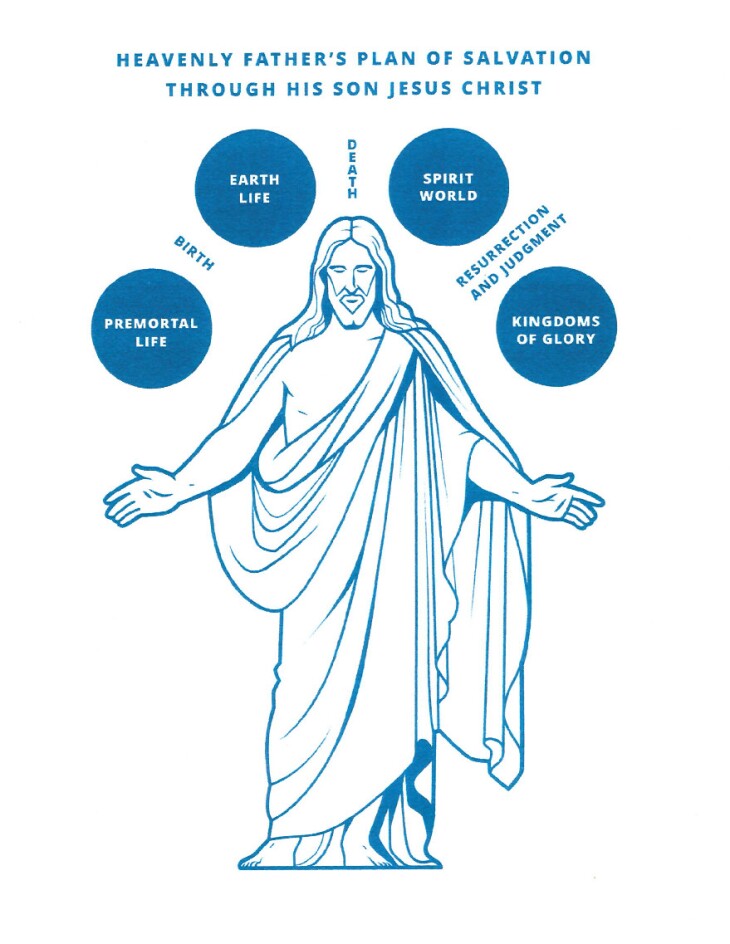
The truth is that life doesn’t start here on earth. This is the beginning that Christianity is missing. We lived long before we came to earth. There are many truths that stem from our understanding of our premortal existence. One of the most important truths that premortality provides us is an understanding of agency. We chose to come here. This life wasn’t thrust upon us. This is the missing beginning.
The truth after death (the end) is that we are temporarily assigned to either “spirit prison” or “paradise,” but this isn’t our final resting place. After our temporary assignment to prison or paradise, we receive our final judgement that the scriptures speak of. This is when we come before God and Jesus Christ, Jesus Christ as our advocate to the Father and our judge before God. This is where we either accept Jesus Christ and the mercy He has given us and are reconciled to God, then assigned our glory by the mercy of God and His Son, Jesus Christ; or we reject Jesus Christ and are cast out to outer darkness. We must willfully reject God, Jesus Christ, and the mercy we are given to be cast off. This is the hell that Christianity understands.
There will be glory assigned to all of God’s children. How can that be? It can be because He loves us that much, so much that He gave His only Begotten Son to save us.
Christianity thinks the final judgement is immediately after we die. The beauty of the Plan of Salvation is the realization that everyone will have an opportunity to accept Jesus Christ. Everyone will be taught and be given a fair chance. Spirits in “prison” will learn what they missed on earth. No one will be left out. Children are alive in Christ (Moroni 8:12). No one will be lost.
This is what Christianity misses. The beginning and the end. Premortality and the final judgement. If you cut off the beginning and the end of the Plan of Salvation, you have life on earth and spirit prison or paradise. That’s missing half the picture. We lived before we came here. We were loved by a loving Father in heaven before we came here. At the end, we will be judged for our actions, all we did on earth, our heart’s intent, our good deeds and bad, what we provided in this speck of time that will send us on an eternal trajectory. The beginning and the end. That’s what Christianity misses by rejecting further revelation by God’s prophets.
What does this do to Christianity?
Christianity believes we started here on earth. What does that do to our agency? We didn’t choose to come here. We didn’t know God before we came, who is He to us? This is what Joseph Smith spoke of when he talked about the First Vision. He said he learned that God and Jesus Christ knew him by name. For me, that knowledge is so engrained in my soul and being, it’s something I know, that God knows me. The Christianity Joseph Smith knew prior to the First Vision led him to be surprised that God could know him. I’m grateful for the truth God provided Joseph Smith when he appeared to him in a grove.
Back to what Christianity believes – we come to this earth by no choice of our own, sent by a God we don’t know or understand. We come to this earth to suffer by the sweat of our brow, a fallen world, a cruel world, a challenge we don’t understand, a challenge we didn’t choose. Then God judges us and casts 90% of us off. Most are cast off because they never knew God or Jesus Christ, no fault of their own.
This is what Christianity believes.
The podcast provided another analogy that made me think about how this misunderstanding of the Plan of Salvation limits Christianity.
There are two young men sitting outside of a Bishop’s office. One of the boys doesn’t want to be there. He doesn’t understand why he’s there. All he knows about the Bishop is that he’s a wrathful, unkind, harsh man. This young man fears the Bishop.
The other young man knows the Bishop. He knows him to be just and kind. He knows the Bishop loves him and only wants what’s best for the him.
As the first boy waits, he feels like he is in prison. He is dreading the upcoming confrontation with this unkind bishop.
What does the second young man experience? Is he not in a paradise? He knows he’s soon to meet a friend. That friend is going to give him a treat, congratulate him on how he’s been doing, give him a hug and tell him he loves him. This second young man welcomes the meeting with the Bishop.
The lack of knowledge in Christianity represents the first young man. Christianity doesn’t know God. By removing the premortal existence, life with a loving Father before life on earth, a Plan to come to earth and progress, a chance to learn of Him after this life, and then to be judged after being given all the necessary information, Christianity only sees a confusing, wrathful God, who has unfairly judged them.
The Plan of Salvation is a beautiful truth that Christianity is missing. Far from being completely ignorant, Christianity is really close. But this closeness, without the full truth, is extremely limiting.
ALL of us on earth chose to come to earth. All of us already chose Jesus Christ.
This is a powerful truth. I wish the rest of Christianity could see, understand, and accept the further light and knowledge that makes this life understandable and worth living.
 No Coincidences