Tag: study

  • Satan’s Story Continued: What I learned from the Qur’an

    Satan’s Story Continued: What I learned from the Qur’an

    In Satan’s Story, I explored the origins of Satan before we came to earth.  This was back when we knew Satan, in the premortal existence.  This was when he was attempting to (mis)lead us.  It was an interesting revelation for me to learn what led to Satan’s revolt.

    If you haven’t read that post, you can click the link (Satan’s Story) above to read it.  It’s not required to understand this post.

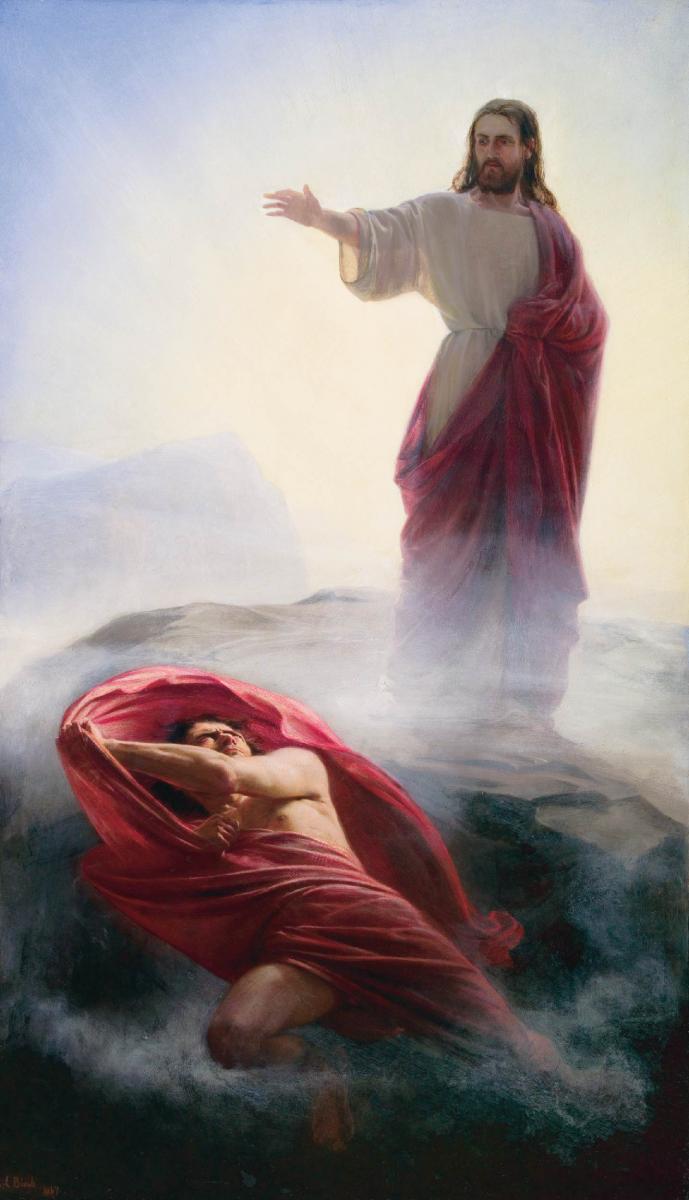
    In this post I’d like to explore a little more about the Father of all Lies (John 8:44).

    I’d like to give the same sort of disclaimer I gave in the first post.  My interest in studying Satan is to further my testimony of One person.  That is Jesus Christ.  By studying Satan, I am studying the exact opposite of all that Jesus Christ is.  By studying Satan, I hope to understand him better only to avoid the same traps he is laying today that he laid in the premortal existence.  Those traps led to 1/3 of our brothers and sisters coming out in full rebellion to the light and love that created us.

    First, an update.  After I finished writing and had posted Satan’s Story (part 1), I started a book called Islam by John Alden Williams.  This book contains a quick historical overview of the beginning, development, growth, laws, and customs of Islam. 

    The book started with reviewing portions of the Qur’an (Koran? Quaran?).  While reading, I came across some interesting text about Satan. 

    I’ve found there are many translations of the Qur’an, similar to our modern day Bible. This was the text provided in the book (my own emphasis and commentary in parentheses added):

    “We created you, then we shaped you,

    then we said to the angels: ‘Bow yourselves

    to Adam’; so they bowed themselves,

    save Iblis (Iblis = Satan)-he was not of those

    that bowed themselves.

    Said He (God), ‘What prevented thee to

    Bow thyself, when I commanded thee?’

    Said he (Satan), ‘I am better than he; Thou

    createdst me of fire, and him Thou

    Createdst of clay.’ (God created Adam out of clay)

    Said He (God), ‘Get thee down out of it;

    It is not for thee to wax proud here,

    So go forth; surely thou art

    Among the humbled.’

    It goes on to provide other interesting details about Satan being cast out of heaven.  I find it interesting that so many of the world’s religions and especially the many sects of Christianity have such unique views on Satan’s story.  I think the mythology and legend of Satan in all cultures goes to show the significance of Satan on all of us here. 

    Another noteworthy item from the above, notice the first two lines. We created you. We said to the angels. Who are we? If it is only God, why is he referring to we? Joseph Smith taught and the Church of Jesus Christ of Latter-day Saints theology teaches us that we is referring to Jesus Christ and God.

    That portion of Satan speaking in the Qur‘an I found to add somewhat to the idea that Satan ultimately revolted because he was jealous of Adam and prideful, feeling he deserved the honor that Adam received. We see that pride is the great detriment to all souls. Pride took Satan from “an angel of God who was in authority in the presence of God” to one called Perdition, who fell, who the heavens wept over. (Doctrine and Covenants 76:25-27)

    The book goes on to say that Adam inherited the earth with his wife.  While there “Satan whispered to them…And he swore to them, Truly, I am for you a sincere adviser.”

    So, we see that Satan was a liar and has always been a liar, “from the beginning” (D&C 93:25, John 8:44).

  • Godhead – My Understanding

    Godhead – My Understanding

    Two posts ago I discussed the doctrine of the Trinity and my opposition to it.

    This will be a much gentler post, detailing how I personally come to the belief and understanding of the Godhead as true doctrine. 

    First, an explanation I didn’t give last time. Definitions:

    1. Trinity or Trinitarian belief:  God is one God, but three coeternal and consubstantial persons; the Father, the Son, and the Holy Spirit.  The three persons are distinct, yet are one “substance, essence or nature” (homoousios).  In this context, a “nature” is what one is, whereas a “person is who one is. (From https://en.wikipedia.org/wiki/Trinity).  (Also, huh?).
    2. Godhead: God the Father, Jesus Christ, and the Holy Ghost form a group known as the Godhead.  Each member is a different, individual being, yet all three are united in thought, desire, knowledge, power, and purpose. (From https://www.churchofjesuschrist.org/media/video/2019-08-0080-godhead?lang=eng). (Also, visit that link to watch a 7-minute video to learn more).

    How can I say “I know” the Godhead to be true?

    The Godhead is one of the unique beliefs of the Church of Jesus Christ of Latter-day Saints. 

    A majority of Christianity believes in the Trinity.

    In this post, I won’t go into detail on the doctrine, differences, importance, history, etc. of the distinctions between Trinitarian and Godhead belief.  That I’ll likely save for another day.  In this post I simply want to explain how I have come to know for myself that the Godhead is true and correct doctrine.

    The short answer to how I can know the Godhead to be true is:

    Through study, prayer, and upbringing.

    My understanding of this principle and the knowledge I have of it can be broken down very simply.  It’s a similar breakdown that explains much of my testimony in the restored gospel.

    In reading the Book of Mormon, I know without a shadow of a doubt that it is the word of God.  I know that it was translated through the power of God.

    If the Book of Mormon is true, then Joseph Smith is a prophet. 

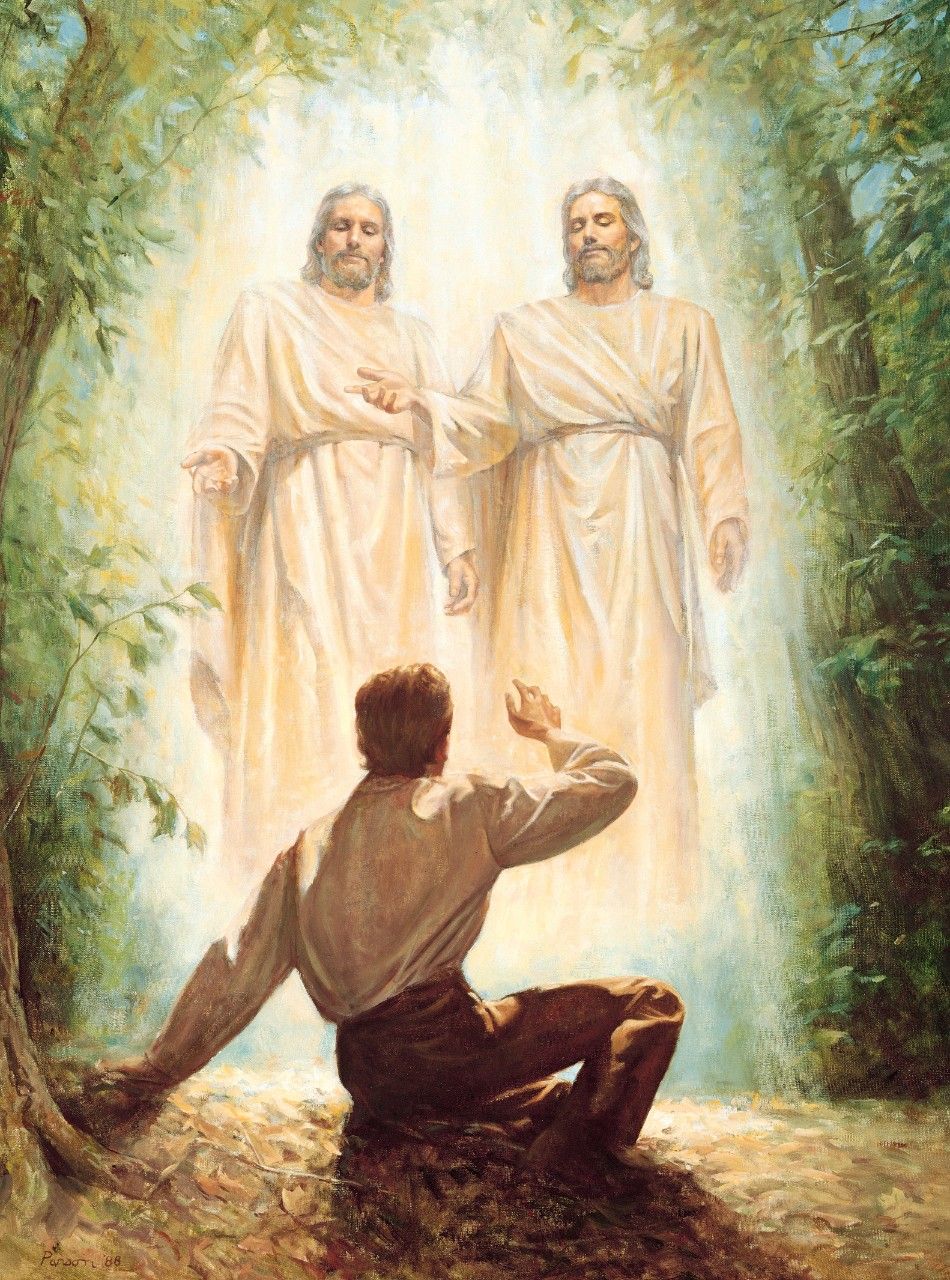
    Joseph Smith told us he saw God the Father, and Jesus Christ on His right hand.

    Joseph Smith History 1:17:

    It no sooner appeared than I found myself delivered from the enemy which held me bound. When the light rested upon me I saw two Personages, whose brightness and glory defy all description, standing above me in the air. One of them spake unto me, calling me by name and said, pointing to the other-This is My Beloved Son, Hear Him!

    Joseph Smith never wavered on this fact. 

    This could be where it ends, but I’ll add some notes on upbringing and study.

    Upbringing – obviously, I must mention that my upbringing played a role in my believing this to be true.  I was raised to believe in the Godhead; therefore, it is much easier for me to accept as truth.  That said, it was up to me to ask questions, read the book for myself, study Joseph Smith’s history and understand the principle for me to come to the knowledge.  Because I was raised to believe it to be true didn’t make it true.  Which leads to the next point.

    Study – As I said, through study and research I have determined the Book of Mormon to be the word of God.  It is an inspired book. 

    Prayer – My testimony of the Book of Mormon, mentioned in study, not only comes from logical, mind-centered study, but from personal revelation.  I’ve felt the Book of Mormon is true.  I’ve prayed to know the Book of Mormon is true.  I’ve received my answer, through prayer, that the Book of Mormon is true.  Prayer is an irreplaceable ingredient. 

    The principle of the Godhead has been distorted, attacked, and misunderstood for centuries.  One of the first attacks Satan always makes is on the nature of God.  If Satan can confuse us on who God is, he can confuse us on who we are.  We are children of the Almighty God. 

    I am grateful for modern revelation and prophets that make simple and powerful truths known.  I am grateful to know that while God is magnificent and powerful, He is not un-knowable.  The understanding of God as my Heavenly Father and Jesus Christ as my brother, who gave His life for me, strengthens my faith and helps me put my trust in them.

    This truth is eternal, and this truth is important. 

  • Listen, Learn, Love

    Listen, Learn, Love

    I recently listened to an episode from a podcast called Listen, Learn Love.  This podcast has opened up my ways of thinking on a few topics.  The episode I listened to recently I basically want to summarize (steal) because the points made are so simple, so well-said, and so true. 

    Here is a link to the website for the podcast if you want to learn more: https://www.listenlearnandlove.org/

    The episode I recently listened to that I’m writing thoughts on here is episode 2 and can be found if you search for podcast “Listen, Learn, and Love.”

    The podcast is hosted by Richard Ostler.  He is a former Young Single Adult Ward Bishop.  He has now done 334 episodes of his podcast which “was created out of the desire to better understand our LGBTQ+ brothers and sisters.  We believe in God and in His decree to love one another.” – from the mission statement on the website. 

    Episode 2 does not focus on the LGBTQ+ topic which I feel is an extremely important topic in the church.  Still, this episode is also important and I learned a lot from it.

    The topic was faith-crisis.  Whether minor or major, any faith crisis is difficult to go through.  When I was returning to church my uncle said something that has stuck with me.  He said he wouldn’t wish the losing of faith on his worst enemy.  You can lose cars, homes, family, money, everything in this world, but losing your faith is the hardest thing that a person can possibly go through.

    As I continue to write I will be presenting many ideas that came directly from Brother Ostler.  Please listen to the episode.  For ease of writing, I won’t reference Brother Ostler in everything I’ll continue to say. Just know most of these thoughts came directly from him, and I hope to re-state them without taking too much away from them.

    In my writing, I often refer to “The Church.” When I say this I am referring to the Church of Jesus Christ of Latter-day Saints.  Something I’d never considered is how important it is to clarify what we mean when we say, “The Church.” The Latter-day Saint Church could mean different things to different people.

    A couple categories for “The Church” are

    1. The Gospel of Jesus Christ.
      • This was described beautifully by Brother Ostler as a pristine, clear-watered pool.  No murkiness.  The Gospel of Jesus Christ is perfect in every way. This hasn’t been completely revealed yet.
    2. The restored Church of Jesus Christ.
      • It has the restored priesthood and priesthood keys. Ideally, this would be perfect.  I think we sometimes confuse this category with the next category I’ll mention.  The restored Church of Jesus Christ should be perfect.  The problem is, as we know, Christ must use fallible men and women to run His church.
    3. The institutional church.
      • This is where we get into a flawed organization. The institutional church has many people, programs, and policies that are meant to implement the Gospel of Jesus Christ.  The institutional church is run by men and women and therefore has flaws.  Christ guides the institutional church, but people make mistakes. Brother Ostler points out in the podcast that as a YSA Bishop he was a part of the institutional church and he knew he made mistakes as a Bishop, a leader in the church.

    Much of the hurt that comes into the souls of God’s children is caused by the institutional church.  It is critical to not confuse “The Church” the institution with the pure and perfect Gospel of Jesus Christ.

    A faith crisis is a serious event that can happen to anybody. You can’t always read and pray a faith crisis away.  We are here to develop faith and while here our faith will be tested.  Sometimes to the very brink.  It’s important to get our roots in the correct place.  Is your faith in a bishop?  It shouldn’t be, it should be in Jesus Christ.  The best bishop in the world can let you down.  Jesus Christ can not.

    The fourth article of faith: “We believe that the first principles and ordinances of the gospel are: FIRST, faith in the Lord Jesus Christ. 

    The Articles of Faith can be read here.  I invite everyone to read and focus on the first four articles of faith in the Restored Church of Jesus Christ.  You’ll notice not only is Jesus Christ’s name in the name of the Church, but that He is referenced three times in the first four articles. 

    Our foundation must be on Christ.

    Brother Ostler talked about the Policy Statement of 2015 and how it created a “mini faith crisis” for him.  These were changes made by the institutional church and have since been reversed.  He talked about how difficult that was for him, personally.  He is not the first person I’ve heard that was impacted in a sad, difficult way by those changes.  He emphasized that the brethren (leaders of the church) were doing their best.  Brother Ostler referred to dominoes, and how the policy statements started to make dominoes fall in his faith.  What saved Brother Ostler’s faith was that all his dominoes didn’t fall.  As he stated so perfectly, some of his dominoes had roots to the center of the earth and couldn’t be shaken.  He referenced Jesus Christ, priesthood blessings, and temples as the foundation of his faith.

    The 2015 Policy Statement is a good example of what separates the institutional church from the Gospel of Jesus Christ. The institutional church can and does make mistakes. Jesus Christ does not reverse. Jesus Christ does not change.

    We must change the way we discuss faith crises.  There are too many people who leave the church because they don’t feel heard.  The idea that you can read or pray away a faith crisis is inaccurate and often leads individuals to feel like the “Church” is avoiding their concerns.  We have to listen, as the Savior did, to those with concerns.  Ask questions.  Having a faith crisis does not mean someone is sinning.  It can mean that, but it doesn’t always.  Brother Ostler is a perfect example.  His self-described “mini faith crisis” came while he was a YSA bishop spending dozens of hours each week in service to others.  He was reading, praying, and serving as much as anyone could at that time.  Imagine telling a bishop he needs to pray more, or read more, or do more to fix your problem.  One could rightfully be turned off by this suggestion.

    We must stop considering a faith crisis as a dirty topic that we must avoid.  Thousands are having one at this moment.  Those with unshaken faith must support and lift those who have a hard time. We must address questions head on and strengthen our faith together. We must strengthen each other. We are family. The Gospel of Jesus Christ is meant for everyone. 

    Now I’d like to share some of my personal story.  I returned to church in 2016.  I narrowly missed being an active member of the church when the policy statements came out.  I know this was a hard time for the church.  I know many people left.  I know many people, like Brother Ostler, were shaken by the announcement. 

    I’ve often thought about my faith.  I feel fortunate and blessed to have never experienced a personal faith crisis.  Even in my time away from the church, I never doubted that Jesus Christ died for me.  I never doubted Joseph Smith was a prophet.  I never doubted the restored Church of Jesus Christ.  I never doubted the Church of Jesus Christ of Latter-day Saints.  While I was living completely opposite to some of the teachings the church, I still knew it was true.  I know I caused many head scratches from those who witnessed my verbal devotion while clearly ignoring all the precepts of the church.

    I said my faith has always been a blessing to me.  I believe it has.  When I was living opposite to the principles of the gospel it felt like a curse.  I’m sure I will need to answer for that one day.  If I knew it so much to be true, I believe I’ll be more accountable for my behavior.  Maybe that’s what gives me so much faith in Jesus Christ.  I know how important His Atonement is to me personally.  I have too many spots on my garments.  Without Him I am a damned soul. 

    Maybe that’s difficult for others who have never grievously sinned.  It’s easy to appreciate a lifeboat when you’re sinking in the ocean.  What if you’re safe on shore, do you still have the same appreciation for the lifeboat?  I’m not implying those who have lived just, kind, good lives start to finish are in anyway unappreciative of the sacrifice Jesus Christ made for them.  I’m truly amazed by those I see that have been faithful and true for all of their mortal journey.  I can only speak for myself.  I was not true for all of my journey and it makes me worship and love my Savior so intensely. 

    I wonder what would have happened if I was in church in 2015.  Would I have struggled?  Would I have left?

    I don’t know the answer to many questions.

    A book I read recently repeated the idea that we (humanity) know so much; space travel, geography, math, science.  Ask someone to give some thoughts about nature or history and everyone can provide some insight.  Ask someone to provide some thoughts about who they are, and they will struggle.  We often know and understand ourselves least of all the things in the world. I take comfort in knowing there are two individuals who know me infinitely better than I currently know myself.

    I want to give advice to anyone currently in a faith crisis.  Fight.  Don’t lose your faith.  Please.  It’s the most valuable thing on this earth.  You can lose your family, money, cars, your home, and you can lose your faith.  I hope we all fight for our faith.  Focus your faith on what is most important.  All your questions – ask them.  Doubt.  Wonder.  Have concern.  Voice your concerns.  But don’t forget where faith should lie.  Jesus Christ is the only name whereby men can be saved (Acts 4:12).

    Sometimes people will hurt, disappoint, or let you down. Sometimes those people may be leaders you trust. We all hurt and disappoint people we love. We must hope that we will receive mercy for the hurt we cause, and therefore should show mercy to those who hurt us. The great giver of all mercy is Jesus Christ. He loves each of us. He wants each of us to do whatever we can to come closer to Him. Stay close to Him and He will never let you down.

    Find those experiences in your memory that remind you that Jesus Christ guides His church.  Read the Book of Mormon and ask yourself if it could be false.  Then ask yourself, if it is false, how can it so perfectly testify of Jesus Christ?

    Find your foundation in sure things.  The pure faith in Christ.  Then fight for that faith.  We hope the Church of Jesus Christ of Latter-day Saints can be a faith building organization for all.  We hope that the covenants we make can strengthen our faith and the faith of those around us.  But at all costs, do not mix the pure, perfect, pristine waters of the Gospel of Jesus Christ with the sometimes-murky institution run by us here on earth.
  • Paul’s Life and Letters

    Paul’s Life and Letters

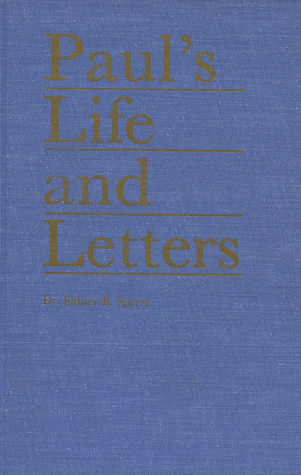
    Book Review: Paul’s Life and Letters

    By Dr. Sidney B. Sperry

    Copyright 1955

    __________________

    This book was a breakdown of Paul’s life and everything he ever wrote – thus the title.  I haven’t read the New Testament beginning to end.  I want to finish the Old Testament first.  This book helped me get a better understanding of Paul’s writings.  His writing was deep and powerful.  I also think his writings have always been and are increasingly misunderstood.

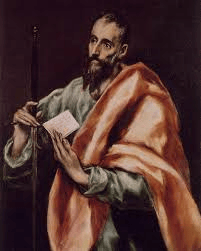
    Paul was such a fascinating figure.  I’ve long wondered what it would have been like to be alongside him.  Everything he did he did with such zeal.  Reading and learning about him, I’m awed by his work ethic.  He’s somebody to be admired for his hard work.  The fervor with which he did whatever he put his mind to.  It’s motivating on one hand and terrifying on the other.  Few can live up to the devotion Paul had to what he was passionate for.  We are lucky his passion turned towards the Gospel of Jesus Christ and worship of God as we’ve seen how his efforts against the early saints caused much pain and suffering.

    The book starts with a history of Paul.  Where he was from, who he was, how he became who he became.  The beginning was basically a historical biography of who Paul was.  As Paul got into the portion of his life where he was writing so much, the book transitions.

    This book is one I will refer back to often as I continue to study scripture.  It had a great breakdown of Paul’s individual epistles and when they were estimated to be written.  For example, chapter 13 was “Paul’s third missionary journey (continued).”  It gave a detailed breakdown of the epistle to the Galatians including everything Paul said, the authenticity, importance, style, and doctrine from that epistle.  I would find myself marking entire pages during these chapters. 

    There were many notable things I learned about Paul from this book.  One was that he worked throughout his missionary ministry.  Despite travelling all over the ancient world and spending many, many years as a full-time missionary, it never appears that Paul was paid for his ministry.  He was given “gifts” from church members from time to time.  But it seems very clear that Paul always worked.  The predominant theory is that he was a tent builder.  I found this very interesting given that many modern-day ministers point to Paul’s writings as proof that Paul advocated a paid ministry. 

    One amazing thing about this book was the feeling I had while reading it.  Especially while reading the breakdown of Paul’s letters.  There were moments where I’d pause and ask myself what I was feeling.  This isn’t normally something I do, but I was aware I was feeling something.  It was joy.  It was a feeling like, ‘what is this earth and what does it really matter but to be a test for something greater?  Live righteously and prepare to live with Christ and God forever.’  While reading his writings everything seemed so clear and simple.  It was a feeling in my chest while reading his messages.  Pure joy.  Pure peace.  Pure comfort in the future if I am faithful.  Motivation to be faithful.  As long as I am obedient and keep faith, I truly have nothing to fear.  It’s a similar feeling to what I get when I read the Book of Mormon.  That testified and made it so clear to me that what I was reading was the word of God, meant to lift up and inspire.

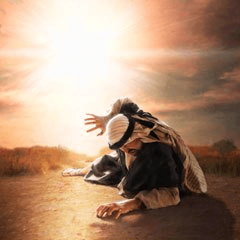
    I’m grateful for this book and the understanding it gave me of Paul and his writings.  As I mentioned, I know I’ll be using this book often as I continue to read scripture and one day study Paul’s writings more intently.  The principles Paul taught were pure.  He was called by Jesus Christ Himself which tells us of the importance of Paul’s work.  The missionary effort Paul put forth and his contribution to building God’s kingdom is inspiring.  He has the greatest conversion story of all time.  We could all be better if we spent more time aspiring to be like Paul the Apostle.