Tag: testimony

  • Incommensurable

    Incommensurable

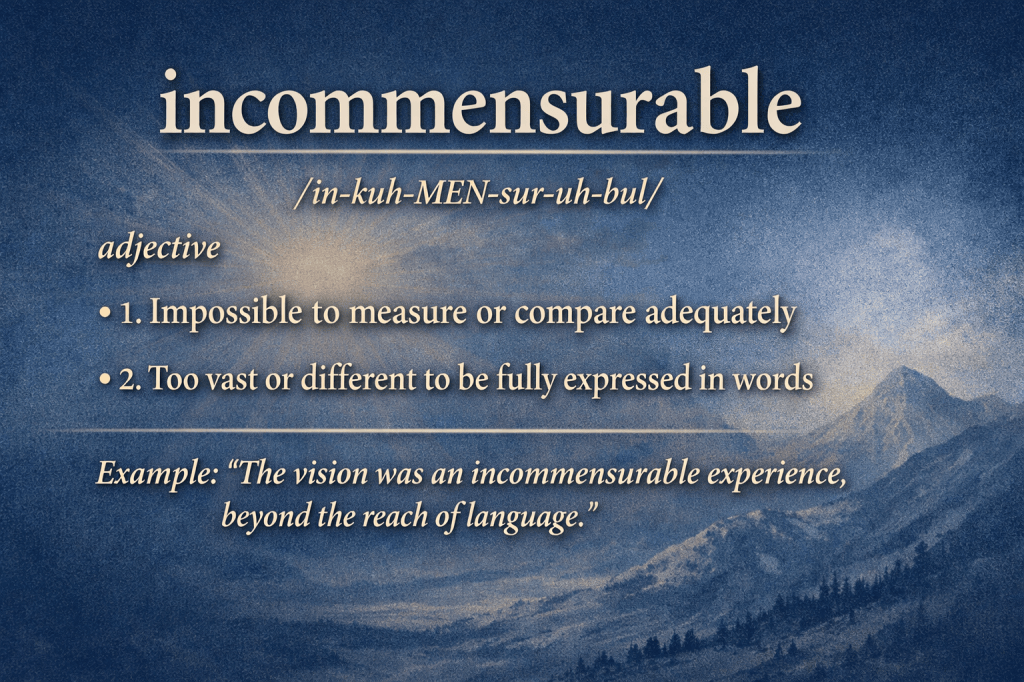
    I was listening to a podcast about the incommensurability of Joseph Smith being able to describe what the translation process for the Book of Mormon was like.  

    Incommensurable is like indescribable, without relation to anything, unquantifiable.  

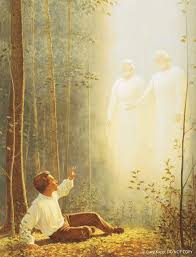
    Joseph Smith had many experiences, including the First Vision, that were incommensurable and therefore difficult for him to describe.

    I’ve written 330+ posts at this point. In many of them, I’m trying to describe incommensurable things. I’m trying to describe my testimony. I’m trying to describe my experiences. I’m trying to describe a change that has happened inside me. I’m trying to describe things I know to be true. These things, without the reader feeling my emotions, my heart, my chest, my mind, without being in my skin, words can’t describe many of the things I try to write and share. 

    I wish I could hand the testimony I have of the Book of Mormon and of Jesus Christ’s sacrifice for me into the heart of every person I ever meet, if only for a moment (I want it back!). But I can’t. I wish I could give to someone how I know the Book of Mormon is true. I’ve tried before. I can’t. 

    I wish I could describe so that you, the reader, could understand what I felt when I left the Bishop’s office and knew, just knew with all my heart, that Christ was going to forgive me for everything I had done. I wish I could describe the feeling that washed over me. I wish you could feel my tears. I wish you could feel that experience. 

    Many of you have in your own way. Some of you haven’t.

    Tears come to my eyes just thinking back on some of these moments in my life.

    Incommensurable.  

    I want to state something clearly, since I can’t use words to properly describe my testimony and knowledge of my Savior. Here are facts to review. 

    I have changed. 

    I am a father. 

    I am a different person than I was 5, 10, or 15 years ago. I am far, far, far from perfect. Embarassingly far from perfect. Shamefully far from perfect. I recognize that. But –

    If you see anything good in me, it’s because of Jesus Christ.

    If you think I have any admirable qualities, it’s because of Jesus Christ. 

    If you think I’m any sort of decent father, it’s because of Jesus Christ. 

    If you think I’m any sort of decent person, it’s because of Jesus Christ.

    Everything good I am and everything good I can be is because of Him. 

    I am not a father without Him. I am not a son without Him. I am not a friend without Him. 

    Everything good I am, is because of Him. 

    For those that haven’t had revelatory experience of knowing that Christ is your Savior, and feeling what He has done for you, I invite you to sit and ponder all your mistakes. Ponder the pain you’ve caused others. Ponder all the bad. Realize He forgives you because He loves you. Then ponder all the good you’ve ever done. All the help you’ve ever provided. All the smiles you’ve caused. Consider all that is good about you, and thank Him. Whether you realize it or not, it’s because of Him.  
  • Salt of the Earth

    Salt of the Earth

    In studying the scriptures, it can be beneficial to have an understanding of the cultural background of those people and situations we read about. I recently read something that added a whole new perspective to the phrase “salt of the earth.”

    Matthew 5:13 reads

    “Ye are the salt of the earth: but if the salt have lost his savour, wherewith shall it be salted? It is thenceforth good for nothing, but to be cast out, and to be trodden under foot of men.”

    3 Nephi 12:13 reads

    “Verily, verily, I say unto you, I give unto you to be the salt of the earth; but if the salt shall lose its savor wherewith shall the earth be salted? The salt shall be thenceforth good for nothing, but to be cast out and to be trodden under foot of men.”

    I don’t know about you, but when I think about salt the first thing I think about is taste. Especially when the word “savor” is used. But this is NOT what those hearing these words come from the source (Jesus Christ) would have thought about.

    In using the metaphor of us being “the salt of the earth”, with my understanding of taste, I would think about being a representative of the gospel to help it “taste” good to others. That by seeing the way I live, others can see that the Gospel is good. Another thought that comes to my mind about salt is its preservative properties. This metaphor could be looked at as those who are the salt of the earth conserve and preserve the Gospel, keeping it active and alive.

    How would the ancient Israelites and inhabitants of ancient America have viewed this metaphor? Turns out, the primary purpose of salt to these cultures would have been its ability to impact the smell of sacrifices.

    The commentary I read stated:

    “When sacrifices were offered upon the altars of ancient Israel, the Israelites did not give the Lord the flesh of the animal, the fruit of the ground, or the ashes or smoke of such sacrifices. The acceptable part of the offering presented to the Lord was the smell, ‘a sweet savour unto the Lord’ (Leviticus 1:17). (Many translations have the word “aroma” in the place of “savour”). In the Bible, the word savour most often refers to the pleasant smell of burning sacrifice in the temple. To ensure that the smell would be sweet, the Mosaic law required that the offering be liberally sprinkled with salt.

    “The scent of an unsalted burnt offering would be the stench of scorched flesh. But if the meat were generously salted, the odor would be quite different, ….. due to the reaction of the salt upon the cells that compose animal flesh. Under high-salt conditions, cellular fluid rapidly escapes the cells to dilute the salts outside cell membranes. ………When accentuated by heat, these fluids cause a sweet savour to emanate….

    “In this context the charge to be the ‘salt of the earth’ takes on marvelous significance. The Lord said, ‘I give unto you to be the salt of the earth; but if the salt shall lose its savour wherewith shall the earth be salted?’ (3 Nephi 12:13). The Savior’s audience no doubt understood the law of Moses and the close connection between salt and acceptable sacrifice (emphasis added).

    “It is clear that under the new covenant the followers of Christ, as “salt,” are responsible for extending gospel blessings to the whole earth. “When men are called unto mine everlasting covenant,” the Lord explains, “they are accounted as the salt of the earth and the savor of men” (D&C 101:39). It is our privilege and blessing to lovingly lead our brothers and sisters to Christ, helping them receive their covenant blessings. As we do so, we become the figurative salt that makes it possible for them to offer the acceptable sacrifice of a broken heart and a contrite spirit. In addition, our own covenant sacrifice of time, talents, and means is pleasing to the Lord.”

    The commentary concludes with this statement:

    “So how do we become the salt of the earth? The Apostle Paul points out that charity is a key to this process: “Be ye therefore followers of God, as dear children; And walk in love, as Christ also hath loved us, and hath given himself for us an offering and a sacrifice to God for a sweet smelling savour” (Ephesians 5:1-2).

    This gives the analogy of salt of the earth a whole new meaning.

    Without the gospel of Jesus Christ, and those keeping the covenants of God on earth, there is no acceptable sacrifice on the earth.

    I’ve written before about the One True Church and why it’s important. Our covenants are important.

    Malachi 4:5-6 reads

    Behold, I will send you Elijah the prophet before the coming of the great and dreadful day of the Lord:

    And he shall turn the heart of the fathers to the children, and the heart of the children to their fathers, lest I come and smite the earth with a curse.

    Modern revelation gives us more insight into this curse.

    D&C 128:18 reads

    the earth will be smitten with a curse unless there is a welding link of some kind or other between the fathers and the children, upon some subject or other—and behold what is that subject? It is the baptism for the dead. For we without them cannot be made perfect; neither can they without us be made perfect. Neither can they nor we be made perfect without those who have died in the gospel also; for it is necessary in the ushering in of the dispensation of the fulness of times, which dispensation is now beginning to usher in, that a whole and complete and perfect union, and welding together of dispensations, and keys, and powers, and glories should take place, and be revealed from the days of Adam even to the present time.

    We are the salt of the earth. We are the enabling welding link, through the power and priesthood of Jesus Christ Himself, that allows the sacrifices of this world to be of any worth, of a sweet savor, to God Almighty.

    What a beautiful and powerful responsibility. What a calling. Without the gospel our sacrifices are for naught. Our covenants are important.

    We must be the salt of the earth to save it from the curse, to make our sacrifices acceptable to God, to link ourselves to our past generations, and to one day come before God, having fulfilled our salt-like duties. To preserve, save, and help the earth on its eternal trajectory. What a sobering an humbling thought.

    As I always say, I am grateful for the Church of Jesus Christ of Latter-day Saints. I am grateful for the priesthood attached to it. I am grateful that we can help in God’s glorious plan.

  • Amos and Joseph Smith

    Amos and Joseph Smith

    The book of Amos in the Old Testament is an underrated book of scripture which I believe is extremely important to the Church of Jesus Christ of Latter-day Saints.

    In 2021 I was reading through the entire Old Testament for the first time and got to Amos. I’d like to share some things I learned from this book that I seldom hear talked about.

    Amos 3:7 is a scripture often quoted by latter-day saints. It reads:

    “Surely the Lord God will do nothing, but he revealeth his secret unto his servants the prophets.”

    This has obvious significance to the message of the restored Gospel of Jesus Christ. God reveals nothing, save it is revealed to a prophet.

    As I’ve read this short book of only 9 chapters, other significant scriptures have stood out. 

    An example is chapter 7. It is well-known that God chooses the most meek and humble of the earth to be His mouthpiece on the earth. This is a common theme in the Old Testament. It is common for herders and fisherman (symbolic much?), and others of little means to be called to God’s service.

    Chapter 7 starts with Amos relating a vision he had wherein he was called to prophesy to Israel of their sins and upcoming destruction if they did not repent. 

    Verse 9 of chapter 7 reads:

    “And the high places of Isaac shall be desolate, and the sanctuaries of Israel shall be laid waste; and I will rise against the house of Jeroboam with the sword.”

    This prophesy, naturally, led to a scorned priest going to the king and tattling. The modern day equivalent of going to the teacher and whining about a classmate. 

    “Then Amaziah the priest of Beth-el sent to Jeroboam king of Israel, saying, Amos hath conspired against thee in the midst of the house of Israel: the land is not able to bear all his words.”

    Boo-hoo Amaziah.

    boo hoo Memes & GIFs - Imgflip

    Amos’s reply is a classic prophet response.

    “Then answered Amos, and said to Amaziah, I was no prophet, neither was I a prophet’s son; but I was an herdman, and a gatherer of sycamore fruit.”

    Amos is basically saying, ‘Who am I to lead an insurrection against the king?  What is my motivation? Yesterday I was minding my own business herding sheep. The Lord has commanded me to say these words and so I must say them.’ Amos is pointing out that he is a humble shepherd. Someone of little consequence.

    The footnote to the word prophet in this verse is what really jumped out to me. The footnote referred to Joseph Smith-History 1:22-23 which reads:

    22 I soon found, however, that my telling the story had excited a great deal of prejudice against me among professors of religion, and was the cause of great persecution, which continued to increase; and though I was an obscure boy, only between fourteen and fifteen years of age, and my circumstances in life such as to make a boy of no consequence in the world, yet men of high standing would take notice sufficient to excite the public mind against me, and create a bitter persecution; and this was common among all the sects—all united to persecute me.

    23 It caused me serious reflection then, and often has since, how very strange it was that an obscure boy, of a little over fourteen years of age, and one, too, who was doomed to the necessity of obtaining a scanty maintenance by his daily labor, should be thought a character of sufficient importance to attract the attention of the great ones of the most popular sects of the day, and in a manner to create in them a spirit of the most bitter persecution and reviling. But strange or not, so it was, and it was often the cause of great sorrow to myself.

    Here we find something of simple but important significance. The pattern continues. Just as Joseph Smith, a boy of little confidence and almost no education was vilely attacked for his claims, claims that, as he said, should have made these men of God want to bring him close and set him straight to help him, instead lead to persecution and hatred. Such it is when corrupt men are brought before light and truth.

    Just as Joseph Smith was attacked for his claims, so was Amos. A humble herdman, minding his own business, but one day called upon by God.

    Profound teachings can be found throughout the scriptures. All of the written word of God should be pondered by us as latter-day saints. We can find truths everywhere. This pattern is one that adds to my testimony that Joseph Smith was a prophet. I’m grateful that like Amos, Joseph Smith fought the persecution he received to bring forth the word of God. Just as Amos thousands of years earlier had to do the same.

  • A Corny Video but Compelling Witness

    A Corny Video but Compelling Witness

    I came across this extremely corny 8-minute video that I had to share.

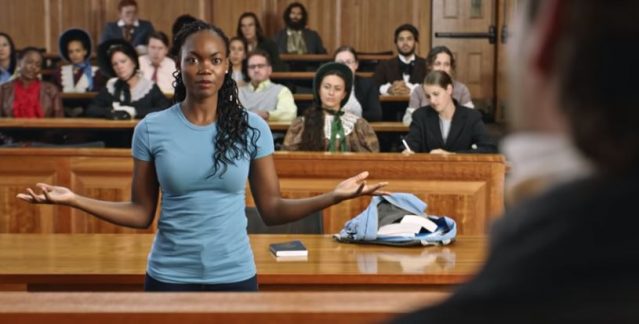
    It depicts a somewhat realistic interaction between two high schoolers that is then transported (classic short video trope) into a courtroom debate.

    I’m poking fun at the video because it really is quite cringy. But I love it. Which is why I’m sharing it.

    This video made me think of this post I wrote recently:

    Is the Book of Mormon true? Yes.

    The other day I overheard someone talking about how they don’t believe in God. I didn’t talk to them. But later I daydreamed about what I could have said. I daydreamed about walking up to them and telling them I know God exists. I imagined this imaginary person asking ‘How do you know?’ I would then explain about the Book of Mormon, and that because of it, I can know that God exists. This imaginary person would then ask, ‘How do you know the Book of Mormon is true?’ At which point I could try to explain in less than 1000 words as even my imaginary friend starts to gloss over and not understand/comprehend/care about what I’m saying.

    That’s what this short video made me think of. This video made me think of all the people I wish I could convince that the Book of Mormon is true. And along with that, all the people I wish I could convince that this matters, and it’s important.

    A quick recap from the video and from myself because I can’t help myself –

    Joseph Smith dictated the Book of Mormon without notes or source materials, nothing in front of him, in 65 working days. Today tens of thousands of people his same age stress and fret over 10-page term papers with sources included. The Book of Mormon is 531 pages.

    So he was a literary genius? Quite the contrary, could hardly write an understandable letter.

    So he faked for decades being an illiterate farm boy while dictating the greatest fictional literary work of all time? Uhm, okay. “This would require a beyond creative, theological genius to compile a book that radiates with the spirit.”

    Not to mention the things no one in his day knew about that have since come to light. Things it would have been impossible for him to know.

    As this video says, it’s not about proving the Book of Mormon is true with facts.

    It isn’t fiction. But I can’t prove that to anyone (as much as I think I actually can…). You have to read it then you have to ask God. And then if you get your answer, what next?

    A reminder of what the Book of Mormon asks us to do – prove it. Then be baptized and remember Jesus Christ, the redeemer of this world.  

    Moroni 10:3-5:

    Behold, I would exhort you that when ye shall read these things, if it be wisdom in God that ye should read them, that ye would remember how merciful the Lord hath been unto the children of men, from the creation of Adam even down until the time that ye shall receive these things, and ponder it in your hearts.

    And when ye shall receive these things, I would exhort you that ye would ask God, the Eternal Father, in the name of Christ, if these things are not true; and if ye shall ask with a sincere heart, with real intent, having faith in Christ, he will manifest the truth of it unto you, by the power of the Holy Ghost.

    And by the power of the Holy Ghost ye may know the truth of all things.

    Mosiah 18:8-10:

    And it came to pass that he said unto them: Behold, here are the waters of Mormon (for thus were they called) and now, as ye are desirous to come into the fold of God, and to be called his people, and are willing to bear one another’s burdens, that they may be light;

    Yea, and are willing to mourn with those that mourn; yea, and comfort those that stand in need of comfort, and to stand as witnesses of God at all times and in all things, and in all places that ye may be in, even until death, that ye may be redeemed of God, and be numbered with those of the first resurrection, that ye may have eternal life—

    10 Now I say unto you, if this be the desire of your hearts, what have you against being baptized in the name of the Lord, as a witness before him that ye have entered into a covenant with him, that ye will serve him and keep his commandments, that he may pour out his Spirit more abundantly upon you?

    If this book is true, what else matters!?!?

    Family = eternity.

    Jesus Christ = resurrection and eternal life.

    Heavenly Father = our Father, we are sons and daughters of God.

    If the Book of Mormon is true these things are true! Don’t day to day issues seem smaller when you realize you will live forever, with your family, as a divine being alongside THE divine beings?

    What a message.

    Read the book. Prove for yourself.

  • One Eternal Round

    One Eternal Round

    I started making some bad decisions in high school. These decisions nearly derailed my life.

    During that time I was becoming friendly with a girl. She knew about some of my bad decision-making.

    One night when we were hanging out I told her I would never get married anywhere but a temple. This interested her. Why, she wondered, would someone like me, who seemingly cared nothing for this religion that I was raised with, care about a temple marriage?

    I explained to her that I believed my church was true. If my church was true, then it held the authority to marry couples for eternity. That church, therefore, sealed families for eternity. I told her if I married someone I didn’t want it to end after we died. If I were to ever get married, I wanted it to be for eternity.

    When I was in college my decision making had gotten increasingly worse.

    On a night I don’t remember, it was later told to me that I bore my testimony to a girl at a party. I don’t remember any of this. Apparently, religion came up and I told her I knew the Church of Jesus Christ of Latter-day Saints was Jesus Christ’s church on the earth.

    This girl asked the obvious question, “If you know it’s true, why are you doing the things you’re doing?”

    I’m told I said that even though I wasn’t living the standards of the church, I couldn’t deny what I knew to be true.

    That testimony that I don’t remember had a big impact on that girl.

    Years later that first girl from high school sent me a postcard. That girl from high school had gotten baptized. Her postcard was one of a few critical moments that helped me come back to church and changed my life.

    A month after that postcard, in the midst of my difficult journey back to church, I stumbled upon a Facebook message that had gotten blocked and I’d never seen. It was from years prior. It was from the girl at the college party, the girl I bore a drunken testimony to.

    She told me she’d gotten baptized. She told me she had never let me know how big an impact that testimony had on her ultimately getting baptized. I visited her and her budding family. She was sealed in the temple. She had an eternal family. She was happy. It gave me strength to continue on the path of repentance that was so, so hard.

    The girl from high school got married in the temple and now has three kids. She has an eternal family. She is happy.

    A patriarchal blessing is extremely sacred. I share a short line from my blessing with the utmost reverence:

    “Trouble not yourself over lost days, for you are an eternal being”

    I can’t tell you how comforting those words were when I was trying to find strength to stay faithful, and how important those words continue to be to me.

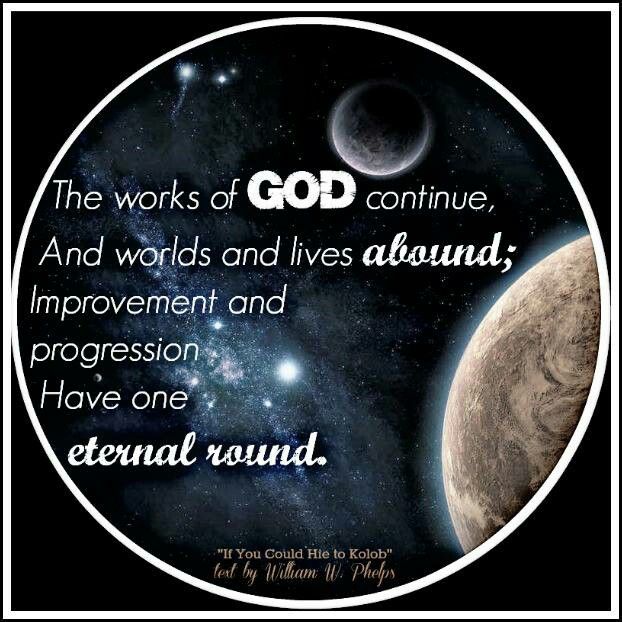
    It is all one eternal round to God (D&C 3:2). He knew I would stumble. What did He do when I stumbled? Put two people in my path that I could somehow, inexplicably, impact at my lowest, during my most degraded behaviors.

    What did He do?

    He put those two people back in my path when they could help me back. He put two people back into my life to help me remember what I always knew, what I was getting dangerously close to forgetting. He put two people in my path to remind me who I was. I am nothing special of myself, but I am a son of God. That is special.

    I marvel at the workings of God. That He loves us so much that He gave us a world so we could leave our Heavenly home, just as children leave their homes here on earth to go out and learn, and grow, and fall. He gave us an earth to fall. But He allowed us a way back.

    I know there is a way back.

    I know that Jesus Christ allows that way back.

    I know that God planned for everything. We are His work and His glory.

    I can never deny what I know.