Tag: Tolkien

  • Tolkien’s Knowledge of Eternal Truths

    Tolkien’s Knowledge of Eternal Truths

    I’ve written before about Tolkien’s uncanny parallels to what the Church of Jesus Christ of Latter-day Saints knows to be true due to modern revelation. These truths include information on the premortal life, Satan, and the afterlife.

    See The Wisdom of Tolkien and The Many Literary Parallels to Satan.

    I just started reading The Silmarillion by J.R.R. Tolkien. It is a book whose tale pre-dates The Lord of the Rings Trilogy and even The Hobbit. It is the origin story of Middle Earth.

    The preface to The Silmarillion includes a letter Tolkien wrote to his editor. In the letter Tolkien is trying to explain why The Silmarillion and the Lord of the Rings trilogy should be released together as their saga is intrinsically linked. Something Tolkien said in that letter struck me. He said, “[The mere stories] arose in my mind as ‘given’ things, and as they came, separately, so too the links grew. An absorbing, though continually interrupted labour… yet I always had the sense of recording what was already ‘there’, somewhere: not of ‘inventing’.”

    J.R.R. Tolkien was known to be a devout Christian. So I find it no surprise that his soul seemed to speak of things already known, deep in his being, that he expressed through his writing.  

    I find that statement especially fascinating given the parallels to eternal truth Tolkien touched on as I already referenced. I’m going to note some of those truths I’ve found in The Silmarillion. This list, I think, could go on and on nearly endlessly, but I will list out the few that made me literally stop reading, come to my computer, and note down:

    It is a well known fact that Tokien was a religious man who was pulling from religious traditions into his writing. I think it is clear that he had a sense of more. I would consider that his spirit telling him things his mind had no way of knowing. We did come from somewhere. We are here for a reason. We are going somewhere. There are too many eternal truths in his writings. Someday I’ll likely re-read the Lord of the Rings Trilogy, books I haven’t read since I was 11 and 12, to see what more I can pull from those great books as an adult.

    1. (Page 16 of The Silmarillion) “Manwe (Jesus Christ) and Melkor (Satan) were brethren in the thought of Illuvatar (God). The mightiest of those Ainur (first children of God) who came into the world was in the beginning Melkor; but Manwe is dearest to Illuvatar and understands most clearly his purposes. He was appointed to be, in the fullness of time, the first of all Kings: lord of the realm of Arda (Earth) and ruler of all that dwell therein.”
      • Wow, there are many parallels here.
    2. (Page 36) (Note also that Elves and Men are often referred to in this mythology as the sons of Illuvatar (God)). The book talks about how death is given to men as a gift from Illuvatar (God). Whereas the elves are immortal on earth, men die. “But illuvatar knew that Men, being set amid the turmoils of the powers of the world, would stray often, and would not use their gifts in harmony; and he said: ‘these too in their time shall find that all that they do redounds at the end only to the glory of my work.’ Yet the Elves believe that Men are often a grief to Manwe (in this analogy, Manwe=Christ), who knows most of the mind of Illuvatar (God); for it seems to the Elves that Men resemble Melkor (Satan) most of all the Ainur, although he has ever feared and hated them, even those that served him.
      • This is fascinating because despite us being most like Satan (rebellious, stubborn, prone to anger and hatred, greedy, desirous of power, desirous of honor), he still fears us because we have bodies and have the potential he will never have. And even when we follow and serve Satan, he still hates us. This is just like in the Lord of the Rings mythology where men are looked at as a burden to God, but loved by Him. Melkor doesn’t trust man even when they serve him.`
    3. (Page 36) “It is one with this gift of freedom that the children of Men dwell only a short space in the world alive, and are not bound to it, and depart soon whither the Elves know not… But the sons of Men die indeed, and leave the world; wherefore they are called the Guests, or the Strangers. Death is their fate, the gift of Illuvatar, which as Time wears even the Powers shall envy. But Melkor (Satan) has cast his shadow upon it, and confounded it with darkness, and brought forth evil out of good, and fear out of hope.
      • It is a gift that we dwell on Earth for a short time. Our reward after earth life is unimaginable. Satan tries to make death seem like a bad thing, casting his shadow upon it. We should remember that death is not evil and nothing to fear. It is a gift.
    4. (Page 96) Curse of Noldor for slaying their brethren. “’Ye have spilled the blood of your kindred unrighteously and have stained the land of Aman. For blood ye shall render blood, and behold Aman ye shall dwell in Death’s shadow. For though Eru appointed to you to die not in Ea, and no sickness may assail you, yet slain ye may be, and slain ye shall be: by weapon and by torment and by grief; and your houseless spirits shall come then to Mandos. There long shall ye abide and yearn for your bodies, and find little pity though all whom ye have slain should entreat for you. And those that endure in Middle-earth and come not to Mandos shall grow weary of the world as with a great burden, and shall wane, and become as shadows of regret before the younger race that cometh after. The Valar have spoken.’
      • There are elves in the mythology that commit the first murder of their own kindred. They are punished by having their spirits go to Mandos, keeper of the underworld, after their deaths. “There long shall ye abide and yearn for your bodies.” This is a truth of the Plan of Salvation that when men die, they go to spirit prison or spirit paradise and look at the absence of their body from their spirit as a prison. Also, the ties to the first murder in the Bible and the curse of Cain are obvious.
    5. (Page 109) “And they mourned not more for the death of the Trees than for the marring of Feanor: of the works of Melkor one of the most evil. For Feanor was made the mightiest in all parts of body and mind, in valour, in endurance, in beauty, in understanding, in skill, in strength and in subtlety alike, of all of the Children of Iluvatar (God), and a bright flame was in him. The works of wonder for the glory of Arda (Earth) that he might otherwise have wrought only Manwe (Christ, God of earth) might in some measure conceive. And it was told by the Vanyar who held vigil with the Valar that when the messengers declared to Manwe the answers of Feanor to his heralds, Manwe wept and bowed his head.”
      1. This is talking about one of the earliest elves, Feanor. Feanor was deceived by Melkor and ultimately his pride led him to swearing an oath to do anything to reclaim the silmarils he had crafted. This led to many misdeeds. This made me think of Satan, a “morning star that fell.”
      • Also, this part talks about how the greatest evil Melkor (Satan) committed was lying, deceiving, and ultimately turning the path of Feanor to evil. The most evil work of Satan on this earth is turning the hearts of men to do evil when they could have done so much good. How many are there out there that could have been great bringers of peace, creators of beauty, uniters of the human race, that Satan destroyed?
    6. (Page 325) – Sauron in deceiving men tells them that the Valar have deceived men by putting forth the name of Eru (God). That they speak for Eru. He says Eru is a phantom, putting the power in the Valar’s hands. Then Sauron says, “But he that is their (the Valar) shall yet prevail, and he will deliver you from this phantom (God); and his name is Melkor, Lord of All, Giver of Freedom, and he shall make you stronger than they.”
      • Isn’t this the strategy of Satan today? There is no God. Those who speak for him (prophets) only speak in His name to get their own power. This is what Satan tries to get people to believe. There is one that you can follow who will give you freedom and power – yourself. In this analogy, I think Melkor is us. When Satan denies God, he usually doesn’t bring himself into it. He tells men that they are Gods and need no God. He tells us that we can find freedom and power in our own devices. Satan’s prevailing strategy today is telling the world there is no God.
    7. (Page 334-335) – men become so proud that they deny God and go to war against the Valar. It says that Manwe (the King of earth) “called upon Iluvatar, and for that time the Valar laid down their government of earth.” It says that Illuvatar changed the world with a chasm, water, and smoke, and the world was shaken.
      • This sounds like a description of the end of times when all the unrighteous turn from God and rebel against Him. They will be destroyed.
    8. There is a scene during the destruction of Numenor, a city that rebelled against the Gods, that describes a Queen of the people who, “Too late she strove to ascend the steep ways of the Meneltarma, to the holy place; for the waters overtook her.” The Meneltarma was the temple they had built to Illuvatar (God) and that had been neglected and ignored for decades. As floods started to come into the city, she tried to go to the temple but it was too late for the Queen. She had neglected the temple and God for too long. Once hardship befalls man, it’s too late to then try to cry out for help and worship God. This is the parable of the 10 virgins put right into the Lord of the Rings mythology.

    This is why I love reading! Everything denotes that there is a Christ. Beauty and truth can be pulled from almost any book. Everything I read gives me some new perspective or something new I hadn’t before considered. It’s also why I like writing. The greatest invention in the world was writing. Before I digress, let me close this post. I love Tolkien’s writing. Go read something great today.
  • The Many Literary Parallels to Satan

    The Many Literary Parallels to Satan

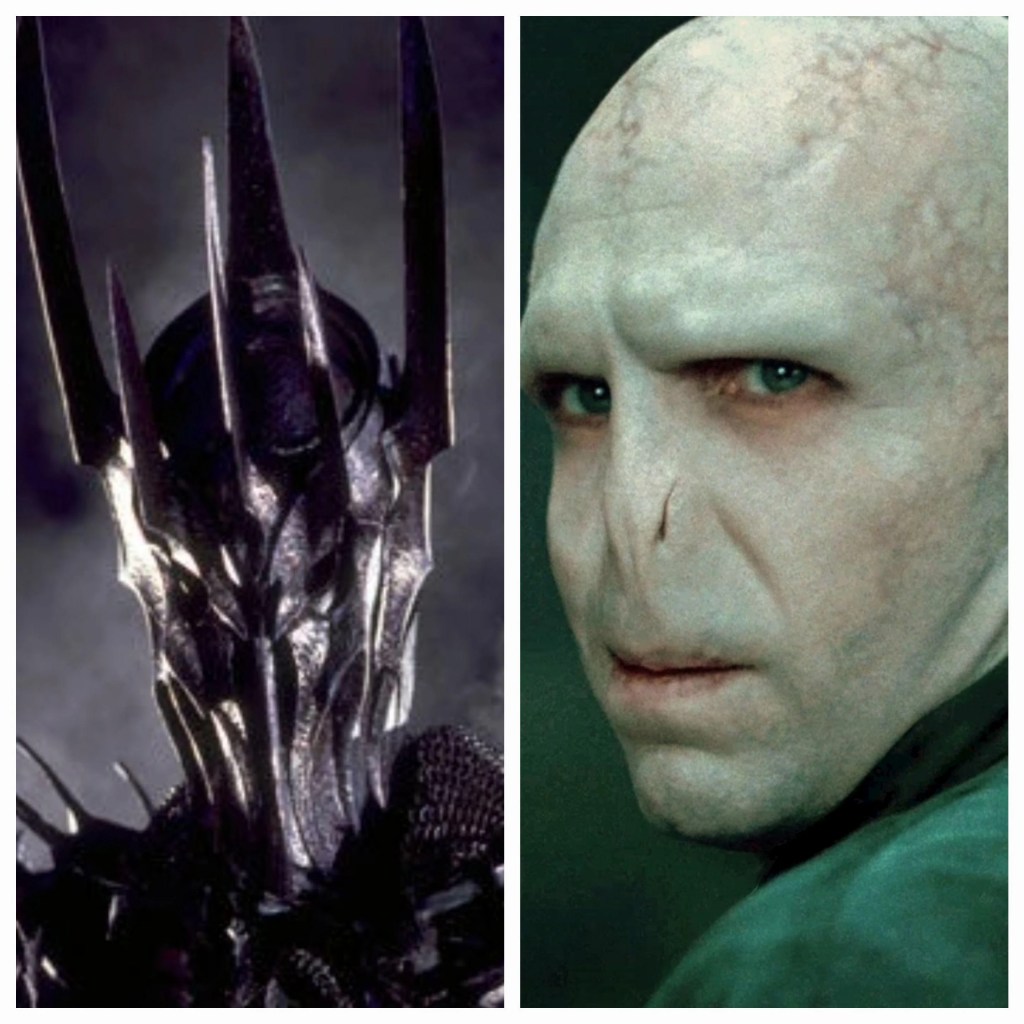
    I’ve always been struck by the parallels to Satan made in so many fantasy fiction books. I think the authors of these fictions are writing from a place that their soul understands, even if they don’t fully remember it here on earth, in this life. I guess these parallels aren’t too surprising given that Satan is the personification of evil, so, if you’re writing a fiction with evil characters, your evil will mirror him at least in some way.

    One major example is Voldemort. It’s been a long time since I read the Harry Potter books. I just re-read book 1 with Ivy. I’m anxiously awaiting Ivy getting older so we can continue this greatest books series of all time together. Since it’s been so long since I read them, I can’t remember all the intricacies of Satan’s comparisons to Voldemort. There is the obvious – great wizard (Son of the Morning) turned evil and selfish, wanting dominion, power, and control. Voldemort was opposed to all things love. It was ultimately love that was his downfall because he couldn’t see its power.

    I recently read A Guide to Tolkien by David Day which is essentially an encyclopedia of Tolkien information – all things Lord of the Rings. It is not meant to be read cover to cover (I’m weird), but I still thoroughly enjoyed it. I learned so much about the mythology Tolkien created that gave me so much more appreciation for The Hobbit and the Lord of the Rings series. I’ve read all those books and seen the movies, but reading this book gave me a glimpse into the wonderful world Tolkien produced from his mind.

    In The Lord of the Rings world, Sauron was not the first evil of Arda (earth, or Middle-Earth). Sauron was actually the first leitenant of a greater evil called Melkor. In the Lord of the Rings mythology, there are 15 beings called Valar. They are essentially Gods who helped create and maintain the earth. One of these Gods was Melkor, one of the greats. Here is what is said about him in A Guide to Tolkien:

    “Last of the Valar is he who in the beginning was mightiest of the Ainur. He was named Melkor, “He who arises in Might”. He owned in part the powers of all the Valar (children of God), but chiefly his realm was Darkness and Cold. He moved over Arda (earth) like a black cloud that was dreadful to behold, like the World’s nightmare come into daylight. All evil that was and is in the World had its beginning in Melkor, for he revolted against Iluvatar (God) in the Timeless Halls and came to Arda in rage, wishing to make his own kingdom. He brought corruption into the World, and with him came a part of the Maiar (people who followed or served the Valar) twisted by his malice. He made his fortress, Utumno, and his armoury, Angband, deep under the mountain roots of Middle-earth. In Arda he waged five great wars against the Valar and put out the fairest lights of the World by destroying both the Great Lamps and the Trees of the Valar. 

    “In the beginning Melkor appeared in forms both fair and evil: his wiles were many and even Manwe the First King was deceived.  Yet after the Darkening of the Valinor, he always assumed his evil form and the Elves called him Morgoth, the “dark enemy of the World”… His countenance was evil, for the fire of malice was in his eyes and his face was twisted with rage…Yet, in the War of Wrath, all this power was destroyed, though Melkor summoned Dragons, Balrogs, Orcs, Trolls and every other evil being to his aid. This was the end of him, and, though much of his evil and some of his servants remained, he alone of the Valar was driven from the spheres of the World and now dwells for ever in the Void.”

    Sound familiar?

    All evil in the world had its beginning in him.

    He revolted.

    He came to Earth in rage.

    He wished to make his own kingdom.

    He brought corruption into the world.

    He brought with him followers (the sons and daughters or God, or in this case, the followers of the Valar).

    He made his home deep in the mountain roots of Earth.

    He waged war against God (the Valar).

    In the beginning he appeared in forms both fair and evil.

    The dark enemy of the world.

    His countenance was evil.

    He was driven from the spheres of the World and now dwells forever in the void.

    Tolkien was a religious man. But his religious traditions knew nothing of the true premortal scope of Satan’s actions. In writing this, it was like Tolkien was creating a character he knew from a previous life, someone his soul remembered, though his mind did not. 

    Art imitates life. In this case, art imitates eternity.

  • Books 2024

    Books 2024

    Since my 2023 list came out so late and I had a hard time remembering the books, I decided to get a jump start on 2024.

    Here is my list in order of favorite/most enjoyable reads of 2024 down to the least enjoyable yet still rewarding.

    1. Earth in the Beginning by Eric N. Skousen
      • The fact that I’ve given copies of this book to two people already should indicate that I enjoyed this book. My favorite books are those that expand my mind and make me think of something I’d never before considered. This book did that many times.
    2. Hugh Nibley’s semester two on the Book of Mormon
      • Speaking of “books” (this is more a lecture) that expand my mind, that is the perfect description of all things Hugh Nibley for me. Semester one was #7 in 2023’s list. I love getting a look into Hugh Nibley’s mind. If I could have dinner with one historical figure, Hugh Nibley might make my top 10 list.
    3. 4-Hour Work Week by Tim Ferris
      • I’m currently reading this book again in 2025. Enough said.
    4. Lethal White by Robert Galbraith
      • I read this alongside the next book on this list. It was a rare time that I was reading two fictional books concurrently. As I thought back on reading this alongside The City, I realized there were ebbs and flows where I liked one above the other. The tie-breaker? J.K. Rowling (the greatest author of our generation, duh).
    5. The City by Dean Koontz
      • Reading one Dean Koontz book a year is the perfect amount. If you read too many they all start to blur together. This was a fantastic book with a surprisingly powerful message. Very much enjoyed it.
    6. Seeking Allah, Finding Jesus: A Devout Muslim Encounters Christianity by Nabeel Qureshi
      • This book was recommended by a friend. It was the story of a man who converted from Islam to Christianity, a truly life threatening choice. I thoroughly enjoyed this book. One of my favorite topics is how people find faith in one way or another. This was an interesting story about this man’s journey through a shift in rethinking everything he thought he knew about the world.
    7. The Third Man Factor: Surviving the Impossible by John Geiger
      • This book was recommended by Beth. It includes true stories of people experiencing what has been called “The Third Man.” Beth thought I would enjoy it because of my love of all things spiritual and especially near-death experiences. She was right. I believe there is something real and misunderstood about this “third man” concept. Great read.
    8. #Positivity: You are always in the right place at the right time by Phil Helmuth
      • Another very short book. I took a lot from this book and quite enjoyed it. All about the power of positive thinking and making the most of your talents. Intriguing coming from one of the most successful poker players ever.
    9. Hugh Nibley’s semester three on the Book of Mormon
      • At this point in the “class” Hugh started to repeat a lot of themes and information, so I felt like I’d read some of it before and the new insights started to come much less often. It was still informative and I still loved reading his words.
    10. The Fall of Adam, the Atonement of Christ, and Organic Evolution by Reid E. Bankhead
      • There is a somewhat random process to my selection of books and the fact that this one came up right after the first book on this list was interesting to me. This was basically a short collection of quotes from church leaders about evolution.
    11. Revelations of the Restoration by Ostler and McConkie
      • This was the second straight year I started the year with a huge church history book (#13 from 2023). This one was longer but less dry than the previous year’s. This one was a little more palatable and easier to read.
    12. Hell House by Richard Matheson
      • It’s so hard to rate these books. How do you put Hell House amidst Seeking Allah, Finding Jesus, and Revelations of the Restoration? It felt strange putting it above those. It also felt strange putting it behind because this book was an extreme page turner. I had an incredibly hard time putting it down. I think I read it in a few days. It was perfectly spooky and scary without being too obscene. I really liked this book. First scary book I’ve read in a while and I’m glad I did.
    13. Anything you want by Derek Sivers
      • I was somewhat disappointed in this book. I’d heard so much about it so probably more an issue with expectations. Derek Sivers’s story was really interesting to me. He sold his company CD baby for a large amount of money. But the book wasn’t super memorable.
    14. The Lost Road and Other Writings (Book 5 Book of Lost Tales set) by Christopher Tolkien
      • A book can’t be rated too highly if I wasn’t too disappointed to be done with it. See #17 2022, #16 2022, #15 2023, and #17 2023 for more information on the series. That said, now that I’m done with these “Lost Tales” books, I do look forward to re-reading Lord of the Rings to see what more I pick up on, one day.
    15. The Works of Edgar Allen Poe Raven Edition
      • Edgar Allen Poe joins the ranks of The Outsiders (#13 2021) and Catcher in the Rye (#30 2021) – classics that I just don’t get. These short stories from Edgar Allen Poe were perplexing. Most of the time I didn’t understand what was happening. Maybe I’m not sophisticated enough.
  • Wisdom of Tolkien

    Wisdom of Tolkien

    ****Disclaimer before reading this post. Of course I have the greatest family and Beth. The world wasn’t completely lonely. My world has always been amazing. I thank God daily for that, and don’t know what I did to deserve it. I love my family and I love Beth. I’ve been so blessed. But that didn’t fit into the point of this post. So, I’m putting this disclaimer before writing.

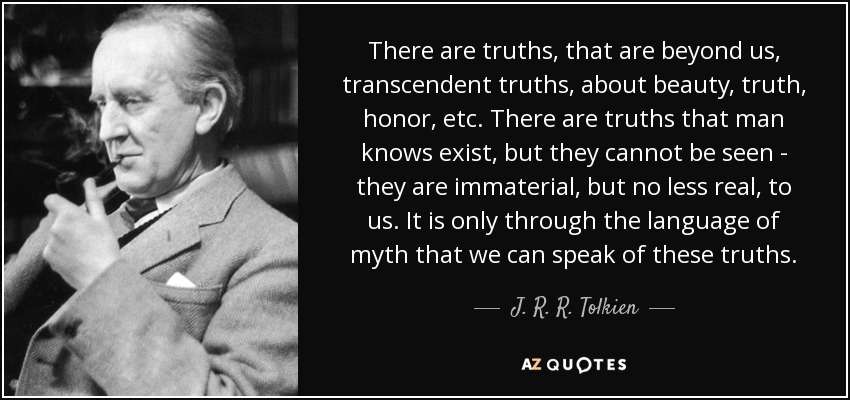
    Tolkien inspires a lot of thoughts in me. His writing is flush with eternal truths.

    I’m reading The Book of Lost Tales Part 1 (I wrote this in 2022, I’m now on book 5).

    This book includes the writings of J.R.R. Tolkien that were never put to print in his lifetime. His son has since edited and published the writings.

    In this book, the tale of the coming of the Eldar, or the elves, is told. The Valar (Gods of Earth) had been on the earth for an untold amount of time. They knew one day the children of Ilúvatar (the one God, their creator) would come one day. That day finally came. This is how it is described in the book:

    “Then shouted all the people of Valinor: “I-Eldar tulier – the Eldar have come” – and it was not until that hour that the Gods knew that their joy had contained a flaw, or that they had waited in hunger for its completion, but now they knew that the world had been an empty place beset with loneliness having no children for her own.”

    That is precisely how I feel about Ivy and Sage. What was the world before them? It was a lonely place. What did I do before them? Play basketball and video games? What was life?

    It wasn’t until they came that I truly understood what mattered. I’ve written about my world flipping upside down before. That passage from The Book of Lost Tales Part 1 describes it perfectly.

    What was the earth before my children?

    An empty place.

  • Books in 2022

    Books in 2022

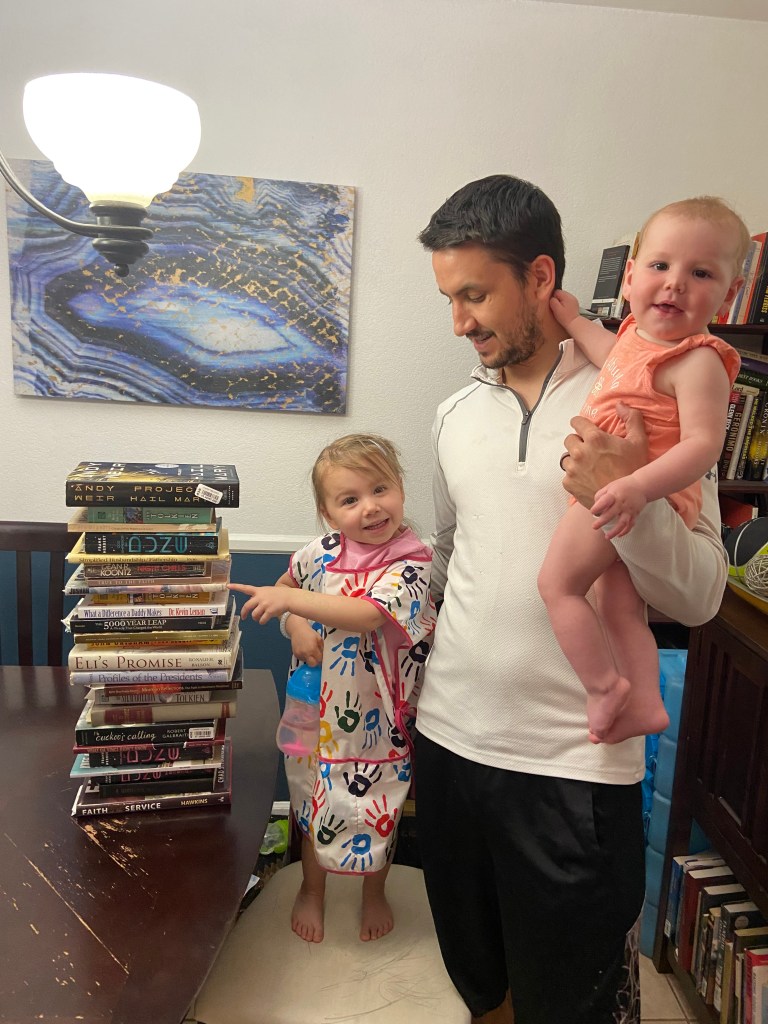
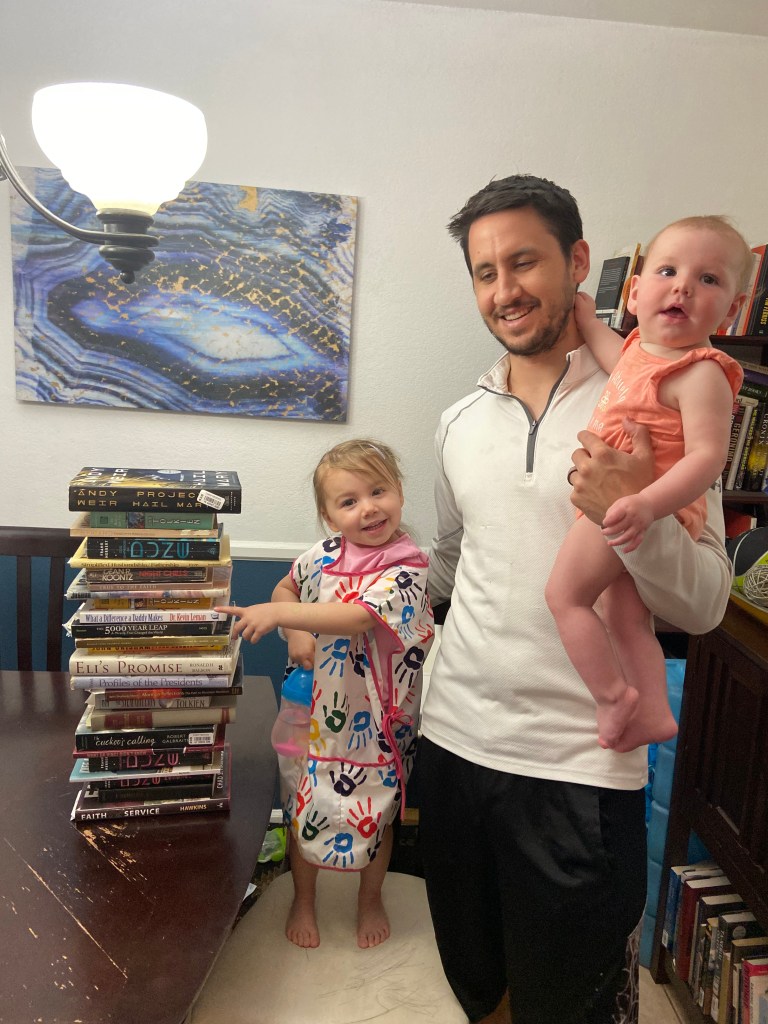
    It’s time for my annual list of books read last year. My 2022 list is down quite a bit due to some non-book reading and studying. I’ll rank the books from favorite to least favorite with a short description of what I remember about the book or what led to its ranking.

    Without further ado, here is my list of books from 2022:

    1. Marvelous Work and a Wonder
      • One of my favorite (and most important) books ever, so despite it being my third or fourth read, still has to top the list. This book lays out just how marvelous a work and a wonder the restoration of Christ’s gospel is.
    2. God Emperor of Dune (book 4)
      • This is the fourth book in the Dune series and comes ahead of Children of Dune and Dune Messiah.
    3. Children of Dune (book 3)
      • It’s hard to separate all these books, they blend into one in my mind, but I think God Emperor was my favorite after book 1, followed by Children of Dune. We’ll get to Dune Messiah later.
    4. 5000 Year Leap
      • This book was given to me by CJ Matthews and as you can see by its ranking, I highly enjoyed it. It resulted in a blog post which is a sign of a good book that made me think.
    5. Project Hail Mary
      • This was another recommended book, this one from John Safstrom. I loved this book, close call between this and the author’s other popular book turned feature film, The Martian starring Matt Damon.
    6. What a Difference a Daddy Makes
      • Yet another recommended book, thanks Mitch Waters who recommended this book after he heard my second daughter was coming. Must read for any girl dad.
    7. The Cuckoo’s Calling
      • J.K. Rowling is a modern marvel. I love her and her writing. While reading, knowing Robert Galbraith is a pseudonym, I couldn’t help but recognize her amazing writing style. This book was so good it made me continue on with the series and I’m currently on book 3, “Career of Evil.”
    8. Night Chills
      • Classic Dean Koontz, spooky and fast-paced. I recommended this to a friend along with a long Stephen King novel (Tommyknockers). The friend quit Tommyknockers and finished Night Chills.
    9. Dune Messiah (book 2)
      • This one drops a bit below the others because I think it was more of a transition book to keep the series going, at least that’s what Frank Herbert seems to have said about the book. It’s still ranked highly because the Dune series is so awesome and sometimes you need bridging books to make the next ones that much better.
    10. Eli’s Promise
      • Any book that makes me cry multiple times probably needs to be in the top ten. This book was a split between Holocaust and modern-day time lines, jumping around a bunch, which kept things interesting throughout.
    11. Herland
      • Classic book I never read in high school but when it was assigned reading for a class I took this year, I decided to actually read the whole book. Glad I did. Book is based around the idea of a women-only society.
    12. Ford County Stories
      • I really like John Grisham. This is a book of short stories focused around Ford County. You know an author is good when they take a topic you have zero interest in, like a small Mississippi town, and make you love it.
    13. Knees Over Toes
      • This book was tough to rank because it made huge changes to my daily habits and saved my Achilles, but can’t be rated higher as a book than the ones above it. Recommended to me by my brother Garrick.
    14. Simplified Husbandship Simplified Fathership
      • This was an impactful book overall but a notch below What a Difference a Daddy Makes (#6). Definitely made me think more seriously about being a father and husband.
    15. Silmarillion
      • I Enjoy the Lord of the Rings stuff, but the mythology can be a bit to keep up with sometimes. I really enjoyed the Silmarillion, but Lord of the Rings books in general are lower on my list due to their density. If I’m reading a fantasy fiction, I like to spend less time trying to understand geography.
    16. Book of Lost Tales Vol 2
      • See notes on Silmarillion, this one is more dense than the Silmarillion since the Silmarillion is like a mythological overview, which made it more enjoyable to me.
    17. The Book of Lost Tales Vol 1
      • The Books of Lost Tales are going way back in the Lord of the Rings mythology, farther than JRR Tolkien ever got published. They’re his son compiling his notes and other works to put together more stories. I enjoy them, but again, very dense and a lot of geography to try to understand sometimes.
    18. A Guide to Tolkien
      • This was basically an encyclopedia of Tolkien. Someday I’ll read the actual encyclopedia.
    19. Just to Illustrate
      • This was a collection of sayings from LeGrand Richards, thus the saying “Just to illustrate,” which apparently was something he was known for saying. Very much enjoyed this book. Though it’s low on the list, LeGrand is one of my favorite people ever.
    20. Faith in the Service
      • This book was all about members of the Church of Jesus Christ of Latter-day Saints that served in the military. As I review this list I realize I didn’t read many bad books this year. I really enjoyed this book, and it still falls near the bottom for the year.
    21. Mormon Reflections: The Path to Mountain Meadows
      • This was a fictional account of what could have led to the horrific events of the Mountain Meadows massacre. Made me think about things. Made me wonder what events could have led to people doing something so heinous.
    22. Joshua Man of Faith
      • This is from a series of books that details the ancient prophets. I read the Moses (# 24) one last year. I didn’t like this one as much as the Moses one. It’s hard to compete with Moses.
    23. Profiles of the Presidents
      • This was a biographical book of all the Presidents of the Church of Jesus Christ of Latter-day Saints.
    24. True to the Faith
      • Almost feels wrong having this so low, but it is essentially a textbook. A textbook on faith, but still a textbook. Weird having a book so low that I feel I should read at least once a year.
    25. What Da Vinci Didn’t Know
      • A book being this low basically means it didn’t stand out to me. I think this book was basically trying to get in on the Da Vinci Code movie hype. I don’t remember learning anything super interesting from this book besides that Leonardo da Vinci was “Leonardo from Vinci.”
    26. 40 Years and Marching On
      • Despite probably liking this book more than What Da Vinci Didn’t Know, I couldn’t for the life of me remember anything about the book until I found it on my shelf. A book that un-memorable gets demoted. It was a BYU studies book that was interesting but still bottom of the list for the year due to being forgotten.

    Additional reading:

    1. Book of Mormon
    2. Doctrine & Covenants
      • Finished Doctrine and Covenants sections 133-Official Declarations. Read alongside two student manuals.
    3. New Testament
      • Book of Matthew and started Book of Mark, reading alongside New Testament Student Manual.
    4. Come Follow Me lesson each week
    5. Did a semester of school and completed 15 credits.
      • Most memorable reading was Nietzche.

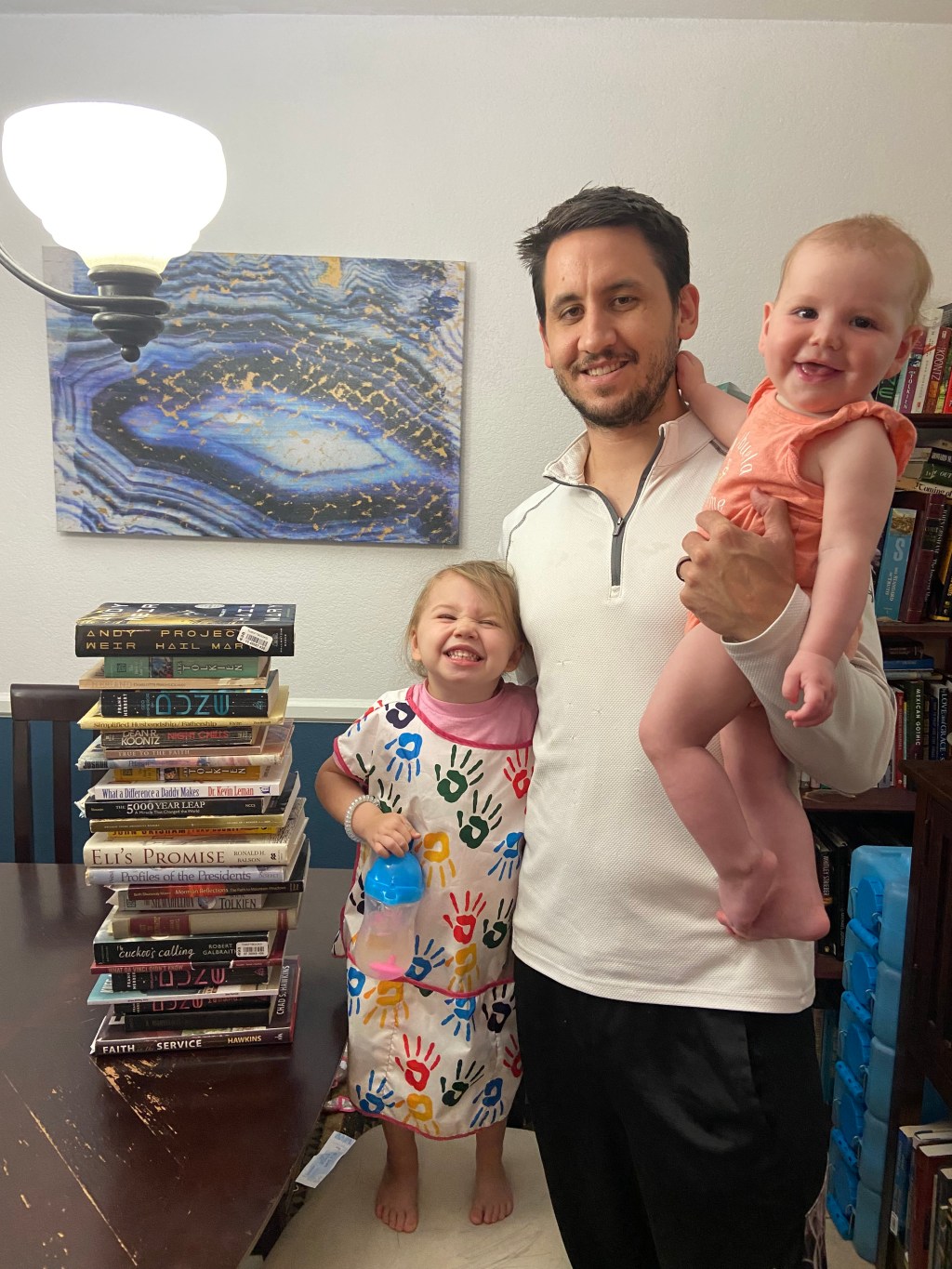
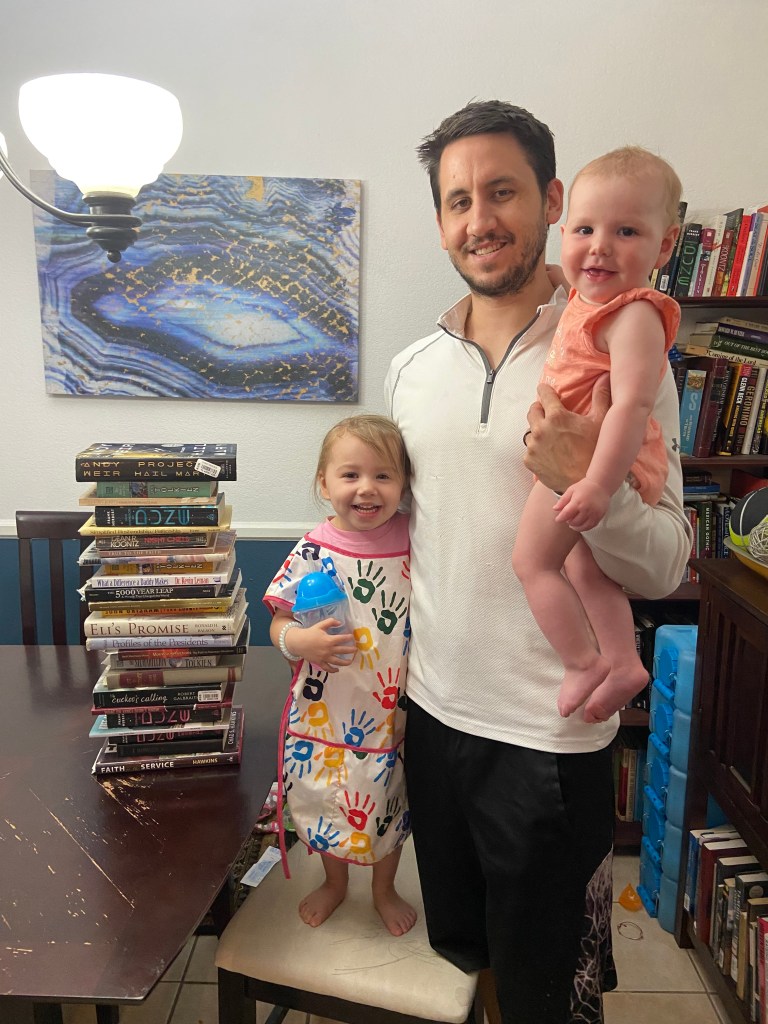
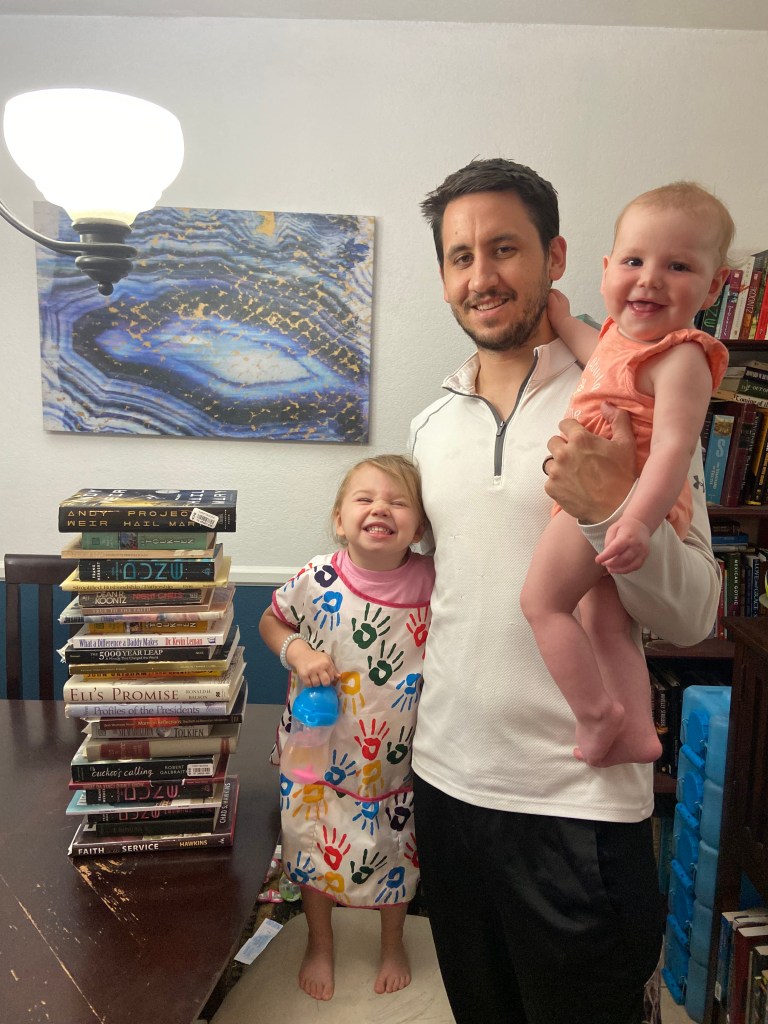
    Couldn’t pick my favorite for the cover photo, so keeping with tradition from last year: