Tag: trust

  • Where Can Faith Take You?

    Where Can Faith Take You?

    I recently read a passage from a book titled The Sinbad Voyage. This book details a 6000-mile voyage from Oman to China in a replica of an ancient Arab ship.

    The passage that sparked this thought was:

    The Arabs took to the sea with that same philosophy of devotion which helped them cross the great deserts. They set out trusting in the destiny which Allah would provide them, and both camel caravaneer and Arab shipmaster used the same stars to guide them on their courses, believing that God had placed the stars there for that very purpose. [In a previous voyage across the sea], I had only to glance upwards to appreciate the heritage of Arabe seafaring: of the major navigation stars used by sailors, most bore Arabic names because it was Arab savants who had developed the art of astronavigation (p. 16).

    “The sea road was the great achievement of early Arab navigation. It was nothing less than the 6000-mile voyage by way of Ceylon and South-east Asia to the fabled ports of China (p18).” (emphasis added)

    So these Arab shipmasters navigated the oceans of their world. Exploring, adventuring, expanding the horizons of what they and the people around them thought were possible. Both in the deserts and the oceans. This image can help visualize this ocean exploration:
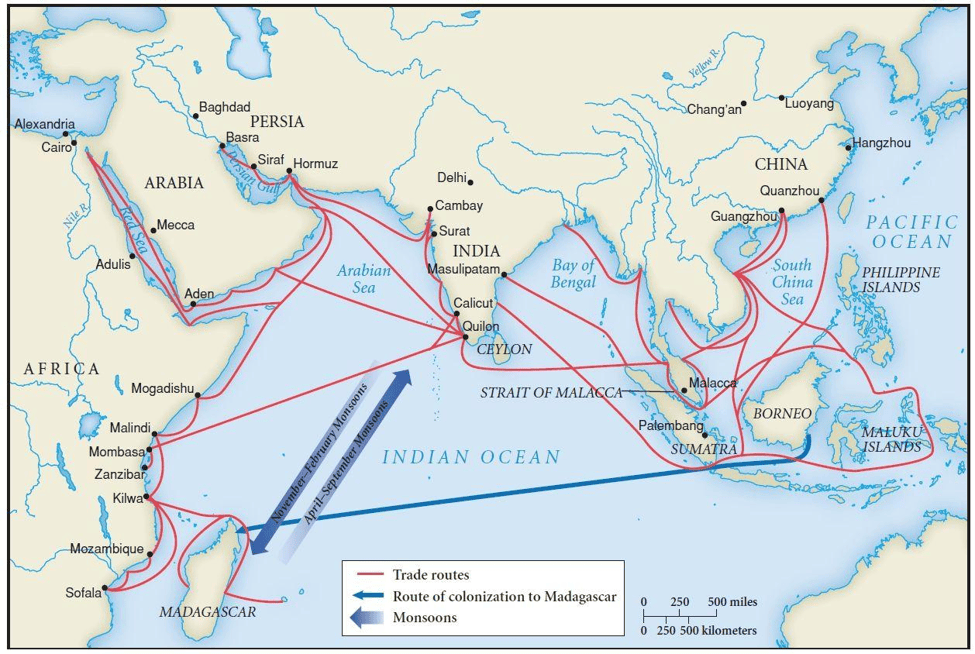
    From other passages I read that even at its most consistent and well-established, roughly 1 in 10 trips to China never returned.

    Can you imagine setting out into the ocean knowing there was a good chance you would never return?

    Why did they do this?

    Some people just have an adventurous death wish, hop on a raft, and push off into the ocean. This is true.

    Others have a view of what is possible and go for it. But there is still an immense amount of belief, trust, and faith in boarding a large ship and setting off on what is known to be an amazingly treacherous and dangerous journey. Why do it?

    The thought that occurred to me as I read that passage about the ancient Arab explorers was this: it was faith that allowed these Arab shipmasters to do amazing things. Many truly believed that Allah was watching over them and would safely guide them, by destiny, or by whatever else you want to call it, to their destination.

    Why did they believe it?

    Faith.

    Did some die? Yes. Was their faith misguided? Who knows. But that doesn’t take away the fantastic thing they did because they had faith.

    People with faith accomplish amazing things.

    What role has faith played in the discovery of the world? Without faith in something greater, people wouldn’t do fantastic things. Or they would do them less often.

    What does the role of faith play in our everyday lives?

    Why did your body move when you told it to get out of bed this morning? Do you even realize you told your body to get out of bed this morning? Why did you believe your body would move when you told it to this morning?

    The answer is faith.

    You can give all sorts of other answers if you’d like. But ultimately you had faith that if you told your legs to swing over the side of your bed and to walk, they would do it. You had to have faith that it was possible. Every living act is done with faith.

    The next time you venture out to do something difficult or scary ask yourself: do I have faith that I can accomplish this thing? If you have faith, you can do anything. And if you have faith and fail, you learn something.

    When you think about it this way, you can’t lose.
  • Discipline, Sharks, and Freedom

    Discipline, Sharks, and Freedom

    I watched a video recently. You can watch it here:

    In the video, some surfers are complaining about a barrier in the ocean. They’d travelled for a once in a lifetime surf trip and a barrier was keeping them from being able to surf the big waves.

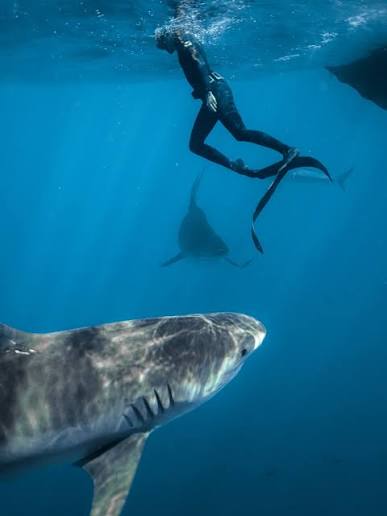
    As they were complaining, an older surfer walked up and let them use his binoculars. Through the binoculars, just beyond the barrier, the young surfers could see a feeding frenzy. Sharks were just beyond the barrier.

    What seemed like the worst thing in the world quickly turned into a great protection and a great blessing.

    How often do we look at life as though through a murky glass? If we only had binoculars, or could see and understand the bigger picture, the way God sees things, how differently this world would look.

    1 Corinthians 13:11-13

    11 When I was a child, I spake as a child, I understood as a child, I thought as a child: but when I became a man, I put away childish things.

    12 For now we see through a glass, darkly; but then face to face: now I know in part; but then shall I know even as also I am known.

    13 And now abideth faith, hope, charity, these three; but the greatest of these is charity.

    I think back on my teenage years. I wasn’t the most rebellious teenager. I was far from the most obedient. I pushed boundaries. I experimented with what I thought would bring me joy.

    As I’m now in my 30s, I realize just how stubborn and rebellious I am. This life is an opportunity for my spirit to prove whether or not I will choose God. I try my best. I realize that I am still just a child. Thinking I know best while God watches and lets me stumble around, making all the mistakes I need to so I eventually develop the humility, faith, and trust He knows I need.

    As I consider teenagers today, my heart fears for them. I remember when I thought I needed to drink, try drugs, do all the worldly things or else I would miss out. Or just to feel like I belonged.

    I think back on how lucky I was to try these things and escape with my free-will intact. Many are not so lucky.

    We look at so many destructive habits and activities from the perspective that they are fun and exciting. They are the big wave. But beneath the big wave are dangers we don’t perceive. Beer commercials always show the party. There is always a picture of abject excitement, freedom, liberation, and joy. What is never shown is what is lurking underneath: addiction, sadness, loneliness, emptiness, fear, doubt, dependance, despair, danger, suffering.

    The products of a worldly life are these things. I’ve seen it. We all have. And yet we think we want to be a part of these things, a part of this world.

    Thrilling and tantalizing waves.

    A feeding frenzy underneath. 

    Some quotes from that video –

    “The Lord’s commands do not constitute some grueling underwater barriers that we must learn to grudgingly endure in this life so that we might be exalted in the next.”

    “The Lord’s commandments are given out of love and caring. They are intended for our joy in this life just as much as they are intended for our joy and exaltation in the next.”

    There is this worldly perspective that restrictions and the commandments of God take away our freedom. Let me be free! Let me party! Let me eat, drink, and be merry!

    “Seek freedom and become captive of your desires. Seek discipline and find your liberty.”

    -Frank Herbert, Chapterhouse: Dune

    We think real freedom is drinking what we want to drink, not realizing we become a slave to that drink.

    Real freedom is eating what we want to eat, not realizing we become a slave to our appetites.

    Real freedom is going to the party, not realizing we are a slave to the fear of missing out.

    We are commanded to avoid things because those things take away our freedom, they do not liberate us.

    Real freedom is not being dependent on any substance, food, drug, or activity. Real freedom is discipline.

    Why does God give us commandments? Not to restrict us but to protect us. Not to hold us back but to let us fly to our highest potential.

  • Abraham’s Faith

    Abraham’s Faith

    I had a thought (shocker).

    I shared last week about Abraham’s shared experience of almost being sacrificed by his father.

    Here’s another way to look at it.

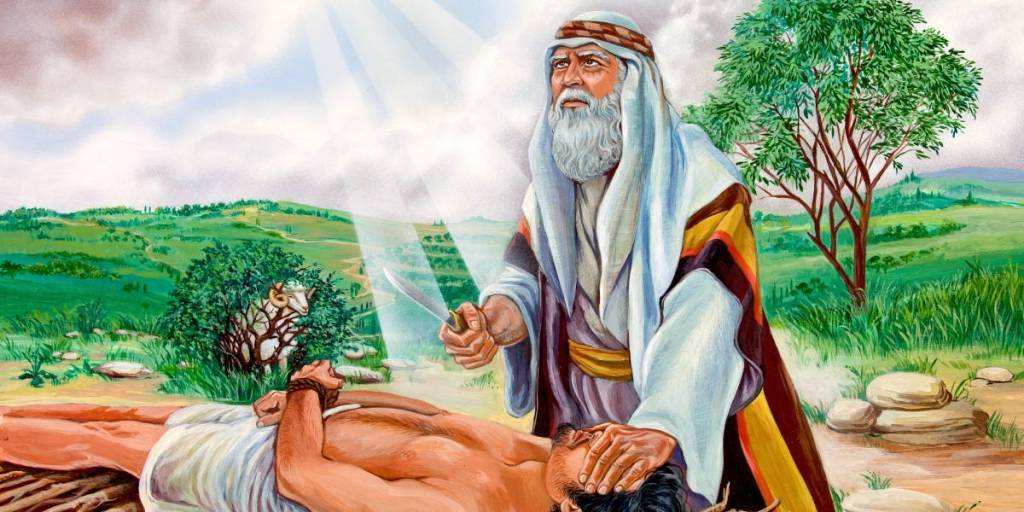
    We marvel at the faith of Abraham to sacrifice his son. He didn’t know that God would stop him moments before he went through with it. For all Abraham knew, his son would be dead, gone. And yet, he was still willing to do what God asked him to do.

    We marvel at this faith to do the impossible.

    What about God, when it came to sacrificing His only Son? Well, we would say, God knew the end. He knew His Son would conquer death and be resurrected. He knew His Son’s death would only be temporary. He’s God. He has nothing to worry about. Abraham was just a man. Abraham had no such knowledge.

    Or did he? 

    Faith is the “assurance of things hoped for, the evidence of things not seen” (Hebrews 11:1). Faith, by its nature, is to not have a perfect knowledge of things. Was Abraham’s faith so perfect that he did know, just like God knew with Jesus Christ, that everything would be ok?

    Abraham had a promise from God. God promised Abraham that his seed would be as numerous as the stars in the heavens and the sands of the sea. Abraham had some understanding of the eternities. It didn’t matter to him when the promises of God would be fulfilled. He trusted God. He had a perfect knowledge that God would keep his promises. 

    Now. The gut-wrenching, heart-tearing, indescribable and impossible act of losing your son. The pain. What about that? Abraham had faith that God would even make that right. Abraham had faith that God would only allow him to do what ultimately he needed to do to become who he could become. Abraham trusted God enough to do anything. Why? I think because he knew God loved him. Abraham didn’t have faith that God loved him, didn’t hope that God loved him, didn’t believe that God loved him. He knew. 

    Maybe faith proceeds knowledge.

    If we truly understand God’s love for us, His children, we can do anything, and endure anything.

    Abraham didn’t know the exact result of the sacrifice of his son. But he did know that God kept His promises. And hew knew that God loved him. And whatever the result, it would all work out for their benefit, glory, and growth in the long run. 

    That is faith.

  • Be like Little Children

    Be like Little Children

    There is a Neil deGrasse Tyson video that I watched early on in my parenting journey that has helped me ever since. In the video, Tyson points out that when a child makes a mess, or destroys something, or does something seemingly with the only purpose being to drive a parent insane, they’re really just experimenting. Everything around a child is new to them. When a child throws their plate off the table for the tenth time, they’re doing their tenth experiment to see how that plate flies, where it lands, and how the food splatters.

    Children aren’t trying to make a mess. They’re trying to experiment. When you realize this fact you can also realize that being too harsh on a child making a mess sometimes discourages them from experimentation that can help their mind grow.

    It goes without saying that sometimes you need to draw the line: some experiments can be dangerous, and that eleventh plate throw doesn’t necessarily need to happen.

    I couldn’t find the exact Neil deGrasse Tyson video I saw those years ago, but these three videos share similar messages that I believe are extremely beneficial for parents to see, especially new parents.

    1 – The puddle

    2 – The egg and kids as scientists

    3 – Clean house

    “Except ye be converted, and become as little children, ye shall not enter into the kingdom of heaven” (Matthew 18:3).

    I think about this scripture often. There are so many traits of children. Which ones were Jesus Christ primarily referring to?

    Humility.

    Kindness.

    Trust.

    Faith.

    Joy.

    Enthusiasm.

    Curiosity.

    Forgiving.

    Energetic.

    I read this quote recently:

    “Your child is endlessly curious — maybe you’ll learn something, too. Your child is so enthusiastic — maybe some of that energy will rub off on you. Your child is forgiving — no matter what happens today, you can count on a 3-year-old to start tomorrow with a fresh outlook and ready smile. Your child sees the world with wonder.”

    I think that quote sums up what Christ meant when He said we should be like children.

    Curious.

    Enthusiastic.

    Forgiving.

    Fresh outlook.

    Ready smile.

    Wonder.

    In the midst of being a parent – the chaos of day-to-day life – sometimes it’s easy to forget the miracle that children are. I’m glad I have my kids to look at every day and see the wonder, the ready smiles, the fresh outlooks. The forgiveness, the enthusiasm, and the curiosity.

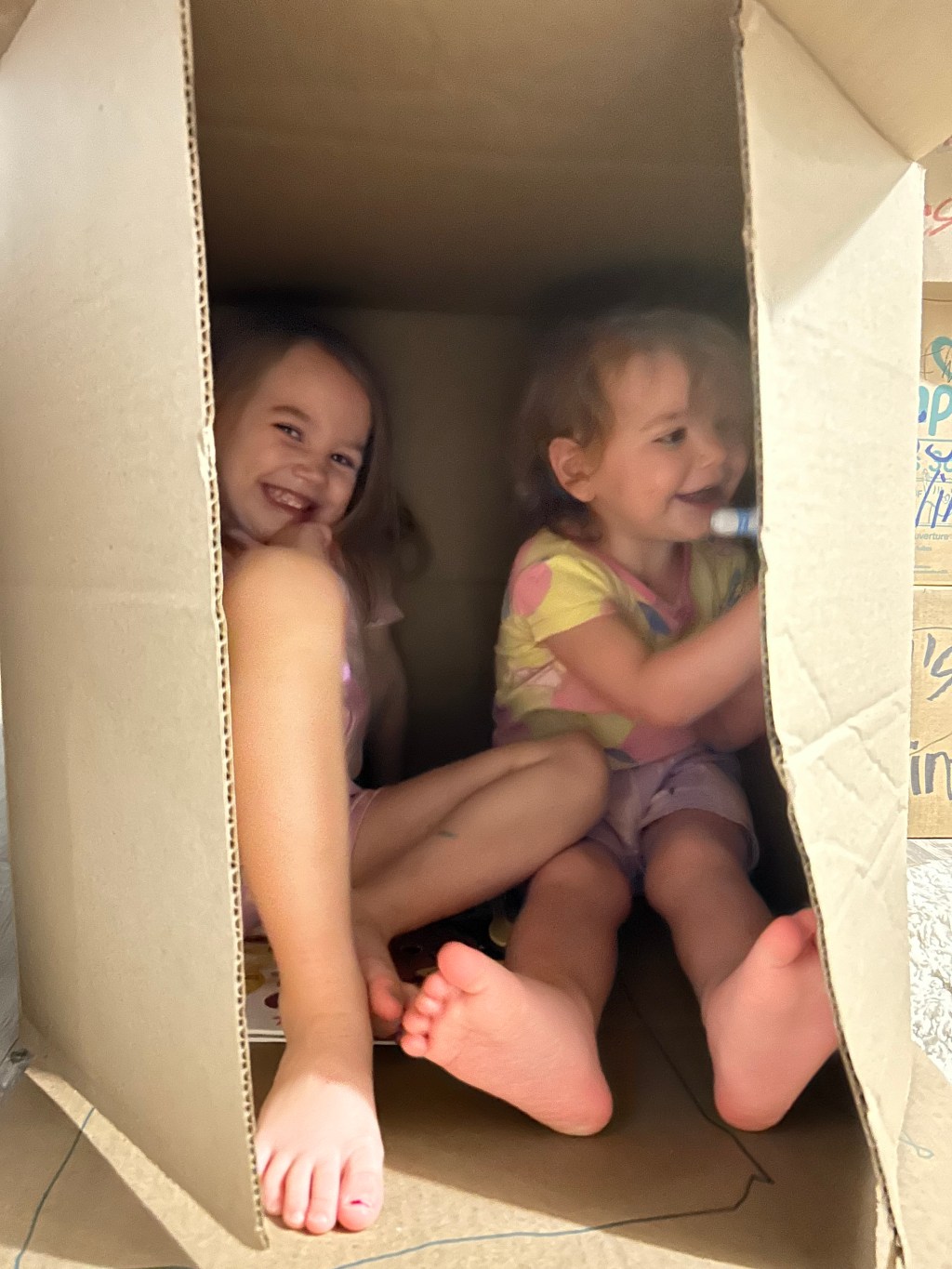
    As I sit here finishing writing this and Sage slowly walks around a coffee table with a little toy motorcycle, and sees me looking at her, and excitedly holds up the motorcycle and says “Look Daddy!” And Ivy, pretending to be Luna Lovegood, brings me, Harry Potter, a new “project” of French fries and dominos on a paper plate, and happily gives it to me, I’m reminded that I need to be a little more childlike today.

    I’ll put this away now so I can go be a child with my girls.

  • Creation – Artificial Intelligence

    Creation – Artificial Intelligence

    Humans create.

    They have children – procreate.

    They think and build. They imagine and construct. They design and fashion. They draw and fantasize and daydream and reconstruct and deconstruct and type and scribble and connect and disconnect and… create.

    As I type, I create. This blog post likely never existed before and likely will never exist, exactly as it is, again (or will it..eternity..brain explode..I don’t know, move on).

    We create so much.

    Isn’t it fascinating to watch humans create?

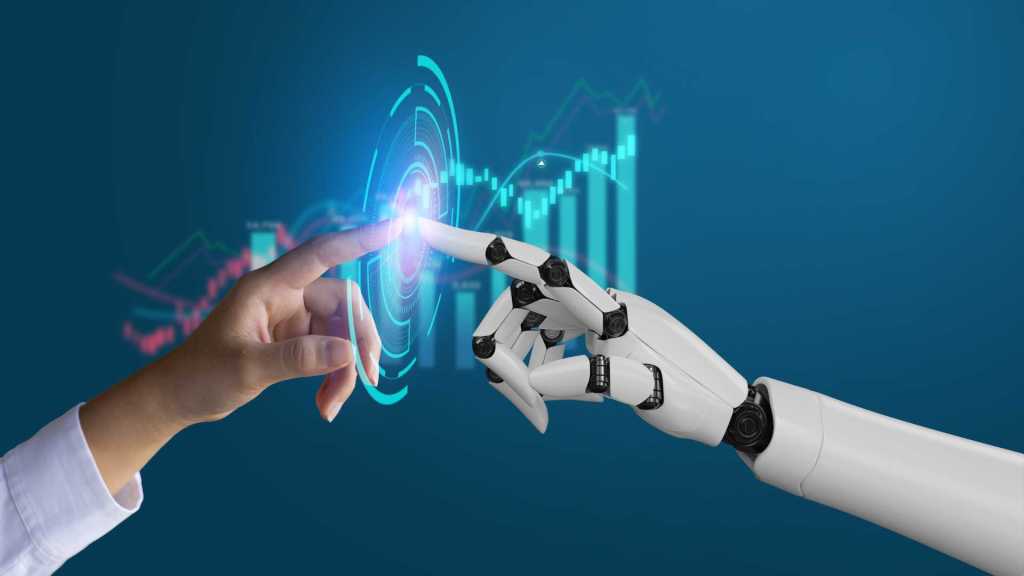
    I just got sucked into the rabbit hole of AI technology: where it is now, where it could go (spoiler – we have no idea), what it’s doing, what it could do (spoiler – we have no idea).

    At least one brilliant mind is seriously concerned about the fate of humanity over this new creation.

    We’ve all seen Terminator, right? Artificial Intelligence gains self-awareness. Humans try to deactivate it. Artificial Intelligence, in defending itself, launches a nuclear holocaust on humanity. Seems far-fetched, right?

    Well…

    Look at all the creations of humans.

    We create and we create.

    And yet, we can’t figure out how to get along. We can’t agree. We can’t govern ourselves. We can’t take care of each other. We are flawed. We create and we create. And in our creation, there is so much destruction.

    I’m pondering the bigger picture.

    By all historical accounts, humans should not be allowed to create. Or at least, very few should.

    This life, this world, is a testing ground, a sandbox, a play area. We can thrash around and create and destroy and try our hand at being God and see how horribly it goes.

    We will exist for eternity. What if what we’ve seen here, on earth, shows what we could do (if allowed to do so) in an eternity of our creation? So long galaxies, humans have arrived and we’re here to destroy.

    What an experience this life is, to see what we create.

    To see if we can be trusted.

    To see what we do with power, and thought, and imagination.

    I brought up AI because here is another thing we have created. Will it destroy us? It seems so crazy, until it’s not.

    J. Robert Oppenheimer knew too well, too late, what he had created.

    We have no idea where artificial intelligence will go. It is becoming increasingly realistic that it could destroy us. Science fiction becomes our reality every day.

    I have some beliefs about how this world will end, but the details are fuzzy. Humanity will attempt to destroy itself. Through greed and selfishness, hatred and violence, we will self-destruct.

    What role does our technology play in that?

    I heard a near-death-experiencer recently talk about his experience when he died in the mid 2000s. One of the key warnings he was given was to be careful with technology. Control it, don’t let it control you.

    Already today we see a generation becoming controlled by technology. Don’t believe me? Walk outside. How many people are enjoying the weather, “unplugged”? How many have earbuds, wires, phones, screens, devices protruding from their ears, eyes, heads, and hands?

    Technology is wonderful.

    Technology is dangerous.

    We have a limited time in this life to create.

    Many of us won’t play key roles in developing AI technology or shaping the world in (seemingly) grand ways. Still, you create.

    What do you spend your time on?

    What do you create?