Tag: unity

  • Simplified Husbandship

    Simplified Husbandship

    These are the highlights I typed up for myself from a book called Simplified Husbandship | Simplified Fathership by Richard M. Eyre. I typed this up mostly for myself to refer back to.

    This is only on the simplified husbandship portion of the book. These are the quotes, summaries, and most important points I found from the book.

    “To become a better husband –

    change yourself

    not your wife.”

    “The home should be the center of growth, happiness, of excitement. If your home isn’t a happier place now than it was a year ago, you’re not progressing.”

    “A marriage of oneness should have a Venn diagram that is as circular as possible in the middle. When the marriage doesn’t have enough oneness, the middle is like a football.”

    “This type of marriage, like a football, is erratic and hard to predict. There is no telling where it will bounce.”

    “The best way for a husband to pursue this kind of oneness lies not in efforts to change his wife or even in efforts to change the marriage relationship. His best chance lies in changing himself.”

    Partnership-Plan-Pray

    Communication – “Oneness is an impossibility between two who share only part of what they feel.” This one really hits home for me. I’m not a great communicator.

    Inspiration – “The third partner should be the Lord.”

    One strategy for partnership –

    Wife handles the “inside partnership” of inside-the-home things such as home, children, personal kingdom, etc.

    Husband handles the “outside partnership” of outside-the-home things such as money, providing necessities, involvement in outside causes like church and civic, etc.

    In the above example, the wife would be general manager of inside partnership and husband participating partner and vice versa.

    Each night before prayer each gives a brief report on their stewardship, and receives comments, questions, or insight from the participating partner. Both participate, but one is in charge of each.

    During scheduling, attempt is made to find an hour where roles are reversed. Husband spends time with the children on the inside and wife shifts to outside activities, church, civic, or personal. (This seems extremely structured, to the point that it might border on unrealistic, practically speaking. But I still like the premise).

    Partnership – “day planning” – evening prayer.

    Each has a role and the Lord is the supervising partner.

    Partnership meeting is simple and shouldn’t take more than 10 minutes. The results:

    1. Each learns more about the arena where he or she did not spend the day (and becomes more appreciative of what the other is doing).
    2. Each gives input and ideas for the other’s benefit.
    3. Each thinks about what he or she will do the next day in both the general and the limited role.
    4. The prayer becomes far more specific and meaningful (because it is about things just discussed).
    5. Both sleep better when the next day is clear and challenging rather than hazy and uncertain.

    Things I personally could talk about with the outside responsibilities:

    1. Schedule for work / coaching / gym / church calling / projects
      • Go over my daily items
    2. Investments and status
    3. Finances – budget (handled by Beth, could be a part of her report).

    Once a month dinner date, reviewing the month. Review the past month and set goals for the month ahead.

    Once a year “honey-moon” vacation to review the last year and the year ahead.

    Principles:

    1. Total communication and openness
    2. Complementary roles (separate but shared responsibility)
    3. Shared goals and plans
    4. Adding the Lord to your partnership through earnest, regular prayer together

    “If exaltation is the goal, marriage partnerships must fold together in purpose and communication until they become one. We often imagine that temple marriages differ from civil marriages in quantity (they last longer), but, in fact, their quantity will be great only if their quality is great, only if oneness is obtained.”

    “Agreeing to disagree on some things is fine among friends and business partners but not between marriage partners striving for oneness.”

    “Partners are separated when they compete in any context other than fun.”

    “Emerson said, “Marriages do not fail, people fail. All marriages do is show those failures up.””

    Partnership-Plan-Pray Summary:

    • My wife is my partner in all I do.
    • We share everything, including our deepest feelings.
    • We plan our time together and share objectives for our lives inside and outside our home.
    • We pray together regularly, and preceding the prayer is a discussion of our partnership.

    Protect-Pamper-‘Preciate

    “A woman’s ego is no weaker than a man’s, but hers works in a slightly different way. Hers usually is best fed when she is cared for, complimented, appreciated, protected – even pampered a bit – not with the patronizing implication that she is weaker, less able, but with the implication that she is more special, important, and genuinely valued. A wife who receives sincere compliments, who is appreciated, who feels needed and cherished and protected, seems to gain a soft strength, a kind of clear-headed fulfillment that raises her toward her full potential in many areas.”

    “It’s the old notion of “out-giving” that can make marriages even more beautiful. Have you ever watched what happens to a basketball team when one player is so unselfish that he is always looking for a teammate to get the ball to? Other players respond in kind. The ball moves faster; everyone gets better shots. The teamwork of marriage can be similar.”

    Me – This is similar to the advice I received early in my marriage. When I confided in someone about my frustrations with doing household chores, that someone asked me point blank, “Why are you doing chores?” They asked if it was to one-up or get an edge on my wife. They asked how the Savior served. They pointed out that this life is meant for us to become like the Savior. The Savior never asked for anything in return when he served others. If I’m cleaning the house or doing something so that I’m owed something or appreciated by my wife, what’s the point? It’s not service, it’s a way to get an advantage. They said to love and serve my wife for that simple purpose. Because I love her and I want her to be happy, and for no other reason. My life and marriage are better when I realize and remember this.

    “It is not the addition of responsibility and children that destroy romance. It is the subtraction of courtship, of chivalry, of living to make the other person happy.”

    Protect-Pamper-‘Preciate Summary:

    • I love my wife deeply and understand her need to feel cherished and loved. 
    • I feel tenderness toward her and want to find meaningful ways to compliment her, to be chivalrous and protective of her. 
    • I watch her closely and notice the time she needs the “lift” of a tender kiss, a word of sincere appreciation, a helping hand, a date.” 

    Patriarch-Priesthood

    A wife is asked, “What would you do if your husband were to ask you to do something you didn’t agree with, not something unrighteous, but something you didn’t want to do?” 

    She responds, “I would tell him I didn’t want to, and we would discuss it.” 

    “Yes, and most things you would work out and agree on. But let’s say in this instance you still didn’t agree. You thought it was the wrong decision, but he still wanted it. What would you do?  

    She says, “I wouldn’t do it.” 

    “That’s what I want to talk to you about. You would have two options in that situation. One, to refuse. Or two, to say, ‘Yes, you know my feelings, but if you still feel it is right, I will accept your decision.’ If you take the first option you get into a power struggle and minimize his chance to change or repent if he is wrong (his ego, if you defy him, will lock him into his wrong choice). If you take the second option, you show trust and giving, and you maximize his chance to change if his decision is wrong. (The other side of the husband’s ego is the one which feels the responsibility to protect and be fair with his wife who puts her confidence in him.)” 

    The husband is then asked, “Would you ever do that? Demand that your wife do something she did not agree with? If you do, you will sooner or later destroy your relationship. If you force decisions on her, you abuse her trust and become a tyrant. That is what you do if you demand.” 

    If either the husband or wife remembers this, it will work. If the wife respects the priesthood, the husband will use it well. If the husband counsels and communicates rather than demands, the wife will respect the husband and they will be one, with the priesthood belonging to both together. 

    I would add that this example works the other way around as well. If the wife decides on something and doesn’t respect the disagreement of the husband and the husband refuses to compromise, it becomes a problem.

    “In a baseball game the pitcher throws the ball, the catcher catches it. The roles are equal but different. They could rotate, the catcher throwing every other pitch, but they would do less well in the game. In the patriarchal order, the husband holds the priesthood and the wife shares it. The “head of the home” (the husband’s role) and the “heart of the home” (the wife’s role) are equal but different in that both draw on the great, inherent strengths of each.”

    To be a strong priesthood leader in a home:

    1. Take the lead in planning the week together each Sunday. 
    1. Use the priesthood more in the home (for blessings, etc.). 
    1. Have a short personal interview with each child on Sunday evening. 
    1. Hold a good family prayer each morning and a “partnership prayer” with your wife each night.  

    Patriarch-Priesthood Summary:

    • My wife shares the priesthood with me, and we are equal partners. But I hold that authority and I have the righteous strength that helps her feel secure and fulfilled in her support. 
    • I take the lead in planning and goal-setting, in family prayer, and in personal interviews with each of the children. 
    • I realize that there is no intervening link in the priesthood chain between myself and the Lord. As a father I am entitled to direct inspiration for my wife and children. I ask for that inspiration and receive it. 
    • use the priesthood often in my home for personal blessings and to keep the Lord’s Spirit present.  

    Priority 

    “Lack of commitment is Satan’s key tool in destroying relationships. Without commitment, little problems and disagreements can become final ones.” 

    A “planning” husband: “In addition to planning with my wife, I consciously ‘prioritize’ my wife in my personal planning. When I plan my week, I think about her first, and the fist thing I put on my calendar is our Friday night date. Then I ask her about her schedule and try to work out when she might need me. I try to plan at least one little surprise for her each week.” 

    A less planning husband, “I just watch Pattie and try to notice when she needs a little pick up. Also, and I don’t always remember this, I try to make my last thought of the day, just before I got to sleep, be of Patti. I think, ‘What can I do for Pattie tomorrow?…It’s fun to try to think of her for a moment each night just as I doze off.” 

    Priority Summary:  

    • My wife comes first in my plans, my schedule, my priorities. 
    • When I have decisions to make, my first thought is always how they will affect her. 
    • I consciously try to find “little things” to do for her on a regular basis.  

    Becoming these things 

    “Most husbands, busy with jobs, callings, and concerns of all varieties, cannot be constantly thinking of their roles as husbands. Therefore, becoming these four qualities to the point where you live them naturally is the only practical, workable way to improve your husbandship.” 

    “Self-programming” is the idea of making these qualities subconscious, so they don’t have to constantly be thought about. The point is to become these husband qualities.  

    Methods of self-programming 

    1. Running 
    1. Meditation 
    • The same kind of self-programming can be done in meditation. Simply sit comfortably in a quiet place, close your eyes and quiet your mind as best you can. Then begin – “I put my wife first,” etc. 
    1. Shaving 
    1. The last thought of the day. 
    • The quiet night, with no light or distraction, is a good time to say, “I am the patriarch of my home. I lead righteously through the priesthood. Last week I gave a priesthood blessing to little Nell. I watch for opportunities to use the priesthood.” And so on. 

    “Each method of self-programming can be strengthened by prayer. We have great power to change ourselves, but our Heavenly Father is the true changing force.” 

  • Is Roseto, Pennsylvania Zion?

    Is Roseto, Pennsylvania Zion?

    There was an extraordinary thing happening in Roseto, Pennsylvania in the 1950s. I read about it in an awesome book called Outliers by Malcom Gladwell.

    Roseto, Pennsylvania was an outlier when it came to heart disease. For some reason, instances of heart attacks and heart trouble in Roseto were shockingly different than anywhere else.

    In the 1950s, heart attacks were the leading cause of death in men under the age of 65 (Outliers, p. 6).

    In Roseto, nobody under 55 had heart attacks. Roseto had half as many people with heart trouble over 65 compared to any other area studied. This included next-door cities and towns.

    What’s fascinating about this is that this phenomenon apparently had nothing to do with genetics, diet, or any other seemingly obvious reason. There was no obvoius indicator of why a whole community would be free of heart trouble.

    Heart trouble wasn’t the only thing missing from this community. A sociologist was brought in to study the community. His name was John Bruhn and he said, “There was no suicide, no alcoholism, no drug addiction, and very little crime. They didn’t have anyone on welfare. Then we looked at peptic ulcers. They didn’t have any of those either. These people were dying of old age. That’s it” (Outliers, p. 7).

    What made Roseto unique, then?

    Finding no pattern, those doing the study had to look at anything different about Roseto to try to explain this phenomenon.

    This led to a primary theory. That primary theory behind why Roseto, Pennsylvania residents didn’t suffer heart trouble or many other common diseases had to do with their community.

    Roseto had an old-fashioned way about it in the 1950s, even compared to the standards of its day. The residents of Roseto were primarily Italian-American immigrants. The standard in Roseto was to live at home as long as possible, take care of one another, and generally live a more laid-back and communal way of life. A young man would stay at home and take care of family. If he lost a job, it was okay. The community would often try to keep shortcomings like a lost job secret so as not to create any embarrassment. Kids would take care of parents. Parents would take care of kids. The community took care of each other. It was a family-focused, close-knit community.

    “(Researchers) learned about the extended family clans that underlay the town’s social structure. They saw how many homes had three generations living under one roof, and how much respect grandparents commanded. They went to mass at Our Lady of Mount Carmel and saw the unifying and calming effect of the church. They counted twenty-two separate civic organizations in a town of just under two thousand people. They picked up on the egalitarian ethos of the community, which discouraged the wealthy from flaunting their success and helped the unsuccessful obscure their failures” (Outliers p. 9, emphasis added).

    The fact that Roseto residents had such low instances of heart trouble revealed a potential connection between community relationships and social support to reduced stress and heart disease. The community of Roseto appeared to buffer its inhabitants from the stresses of life.

    This got me to thinking.

    What is Zion? What is the perfect society? What will it look like? What will it be like, practically speaking?

    “…the Rosetans had created a powerful, protective social structure…” (Outliers p. 9).

    Will Zion be a community that goes to church together? A community that stops to talk to each other? A community that continues to live under one roof with their direct family as long as possible? A community where equality reigns? A community where spontaneous cookouts in front yards are common?

    This sounds like Zion to me.

    It’s fascinating that a community basically shielded itself from the stresses of a fallen world by living by these principles. I believe these are God-given principles: fairness, love, community, support, unity – that’s what makes Zion.

    “When presenting (the researchers’) findings at many medical conferences where their peers were presenting long rows of data arrayed in complex charts and referring to this kind of gene or that kind of physiological process, and they themselves were talking instead about the mysterious and magical benefits of people stopping to talk to one another on the street and of having three generations under one roof….No one was used to thinking about health in terms of community” (Outliers p. 10).

    This Christmas season, as I’m inevitably considering the state of our world and where we’re headed, I can’t help but wonder: is it this simple?

    Community, family, support. People supporting people, people uplifting one another, communities looking out for each other. Neighbors waving hi. People engaging with those in their community. Ministering. Fellowship. Is it that simple? Would that fix our world?

    I think it would. I think this is primarily what is missing from our modern-day societies. Love thy neighbor. How about say hi to thy neighbor?

    This holiday season, aim to light the world. Start by dropping off cookies at a neighbor’s house. It might save you from a heart attack.

  • Adultery and Card Sharks

    Adultery and Card Sharks

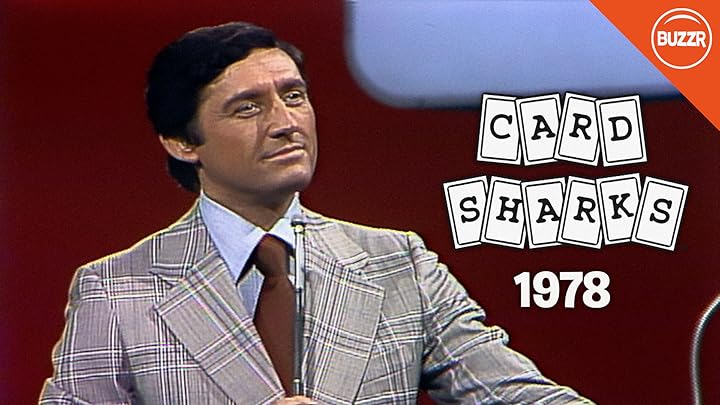
    I was recently watching one of my all-time favorite game shows: Card Sharks. I was watching old episodes from 1978. A timeless treasure is Card Sharks.

    Anyways, the show is filled with questions about human nature. They would poll 100 people, 100 Playboy Bunnies, 100 women in a studio audience, 100 men, etc etc and the contestants would guess how many out of a hundred would think a certain way. The other contestant then guesses if the actual number is higher or lower than their opponent’s estimate.

    The question was asked:

    “In a confidential poll, we asked 100 married men, have you ever considered having an affair? How many married men said, yes, they had considered having an affair?”

    The contestant guessed that 68 (!) married men had considered having an affair.

    “Lower!” I yelled at the TV. My guess was 16.

    Imagine my shock at the correct answer: 40! I was dumbstruck. 40 out of 100 men in 1978 said they had considered having an affair.

    Now, a sad question to consider, do you think that number has gotten higher or lower?

    27 Ye have heard that it was said by them of old time, Thou shalt not commit adultery:

    28 But I say unto you, That whosoever looketh on a woman to lust after her hath committed adultery with her already in his heart.

    Matthew 5:27-28

    I once had a conversation with a friend that was soon to be married. I asked him point blank, would you ever cheat on your wife? He adamantly said no. He said if you’re going to be married then you commit to never even consider that.

    I agreed. I told him that marriage is sacred. Despite society treating marriage with the ultimate disrespect, like it’s some casual commitment that can be set aside whenever it becomes inconvenient, that is not what marriage is. Marriage is a binding promise. Marriage is a covenant. That’s why we do it in front of friends and family. Have you thought about that? Weddings aren’t for the party, extravagance, and fun. Weddings serve an important purpose. Weddings are an opportunity to stand before all our loved ones as witnesses, and promise before every person present that we are entering a binding agreement with someone we love.

    As long as I remember I knew one thing about myself. That one thing was that I would never, ever, under any circumstances, cheat on my wife. That’s important to me. It’s a point of honor. I made a promise not only to Beth, but to God, that I would be faithful to my wife.

    So the question, would I ever consider having an affair?

    No.

  • My Ignorance and Further Light and Knowledge

    My Ignorance and Further Light and Knowledge

    I have an embarrassing story I’m going to share. I’m not that embarrassed by it or else I wouldn’t share. Though, part of the reason I’m not embarrassed by it is probably due to how I’ve progressed from the ignorance I had at that point.

    Early on when I was coming back to church I started meeting with the missionaries and an individual who was curious about the church. One day after months of meeting together and discussing the Book of Mormon, he sat us down for a serious chat. The friend that had been meeting with us for months informed us that it wasn’t true. That’s a story for another day.

    There was a moment that has stuck with me that I haven’t forgotten. This friend, and he is a friend to this day, talked about the unity of the Christian faith. He talked about how LDS doctrine was way off, and most of Christianity, outside of us, agreed on the most important things.

    I wholeheartedly disagreed with this and still do. I see little unity in Christianity. See my post two weeks ago, A Kingdom Divided.

    This is the embarrassing part. At that time, I believed that Godhead vs. Trinity beliefs were roughly split 50/50 in Christianity. I thought for every Trinity leaning Christian sect there was a Godhead leaning sect. This was pure ignorance on my part. I had no idea that there were basically only two sects of Christianity that believed in the Godhead, and the rest followed the Trinitarian belief.

    To illustrate the divided nature of Christianity, I used the worst example. Based out of my ignorance, I stated that the issue of the Godhead vs. the Trinity was a perfect example of an important disagreement between Christianity. This friend who was essentially a Bible scholar looked at me like I was growing a second head. It was like he suddenly realized I had no idea what I was talking about and I lost all credibility.

    He said, “You know the LDS church is one of the only Christian churches that believes in the Godhead right?”

    I really didn’t. Now I did. Of course, it’s actually not that straight forward. While the belief that Heavenly Father, Jesus Christ, and the Holy Spirit are three separate and distinct beings is a minority belief, there are still many, many sects that believe in the Godhead.

    There was something important I learned from this experience, though. I’ll never know enough. There will always be things I don’t know. There will always be things I’m ignorant of. There will always be someone smarter than me. There will always be someone who understands history and the Bible and Christianity better than me.

    That said, if that “smarter,” “more learned,” or “Biblical scholar” doesn’t have the additional light and knowledge of the restored Gospel of Jesus Christ, whether they realize it or not, I will always have more than them. Even if I might not be what the world would call more learned on the subject, I’ve been introduced to truth and light from Heaven. Those that are biblical scholars are studying a dead text. The Bible is important, and wonderful, and a guider, but it is dead. It is no longer living. The Church of Jesus Christ of Latter-day Saints, Christ’s restored church , is a living church. Further revelation and knowledge will always beat studying an ancient and sometimes misunderstood text.

    I have confidence in what I know. But I am not cocky in my understanding. I know there is so much I don’t know. I know I can’t Bible bash with the best of them.

    What I can do, and I hope I do, is rely on the Holy Spirit, the living spirit of revelation, to help me to teach others the truth I know. I may not know everything, but the Holy Spirit does. As long as I have Him with me, and preach and teach with His guidance, I can be confident. I can be confident not in what I know, but in what the Spirit knows and what He can reveal to me.

    I’m grateful for that embarrassing moment. It taught me to never be cocky. It taught me who I need to rely on.

    Ultimately, you can battle over interpretations of Bible verses until you’re blue in the face. The truth is, Christianity is the thing that Christ preached against more than anything – separated, disjointed, contentious. Christianity doesn’t agree because Christianity no longer relies on the Holy Spirit for revelation and truth.

    This led to mass confusion and misunderstanding in Christianity. The things “Christianity” are often the most consistent on (like the Trinity) were decisions made by men who had rejected God and His guidance.

    We need God to reveal truth to us. If we push Him out, He’ll let us fumble about. We’ve seen Christianity fumble about since it rejected Christ’s apostles and started to have their debates and creeds.

    The more I study the Nicene Creed and how the Trinitarian belief came about, the more confused I get. It’s something I hope to write about. But honestly, not sure I ever will because it’s such an ambiguous and ridiculous process that led to this “unanimous” belief.

    We need answers from heaven or we are lost. Christ’s church isn’t dead. It is living. Without that living church, we are lost.

  • The God You Know

    The God You Know

    When I started writing the post Unity, Peace, and Love, I actually had another point I intended to make. As often happens when I write, my point got sidetracked (I hope by the Spirit) and I ended up going a completely different direction than originally intended. The point I was sidetracked from, I still liked, and think is important, so I decided to write it anyway. Hopefully the Spirit will guide this post as well.

    In Unity, Peace, and Love I talked about a video that shocked me, the video of someone strutting up to a rameumptom to pray. The idea of a follower of God shoving people out of his way to pray was so bizarre to me. I wrote in the aforementioned post what I think ended up being a better point about this. But what really came to mind the first time I watched that video is how corrupt religion can become if people don’t know who they worship.

    In my original post about the rameumpton, I wrote about the God a friend of mine knew. His God was vengeful, exclusive, and selective. This friend believed that I was going to hell despite my best efforts. I assured that friend that I believed he was going to heaven. Do I worship a different God?

    Let me be clear, I believe we’re all trying to worship the same God. I don’t mean to make the same argument that many Christians make against members of the Church of Jesus Christ of Latter-day Saints, that I’m not Christian because I don’t worship the same Jesus Christ. Just because we have different understandings of the person doesn’t completely diminish our worship. My efforts in worshiping Christ, even if others deem it a “different” or “inaccurate” Jesus Christ, is still worship.

    The problem comes when our understanding of who we worship completely alters our understanding and our behavior. The idea that someone could shove someone on their way to prayer was so bizarre to me. But what if the God someone understands has no body, passions, and is unknowable? What if someone thinks God is a selective and vengeful God that needs to be feared?Why not shove someone on their way to prayer? This shoving behavior isn’t as bad as a God who destroys people on a whim, a God who sent us here so 99% of us could be damned to eternal torment. Surely shoving someone isn’t that bad if our example is that God.

    I wrote the above before I finished Alma chapter 21 so I’d forgotten about the next part about the Zoramites, their rameumptom, and their recited prayer.

    Verse 15 of chapter 21, after the depiction of a Zoramite shoving someone out of his way on his way to prayer, reads:

    “Holy, holy God; we believe that thou art God, and we believe that thou art holy, and that thou wast a spirit, and that thou art a spirit, and that thou wilt be a spirit forever.”

    Interesting their beliefs line up with my thinking about how not knowing God corrupts our behaviors not only religiously, but in life. Here we have a recited prayer and the confusion on God’s character destroying a society.

    The culmination of the Zoramites corruption was not in their recited prayers or confusion in God, though. The culmination is found in verse 16 which reads:

    “Holy God, we believe that thou has separated us from our brethren; and we do not believe in the tradition of our brethren, which was handed down to them by the childishness of their fathers; but we believe that thou has elected us to be thy holy children; and also thou has made it known unto us that there shall be no Christ” (emphasis added).

    All their confusion, twisting of doctrine, and beliefs ultimately led to a denial of Christ. We will know the modern religions have truly fallen when they stop believing in He who keeps this all together.

    In an April 2023 General Conference talk, Mark A. Bragg reminded us of the Joseph Smith quote, “If men do not comprehend the character of God, they do not comprehend themselves.”

    This is where modern revelation and especially the Lectures on Faith (See here, here, and especially here for more on those) becomes so important. We must understand the character of perfection and love that Heavenly Father and Jesus Christ possess so that we can aspire to those characteristics. An unknowable God gives us an unknowable standard. Knowing God is perfect love, and we can do our best to be like Him, gives us the ability to do our best to emulate His love.