Tag: word of god

  • Godhead – My Understanding

    Godhead – My Understanding

    Two posts ago I discussed the doctrine of the Trinity and my opposition to it.

    This will be a much gentler post, detailing how I personally come to the belief and understanding of the Godhead as true doctrine. 

    First, an explanation I didn’t give last time. Definitions:

    1. Trinity or Trinitarian belief:  God is one God, but three coeternal and consubstantial persons; the Father, the Son, and the Holy Spirit.  The three persons are distinct, yet are one “substance, essence or nature” (homoousios).  In this context, a “nature” is what one is, whereas a “person is who one is. (From https://en.wikipedia.org/wiki/Trinity).  (Also, huh?).
    2. Godhead: God the Father, Jesus Christ, and the Holy Ghost form a group known as the Godhead.  Each member is a different, individual being, yet all three are united in thought, desire, knowledge, power, and purpose. (From https://www.churchofjesuschrist.org/media/video/2019-08-0080-godhead?lang=eng). (Also, visit that link to watch a 7-minute video to learn more).

    How can I say “I know” the Godhead to be true?

    The Godhead is one of the unique beliefs of the Church of Jesus Christ of Latter-day Saints. 

    A majority of Christianity believes in the Trinity.

    In this post, I won’t go into detail on the doctrine, differences, importance, history, etc. of the distinctions between Trinitarian and Godhead belief.  That I’ll likely save for another day.  In this post I simply want to explain how I have come to know for myself that the Godhead is true and correct doctrine.

    The short answer to how I can know the Godhead to be true is:

    Through study, prayer, and upbringing.

    My understanding of this principle and the knowledge I have of it can be broken down very simply.  It’s a similar breakdown that explains much of my testimony in the restored gospel.

    In reading the Book of Mormon, I know without a shadow of a doubt that it is the word of God.  I know that it was translated through the power of God.

    If the Book of Mormon is true, then Joseph Smith is a prophet. 

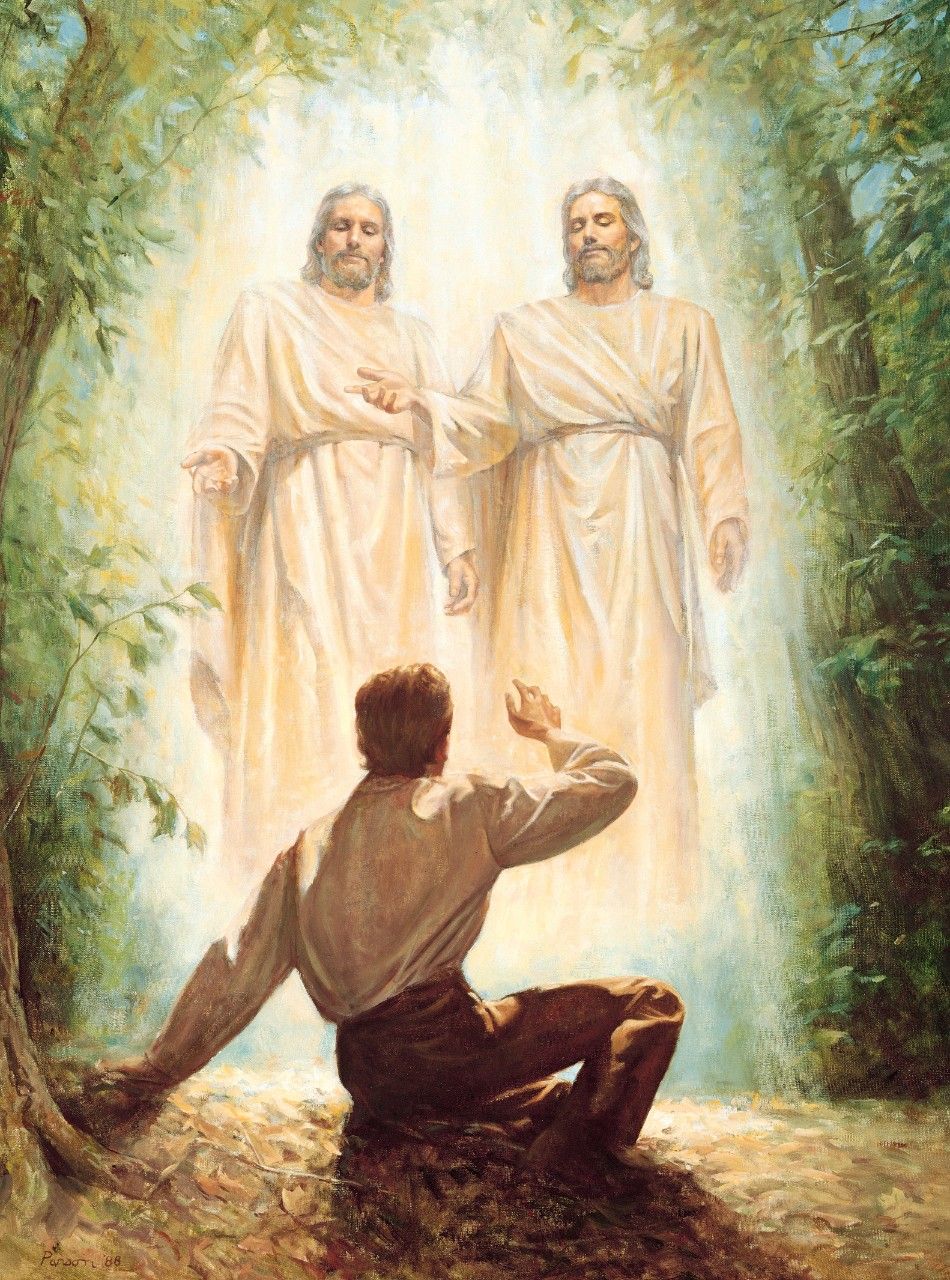
    Joseph Smith told us he saw God the Father, and Jesus Christ on His right hand.

    Joseph Smith History 1:17:

    It no sooner appeared than I found myself delivered from the enemy which held me bound. When the light rested upon me I saw two Personages, whose brightness and glory defy all description, standing above me in the air. One of them spake unto me, calling me by name and said, pointing to the other-This is My Beloved Son, Hear Him!

    Joseph Smith never wavered on this fact. 

    This could be where it ends, but I’ll add some notes on upbringing and study.

    Upbringing – obviously, I must mention that my upbringing played a role in my believing this to be true.  I was raised to believe in the Godhead; therefore, it is much easier for me to accept as truth.  That said, it was up to me to ask questions, read the book for myself, study Joseph Smith’s history and understand the principle for me to come to the knowledge.  Because I was raised to believe it to be true didn’t make it true.  Which leads to the next point.

    Study – As I said, through study and research I have determined the Book of Mormon to be the word of God.  It is an inspired book. 

    Prayer – My testimony of the Book of Mormon, mentioned in study, not only comes from logical, mind-centered study, but from personal revelation.  I’ve felt the Book of Mormon is true.  I’ve prayed to know the Book of Mormon is true.  I’ve received my answer, through prayer, that the Book of Mormon is true.  Prayer is an irreplaceable ingredient. 

    The principle of the Godhead has been distorted, attacked, and misunderstood for centuries.  One of the first attacks Satan always makes is on the nature of God.  If Satan can confuse us on who God is, he can confuse us on who we are.  We are children of the Almighty God. 

    I am grateful for modern revelation and prophets that make simple and powerful truths known.  I am grateful to know that while God is magnificent and powerful, He is not un-knowable.  The understanding of God as my Heavenly Father and Jesus Christ as my brother, who gave His life for me, strengthens my faith and helps me put my trust in them.

    This truth is eternal, and this truth is important. 
  • Blessing Ivy

    Blessing Ivy

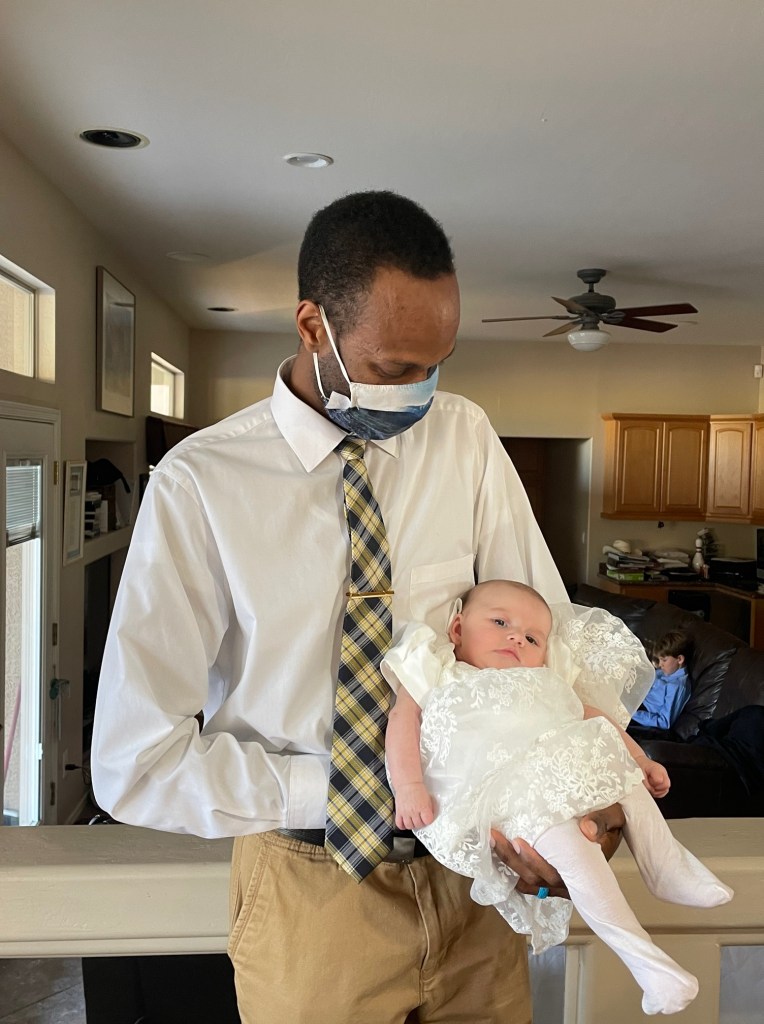
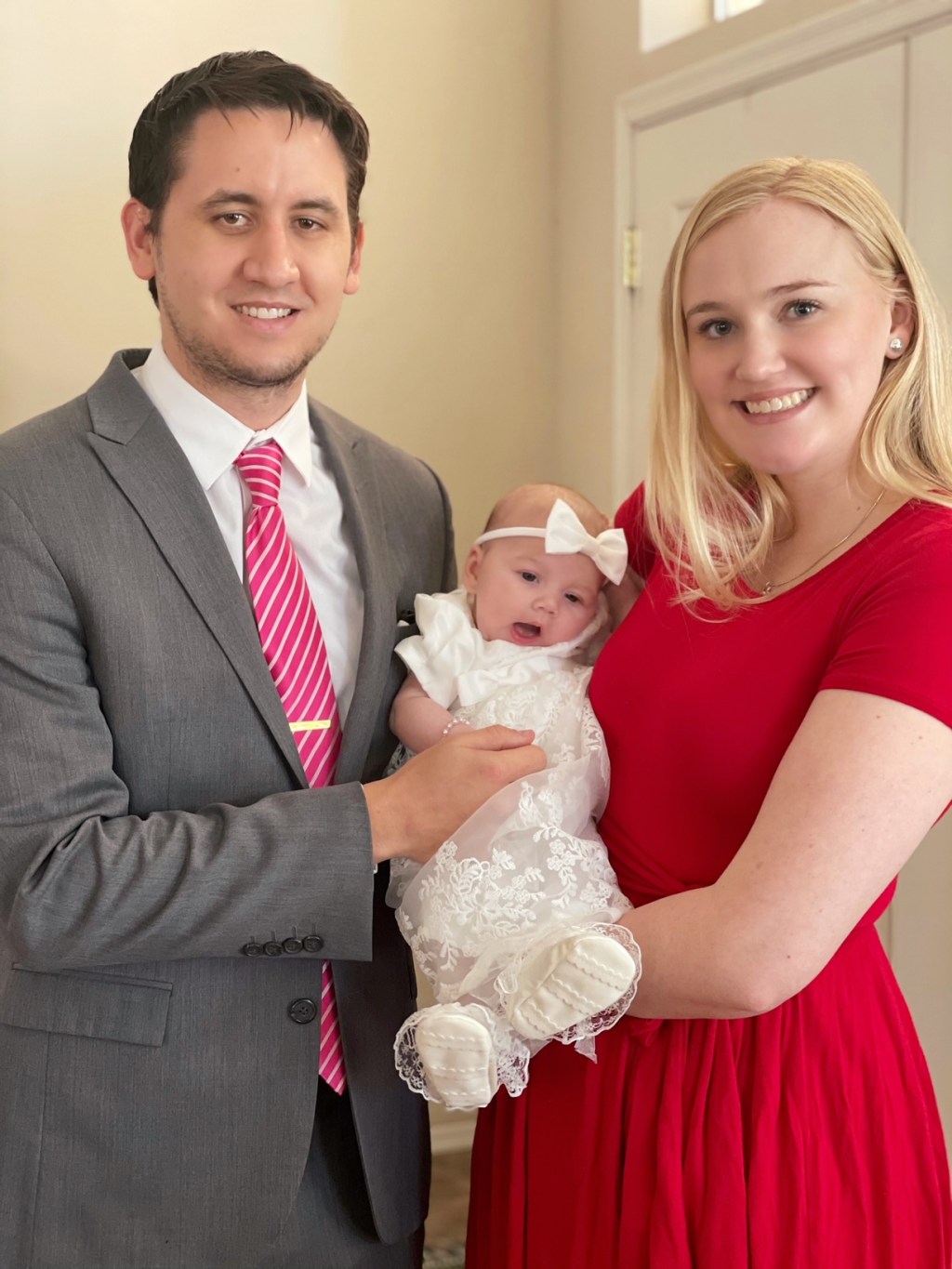
    I recently had the special opportunity to bless Ivy.  Leading up to the blessing, I did some research on the history of blessing children in the Church of Jesus Christ and its significance.  For Ivy’s blessing, Beth put together an event and a description of what a baby blessing is.  Here is that description:

    What is a baby blessing?

    In summary, the naming and blessing of children is a commandment of God. It is proper for a worthy father to name and bless his children. Blessing of children was done during the time of Christ, and it occurred in the early years of the restored Church. The ordinance has become a regular practice followed by Church members ever since.

    Who has the authority to bless a baby?

    A worthy priesthood holder under the direction of the local bishop. It is usually the father or a close family member.

    What is the priesthood?

    The word priesthood has two meanings. First, priesthood is the power and authority of God. It has always existed and will continue to exist without end. Through the priesthood, God created and governs the heavens and the earth. Through this power, He exalts His obedient children, bringing to pass “the immortality and eternal life of man.”

    Second, in mortality, priesthood is the power and authority that God gives to man to act in all things necessary for the salvation of God’s children. The blessings of the priesthood are available to all who receive the gospel.

    What is the format of a baby blessing?

    When blessing a baby, priesthood holders gather in a circle and place their hands under the baby. When blessing an older child, brethren place their hands lightly on the child’s head. The person who gives the blessing:

    1. Addresses Heavenly Father.

    2. States that the blessing is performed by the authority of the Melchizedek Priesthood.

    3. Gives the child a name.

    4. Gives words of blessing as the Spirit directs.

    5. Closes in the name of Jesus Christ.

    Ivy and Aunt Cambria

    Reading up on the baby blessing beforehand taught me some interesting things about this sacred practice that I would like to share.

    The below points were taken from this link:

    https://www.churchofjesuschrist.org/study/ensign/1979/12/i-have-a-question/in-blessing-an-infant-should-both-the-naming-and-blessing-be-addressed-to-our-heavenly-father?lang=eng

    1. Unique to giving a blessing to an older child or adult, the naming and blessing of a child is directed to Heavenly Father like prayers are. 
      • This could be because the baby is too young to understand the words directed to him or her. 
    2. It appears that Melchizedek Priesthood holders are authorized to more than ask for a blessing but are able to pronounce a blessing upon the child directly, as the spirit directs.
      • See D&C 20:70
      • Sometimes inspiration (or confidence) to pronounce/give a blessing does not come.  In this case it is of course acceptable to ask Heavenly Father for these blessings.  I believe this is how I felt in giving Ivy her blessing.  It was enough to ask Heavenly Father to bless her with my requests.
    3. It is a commandment to name and bless infants.
      • See again D&C 20:70
      • It is important to remember the naming and blessing of children is not a saving ordinance.  It is still an important and sacred moment seen in heaven.
    4. “It is an awesome responsibility to be a priesthood agent of the Lord, to act in his behalf, and to approximate in one’s words and doings what the Lord would do if he were here.  A father, especially, who is to bless his child, has the delight and responsibility to prepare himself beforehand by pondering and by fasting and prayer, that he may be sensitive to the suggestions of the Spirit when giving the blessing.”
      • “How blessed we are to be able to present our little ones before the Lord, our families and the Church, and then consecrate them to the Lord.  How blessed we are to be able to name them, plead over, pray for, and, yes, to bless them directly and personally in harmony with our finest desires for them, by the authorization and wisdom of heaven.”

    The below points were taken from this link:

    https://www.churchofjesuschrist.org/study/ensign/1988/12/i-have-a-question/why-is-the-naming-and-blessing-of-a-child-important?lang=eng

    1. An interesting account from Joseph Smith on March 13, 1843 says, “Twenty-seven children were blessed, nineteen of whom I blessed myself, with great fervency.  Virtue went out of me, and my strength left me…”
      • “[The next day] Elder Jedediah M. Grant enquired of me the cause of my turning pale and losing strength last night while blessing children.  I told him that I saw that Lucifer would exert his influence to destroy the children that I was blessing, and I strove with all the faith and spirit that I had to seal upon them a blessing that would secure their lives upon the earth; and so much virtue went out of me into the children, that I became weak, from which I have not yet recovered; and I referred to the case of the woman touching the hem of the garment of Jesus. (Luke 8).” (History of the Church, 5:303.)
      • Elder John Taylor said the Savior’s example of blessing children “should be studiously complied with without hesitancy or objection” (by priesthood holders).
      • We see that Joseph Smith followed the example of the Savior who blessed children in both Israel and the American continent.  (Mark 10:14-16 and 3 Nephi 17).  What an amazing and marvelous thought:  our virtue can be passed to our children.  Our blessings are a force Satan must reckon with.  It makes me want to bless my daughter daily.  It also adds insight to a scripture that has always been a bit puzzling in Luke 8:46.  Virtue can literally leave us to help others.
    2. The new name:
      • A new name is often involved when a covenant relationship is formed.
      • When Adam and Eve were given dominion over the earth, Adam named all the animals (Genesis 2:19-20).
      • God blessed them and named Adam after giving him a body (Genesis 5:2).
      • When we get baptized we follow a similar pattern, taking upon us a new name, the name of Christ.
      • Temple covenants also involve the giving and receiving of names.
    3. The responsibility of blessing a child is bestowed, ideally, on he who helped create that child’s body, and who Heavenly Father entrusted His child with in mortality.
      • Joseph F. Smith – “The patriarchal order is of divine origin and will continue throughout time and eternity.  There is, then, a particular reason why men, women, and children should understand this order and authority in the households of the people of God and seek to make it what God intended it to be, a qualification and preparation for the highest exaltation of his children.  In the home, the presiding authority is always vested in the father, and in all home affairs and family matters there is no other authority paramount…This authority carries with it a responsibility, and a grave one, as well as its rights and privileges, and men cannot be too exemplary in their lives, nor fit themselves too carefully to live in harmony with this important and God-ordained rule of conduct in the family organization.”

    It is my experience that giving blessings is often the closest I ever feel to Heavenly Father.  I can feel him speaking through me and it is always a powerful, emotional, and memorable experience.  The opportunity to bless my daughter will be one of the greatest moments of my life.  I have immense gratitude to my Heavenly Father for entrusting Ivy into my care, allowing me to name her, and trusting me to watch over and protect her in this life and through eternity.

  • Prodigal Son

    Prodigal Son

    The story of the Prodigal Son is well known.  For those who have not read it before or haven’t read it recently it can be found in Luke 15:11-32.

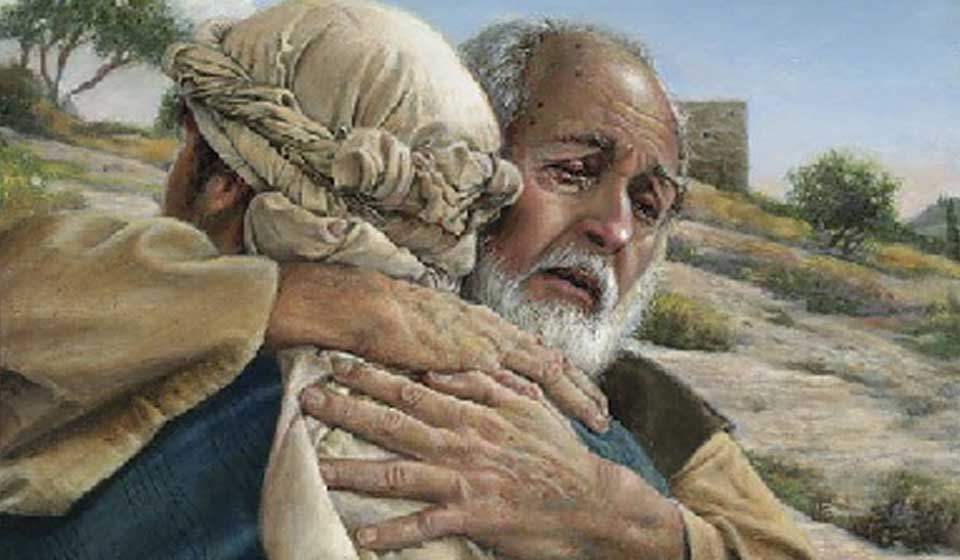
    The story of the Prodigal Son has always hit close to home for me.  Obviously, it’s easy for me to relate to the younger son.  You should read Luke chapter 15 above but a quick summary: there were two sons.  They will be referred to as the elder/older son and the younger son as I write.  The two sons were given their inheritances.  The younger son left his home and went to a faraway city.  There he squandered his inheritance on “riotous living.”  When he hit the lowest of lows, the younger son returned home to beg his father to allow him to be a servant.  The father, instead of showing anger, welcomed his son home, killed the fatted calf, put a robe on his son, gave him a ring, put shoes on his feet, and threw a huge party in celebration of his return.

    The older son, upon hearing of his brother’s return and the subsequent party, was angry.

    This story is often told in such a way that the primary lesson is about the Prodigal Son and his father’s reaction to his return. The story is called “the prodigal son” after all.  That lesson being that no matter how we stray, how far gone are, and how many mistakes we make our Heavenly Father (the father in the story) will always welcome us back.  In fact, Heavenly Father rejoices at our repentance:

    “I say unto you, that likewise joy shall be in heaven over one sinner that repenteth, more than over ninety and nine just persons, which need no repentance.”

    Luke 15:7

    All Prodigal Sons like myself rejoice at this story.

    I once heard a different perspective on this story, and I’d like to share it.  There is a great lesson to be learned in the story of the Prodigal Son by looking at a secondary character: the older brother.

    A great question to ask yourself before reading any of Christ’s parables is “who was He speaking to?”  Another good question is “What was He trying to teach?”  If you look at the parable from the perspective of the Prodigal Son, you can say Christ was teaching those who have sinned that they can always repent and return to the light of their Heavenly Father’s love.

    Who was Christ speaking to when he gave this parable? He was speaking to those looking for the message of God.   He was speaking to the listeners.  These were the ones looking for the message of God.  When giving this parable Christ was speaking to the saints.

    Consider what can be learned from the older brother.  The older brother never left.  The older brother never sinned.  The older brother respected and worked for his father.  Many say, and I always thought, he was justified in his reaction.  His exact words in verses 29 and 30:

    “And he answering said to his father, Lo, these many years do I serve thee, neither transgressed I at any time thy commandment: and yet thou never gavest me a kid (fatted calf), that I might make merry with my friends:

    But as soon as this thy son was come, which hath devoured thy living with harlots, thou hast killed for him the fatted calf.”

    This appears to be a natural reaction.  He had always been there.  He had always done right.  Only for his corrupt brother to return and receive honor.

    Why did the older son stay and work hard for his father?  Why did he keep his commandments?  Was he simply looking forward to the inheritance he was to receive?

    A Crucial Lesson from the Brother of the Prodigal Son « Meridian Magazine

    Why do you serve God and keep his commandments?  Are you looking forward to your mansion?  Do you serve God so you can inherit His glory?  Are you serving Him for YOUR benefit?

    We should serve God because we love God.  We should serve God because we love those around us.  Our service to God shouldn’t be for the blessings and honors He can give us.  Our hearts should serve for love and not for our inheritances.

    Jesus didn’t tell this story only to get sinners to repent.  He also told this story to get the saints to repent.  The Prodigal Son went out to experience life and disregarded his father’s possessions.  The older son on the other hand stuck around, but he was working to please his father.  He looked at himself as moral and worthy.  He was after his father’s possessions.  That’s what he concerned himself with.  The elder son was keeping score.  He was trying to earn his father’s love and inheritance.

    Sometimes we are like the Prodigal Son: sinning and needing to return home.  Sometimes we are like the older brother: serving for the glory of the world. 

    Often we are like the older son in our envy and jealousy.  When someone returns to the fold do we judge them for their past?  Or, like the father in the parable and our Heavenly Father, do we rejoice at someone’s return?

    Elder Holland in his talk, The Other Prodigal, said:

    “I testify that no one of us is less treasured or cherished of God than another.  I testify that He loves each of us-insecurities, anxieties, self-image, and all.  He doesn’t measure our talents or our looks; He doesn’t measure our profession or our possessions.  He cheers on every runner, calling out that the race is against sin, not against each other.  I know that if we will be faithful, there is a perfectly tailored robe of righteousness ready and waiting for everyone, “robes…made…white in the blood of the Lamb.”  May we encourage each other in our effort to win that prize is my earnest prayer.”

    Let us not compare our blessings to the blessings of others, what we have to the possessions of others.  Let us support and help each other to all return to our Heavenly Father.  Jealousy is of Satan.  We should never look down on somebody who made mistakes and is trying to return to God, because then we are the sinner.  We can learn from every character in Christ’s great parable.  Be like the Prodigal Son and repent, humble ourselves, and return home.  Be like the elder son and don’t envy but welcome our wayward brothers and sisters back home with joy and love.  And be like the father, loving all those around us, embracing the sinner and the saint alike.  I believe this is God’s hope for us and what Christ was teaching us through this story.

    __________________________

    Here is a link to Jeffery R. Holland’s talk, The Other Prodigal:

    https://www.churchofjesuschrist.org/study/general-conference/2002/04/the-other-prodigal?lang=eng

  • Rameumptom

    Rameumptom

    It’s amazing to read the Book of Mormon and compare those people to our day.  One story from the Book of Mormon that recently stood out to me was the story of the Zoramites and the rameumptom.

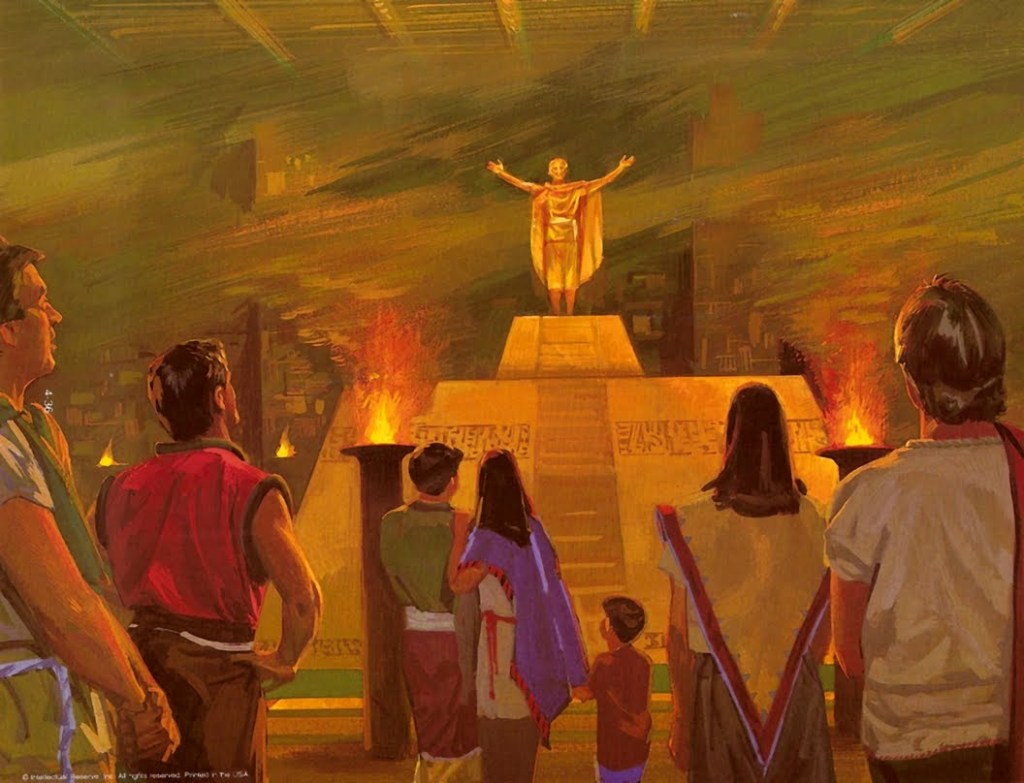
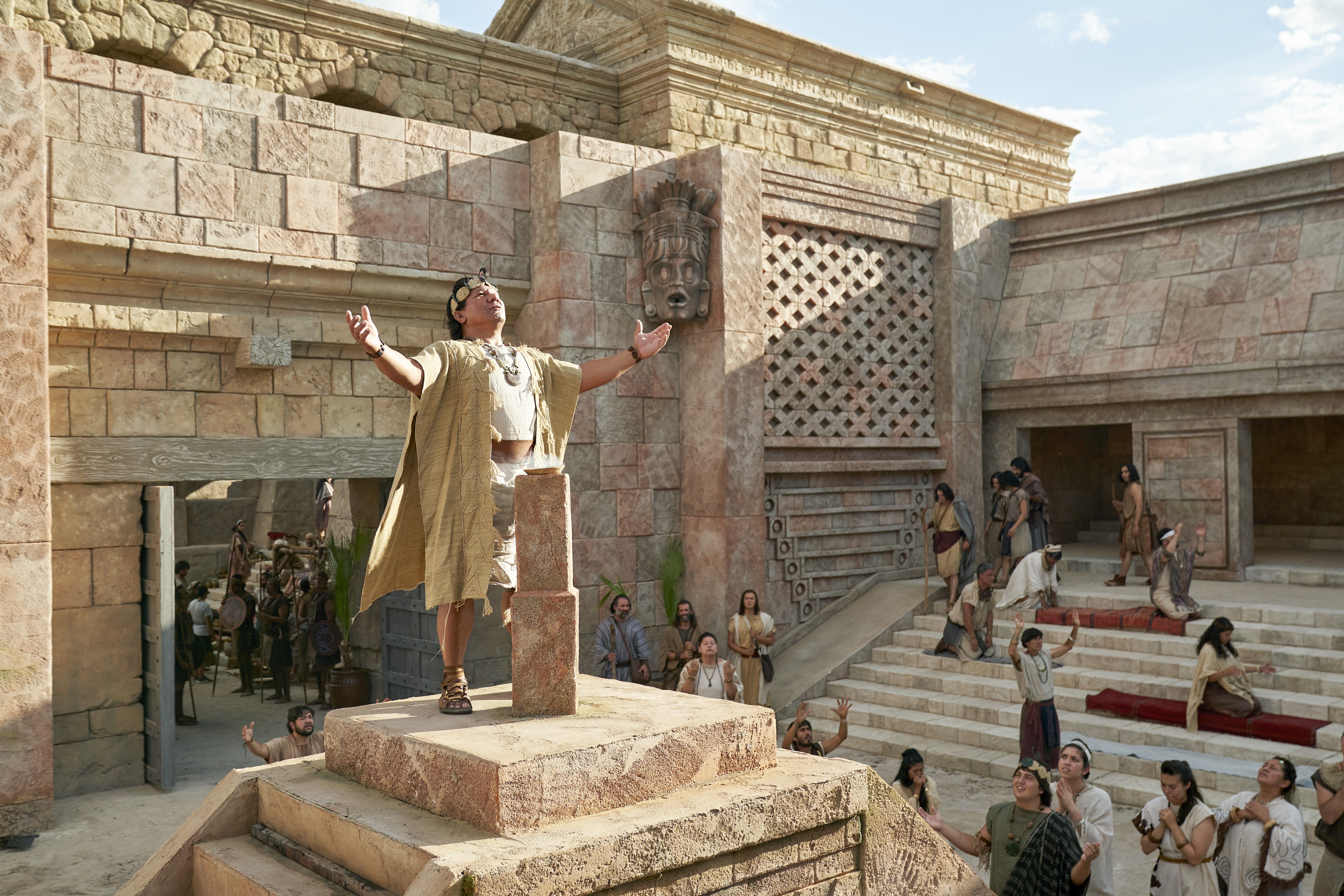
    The Zoramites were a people who corrupted religion in many ways.  They built a large tower.  This tower was called a rameumptom and it was used for prayer.  People would go to the top of the tower and loudly proclaim a rehearsed prayer.  In the prayer they would thank God that He chose them.  They would thank God that He had enlightened them and saved them while He would damn all the others to hell for their false beliefs.  They would say their prayer, leave the tower, and go about their week without another thought towards God.  They would use their week to serve no one but themselves. 

    A Zoramite man prays on the Rameumptom in the land of Antionum.

    Let’s compare the many false beliefs of the Zoramites to our society today.

    First, praying on the rameumptom.  What good deed is done today without proclaiming it to the world?  We’re all guilty of it.  Social media is our modern day rameumptom.  It is where we proudly shout our greatest deeds for the world to see.  Prayer and good deeds should be done in private.  Let not thy left hand know what thy right hand doeth.

    Second, the Zoramites had a temple that only the rich were able to go to.  Churches today have become much more about prestige and power than about humility and kindness.

    Third, rehearsed prayer.  The Zoramites used a rehearsed, scripted prayer to talk to God.  There are many problems with this.  It takes any effort from the procedure.  The prayer has no thought or feeling to it, it’s like reading in class.  There’s no genuine questions, no genuine requests, no genuine gratitude. It is a script.  We see this in many churches today.

    Fourth, prayer without action.  This is a byproduct of rehearsed prayer.  What does prayer without effort lead to?  Life without effort.  The Zoramites loudly spoke their prayers from their tower, stepped down, and that was the extent of their worship.  They wouldn’t speak to God again until the next week when they would give their five minute rehearsed prayer and move on with their life.  This is the worship of our society today.  With all God has given us we can’t even give Him a day of worship in return.  Most don’t go to church at all.  Many who do go, go on Sunday, listen for an hour, and the rest of the week don’t do a selfless act.  Christ was our example.  He taught us to pray always, serve others, and love others.  If we aren’t doing that, we aren’t of Him, no matter how loud our prayer.

    Fifth, the Zoramites thanked God that they were chosen by Him.  They thanked Him for enlightening them and turning them away from the foolish traditions of their fathers and neighbors.  They were selected by God and would be saved.  All others were fools who would burn in hell.  Sound familiar?  Many churches today believe you will only be saved if you follow their beliefs or belong to their church.  What kind of selective God is this?  It spits in the face of a loving, caring Heavenly Father who is no respecter of persons. This is a blasphemous and poisonous teaching that goes back to the pride and selective nature of churches.  God loves all His children and will provide a way for all of them to attain as much glory as they desire.  The doctrine of Jesus Christ taught by the Church of Jesus Christ of Latter-day Saints teaches that there are many mansions in heaven and God’s wonderful plan has provided a way for a vast majority, almost all of His children to go to Heaven.  All that repent,  follow His commandments, and believe in His Son will find a place worthy of their righteous hearts.  This is truth.

    I have a close friend of a different Christian faith.  We have many good religious conversations.  One day the topic of heaven came up.  He told me that surely I didn’t believe he would go to heaven as he wasn’t a member of the Church of Jesus Christ of Latter-day Saints, my church.  This made me so sad.  I told him with complete sincerity and 100% certainty that I knew he was going to heaven.  Whether he joined the Church (my church) or not, I knew he was a good person.  I knew he loved Jesus Christ.  I knew he tried every day to seek Christ and to do good.  I knew he sought God with all his heart.  I knew he was kind and liked to help people.  I know, without a doubt in my mind, that there is a place in heaven for him.  I know this because I know God.  I know he loves all of us.  I told this to my friend, and I’ll never forget the look on his face.  A little shock, a little awe.  I know that he believes I am going to hell, he has told me so.  He believes I have been fooled and I will have to pay for my ignorance.

    I know that God loves him, and I know that God loves me.  I know that Jesus Christ is the perfect judge.  We will be judged perfectly.  Even those who are fooled will be given mercy and love from God.  That’s the God I know.  I feel sad for those who don’t know that same God.

    False teachings have corrupted and destroyed religion.  False teachings have turned many away from the truth and light that religion should provide.

    I have an invitation to anyone who read this and thought “I do hate how churches say everyone who doesn’t do this or that is going to hell,” or “I’ve never understood rehearsed prayers,” or “I can’t stand the hypocritical church goers who are the meanest people during the week.”  My invitation is to come and see.  Come and learn of the Gospel of Jesus Christ. Come and learn what Christ intended for us.  Come and learn true principles and ordinances of Christ’s gospel.  Come serve with us, come worship with us, come pray with us, come be with us.  The Church of Jesus Christ of Latter-day Saints is not perfect, not yet.  Not until Christ returns.  We can still be hypocrites but we’re trying.  Christ’s Gospel is perfect and we’re working toward it.  Come and see.

  • Paul’s Life and Letters

    Paul’s Life and Letters

    Book Review: Paul’s Life and Letters

    By Dr. Sidney B. Sperry

    Copyright 1955

    __________________

    This book was a breakdown of Paul’s life and everything he ever wrote – thus the title.  I haven’t read the New Testament beginning to end.  I want to finish the Old Testament first.  This book helped me get a better understanding of Paul’s writings.  His writing was deep and powerful.  I also think his writings have always been and are increasingly misunderstood.

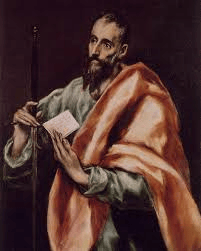
    Paul was such a fascinating figure.  I’ve long wondered what it would have been like to be alongside him.  Everything he did he did with such zeal.  Reading and learning about him, I’m awed by his work ethic.  He’s somebody to be admired for his hard work.  The fervor with which he did whatever he put his mind to.  It’s motivating on one hand and terrifying on the other.  Few can live up to the devotion Paul had to what he was passionate for.  We are lucky his passion turned towards the Gospel of Jesus Christ and worship of God as we’ve seen how his efforts against the early saints caused much pain and suffering.

    The book starts with a history of Paul.  Where he was from, who he was, how he became who he became.  The beginning was basically a historical biography of who Paul was.  As Paul got into the portion of his life where he was writing so much, the book transitions.

    This book is one I will refer back to often as I continue to study scripture.  It had a great breakdown of Paul’s individual epistles and when they were estimated to be written.  For example, chapter 13 was “Paul’s third missionary journey (continued).”  It gave a detailed breakdown of the epistle to the Galatians including everything Paul said, the authenticity, importance, style, and doctrine from that epistle.  I would find myself marking entire pages during these chapters. 

    There were many notable things I learned about Paul from this book.  One was that he worked throughout his missionary ministry.  Despite travelling all over the ancient world and spending many, many years as a full-time missionary, it never appears that Paul was paid for his ministry.  He was given “gifts” from church members from time to time.  But it seems very clear that Paul always worked.  The predominant theory is that he was a tent builder.  I found this very interesting given that many modern-day ministers point to Paul’s writings as proof that Paul advocated a paid ministry. 

    One amazing thing about this book was the feeling I had while reading it.  Especially while reading the breakdown of Paul’s letters.  There were moments where I’d pause and ask myself what I was feeling.  This isn’t normally something I do, but I was aware I was feeling something.  It was joy.  It was a feeling like, ‘what is this earth and what does it really matter but to be a test for something greater?  Live righteously and prepare to live with Christ and God forever.’  While reading his writings everything seemed so clear and simple.  It was a feeling in my chest while reading his messages.  Pure joy.  Pure peace.  Pure comfort in the future if I am faithful.  Motivation to be faithful.  As long as I am obedient and keep faith, I truly have nothing to fear.  It’s a similar feeling to what I get when I read the Book of Mormon.  That testified and made it so clear to me that what I was reading was the word of God, meant to lift up and inspire.

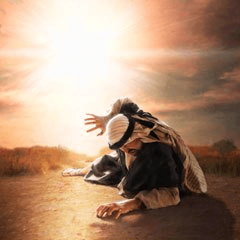
    I’m grateful for this book and the understanding it gave me of Paul and his writings.  As I mentioned, I know I’ll be using this book often as I continue to read scripture and one day study Paul’s writings more intently.  The principles Paul taught were pure.  He was called by Jesus Christ Himself which tells us of the importance of Paul’s work.  The missionary effort Paul put forth and his contribution to building God’s kingdom is inspiring.  He has the greatest conversion story of all time.  We could all be better if we spent more time aspiring to be like Paul the Apostle.