Tag: writing

  • Churches for Profit

    Churches for Profit

    This often happens with a blog post.

    I start with a simple anecdotal story.

    I start telling that story and as I start to make a point I realize I don’t know enough about the topic. I start researching. I go down rabbit holes. I end up with thousands of words, quotes, videos, links, and information.

    My simple story gets lost in a lot of information and I never finish my thought.

    This happened with a story about a woman I met.

    This was back when our dog Bengie was still with us. I was walking him when I got into a conversation with an elderly woman sitting on her doorstep. She was very sweet. We discussed her kids, Bengie, and the neighborhood.

    During our conversation she made a simple comment that made me very sad.

    This lady was talking about her church and how it was close enough for her to walk to.

    Internally I was thinking, “Awesome!”

    Then, unprompted, she said, “I don’t give them much money though… just sometimes when I go, I give them a little.”

    Why did this little old lady, a stranger, feel the need to clarify that she didn’t give her church too much money? When talking about her church, the first two things she told me were that it was close and that she didn’t give it too much money. That is sad.

    She didn’t tell me anything about how her church helps her feel closer to God, nothing about how amazing her pastor is, nothing about the community her church brings her life.

    1 – She can walk to it

    2 – She’s not giving it too much money

    When did that become one of the first things you have to say about your church?

    This got me thinking about the progression of churches. Satan has been corrupting religious institutions since the Earth began.

    All institutions, including churches, need money to operate. Where is the line drawn? I think the line may get drawn at extravagance, excess, and greed.

    That’s why this post originally got derailed. I started talking about this woman’s comments about her church, thinking about how sad that she had to mention her donations, and it led to me defending the Church of Jesus Christ of Latter-day Saints and its finances.

    I’m going to set that discussion aside for another day. As I said, there’s a lot to be discussed there.

    Ultimately, it’s sad that profit has to be discussed about any church.

    Churches are for the benefit of man. Not for the profit of man. Churches are for the eternal benefit of man.

    What does the Book of Mormon say on this topic?

    The Book of Mormon takes a strong stance against churches for profit. See Mormon 8:32-37, 4 Nephi 1:26-27, 2 Nephi 26:20-22, 2 Nephi 26:31, and Alma 1:12 for examples.

    I think so many people have been turned away from organized religion due to this corruption for personal gain.

    I think it’s interesting to take a look at the things Satan attacks. Some of the first things to come to mind.

    1. Our true identity – Divine, Children of God
    2. Who God is – our Eternal Father
    3. Truth – what is truth, really?
    4. Churches

    That last one I think is shown in all the things churches have done wrong over the centuries. Judgement, wealth, greed, manipulation, abuse. These are the things Satan has brought into religious institutions and it has resulted in generations of people who then spurn religion, which in turn allows them to spurn the big questions about life.

    I don’t think the major issue with people not going to church is people not being in church, I think it’s them not thinking about who they are, how they got here, who sent them here, and who they’re going to see when the finish here.

    If you’re not asking these questions, you’re not seeing the big picture.

    And that’s what Satan wants. He wants us to miss the bigger picture.

    With technology, the busy-ness of life, and the corruption of churches, Satan is making us forget the real reason we’re here.

    The main benefit of church is thinking about Jesus Christ each week. After that it’s community and support. That’s it, I think. Outside of that, church doesn’t do much. If we all had a strong relationship with Jesus Christ and showed that in a covenantal way as a community by supporting one another and showing our devotion to Jesus Christ regularly in the other ways He’s asked us to, we wouldn’t really need a church. Life would be church.

    That’s the goal.
  • Books 2024

    Books 2024

    Since my 2023 list came out so late and I had a hard time remembering the books, I decided to get a jump start on 2024.

    Here is my list in order of favorite/most enjoyable reads of 2024 down to the least enjoyable yet still rewarding.

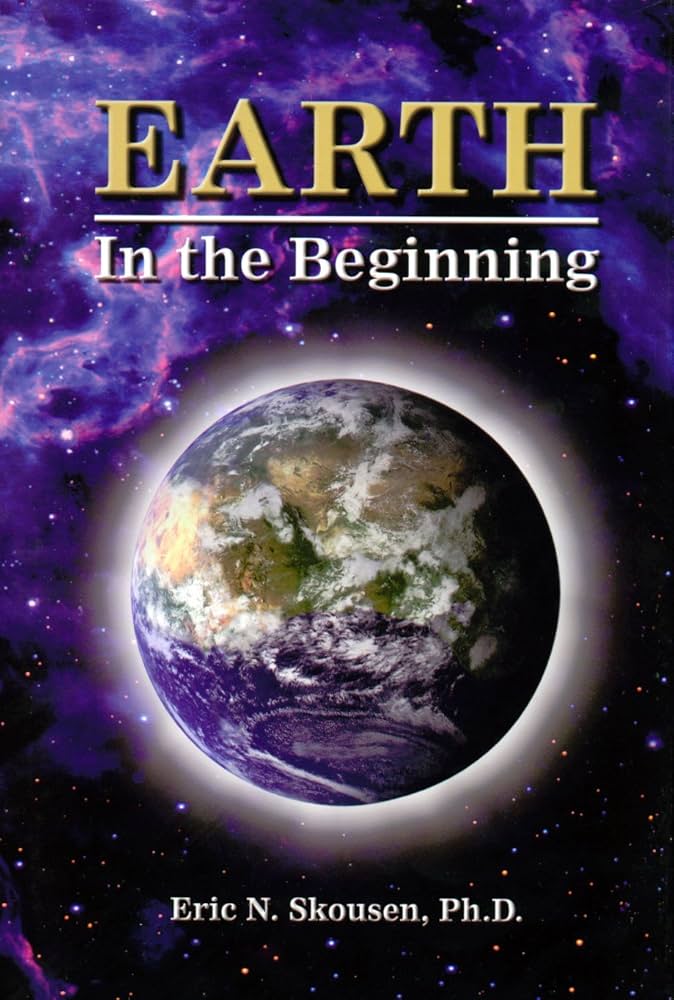
    1. Earth in the Beginning by Eric N. Skousen
      • The fact that I’ve given copies of this book to two people already should indicate that I enjoyed this book. My favorite books are those that expand my mind and make me think of something I’d never before considered. This book did that many times.
    2. Hugh Nibley’s semester two on the Book of Mormon
      • Speaking of “books” (this is more a lecture) that expand my mind, that is the perfect description of all things Hugh Nibley for me. Semester one was #7 in 2023’s list. I love getting a look into Hugh Nibley’s mind. If I could have dinner with one historical figure, Hugh Nibley might make my top 10 list.
    3. 4-Hour Work Week by Tim Ferris
      • I’m currently reading this book again in 2025. Enough said.
    4. Lethal White by Robert Galbraith
      • I read this alongside the next book on this list. It was a rare time that I was reading two fictional books concurrently. As I thought back on reading this alongside The City, I realized there were ebbs and flows where I liked one above the other. The tie-breaker? J.K. Rowling (the greatest author of our generation, duh).
    5. The City by Dean Koontz
      • Reading one Dean Koontz book a year is the perfect amount. If you read too many they all start to blur together. This was a fantastic book with a surprisingly powerful message. Very much enjoyed it.
    6. Seeking Allah, Finding Jesus: A Devout Muslim Encounters Christianity by Nabeel Qureshi
      • This book was recommended by a friend. It was the story of a man who converted from Islam to Christianity, a truly life threatening choice. I thoroughly enjoyed this book. One of my favorite topics is how people find faith in one way or another. This was an interesting story about this man’s journey through a shift in rethinking everything he thought he knew about the world.
    7. The Third Man Factor: Surviving the Impossible by John Geiger
      • This book was recommended by Beth. It includes true stories of people experiencing what has been called “The Third Man.” Beth thought I would enjoy it because of my love of all things spiritual and especially near-death experiences. She was right. I believe there is something real and misunderstood about this “third man” concept. Great read.
    8. #Positivity: You are always in the right place at the right time by Phil Helmuth
      • Another very short book. I took a lot from this book and quite enjoyed it. All about the power of positive thinking and making the most of your talents. Intriguing coming from one of the most successful poker players ever.
    9. Hugh Nibley’s semester three on the Book of Mormon
      • At this point in the “class” Hugh started to repeat a lot of themes and information, so I felt like I’d read some of it before and the new insights started to come much less often. It was still informative and I still loved reading his words.
    10. The Fall of Adam, the Atonement of Christ, and Organic Evolution by Reid E. Bankhead
      • There is a somewhat random process to my selection of books and the fact that this one came up right after the first book on this list was interesting to me. This was basically a short collection of quotes from church leaders about evolution.
    11. Revelations of the Restoration by Ostler and McConkie
      • This was the second straight year I started the year with a huge church history book (#13 from 2023). This one was longer but less dry than the previous year’s. This one was a little more palatable and easier to read.
    12. Hell House by Richard Matheson
      • It’s so hard to rate these books. How do you put Hell House amidst Seeking Allah, Finding Jesus, and Revelations of the Restoration? It felt strange putting it above those. It also felt strange putting it behind because this book was an extreme page turner. I had an incredibly hard time putting it down. I think I read it in a few days. It was perfectly spooky and scary without being too obscene. I really liked this book. First scary book I’ve read in a while and I’m glad I did.
    13. Anything you want by Derek Sivers
      • I was somewhat disappointed in this book. I’d heard so much about it so probably more an issue with expectations. Derek Sivers’s story was really interesting to me. He sold his company CD baby for a large amount of money. But the book wasn’t super memorable.
    14. The Lost Road and Other Writings (Book 5 Book of Lost Tales set) by Christopher Tolkien
      • A book can’t be rated too highly if I wasn’t too disappointed to be done with it. See #17 2022, #16 2022, #15 2023, and #17 2023 for more information on the series. That said, now that I’m done with these “Lost Tales” books, I do look forward to re-reading Lord of the Rings to see what more I pick up on, one day.
    15. The Works of Edgar Allen Poe Raven Edition
      • Edgar Allen Poe joins the ranks of The Outsiders (#13 2021) and Catcher in the Rye (#30 2021) – classics that I just don’t get. These short stories from Edgar Allen Poe were perplexing. Most of the time I didn’t understand what was happening. Maybe I’m not sophisticated enough.
  • Why Do I Care?

    Why Do I Care?

    I’ve been thinking recently. Why I care about this?

    This being – the Gospel, the Church of Jesus Christ, the Church of Jesus Christ of Latter-day Saints, Jesus Christ in general.

    Let’s start with Jesus Christ in general. I feel like I write about this constantly and it’s the constant conclusion to one of my posts, so I’ll be brief here. I care about Jesus Christ in general because He has given me everything. The least I can do in return is share Him, follow Him, try my best to be like Him.

    Let’s go broader. Why do I care about the Gospel and the Church of Jesus Christ? That, I think goes in line with why I care about Jesus Christ Himself. If I care about Him, then I would care about His church, and I’d want to share His gospel. That lines up.

    You’ll notice I distinguished the Church of Jesus Christ with the Church of Jesus Christ of Latter-day Saints. This is what I want to focus on and think about here.

    Why do I care to share that I’m a member of the Church of Jesus Christ of Latter-day Saints? Why do I invite people to church? Why do I invite people to activities? Why do I share Book of Mormons? Why do I invite people to meet with the missionaries? Why do I share being a latter-day saint? Why do I talk about it? Why does it matter? Why do I care? Why do I keep doing it with such little success?

    It’s something I think about relatively often. The why?

    How do I stay motivated to write spiritually themed blog posts every week not very many read and fewer still are interested in?

    Why do I keep having gospel discussions with people and trying to convince them that this is the restored Church of Jesus Christ – when everyone I talk to disagrees, or worse, doesn’t care?

    Why do I keep inviting people to church and activities when they never come?

    Why do I keep sharing scriptures and conference talks that no one reads or listens to?

    Why is being a “Mormon” important?

    Hmm.

    Sounds depressing right? Sometimes it’s hard. Being a member missionary is hard. It’s discouraging. It seems like an endlessly fruitless effort.

    And yet I’m not being persecuted or crucified so I have really nothing to complain about compared to saints from earlier times.

    So, I’ve distinguished “The Church of Jesus Christ of Latter-day Saints” from “The Church of Jesus Christ” but that’s really the answer to the question of why. I do all these things, no matter how hard or discouraging, because I believe the Church of Jesus Christ of Latter-day Saints is the Church of Jesus Christ. I believe they are one and the same. I believe this is Christ’s restored church. I believe it is the way back to Him. I believe I was called and sent here to share it. That’s why I do it. That’s why I care.

    I have a friend who converted to this church who once said something I found fascinating. He said, basically, “Whether it’s true or not, I don’t care. This church brings me happiness. It’s made my life better. It’s made me a better person. It’s made me feel closer to God. Is it true? Is it the One True Church? I don’t know. Really, I don’t care.”

    He doesn’t care because for him it’s about his well-being. This church has helped his life and brought him joy. What does he care about the rest of it? While I think in a completely different way, I can appreciate this line of logic, this way of thinking. This person is an extreme pragmatist. So when he said this statement, it told me a lot about him.

    Does what this individual said make him any less of a latter-day saint and disciple of Christ than me? I’ll say, I think it could, but it doesn’t. This person is still one of the most faithful, serving, selfless, Christ-like individuals I know. Ultimately his why doesn’t matter as much as who he is becoming, which is more like Jesus Christ.

    I consider that person’s why somewhat temporal. ‘This church has been good to me and brought me joy, I’m for it.’

    My why is different.

    My question is, what if the church doesn’t bring you joy? What if it makes your life worse? This friend of mine might leave if that were the case. Right now he has no reason to leave.

    Maybe this is why so many leave. They don’t see how the church is benefitting them.

    This friend and I have a mutual friend. The mutual friend is very interested in religion and so we’ve had religious conversations together. After a few discussions, my friend said the mutual friend would never join the church. He said the mutual friend had too much to lose. His family would disown him, his wife would hate him, his whole life would change. It would be too hard. Should that person join the church?

    My friend would say no.

    Again, my why is different.

    I look at that and say, “Is it true?”

    Response from hypothetical person, “Well…”

    “No well, is it true?”

    If it’s true, if God sent a prophet, and that prophet established a church, and it’s Christ’s church – if it’s true – what else matters?

    Is it true?

    I believe it is.

    That’s why it matters. That’s why I care. That’s why it’s so important to me.

    I’ll write more on the temporal vs spiritual benefits of the church another time. But for now, I wanted to share that.

    Is it true?

    Yes.

    Then it matters. It matters more than anything else on this entire earth.

  • An Epistle from the New Testament Apostles

    An Epistle from the New Testament Apostles

    I read a book titled An Epistle from the New Testament Apostles.

    A sentence in the second paragraph of the preface caught my attention and helped me to read this book in a different light. That sentence read:

    “Imagine for a moment how you might feel if you were to go to your mailbox only to find there a long letter addressed personally to you from the First Presidency and the Quorum of the Twelve Apostles as those church leaders were constituted shortly after the resurrection of Christ.”

    Huh. Do we read the Bible in this way? Do we read the Bible as if Simon Peter, Paul of Tarsus, or John the Beloved were writing to us? How much more power comes from the words as we consider them a personal letter directly sent to us? What is the Bible really, but a letter sent directly to us from these prophets? You could also consider the Bible a letter sent to you from God.

    I’d like to share a part of this book that was especially significant to me. As I said, the book takes all the epistles of the prophets in the New Testament and categorizes them. It’s also worth noting that where there are multiple translations or interpretations of what may have been originally written, this book showed some of those different options. Keep that in mind when reading the quotes below. One category that stood out to me was titled:

    Unity in the Church

    From James 3:14-16 “But if ye have bitter envying and strife in your hearts, glory not/do not assume superiority over/ and lie not against the truth. This wisdom descendeth not from above, but is earthly, sensual, devilish. For where envying and strife is, there is confusion and every evil work.”

    Sounds like Christianity today.

    Another section.

    A Call to Unity in the Body of Christ

    From Ephesians 4:1-6 “I therefore, the prisoner of the Lord, beseech you that ye walk worthy of the calling wherewith ye are called, With all lowliness and meekness, with longsuffering, forbearing one another in love; Endeavouring to keep the unity of the Spirit in the bond of peace. There is {In} one body, and one Spirit, even as ye are called in one hope of your calling; One Lord, one faith, one baptism, One God and Father of all, who is above all, and through all, and in you all.” 

    Ephesians 4:11-15: “And he gave some, apostles; and some, prophets; and some, evangelists; and some, pastors and teachers; For the perfecting of the saints, for the work of the ministry, for the edifying of the body of Christ: Till we in the unity of the faith, all come and of {to} the knowledge of the Son of God, (MISSING ERASED CONTENT FROM KJV). That we be no more children, tossed to and fro, and carried about with every wind of doctrine, by the sleight of men, and cunning craftiness, whereby they lie in wait to deceive, But speaking the truth in love, may grow up into him in all things, which is the head, even Christ.”

    Unity.

    I point out the lack of it in Christianity not to try to “dispute” or to create “contention” but to point out the obvious.

    It’s interesting the first things Jesus Christ did when he appeared to His other flock in the Americas.

    1. He proclaims His Atonement, announcing that He accomplished what the prophets said would be fulfilled, announcing that He can save His people.
    2. He ministers to His people one by one. They are each individually allowed to come up and feel the wounds in His hands, feet, and sides.
    3. After the people cry out “Hosana!” literally, “God save us” or “Save now, we pray,” Jesus Christ sets forth the mode of baptism, the way He can save them.

    From here Christ’s complete focus is on unity. He elaborates on the oneness of Himself, God the Father, and the Holy Ghost.

    Then He says (3 Nephi 11:28-30), “And according as I have commanded you thus shall ye baptize. And there shall be no disputations among you, as there have hitherto been; neither shall there be disputations among you concerning the points of my doctrine, as there have hitherto been. For verily, verily I say unto you, he that hath the spirit of contention is not of me, but is of the devil, who is the father of contention, and he stirrith up the hearts of men to contend with anger, one with another. Behold, this is not my doctrine, to stir up the hearts of men with anger, one against another; but this is my doctrine, that such things should be done away.”

    May we all avoid disputations and contention. May we always serve with meekness, longsuffering, and love. I hope that one day Christianity can be unified in our faith in Jesus Christ. That will likely not come until the millennium, when we can all look to who we serve, and know without a doubt that we know Him. But we can do our part today to not let the devil have power over us. We can do our part by removing contention and argument from our lives.


  • Creation – Artificial Intelligence

    Creation – Artificial Intelligence

    Humans create.

    They have children – procreate.

    They think and build. They imagine and construct. They design and fashion. They draw and fantasize and daydream and reconstruct and deconstruct and type and scribble and connect and disconnect and… create.

    As I type, I create. This blog post likely never existed before and likely will never exist, exactly as it is, again (or will it..eternity..brain explode..I don’t know, move on).

    We create so much.

    Isn’t it fascinating to watch humans create?

    I just got sucked into the rabbit hole of AI technology: where it is now, where it could go (spoiler – we have no idea), what it’s doing, what it could do (spoiler – we have no idea).

    At least one brilliant mind is seriously concerned about the fate of humanity over this new creation.

    We’ve all seen Terminator, right? Artificial Intelligence gains self-awareness. Humans try to deactivate it. Artificial Intelligence, in defending itself, launches a nuclear holocaust on humanity. Seems far-fetched, right?

    Well…

    Look at all the creations of humans.

    We create and we create.

    And yet, we can’t figure out how to get along. We can’t agree. We can’t govern ourselves. We can’t take care of each other. We are flawed. We create and we create. And in our creation, there is so much destruction.

    I’m pondering the bigger picture.

    By all historical accounts, humans should not be allowed to create. Or at least, very few should.

    This life, this world, is a testing ground, a sandbox, a play area. We can thrash around and create and destroy and try our hand at being God and see how horribly it goes.

    We will exist for eternity. What if what we’ve seen here, on earth, shows what we could do (if allowed to do so) in an eternity of our creation? So long galaxies, humans have arrived and we’re here to destroy.

    What an experience this life is, to see what we create.

    To see if we can be trusted.

    To see what we do with power, and thought, and imagination.

    I brought up AI because here is another thing we have created. Will it destroy us? It seems so crazy, until it’s not.

    J. Robert Oppenheimer knew too well, too late, what he had created.

    We have no idea where artificial intelligence will go. It is becoming increasingly realistic that it could destroy us. Science fiction becomes our reality every day.

    I have some beliefs about how this world will end, but the details are fuzzy. Humanity will attempt to destroy itself. Through greed and selfishness, hatred and violence, we will self-destruct.

    What role does our technology play in that?

    I heard a near-death-experiencer recently talk about his experience when he died in the mid 2000s. One of the key warnings he was given was to be careful with technology. Control it, don’t let it control you.

    Already today we see a generation becoming controlled by technology. Don’t believe me? Walk outside. How many people are enjoying the weather, “unplugged”? How many have earbuds, wires, phones, screens, devices protruding from their ears, eyes, heads, and hands?

    Technology is wonderful.

    Technology is dangerous.

    We have a limited time in this life to create.

    Many of us won’t play key roles in developing AI technology or shaping the world in (seemingly) grand ways. Still, you create.

    What do you spend your time on?

    What do you create?