Tag: Zion

  • Is Roseto, Pennsylvania Zion?

    Is Roseto, Pennsylvania Zion?

    There was an extraordinary thing happening in Roseto, Pennsylvania in the 1950s. I read about it in an awesome book called Outliers by Malcom Gladwell.

    Roseto, Pennsylvania was an outlier when it came to heart disease. For some reason, instances of heart attacks and heart trouble in Roseto were shockingly different than anywhere else.

    In the 1950s, heart attacks were the leading cause of death in men under the age of 65 (Outliers, p. 6).

    In Roseto, nobody under 55 had heart attacks. Roseto had half as many people with heart trouble over 65 compared to any other area studied. This included next-door cities and towns.

    What’s fascinating about this is that this phenomenon apparently had nothing to do with genetics, diet, or any other seemingly obvious reason. There was no obvoius indicator of why a whole community would be free of heart trouble.

    Heart trouble wasn’t the only thing missing from this community. A sociologist was brought in to study the community. His name was John Bruhn and he said, “There was no suicide, no alcoholism, no drug addiction, and very little crime. They didn’t have anyone on welfare. Then we looked at peptic ulcers. They didn’t have any of those either. These people were dying of old age. That’s it” (Outliers, p. 7).

    What made Roseto unique, then?

    Finding no pattern, those doing the study had to look at anything different about Roseto to try to explain this phenomenon.

    This led to a primary theory. That primary theory behind why Roseto, Pennsylvania residents didn’t suffer heart trouble or many other common diseases had to do with their community.

    Roseto had an old-fashioned way about it in the 1950s, even compared to the standards of its day. The residents of Roseto were primarily Italian-American immigrants. The standard in Roseto was to live at home as long as possible, take care of one another, and generally live a more laid-back and communal way of life. A young man would stay at home and take care of family. If he lost a job, it was okay. The community would often try to keep shortcomings like a lost job secret so as not to create any embarrassment. Kids would take care of parents. Parents would take care of kids. The community took care of each other. It was a family-focused, close-knit community.

    “(Researchers) learned about the extended family clans that underlay the town’s social structure. They saw how many homes had three generations living under one roof, and how much respect grandparents commanded. They went to mass at Our Lady of Mount Carmel and saw the unifying and calming effect of the church. They counted twenty-two separate civic organizations in a town of just under two thousand people. They picked up on the egalitarian ethos of the community, which discouraged the wealthy from flaunting their success and helped the unsuccessful obscure their failures” (Outliers p. 9, emphasis added).

    The fact that Roseto residents had such low instances of heart trouble revealed a potential connection between community relationships and social support to reduced stress and heart disease. The community of Roseto appeared to buffer its inhabitants from the stresses of life.

    This got me to thinking.

    What is Zion? What is the perfect society? What will it look like? What will it be like, practically speaking?

    “…the Rosetans had created a powerful, protective social structure…” (Outliers p. 9).

    Will Zion be a community that goes to church together? A community that stops to talk to each other? A community that continues to live under one roof with their direct family as long as possible? A community where equality reigns? A community where spontaneous cookouts in front yards are common?

    This sounds like Zion to me.

    It’s fascinating that a community basically shielded itself from the stresses of a fallen world by living by these principles. I believe these are God-given principles: fairness, love, community, support, unity – that’s what makes Zion.

    “When presenting (the researchers’) findings at many medical conferences where their peers were presenting long rows of data arrayed in complex charts and referring to this kind of gene or that kind of physiological process, and they themselves were talking instead about the mysterious and magical benefits of people stopping to talk to one another on the street and of having three generations under one roof….No one was used to thinking about health in terms of community” (Outliers p. 10).

    This Christmas season, as I’m inevitably considering the state of our world and where we’re headed, I can’t help but wonder: is it this simple?

    Community, family, support. People supporting people, people uplifting one another, communities looking out for each other. Neighbors waving hi. People engaging with those in their community. Ministering. Fellowship. Is it that simple? Would that fix our world?

    I think it would. I think this is primarily what is missing from our modern-day societies. Love thy neighbor. How about say hi to thy neighbor?

    This holiday season, aim to light the world. Start by dropping off cookies at a neighbor’s house. It might save you from a heart attack.

  • A Kingdom Divided

    A Kingdom Divided

    The first step for Zion is to stop distinguishing ourselves from one another. We are first Children of God.

    President Russell M. Nelson has been clear about the three primary identities we should all focus on for ourselves. Those three identities are:

    First – children of God.

    The first identity is for every person on the face of the earth. Whether they realize it or not, every person is a child or God. The second and third identities are for members of the Church of Jesus Christ of Latter-day Saints. But this does not exclude anyone. The second and third identities are an invitation to the world.

    The second identity is child of the covenant.

    The third identity is disciple of Jesus Christ.

    President Nelson has stressed that anything we give precedence over these three identities distracts from our true potential. As children of God, children of the covenant, and disciples of Jesus Christ, we have a divine inheritance and royal home to return to. Any other worldly designation distracts from our ultimate goal of becoming everything we can be.

    Some of the other designations the world assigns include sexuality, status, race, and political affiliation. There are countless self-defined categories we assign ourselves. None of these things matter, they won’t matter at all when the veil is lifted, and we are reminded of what we always were.

    Zion are the pure in heart (D&C 97:21), Zion are one.

    All who believe in Christ are the children of Christ. But how is Zion established? How can there be unity in Christ given the divisive nature of the world and Christianity?

    A search for all the sects of Christianity brings up THOUSANDS of results. Thousands. How can one know the truth when there are so many claiming to be true? How can Christianity be united under Christ when there are thousands battling for attention, power, and patrons.

    How can God be a God of such confusion and disorder?

    In Luke 11:17 Jesus Christ says:

    Every kingdom divided against itself is brought to desolation; and a house divided against a house falleth.

    How would Jesus Christ feel about the state of the religion that espouses His name?

    I’ve heard it said that Christianity is united, despite its differences, in its faith in Christ. I think this is an admirable way to look at it. In fact, it’s how I try to look at it. It’s my opinion and belief that our faith in Jesus Christ is important and unites us. That said, what really unites us? What enduring principle is it that unites all Christians?

    Is it our belief in what Christ taught? There are a million different interpretations of what Christ taught.  

    Is it our belief in who Christ was? That couldn’t be a more divisive topic. Was He who He claimed to be? Was He the Son of God or wasn’t he?

    Is it our belief in the Atonement of Jesus Christ and what it accomplished? Again, there are different interpretations of Christ’s Atonement, why it was needed, and what it accomplished.

    Surely we can agree on Christ’s resurrection? Was Christ resurrected with His body or wasn’t He? Was there significance to Him eating fish with His disciples after His resurrection? Again, there is contention on this topic.

    What can Christianity be united on? It seems nothing.

    I believe the Church of Jesus Christ of Latter-day Saints provides the only solution to this problem. What Christianity can be united on is a connection to Jesus Christ. A real connection. Not a belief in Him, what He taught, or who He was. The connection must be real and tangible. The connection must be a welding link. The connection must have veracity on earth and in heaven (Matthew 18:18). That connection must be through a covenant.

    A covenant is a two-way promise.

    A covenant binds us to Him.

    When we get baptized, we promise to take upon us the name of Christ, and He becomes our shepherd. From that point on we are inseparably linked with Him.

    Latter-day Saints are a covenant people. The saints of God have always been covenant keepers.

    In the podcast Church History Matters, the hosts were speaking about the early history of temples in the Church of Jesus Christ. Something they said stood out to me as I’ve been working on writing this post.

    “…through the ordinances given to both men and women, living and dead, the human family is being knit or woven or let’s just use the word sealed together into one eternal holy order which we can call the family of God, we can call it the Kingdom of God, we can call it the Church of the Firstborn, we can call it the Celestial Kingdom, or simply the priesthood.”

    In the most recent General Conference of the Church of Jesus Christ of Latter-day Saints, Elder McCune of the Seventy said:

    Joy and eternal perspective come through being bound to the Savior by making and keeping covenants through Christlike discipleship.

    Adam, Abraham, Moses, and Peter; they made covenants with the great Jehovah and became His, and received of His power. Over time, they became more like Him. Over time they became one with Him. Enoch created Zion and was so connected to the Lord that he and his city were taken up to Him. This connection is made through covenants.

    What can unite Christianity? It is a covenant with Jesus Christ.

    Christ’s Church has temples where these covenants can be made.

    We must strive to be one with our brothers and sisters. We can only truly be one as we are united under one banner. The disjointed nature of Christianity is unacceptable. Covenants are needed. It is the banner of covenants with Jesus Christ that will unite Christianity, and nothing else. He died for us. In return, He asked us to believe in Him, follow Him, repent, and be baptized. That was His request of us. There is only one baptism that is acceptable to God the Father and that is the baptism with His authority in the name of His Son. No other baptism is acceptable to Him because it is a baptism not by His authority.

    I wish the Christian world could see that it is covenants that unite us to God. It is covenants that can re-unite us.

    I know as the Millenium approaches that one day all knees will bow and every tongue confess. At some future date the children of God will know and understand the covenants needed to unite the heavenly and eternal family.

    It is here for us now. But the world does not listen. Jesus was sent to this world, but He was not of it. This world struggles with the eternal nature of what God has in store for us. One day the world will have to understand what was always offered to us. What is offered to us is unity under Christ. Eternal families, eternal potential, eternal happiness, eternal inheritance. That is what will come when the world covenants to join with Jesus Christ and be Zion.

  • Why is the Book of Mormon Needed?

    Why is the Book of Mormon Needed?

    In honor of General Conference this weekend, I’m going to post a short and simple message.

    I know that we take the Book of Mormon for granted. I know that there are infinite purposes and benefits to us having the Book of Mormon on earth.

    Why do we need the Book of Mormon? Below is one critical reason.

    The Lord declared that there would be a sign before the gathering of His people, and before He started to establish Zion.

    The Book of Mormon is that sign. It is God’s sign that the Abrahamic covenant is still in force. The elect of the Lord are being gathered. This has been prophesied.

    This is why we need the Book of Mormon.

    “In fact, if there were no Book of Mormon, the promised gathering of Israel would not occur.”

    -President Russell M. Nelson

    Or else where are people gathering? Do we see any other gathering in the world today? Surely it must be happening. God can’t be a liar.

  • We are Scripture

    We are Scripture

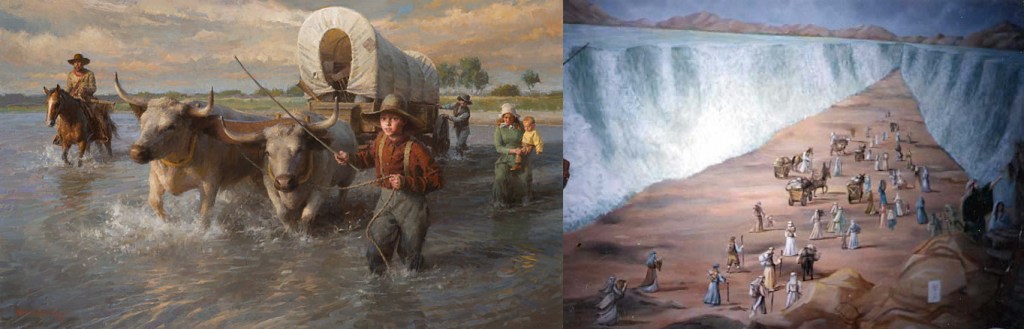
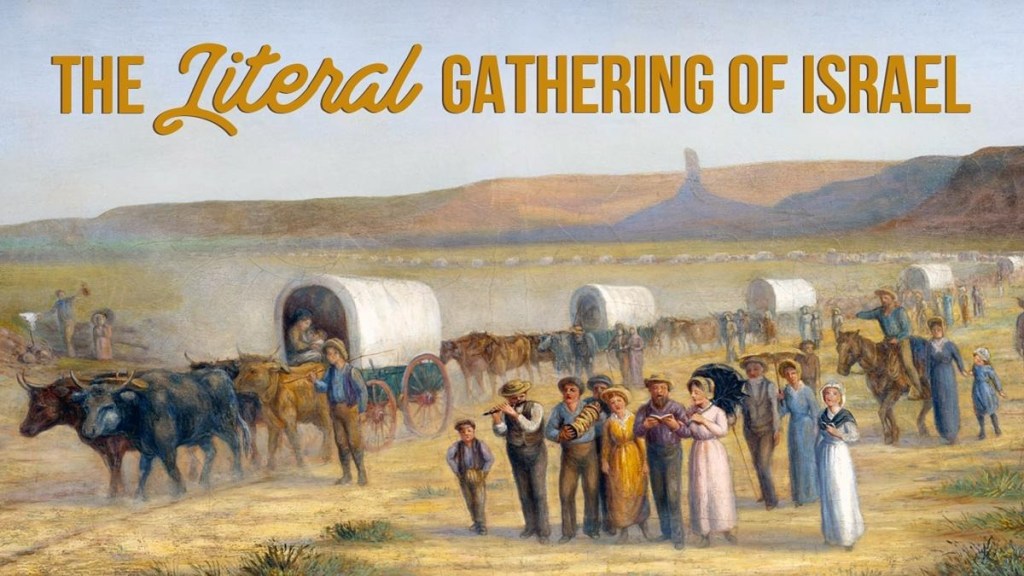
    As I read the historical background of Section 136 of the Doctrine and Covenants, I’m struck by the realization of how much the pioneers of the 1840s parallel the children of Israel leaving Egypt.

    The pioneers were leaving persecution, and in many ways bondage, just as the children of Israel.

    The pioneers had a humble leader, being inspired of God.  Brigham Young said, “What I know, I have received from the heavens…Men talk about what has been accomplished under my direction, and attribute it to my wisdom and ability; but it is all by the power of God, and by intelligence received from him.”

    The pioneers were on a covenant path.  The destination was not as important as the journey.  Section 136 is all about the pioneers learning to trust and follow God, whatever happened.  This has many parallels with the children of Israel, from manna coming to heaven to their rejection of the full covenants with God along their way.

    The pioneers were going to settle a new promised land.  The children of Israel were going to settle the Lord’s city.

    The comparisons go on and on.

    As I’ve been writing this, I have said: the pioneers compared to the children of Israel.  It’s important to realize that the pioneers were the modern children of Israel.  It is no coincidence that their story so perfectly parallels the Exodus from Egypt.  God works in patterns.  This is proof of His work.

    Brigham Young, when worries came from the pioneers about them being behind schedule in their goal to have crops planted, is quoted as saying, if the Saints “had done all [they] could,” he would feel “just as well satisfied as if [they] had a thousand acres planted with grain.  The Lord would do the rest.”

    Ultimately, the pioneers settled Utah.  Salt Lake City has become a bustling and powerful city of the world.  The desert has blossomed as the rose, (Isaiah 35:1) just as Jerusalem became a powerful city in ancient times.

    I believe we often read the scriptures and forget that we are scripture.  Very little differentiates us from the followers of God 2000 or 4000 years ago.  Different places, different time, new technology; but we are still following God, trying our best to keep His covenants, and trying our best to come closer to Him.

    If scripture verses were written about you, what would be written?

    With this understanding comes an important realization.  History repeats itself.  I believe we can read of the ancient Jews condemning their Christ to death on the cross and scoff at the idea.  We are ~170 years removed from our “time in the wilderness,” our pioneer days.  If Christ came before Zion today, would we know Him?

    I hope we would, but sometimes I worry for Zion.  We know Zion will become complacent in the last days.  It’s important that we stay vigilant in our devotion to God and to our covenants with Him.  Otherwise we risk the same fate that befell Jerusalem so many years ago.

  • Authority in God’s Kingdom

    Authority in God’s Kingdom

    In 1830 the church was brand new and something extremely difficult happened.  An issue occurred which would forever shape church government.  This issue would establish a pattern, God’s pattern, of order.

    An extremely faithful member of the Church, in fact one of the 8 witnesses of the Book of Mormon, started to receive revelations on the gathering of Zion.  This member was Hiram Page.  He was faithful to the church and would never deny the Book of Mormon’s authenticity.  It was not surprising that many church members believed the revelations Hiram Page received.  Why wouldn’t they?  He was a faithful member.  He was one of the 8 witnesses, a blessed individual that saw and beheld the gold plates.

    The issue was, if Hiram Page could receive revelation for the entire church, then who couldn’t receive revelation for the entire church?  You’re seeing where this is going.  The Church of Jesus Christ of Latter-day Saints would go the way of all other sects of Christianity:  chaos.

    There must be order in God’s system.  God could not have every person claiming revelation for His Church.  It’s important to note, personal revelation is an important part of our mortal journey.  Personal revelation is also critical in God’s church.  Revelation cannot be received by an individual pertaining to the entire church or to guide those in a higher position of authority.  Without this rule, there would be complete confusion, as there started to be when Hiram Page reported his revelations.

    When this problem arose, Joseph Smith was in the most difficult of positions.  How did he correct this issue without seeming authoritarian and dictatorial?  He needed Hiram Page, Oliver Cowdery (who supported Hiram’s revelations), and all church members to understand the significance of this issue. 

    Joseph Smith met with the congregation and explained revelations received prior to Hiram’s revelations.  Joseph Smith had documented the Lord’s commandments in Doctrine and Covenants sections 20 and 21.  He now learned that many members of the new church didn’t understand these doctrines and principles of church government. 

    The history states that Joseph Smith joined with the people and explained the revelations in Doctrine and Covenants 20 and 21 in detail.  He used simple language and explained what it actually meant.  In what could have been a contentious and ugly situation, church members, Oliver Cowdery, and Hiram Page himself left understanding the error of their ways.  This was a prophet of God explaining God’s order.  All present accepted.

    This is the way it should be.

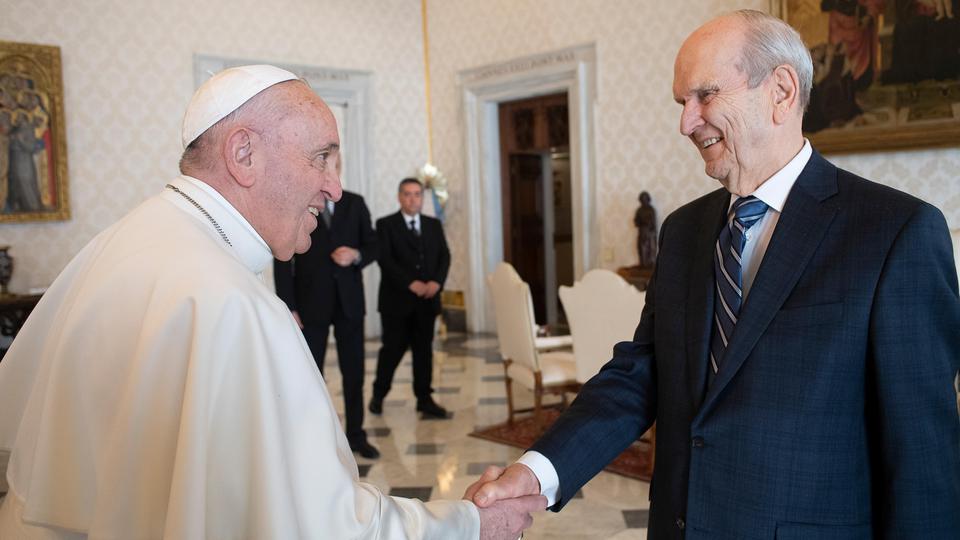
    I would like to compare this to something I learned when reading about how “retired” Pope Benedict XVI… retired.  I didn’t understand how this could be and wanted to research to see what happened.

    Instead of commenting on what I learned about Pope Benedict’s retirement, I want to comment on something else I came across.  An article I read talked about how the current Pope Francis has considered relaxing priestly celibacy rules and how “retired” Pope Benedict came out publicly against this.

    Does this not present a problem?  What if the current Pope did make a decree and the “retired” Pope publicly voiced his disagreement with it?  Would there be another branch of Catholicism?  One following current Pope and one following retired Pope?

    I can’t understand it.  There can’t be confusion in God’s kingdom.  While men are imperfect, God can’t have questions of authority in His church.  Otherwise, there is complete chaos.

    These stories of how two issues were handled strengthened my testimony of the importance of authority.  I believe the Church of Jesus Christ of Latter-day Saints is Christ’s Church restored to the earth, and as such, it must have order.  As I study Priesthood authority and how the church functions with millions of members across the entire globe, I’m blown away at how seamlessly it all works.

    Joseph Smith foresaw General Authority Seventies when the church was a couple dozen members.  Now as the Church grows and there are 12 quorums of the Seventy, anyone who doesn’t believe this church to be divinely guided must marvel at Joseph Smith’s foresight.

    The truth is it wasn’t Joseph Smith’s foresight, it was God’s foresight.  This church is divinely guided, divinely structured, and divinely governed.  My testimony of this grows daily as I understand the structure of the church better and see how the Lord guides His Kingdom.