Author: Brayden Quackenbush

  • An Epistle from the New Testament Apostles

    An Epistle from the New Testament Apostles

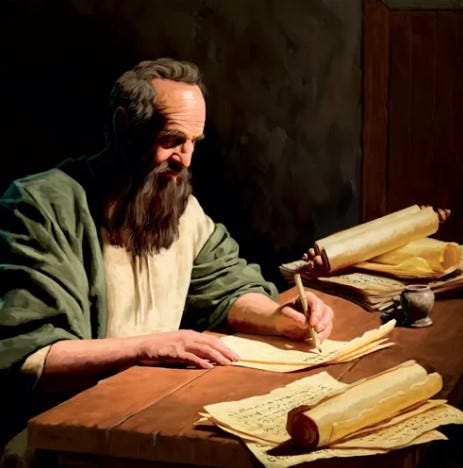
    I read a book titled An Epistle from the New Testament Apostles.

    A sentence in the second paragraph of the preface caught my attention and helped me to read this book in a different light. That sentence read:

    “Imagine for a moment how you might feel if you were to go to your mailbox only to find there a long letter addressed personally to you from the First Presidency and the Quorum of the Twelve Apostles as those church leaders were constituted shortly after the resurrection of Christ.”

    Huh. Do we read the Bible in this way? Do we read the Bible as if Simon Peter, Paul of Tarsus, or John the Beloved were writing to us? How much more power comes from the words as we consider them a personal letter directly sent to us? What is the Bible really, but a letter sent directly to us from these prophets? You could also consider the Bible a letter sent to you from God.

    I’d like to share a part of this book that was especially significant to me. As I said, the book takes all the epistles of the prophets in the New Testament and categorizes them. It’s also worth noting that where there are multiple translations or interpretations of what may have been originally written, this book showed some of those different options. Keep that in mind when reading the quotes below. One category that stood out to me was titled:

    Unity in the Church

    From James 3:14-16 “But if ye have bitter envying and strife in your hearts, glory not/do not assume superiority over/ and lie not against the truth. This wisdom descendeth not from above, but is earthly, sensual, devilish. For where envying and strife is, there is confusion and every evil work.”

    Sounds like Christianity today.

    Another section.

    A Call to Unity in the Body of Christ

    From Ephesians 4:1-6 “I therefore, the prisoner of the Lord, beseech you that ye walk worthy of the calling wherewith ye are called, With all lowliness and meekness, with longsuffering, forbearing one another in love; Endeavouring to keep the unity of the Spirit in the bond of peace. There is {In} one body, and one Spirit, even as ye are called in one hope of your calling; One Lord, one faith, one baptism, One God and Father of all, who is above all, and through all, and in you all.” 

    Ephesians 4:11-15: “And he gave some, apostles; and some, prophets; and some, evangelists; and some, pastors and teachers; For the perfecting of the saints, for the work of the ministry, for the edifying of the body of Christ: Till we in the unity of the faith, all come and of {to} the knowledge of the Son of God, (MISSING ERASED CONTENT FROM KJV). That we be no more children, tossed to and fro, and carried about with every wind of doctrine, by the sleight of men, and cunning craftiness, whereby they lie in wait to deceive, But speaking the truth in love, may grow up into him in all things, which is the head, even Christ.”

    Unity.

    I point out the lack of it in Christianity not to try to “dispute” or to create “contention” but to point out the obvious.

    It’s interesting the first things Jesus Christ did when he appeared to His other flock in the Americas.

    1. He proclaims His Atonement, announcing that He accomplished what the prophets said would be fulfilled, announcing that He can save His people.
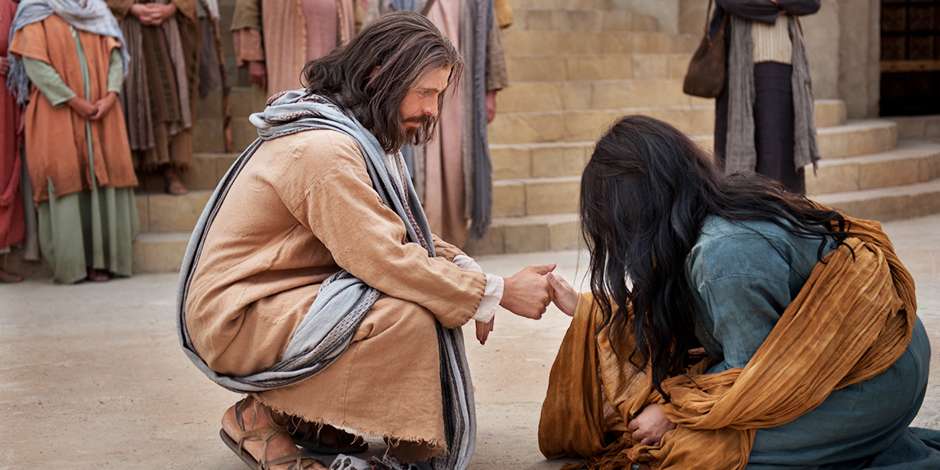
    2. He ministers to His people one by one. They are each individually allowed to come up and feel the wounds in His hands, feet, and sides.
    3. After the people cry out “Hosana!” literally, “God save us” or “Save now, we pray,” Jesus Christ sets forth the mode of baptism, the way He can save them.

    From here Christ’s complete focus is on unity. He elaborates on the oneness of Himself, God the Father, and the Holy Ghost.

    Then He says (3 Nephi 11:28-30), “And according as I have commanded you thus shall ye baptize. And there shall be no disputations among you, as there have hitherto been; neither shall there be disputations among you concerning the points of my doctrine, as there have hitherto been. For verily, verily I say unto you, he that hath the spirit of contention is not of me, but is of the devil, who is the father of contention, and he stirrith up the hearts of men to contend with anger, one with another. Behold, this is not my doctrine, to stir up the hearts of men with anger, one against another; but this is my doctrine, that such things should be done away.”

    May we all avoid disputations and contention. May we always serve with meekness, longsuffering, and love. I hope that one day Christianity can be unified in our faith in Jesus Christ. That will likely not come until the millennium, when we can all look to who we serve, and know without a doubt that we know Him. But we can do our part today to not let the devil have power over us. We can do our part by removing contention and argument from our lives.

  • Hypocrisy in Intelligent Design and Evolution Debate

    Hypocrisy in Intelligent Design and Evolution Debate

    The theory of intelligent design is, simply put, the idea that this world is too perfectly designed for there to be no designer. The theory comes from what’s called the Watchmaker Analogy, put forth by William Paley in 1802. The idea is that if you walked into the woods and found a pocket watch, you would assume someone designed that pocket watch. Due to the complexity and clear design of the pocket watch, you would not assume it just appeared there by coincidence.

    Of course, it’s more complex than that. Before you say, “Well you would assume a designer because you’ve seen a pocket watch before,” well, sure. That’s not the point. The point is that things that appear to have been designed usually have a designer. If it makes you feel better, insert “clearly designed foreign object” instead of pocket watch.

    Intelligent design gets a tough rap in the scientific community. In scientific circles, they scoff at this idea. They say, scientifically, who is the designer? The ridicule continues from there.

    There is one argument from scientists against the theory of intelligent design that I’d like to discuss here. Scientists who believe in the theory of evolution and oppose intelligent design make this argument:

    They say that –

    “If there is an intelligent designer, why would that intelligent designer create things that seem to not have a purpose?”

    To be funny, and to lighten the mood, we will use the example of male nipples. Why would an intelligent designer give males nipples when they serve no purpose?

    Proponents of intelligent design would respond, “Just because we don’t know the purpose, doesn’t mean there is none.”

    This results in escalated scoffing from evolutionary scientists. They say, “That is unscientific. You can’t have it both ways. You can’t say something has an intelligent designer, then when asked why there would be pointless designs say we don’t know the purpose of those designs. That is unscientific as it is untestable and can’t be proven either way.”

    This goes back to what is “scientific” in terms of the scientific method, etc.

    The theory of evolution is that all species have evolved through a process called natural selection. There is ample evidence to appear that the theory of evolution is true. See my post What the Theory of Evolution is Missing. Natural selection is basically the idea that the strongest survive, they breed, and so the strongest traits in a species will survive and be passed on.

    Of course, it’s not that simple.

    So, here’s the thing.

    If an evolutionary proponent is asked, “Why did natural selection result in males with nipples? How did nipples help man survive?”

    The response would be, “Natural selection doesn’t guarantee everything is related to survival. There is some randomness.”

    What is the difference between the intelligent design defense and the evolution defense?

    What’s the difference between:

    • Intelligent designer
      • If we don’t understand the design, doesn’t mean there is no purpose.

    And

    • Evolution and natural selection
      • Not every trait is for the purpose of survival, there is some randomness.

    Where is the difference? These are both ‘you can’t have it both ways’ arguments.

    Is there something I’m missing here? Is this not, essentially, the same argument? Is this not the same thing?

    Ultimately, the root of criticism of the theory of intelligent design comes down to one thing: belief in God. That’s what it’s all about. A lot is thrown around about “unscientific” and blah blah. Please define “scientific.” Cool, thank you. Now I’ll find 10 different definitions of scientific from 10 different scientists.

      I’ve elaborated more on the “God issue” in science in this post. Science and religion will always be in an unwarranted battle until the true scientist – the one who set this all up, designed it, created it, organized it, and sent us here – comes down and explains it all to us. I welcome that day.

    1. This is Repentance

      This is Repentance

      Sometimes I struggle with the idea that my sins have been made completely white through the Atonement of Jesus Christ, that I’m completely forgiven for everything I’ve done.

      I know this disrespects the Atonement of Jesus Christ and that’s part of my biggest struggle. The last thing I ever want to do is belittle what Christ did for me.

      The thing is, sometimes I still dwell on my past sins. Sometimes I still think about them. Sometimes I still feel remorse and guilt. Sometimes I wonder if I’ve paid the full penitence to those I hurt. Have my sins been washed away? Are they completely gone if I still remember them?

      I rationalize this, and I believe it’s true, that I remember them for my benefit. I have to remember them or I might return to them. It’s the remembrance of guilt that keeps me from wanting to go back to being that person.

      I understand this intellectually.

      Still, sometimes it’s hard for me to understand how Christ can have forgotten my sins, washed them away as if they never happened, when I can’t forget them myself.

      The young men I work with and I recently studied Isaiah chapter 1.

      Isaiah 1:18 reads:

      “Come now, and let us reason together, saith the Lord: though your sins be as scarlet, they shall be as white as snow; though they be red like crimson, they shall be as wool.”

      After reading that I emphatically emphasized something to those young boys. What I emphasized was this:

      “When you truly repent, and show remorse, and try your absolute hardest to not do it again, Christ forgives and forgets your sins. Period. White as snow. It’s as if they never happened. Don’t be deceived. Satan will have you believe you can never be forgiven for a mistake. This is the great lie. You can be forgiven. If you repent, Christ will forgive. Not only that, He won’t even remember it. It’s like it never happened. I can’t stress this enough.”

      That’s what I said to my young men, and I believe it’s true.

      But… do I believe it’s true?

      Given what I just wrote?

      I had a thought today for the first time ever. I often think about the time of judgement. That time when we stand before Christ and have our life reviews. I’ve never feared that moment. The thought that occurred to me today is: why don’t I fear that moment? I have so much to be embarrassed by, so much to be ashamed of in my past behavior. Why haven’t I worried about it before? It occurred to me that one day my wife, Beth, will see how I once was. I’ve tried to tell her, but I don’t think she gets it. Then it occurred to me that my family will see it too. I will be so ashamed! Why haven’t I feared this before?

      Then it hit me.

      Maybe that’s repentance.

      Repentance is knowing – yes, I did those things. Yes, I made many mistakes. But though my skins be scarlet (they are and were) they shall be as white as snow. As I type this, I hold back tears. That’s what Christ has done for me. That’s what repentance is.

      Luke 15:7:

      “I say unto you, that likewise joy shall be in heaven over one sinner that repenteth, more than over ninety and nine just persons, which need no repentance.”

      D&C 18:13:

      “And how great is his joy in the soul that repenteth!”

      I am that soul. I don’t know how the life review will go. If my sins are forgiven and forgotten, are those parts reviewed? I don’t know. But what I realized was, and why I’ve never feared that moment, is even if all my abhorrent behavior is shown, it will be ok. It will be ok because I changed.

      That thought of Beth seeing how I used to be? It occurred to me that maybe she’ll love me even more after seeing all of it because she’ll see how much I changed. She’ll be able to see the full picture of how far I came to be a semi-decent husband and father.

      I think that’s what repentance is. Knowing that even if all your sins are laid out, you’re still forgiven.

      That’s repentance.

    2. Wisdom of Tolkien

      Wisdom of Tolkien

      ****Disclaimer before reading this post. Of course I have the greatest family and Beth. The world wasn’t completely lonely. My world has always been amazing. I thank God daily for that, and don’t know what I did to deserve it. I love my family and I love Beth. I’ve been so blessed. But that didn’t fit into the point of this post. So, I’m putting this disclaimer before writing.

      Tolkien inspires a lot of thoughts in me. His writing is flush with eternal truths.

      I’m reading The Book of Lost Tales Part 1 (I wrote this in 2022, I’m now on book 5).

      This book includes the writings of J.R.R. Tolkien that were never put to print in his lifetime. His son has since edited and published the writings.

      In this book, the tale of the coming of the Eldar, or the elves, is told. The Valar (Gods of Earth) had been on the earth for an untold amount of time. They knew one day the children of Ilúvatar (the one God, their creator) would come one day. That day finally came. This is how it is described in the book:

      “Then shouted all the people of Valinor: “I-Eldar tulier – the Eldar have come” – and it was not until that hour that the Gods knew that their joy had contained a flaw, or that they had waited in hunger for its completion, but now they knew that the world had been an empty place beset with loneliness having no children for her own.”

      That is precisely how I feel about Ivy and Sage. What was the world before them? It was a lonely place. What did I do before them? Play basketball and video games? What was life?

      It wasn’t until they came that I truly understood what mattered. I’ve written about my world flipping upside down before. That passage from The Book of Lost Tales Part 1 describes it perfectly.

      What was the earth before my children?

      An empty place.

    3. Why do we need the Church of Jesus Christ really?

      Why do we need the Church of Jesus Christ really?

      As I’ve written Which Church and One True Church I’ve started to think more about why the Church of Jesus Christ of Latter-day Saints is needed. Why, if someone can accept the gospel in the next life, do they need it here?

      I combined those two questions but they I have led to two distinct thoughts.

      1. Why do we need the Church of Jesus Christ?

      To go along with that, why not any other church? 

      I recently read this in Doctrine and Covenants 65:4-6:

      “Pray unto the Lord, call upon his holy name, make known his wonderful works among the people.

      Call upon the Lord, that his kingdom may go forth upon the earth, that the inhabitants thereof may receive it, and be prepared for the days to come, in the which the Son of Man shall come down in heaven, clothed in the brightness of his glory, to meet the kingdom of God which is set up on the earth.

      Wherefore, may the kingdom of God go forth, that the kingdom of heaven may come, that thou, O God, mayest be glorified in heaven so on earth, that thine enemies may be subdued; for thine is the honor, power and glory, forever and ever. Amen.”

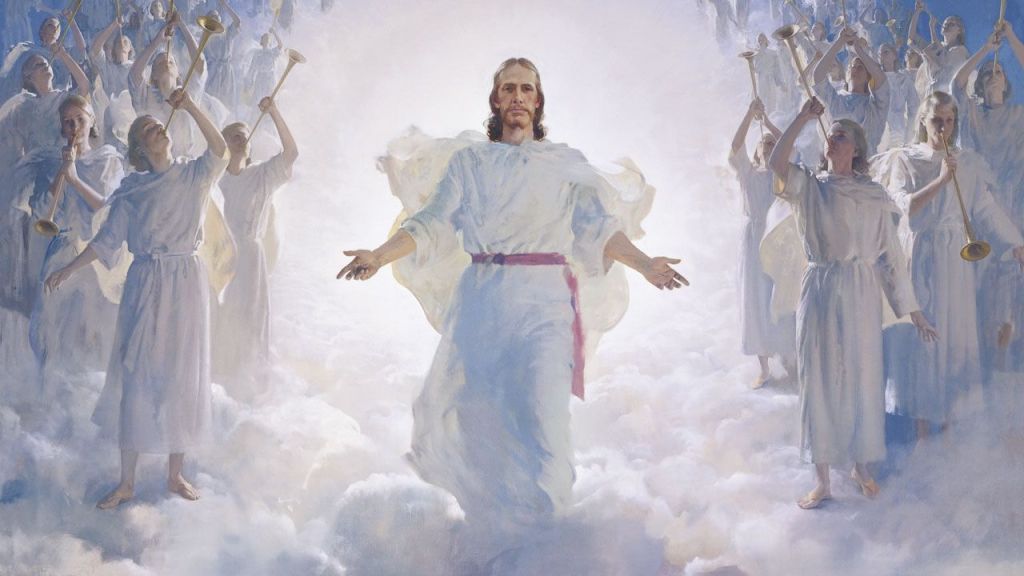
      We know that Christ will come to this earth again. The Second Coming will happen. We know He will come in power and glory. What I think is lost is the preparation that goes into preparing for Him. He doesn’t come and people just all of a sudden realize He is their King. They may realize who He is in a broad sense but they don’t appreciate His role as their Savior just because they see Him come. The Kingdom of Heaven is being built. It’s being built by us, by followers of Christ. The covenants we make here prepare us to meet Christ at His coming. If we can’t covenant with Him, we can’t understand Him. If we can’t understand Him we can’t know Him. If we can’t know Him, He will be forced to say, “I never knew you” (Matthew 7:23).

      Look at all of what Christ said in Matthew 7:21-23:

      21 Not every one that saith unto me, Lord, Lord, shall enter into the kingdom of heaven; but he that doeth the will of my Father which is in heaven.

      22 Many will say to me in that day, Lord, Lord, have we not prophesied in thy name? and in thy name have cast out devils? and in thy name done many wonderful works?

      23 And then will I profess unto them, I never knew you: depart from me, ye that work iniquity (emphasis added).

      We must do the will of the Father, not just profess to know Christ. This is where our covenants come in.

      This leads to my second question.

      2. If someone can accept the gospel in the next life, why do they need it here?

      I like to read near death experience books. There are many consistent, fascinating themes in the experiences people have when they nearly die and are allowed to remember some of their experience. One of those themes is the realization that everything we do here is immensely important. Why did God send us to this earth? To be tested, to learn faith, to grow, to have families, to develop God-like traits. All these things. While I can list off a somewhat generic list of statements about why we’re here, (I say generic though I believe each of those statements to be truly profound), there is so much we don’t know about why we’re here. I don’t think many of us will ever appreciate the magnitude of every moment on this earth. I don’t think we understand how important every decision, relationship, and thought is in our eternity.

      I think if we understood these things perfectly, we’d live our lives in much different ways. What does the next episode of “stupid tv show” matter in the grand scheme of things? It only matters in that it has distracted you from what is truly important. Scripture, faith, family, relationships, love – these things are eternal.

      There is something profound about this life. Yes, everyone will receive an opportunity in the next life to hear the gospel. Everyone will have an opportunity to have their biases stripped away. Everyone will have an opportunity to see truth for what it is: truth. To see light for what it is: light. We don’t understand the true importance of this life. But I do know it’s important. I know there’s a lot we don’t understand about the real importance of our time here.

      We are laying the foundation of the Kingdom of God. Think about the power in that statement. What we do here is important.

      We must prepare ourselves and those around us to be ready for Jesus Christ’s Second Coming. Think about yourself and those around you. Christ is a light greater than the Sun. When He comes, can you withstand His glory? Are you living in such a way that you’ll know Him, and be able to look into Him? What about your family, those around you? Will they be able to withstand His glory with you?

      Malachi 3:2:

      But who may abide the day of his coming? and who shall stand when he appeareth? for he is like a refiner’s fire and fullers’ soap.

      I think back on myself when I was first returning to Church. I didn’t truly know Christ. I couldn’t. It’s through priesthood power, temple covenants, and a true commitment to Christ that I have grown. I still have a long way to go. I am not saying I’m near finished. Enduring to the end. Putting all my faith into Christ has changed me in so many ways and I know I’m becoming better prepared to meet Him again.

      Now is the day to prepare to meet Christ. There isn’t time to wait. It is time to know Christ, then follow Christ. Only by truly knowing Him can you be ready for Him at His coming.

      Repent today. Evaluate yourself today. Don’t be like me and waste so many years. Christ knows who you can become. Take comfort in that and move forward. Know Him. Trust Him.