Author: Brayden Quackenbush

  • Emotions of a Toddler

    Emotions of a Toddler

    Have you ever thought about how far you’ve come emotionally?

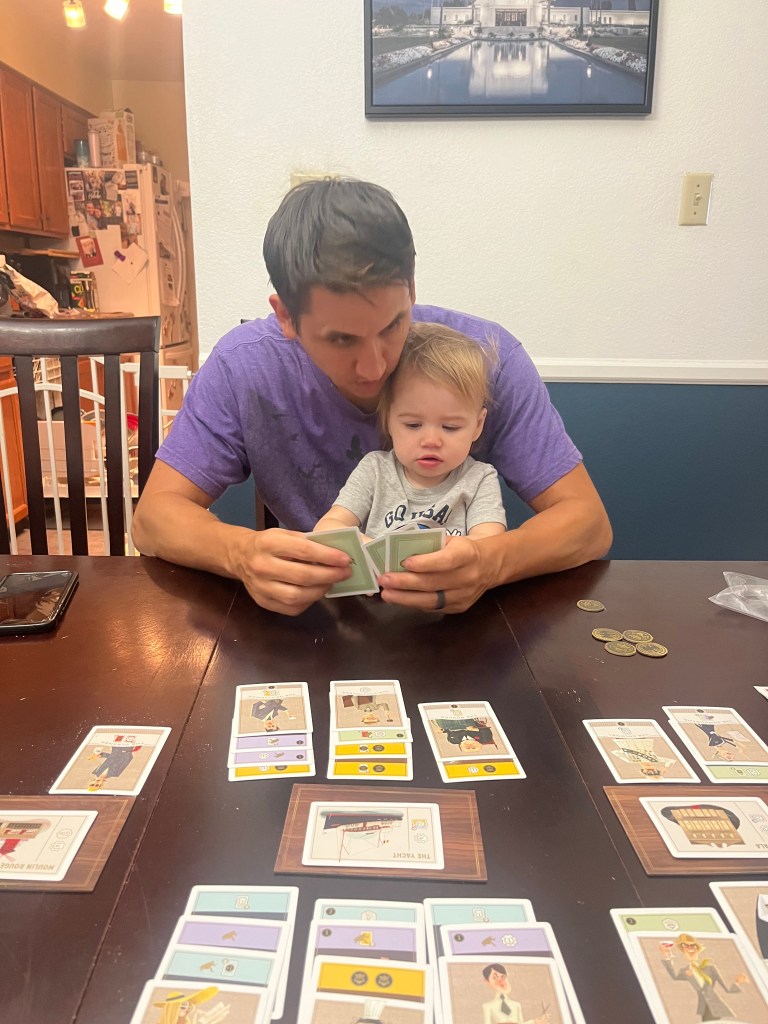
    When Ivy gets upset, she does crazy things. An example: today she was upset and throwing a tantrum. So she decided to put her foot underneath the couch and yell “STUCKKKKK” to emphasize and dramatize how difficult her situation was. She was not stuck.

    Can you imagine an adult doing this? You’re at the office and your coworker gets frustrated and starts thrashing around and yelling. Next thing you know they’ve put their foot under their chair, in a position that it could easily be pulled from, and yelling, “I’m stuck!” How crazy would that be?

    Again, have you considered how far you’ve come? From a toddler that has almost zero control of emotions, to a child who starts to have some semblance of control, to a teeneager who, depending on how you were either reverted back to toddler-hood or became more emotionally balanced (I reverted to toddler-hood), to an adult. Now, you go to work, drive in traffic, and go to the grocery store, constantly surrounded by frustrations that should have you throwing tantrums. But you don’t. You handle your emotions and live your life. Some do this better than others.

    The problem is, are you still getting better?

    I think a lot of adults get to adulthood and, whether consciously or not, come to the conclusion that they’ve “made it.” There is no more growth to go. You can brush your teeth and dress yourself so you’ve got it all under control. The truth is, we can still get better at controlling our emotions. There is always growth to be had.

    We’ve come a long way from being toddlers. But don’t stop. Keep going. Further your self-control every day. Become better. This is growth.

  • Cigarettes, Coffee, Alcohol

    Cigarettes, Coffee, Alcohol

    Imagine if someone walked up to you, handed you a small stick, and said, “Here, put this in your mouth and inhale. You’ll need to do this every day from now on or else you’ll be irritable and unhappy. You have to do it outside because most people HATE the smell. Also, that smell will linger on your clothes and hair all the time, and again, people hate it. Oh, and it’s going to kill you.”

    Can you imagine ever getting near that thing? Who would take it? It blows my mind that people still smoke.

    Here’s another one, someone walks up to you and hands you a cup, “Drink this. It’s a dark hot liquid that people have convinced themselves tastes good. You’ll need this every morning for the rest of your life or else you won’t be able to function or concentrate in the morning or throughout the day. You’ll need more and more of it as you become dependent on it. First, you’ll only need one cup in the morning. Then you’ll need one in the afternoon. Then you might need two or three cups just to get through the morning and 5-6 cups to get through the day.”

    Who would drink that?

    Here’s another one, someone walks up to you and gives you a big cup, “Drink this. It will taste horrible, it will burn your throat. Then you’ll start to feel woozy and exhilarated. It will last a short time and then you’ll feel like crap. Drink more and your brain will shut down. The next day you will feel worse than you’ve ever felt. You’ll feel like your insides are melting, and they kind of are. What you were drinking was poison. There’s a chance you’ll become dependent on this drink and it will be the only way your brain can feel like it’s having a good time. You’ll need more and more to feel that exhilaration you had the first time, causing you to slowly poison yourself to death.”

    Who would drink that?

    I could go on and on.

    I’m grateful for the word of wisdom. I’m grateful that I got to figure out for myself that I don’t like being addicted to substances. I admire those who never have to find out, and encourage them with all my heart to keep it that way. I’m grateful that I survived some of my addictions.

    I’m grateful for who helped me get through some addictions. Hint – He’s the same person who has given me everything.

  • Forgiveness

    Forgiveness

    Forgiveness can be so hard. There’s a reason Christ emphasized it so differently from normal human traditions. Human thinking is, “I can’t forgive them that many times.” God’s response is, “how many times have I forgiven you?”

    That point is brought home in Matthew chapter 18. In verses 21-23, Peter asks that question we’re all tempted to ask. How many times must I forgive? Seven? Surely seven is good. It’s 4 more times than the Hebrew law dictated at the time. Christ’s famous response,

    “I say not unto thee, until seven times; but, until seventy times seven.”

    Christ expounded upon this with the parable of the servant who owed a king a large sum. When brought forward to pay the sizeable debt, the servant fell down before the king and begged for patience. In great mercy, the king waived the debt.

    That same servant then went out and grabbed another servant, demanding that a tiny amount be paid back. The second servant asked for patience and the same servant who had just been shown so much mercy had the second servant thrown into prison.

    When the king heard this he “was wroth, and delivered him to the tormentors, till he should pay all that was due to him” (Matthew 18:34).

    It seems so easy here on earth not to forgive others. What does it hurt us to not forgive? How does that person who wronged me deserve my forgiveness?There is a story from the book Return from Tomorrow. A holocaust survivor is found in a concentration camp. When he is liberated by the soldiers, he is put to work helping with the sick and dying around him. He is energetic and relatively healthy. The soldiers finally say to him, “you must have been lucky. You haven’t been here long, huh?” The man tells them how many years he’d been at the concentration camp; a long time. They marvel at his health. How can it be?

    The man tells them that early in the war, his wife and children were murdered before his eyes. He desperately wanted to hate these men, hate this war, hate this world, hate God. He had every reason to. But, the survivor made a decision. He decided he would not carry that hate with him. He decided he wouldn’t poison himself with hate. Forgiveness saved his life.

    Elder David E. Sorensen said, “When someone has hurt us or those we care about, that pain can almost be overwhelming. It can feel as if the pain or the injustice is the most important thing in the world and that we have no choice but to seek vengeance. But Christ, the Prince of Peace, teaches us a better way. It can be very difficult to forgive someone the harm they’ve done us, but when we do, we open ourselves up to a better future. No longer does someone else’s wrongdoing control our course. When we forgive others, it frees us to choose how we will live our own lives. Forgiveness means that problems of the past no longer dictate our destinies, and we can focus on the future with God’s love in our hearts.”

    We may think not forgiving others is harmless, but hate is poison. Holding onto grievances and refusing to forgive only poisons ourselves.

    In the book, Surprised by Hope, N. T. Wright said: “If you lock up the piano because you don’t want to play to somebody else, how can God play to you?“

    Reading back on the story of the king and the foolish servant who would be forgiven his great debt then demand payment from another. We read that and scoff at the hypocrisy. Yet we all have this same hypocrisy in us. And God is our king, having forgiven us all, and wroth when we can’t extend the same favor to our fellow brothers and sisters.

    Verse 35 concludes that story:

    “So likewise shall my heavenly Father do also unto you, if ye from your hearts forgive not every one his brother their trespasses.”

    Going along with what Elder Sorensen said, from this link: “I think it is helpful to recognize that offences and injuries are always bottled in our past. So, forgiveness requires us to deal with our past – not our present or future. We have to let go of our past in order to fill up the present and bless the future. When we fail to deal properly with our past, we are like someone whose elastic belt is caught on a barbed wire fence; we can make very little forward progress until we unhook ourselves from our pain and injustice in our past.”

    That quote is perfect in explaining how that man from the concentration camp survived. That man, if he hated, would have been stuck in the past, attached to a barbed wire. Never being able to progress to his future. Instead, he chose to forgive, free himself, and save himself. That is the true power of forgiveness.

    We have all been wronged. We have all wronged others. Some of us have been wronged worse than others. But life isn’t a ledger book. Life isn’t a tally of who has been wronged the most. There is always someone that has been wronged worse than you have. The book The Shack talks about this eternal idea of “being wronged.” If you refuse to forgive someone, and that someone refuses to forgive their father who made them that way, and their father refuses to forgive his father who made him that way: on and on for eternity. Grievances go back to the beginning of time. Forgiveness ends the vicious cycle of hate. 

    Forgive our trespasses as we forgive those who trespass against us.

    There was a point in my life when I realized I’d been carrying around poison for far too long. There was a day I realized I had to forgive some people from my past so that I could move forward. I reached out to some people I hadn’t spoken to for so long. It helped me. I felt that feeling, of getting a weight off your shoulders. For me, it was more a feeling of getting poison out of my system. I thought I’d forgiven. It wasn’t until I actually said it, to the person that needed to hear it, and apologized for my part in pain that was caused, that I realized the burden I’d been carrying for so long.

    We all must forgive.

    Again, I know that sometimes such heinous wrongs are committed that some people feel they have the right to shout, “But I’ve never hurt someone like they hurt me!”

    In those moments think about the person from the concentration camp who refused to hate. He chose to forgive. It saved his life. He had more reason to hate than just about anyone ever has. He chose not to. There’s always someone that deserves to hate more. Choose to love instead.

    Let go of the hate you harbor and forgive. Do you want to come before God and Him to ask, “how can I forgive you, when you never forgave?”

    We all do wrong, and we all get wronged. Remove yourself from the past and progress.

    A forgiveness post would be lacking if it didn’t mention where all forgiveness originates. Always remember, there is only one person who can truly break the vicious cycle of pain and hate. Jesus Christ is the ultimate giver of grace and mercy. If you feel you truly can’t forgive, lean on Him. He felt the pain, He felt all of it, and He has forgiven us. He’s forgiven all of us. He died so that we can experience the true feeling of freedom that He allows. His blood paid our debt, all of it. As we rely on Him, we will find the forgiveness our hearts desperately need.


  • The Difference Between Steph Curry and Kevin Durant

    The Difference Between Steph Curry and Kevin Durant

    This will be slightly out of brand for my blog. I love basketball so it’s surprising this is the first true basketball commentary I’ve written.

    Anyways,

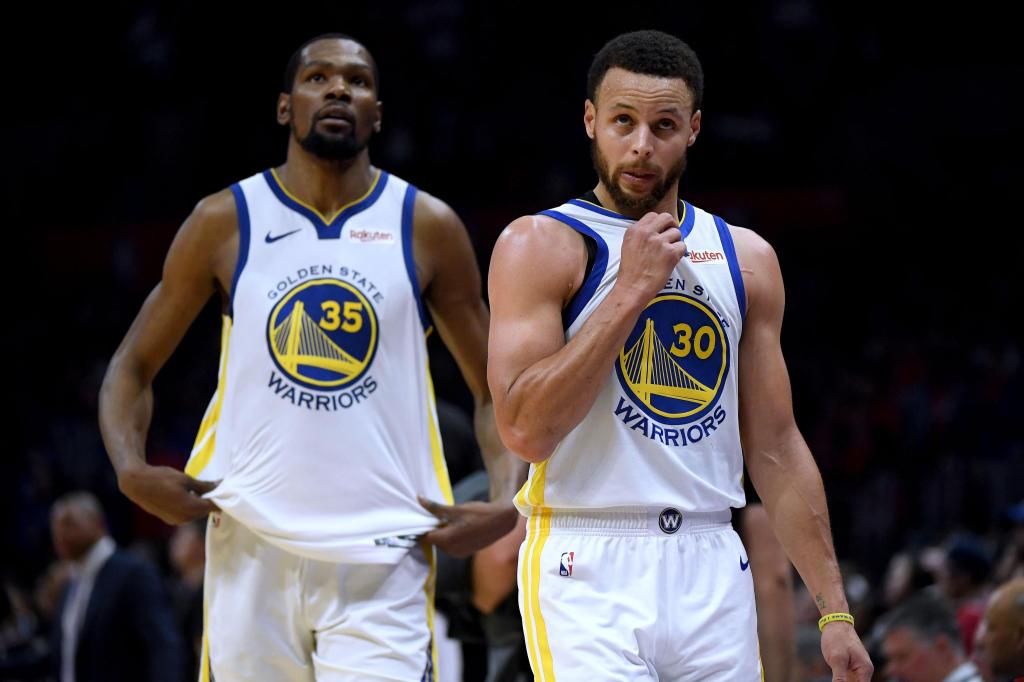
    Kevin Durant is without question one of the best players in the NBA right now (when healthy), and one of the most talented players of all time. He is an extraordinary basketball player. It was big news a couple weeks ago when he requested a trade from his current team, the New Jersey Nets. It was especially relevant in Arizona because Durant listed Phoenix and Miami as his two preferred destinations.

    A quick history on Kevin Durant for those that don’t know –

    Durant was on an off-the-charts talented Oklahoma City team that had 3 future MVPs on the roster. That Oklahoma City Thunder team gave a record breaking 73-win Golden State Warriors team all it could handle. The Warriors came back from down 3-1 to the Oklahoma City Thunder. That Warriors team then lost to the LeBron led Cavaliers in the finals.

    After the Warriors lost to the Cavaliers, and beat Durant’s Thunder, Durant left his team to join the record-breaking Warriors. A true, “if you can’t beat em, join em.” I didn’t hate this move by Durant like a lot of basketball fans did. As a lover of basketball, I could see that Durant hated playing with Russell Westbrook. From watching Durant play with Westbrook, I could understand Durant’s frustration. He wanted to play with a real team. Draymond Green, Klay Thompson, and Steph Curry made basketball look so fun. If I could play with any NBA team, it would hands down be the Warriors. They play basketball right. I understood Durant’s decision.

    Fast forward some years. The Warriors win two more championships in 3 years. Durant is the Finals MVP both times. Here’s the thing though. The Warriors were never Durant’s team. It was always Steph Curry’s team. No matter how phenomenal Durant was. He couldn’t be loved in the Bay Area the way Steph was.

    This led Durant to leave again. Always looking for the greener grass. He joined the Nets and hitched his wagon to a known enigma: Kyrie Irving. I won’t go into all the details, but the Nets experiment went disastrously. About as bad as it possibly could. Durant wanted to go to New Jersey to make it his city, the way San Francisco was Steph’s city. It exploded in his face.

    So here we are, full circle. Durant is wanting out again. Looking for greener pastures, again.

    Here’s the amazing thing I’m sure the casual NBA fan has missed.

    What were the two teams Durant said were his two most desired destinations to be traded to? The Suns and the Heat. Who was the number one team in the west last year?… the Suns. Who was the number one team in the East last year?…the Heat. Interesting.

    When Durant left the Thunder, he got destroyed in the media for leaving to join a better team. Despite being the player that took the Warriors over the top, potentially making them the best team in NBA history, he was never satisfied. He always seemed jaded by how he was bashed for the decision, and the perceived lack of love and appreciation he received for his basketball brilliance.

    Here we are. Years later. He’s making the same decision. He went to a team to make it his own. It was disastrous. So, he’s trying to go to another team that already has leadership and join them.

    How does Steph Curry tie into this?

    Steph Curry is a leader of men; Durant is a lone ranger. Durant is not a leader of men.

    Durant thinks because he can recruit talent to play with him, that makes him a leader. Recruiting talent doesn’t make you a leader. Elevating those around you makes you a leader. When has Durant elevated others?

    The dichotomy of Kevin Durant is wanting to be a part of good culture, then ultimately wanting to be the good culture himself. But you can’t be the good culture by the simple fact that you want to be the good culture. Good culture is humility, self-sacrifice, team before individual. Durant acts like that’s what he wants, but then he leaves the greatest team of all time because he wasn’t getting the credit he felt he deserved. He went somewhere else thinking he could have it all. A talented team and a city that loved him.

    Look who he gravitated towards in his recruitment efforts– another lone wolf, unique, kind of weird individual – Kyrie Irving. Look who else he brought in – a strip club attending, come in out of shape, (selfish), James Harden. These aren’t culture builders. What happened in Golden state doesn’t happen every day. And it does not happen by accident. It’s not every day that you find immensely talented people that are willing for it not to be all about them. Kevin Durant was never interested in it not being about him. That’s the dichotomy.

    Steph Curry brought Kevin Durant in and embraced him. He didn’t care about the limelight. He cared about winning. He proved that. Two MVP trophies that did not go his way. Why? Because he had the humility to say, definitively, “it doesn’t have to be about me.” With Steph Curry, it’s truly about the team.

    Steph Curry doesn’t try to be humble. He doesn’t try to be a uniter of men. He just is those things. They come naturally to him. He is a leader. These things don’t come naturally to Kevin Durant.

    This isn’t an indictment of Kevin Durant as a person and definitely not as a basketball player. Not everyone is a born leader. It may be unfair to compare him to the most selfless superstar in NBA history, and I don’t think it’s even close. Who has a higher combination of talent, accolades, and humility than Steph Curry?

    That said, Kevin Durant brought this comparison on himself. He had it all. Championships. A great team. Great teammates. He left that because he wanted to do it himself. When things got hard, he bailed ship faster than Kyrie bails a vaccination center. Is it any surprise that his two preferred destinations are where there’s a solid team, solid culture, solid comradery, and solid leadership?

    Durant thought he wanted to be a leader of men. He quickly realized he only wanted to play basketball. That’s fine. Hopefully, though, he doesn’t go to Phoenix or Miami, win championships, and then realize he’s still not happy. Even though, if that were to happen, it seems like a foregone conclusion that would be the result.

    Always seeking greener pastures.

  • Children Need Their Father

    Children Need Their Father

    I went on a weeklong river rafting trip. I believe it was the longest time I’d spent away from Ivy. A large portion of that trip, I did not have my cell phone with me.

    When I got off the river and started driving back to Las Vegas with my family, I checked my phone and learned that Ivy had not had a good week. Meltdowns, tantrums, refusing to sleep. Apparently, she’d had a very hard time in my absence. I didn’t even recognize the girl being described.

    Many theories were tossed around to explain the behavior: teething, out of her routine (they stayed at my in-law’s house), she was sick, her shoes were too tight. I knew the truth. She missed her daddy. I couldn’t wait to get home and comfort her.

    I’ve written about missing Ivy before. This was the first time, it seemed, she could really miss me. I just finished a book, What a Difference a Daddy Makes by Dr. Leman that talks all about the importance of a father, especially in a daughter’s life. It talks about how a father reinforces confidence and helps a daughter relate to men as she gets older. It talks about how moms have a tendency to parent and do things one way, and the balance of how a father generally does things is important to a child’s development. This is at least partly why The Family Proclamation says, “Marriage between man and woman is essential to His eternal plan. Children are entitled to birth within the bonds of matrimony, and to be reared by a father and a mother who honor marital vows with complete fidelity.”

    I believe I was 16 when I first hung up on my mom while she was talking. I promptly received a call from my dad. The usual mild-mannered, relaxed father I knew was gone. I was told over the phone, in no uncertain terms, that if I EVER hung up on my mother ever again, he would kill me. I believed him. He told me I was to treat my mom with respect. It was an important lesson I needed to learn. It was the last time I ever hung up on my mom.

    This is an example of why kids need their dad. Dads, in society, have gotten a ridiculously unfair reputation. Dr. Leman in the aforementioned book noted the unfair representation of fathers on television. Fathers are almost always bumbling blockheads that can’t get anything right. This is unfair and wrong. It has built a belief in society that fathers aren’t needed, or worse, that they cause more harm than good. Fathers are important.

    So how was Ivy when I returned home? An angel. The most well-behaved, happy, sleeping babe you ever met. She smiled ear to ear the moment I saw her when I got home. It was such dramatic joy that I almost didn’t believe all the propaganda I’d been hearing about her. She just needed her daddy.

    Before I could get too cocky, Beth had a doctor’s appointment during the week. It was Ivy and I for a couple hours. Then I got to witness all the behavior I’d seen.

    A growing girl needs her daddy. She also needs her mother. We’ve seen that Ivy is way happier when it’s all of us together. Ivy’s still relatively fresh from heaven. She knows the importance of family and the The Family Proclamation.

    I’m grateful to understand the importance of family. I’m grateful to have a small inkling of how important I can be to Ivy’s life. I’m grateful that Beth continues to be such a great mother. I’m grateful to have an amazing family to help me understand these things. I’m grateful that families can be forever.