Author: Brayden Quackenbush

  • House Pets

    House Pets

    Sometimes I look at my dog and think, “he wouldn’t last 5 minutes out in the real world.”  If he had to go out and hunt/scavenge for food and water, on his own, no chance.  Being cute getting someone to give him food and water would be his only chance at survival.  If that option is removed, he’s a goner.

    Look at this picture. It looks like he just ate a plate of strawberries and his afternoon plans are to lounge and get belly rubs.

    Exhibit A

    Granted, he is an 8-pound poodle/terrier mix.  He wasn’t bred to survive in the wild.  He was bred to be cute and to get people to give him stuff.  I’m just saying, removing that option = goner. 

    I can already hear the “big” dog owners.  “My dog would survive in the wild.  Yours is closer to a cat, mine still has some wolf instincts.”  OK.  Your golden retriever is not surviving a week in the wild without its cute factor, just the same as my poodle/terrier. 

    Golden Retriever Dog Birthday Photograph by Kathy Sidjakov
    Exhibit B

    My dog lives the most cushy life imaginable.  He sleeps all the time.  He wakes up and eats.  He sleeps some more.  He goes on walks.  Then he sleeps.  He plays.  He goes on bike rides.  At 9:30pm he stares me dead in the eyes and I know he’s saying, “You know good and well it’s time for bed.”

    It wasn’t until just recently that a very obvious and humbling fact slapped me right across the face.  I wouldn’t survive a week out in the wild.

    I was looking at my (adorable) little dog curled up on the bed, petting his soft hair, admiring how good he is, being jealous of how easy his life is, when I had that thought.  “You poor pathetic creature.  What would you do without me?”

    Who was I talking to?

    *Slap to the face.

    What would I do out in the wild?

    Here I was in my air-conditioned condo, with a giant Hydrapeak water bottle filled to the brim with ice cold water that I filled from my refrigerator.  That morning I’d poured Berry Colossal Crunch into a bowl, pulled a cold jug of milk from the refrigerator, and had cereal, like a proper grown man should do.  That morning I’d taken a piping hot shower.  I let the water run long enough so that it was plenty warm.  Cold shower?  No chance!  Running water came from a tap where I put a toothbrush I’d squeezed mint toothpaste onto to brush my teeth.  I then sat in a comfortable chair and worked at a computer. 

    Who was I to judge my dog?  I was living the same life my dog was!

    Put me out in the wild without food and water and tell me to figure it out.  Remove the option of me going to someone’s door and saying, “please feed me,” and I had no chance.

    I don’t think we take the time often enough to

    1. Stop and realize how blessed we are.
    2. Realize how pathetic we are.

    What would I do out in the wild without a can opener? Let alone having to hunt and find food?

    I’ve recently read a couple books about the old west.  A story I just read was about an 11-year-old boy who ran off with some Shoshone Indians (Native Americans).  He lived two years with them.  Eating buffalo meat.  Hunting rabbits.  Fishing for trout.  I was amazed at the life this boy lived just 170 years ago.

    Can you imagine if your ancestors could look at you now?  What a pathetic sight you would be.  Your great-great-great-great grandpa would marvel at your fancy light up information device and cans of food but would ask you, do you know how to hunt?  Do you know how to guide yourself by the stars?  Do you know how to survive without your pre-packaged meals and Uber eats? (Reminder- that great grandfather would be so perplexed by Uber eats).

    Can you imagine your great-great-great-great grandmother asking where you keep the chickens?  How do you grind the wheat for your bread?  (Do you grind wheat for bread??? I DON’T KNOW!)  Can you even cook without that radiation device that nuclearizes your food into something *edible?

    While modern advances are amazing, truly amazing; we have become so pathetic.

    That’s all.

    Just thought I would remind all of us of that.

    Next time you look at your house cat, little dog, big dog, or even your fish and scoff and say “you dumb and spoiled animal,” I hope you pause for a second and soak in the irony.

  • Truths Removed from the Bible:  What does the Book of Mormon tell us about Baptism?

    Truths Removed from the Bible: What does the Book of Mormon tell us about Baptism?

    I like to think about what critics would say as proof against the Book of Mormon.  I think it helps to have responses to honest concerns about its validity.  I always hope something I read, know, or especially my testimony can one day help someone to see what I see, the truth of this ancient record. 

    The Book of Mormon makes a very important claim.  The claim is that many plain and precious truths have been removed from the Bible over time.  When Joseph Smith first translated the Book of Mormon this was an outlandish and inflammatory statement.  Even more so than today. Christianity in the early to mid-1800s had a firm belief that the Bible was infallible. 

    From a website (https://stepbystep.alancminer.com/) I’ve loved using to study alongside the Book of Mormon, I read this:

    “Richardson, Richardson and Bentley write that while the Book of Mormon testifies to the authenticity of the Bible, it does not claim that the Bible is without error. It specifically states that there were many “plain and precious things” that were deleted from its pages through the evil works of men. (See 1 Nephi 13:20-32; 19:10-12; 20:1-3; 2 Nephi 3:5-22; Alma 33:3, 13, 15; 34:7; 46:23-27; Helaman 8:19-20; 15:11; 3 Nephi 10:14-17; 12:13, 17-19, 22, 29-30; 14:1.)

    Scholars of the Bible have found indisputable evidence that the Bible has indeed suffered many deletions. Non Mormon scholarship has concluded that the gospels found in the New Testament have also been manipulated.”

    Critics may ask for specific examples of any “plain and precious truths” found in the Book of Mormon that are not also found in the Bible.

    The website I mentioned above goes on to list 24 plain and precious truths removed from the Bible and where they are laid forth in the Book of Mormon.  I’d like to go over an extremely important one.

    Baptism is only for those who are accountable (Moroni 8:5-23).

    I know of nowhere in the Bible that lays forth the age of accountability. Should children be baptized?  We know baptism is of the utmost importance:

    John 3:5 “Jesus answered, Verily, verily, I say unto thee, Except a man be born of water and of the Spirit, he cannot enter into the kingdom of God.”

    What does the Book of Mormon teach us on the subject of baptism? Moroni chapter 8 is full of profound truths found nowhere in the Bible. I will quote portions of the chapter here but encourage everyone to read the chapter and ponder its truthfulness.

    8 “the whole need no physician, but they that are sick; wherefore, little children are whole, for they are not capable of committing sin; wherefore the curse of Adam is taken from them in me (Jesus Christ), that it hath no power over them”

    9 “I know that it is solemn mockery before God, that ye should baptize little children.”

    10 “repentance and baptism unto those who are accountable and capable of committing sin; yea, teach parents that they must repent and be baptized, and humble themselves as their little children, and they shall all be saved with their little children.”

    11 “And their little children need no repentance, neither baptism.”

    12 “But little children are alive in Christ…if not so, God is a partial God, and also a changeable God, and a respector of persons; for how many little children have died without baptism!”

    15 “For awful is the wickedness to suppose that God saveth one child because of baptism, and the other must perish because he hath no baptism.”

    19 “Little children cannot repent; wherefore, it is awful wickedness to deny the pure mercies of God unto them, for they are all alive in him because of mercy.”

    20 “And he that saith that little children need baptism denieth the mercies of Christ, and setteth at naught the atonement of him and the power of his redemption.”

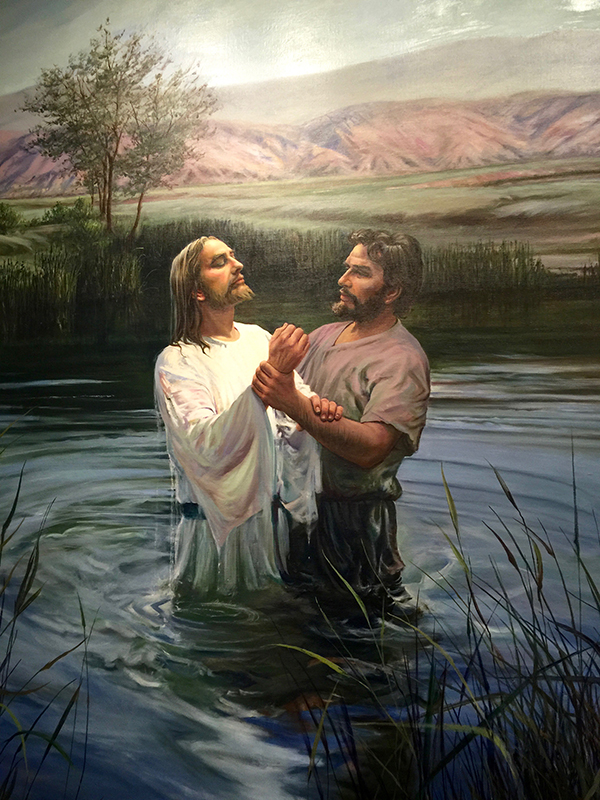
    Girl Being Baptized

    Who can read this and deny the truth that speaks to your heart and soul?  It is so clearly laid out. So perfectly explained. 

    What about how to baptize?  There is so much confusion in the world on not only when but how.  Does the Book of Mormon provide an answer?  Of course!  3 Nephi 11:24-28.

    24 And now behold, these are the words which ye shall say, calling them by name, saying:

    25 Having authority given me of Jesus Christ, I baptize you in the name of the Father, and of the Son, and of the Holy Ghost. Amen.

    26 And then shall ye immerse them in the water, and come forth again out of the water.

    27 And after this manner shall ye baptize in my name; for behold, verily I say unto you, that the Father, and the Son, and the Holy Ghost are one; and I am in the Father, and the Father in me, and the Father and I are one.

    28 And according as I have commanded you thus shall ye baptize. And there shall be no disputations among you, as there have hitherto been; neither shall there be disputations among you concerning the points of my doctrine, as there have hitherto been.

    How lucky we are to live in the dispensation of the fullness of times. I’m grateful for the Book of Mormon. I’m grateful that it clarifies what has been a point of contention within Christianity for centuries.

    Christ was our ultimate example.

    2 Nephi 31:5 And now, if the Lamb of God, he being holy should have need to be baptized by water, to fulfil all righteousness, O then, how much more need have we, being unholy, to be baptized yea, even by water!

    Click below to learn more about baptism as it has been perfectly restored through the Gospel of Jesus Christ by the Church of Jesus Christ of Latter-day Saints.

    https://www.churchofjesuschrist.org/study/manual/true-to-the-faith/baptism?lang=eng

  • The Social Dilemma (Netflix)

    The Social Dilemma (Netflix)

    What is truth?

    How do we know?

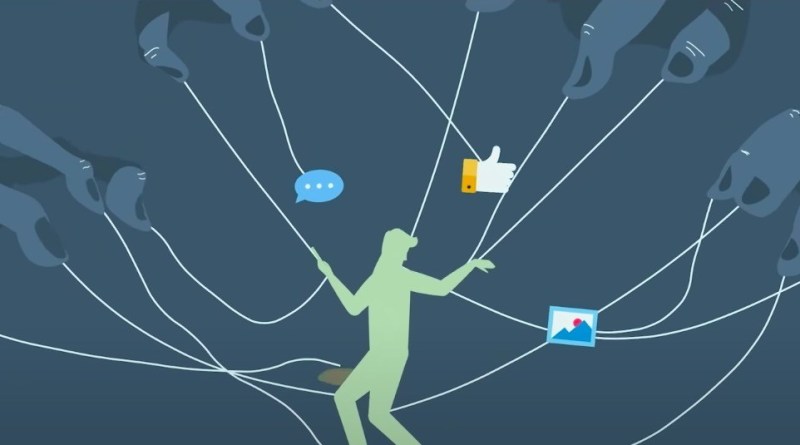
    If you haven’t watched The Social Dilemma on Netflix, watch it as soon as possible.  Could end up being the most important documentary of our generation.  Given that we are the generation of documentaries, that would make it the most important documentary ever.

    Why is this documentary important?  Because it’s real and it’s happening now. 

    What will be the downfall of America?  Have we given Civil War enough consideration?

    Let’s do a quick thought experiment.  What happens if Donald Trump wins the election this November?  There will be 165 million mad people.  Mad enough, maybe, to protest, riot, and maybe fight.

    What happens if Joe Biden wins the election in November?  There will be 165 million mad people.  Mad enough, maybe, to protest, riot, and maybe fight.

    Of course, 165 million people is an exaggeration because not everybody is this passionate, or angry, or inflamed about the upcoming election.

    Let’s call the number 30 million on each side.  Sound much better?

    Why is this happening?  Why are people always so angry?

    There is an increasing gap between what we would deem the “center.”  Center of anything.  Not overly passionate about one side or the other.  I’m not just talking about politics.  I’m talking about anything.  The middle is gone.  The “hear the other side,” “hear them out,” “hear their opinions,” are disappearing.  We’re turning into a world of people who think we know everything while not knowing anything.

    So much from The Social Dilemma gave me an intense feeling of anxiety.  One statistic mentioned was that a study showed lies are spread on the internet/social media 6 times more quickly than truths.  What happens if a lie always has a 6x head start on the truth?  What happens is what we’re seeing happen.  Contention.  Hatred.  Vitriol.  Anger.  Confusion.  Aggression.  Fighting.

    This brings me to the most important point.

    What is truth?

    Can we even know what truth is?

    Truth is a concept society is starting to wonder exists.  How do we find something our society is starting to believe is a myth?

    This is where I turn off all my non-religious friends, but I would ask my non-religious friends:  What is your truth?  What do you turn to when everything around you is chaos, and confusion, and darkness?

    I don’t say this to spread the divide more.  I say this to invite others to find truth and make that truth love-based at all costs. 

    I love God because He loved me first.

    What is truth?

    God is truth. 

    He’s my truth.  Maybe He isn’t yours.  But you must find a truth to hold to dearly.  This truth must be centered on love.  We’ve seen what hate-filled “truth” results in.

    How do we survive in an age of disinformation?

    What do we do to protect ourselves?

    I think first we follow all the suggestions given during the credits of The Social Dilemma documentary.  I will list those here and then add my own suggestions.

    1. Uninstall apps from your phone that waste your time.
      • Hint: most of them.
    2. Turn off notifications.  Especially for anything that vibrates your leg that doesn’t provide an immediate and important alert you need to see at that moment.
    3. Use a search engines besides Google.
    4. Never watch a video recommended to you anywhere:  Facebook, Youtube, etc.  If it’s not something you went there to search for and to watch, just don’t watch it.
      • Wayyyyy easier said than done (but let’s all try!)
    5. Use a Chrome extension to remove recommendations.  Below are some options.
    6. Before you share anything online, fact check, consider the source, do the extra research (make sure it is GOOD).
      • If it looks like it’s designed to push your emotional buttons, it probably is.  Don’t share it.
    7. You vote with your clicks.  If you click on clickbate you’re perpetuating the problem.  Reward GOOD material.
    8. Get different kinds of information.
      • If you are on Twitter, add people who have different opinions from you.
      • Talk to people in the real world about real issues.
      • When you find enough people in the real world to talk to, delete your Twitter.
    9. Delete the social media accounts you really don’t need, that you don’t feel are healthy, that are taking you away from life.  Delete it and embrace the freedom!
    10. Get out of the system.
    11. The World is beautiful.  Live.

    For Families:

    1. Don’t give devices to your children.  Don’t allow them on social media.  Just don’t.
    2. Minimal screen time.
      • Set a limit and stick to it.  It was suggested to ask your child what they think is a good amount of time to spend looking at a screen each day.  Your child will often give a reasonable response.
      • Create that limit and then give rewards for going under it.  Set a 7 hour per week limit for screen time and your child spent 6 hours?  1-hour reward is a bowling trip or mini golf outing.  I used to love incentives like these as a kid.  I hope kids still do.
    3. No devices in the bedroom a set amount of time before bedtime. This will also help with sleep because you’re removing blue light which signals to your brain that it’s time to wind down.
      • Here’s a suggestion – read a book instead of your phone!
    4. Treat Social Media how Latter-day Saints treat dating – not before 16.

    Here are my suggestions.  If you can- delete it all.  Just do it.  I can almost promise you’ll feel better within a couple weeks, after the withdrawals stop.

    Me personally, I have a Facebook.  I use it so I can share my blog.  It’s good to have.  I see the use.  I’m working on limiting my scrolling down my timeline to zero and especially not watching suggested videos in my feed.  Suggested videos inevitably lead me to watching video after video of garbage material.

    Another thing that has helped me a ton has been moving the Facebook app from my main page.  I have it on page two.  That way I’m not constantly slapped in the face by that addictive, dopamine-igniting red alert symbol.  I have my Gospel Library on my home screen and if I find myself instinctively (or robotically) looking at my phone I do my best to open the scriptures and read those instead. 

    I understand all these things are easier said than done.  It’s not easy to delete social media.  It’s not easy, I get it.  I’m right there with you.  Technology is so good.  It can be used for so much good.  Why don’t we start using it for good again? 

    That brings me to my last point.

    My final and most important point.  What can we do to make a difference:  Share GOOD stuff. 

    Emphasis on GOOD MATERIAL.

    By good material I don’t mean you like it, or it tickled your fancy.  I mean it is GOOD.  It is wholesome.  It is kind.  It doesn’t make you explosively emotional but makes you feel gentle in your emotions. I mean good as in the good guided by the spirit.  I mean good as in loving.  I mean good as in spreading positivity. 

    I’m guilty like everyone else.  I see a post from the Church, and I scroll right through.  The AI (artificial intelligence) involved sees that (how scary is that?!).  They know I scrolled quickly past something GOOD.  We each need to make a conscious effort to spend time on the good stuff.  Read the good stuff.  Watch the good stuff.  If you don’t have good stuff on your Facebook timeline, use AI for good!  Go to google and search for Jesus Christ, the scriptures, conference talks, missionary messages.  You know how when you search for that cute new jacket for winter and there are suddenly cute winter jackets on your timeline?  Works the same way for good stuff.  Search for good stuff.  You’ll see more good stuff.  Spend more time with the good stuff. 

    This is how we can combat and fight the echo chamber of hatred.  This is how we remove political polarization.  This is how we remove lies.

    In the steps above I mentioned fact-checking what you share.  How about this? Spiritually check what you share.  Stop.  Say a prayer.  Ask yourself if what you’re sharing is spreading goodness, positivity, or love. If not, it can be deleted.

    I often pray before I write, and I often pray before I share what I write.  I always hope what I write is guided by something bigger and better than me. 

    Spiritually check everything you do online.  Is this making me a better person?  No.  Get it out of here.  Could this make someone’s day, bring a smile, alter someone for the better – SHARE IT. 

    This is what we can do.  This is how we can make a difference.

    I don’t ever say like and share on my blog posts because it’s become such a stupid thing to say.  But we need to say it for the things that deserve it.  Maybe we should change it to “LIKE AND SHARE GOODNESS.”

    So, if you think this was worth reading, did something positive for you, or helped you in any way, please share it.

    We can all do our part by sharing goodness.

    You can join the discussion and learn more about the Social Dilemma documentary at TheSocialDilemma.com

    I think this is important and I think it should be something we all start thinking about.  Let’s start thinking about it.  Let’s start doing our part.

  • Second Coming is Upon Us (maybe?)

    Second Coming is Upon Us (maybe?)

    I’ve been pondering a scripture that many might find a peculiar scripture to study.  I think value can be taken from almost any scripture.

    1 Nephi 18:23 reads:

    “And it came to pass that after we had sailed for the space of many days we did arrive at the promised land; and we went forth upon the land, and did pitch our tents, and we did call it the promised land.”

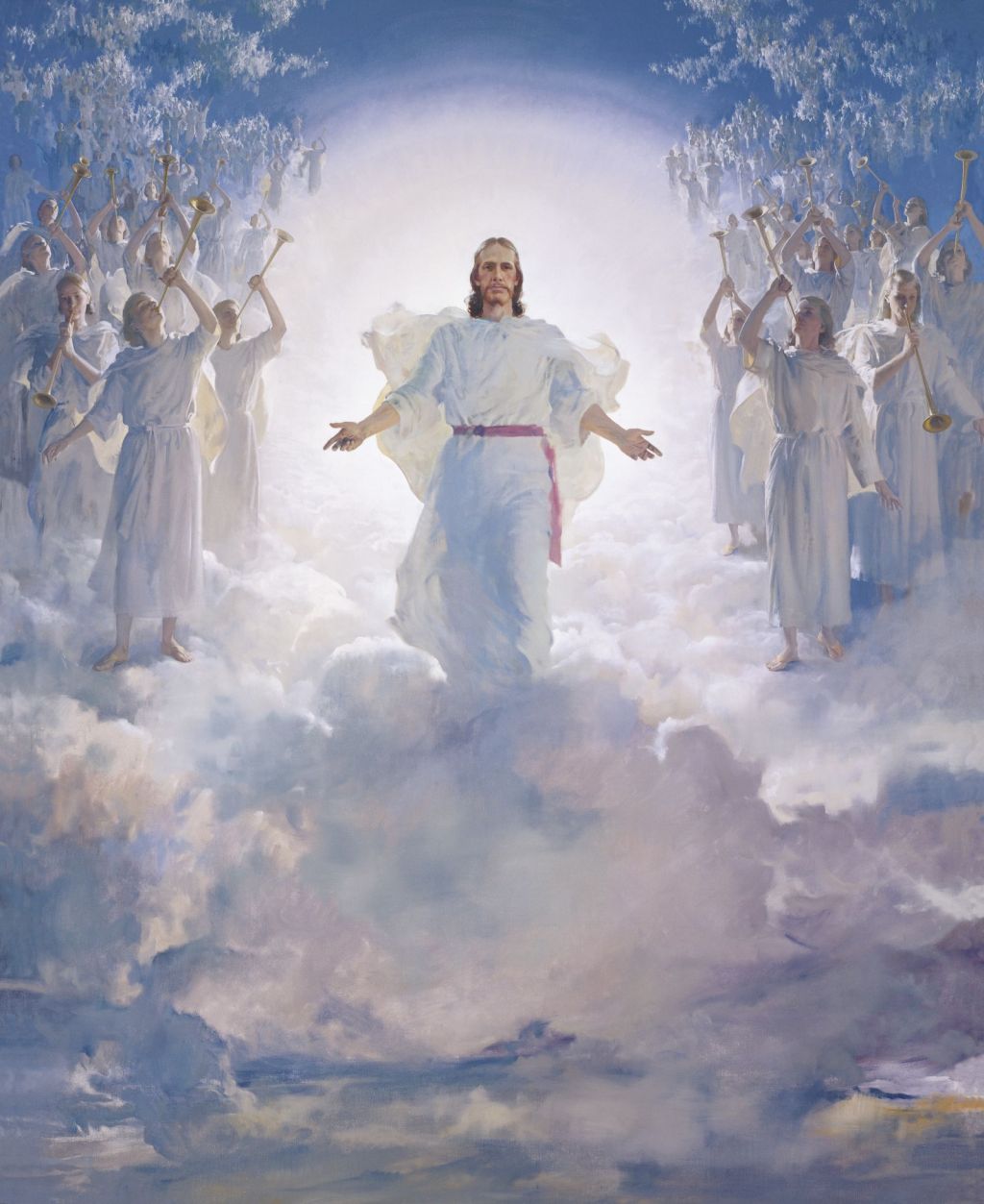
    “The Rapture,” the “Second Coming,” the “Millennium,” the “End of Times,” it comes in many different terms.  There’s a belief in a lot of Christianity that the end will come overnight, Christ will appear, and the millennium will be ushered in.

    From what I’ve read and studied and what modern revelation tells us, this will not be the case.  There will be a long, drawn out period of famine, war, disease, fires, earthquakes, and other natural disasters that will go on for some time before Christ returns. 

    Check out that list.  War.  Disease.  Fire.  Sound familiar?

    The fall of society and of God’s chosen land (United States of America) will come before the Millennium is ushered in.  The faith of the saints, the believers of Christ, will be tested in serious and tragic ways.  There will be much suffering.  If your foundation and faith in Christ is not firm before it comes you could find yourself asking, “Why is God letting this happen?”

    We’ve always known this was going to happen.  The scriptures have talked about our day since the beginning of time.  Now we’re seeing it happen.   

    Back to 1 Nephi 18:23 (with some emphasis added):

    “And it came to pass that after we had sailed for the space of many days we did arrive at the promised land; and we went forth upon the land, and did pitch our tents, and we did call it the promised land.”

    Many estimates put that “space of many days” that Lehi and his family sailed as at least 1-2 years.  That’s 1-2 years on a cramped boat sailing across the ocean.  After many days they finally arrived at the promised land.

    I believe this will be similar to how Christ’s coming will approach us. We will spend many days being tossed about by the winds and waves. We will be required to endure a lot of suffering before we can arrive at the promised land.

    As things get more difficult, I pray that each of us individually considers how strong our faith in Christ truly is.  It’s easy today to casually say, “I believe in Jesus Christ.”  But what about when it’s hard?  What about when your life is in jeopardy because of that belief?  Will you still profess Him who will never turn His back on you?

    Finally, while things are scary in our world, and only getting scarier, it’s important to remember Romans 8:35-39:

    35 Who shall separate us from the love of Christ? shall tribulation, or distress, or persecution, or famine, or nakedness, or peril, or sword?

    36 As it is written, For thy sake we are killed all the day long; we are accounted as sheep for the slaughter.

    37 Nay, in all these things we are more than conquerors through him that loved us.

    38 For I am persuaded, that neither death, nor life, nor angels, nor principalities, nor powers, nor things present, nor things to come,

    39 Nor height, nor depth, nor any other creature, shall be able to separate us from the love of God, which is in Christ Jesus our Lord.

    Be prepared. Keep hope. Look to Christ.

    https://www.churchofjesuschrist.org/study/manual/gospel-topics/second-coming-of-jesus-christ?lang=eng

  • First year of marriage during a pandemic-oh my!

    First year of marriage during a pandemic-oh my!

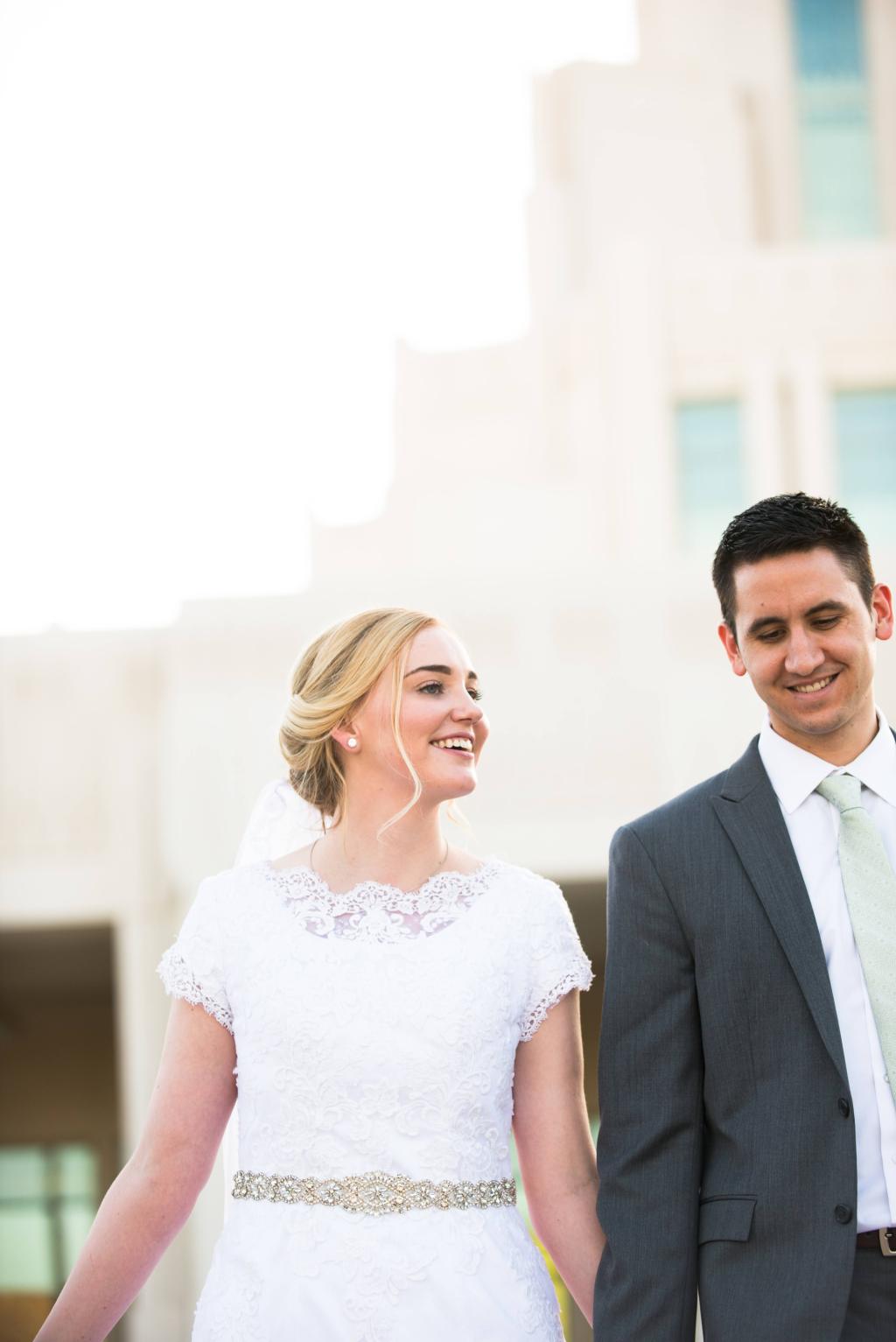
    Beth and I have been married for 15 months.  If you’re doing the math, you’re realizing that our first 12 months of marriage included 3 months of quarantine.  It seems silly for someone married 15 months to give marriage advice.  But I’ll remind you, we’ve survived the great pandemic and quarantine period of 2020!  I’d like to write some things I learned in the first year of marriage.

    First let me comment on the pandemic.  While being stuck with someone and quarantined with them for 6 months may be miserable for some, it’s made me realize how lucky I am to have a wife I love to be around.  Beth and I have joked about how quarantine has been quite a blessing for us.  We basically haven’t left each other’s side for 6 months.  It’s crazy to think about.  What’s even crazier is I love it.  It’s given me a chance to appreciate her, talk with her, and be with her.  We went through a stretch when the weather was nice where we were biking almost every day.  That was great.  As the heat set in, we transitioned into conversations and TV series together.  It’s been nice. 

    It hasn’t been all roses and bliss.  While we rarely fight, there are still frustrations.  I’ll mention one (and don’t worry, this will be proofread by Beth before I post it).

    Early on in our marriage I noticed a frustration setting in.  If I cleaned a bathroom, or did laundry, or vacuumed the living room I would find myself resenting her.  I would wonder why she didn’t help or do this or that. 

    I was letting this frustration build when I turned to someone for advice.  This wise advice giver presented me with thoughts that completely turned around my way of thinking.  He said that when he got married (39 years ago, congrats!) he was given some advice that he took to heart.  He said he struggled with something similar early in marriage where he would fold the laundry and then expect his wife to do something in return.  Someone explained to him that you don’t fold the laundry to keep a leg up or hold something over on your wife.  You fold the laundry because you love your wife and you want to do it for her and yourself, without any thought of repayment.

    My advice giver talked about the Savior and how He is our greatest example.  He reminded me Jesus Christ never did anything with any hope of getting something in return.  Christ served only to serve.  He reminded me we’re here to become like Christ.  Folding the laundry or doing the dishes, with zero expectations of getting something back, was our small way of becoming like Christ. 

    It hit me how dumb I’d been.  Here I was doing good stuff like picking up around the house but doing it without good intentions.  I was essentially nullifying my “good deed.”  I was reminded we don’t serve to get pats on the back, we serve because we love.  It reminded of the advice of our bishop, Bishop Nelson, when Beth and I met with him before getting married.  He said, “If you always do whatever you can to make the other person happy, you will always have a happy marriage.”  I’ve realized how difficult that is in practice, but how rewarding it is to try to live thinking about Beth first.

    I realized after this advice that I’d really let some negative feelings set into my heart.  Looking back, I think it would have been a short skip and a jump to negative feelings turning into resentment, resentment turning into animosity, and animosity turning into a really unhappy home.  I’m extraordinarily grateful to two wise advice givers that helped me be a *slightly better husband early on.

    Let me be clear about something.  I am far from a perfect or I’d say even a decent husband at this point.  While Beth is the epitome of love and kindness, I know my tendency to be stoic and un-affectionate.  I am lucky to be married to someone who understands my flaws.  I’ve mentioned some of the patience I’ve developed but I’m well aware of Beth’s out of this world patience with me.  I know I am not easy to live with and I feel so lucky to have her. 

    Since I received the advice, I can say my heart has changed.  Every once in a while, if I’m vacuuming, I’ll get an inkling of frustration.  I have to stop myself and remember.  Am I vacuuming so I’m owed something?  No.  I’m vacuuming because I want to clean up and I love my wife.  She does so much around the house and does so much for me.  There’s no keeping score.  Truth is I’m lucky we don’t keep score, or I’d probably be losing.

    The moral of the story I learned is we control how we feel.  We can control our thoughts and our emotions- especially frustration.  It’s not always easy,  but it’s possible.  It’s what we’re here to learn.  We’re here to learn patience and love.  I’m still working on being a more loving husband and look forward to the years where Beth teaches me how to be more loving. 

    I see a sad trend in our society and the world today.  We give up too easy.  Love and marriage aren’t easy.  If it was easy it wouldn’t be rewarding.  We’re in a world that has decided if things are difficult, they’re not worth it.  It makes me sad.  Committing to marriage should be the most serious commitment of our life.  Too many people give up too quickly.  It’s sad and I wish it wasn’t that way.

    I know that my marriage will end up being the greatest catalyst to my growth in this life.  From my marriage I will soon be blessed with a daughter which will also provide vast opportunities to mature in many qualities.  I’m grateful for my marriage.  I’m grateful that my marriage is for eternity.  I can’t imagine vacuuming all these floors and taking out all this trash just to have this marriage end when I die.  I’m earning brownie points for eternity 😉.  (Just kidding!  Were you paying attention?  No brownie points!)

    I’ll conclude with a great quote.  The quote comes from Jenkin Lloyd Jones and has famously been quoted by Gordon B. Hinckley.  I share it because I think it’s important to remember, especially when marriage becomes difficult. 

    There seems to be a superstition among many thousands of our young who hold hands and smooch in the drive-ins that marriage is a cottage surrounded by perpetual hollyhocks, to which a perpetually young and handsome husband comes home to a perpetually young and ravishing wife. When the hollyhocks wither and boredom and bills appear, the divorce courts are jammed.

    Anyone who imagines that bliss is normal is going to waste a lot of time running around shouting that he’s been robbed. The fact is that most putts don’t drop. Most beef is tough. Most children grow up to be just ordinary people. Most successful marriages require a high degree of mutual toleration. Most jobs are more often dull than otherwise. . . .

    Life is like an old-time rail journey—delays, sidetracks, smoke, dust, cinders, and jolts, interspersed only occasionally by beautiful vistas and thrilling bursts of speed. The trick is to thank the Lord for letting you have the ride.”