Category: Books

  • A Miracle that Changed the World

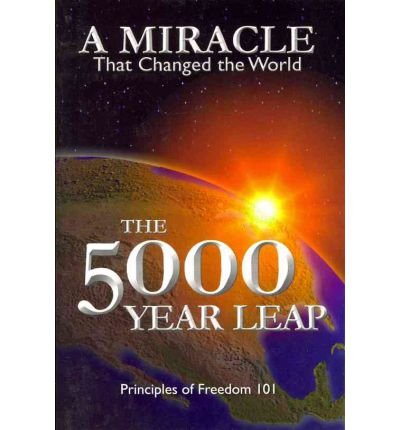
    A Miracle that Changed the World

    These are thoughts from a book I read recently called A Miracle that Changed the World. It was an awesome book that laid out just how spectacular the establishing of America was. This was a section of the book I had some thoughts on. I’m quoting sections of the book with my thoughts.

    p. 52:

    The Tide of Reform

    “Many Americas became extremely self-conscious about their lack of “public virtue” because of non-involvement in the affairs of government. They began to acknowledge their obsession with self-interest, the neglect of public affairs, and their disdain for the needs of the community as a whole. Gradually, a spirit of “sacrifice and reform” became manifest in all thirteen colonies.”

    This occurred in America in the couple of years leading up to the Declaration of Independence being signed. Is it any coincidence that a spirit of sacrifice, public virtue, and selflessness preceded the greatest revolution in the history of the world and the rise of the greatest nation ever to exist on earth? God needed a self-sacrificing and humble people to inherit the new world. When they exhibited these qualities, they became His chosen people to enact this major event. This led to a revolution and the freedom from tyranny that allowed the explosion of religious freedom that God planned, that couldn’t have happened under the rule of a monarchy. It started with sacrifice, service, and humility.

    “In the eyes of the Whigs, the two or three years before the Declaration of Independence always appears to be the great period of the Revolution, the time of greatest denial and cohesion, when men ceased to extort and abuse one another, when families and communities seemed peculiarly united, when the courts were wonderfully free of that constant bickering over land and credit that had dominated their colonial life.”

    Two things especially stand out to me from that statement –

    1. “families and communities seemed peculiarly united.”
      • From the Family Proclamation: “We call upon responsible citizens and officers of government everywhere to promote those measures designed to maintain and strengthen the family as the fundamental unit of society.”
      • As the fundamental unit of society, strong families make for strong society. No wonder Satan has so adamantly attacked the family. Look at divorce rates, look at what has happened to the American family. The dismantling of families is the the beginning of the downfall of a great society, and we’re seeing it happen right before our eyes.
    2. “the courts were wonderfully free of that constant bickering…”
      • Could the 13 original colonies have broken from the greatest world power at that time, colonies v. Greatest World Power, if they were busy bickering amongst themselves? It took unity for the freedom of America to be established.
      • D&C 38:27: “be one; and if ye are not one ye are not mine.”

    This is what we need – Americans to become self-conscious about how selfish we’ve become. This is the eternal principle of unity. America needed to be united under one cause and one heart before they could break free from tyranny. God wants us to be one. What has happened to that unity?

    I read in a Doctrine and Covenants commentary how early church members, going back to the very earliest days of the church, were advised to avoid courts. It was said that if a dispute couldn’t be resolved by arbitration, then there was discord and discontent too strong amongst the parties, and they needed to evaluate what they truly valued. One early church leader, Oliver Cowdery, was chastised for becoming too involved in the courts, and it ultimately began to descent towards his excommunication.

    “When Oliver moved to Missouri in 1837, he sought to alleviate personal debts by starting a legal career. Witnesses testified that Oliver had urged people to sue others in court who “fired guns in town,” who broke “the Sabbath day,” he “frequently solicited for business in collecting debts,” and “urge[d] on lawsuits with others.””

    There can’t be unity where there is constant bickering and lawsuits. Those needed to be removed from public standards before the 13 colonies could think to stand up against Britain.

    The book continues:

    “How the Moral Reform Accelerated the Revolution

    “Many Americans became so impressed with the improvement in the quality of life as a result of the reform movement that they were afraid they might lose it if they did not hurriedly separate from the corrupting influence of British manners. They attributed this corruption to the monarchal aristocracy of England. Even Americans such as John Jay, Robert Morris, and Robert Livingston were beginning to see that the people were exhibiting a potential capacity for virtue and morality which would guarantee the success of a free, self-governing society. Therefore, it became popular to express the sentiment that the sooner they became independent the better” (emphasis added).

    The underlined portion is the part that stood out to me. Imagine if society today could be said to have such a high standard of virtue and morality. This is what guaranteed the success of the United States: A virtuous and morally upright people. This is why they could self-govern themselves, because they self-governed in righteousness. Imagine describing our society like that today – excess of virtue and morality.

    The definition of virtue is “behavior showing high moral standards.”

    The definition of morality is “principles concerning the distinction between right and wrong or good and bad behavior.”

    We couldn’t be farther from such a standard. We’ve gone so far off the path that we have reversed morality so that right is wrong and wrong is right. We have molded morality to be what we want it to be. The early Americans who established this nation were moral and upright in all their dealings, which allowed them the honor of being the people to establish the most free, most righteous, and most powerful nation in history. Freedom and righteousness are power.

    Another motivating factor for the colonies wanting freedom from England was to avoid developing all the negative attributes of the British.

    “British influence was already taking its toll. One alarmed American wrote, “Elegance, luxury and effeminacy begin to be established.” David Ramsay declared that if Americans had not revolted “our frugality, industry, and simplicity of manners, would have been lost in an imitation of British extravagance, idleness and false refinements” (emphasis added).

    America has gotten closer to extravagance, idleness, and false refinements than frugality (look at our national debt), industry (look at our bail outs), and simplicity (look at social media).

    It’s time for unity in America. It’s time for virtue and morality. It’s time to protect and re-establish the importance of the family. It’s time to return to frugality, industry, and simplicity. If America can return to these values, maybe it stands a chance to stay a chosen nation and be protected from the tribulations that are to come.
  • The Life Beyond

    The Life Beyond

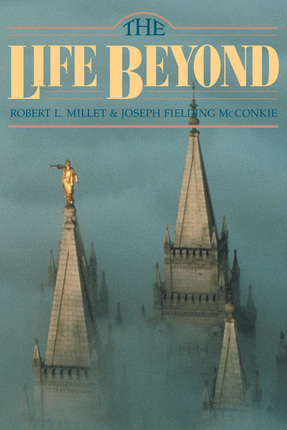
    The Life Beyond by Robert L. Millett and Joseph Fielding McConkie Copyright 1986.

    I recently was asked by two friends who have different religious beliefs from me, what do you believe happens to a person when they die?

    This is the great question right?  One of the 3 great questions.

    1. Where did I come from?
    2. Why I am I here?
    3. Where am I going?

    What a world we’d live in if every conversation we ever had started with that question:

    Hi, my name is Brayden.  Say, what do you think happens to us when we die?

    Wouldn’t that be great!  Less discussion about politics, sports, and tv.  What amazing conversations could come about from that question.

    It amazes me how many people in the world float through life without knowing any sort of answer to these questions.  It’s no wonder we’re in a world that seems untethered from any understanding, sense of reality, or sense of meaning.  What’s worse than all those who don’t know the answer to these questions is those that don’t even ask the question.  It baffles my mind that so many live on this earth, day by day, moment by moment, without daily stopping to ponder: why am I here?

    I believe the reason for this attitude by many people and much of society is due to a feeling that there is no answer.  No one can know so why ask?  I believe every person has asked these questions at some point.  They eventually determine it’s unknowable and move on.  I believe this cuts us off from growth.  How can we grow to our full potential if we have no understanding of our true potential?  How can we reach our true potential if we believe this whole life is for no purpose or reason?  How can we reach our full potential if we don’t even know if there’s something after all this?  In that case, what’s the point?

    That’s why when this question comes up I internally jump for joy.  I know many skeptics, doubters – ye with little faith – still say, “you can’t really know.”  I don’t care.  I know!  I know where I come from.  I know why I’m here.  I know where I’m going.

    It’s one of my greatest wishes that every person on this earth knew the same.  I believe it would make people happier.  I believe it would make the world a better place.  It’s why I’m writing this.  To share what I know.

    The Life Beyond is a book I recently finished by one of my favorite scholars.  Robert Millet was a panelist on the youtube video series I’ve used to study the lectures on faith.  I’ve seen Joseph Fielding McConkie on many of the books I intend to read.

    This book details everything we know about The Life Beyond.  Through scripture, modern revelation, prophets, and all other light and knowledge we’ve received, they go into great detail about what happens after we die.

    Could there be a more important book?

    Can you believe this book exists?  Can you believe you’re not reading it right now?

    Hundreds of millions stumble around in darkness, with fear of death and wonderment about life.  Here is scripture, from God, light and knowledge, revelation, that answers the most important questions in this life.

    For those with little understanding of the Gospel of Jesus Christ, this book would be like feeding a steak to a newborn.  Milk before meat.  I understand that.  Still, why isn’t everyone reading it?  If anyone reading this has ever asked, why am I here?  I invite you to read this book.  Then ask questions.  It can change your life.

    To conclude I’ll share one excerpt from the book that I enjoyed. 

    “The Family Unit Beyond the Veil

    Paul said, ‘I bow my knees,’ as do we all, ‘unto the Father of our Lord Jesus Christ, of whom the whole family in heaven and earth is named” (Ephesians 3:14-15).  In a manifestation to Brigham Young after his death, Joseph Smith told his successor to be sure to instruct the Saints to keep the Spirit of the Lord, promising that if they would do so, ‘they will find themselves just as they were organized by our Father in Heaven before they came into the world.  Our Father in Heaven organized the human family, but they are all disorganized and in confusion.’  Brigham also said that Joseph showed him the pattern, ‘how they were in the beginning.’  He said that he could not describe it but that there must yet be ‘a perfect chain from Father Adam to his latest posterity.’

    During an illness, Jedediah M. Grant visited the spirit world two nights in succession.  He reported a perfect order and government that existed there, saying that the ‘righteous gathered together,’ that there were ‘no wicked spirits among them,’ and that they were ‘organized in family capacities.’  ‘To my astonishment,’ he said, ‘when I looked at families, there was a deficiency in some, there was a lack, for I saw families that would not be permitted to come and dwell together, because they had not honored their calling here.’” (Emphasis added)

    What a marvel it is we have these truths and how lucky we are.  May we all fulfill our callings here, and start by asking, why am I here?

  • The Millionaire Mind

    The Millionaire Mind

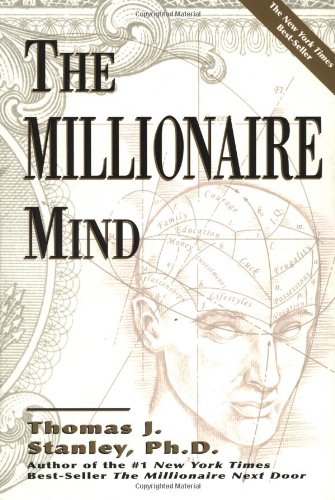
    I mentioned in another post the repetitive nature of the book The Millionaire Mind by Thomas J. Stanley. It’s a world-famous, best-selling book written in 2000. Being written 22 years ago makes it slightly outdated (might be the billionaire mind now), yet it is clearly still relevant today. The repetition is undoubtedly intentional as that’s the way humans learn. What were the repeated points made over and over, then? What does this book clearly think are the most important aspects of becoming a millionaire or having a “millionaire mind”?

    Before I give the list of things I found repeated in the book, it’s important to point out a distinction made in the book between types of millionaires. In the study of millionaires, the author, Dr. Stanley, was looking for “balance sheet millionaires.” He wanted people with high asset, low debt net worths. For obvious reasons this book was NOT a study of individuals who appear to be living a millionaire lifestyle when in reality they were in huge amounts of debt.

    Here are the things I found myself highlighting over and over from that book:

    1. Marriage is conducive to becoming a millionaire, or financially independent. This is for various reasons including but not limited to:
      • Having a support system and partner
      • Combining skills and talents (2 is better than 1)
      • Stability
    2. Generally, millionaires are cautious with how they spend their money. “Cheap” is not a fair characterization, but frugal might be. They are cautious with their money and particular about how they spend it.
      • The book used the example often that millionaires never bought a car over $41,000 or paid more than $38 for a haircut.
    3. Often, millionaires started their own business. It’s difficult to become a millionaire when you’re being paid by someone else.

    I find point 3 very interesting. There’s a guy on YouTube that has gotten popular making one type of video. In these videos he walks around asking people in expensive cars, “what do you do?” Common answers heard are attorney, doctor, and real estate. But the overwhelming majority of the answers are some form of “I started my own company x.”

    I think about this often. This was the point stressed over and over, more than any other point made in this book. The dead horse was beaten relentlessly. If you want to get “rich,” start your own business. If you don’t know this, I’m telling you now, so now you know. But I think most of us know this. And yet, so few of us start our own business. Why is that?

    Like I said, I think about this a lot. I think there are various reasons more people don’t venture out and start their own thing. They can be boiled down to:

    1. Fear
    2. Doubt in oneself
    3. Laziness
    4. Ignorance

    That’s it. I think those are the four things that keep someone from starting their own business. Working for someone else is stable and comfortable, going out on your own is scary (fear). When it’s up to you and you alone to succeed, the excuses go out the door. Relying on yourself for your paycheck requires a lot of confidence in oneself (doubt in oneself). Laziness is probably the greatest detriment to progress in life (laziness). Finally, ignorance in not knowing where to start, or thinking people who start businesses just knew something they didn’t or had some secret (ignorance). Often this is an accepted ignorance. The thinking that others have a secret sauce of success. This ignorance is tied to laziness more than anything.

    There is *usually no secret sauce. Usually someone who starts their business had less fear, less doubt in themselves, were the opposite of lazy, and did the research and work. Simple as that. I’m trying to work myself towards a financial freedom goal. It’s slow work and I find myself running into these four hurdles constantly:  fear, doubt, laziness, ignorance.

    All these things can be defeated, and I think we would benefit ourselves greatly to face these challenges head on and step out of our comfort zones. Of course, that’s easier said than done.

    So what’s my conclusion? Why am I writing this post if I myself can’t step out of my fear, doubt, laziness, and ignorance? I don’t know yet. But maybe one day I’ll look back on this post and think, “well I was always thinking about it, and eventually I got there.” That’s the hope.

  • Books in 2021

    Books in 2021

    This is a list of every book I read in 2021 and the order I ranked them in from favorite to least favorite.  I get something out of every book I read.  I learned long ago that if I allow myself to not finish one book, I won’t finish any.  For those reasons, when I start a book, I’m committed to finishing it.  I don’t care how dry or boring it may be.

    It’s difficult to rank such a wide variety of books. I don’t overthink it too much. This is mostly a list of most enjoyable and most rewarding reads. That said, every book offers something, even if it might just be a laugh.

    I included a one sentence thought about each book.  This proved difficult because I could say so much about every book.  To get around the one sentence rule, I used many commas and run-on sentences. My list, my rules. I find it amusing posting a list of of books read in such an illiterate fashion.

    I enjoyed all these books because they each taught me something. That’s the great thing about books. 

    * Represents a book I recommended or gave to someone to read.

    Here’s my list:

    1. Dune*
      • The movie and book did not disappoint, what a fantastic world created by Frank Herbert.
    2. Stories of your Life and Others*
      • This is a book of short stories, one of which inspired the movie Arrival, the “Arrival” short story, actually called “Story of Your Life,” wasn’t even one of my favorite short stories, I ranked it 6th out of the 8 short stories, I can’t say enough about how phenomenal this book was, looking over it again makes me want to read it right now. 
    3. Unlimited Power*
      • This was a difficult read due to all the exercises and activities done throughout but has resulted in multiple beneficial changes to my daily life so needs to be near the top.
    4. Out of the Best Books Volume 1
      • I never expected to love this book so much, it’s a collection of classic short stories and poems, I learned I’m not huge on poems but highly recommend this for the short stories.
    5. The Eternal Man
      • Second or third reading of this book, love this book, the truths in it speak to my eternal soul every time.
    6. A Boy’s Story a Man’s Memory
      • I met Oscar at a church activity where he spoke about his book, the man emanated love and humility, his story is extraordinary and had me in tears more often than I’ll admit.
    7. Edgar Cayce Mystery Man of Miracles
      • Reading about this man’s fascinating life opens the eyes to the gifts God has potentially given some of His children here on earth.
    8. The Time Machine and the Invisible Man
      • These two classics were in one book so I’m putting them together, I think I preferred the Invisible Man for the roller coaster of where that story went, both great stories.
    9. The Short Second Life of Bree Tanner
      • Make fun of me all you want, Stephanie Meyer is an amazing author and I enjoyed this book enough for it to be in my top ten for the year. 
    10. The Tommyknockers*
      • This book proved to be too long for CJ Matthews, classic Stephen King, super long, I read three quarters of this a long time ago but never finished it, the ending made it worth re-reading. 
    11. Whispers
      • Classic Dean Koontz, this was my second time reading this, there’s a reason it’s right next to a Stephen King book, Koontz and King are so similar and yet so different. 
    12. The Locket
      • This book is the perfect example of how expectations set the tone for a book, I had zero expectations for this book, and ended up liking it a lot.
    13. The Outsiders
      • Much better than Catcher in the Rye in my opinion, the movie was pretty good too. 
    14. Robinson Crusoe
      • This was a youth version so it was a condensed and quick version of the story, but I really loved it.
    15. Return from Tomorrow (just because I read it twice)
      • I love this book but it’s the second time I’ve read it recently, so it dropped a little (from #11 on last year’s list). 
    16. Those Gold Plates!
      • This is a defense of the Book of Mormon, it discusses other records that were kept on metal plates anciently that have only recently been found (book written 1979), and provides information that would have been impossible for Joseph Smith to know in the 1800s yet were somehow in the Book of Mormon, this was another book that strengthened my testimony of the Book of Mormon and Joseph Smith.            
    17. The Little Mermaid and other Fairy Tales
      • Clearly there’s something about reading some good old fashioned classic books that is good for the soul (see #4 and #14).
    18. Embrace Fatherhood
      • This was written by a friend and gave a unique perspective on fatherhood that I enjoyed reading.
    19. Mexican Gothic
      • I’m still not sure exactly how I feel about this book, it was entertaining, but not super entertaining, it was a page turner, it wasn’t a super page turner, but it was one of the more unique books I read this year.
    20. Lighten Up
      • Here starts the group of nonfiction books, nonfiction is great for learning and growth but I think most would agree fiction is more enjoyable, thus their position on my list, anyways, I really liked this book and I think it was one I needed to read at the time I read it.
    21. Spencer W. Kimball
      • Spencer W. Kimball and Howard W. Hunter meld a bit in my mind, I love Spencer W. Kimball for his missionary focus during his time as our prophet.
    22. Howard W. Hunter
      • I love reading about the lives of these most faithful men.
    23. The Mis-Education of the Negro
      • This was given to me by CJ and it taught me a lot about the history of education (and mis-education) for black people in America. 
    24. Moses Man of Miracles
      • Speaking about learning of great, faithful men (See #21 and #22), these are a series of books, with other books of great prophets, really enjoyed this book from Mark E. Petersen about Moses. 
    25. The Coming of the Lord
      • A book written by Gerald N. Lund in 1971, I don’t remember much of the details of this book, but it was all about the signs of the Second Coming of Christ.
    26. Essentials in Church History
      • This was DENSE, but this 685 page (yes you read that right) book taught me a lot about the history of the Church of Jesus Christ of Latter-day Saints.   
    27. Pearl of Great Price Commentary
      • This was a deep and dense commentary on what I feel is one of our more underrated books of scripture, the Pearl of Great Price.
    28. A Bride goes West
      • A fictional book detailing the life of a woman helping to pioneer the west. 
    29. By Love and Grace
      • I could not remember this book at all until I pulled it off the book shelf, that normally would give it huge deduction points in my list, but once I saw the book and opened the front cover, memories of this book washed over me, so I had to move it up the list, a book about a man who finds love and faith, gets falsely accused of murder, it was actually a super awesome book.
    30. Catcher in the Rye
      • Kind of terrifies me that our high school students are reading this book of debauchery.
    31. Dakota Diaspora
      • I may have to read this again as I don’t remember much about it, but reading the back cover reminds me what a fascinating story it was, a woman tells the story of her Jewish parents who left Russia to settle in North Dakoda in the 1800s, really interesting story and a way of life I can’t even imagine. 
    32. Temple Worship
      • When you read temple books in succession, they kind of meld together, this is the case with this book and next on the list, House of Glory, Temple Worship was written by Andrew C. Skinner in 2007, it’s a little deeper than House of Glory and had pictures!
    33. House of Glory
      • Compared to Temple Worship this book was more temporal information on temples if I remember right, it was written by S. Michael Wilcox in 1995.
    34. How to Pray and not Fall Asleep
      • This was literally a how-to book on praying better.
    35. An Epistle from the New Testament Apostles
      • This was a cool concept, it put all the epistles from the New Testament into thematic categories as if they were a single letter. 
    36. This Word of Wisdom
      • This tiny book was written in 1958 and was all about the Word of Wisdom.
    37. America’s Wonderlands
      • This was a coffee table book with pictures and information about America’s national parks. 
    38. Articles of Faith Volume 1
      • This is another coffee table book, a big, beautifully illustrated book about the articles of faith, part 1 of 3 I believe.
    39. Studies in Scripture Volume 3 the Old Testament
      • You know when a book is so good for you but man is it dense and difficult to read, yeah, commentary on Genesis through 2 Samuel falls into that category.
    40. The Seat of the Soul
      • Dude, this book was wild, I quickly went from “wow I’m really getting a lot out of this” to abruptly thinking, “what the heck, we’re talking about dolphin souls,” this book was a wild ride, and fun fact, it appeared my grandma had the same experience because right as my marking of the book started to greatly decrease so did hers, and I don’t think she ended up finishing this book, which is understandable with the out there direction it headed. 
    41. The Church and the Negro
      • Here enters my flawed books, this book had some outdated and inappropriate information.
    42. I was a Born Again Mormon
      • I don’t want to be too disparaging of a book, so I won’t say much about this, let’s just say I disagreed with a lot.
    43. Deal Me In
      • Old book I’ve had for a long time and read before, biographies of professional poker players in the early 2000s.
    44. No Limit Hold em Theory and Practice
      • Dusted off one of my old poker books to explore some strategic game theory ways of thinking.
    45. Passport to Survival
      • This is so low due to the dry nature of the content, not due to lack of good content, this book had all sorts of recipes and ways to extend food storage and survive in an emergency. 

    Additional reading:

    1. To Young Men Only – old church pamphlet.
    2. Book of Mormon
      • Checking back on time stamps of my notes tells me I read 2 Nephi 6-Mosiah 2. I’m reading the book of Mormon alongside a cultural commentary and adding notes throughout.
    3. Doctrine & Covenants
      • Read from Section 100 to 133 alongside two student manuals to add comments and additional information throughout.
    4. Finished Old Testament
      • Ezekiel-Malachi alongside Enduring Word Bible commentary to add notes throughout.
    5. Come Follow Me lesson each week
    6. Started the New Testament
      • Started in Matthew chapter 1 and reading alongside New Testament Student Manual.

    Bonus footage for getting this far

  • Truths Removed from the Bible

    Truths Removed from the Bible

    This post comes directly from something I read on my favorite Book of Mormon commentary website. He received it from a book I would like to read at some point by Anthony E. Bentley: 1000 Evidences for the Church of Jesus Christ of Latter-day Saints: Part Two-A Voice from the Dust: 500 Evidences in Support of the Book of Mormon. The portion I’m taking from the book is from pages 16-17.

    In the book, Brother Bentley points out how critics like to ask for specific examples of any “plain and precious things” found in the Book of Mormon that are not also found in the Bible. He then provides this list:

    • The Lord prepares a way for us to keep all of His commandments (1 Nephi 3:7):
      • 7 And it came to pass that I, Nephi, said unto my father: I awill go and do the things which the Lord hath commanded, for I know that the Lord giveth no bcommandments unto the children of men, save he shall cprepare a way for them that they may accomplish the thing which he commandeth them.
    • How mysteries are made known unto man (1 Nephi 10:19; Mosiah 2:9; Alma 12:10; 26:22)
      • 19 For he that diligently seeketh shall find; and the bmysteries of God shall be unfolded unto them, by the power of the cHoly Ghost, as well in these times as in times of old, and as well in times of old as in times to come; wherefore, the dcourse of the Lord is one eternal round.
      • 9 And these are the words which he aspake and caused to be written, saying: My brethren, all ye that have assembled yourselves together, you that can hear my words which I shall speak unto you this day; for I have not commanded you to come up hither to btrifle with the words which I shall speak, but that you should chearken unto me, and open your ears that ye may hear, and your dhearts that ye may understand, and your eminds that the fmysteries of God may be unfolded to your view.
      • 10 And therefore, he that will aharden his heart, the same receiveth the blesser portion of the word; and he that will cnot harden his heart, to him is dgiven the greater portion of the word, until it is given unto him to know the mysteries of God until he know them in full.
      • 22 Yea, he that arepenteth and exerciseth faith, and bringeth forth good bworks, and prayeth continually without ceasing—unto such it is given to know the cmysteries of God; yea, unto such it shall be dgiven to ereveal things which never have been revealed; yea, and it shall be given unto such to bring thousands of souls to repentance, even as it has been given unto us to bring these our brethren to repentance.
    • The process for receiving revelation and inspiration (1 Nephi 17:45; Enos 1:10)
      • 45 Ye are aswift to do iniquity but slow to remember the Lord your God. Ye have seen an bangel, and he spake unto you; yea, ye have heard his voice from time to time; and he hath spoken unto you in a still small voice, but ye were cpast feeling, that ye could not feel his words; wherefore, he has spoken unto you like unto the voice of thunder, which did cause the earth to shake as if it were to divide asunder.
      • 10 And while I was thus struggling in the spirit, behold, the voice of the Lord came into my amind again, saying: I will visit thy brethren according to their diligence in keeping my commandments. I have bgiven unto them this land, and it is a holy land; and I ccurse it not save it be for the cause of iniquity; wherefore, I will visit thy brethren according as I have said; and their dtransgressions will I bring down with sorrow upon their own heads.
    • The gentiles to assist the house of Israel (1 Nephi 22:8-11; 2 Nephi 10:18)
      • And after our seed is scattered the Lord God will proceed to do a amarvelous work among the bGentiles, which shall be of great cworth unto our seed; wherefore, it is likened unto their being nourished by the dGentiles and being carried in their arms and upon their shoulders.
      • And it shall also be of aworth unto the Gentiles; and not only unto the Gentiles but bunto all the chouse of Israel, unto the making known of the dcovenants of the Father of heaven unto Abraham, saying: In thy eseed shall all the kindreds of the earth be fblessed.
      • 10 And I would, my brethren, that ye should know that all the kindreds of the earth cannot be blessed unless he shall make abare his arm in the eyes of the nations.
      • 11 Wherefore, the Lord God will proceed to make bare his arm in the eyes of all the anations, in bringing about his covenants and his gospel unto those who are of the house of Israel.
      • 18 Wherefore, my beloved brethren, thus saith our God: I will afflict thy seed by the hand of the Gentiles; nevertheless, I will asoften the hearts of the bGentiles, that they shall be like unto a father to them; wherefore, the Gentiles shall be cblessed and dnumbered among the house of Israel.
    • The law of consecration (2 Nephi 2:2)
      • 2 Nevertheless, Jacob, my firstborn in the wilderness, thou knowest the greatness of God; and he shall consecrate thine aafflictions for thy gain.
    • The reason God allows evil and opposition to continue in the world and the importance of moral agency (2 Nephi 2:2, 10:16)
      • (See above).
      • 16 Wherefore, he that afighteth against bZion, both Jew and Gentile, both bond and free, both male and female, cshall perish; for dthey are they who are the ewhore of all the earth; for fthey who are gnot for me are hagainst me, saith our God.
    • The purpose of Adam’s fall & man’s existence (2 Nephi 2:22-25)
      • 22 And now, behold, if Adam had not transgressed he would not have fallen, but he would have remained in the garden of Eden. And all things which were created must have remained in the same state in which they were after they were created; and they must have remained forever, and had no end.
      • 23 And they would have had no achildren; wherefore they would have remained in a state of innocence, having no bjoy, for they knew no misery; doing no good, for they knew no csin.
      • 24 But behold, all things have been done in the wisdom of him who aknoweth all things.
      • 25 aAdam bfell that men might be; and men care, that they might have djoy.
    • The lost prophecy of the latter-day Joseph (2 Nephi 3:6-16)
    • God’s word is not limited to the Bible (2 Nephi 29:3-13)
    • The lost teachings of Zenos (Jacob 5:1-77)
    • A description of the natural man, and how to overcome (Mosiah 3:19; Alma 5:6-45)
      • 19 For the anatural bman is an cenemy to God, and has been from the dfall of Adam, and will be, forever and ever, unless he eyields to the enticings of the fHoly Spirit, and gputteth off the hnatural man and becometh a isaint through the atonement of Christ the Lord, and becometh as a jchildksubmissive, meek, humble, patient, full of love, willing to submit to all things which the Lord seeth fit to inflict upon him, even as a child doth submit to his father.
    • How to retain the remission of sins (Mosiah 4:11-16)
    • The true process of being born again (Mosiah 5:2-9; Alma 5:6-45)
    • The office and calling of a seer (Mosiah 8:13-17):
      • 13 Now Ammon said unto him: I can assuredly tell thee, O king, of a man that can atranslate the records; for he has wherewith that he can look, and translate all records that are of ancient date; and it is a gift from God. And the things are called binterpreters, and no man can look in them except he be commanded, lest he should look for that he ought not and he should perish. And whosoever is commanded to look in them, the same is called cseer.
      • 14 And behold, the king of the people who are in the land of Zarahemla is the man that is commanded to do these things, and who has this high gift from God.
      • 15 And the king said that a aseer is greater than a prophet.
      • 16 And Ammon said that a seer is a revelator and a prophet also; and a gift which is greater can no man have, except he should possess the power of God, which no man can; yet a man may have great power given him from God.
      • 17 But a seer can know of things which are past, and also of things which are to come, and by them shall all things be revealed, or, rather, shall secret things be made manifest, and hidden things shall come to light, and things which are not known shall be made known by them, and also things shall be made known by them which otherwise could not be known.
    • The manner in which faith is developed and maintained (Alma 32:26-34)
    • The relationship between justice and mercy (Alma 34:15-16)
      • 15 And thus he shall bring asalvation to all those who shall believe on his name; this being the intent of this last sacrifice, to bring about the bowels of mercy, which overpowereth justice, and bringeth about means unto men that they may have faith unto repentance.
      • 16 And thus amercy can satisfy the demands of bjustice, and encircles them in the arms of safety, while he that exercises no faith unto repentance is exposed to the whole law of the demands of cjustice; therefore only unto him that has faith unto repentance is brought about the great and eternal dplan of eredemption.
    • The state of the soul between death and the resurrection (Alma 40:11-14):
      • 11 Now, concerning the astate of the soul between bdeath and the resurrection—Behold, it has been made known unto me by an angel, that the spirits of all men, as soon as they are departed from this mortal body, yea, the spirits of all men, whether they be good or evil, are ctaken dhome to that God who gave them life.
      • 12 And then shall it come to pass, that the spirits of those who are righteous are received into a state of ahappiness, which is called bparadise, a state of rest, a state of cpeace, where they shall rest from all their troubles and from all care, and sorrow.
      • 13 And then shall it come to pass, that the aspirits of the wicked, yea, who are evil—for behold, they have no part nor portion of the Spirit of the Lord; for behold, they chose evil works rather than good; therefore the spirit of the bdevil did enter into them, and take possession of their house—and these shall be cast out into couter darkness; there shall be dweeping, and wailing, and gnashing of teeth, and this because of their own iniquity, being led captive by the will of the devil.
      • 14 Now this is the state of the asouls of the bwicked, yea, in darkness, and a state of awful, cfearful looking for the fiery dindignation of the wrath of God upon them; thus they remain in this estate, as well as the righteous in paradise, until the time of their resurrection.
    • Christians and Christianity flourished before the time of Christ (Alma 46:13-16):
      • 13 And he fastened on his head-plate, and his abreastplate, and his shields, and girded on his armor about his loins; and he took the pole, which had on the end thereof his rent coat, (and he called it the btitle of liberty) and he cbowed himself to the earth, and he prayed mightily unto his God for the blessings of liberty to rest upon his brethren, so long as there should a band of dChristians remain to possess the land—
      • 14 For thus were all the true believers of Christ, who belonged to the church of God, called by those who did not belong to the church.
      • 15 And those who did belong to the church were afaithful; yea, all those who were true believers in Christ btook upon them, gladly, the name of Christ, or cChristians as they were called, because of their belief in Christ who should come.
      • 16 And therefore, at this time, Moroni prayed that the cause of the Christians, and the afreedom of the land might be favored.
    • The symbolisms of the remnant of Joseph’s coat (Alma 46:23)
      • 23 Moroni said unto them: Behold, we are a aremnant of the seed of Jacob; yea, we are a remnant of the seed of bJoseph, whose ccoat was rent by his brethren into many pieces; yea, and now behold, let us remember to keep the commandments of God, or our garments shall be rent by our brethren, and we be cast into prison, or be sold, or be slain.
    • The perpetual cycle of the human experience (pride cycle): obedience–>blessings–>prosperity–>pride–>sin–punishment–>humility–>repentance–>obedience . . . (Helaman 12:1-3):
      • And thus we can behold how false, and also the unsteadiness of the hearts of the children of men; yea, we can see that the Lord in his great infinite goodness doth bless and aprosper those who put their btrust in him.
      • Yea, and we may see at the very atime when he doth bprosper his people, yea, in the increase of their fields, their flocks and their herds, and in gold, and in silver, and in all manner of cprecious things of every kind and art; sparing their lives, and delivering them out of the hands of their enemies; softening the hearts of their enemies that they should not declare wars against them; yea, and in fine, doing all things for the welfare and happiness of his people; yea, then is the time that they do dharden their hearts, and do eforget the Lord their God, and do ftrample under their feet the Holy One—yea, and this because of their ease, and their exceedingly great prosperity.
      • And thus we see that except the Lord doth achasten his people with many afflictions, yea, except he doth visit them with bdeath and with terror, and with famine and with all manner of pestilence, they will not cremember him.
    • The “other sheep” spoken of in John 10:16 are identified (3 Nephi 15:16-24)
    • The powers of translated beings (3 Nephi 28:36-40)
      • 36 And now behold, as I spake concerning those whom the Lord hath chosen, yea, even three who were caught up into the heavens, that I knew not whether they were acleansed from bmortality to immortality—
      • 37 But behold, since I wrote, I have inquired of the Lord, and he hath made it manifest unto me that there must needs be a change wrought upon their bodies, or else it needs be that they must taste of death;
      • 38 Therefore, that they might not taste of death there was a achange wrought upon their bodies, that they might not bsuffer pain nor sorrow save it were for the sins of the world.
      • 39 Now this change was not equal to that which shall take place at the last day; but there was a change wrought upon them, insomuch that Satan could have no power over them, that he could not atempt them; and they were bsanctified in the flesh, that they were choly, and that the powers of the earth could not hold them.
      • 40 And in this state they were to remain until the judgment day of Christ; and at that day they were to receive a greater change, and to be received into the kingdom of the Father to go no more out, but to dwell with God eternally in the heavens.
    • Baptism is only for those who are accountable (Moroni 8:5-23)
    • The manner in which all truth may be verified (Moroni 10:4-5)   
      • And when ye shall receive these things, I would exhort you that ye would aask God, the Eternal Father, in the name of Christ, if these things are not btrue; and if ye shall ask with a csincere heart, with dreal intent, having efaith in Christ, he will fmanifest the gtruth of it unto you, by the power of the Holy Ghost.
      • And by the power of the Holy Ghost ye may aknow the btruth of all things.

    And lastly, one of my own:

    Order of baptism 3 Nephi 11:24-27
    24 And now behold, these are the words which ye shall say, calling them by name, saying:
    25 Having aauthority given me of Jesus Christ, I baptize you in the name of the bFather, and of the Son, and of the Holy Ghost. Amen.
    26 And then shall ye aimmerse them in the water, and come forth again out of the water.
    27 And after this manner shall ye abaptize in my name; for behold, verily I say unto you, that the Father, and the Son, and the Holy Ghost are bone; and I am in the Father, and the Father in me, and the Father and I are one.

    I haven’t personally checked the Bible for all of these truths. If anyone knows of places in the Bible that speaks of any of these truths I would gladly review them. Ultimately, it is not a competition between the Bible and the Book of Mormon. The primary purpose of the Book of Mormon is to testify of Christ, and part of that purpose is accomplished by supporting the Bible in every way. The Bible and the Book of Mormon together leave indisputable evidence of Christ’s divine mission as our Savior.