Tag: Atonement of Jesus Christ

  • Doctrine vs. Practice

    Doctrine vs. Practice

    I want to go over something I’ve always had a hard time understanding. 

    What is a doctrine? What are the core doctrines of the Church of Jesus Christ of Latter-day Saints? What is the difference between a doctrine and a practice?

    Doctrines and practices are much different, though they often get confused.

    The simplest way I learned to differentiate a doctrine from a practice is this simple rule: A doctrine is eternal, it never changes. Practices can be changed.

    According to the First Presidency, there are three guidelines to follow when determining if something is a doctrine or just a practice:

    1. Doctrine is eternal, never changing.
    2. The First Presidency and Quorum of the Twelve is unified on a doctrinal subject.
    3. Doctrines are salvific, it is pertinent to our salvation.

    It’s important to remember that these criteria don’t necessarily confirm something is doctrine. Just because the 15 members of the First Presidency and Quorum of the Twelve are unified on the subject DOES NOT necessarily make it a doctrine.

    Let’s look at a couple examples.

    The sacrament that we take each week is a practice. It has changed in multiple ways over time, throughout history. For example, it used to be the practice of the church to use wine for the sacrament. We now use water. This is just one example of how the sacrament has changed over time.

    The doctrine associated with the sacrament would be the Atonement of Jesus Christ. The Atonement of Jesus Christ is eternal and never changing. It is a doctrine. 

    Priesthood is a doctrine but who holds it is a practice. The priesthood itself is eternal. It is God’s power on the earth. In 2018 we saw a change in who can hold the priesthood when the required age changed from 12 years to 11 years. Another example is when the sons of Aaron were the only holders of the priesthood before it was opened up to the Gentiles in this dispensation. This makes who holds the priesthood a principle.

    I know what you’re thinking. Does that mean women can/should/will one day hold the priesthood independent of any man? I don’t know. I won’t delve into that anymore at this time. I will just say, it will take a revelation from God for that to happen.

    In conclusion, I would like to share the 9 basic doctrines of the Church of Jesus Christ. These doctrines are:

    9 core doctrines:

    1. Godhead
    2. Plan of Salvation
    3. Atonement of Jesus Christ
    4. Dispensation, Apostasy, and Restoration
    5. Prophets and Revelation
    6. Priesthood and Priesthood Keys
    7. Ordinances and Covenants
    8. Marriage and Family
    9. Commandments
  • This is Repentance

    This is Repentance

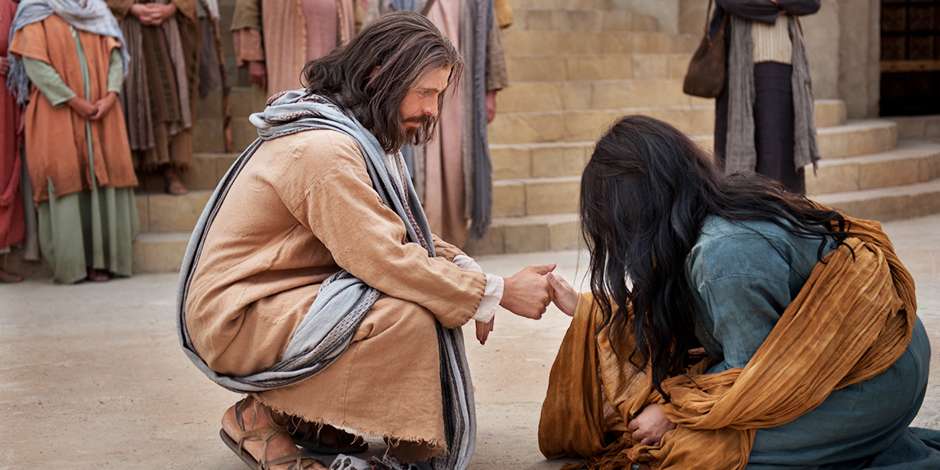
    Sometimes I struggle with the idea that my sins have been made completely white through the Atonement of Jesus Christ, that I’m completely forgiven for everything I’ve done.

    I know this disrespects the Atonement of Jesus Christ and that’s part of my biggest struggle. The last thing I ever want to do is belittle what Christ did for me.

    The thing is, sometimes I still dwell on my past sins. Sometimes I still think about them. Sometimes I still feel remorse and guilt. Sometimes I wonder if I’ve paid the full penitence to those I hurt. Have my sins been washed away? Are they completely gone if I still remember them?

    I rationalize this, and I believe it’s true, that I remember them for my benefit. I have to remember them or I might return to them. It’s the remembrance of guilt that keeps me from wanting to go back to being that person.

    I understand this intellectually.

    Still, sometimes it’s hard for me to understand how Christ can have forgotten my sins, washed them away as if they never happened, when I can’t forget them myself.

    The young men I work with and I recently studied Isaiah chapter 1.

    Isaiah 1:18 reads:

    “Come now, and let us reason together, saith the Lord: though your sins be as scarlet, they shall be as white as snow; though they be red like crimson, they shall be as wool.”

    After reading that I emphatically emphasized something to those young boys. What I emphasized was this:

    “When you truly repent, and show remorse, and try your absolute hardest to not do it again, Christ forgives and forgets your sins. Period. White as snow. It’s as if they never happened. Don’t be deceived. Satan will have you believe you can never be forgiven for a mistake. This is the great lie. You can be forgiven. If you repent, Christ will forgive. Not only that, He won’t even remember it. It’s like it never happened. I can’t stress this enough.”

    That’s what I said to my young men, and I believe it’s true.

    But… do I believe it’s true?

    Given what I just wrote?

    I had a thought today for the first time ever. I often think about the time of judgement. That time when we stand before Christ and have our life reviews. I’ve never feared that moment. The thought that occurred to me today is: why don’t I fear that moment? I have so much to be embarrassed by, so much to be ashamed of in my past behavior. Why haven’t I worried about it before? It occurred to me that one day my wife, Beth, will see how I once was. I’ve tried to tell her, but I don’t think she gets it. Then it occurred to me that my family will see it too. I will be so ashamed! Why haven’t I feared this before?

    Then it hit me.

    Maybe that’s repentance.

    Repentance is knowing – yes, I did those things. Yes, I made many mistakes. But though my skins be scarlet (they are and were) they shall be as white as snow. As I type this, I hold back tears. That’s what Christ has done for me. That’s what repentance is.

    Luke 15:7:

    “I say unto you, that likewise joy shall be in heaven over one sinner that repenteth, more than over ninety and nine just persons, which need no repentance.”

    D&C 18:13:

    “And how great is his joy in the soul that repenteth!”

    I am that soul. I don’t know how the life review will go. If my sins are forgiven and forgotten, are those parts reviewed? I don’t know. But what I realized was, and why I’ve never feared that moment, is even if all my abhorrent behavior is shown, it will be ok. It will be ok because I changed.

    That thought of Beth seeing how I used to be? It occurred to me that maybe she’ll love me even more after seeing all of it because she’ll see how much I changed. She’ll be able to see the full picture of how far I came to be a semi-decent husband and father.

    I think that’s what repentance is. Knowing that even if all your sins are laid out, you’re still forgiven.

    That’s repentance.

  • Pain

    Pain

    The other day I banged my knee against a bed frame so hard that I almost threw up. The pain was excruciating. Then I realized, why am I fine? I’m fine because I know the pain will end in the next couple minutes, then I’ll be fine.

    I haven’t experienced tons of physical pain in my life. I’ve been very lucky in that respect. I imagine the worst thing about pain is not knowing when it will end.

    What makes pain bearable is knowing it will end. It’s the not knowing that can be truly excruciating. For example, take even just the pain of a paper cut. If that painful cut was indefinite, meaning you felt the papercut for minutes, then hours, then days, just as intensely as that first moment when the cut happened, it would be horrible. Papercuts aren’t that bad because the pain passes quickly.

    What about when you don’t know when the pain will end?

    I think that’s the worst kind of experience. Again, I haven’t personally gone through that, so I can’t say from experience. But we’ve all heard stories of or know people with some sort of chronic pain. Pain that doesn’t end would be a challenge due to the mental exhaustion along with the physical pain.

    I haven’t even gotten into mental or emotional pain. Those are different categories that can be completely different levels of unbearable.

    If you’ve read a couple of my posts before, you know where this is going: The infinite Atonement of Jesus Christ.

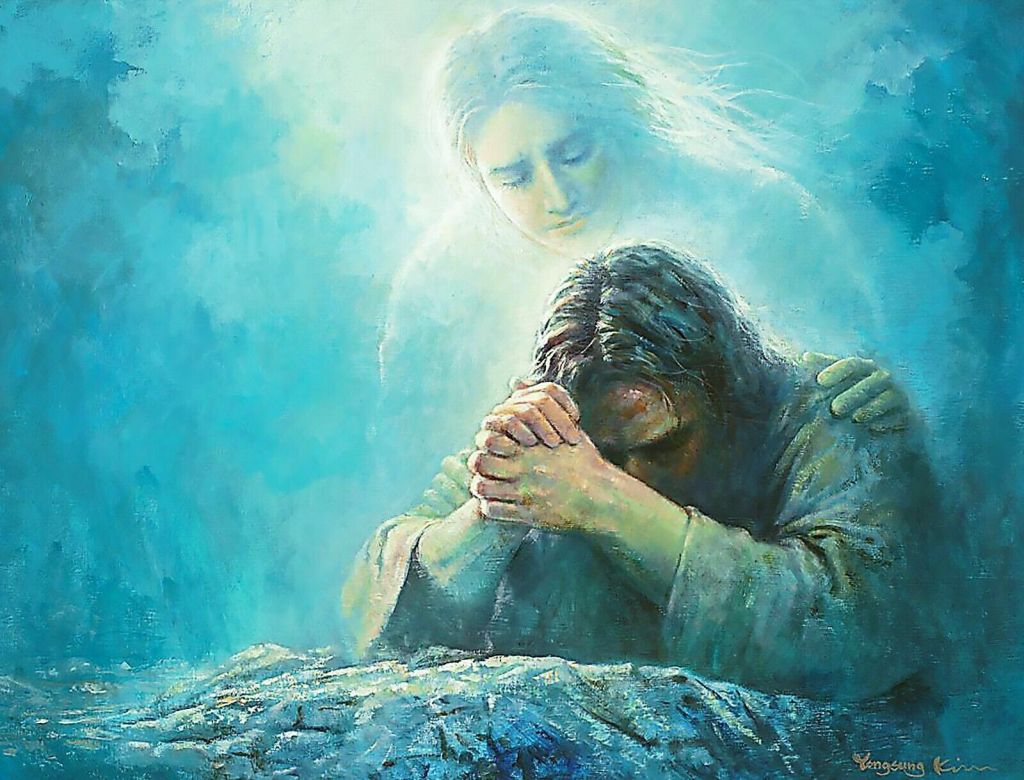
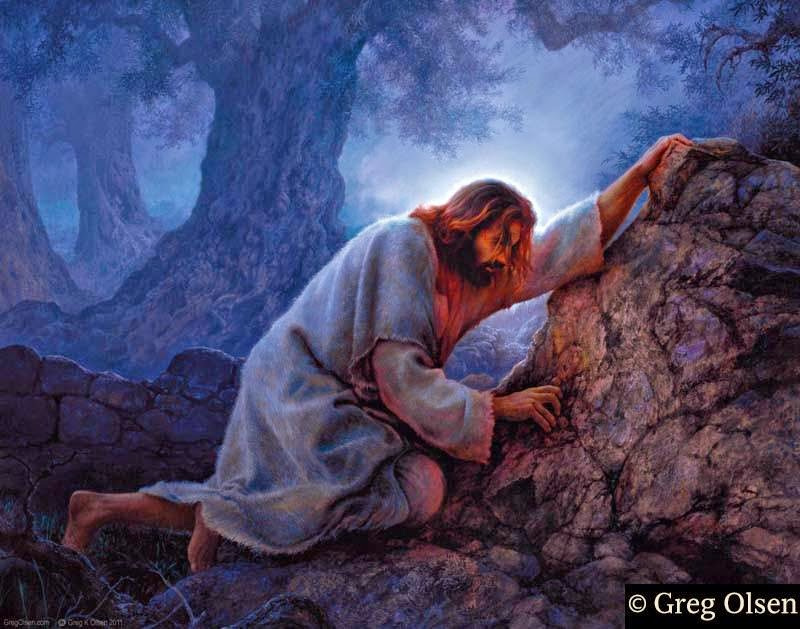
    Did the pain Christ felt in Gethsemane feel infinite? I doubt “infinite” is even close to an adequate word for what Christ felt when he experienced the past, present, and future sins, sufferings, and pains of a universe.

    Luke 22:41-44:

    41 And he was withdrawn from them about a stone’s cast, and kneeled down, and prayed,

    42 Saying, Father, if thou be willing, remove this cup from me: nevertheless not my will, but thine, be done.

    43 And there appeared an angel unto him from heaven, strengthening him.

    44 And being in an agony he prayed more earnestly: and his sweat was as it were great drops of blood falling down to the ground.

    I wonder if the uncertainty of time led to the ultimate request, “If thou be willing, remove this cup from me.”

    It’s hard to imagine what Christ felt in those moments. The “infinite” Atonement of Jesus Christ. Did it feel infinite? Did it feel like it would never end? However it felt, it didn’t feel good.

    D&C 19:18:

    18 “Which suffering caused myself, even God, the greatest of all, to tremble because of pain, and to bleed at every pore, and to suffer both body and spirit—and would that I might not drink the bitter cup, and shrink.

    19 Nevertheless, glory be to the Father, and I partook and finished my preparations unto the children of men.

    I remind myself daily that Christ suffered what He did because He loves me. I owe Him everything. I’m grateful that He was willing to pay the price of my sins and to feel all my sorrows and pains so He can support and understand everything about me.

    I hope during this Christmas season we remember what Christ did for us and why we celebrate Christmas.

  • The Higher Law and the End of Blood Sacrifice

    The Higher Law and the End of Blood Sacrifice

    Christ fulfilled the law. This was why blood sacrifices were done with after His last and great sacrifice. But what does this mean, practically?

    The Israelites practiced God’s law which was a law of reparations. You take out the eye of an enemy maliciously, you take out his eye. Someone kills your brother, you kill him. The problem with this is obvious. Blood begets blood and when does it end?

    This is why the Israelites practiced the law of sacrifice. They took an animal, that had nothing to do with bloodshed, or theft, or lying, and instead of continuing the constant cycle of reparations, they sacrificed the blood of the animal. This is obviously what Christ represented when He died on the cross. He paid the price for all our sins, because we are incapable of paying such a price.

    This is why Christ preached a higher law. No longer was it an eye for an eye but it was turn the other cheek. No longer was it sue for damages but give your second coat. Christ’s point was that after He died for our sins, animal sacrifices would be done away with, there was no more putting your sins off on a goat. Christ was teaching the end of strife. Someone wrongs you, forgive them and move on. This put an end to the vicious cycle of payback and recompense.

    Who was the greatest example ever of this? Jesus Christ never asked us to do something He didn’t do first, when He was up on the cross, and forgave those who had scourged, beaten, and crucified Him.

    But of course, justice still had to be paid for a wrong done. That’s where Christ came in, paying the ultimate and last sacrifice with His blood. So, we flawed human beings, who sometimes commit wrong without even meaning to, can be forgiven. This is the miracle of what Christ did for us, the miracle of His atonement, the miracle of His forgiveness, and the miracle of the higher law.

  • Infant baptisms, Salvation, and the Atonement of Jesus Christ

    Infant baptisms, Salvation, and the Atonement of Jesus Christ

    One of the great fallacies of Christian belief is what happens to people who die without being baptized, especially those who never, in mortal life, had an opportunity to be baptized.

    The Church of Jesus Christ of Latter-day Saints is sometimes accused of diminishing God through the beliefs He has revealed to us. For example, the idea that we can become like Him. Other Christian sects look at this as some sort of disrespect towards God. Like us trying to be like our Father is an insult to Him. We’re similarly criticized for diminishing Christ’s Atonement in the faith and works discussion.

    What of children who die without baptism? How many children have died without the opportunity to be baptized?

    We’re criticized for diminishing Christ’s Atonement.

    What’s more disrespectful to the price Christ paid for ALL of us than saying Christ’s Atonement doesn’t cover the billions of people – billions of babies and children, that have died without baptism? What a corrupt and sad view of the Atonement of Jesus Christ to say that it doesn’t protect innocent children who never could be baptized. He died for all of us.

    So, I would like to share beautiful truths as revealed by God to his prophets in this dispensation that pertain to little children, salvation, the resurrection, and Christ’s Atonement.

    The following are some frequently asked questions concerning the status of children who die before the age of accountability.

    Are they automatically saved? 

    Elder Bruce R. McConkie wrote: “To this question the answer is a thunderous yes, which echoes and re-echoes from one end of heaven to the other. Jesus taught it to his disciples. Mormon said it over and over again. Many of the prophets have spoken about it, and it is implicit in the whole plan of salvation. If it were not so the redemption would not be infinite in its application. And so, as we would expect, Joseph Smith’s Vision of the Celestial Kingdom contains this statement: ‘And I also beheld that all children who die before they arrive at the years of accountability are saved in the celestial kingdom of heaven.’ [D&C 137:10.]

    “It is sometimes asked if this applies to children of all races, and of course the answer is that when the revelation says all children it means all children. There is no restriction as to race, kindred, or tongue. Little children are little children and they are all alive in Christ, and all are saved by him, through and because of the atonement. …

    “They are saved through the atonement and because they are free from sin. They come from God in purity; no sin or taint attaches to them in this life; and they return in purity to their Maker. Accountable persons must become pure through repentance and baptism and obedience. Those who are not accountable for sins never fall spiritually and need not be redeemed from a spiritual fall which they never experienced. Hence the expression that little children are alive in Christ.…

    “Truly it is one of the sweetest and most soul-satisfying doctrines of the gospel! It is also one of the great evidences of the divine mission of the Prophet Joseph Smith. In his day the fiery evangelists of Christendom were thundering from their pulpits that the road to hell is paved with the skulls of infants not a span long because careless parents had neglected to have their offspring baptized. Joseph Smith’s statements, as recorded in the Book of Mormon and latter-day revelation, came as a refreshing breeze of pure truth: little children shall be saved. Thanks be to God for the revelations of his mind where these innocent and pure souls are concerned!” (“The Salvation of Little Children,” Ensign, Apr. 1977, pp. 4, 7.)

    Even though little children will be saved, does that mean they will have eternal life?

    Elder McConkie explained: “Eternal life is life in the highest heaven of the celestial world; it is exaltation; it is the name of the kind of life God lives. It consists of a continuation of the family unity in eternity. … children will be saved in the celestial kingdom. Salvation means eternal life; the two terms are synonymous; they mean exactly the same thing. Joseph Smith said, ‘Salvation consists in the glory, authority, majesty, power and dominion which Jehovah possesses and in nothing else.’ (Lectures on Faith, pp. 63–67.) We have come to speak of this salvation as exaltation—which it is—but all of the scriptures in all of the standard works call it salvation. I know of only three passages in all our scriptures which use salvation to mean something other and less than exaltation.” (“Salvation of Little Children,” p. 5.)

    President Joseph Fielding Smith added:

    “The Lord will grant unto these children the privilege of all the sealing blessings which pertain to the exaltation.

    “We were all mature spirits before we were born, and the bodies of little children will grow after the resurrection to the full stature of the spirit, and all the blessings will be theirs through their obedience, the same as if they had lived to maturity and received them on the earth.

    “The Lord is just and will not deprive any person of a blessing, simply because he dies before that blessing can be received. It would be manifestly unfair to deprive a little child of the privilege of receiving all the blessings of exaltation in the world to come simply because it died in infancy.…

    “Children who die in childhood will not be deprived of any blessing. When they grow, after the resurrection, to the full maturity of the spirit, they will be entitled to all the blessings which they would have been entitled to had they been privileged to tarry here and receive them.” (Doctrines of Salvation, 2:54; see also Mosiah 15:25.)

    Why do some children die and others live? Are those who die better off than those who remain in mortality?

    Elder McConkie wrote:

    “We may rest assured that all things are controlled and governed by Him whose spirit children we are. He knows the end from the beginning, and he provides for each of us the testings and trials which He knows we need. President Joseph Fielding Smith once told me that we must assume that the Lord knows and arranges beforehand who shall be taken in infancy and who shall remain on earth to undergo whatever tests are needed in their cases. This accords with Joseph Smith’s statement: ‘The Lord takes many away, even in infancy, that they may escape the envy of man, and the sorrows and evils of this present world; they were too pure, too lovely, to live on earth.’ (Teachings, pp. 196–97.) It is implicit in the whole scheme of things that those of us who have arrived at the years of accountability need the tests and trials to which we are subject and that our problem is to overcome the world and attain that spotless and pure state which little children already possess.” (“Salvation of Little Children,” p. 6.)

    Will children who die before the years of accountability ever be tested in the way that other mortals are tested? 

    President Joseph Fielding Smith said: “Satan cannot tempt little children in this life, nor in the spirit world, nor after their resurrection. Little children who die before reaching the years of accountability will not be tempted.” (Doctrines of Salvation, 2:57; see also D&C 29:4745:58.)

    What will happen to children in the Resurrection?

    President Joseph F. Smith wrote: “Joseph Smith taught the doctrine that the infant child that was laid away in death would come up in the resurrection as a child; and, pointing to the mother of a lifeless child, he said to her: ‘You will have the joy, the pleasure, and satisfaction of nurturing this child, after its resurrection, until it reaches the full stature of its spirit.’ There is restitution, there is growth, there is development, after the resurrection from death. I love this truth. It speaks volumes of happiness, of joy and gratitude to my soul. Thank the Lord he has revealed these principles to us.” (Gospel Doctrine, pp. 455–56.)

    Thank the Lord He has revealed these principles to us. Amen.