Tag: baptism

  • TRUTH about Heaven

    TRUTH about Heaven

    On November 19, 1823, a young man named Alvin Smith died.  The Smith family asked a Presbyterian minister to officiate at Alvin’s funeral.  “As Alvin had not been a member of the minister’s congregation, the clergyman asserted in his sermon that Alvin could not be saved.  William Smith…recalled: ‘[The minister]… intimated very strongly that [Alvin] had gone to hell, for Alvin was not a church member, but he was a good boy and my father did not like it.” (Teachings: Joseph Smith, 401, 403).

    On January 21, 1836, while in the temple at Kirtland, Ohio, the heavens were opened up to a still young man named Joseph Smith.  It was recorded:

    1 The heavens were opened upon us, and I beheld the celestial kingdom of God, and the glory thereof, whether in the body or out I cannot tell. 

    5 I saw Father Adam and Abraham and my father and my mother; my brother Alvin, that has long since slept;

    6 And marveled how it was that he had obtained an inheritance in that kingdom, seeing that he had departed this life before the Lord had set his hand to gather Israel the second time, and had not been baptized for the remission of sins.

    7 Thus came the voice of the Lord unto me, saying: All who have died without a knowledge of this gospel, who would have received it if they had been permitted to tarry, shall be heirs of the celestial kingdom of God; 

    8 Also all that shall die henceforth without a knowledge of it, who would have received it with all their hearts, shall be heirs of that kingdom;

    9 For I, the Lord, will judge all men according to their works, according to the desire of their hearts.

    10 And I also beheld that all children who die before they arrive at the years of accountability are saved in the celestial kingdom of heaven. 

    Matthew 7 of the Joseph Smith translation has an important clarification:

    Now these are the words which Jesus taught his disciples that they should say unto the people.

    Judge not unrighteously, that ye be not judged; but judge righteous judgment.

    What is, righteous judgement, then? From the New Testament Student Manual:

    “President Dallin H. Oaks explained these teachings and their application, basing his comments on the principle “that there are two kinds of judging: final judgments, which we are forbidden to make, and intermediate judgments, which we are directed to make, but upon righteous principles:

    First, a righteous judgment must, by definition, be intermediate. It will refrain from declaring that a person has been assured of exaltation or from dismissing a person as being irrevocably bound for hellfire. It will refrain from declaring that a person has forfeited all opportunity for exaltation or even all opportunity for a useful role in the work of the Lord. The gospel is a gospel of hope, and none of us is authorized to deny the power of the Atonement to bring about a cleansing of individual sins, forgiveness, and a reformation of life on appropriate conditions.

    Second, a righteous judgment will be guided by the Spirit of the Lord, not by anger, revenge, jealousy, or SELF-INTEREST(my emphasis added). …

    Third, to be righteous, an intermediate judgment must be within our stewardship. We should not presume to exercise and act upon judgments that are outside our personal responsibilities. …

    Fourth, we should, if possible, refrain from judging until we have adequate knowledge of the facts. …

    “A fifth principle of a righteous intermediate judgment is that whenever possible we will refrain from judging people and only judge situations. … We can set and act upon high standards for ourselves or our homes without condemning those who do otherwise. …

    Sixth, forgiveness is a companion principle to [this] commandment. … In modern revelation the Lord has declared, ‘I, the Lord, will forgive whom I will forgive, but of you it is required to forgive all men’ (D&C 64:10).

    Seventh, a final ingredient or principle of a righteous judgment is that it will apply righteous standards” (“‘Judge Not’ and Judging,” Ensign, Aug. 1999, 7, 9–12).”

    I will refrain from judging that minister at Alvin’s funeral who failed in almost all these points laid out by President Oaks.  I will leave that judgement to God for such behavior.

    What I will say is this:  the hateful, vengeful God that condemns young children and the ignorant to eternal hellfire, is not my God.  My God doesn’t create someone, give them a body, send them to earth, only to condemn them to eternal damnation because they never committed to a God they never heard of.

    Where is the justice, mercy, and LOVE of that God?  There is no love in that God.  That is not my God.

    My God loves all His children.

    1 Peter 4:6 “For for this cause was the gospel preached also to them that are dead, that they might be judged according to men in the flesh, but live according to God in the spirit.” 

    How can it be, then? How can men be judged in the flesh when their flesh has long since been laid in the ground and returned to the dust from which it was formed?

    Salvation for the dead through ministering to the dead.  Baptisms and ordinances for the dead.  Ordinances that the dead cannot, once dead, perform for themselves.  For we, without them, cannot be made perfect, as they, without us, cannot be made perfect (Hebrews 11:40, D&C 128:18).

    Truth.

    Pure.

    Simple.

    If this doesn’t make sense to you, please, re-read it.  Then read it again, then read it again.  New wine is difficult to fit in old bottles.  Then ask me, and maybe I can explain in better.  I know the missionaries can.

    God doesn’t condemn you or your loved ones to hell because you haven’t met or been taught of the true Him.  This is the great evil that Satan has perpetuated throughout Christianity.

    THAT IS NOT GOD.

    God is love.  You, your father, your father’s father.  He loves all of you.  And you will all be able to hear the truth before any judgement is made.  I love that God, and I am grateful for Him.  And I am grateful for Joseph Smith for these pure, simple truths that he restored.  And I am grateful for my Savior, Jesus Christ, who affords me all this: forgiveness, love, peace, eternity with my family.  Because He suffered for me.  Again, and again and again and again I say, thank you.

    To learn more about TRUTH:
    CLICK HERE

  • Truths Removed from the Bible

    Truths Removed from the Bible

    This post comes directly from something I read on my favorite Book of Mormon commentary website. He received it from a book I would like to read at some point by Anthony E. Bentley: 1000 Evidences for the Church of Jesus Christ of Latter-day Saints: Part Two-A Voice from the Dust: 500 Evidences in Support of the Book of Mormon. The portion I’m taking from the book is from pages 16-17.

    In the book, Brother Bentley points out how critics like to ask for specific examples of any “plain and precious things” found in the Book of Mormon that are not also found in the Bible. He then provides this list:

    • The Lord prepares a way for us to keep all of His commandments (1 Nephi 3:7):
      • 7 And it came to pass that I, Nephi, said unto my father: I awill go and do the things which the Lord hath commanded, for I know that the Lord giveth no bcommandments unto the children of men, save he shall cprepare a way for them that they may accomplish the thing which he commandeth them.
    • How mysteries are made known unto man (1 Nephi 10:19; Mosiah 2:9; Alma 12:10; 26:22)
      • 19 For he that diligently seeketh shall find; and the bmysteries of God shall be unfolded unto them, by the power of the cHoly Ghost, as well in these times as in times of old, and as well in times of old as in times to come; wherefore, the dcourse of the Lord is one eternal round.
      • 9 And these are the words which he aspake and caused to be written, saying: My brethren, all ye that have assembled yourselves together, you that can hear my words which I shall speak unto you this day; for I have not commanded you to come up hither to btrifle with the words which I shall speak, but that you should chearken unto me, and open your ears that ye may hear, and your dhearts that ye may understand, and your eminds that the fmysteries of God may be unfolded to your view.
      • 10 And therefore, he that will aharden his heart, the same receiveth the blesser portion of the word; and he that will cnot harden his heart, to him is dgiven the greater portion of the word, until it is given unto him to know the mysteries of God until he know them in full.
      • 22 Yea, he that arepenteth and exerciseth faith, and bringeth forth good bworks, and prayeth continually without ceasing—unto such it is given to know the cmysteries of God; yea, unto such it shall be dgiven to ereveal things which never have been revealed; yea, and it shall be given unto such to bring thousands of souls to repentance, even as it has been given unto us to bring these our brethren to repentance.
    • The process for receiving revelation and inspiration (1 Nephi 17:45; Enos 1:10)
      • 45 Ye are aswift to do iniquity but slow to remember the Lord your God. Ye have seen an bangel, and he spake unto you; yea, ye have heard his voice from time to time; and he hath spoken unto you in a still small voice, but ye were cpast feeling, that ye could not feel his words; wherefore, he has spoken unto you like unto the voice of thunder, which did cause the earth to shake as if it were to divide asunder.
      • 10 And while I was thus struggling in the spirit, behold, the voice of the Lord came into my amind again, saying: I will visit thy brethren according to their diligence in keeping my commandments. I have bgiven unto them this land, and it is a holy land; and I ccurse it not save it be for the cause of iniquity; wherefore, I will visit thy brethren according as I have said; and their dtransgressions will I bring down with sorrow upon their own heads.
    • The gentiles to assist the house of Israel (1 Nephi 22:8-11; 2 Nephi 10:18)
      • And after our seed is scattered the Lord God will proceed to do a amarvelous work among the bGentiles, which shall be of great cworth unto our seed; wherefore, it is likened unto their being nourished by the dGentiles and being carried in their arms and upon their shoulders.
      • And it shall also be of aworth unto the Gentiles; and not only unto the Gentiles but bunto all the chouse of Israel, unto the making known of the dcovenants of the Father of heaven unto Abraham, saying: In thy eseed shall all the kindreds of the earth be fblessed.
      • 10 And I would, my brethren, that ye should know that all the kindreds of the earth cannot be blessed unless he shall make abare his arm in the eyes of the nations.
      • 11 Wherefore, the Lord God will proceed to make bare his arm in the eyes of all the anations, in bringing about his covenants and his gospel unto those who are of the house of Israel.
      • 18 Wherefore, my beloved brethren, thus saith our God: I will afflict thy seed by the hand of the Gentiles; nevertheless, I will asoften the hearts of the bGentiles, that they shall be like unto a father to them; wherefore, the Gentiles shall be cblessed and dnumbered among the house of Israel.
    • The law of consecration (2 Nephi 2:2)
      • 2 Nevertheless, Jacob, my firstborn in the wilderness, thou knowest the greatness of God; and he shall consecrate thine aafflictions for thy gain.
    • The reason God allows evil and opposition to continue in the world and the importance of moral agency (2 Nephi 2:2, 10:16)
      • (See above).
      • 16 Wherefore, he that afighteth against bZion, both Jew and Gentile, both bond and free, both male and female, cshall perish; for dthey are they who are the ewhore of all the earth; for fthey who are gnot for me are hagainst me, saith our God.
    • The purpose of Adam’s fall & man’s existence (2 Nephi 2:22-25)
      • 22 And now, behold, if Adam had not transgressed he would not have fallen, but he would have remained in the garden of Eden. And all things which were created must have remained in the same state in which they were after they were created; and they must have remained forever, and had no end.
      • 23 And they would have had no achildren; wherefore they would have remained in a state of innocence, having no bjoy, for they knew no misery; doing no good, for they knew no csin.
      • 24 But behold, all things have been done in the wisdom of him who aknoweth all things.
      • 25 aAdam bfell that men might be; and men care, that they might have djoy.
    • The lost prophecy of the latter-day Joseph (2 Nephi 3:6-16)
    • God’s word is not limited to the Bible (2 Nephi 29:3-13)
    • The lost teachings of Zenos (Jacob 5:1-77)
    • A description of the natural man, and how to overcome (Mosiah 3:19; Alma 5:6-45)
      • 19 For the anatural bman is an cenemy to God, and has been from the dfall of Adam, and will be, forever and ever, unless he eyields to the enticings of the fHoly Spirit, and gputteth off the hnatural man and becometh a isaint through the atonement of Christ the Lord, and becometh as a jchildksubmissive, meek, humble, patient, full of love, willing to submit to all things which the Lord seeth fit to inflict upon him, even as a child doth submit to his father.
    • How to retain the remission of sins (Mosiah 4:11-16)
    • The true process of being born again (Mosiah 5:2-9; Alma 5:6-45)
    • The office and calling of a seer (Mosiah 8:13-17):
      • 13 Now Ammon said unto him: I can assuredly tell thee, O king, of a man that can atranslate the records; for he has wherewith that he can look, and translate all records that are of ancient date; and it is a gift from God. And the things are called binterpreters, and no man can look in them except he be commanded, lest he should look for that he ought not and he should perish. And whosoever is commanded to look in them, the same is called cseer.
      • 14 And behold, the king of the people who are in the land of Zarahemla is the man that is commanded to do these things, and who has this high gift from God.
      • 15 And the king said that a aseer is greater than a prophet.
      • 16 And Ammon said that a seer is a revelator and a prophet also; and a gift which is greater can no man have, except he should possess the power of God, which no man can; yet a man may have great power given him from God.
      • 17 But a seer can know of things which are past, and also of things which are to come, and by them shall all things be revealed, or, rather, shall secret things be made manifest, and hidden things shall come to light, and things which are not known shall be made known by them, and also things shall be made known by them which otherwise could not be known.
    • The manner in which faith is developed and maintained (Alma 32:26-34)
    • The relationship between justice and mercy (Alma 34:15-16)
      • 15 And thus he shall bring asalvation to all those who shall believe on his name; this being the intent of this last sacrifice, to bring about the bowels of mercy, which overpowereth justice, and bringeth about means unto men that they may have faith unto repentance.
      • 16 And thus amercy can satisfy the demands of bjustice, and encircles them in the arms of safety, while he that exercises no faith unto repentance is exposed to the whole law of the demands of cjustice; therefore only unto him that has faith unto repentance is brought about the great and eternal dplan of eredemption.
    • The state of the soul between death and the resurrection (Alma 40:11-14):
      • 11 Now, concerning the astate of the soul between bdeath and the resurrection—Behold, it has been made known unto me by an angel, that the spirits of all men, as soon as they are departed from this mortal body, yea, the spirits of all men, whether they be good or evil, are ctaken dhome to that God who gave them life.
      • 12 And then shall it come to pass, that the spirits of those who are righteous are received into a state of ahappiness, which is called bparadise, a state of rest, a state of cpeace, where they shall rest from all their troubles and from all care, and sorrow.
      • 13 And then shall it come to pass, that the aspirits of the wicked, yea, who are evil—for behold, they have no part nor portion of the Spirit of the Lord; for behold, they chose evil works rather than good; therefore the spirit of the bdevil did enter into them, and take possession of their house—and these shall be cast out into couter darkness; there shall be dweeping, and wailing, and gnashing of teeth, and this because of their own iniquity, being led captive by the will of the devil.
      • 14 Now this is the state of the asouls of the bwicked, yea, in darkness, and a state of awful, cfearful looking for the fiery dindignation of the wrath of God upon them; thus they remain in this estate, as well as the righteous in paradise, until the time of their resurrection.
    • Christians and Christianity flourished before the time of Christ (Alma 46:13-16):
      • 13 And he fastened on his head-plate, and his abreastplate, and his shields, and girded on his armor about his loins; and he took the pole, which had on the end thereof his rent coat, (and he called it the btitle of liberty) and he cbowed himself to the earth, and he prayed mightily unto his God for the blessings of liberty to rest upon his brethren, so long as there should a band of dChristians remain to possess the land—
      • 14 For thus were all the true believers of Christ, who belonged to the church of God, called by those who did not belong to the church.
      • 15 And those who did belong to the church were afaithful; yea, all those who were true believers in Christ btook upon them, gladly, the name of Christ, or cChristians as they were called, because of their belief in Christ who should come.
      • 16 And therefore, at this time, Moroni prayed that the cause of the Christians, and the afreedom of the land might be favored.
    • The symbolisms of the remnant of Joseph’s coat (Alma 46:23)
      • 23 Moroni said unto them: Behold, we are a aremnant of the seed of Jacob; yea, we are a remnant of the seed of bJoseph, whose ccoat was rent by his brethren into many pieces; yea, and now behold, let us remember to keep the commandments of God, or our garments shall be rent by our brethren, and we be cast into prison, or be sold, or be slain.
    • The perpetual cycle of the human experience (pride cycle): obedience–>blessings–>prosperity–>pride–>sin–punishment–>humility–>repentance–>obedience . . . (Helaman 12:1-3):
      • And thus we can behold how false, and also the unsteadiness of the hearts of the children of men; yea, we can see that the Lord in his great infinite goodness doth bless and aprosper those who put their btrust in him.
      • Yea, and we may see at the very atime when he doth bprosper his people, yea, in the increase of their fields, their flocks and their herds, and in gold, and in silver, and in all manner of cprecious things of every kind and art; sparing their lives, and delivering them out of the hands of their enemies; softening the hearts of their enemies that they should not declare wars against them; yea, and in fine, doing all things for the welfare and happiness of his people; yea, then is the time that they do dharden their hearts, and do eforget the Lord their God, and do ftrample under their feet the Holy One—yea, and this because of their ease, and their exceedingly great prosperity.
      • And thus we see that except the Lord doth achasten his people with many afflictions, yea, except he doth visit them with bdeath and with terror, and with famine and with all manner of pestilence, they will not cremember him.
    • The “other sheep” spoken of in John 10:16 are identified (3 Nephi 15:16-24)
    • The powers of translated beings (3 Nephi 28:36-40)
      • 36 And now behold, as I spake concerning those whom the Lord hath chosen, yea, even three who were caught up into the heavens, that I knew not whether they were acleansed from bmortality to immortality—
      • 37 But behold, since I wrote, I have inquired of the Lord, and he hath made it manifest unto me that there must needs be a change wrought upon their bodies, or else it needs be that they must taste of death;
      • 38 Therefore, that they might not taste of death there was a achange wrought upon their bodies, that they might not bsuffer pain nor sorrow save it were for the sins of the world.
      • 39 Now this change was not equal to that which shall take place at the last day; but there was a change wrought upon them, insomuch that Satan could have no power over them, that he could not atempt them; and they were bsanctified in the flesh, that they were choly, and that the powers of the earth could not hold them.
      • 40 And in this state they were to remain until the judgment day of Christ; and at that day they were to receive a greater change, and to be received into the kingdom of the Father to go no more out, but to dwell with God eternally in the heavens.
    • Baptism is only for those who are accountable (Moroni 8:5-23)
    • The manner in which all truth may be verified (Moroni 10:4-5)   
      • And when ye shall receive these things, I would exhort you that ye would aask God, the Eternal Father, in the name of Christ, if these things are not btrue; and if ye shall ask with a csincere heart, with dreal intent, having efaith in Christ, he will fmanifest the gtruth of it unto you, by the power of the Holy Ghost.
      • And by the power of the Holy Ghost ye may aknow the btruth of all things.

    And lastly, one of my own:

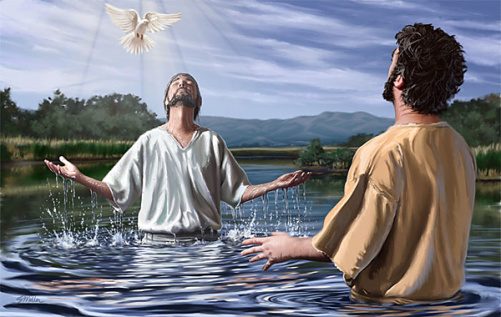
    Order of baptism 3 Nephi 11:24-27
    24 And now behold, these are the words which ye shall say, calling them by name, saying:
    25 Having aauthority given me of Jesus Christ, I baptize you in the name of the bFather, and of the Son, and of the Holy Ghost. Amen.
    26 And then shall ye aimmerse them in the water, and come forth again out of the water.
    27 And after this manner shall ye abaptize in my name; for behold, verily I say unto you, that the Father, and the Son, and the Holy Ghost are bone; and I am in the Father, and the Father in me, and the Father and I are one.

    I haven’t personally checked the Bible for all of these truths. If anyone knows of places in the Bible that speaks of any of these truths I would gladly review them. Ultimately, it is not a competition between the Bible and the Book of Mormon. The primary purpose of the Book of Mormon is to testify of Christ, and part of that purpose is accomplished by supporting the Bible in every way. The Bible and the Book of Mormon together leave indisputable evidence of Christ’s divine mission as our Savior.

  • The Greatest Gift Man can Receive in Mortality

    The Greatest Gift Man can Receive in Mortality

    The Holy Ghost is the Holy Spirit; he is the Holy Spirit promised the saints at baptism, or in other words the Holy Spirit of Promise, this exalted name-title signifying that the promised receipt of the Holy Spirit, as on the day of Pentecost, is the greatest gift man can receive in mortality.

    Bruce R. McConkie

    I recently read this quote and the truth of the statement hit me.  This seemed a fitting thought after last week’s post talking about the gift the gospel has been in my life. I believe that quote is a powerful reminder for those of us who have been blessed with this great gift.  The gospel is a blessing in part due to this great gift, the gift of the Holy Ghost. 

    I can’t wait to teach Ivy of this most extraordinary gift and to watch her receive it for herself.  I know the Holy Ghost is a guiding force and has blessed my life more than I will ever understand while on this earth.  One day I will know.

    I’m grateful for this constant companion (D&C 121:46), this friend, this comforter.  I am never alone when the Holy Ghost is within me.  What a blessing that gift is.  The greatest in this life.

    WORD FOR THE DAY-03JAN17 | Living Waters
  • A Scripture as important to Latter-day Saints as it would be to the Ancient Jews

    A Scripture as important to Latter-day Saints as it would be to the Ancient Jews

    One of my favorite scriptures of all time is 2 Nephi 25:26 which reads:

    And we talk of Christ, we rejoice in Christ, we preach of Christ, we prophesy of Christ, and we write according to our prophesies, that our children may know to what source they may look for a remission of their sins.”

    A common criticism that the Church of Jesus Christ of Latter-day Saints receives from other sects of Christianity, often Protestant groups, is that the Church teaches works as a form of salvation taking precedence over faith.

    As I read the Book of Mormon with this criticism in mind, I’m struck by how clearly the Book of Mormon teaches this principle – that faith in Jesus Christ is the most important thing.  The Church of Jesus Christ of Latter-day Saints is (as far as I know, open to correction) the only church with an explanation on how faith in Jesus Christ alone can result in being saved. 

    Saved, or immortality, is different from Eternal life and salvation.  All of God’s children who choose to be saved, will be saved, for He loves us all.  You can be saved by simply having faith in Jesus Christ, no works needed.  To attain all that the Father has to give, eternal life and salvation in His Kingdom for eternity, you must follow Him, and do what He asks of you.  For without works faith is dead (James 2:26).

    Sometimes I think the members of the Church of Jesus Christ of Latter-day Saints would be benefitted immensely by reading verses 26 and 27 of 2 Nephi chapter 25 every single day.  I think if we each did this, it would help us to re-orient ourselves and never lose sight of what is most important – faith in the Lord, or Savior, Jesus Christ. 

    The below scripture is what I am referring to in the title of this post.  This scripture is as important to latter-day saints today as it was to the ancient Jews:

    Wherefore, we speak concerning the law that our children may know the deadness of the law; and they, by knowing the deadness of the law, may look forward unto that life which is in Christ, and know for what end the law was given. And after the law is fulfilled in Christ, that they need not harden their hearts against him when the law ought to be done away.”

    2 Nephi 25:27

    I believe this scripture to be extremely important to latter-day saints.  The ancient Jews lost sight of Jesus Christ.  They looked to the law for salvation.

    I bear my testimony that I do not believe the Church of Jesus Christ of Latter-day Saints has lost sight of Jesus Christ.  His name is the name of our church, His prophet has implored us to use His name, our leaders preach of Jesus Christ, prophesy of Jesus Christ, teach of Jesus Christ, emphasize Jesus Christ.  The Church of Jesus Christ of Latter-day Saints points us to Jesus Christ.

    It is we, the members, I think, that need to read verse 27 often.  What is the law without Jesus Christ?  I fear that sometimes church members become focused on the wrong things.  Temple attendance for temple attendance’s sake.  Church service because it’s their duty.  Serving in church callings to keep up appearance as a faithful latter-day saint.  Partaking of the sacrament in a rote, mindless manner, not considering what it really means.

    I know I am at fault when it comes to some of the things I’ve just listed.  Sometimes I lose sight of Jesus Christ.  Sometimes I lose sight of what this is all really about.

    I’ve been back in church activity for 5 years now.  My first couple years of returned church activity were so Christ focused.  They were Christ focused because it was all I had.  He was all I had.  He was my strength, and He was everything.  I felt His forgiveness so potently because I’d so recently experienced it with such power.  As my church activity has steadied and become consistent, I’ve found myself relying on church activities, social events, friendships, and making my appearance as a faithful member.  These things aren’t necessarily bad, but they can be.  If they distract from Jesus Christ, they distract from the point.  If I get distracted from Jesus Christ, I am missing the mark.

    What is the law without faith in He who the law points to?

    I think we could all benefit from a consistent study of verse 2 Nephi 25:27.

    Why do we do what we do?  Is it for love?  Is it to serve Jesus Christ?  Is it to remember Jesus Christ, worship Jesus Christ, thank Jesus Christ?

    When is the last time you thought about all your sins and what Jesus Christ did for you at Gethsemane and on the cross?  For me, it’s been far too long since I’ve been brought to tears considering that event.  I’m glad I’m writing this because in doing exactly that, remembering what He’s done for me, and feeling it in my heart, tears are inevitable. 

    Remember why we go to church, the temple, and serve.  It’s for Him.  Not because we have to but because we want to.  Not because it will get us into heaven but because we love Him.  Salvation is through Jesus Christ.  If we go to the temple 5 days a week without Him in mind, we are wasting our time.

    Without Jesus Christ, all of it: temple worship, baptism, sacrament, service; it’s all for naught.  All these things point to Him.  Without Him as our focus all the items listed above are dead works.  

    This is the misconception of other faiths, that we go to the temple to substitute for Jesus Christ.  That couldn’t be farther from the truth.  We go to the temple because of Jesus Christ.

    I think every once in a while, it’s important we re-center our focus and remember what it’s all about.

    I hope and pray that we continue to steadfastly talk of Christ, rejoice in Christ, preach of Christ, prophesy of Christ, and bring others unto Christ, that we always remember to what source we may look for a remission of our sins.

  • What is the Power of Faith?

    What is the Power of Faith?

    What is the power of faith?

    Well, by it the worlds were made so… what can our faith do?

    I’ve written about a miracle I saw happen in my post Miracle Baptisms.

    I was once told a story that strengthened my faith and taught me something about the power of faith. By the way, this is a true story, not made up. If you don’t believe me, have faith.

    The story goes like this…

    There was a guy attending ASU.  His parents planned a big cruise vacation over the winter break.  This guy had been praying and looking for an opportunity to share the gospel with someone. Who? He didn’t know, just someone.  He had made a commitment to baptize a friend before the end of winter break.

    When his parents told him about the plans for the cruise he declined. His parents were shocked.  “Why??? We’re going on a family cruise!” He explained he already had plans.

    Best Large Cruise Ship Winners (2021) | USA TODAY 10Best

    “What plans?!” They asked. “What could be more important than our family cruise?”

    “I’ll be baptizing a friend at that time,” was his response.

    Oh… they thought.  Well, that is important.  They asked who the friend was.  He told them he didn’t know, yet. 

    Let’s break this down.  Here was a cruise.  It existed.  It was paid for.  It was happening.  It was a guarantee. 

    This guy, though, had another guarantee.  He had a commitment.  He would be baptizing someone at that time.

    Soon after the conversation with his parents (aka the testing of his faith) he was sitting outside on campus reading the Book of Mormon.  An acquaintance from class walked by and asked what he was reading.  A few weeks later our hero was baptizing this friend at the precise time his family was on their cruise.

    Some would say the cruise was a sure thing and the baptism was not.  The baptism was a pipe dream, a shot in the dark.  It was unlikely to happen.

    What role did faith play in this story?

    Obviously, faith was everything.

    Soon after declining a sure thing, an all-expense paid cruise vacation, the interaction happened.

    While this guy could have been on a cruise, he was doing something vastly more important, baptizing a friend.

    What is a cruise when compared to the eternal salvation of a soul, of one of God’s children?

    I don’t know the rest of the story. I don’t know what happened with the individual that was baptized. My faith tells something special happened. What if this individual joined the Church of Jesus Christ and devoted himself to it? What if he went on a mission? What if he baptizes five individuals on his mission and shares the Gospel of Jesus Christ with countless others? What if he marries in the temple and has five children? What if those children are raised to worship Christ and bear testimony of Him throughout their lives?

    Fact – that cruise turned into one baptism.

    Faith – that one baptism turned into thousands hearing of the Gospel of Jesus Christ and coming closer to their Savior.

    Where does faith end and fact start? – That’s up to us.

    “Remember the worth of souls is great in the sight of God.”

    Doctrine and Covenants 18:10

    “And if it so be that you should labor all your days in crying repentance unto this people, and bring, save it be one soul unto me, how great shall be your joy with him in the kingdom of my Father!”

    Doctrine and Covenants 18:15