Tag: children

  • How do we speak to others?

    How do we speak to others?

    My parents and younger brother Easton were in town for the weekend. We went swimming and came back to the condo before they left. I said my goodbyes and got in the shower with Ivy to rinse off, as we always do after the pool. My family was packing up to leave.

    As usual, I cleaned Ivy up and then yelled for Beth to come and grab Ivy from me. Beth didn’t come so I yelled again. After a couple minutes Beth still hadn’t come so I opened the shower door to make sure the maximum amount of sound waves would travel and yelled again. 

    I don’t like yelling. It was something I worried about when I started coaching basketball. Yelling feels inherently mean and unkind to me. I try not to raise my voice for almost any reason.

    After the third yell I started to feel like a jerk. I wasn’t being a jerk; I was simply trying to make sure Beth heard me. After the third yell she came quickly into the bathroom. I apologized for yelling and said I wasn’t sure if she could hear me. Beth told me she heard me, but my family was just leaving, and she was saying goodbye. 

    For a split second I thought how my family heard me yelling also and felt ashamed for a moment before I reminded myself my yelling wasn’t malicious in any way. This was practical yelling; it served a purpose. I had to remind myself this because of my aversion to yelling. It wasn’t mean, I was trying to make sure Beth heard me.

    This led me to a thought. I hope my parents know they raised me so that they never have to worry about how I speak to or treat others, especially my wife and daughters. I hope my parents know there are certain ways I would never speak to my wife and daughters. I hope they know I would never speak to anyone a certain way. I think they know that.

    I hope to raise Ivy so that when she’s a grown up (can’t believe that’s going to happen) I’ll know how she speaks to people. I’ll know there’s certain ways she would never speak to anyone. I’ll know if she’s yelling there’s a purpose for it.

    Why do we speak to people a certain way? Because Christ taught us that we’re all brothers and sisters and He showed the way. I hope I would never disappoint my parents or my heavenly parents with my behavior towards others. Of course, we slip sometimes. We aren’t perfect. But the Gospel of Jesus Christ teaches me why I should treat others the way I want to be treated. I hope to instill that in Ivy and Sage the same way my parents instilled it in me, so that I never have to wonder where her values lie and how she treats those she interacts with.

  • Ivy Thougts Part 3

    Ivy Thougts Part 3

    It’s time for one of my favorite posts to write – Ivy thoughts!

    This is a good one.

    One of the funnest things about being a parent is watching your child start to mimic you. It’s in those moments that I get a snapshot into how closely she is watching me. The other day Beth texted me and said, “I can tell when there’s a habit you do because Ivy does it. Like tapping your toothbrush on the edge of the sink. I said, ‘Does Daddy do that?’ And she said, ‘Yeah Daddy like tap tap tap.’”

    Other examples are the words she copies. The other day she said to her grandpa, “Papa, come hang out.” Another time they were playing a game and she said, “You give it a try.” My favorite example showing Ivy paying attention and learning, she was standing at the kitchen counter while her grandpa cut vegetables. He set the knife down and she, unprompted, said, “Ivy no touch knives.” Ivy helps me put the dishes away. I’ll hand her cups, plastic bowls, plastic plates, forks, spoons and she’ll put them in the dishwasher. Early on I would start to hand her a knife and then pause and say, “Does Ivy touch knives.” Of course, in the beginning, she would say, “Yes,” and I would say, “No, no, Ivy doesn’t touch knives,” and she’d quickly say, “No, no, Ivy no touch knives.” So we’d continue and if I started to hand her a knife to test her she would quickly say, “No, no, Ivy no touch knives.” Glad to see the things I’m teaching her are travelling.

    I had Ivy for an hour while I worked one day. She sat on the couch and watched Curious George by herself for 30 minutes. 30 minutes in she wanted to work with me. I tell her she can sit on my lap as long as she doesn’t touch anything. She proceeds to touch everything and say, “Can I touch this.” This I accept, having played this game before, as long as she doesn’t touch my keyboard. Then she starts throwing things. I gently set her aside and tell her it’s back to Curious George. This whole time she hasn’t said a word about the bag of Reese’s Peanut Butter Eggs on the right side of my desk. I’m amazed until… 2 minutes later she comes back. She walks up to my right arm which is on my chair’s arm rest. She gives my arm a huge hug and says, “Daddy, I’m so proud of you.” She gives it a good squeeze. I say, “Aw Ivy, thank you, I love you,” and give her a kiss. She promptly reaches over for the bag of chocolates and starts to walk away. I grab them just before she is out of reach. I tell her she can have one. I unwrap it and give it to her. As she walks out she says, “Thank you Daddy, I love you.” Is this what being wrapped around a finger feels like?

    Ivy and I were cuddling in bed after a nap and totally out of nowhere Ivy looks up at me and says, “You have sharks on your water bottle, Dad?” I looked over at my water bottle and said, “No, my water bottle is just green.” Ivy said, “It OK Dada, one day when you’re bigger you’ll get sharks on your water bottle TOO.”

    The other day Beth asked Ivy if she tooted and she said, very seriously, “No. There’s just a bobcat in my bum.” The same day, after I left for work, Ivy asked Beth, “Where Daddy going?” Beth responded that I went to work and Ivy said, “Again?!?!” You and me both sweet girl. She had a lot of personality that day.

    This was one of those equally heartbreaking and also wonderful parenting moments. I took Ivy with me to an open gym for basketball a couple months back. I expected it to go well. It went as poorly as it could have. I had to leave early and it was the last time I took Ivy to open gym. In my frustration, after Ivy was upset and throwing a fit and crying, I told her I’d hoped I could take her with me to basketball more this season but that I wasn’t going to make that mistake again. Like I said, I hadn’t taken her back with me since. Recently, I was at basketball. Ivy saw me leave with my bag and ball. “Where you goin Daddy?” “I have to go to basketball sweetie, I’ll see you when I get back.” She just looked at me with the most beautiful eyes and content face. But it wasn’t the normal – ‘see ya later’ face. While I was at practice Beth texted me, “Ivy’s been packing a bag and saying ‘I’m packing because I have to go to basketball soon. I know you will miss me when I’m at basketball. I come back though.’” I realized I need to give her another shot.

    Apparently when I was gone for work an entire day Ivy kept saying, “Say what’s wrong Hero Boy.” So Beth replies and asks what’s wrong with Hero Boy. “I lost my daddy.” Heart. Broken.

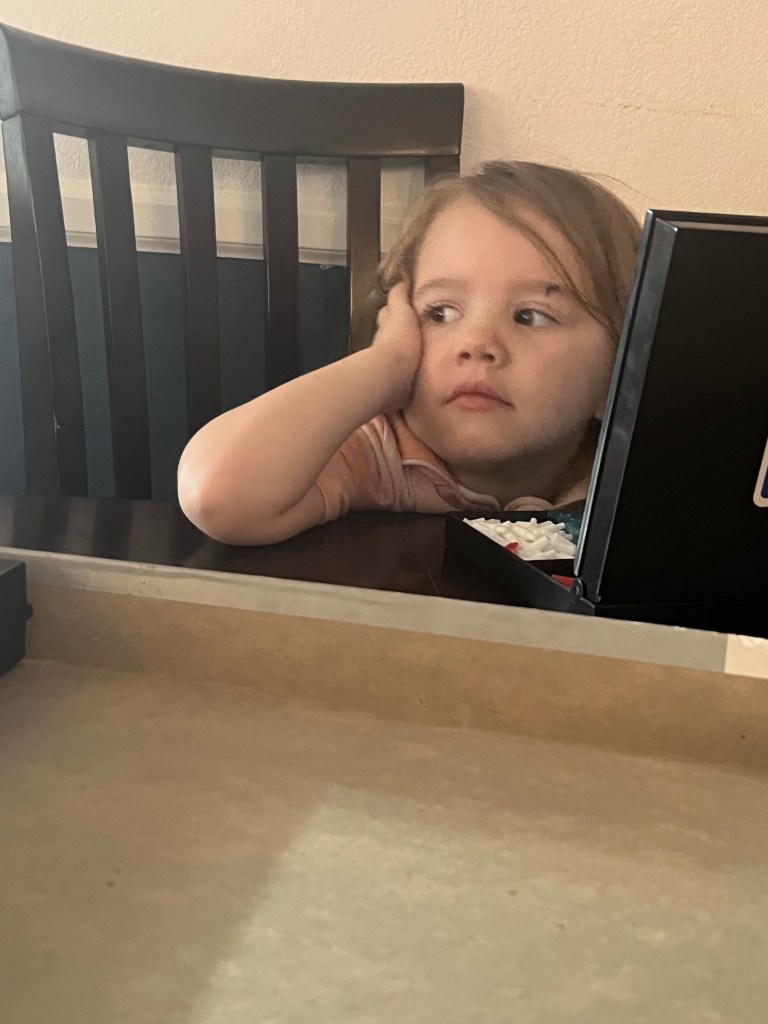
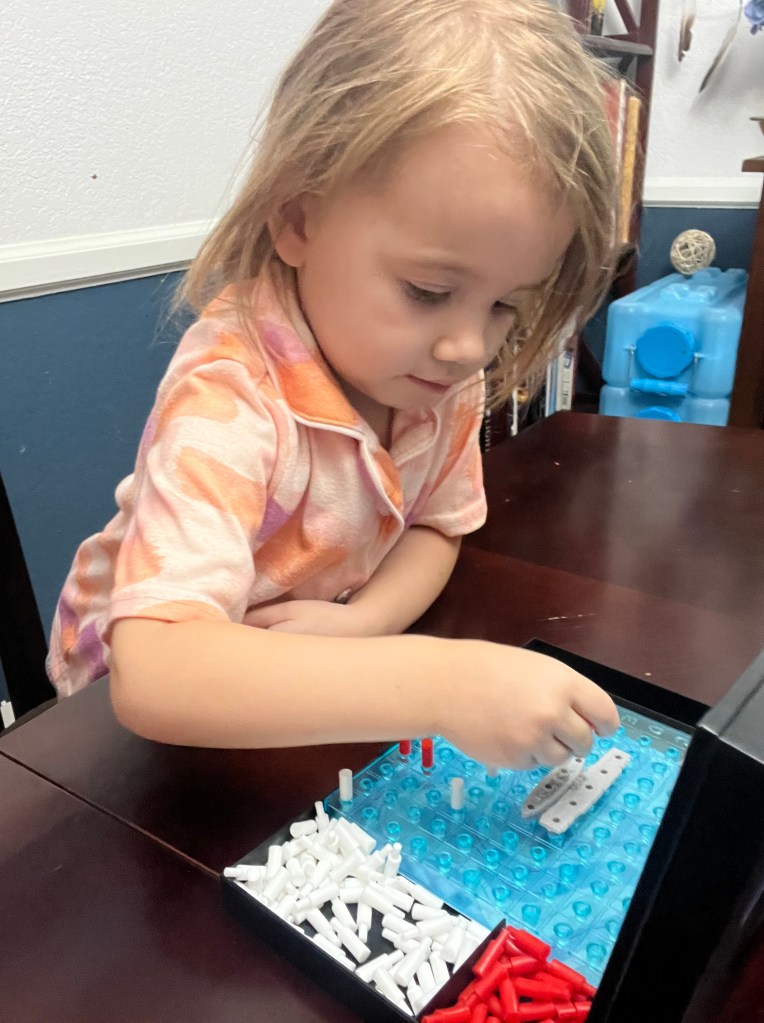
    We’ve had a few days of complete toddler turmoil. I love Ivy. She’s been a monster. She’s in the stage where if you ask her not to do something it’s instantly the next thing she does. Not kidding. We’ve been letting her play Battleship. You know, like the old school board game. She sits and puts the ships and pegs in and plays Battleship with herself. On occasion, the little pegs drop and I had to emphasize to her that it was important those didn’t drop because we didn’t want to lose pieces and Sage could choke on them. Ivy got out of her chair, walked across the room to where Sage was, and started to hand her one of the little pegs. It wasn’t like the temptation was even there. Sage wasn’t right next to her. She had to get out of her seat (a lot of work) and walk across the room to find Sage and willfully disobey what I just said. It was like she was possessed by some irrepressible urge to do exactly what I just told her not to do. These are the parenting moments that are teaching us patience, I guess.

    On that note of Ivy being difficult and us trying to be patient – I was leaving for basketball the other day and it had been a particularly stressful day for Beth. I went to Ivy before I left and quietly talked to her. I asked her to be my best girl. To help her mom, to take care of her sister, and to be my best, sweetest girl. “Can you do that for me?” “Yes, Daddy.” Beth texted me while I was at basketball: “We finally had a quiet moment to sit down after a walk and crafts. I’m trying so hard and yet she’s being so difficult! Ivy has a cold drink and Sage is eating her dinner. Ivy looks up at me and says in a sweet little voice, ‘Mom, I am doing my best.’ I have no idea where she heard that or if she even knows what that means but it was so sweet and probably true so I told her, ‘I know, my sweet Ivy’ and felt a little calmer. The student becomes the teacher yet again.” Ivy knows what that means. And she’s amazing. And she’s teaching us so much, while we try to teach her just enough to survive and not choke her sister.

  • Discussion Before I Came to Earth

    Discussion Before I Came to Earth

    “Now, you’re going to get a lot of attention. A LOT. You will be the center of their world for years. This will give you a huge advantage in life. That early love will carry you for your entire mortal experience.”

    My upcoming birth and place in life were being discussed.

    “But, there is a downside. Your parents are young, inexperienced. They can barely take care of themselves. Now they’ll have to take care of you. They will make mistakes. Every mistake they make will be made up for by the outpouring of love you receive, but there will still be mistakes. You will have to grow up as they learn to take care of a child.

    “Also, being the first-born will be a huge responsibility. If things go according to plan, and they always do, you will be the first of many children. Your younger siblings will be as much your responsibility in life as your parents. You will have to answer to how you treated them, how you watched over them, how you protected them, how you supported them. It will start at a young age, but it will be for your entire mortal life. You will have to watch over them.”

    I loved each of them so much already. Of course, I would do that.

    “Being the oldest will provide many unique opportunities. Sometimes you will be a bully. This will be to teach you something later in life and to teach your siblings. Over time your relationship with them will grow and develop. You all will mature mortally and spiritually.

    “It won’t be easy. But being the first-born child will set you up to achieve your highest potential. It’s what He has in store for you. It will help you become who you can become.”

    This is how I imagine the conversation in heaven was before I came here. It would continue,

    “You will have a bumpy path. You’ve always had to learn things through trial and error. You will taste much of the bitter to realize how sweet obedience is.

    “Eventually we believe you will come back. Of course, that will be up to you. But Father doesn’t misread these things. When you come back you will find a companion from the devoted women of the kingdom. You know her already.

    “When the time is right, we will send you His choicest spirit. She will enter in much the same position you entered this world. Your wife and you will have much to learn, and she will teach you. You will be sent a strong, powerful, spiritual, kind, gentle, intelligent spirit to be a cornerstone of your family. She will be followed by another choice spirit, one who even now can’t wait for her experience to start. She will bring a spark and a light to your family. Your family will be stronger for the two pillars sent to expand it. You will be greatly blessed by your daughters.”

    Doesn’t this bring so much meaning to life? The truth of premortal existence speaks to my soul. I know it to be a fact. It is too sweet for my spirit to deny. I know its truth. I knew where I was coming, I knew who I was joining, I knew my wife and daughters before I came here. I was guided and trained for my time here on earth. I was sent for a purpose. I believe I’m still learning that purpose. Every mortal experience I’ve had has led me to the purposes I’m finding in life.

    “Your purpose will be to come to Him. Because you will taste so much bitter, you will be able to help others find Him. This will be your purpose.”

    I’m grateful for this truth of premortality. I know it’s true. I feel it. I know there’s a reason I’m here. I’m grateful for that.

    https://www.churchofjesuschrist.org/study/manual/gospel-topics/premortality?lang=eng

  • Infant baptisms, Salvation, and the Atonement of Jesus Christ

    Infant baptisms, Salvation, and the Atonement of Jesus Christ

    One of the great fallacies of Christian belief is what happens to people who die without being baptized, especially those who never, in mortal life, had an opportunity to be baptized.

    The Church of Jesus Christ of Latter-day Saints is sometimes accused of diminishing God through the beliefs He has revealed to us. For example, the idea that we can become like Him. Other Christian sects look at this as some sort of disrespect towards God. Like us trying to be like our Father is an insult to Him. We’re similarly criticized for diminishing Christ’s Atonement in the faith and works discussion.

    What of children who die without baptism? How many children have died without the opportunity to be baptized?

    We’re criticized for diminishing Christ’s Atonement.

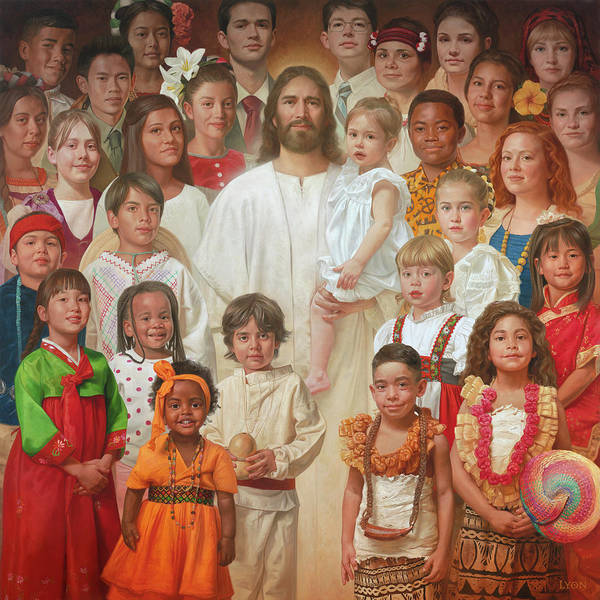
    What’s more disrespectful to the price Christ paid for ALL of us than saying Christ’s Atonement doesn’t cover the billions of people – billions of babies and children, that have died without baptism? What a corrupt and sad view of the Atonement of Jesus Christ to say that it doesn’t protect innocent children who never could be baptized. He died for all of us.

    So, I would like to share beautiful truths as revealed by God to his prophets in this dispensation that pertain to little children, salvation, the resurrection, and Christ’s Atonement.

    The following are some frequently asked questions concerning the status of children who die before the age of accountability.

    Are they automatically saved? 

    Elder Bruce R. McConkie wrote: “To this question the answer is a thunderous yes, which echoes and re-echoes from one end of heaven to the other. Jesus taught it to his disciples. Mormon said it over and over again. Many of the prophets have spoken about it, and it is implicit in the whole plan of salvation. If it were not so the redemption would not be infinite in its application. And so, as we would expect, Joseph Smith’s Vision of the Celestial Kingdom contains this statement: ‘And I also beheld that all children who die before they arrive at the years of accountability are saved in the celestial kingdom of heaven.’ [D&C 137:10.]

    “It is sometimes asked if this applies to children of all races, and of course the answer is that when the revelation says all children it means all children. There is no restriction as to race, kindred, or tongue. Little children are little children and they are all alive in Christ, and all are saved by him, through and because of the atonement. …

    “They are saved through the atonement and because they are free from sin. They come from God in purity; no sin or taint attaches to them in this life; and they return in purity to their Maker. Accountable persons must become pure through repentance and baptism and obedience. Those who are not accountable for sins never fall spiritually and need not be redeemed from a spiritual fall which they never experienced. Hence the expression that little children are alive in Christ.…

    “Truly it is one of the sweetest and most soul-satisfying doctrines of the gospel! It is also one of the great evidences of the divine mission of the Prophet Joseph Smith. In his day the fiery evangelists of Christendom were thundering from their pulpits that the road to hell is paved with the skulls of infants not a span long because careless parents had neglected to have their offspring baptized. Joseph Smith’s statements, as recorded in the Book of Mormon and latter-day revelation, came as a refreshing breeze of pure truth: little children shall be saved. Thanks be to God for the revelations of his mind where these innocent and pure souls are concerned!” (“The Salvation of Little Children,” Ensign, Apr. 1977, pp. 4, 7.)

    Even though little children will be saved, does that mean they will have eternal life?

    Elder McConkie explained: “Eternal life is life in the highest heaven of the celestial world; it is exaltation; it is the name of the kind of life God lives. It consists of a continuation of the family unity in eternity. … children will be saved in the celestial kingdom. Salvation means eternal life; the two terms are synonymous; they mean exactly the same thing. Joseph Smith said, ‘Salvation consists in the glory, authority, majesty, power and dominion which Jehovah possesses and in nothing else.’ (Lectures on Faith, pp. 63–67.) We have come to speak of this salvation as exaltation—which it is—but all of the scriptures in all of the standard works call it salvation. I know of only three passages in all our scriptures which use salvation to mean something other and less than exaltation.” (“Salvation of Little Children,” p. 5.)

    President Joseph Fielding Smith added:

    “The Lord will grant unto these children the privilege of all the sealing blessings which pertain to the exaltation.

    “We were all mature spirits before we were born, and the bodies of little children will grow after the resurrection to the full stature of the spirit, and all the blessings will be theirs through their obedience, the same as if they had lived to maturity and received them on the earth.

    “The Lord is just and will not deprive any person of a blessing, simply because he dies before that blessing can be received. It would be manifestly unfair to deprive a little child of the privilege of receiving all the blessings of exaltation in the world to come simply because it died in infancy.…

    “Children who die in childhood will not be deprived of any blessing. When they grow, after the resurrection, to the full maturity of the spirit, they will be entitled to all the blessings which they would have been entitled to had they been privileged to tarry here and receive them.” (Doctrines of Salvation, 2:54; see also Mosiah 15:25.)

    Why do some children die and others live? Are those who die better off than those who remain in mortality?

    Elder McConkie wrote:

    “We may rest assured that all things are controlled and governed by Him whose spirit children we are. He knows the end from the beginning, and he provides for each of us the testings and trials which He knows we need. President Joseph Fielding Smith once told me that we must assume that the Lord knows and arranges beforehand who shall be taken in infancy and who shall remain on earth to undergo whatever tests are needed in their cases. This accords with Joseph Smith’s statement: ‘The Lord takes many away, even in infancy, that they may escape the envy of man, and the sorrows and evils of this present world; they were too pure, too lovely, to live on earth.’ (Teachings, pp. 196–97.) It is implicit in the whole scheme of things that those of us who have arrived at the years of accountability need the tests and trials to which we are subject and that our problem is to overcome the world and attain that spotless and pure state which little children already possess.” (“Salvation of Little Children,” p. 6.)

    Will children who die before the years of accountability ever be tested in the way that other mortals are tested? 

    President Joseph Fielding Smith said: “Satan cannot tempt little children in this life, nor in the spirit world, nor after their resurrection. Little children who die before reaching the years of accountability will not be tempted.” (Doctrines of Salvation, 2:57; see also D&C 29:4745:58.)

    What will happen to children in the Resurrection?

    President Joseph F. Smith wrote: “Joseph Smith taught the doctrine that the infant child that was laid away in death would come up in the resurrection as a child; and, pointing to the mother of a lifeless child, he said to her: ‘You will have the joy, the pleasure, and satisfaction of nurturing this child, after its resurrection, until it reaches the full stature of its spirit.’ There is restitution, there is growth, there is development, after the resurrection from death. I love this truth. It speaks volumes of happiness, of joy and gratitude to my soul. Thank the Lord he has revealed these principles to us.” (Gospel Doctrine, pp. 455–56.)

    Thank the Lord He has revealed these principles to us. Amen.

  • Of Goodly Parents

    Of Goodly Parents

    Over Christmas, I watched family home videos with my family. We played a video from 1994, a few months after my sister Adie was born. I was four at the time. I was singing to Adie.

    Early in the video, I was singing Humpty Dumpty, Old Mcdonald, and Jack and Jill. Then I started singing Follow the Prophet.

    Adam was a prophet, first one that we know.

    In a place called Eden, he helped things to grow.

    Adam served the (King!) Lord by following his ways.

    We are his descendants in the latter days.

    Of course, at that age, I stumbled through most of the song and got many prompts. King was my confident guess at who Adam served. My answer was as right as the correct lyric anyway.

    My mom joked while my whole family was gathered around watching, “See, we did teach you about the Bible.”  We laughed.

    I don’t remember singing that song to Adie when I was four, obviously. But that song is so ingrained in my heart and soul, it’s a part of my being. Watching that video, it’s a physical, emotional, and spiritual remembering. As an adult now, thinking about that song, it feels like it’s always been a part of me. After watching that quick video, I know why.

    Parenthood is infinite tiny moments. I know that every day provides thousands and thousands of opportunities to have an impact on Ivy and Sage. I’m grateful for the thousands and thousands of moments my parents impacted me.

    My parents have flaws just as I do. I pray to Heavenly Father that, despite my many shortcomings and flaws, I can have a positive impact on Ivy and Sage, just as my parents had on me.

    If you’ve read the themes in my writing, you know there are three things ingrained in me that I know to be true.

    1. I have a divine inheritance; I am a child of God.
    2. I am loved.
    3. I am watched over.

    I hope to ingrain these same truths into the hearts and minds of Ivy and Sage. I wish to remind them here of what their souls already know. That is the greatest gift I could give them.