Tag: christianity

  • The Gift of Tongues and a Temple in Guatemala

    The Gift of Tongues and a Temple in Guatemala

    I recently learned a little about the Cessationist movement in Christianity. I learned that they believe many things have ceased in modern Christianity. One of the things they think has ceased is the gift of tongues.

    The Church of Jesus Christ is alive and well as is the gift of tongues.

    The most obvious example of the gift of tongues in Christ’s modern church is shown in the millions of 18-24 year-olds learning and speaking foreign languages to spread the gospel.

    I recently read of a true miracle in tongues, and I wanted to share.

    Allen Christenson writes the following:

    “I was privileged to help in the translation of the temple ceremony into K’iche’, a dialect of the Mayan Indians of Guatemala. In 1991, the Church brought up seven choice native Maya members of the Church to record the ceremony for the first time in their own language. Most had never traveled outside their own country. They arrived when we had a bad cold snap and snow storms last January. In a country where it never snows that was quite a shock. They wondered whether the flakes were volcanic ash, and bundled up with layer upon layer of clothing so that the snow would have no chance of touching their skin.

    The Maya today are for the most part illiterate, particularly in their native tongue. It has only been in recent years that some members of the church have begun to learn to read and write in the Maya language, so that they can read the scriptures and other church publications. This is a great tragedy, because until about 500 years ago the Maya were the most literate people in the Americas, preserving their history and culture with a sophisticated hieroglyphic script in hundreds of folded screen books. The Spanish Conquest in the early sixteenth century was a devastating blow to Maya literacy in Mexico and Guatemala. Great numbers of hieroglyphic texts were burned in an attempt to eradicate “idolatrous paganism.” Native scribes were singled out for persecution to such an extent that within one hundred years, the art of writing had nearly disappeared from among the Maya people. When I was a missionary in the Guatemala highlands, no one I knew could read in Maya. Because I opened most of the areas I worked in, the church was in its infancy and there were no members to prepare for the temple. The closest temple in fact was in Mesa, Arizona, and for a people who earned at best a dollar a day, a trip there was a goal which was simply impossible to even think about.

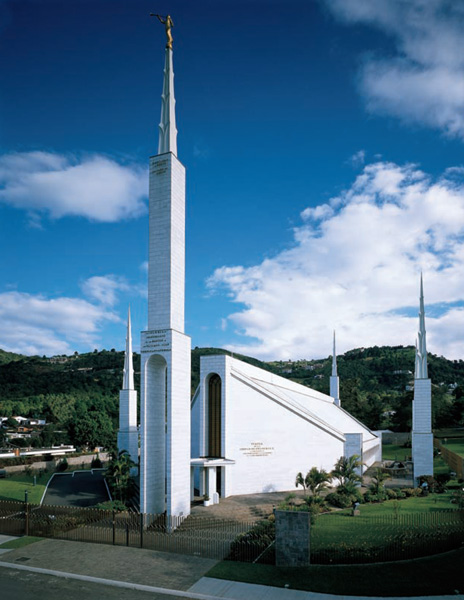
    Today there is a temple in Guatemala City. The Maya who were brought up to record the temple ceremony for their people had all taken out their own endowments and considered it a great privilege to have a part in bringing the blessings of the endowment to their people in a language that they could understand.

    For the first few days, the Maya were given time to read through their parts, review videotapes of the ceremony to practice their timing and voice inflections, and to prepare for the actual recording. It soon became apparent what an impossible thing we were asking them to do. Most of their homes had no electricity, and the rows of machines and blinking lights were frightening and intimidating. None could read any better than at a grade school level, sounding out each word at a time. Just getting out the words was a frustrating and time-consuming task. We frankly didn’t think that it would be possible for them to become proficient enough to read the text rapidly, much less instill in the words the spirit that such a sacred ceremony demands.

    I will never forget the first day we started to record. We put these poor, humble people in a little glass booth, surrounded by technical gadgets, microphones, and earphones and asked them to relax and speak the words with naturalness and the proper spirit. They were so frightened that they could not speak more than a few words at a time, and those were unusable.

    We all went back to our hotel rooms discouraged and felt that we were going to fail. The next day, I noticed a change in the Maya. They were unusually quiet and serious, but somehow they didn’t seem to be as afraid as the day before. When the first brother, who was assigned to read the part of Elohim, was called on to record his part, he stepped into the recording booth without hesitation. The window was set so high in the booth that we could barely see him, being only 5’4″ tall. He put on his earphones, closed his eyes and looked up momentarily, and then said quietly that he was ready. When I gave him his cue he began to speak in the most beautiful, flowing Maya that I had ever heard spoken. He read through three full pages without error before we had to stop him to check the sound level. When I cued him to stop, He asked if he had done something wrong and looked so apologetic that it broke my heart. I assured him that we just had to do some technical things and that he had done beautifully. The spirit was so strong that it was a physical presence that we all could feel. The emotion of it was overwhelming. The brother in charge of the recording instruments turned to me afterward and simply said, “We have just witnessed a miracle, one of the strongest manifestations of the gift of tongues that I have ever witnessed. His voice, inflection, and timing were as good as the best professional actors that we have in English, Spanish, or other of the more established languages.” When I asked this Mayan brother what had happened since the day before, he smiled and said that he knew the enormous importance of the temple endowment for his people and knew that he couldn’t do it on his own. He and the others had tried as hard as they could but that the words just didn’t come. So he had prayed last night to his Father in Heaven and told him that he just couldn’t do it without His help. He didn’t want his people for generations to come to hear his voice and weakness, but the voice of Elohim. He asked if his Father in Heaven would please come to that sound booth with him and speak for himself. He felt assured and that morning he never doubted that God would be there with him. One by one, each of the other Maya read through their parts with similar power and faith. [Allen J. Christenson, “Account of the Recording of the Temple Ceremony into K’iche’ Maya in 1991,” Personal Communication to Alan C. Miner]

    This is one example of a miracle. Miracles are rarely widely spread or publicized. Sometimes they are quiet, personal experiences. Sometimes the world never knows. But if you seek them out, if you look for them, they are there. Miracles happen every day in the world. Miracles happen every day in Christ’s church. Christ’s church is alive in the Church of Jesus Christ of Latter-day Saints. Miracles have not ceased. The gift of tongues is alive and active.

    Mormon 9:20

    And the reason why he ceaseth to do miracles among the children of men is because that they dwindle in unbelief, and depart from the right way, and know not the God in whom they should trust.”

    Moroni 7:29

    And because he hath done this, my beloved brethren, have miracles ceased? Behold I say unto you, Nay; neither have angels ceased to minister unto the children of men.

    God will never cease to be a God of miracles.
  • What is Hell?

    What is Hell?

    Studies have shown that humans will prefer pain over boredom. We as humans need stimulation. When left in a room with the options being complete boredom or a painful electric shock, many will choose the electric shock just to feel something.

    You can watch this YouTube video for an interesting study on this:

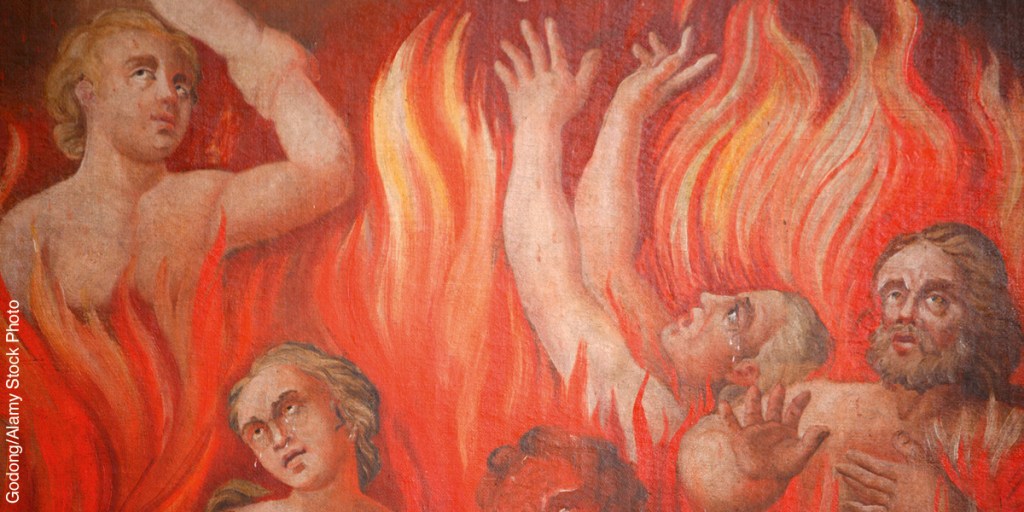
    There is this idea that perpetuates throughout Christianity that hell is fire and pain. I don’t think that’s actually the case. I think hell is boredom, stagnation, lack of growth, lack of purpose, selfishness to the point of looking only at oneself. I think hell is being stuck.

    Mark 9:43-44 reads:

    43 And if thy hand offend thee, cut it off: it is better for thee to enter into life maimed, than having two hands to go into hell, into the fire that never shall be quenched: 

    44 Where their worm dieth not, and the fire is not quenched.

    Doctrine and Covenants 76:43-44 reads:

    43 Who glorifies the Father, and saves all the works of his hands, except those sons of perdition who deny the Son after the Father has revealed him. 

    44 Wherefore, he saves all except them-they shall go away into everlasting punishment, which is endless punishment, which is eternal punishment, to reign with the devil and his angels in eternity, where their worm dieth not, and the fire is not quenched, which is their torment-

    The word translated “hell” in Mark 9:43 is the Greek word Gehenna. Gehenna was a garbage dump in ancient Jerusalem.

    “Gehenna was located on the south end of Jerusalem and had been a site for pagan child sacrifices during Old Testament times (2 Kings 23:10). During Jesus’ lifetime, Gehenna had a constant fire burning to dispose of the waste that was left there—from regular household trash to the carcasses of animals and convicted criminals (Jeremiah 7:31–33). Because of this, the Jews considered Gehenna to be a cursed place full of filth.” (See this link for more information).

    This is where we get the reference in Mark 9:44 “fire is not quenched.” Gehenna or hell was literally a place where fire never stopped, and I believe this is where the popular idea of hell being a place of fire comes from. I think the more critical point in those verses is the phrase, “Where their worm dieth not.” This is not referring to a literal worm, as I don’t believe the endless fire represent literal fire in hell. I believe the fire represents never ending torment.

    But what is this torment? Is it physical pain? Worse.

    As I mentioned earlier for that study, people would prefer any sensation to that of no sensation. I think the endless torment is being stuck for eternity.

    I read a book that once described what hell might be like. It considered hell to be like being a worm deep within mud. The worm squirms around, with no purpose or meaning. The worm can’t see, it can’t feel, it can’t think. It’s getting nowhere. It endlessly squirms in the mud.

    I believe the worm that dieth not is our eternal soul. What could be worse than an eternity of… nothing? What could be worse than being the equivalent of a worm squirming within mud, forever?

    Just the thought should terrify you.

    God has provided us a plan of growth and progression. He has provided us a way to become like Him. Those who reject Him will be stuck, forever. There will be no progressing for them. Their “worm dieth not.”

    I am grateful to God for all that He has given me and all that He has afforded me. I know that because He loves me He has allowed me to grow and progress in eternity. Not to be stuck and stagnant. Growth. I am grateful for that gift He has provided me. 

  • Profession of Faith

    Profession of Faith

    *Before I post this I want to unequivocably say that I respect any church and its teachings, especially if they bring people and families closer to Jesus Christ. I don’t get to interact with teenagers much outside of coaching, but from what I’ve seen with the girls I’ve gotten to coach at two catholic schools, they are kind, compassionate, intelligent, awesome young women.

    When I started coaching basketball at my second catholic high school, I had to sign a Profession of Faith.

    I started reading through the document.

    I believe in one God, the Father almighty, maker of heaven and earth, of all things visible and invisible.”

    Okay, yeah, I can get behind that, we’re off to a good start.

    “I believe in one Lord Jesus Christ, the Only Begotten Son of God, born of the Father before all ages.”

    We’re good here. This is going to be easier than I thought!

    “God from God, Light from Light, true God from true God, begotten, not made, consubstantial with the Father;”

    Wait, hold on, what’s that word mean?

    Consubstantial: “Of the same substance or essence (used especially of the three persons of the Trinity in Christian theology).

    Uh oh.

    But wait. Didn’t I just say I believe in one God, the Father almighty? Also, I believe in one Lord Jesus Christ, the Only Begotten Son of God?

    “through him all things were made. For us men and for our salvation he came down from heaven, and by the Holy Spirit was incarnate of the Virgin Mary, and became man. For our sake he was crucified under Pontius Pilate, he suffered death and was buried, and rose again on the third day in accordance with the Scriptures. He ascended into heaven and is seated at the right hand of the Father.”

    Yes! Exactly. Seated at the right hand of the Father. Okay, we’re back on track again.

    “He will come again in glory to judge the living and the dead and his kingdom will have no end. I believe in the Holy Spirit, the Lord, the giver of life, who proceeds from the Father and the Son, who with the Father and the Son is adored and glorified, who has spoken through the prophets.”

    Yeah! Okay, this is great!

    “I believe in one, holy, catholic and apostolic Church.”

    Uh oh.

    “I confess one Baptism for the forgiveness of sins and I look forward to the resurrection of the dead and the life of the world to come. Amen.”

    I wholeheartedly agree (does the Catholic Church have one baptism? I personally don’t know, I’m curious… to Google we go… quick Google search says no, the Catholic Church does not have one method of baptism).

    “With firm faith I also believe everything contained in God’s word, written or handed down in tradition and proposed by the Church, whether by way of solemn judgment or through the ordinary and universal magisterium, as divinely revealed and calling for faith.”

    Another word I have to look up, let’s see.

    Magisterium: “the teaching authority of the Roman Catholic Church, especially as exercised by bishops or the Pope.”

    Hmm.

    I also firmly accept and hold each and every thing that is proposed definitively by the Church regarding teaching on faith and morals.”

    Uhm, I’m not sure. But I hope we can agree on principles of faith and morals.

    “Moreover, I shall always teach in accord with the Official Magisterium of the Church as it is proclaimed by the Pope and the College of Bishops.

    I then re-read it to see if I could make it work. I kept coming back to this:

    “God from God, Light from Light, true God from true God, begotten, not made, consubstantial with the Father; through him all things were made. For us men and for our salvation he came down from heaven, and by the Holy Spirit was incarnate of the Virgin Mary, and became man. For our sake he was crucified under Pontius Pilate, he suffered death and was buried, and rose again on the third day in accordance with the Scriptures. He ascended into heaven and is seated at the right hand of the Father.

    How can Christ be consubstantial with the Father and then sit on His right hand?

    “I believe in one, holy, catholic and apostolic Church.”

    That one I couldn’t wiggle around. I don’t believe that.

    This wasn’t going to work. I couldn’t sign this. I so looked forward to coaching at this new school. I looked forward to continuing our work as a coaching staff. I looked forward to a new group and new challenges, though I’d miss my girls at St. Mary’s so much. I was excited to coach closer to home. I was excited to start taking Ivy to practice with me so she could hopefully start to develop a love for basketball like I had.

    I had to call Patricia and tell her we had a problem, that I couldn’t sign the Profession of Faith.

    I picked up my phone to call Patricia to see if there were any options available to us. I hit dial. The phone rang. I scrolled down a little bit more on my  screen and saw this:

    “FOR NON-CATHOLICS

    Roman Catholic Diocese of Phoenix
    Division of Education and Evangelization
    Profession of Faith

    I accept and hold each and every thing that is proposed definitively by the Catholic Church regarding teaching on faith and morals.

    Patricia answered.

    “Never mind, we’re in the clear!”

    She was confused. I explained. All I had to do was enter the church I belonged to and I was good.

    How grateful I was for that last part, that I could submit my belief and move on. Was I prepared to refuse to sign that Profession of Faith? Yes, I was. I could not deny what I know. I couldn’t sign something I didn’t believe to be true.

    As I thought more about this, I thought more about the United States of America. How grateful I am to belong to a free country. How grateful I am to have the first amendment of the U.S. Constitution which grants me freedom of religion. How grateful I am that, even at a Catholic high school, which I just detailed might have some strong opinions about my beliefs, I can still click “other religion,” enter what church I belong to, and an institution with different beliefs accepts that. I am grateful for different beliefs. I am grateful for different opinions. I am grateful for debate and disagreement – as long as it is done with love. I am grateful for freedom.

    I’ve now coached three seasons at this new school. Of course there have been no issues. I hope through my example and love I can teach these girls about becoming great young women. I don’t proselytize them.

    It’s ended up being an amazing transition and I’m glad I’ve gotten to coach at a great Catholic high school. Andddd I checked with Patricia before posting this, just to be safe.

  • Lazy Christianity

    Lazy Christianity

    I wrote this in 2022. As I re-read it before posting, I cringed a little. I wondered if I should post it. It’s a little aggressive. I felt this way in 2022. We all go through ups and downs in our faith and devotion, and as I feel like a lazy Christian at this very moment, I think it’s all that more important to post. This is a call to repentance for myself.

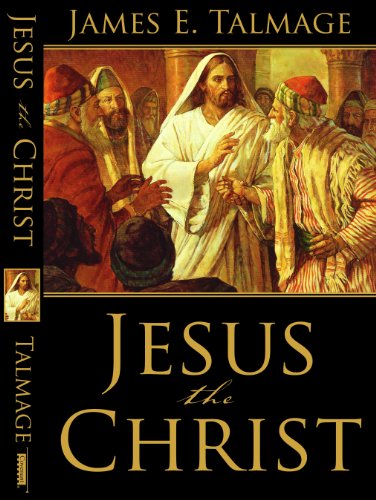
    If you don’t read Jesus the Christ by James E. Tallmadge at least twice in your life, you’re not a real Christian.

    Of course, this is an exclamatory statement. I say it to make a point. 

    I hear so many people profess Christ. Sometimes when this book is mentioned people will say, “It’s so long.”

    Jesus Christ literally suffered the pain and suffering for your sins and mistakes, but the book is too long?

    Before anyone gets mad at me for being high and mighty, let me be clear: I have not read Jesus the Christ twice. But I plan to.

    I think that’s the point. We’re all trying to be better “Christians” or followers of Christ, but, really, what effort are we putting in?

    Are we serving others? Are we thinking about Him? Are we trying to be like Him? Are we reading about Him?

    I think we need to put in more effort.

    On that note, if you’re a member of the Church of Jesus Christ of Latter-day Saints, and you haven’t read the Book of Mormon cover to cover at least two times: get to reading. This is latter-day scripture. Joseph Smith died for this book. Everything we have been given is because of this book.

    We must strengthen our testimonies of Christ as these days get darker and the second coming approaches.

    When Christ returns, will you know Him?

    Will He know you?

  • Salt of the Earth

    Salt of the Earth

    In studying the scriptures, it can be beneficial to have an understanding of the cultural background of those people and situations we read about. I recently read something that added a whole new perspective to the phrase “salt of the earth.”

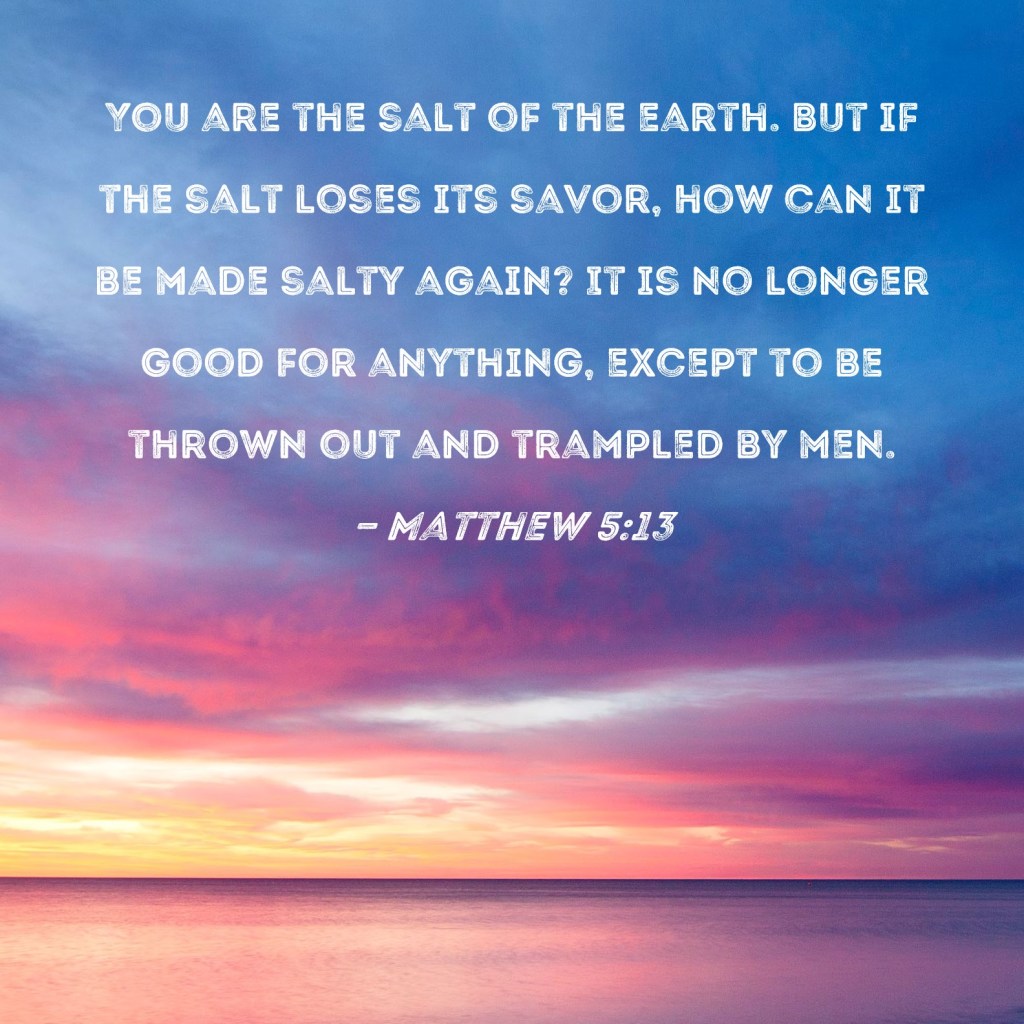
    Matthew 5:13 reads

    “Ye are the salt of the earth: but if the salt have lost his savour, wherewith shall it be salted? It is thenceforth good for nothing, but to be cast out, and to be trodden under foot of men.”

    3 Nephi 12:13 reads

    “Verily, verily, I say unto you, I give unto you to be the salt of the earth; but if the salt shall lose its savor wherewith shall the earth be salted? The salt shall be thenceforth good for nothing, but to be cast out and to be trodden under foot of men.”

    I don’t know about you, but when I think about salt the first thing I think about is taste. Especially when the word “savor” is used. But this is NOT what those hearing these words come from the source (Jesus Christ) would have thought about.

    In using the metaphor of us being “the salt of the earth”, with my understanding of taste, I would think about being a representative of the gospel to help it “taste” good to others. That by seeing the way I live, others can see that the Gospel is good. Another thought that comes to my mind about salt is its preservative properties. This metaphor could be looked at as those who are the salt of the earth conserve and preserve the Gospel, keeping it active and alive.

    How would the ancient Israelites and inhabitants of ancient America have viewed this metaphor? Turns out, the primary purpose of salt to these cultures would have been its ability to impact the smell of sacrifices.

    The commentary I read stated:

    “When sacrifices were offered upon the altars of ancient Israel, the Israelites did not give the Lord the flesh of the animal, the fruit of the ground, or the ashes or smoke of such sacrifices. The acceptable part of the offering presented to the Lord was the smell, ‘a sweet savour unto the Lord’ (Leviticus 1:17). (Many translations have the word “aroma” in the place of “savour”). In the Bible, the word savour most often refers to the pleasant smell of burning sacrifice in the temple. To ensure that the smell would be sweet, the Mosaic law required that the offering be liberally sprinkled with salt.

    “The scent of an unsalted burnt offering would be the stench of scorched flesh. But if the meat were generously salted, the odor would be quite different, ….. due to the reaction of the salt upon the cells that compose animal flesh. Under high-salt conditions, cellular fluid rapidly escapes the cells to dilute the salts outside cell membranes. ………When accentuated by heat, these fluids cause a sweet savour to emanate….

    “In this context the charge to be the ‘salt of the earth’ takes on marvelous significance. The Lord said, ‘I give unto you to be the salt of the earth; but if the salt shall lose its savour wherewith shall the earth be salted?’ (3 Nephi 12:13). The Savior’s audience no doubt understood the law of Moses and the close connection between salt and acceptable sacrifice (emphasis added).

    “It is clear that under the new covenant the followers of Christ, as “salt,” are responsible for extending gospel blessings to the whole earth. “When men are called unto mine everlasting covenant,” the Lord explains, “they are accounted as the salt of the earth and the savor of men” (D&C 101:39). It is our privilege and blessing to lovingly lead our brothers and sisters to Christ, helping them receive their covenant blessings. As we do so, we become the figurative salt that makes it possible for them to offer the acceptable sacrifice of a broken heart and a contrite spirit. In addition, our own covenant sacrifice of time, talents, and means is pleasing to the Lord.”

    The commentary concludes with this statement:

    “So how do we become the salt of the earth? The Apostle Paul points out that charity is a key to this process: “Be ye therefore followers of God, as dear children; And walk in love, as Christ also hath loved us, and hath given himself for us an offering and a sacrifice to God for a sweet smelling savour” (Ephesians 5:1-2).

    This gives the analogy of salt of the earth a whole new meaning.

    Without the gospel of Jesus Christ, and those keeping the covenants of God on earth, there is no acceptable sacrifice on the earth.

    I’ve written before about the One True Church and why it’s important. Our covenants are important.

    Malachi 4:5-6 reads

    Behold, I will send you Elijah the prophet before the coming of the great and dreadful day of the Lord:

    And he shall turn the heart of the fathers to the children, and the heart of the children to their fathers, lest I come and smite the earth with a curse.

    Modern revelation gives us more insight into this curse.

    D&C 128:18 reads

    the earth will be smitten with a curse unless there is a welding link of some kind or other between the fathers and the children, upon some subject or other—and behold what is that subject? It is the baptism for the dead. For we without them cannot be made perfect; neither can they without us be made perfect. Neither can they nor we be made perfect without those who have died in the gospel also; for it is necessary in the ushering in of the dispensation of the fulness of times, which dispensation is now beginning to usher in, that a whole and complete and perfect union, and welding together of dispensations, and keys, and powers, and glories should take place, and be revealed from the days of Adam even to the present time.

    We are the salt of the earth. We are the enabling welding link, through the power and priesthood of Jesus Christ Himself, that allows the sacrifices of this world to be of any worth, of a sweet savor, to God Almighty.

    What a beautiful and powerful responsibility. What a calling. Without the gospel our sacrifices are for naught. Our covenants are important.

    We must be the salt of the earth to save it from the curse, to make our sacrifices acceptable to God, to link ourselves to our past generations, and to one day come before God, having fulfilled our salt-like duties. To preserve, save, and help the earth on its eternal trajectory. What a sobering an humbling thought.

    As I always say, I am grateful for the Church of Jesus Christ of Latter-day Saints. I am grateful for the priesthood attached to it. I am grateful that we can help in God’s glorious plan.