Tag: christianity

  • A Kingdom Divided

    A Kingdom Divided

    The first step for Zion is to stop distinguishing ourselves from one another. We are first Children of God.

    President Russell M. Nelson has been clear about the three primary identities we should all focus on for ourselves. Those three identities are:

    First – children of God.

    The first identity is for every person on the face of the earth. Whether they realize it or not, every person is a child or God. The second and third identities are for members of the Church of Jesus Christ of Latter-day Saints. But this does not exclude anyone. The second and third identities are an invitation to the world.

    The second identity is child of the covenant.

    The third identity is disciple of Jesus Christ.

    President Nelson has stressed that anything we give precedence over these three identities distracts from our true potential. As children of God, children of the covenant, and disciples of Jesus Christ, we have a divine inheritance and royal home to return to. Any other worldly designation distracts from our ultimate goal of becoming everything we can be.

    Some of the other designations the world assigns include sexuality, status, race, and political affiliation. There are countless self-defined categories we assign ourselves. None of these things matter, they won’t matter at all when the veil is lifted, and we are reminded of what we always were.

    Zion are the pure in heart (D&C 97:21), Zion are one.

    All who believe in Christ are the children of Christ. But how is Zion established? How can there be unity in Christ given the divisive nature of the world and Christianity?

    A search for all the sects of Christianity brings up THOUSANDS of results. Thousands. How can one know the truth when there are so many claiming to be true? How can Christianity be united under Christ when there are thousands battling for attention, power, and patrons.

    How can God be a God of such confusion and disorder?

    In Luke 11:17 Jesus Christ says:

    Every kingdom divided against itself is brought to desolation; and a house divided against a house falleth.

    How would Jesus Christ feel about the state of the religion that espouses His name?

    I’ve heard it said that Christianity is united, despite its differences, in its faith in Christ. I think this is an admirable way to look at it. In fact, it’s how I try to look at it. It’s my opinion and belief that our faith in Jesus Christ is important and unites us. That said, what really unites us? What enduring principle is it that unites all Christians?

    Is it our belief in what Christ taught? There are a million different interpretations of what Christ taught.  

    Is it our belief in who Christ was? That couldn’t be a more divisive topic. Was He who He claimed to be? Was He the Son of God or wasn’t he?

    Is it our belief in the Atonement of Jesus Christ and what it accomplished? Again, there are different interpretations of Christ’s Atonement, why it was needed, and what it accomplished.

    Surely we can agree on Christ’s resurrection? Was Christ resurrected with His body or wasn’t He? Was there significance to Him eating fish with His disciples after His resurrection? Again, there is contention on this topic.

    What can Christianity be united on? It seems nothing.

    I believe the Church of Jesus Christ of Latter-day Saints provides the only solution to this problem. What Christianity can be united on is a connection to Jesus Christ. A real connection. Not a belief in Him, what He taught, or who He was. The connection must be real and tangible. The connection must be a welding link. The connection must have veracity on earth and in heaven (Matthew 18:18). That connection must be through a covenant.

    A covenant is a two-way promise.

    A covenant binds us to Him.

    When we get baptized, we promise to take upon us the name of Christ, and He becomes our shepherd. From that point on we are inseparably linked with Him.

    Latter-day Saints are a covenant people. The saints of God have always been covenant keepers.

    In the podcast Church History Matters, the hosts were speaking about the early history of temples in the Church of Jesus Christ. Something they said stood out to me as I’ve been working on writing this post.

    “…through the ordinances given to both men and women, living and dead, the human family is being knit or woven or let’s just use the word sealed together into one eternal holy order which we can call the family of God, we can call it the Kingdom of God, we can call it the Church of the Firstborn, we can call it the Celestial Kingdom, or simply the priesthood.”

    In the most recent General Conference of the Church of Jesus Christ of Latter-day Saints, Elder McCune of the Seventy said:

    Joy and eternal perspective come through being bound to the Savior by making and keeping covenants through Christlike discipleship.

    Adam, Abraham, Moses, and Peter; they made covenants with the great Jehovah and became His, and received of His power. Over time, they became more like Him. Over time they became one with Him. Enoch created Zion and was so connected to the Lord that he and his city were taken up to Him. This connection is made through covenants.

    What can unite Christianity? It is a covenant with Jesus Christ.

    Christ’s Church has temples where these covenants can be made.

    We must strive to be one with our brothers and sisters. We can only truly be one as we are united under one banner. The disjointed nature of Christianity is unacceptable. Covenants are needed. It is the banner of covenants with Jesus Christ that will unite Christianity, and nothing else. He died for us. In return, He asked us to believe in Him, follow Him, repent, and be baptized. That was His request of us. There is only one baptism that is acceptable to God the Father and that is the baptism with His authority in the name of His Son. No other baptism is acceptable to Him because it is a baptism not by His authority.

    I wish the Christian world could see that it is covenants that unite us to God. It is covenants that can re-unite us.

    I know as the Millenium approaches that one day all knees will bow and every tongue confess. At some future date the children of God will know and understand the covenants needed to unite the heavenly and eternal family.

    It is here for us now. But the world does not listen. Jesus was sent to this world, but He was not of it. This world struggles with the eternal nature of what God has in store for us. One day the world will have to understand what was always offered to us. What is offered to us is unity under Christ. Eternal families, eternal potential, eternal happiness, eternal inheritance. That is what will come when the world covenants to join with Jesus Christ and be Zion.


  • Ivy Goes Ministering

    Ivy Goes Ministering

    For those who don’t know, the Church of Jesus Christ of Latter-day Saints has an initiative we call “ministering.” The name has changed over the years, but it’s always been essentially the same thing. The concept is simple. Minister to one another, teach one another, visit with one other, check in on one another. Christ’s church should be a family and the ministering program is the way that the Church tries to keep its members connected, like a family should be connected.

    Ivy recently went with me on a ministering visit. This wasn’t Ivy’s first rodeo. She’s done her fair share of ministering in her years on this earth. What was interesting about this ministering visit was what happened after.

    One Saturday Ivy and I joined the missionaries meeting with a new friend of the church. He was on his way towards baptism. This was my first time meeting him. This person went on to get baptized and has since become a very good friend. So this was a significant visit with the missionaries.

    Afterward, Ivy and I dropped by a family’s home to say hi. I had never met this family. They didn’t know who I was. This was a true “cold” drop-in. They had two young boys under the age of ten and a brand-new baby girl.

    I knocked at the door and heard the normal shuffle going on behind it. The door was opened by two shirtless boys.

    “Hi, my name is Brayden, is your mom or dad home?”

    The younger one ran off yelling, “Dad!”

    The father came to the door, and I introduced myself. I then introduced Ivy to the two boys. We small-talked for a couple minutes, invited them to church, and that was it.

    On the way back to the car Ivy was, as is normal, full of questions.

    Why did we visit them?

    • Because they’re in our church and we want to check on them.

    That home was their church?

    • No, that was their home. But they go to our church, and we just invited them.

    When will they come to our church?

    • Hopefully tomorrow.

    On and on. Anyone who has been around a toddler knows what I’m talking about.

    The next day we went to church and Ivy was very disappointed when her new friends weren’t there.

    After church, we were preparing for our Sunday afternoon nap. As consistent as Ivy’s numerous questions is her desire to avoid a nap. She was giving us her normal fight before lying down.

    I finally said, “Ivy, you’ve been so good today, if you go take a good nap, when you wake up, we can do whatever you want.”

    I immediately worried about this open-ended promise I had given. What would she request? Surely her most common requests: a trip to Six Flags or Las Vegas.

    Ivy shocked me with her reply. After her nap, the thing she wanted to do more than anything – go see her new friends.

    I’ve thought a lot about this.

    What was it about that visit that made Ivy’s day?

    You know what I think. I think her little, pure spirit realized she just got to do something special. And she wanted to do it again.

    She wanted more than anything in the world, whether she fully realized it or not – more than a trip to Las Vegas to see family or a fun-filled trip to Six Flags – more than either of those things, she wanted to go ministering. Ivy’s spirit knew the importance of ministering.

    Sometimes I wish we adults could remember the purity of that desire – to minister to one another, teach one another, visit with one another, check in on one another, love one another.

    I saw in Ivy what we all seem to forget. Supporting those around us – ministering – is more important than anything. Even a trip to Six Flags.

  • Impactful Moments

    Impactful Moments

    In Gravity of God, I wrote about how God is the center of our universe and how His faith and His action holds it all together. I discussed how us being here is an opportunity for us to test how we will use our faith and actions to influence and impact people.

    Will we have a God-like influence of love, help, support, giving, charity, and selflessness to those around us? Or will we use our influence to be more in Satan’s camp of selfishness, hate, judgment, pride, and animosity?

    Our actions matter. We’re here to see how we’ll use the talents and gifts we’ve been given.

    Some moments carry more weight than others.

    I believe everyone we interact with in this life is meant to teach us something. Do you consider the interactions you have to be significant? Do you believe the things that happen to you have meaning? How about the things you do to others?

    I believe when someone is unkind to me here for any reason – they’re here to teach me something.

    I believe when someone does something I disagree with – they’re here to teach me something.

    I believe when someone is kind to me or a good example to me – they’re here to teach me something.

    All these moments matter, and some moments have lasting importance.

    There are so many mundane and average moments in a day. I’m talking about the, “How are you today?” “Good.” “Good.”

    Then there are conversations that change our worldviews, make us think, or expand our horizons. There are some conversations that make us think about eternity. There are some conversations that prepare us for eternity.

    I’ve been given so much in this life.

    I know where I come from, why I’m here, and where I’m going, while so many around me don’t have these answers. Part of the reason I think I’m here and why I’ve been given so much is so that I can share it with others. If everyone around me is asking the important question – why am I here? And I know the answer, and I’m not sharing it with them, then I’m the most selfish person there is.

    Why do you think I put the time and effort into writing this? One day I want to tell God I tried my best to share what He gave me.

    Anyways.

    There is one topic that can be brought up in any conversation and will immediately change the moment from mundane and borderline meaningless to extraordinarily impactful and important. That topic is God.

    I was at a bachelor party once. We went to Palm Springs for a long weekend. Got a house. Played a lot of pool and video games. The rest of the party played golf. I found ways to fill my time while they played golf.

    There were two conversations I had that weekend that were memorable and impactful.

    While playing pool one night, somehow religion got brought up. I’m sure I helped us into that direction one way or another. Me and another guy in the group who I didn’t know very well started talking about eternity, church, and the gospel.

    That conversation was years ago. And seemingly nothing came about from it. But I still remember what that guy said at one point. He said, “When God gets brough up, the conversation changes. It becomes real. Even if it’s slightly or fully contentious, it’s still good if God is in the conversation.”

    He was so right, and it’s the reason I’m writing this.

    He probably doesn’t consciously remember that conversation. But I believe his spirit does. I really believe we keep a record of all we hear, see, and learn here on earth. And one day he’ll see that moment again and I hope it was as impactful as it felt.

    The other conversation that happened was on the drive back. I was in the car with the groom to be and a friend.

    We were talking about the upcoming wedding and what that meant, the topic of marriage, fidelity, vows, our bodies, drinking, habits, and growth were discussed. I know those topics sound wide-ranging. It was a long drive.

    I came out of that conversation feeling like we’d talked about something so important.

    Every mundane conversation is exactly that, mundane, until God is brought up.

    Have more meaningful conversations.

  • An Epistle from the New Testament Apostles

    An Epistle from the New Testament Apostles

    I read a book titled An Epistle from the New Testament Apostles.

    A sentence in the second paragraph of the preface caught my attention and helped me to read this book in a different light. That sentence read:

    “Imagine for a moment how you might feel if you were to go to your mailbox only to find there a long letter addressed personally to you from the First Presidency and the Quorum of the Twelve Apostles as those church leaders were constituted shortly after the resurrection of Christ.”

    Huh. Do we read the Bible in this way? Do we read the Bible as if Simon Peter, Paul of Tarsus, or John the Beloved were writing to us? How much more power comes from the words as we consider them a personal letter directly sent to us? What is the Bible really, but a letter sent directly to us from these prophets? You could also consider the Bible a letter sent to you from God.

    I’d like to share a part of this book that was especially significant to me. As I said, the book takes all the epistles of the prophets in the New Testament and categorizes them. It’s also worth noting that where there are multiple translations or interpretations of what may have been originally written, this book showed some of those different options. Keep that in mind when reading the quotes below. One category that stood out to me was titled:

    Unity in the Church

    From James 3:14-16 “But if ye have bitter envying and strife in your hearts, glory not/do not assume superiority over/ and lie not against the truth. This wisdom descendeth not from above, but is earthly, sensual, devilish. For where envying and strife is, there is confusion and every evil work.”

    Sounds like Christianity today.

    Another section.

    A Call to Unity in the Body of Christ

    From Ephesians 4:1-6 “I therefore, the prisoner of the Lord, beseech you that ye walk worthy of the calling wherewith ye are called, With all lowliness and meekness, with longsuffering, forbearing one another in love; Endeavouring to keep the unity of the Spirit in the bond of peace. There is {In} one body, and one Spirit, even as ye are called in one hope of your calling; One Lord, one faith, one baptism, One God and Father of all, who is above all, and through all, and in you all.” 

    Ephesians 4:11-15: “And he gave some, apostles; and some, prophets; and some, evangelists; and some, pastors and teachers; For the perfecting of the saints, for the work of the ministry, for the edifying of the body of Christ: Till we in the unity of the faith, all come and of {to} the knowledge of the Son of God, (MISSING ERASED CONTENT FROM KJV). That we be no more children, tossed to and fro, and carried about with every wind of doctrine, by the sleight of men, and cunning craftiness, whereby they lie in wait to deceive, But speaking the truth in love, may grow up into him in all things, which is the head, even Christ.”

    Unity.

    I point out the lack of it in Christianity not to try to “dispute” or to create “contention” but to point out the obvious.

    It’s interesting the first things Jesus Christ did when he appeared to His other flock in the Americas.

    1. He proclaims His Atonement, announcing that He accomplished what the prophets said would be fulfilled, announcing that He can save His people.
    2. He ministers to His people one by one. They are each individually allowed to come up and feel the wounds in His hands, feet, and sides.
    3. After the people cry out “Hosana!” literally, “God save us” or “Save now, we pray,” Jesus Christ sets forth the mode of baptism, the way He can save them.

    From here Christ’s complete focus is on unity. He elaborates on the oneness of Himself, God the Father, and the Holy Ghost.

    Then He says (3 Nephi 11:28-30), “And according as I have commanded you thus shall ye baptize. And there shall be no disputations among you, as there have hitherto been; neither shall there be disputations among you concerning the points of my doctrine, as there have hitherto been. For verily, verily I say unto you, he that hath the spirit of contention is not of me, but is of the devil, who is the father of contention, and he stirrith up the hearts of men to contend with anger, one with another. Behold, this is not my doctrine, to stir up the hearts of men with anger, one against another; but this is my doctrine, that such things should be done away.”

    May we all avoid disputations and contention. May we always serve with meekness, longsuffering, and love. I hope that one day Christianity can be unified in our faith in Jesus Christ. That will likely not come until the millennium, when we can all look to who we serve, and know without a doubt that we know Him. But we can do our part today to not let the devil have power over us. We can do our part by removing contention and argument from our lives.


  • Plan of Salvation and What Christianity is Missing

    Plan of Salvation and What Christianity is Missing

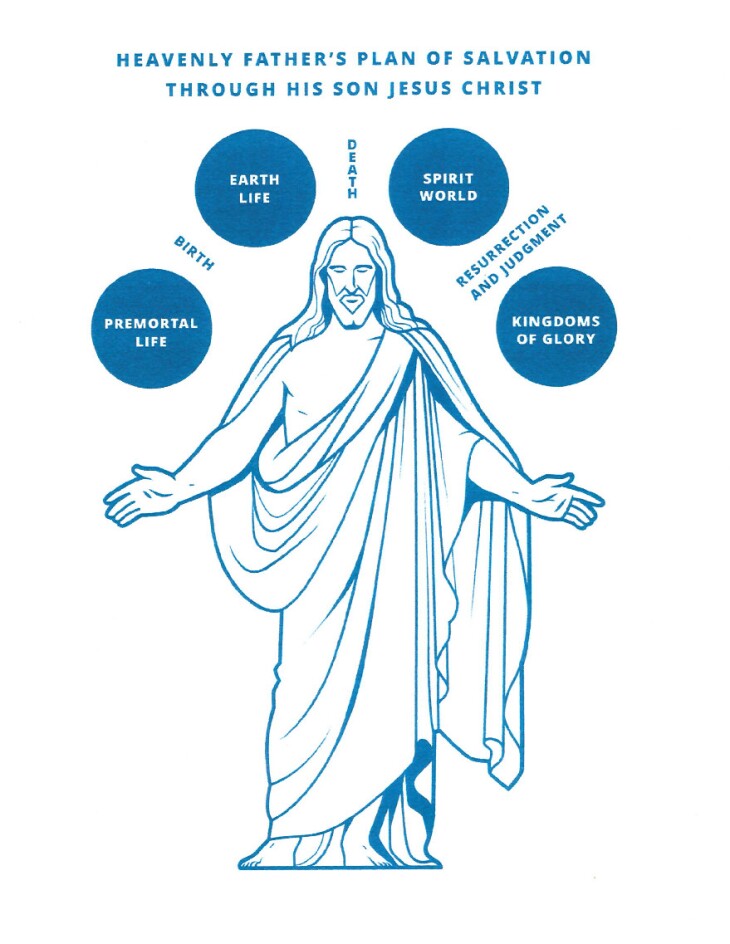
    Outside of the Church of Jesus Christ of Latter-day Saints, what does Christianity believe about the after-life? Generally speaking, Christianity believes that we are born on earth, live our lives, die, are judged, and assigned to either heaven or hell.

    I heard something on an awesome podcast called Unshaken Saints recently that I’d never realized. What the host of the podcast pointed out was that Christianity has it right. Christianity is just missing the beginning and the end.

    As I stated, Christianity believes in life on earth, then judgement, then heaven or hell.

    The truth is that life doesn’t start here on earth. This is the beginning that Christianity is missing. We lived long before we came to earth. There are many truths that stem from our understanding of our premortal existence. One of the most important truths that premortality provides us is an understanding of agency. We chose to come here. This life wasn’t thrust upon us. This is the missing beginning.

    The truth after death (the end) is that we are temporarily assigned to either “spirit prison” or “paradise,” but this isn’t our final resting place. After our temporary assignment to prison or paradise, we receive our final judgement that the scriptures speak of. This is when we come before God and Jesus Christ, Jesus Christ as our advocate to the Father and our judge before God. This is where we either accept Jesus Christ and the mercy He has given us and are reconciled to God, then assigned our glory by the mercy of God and His Son, Jesus Christ; or we reject Jesus Christ and are cast out to outer darkness. We must willfully reject God, Jesus Christ, and the mercy we are given to be cast off. This is the hell that Christianity understands.

    There will be glory assigned to all of God’s children. How can that be? It can be because He loves us that much, so much that He gave His only Begotten Son to save us.

    Christianity thinks the final judgement is immediately after we die. The beauty of the Plan of Salvation is the realization that everyone will have an opportunity to accept Jesus Christ. Everyone will be taught and be given a fair chance. Spirits in “prison” will learn what they missed on earth. No one will be left out. Children are alive in Christ (Moroni 8:12). No one will be lost.

    This is what Christianity misses. The beginning and the end. Premortality and the final judgement. If you cut off the beginning and the end of the Plan of Salvation, you have life on earth and spirit prison or paradise. That’s missing half the picture. We lived before we came here. We were loved by a loving Father in heaven before we came here. At the end, we will be judged for our actions, all we did on earth, our heart’s intent, our good deeds and bad, what we provided in this speck of time that will send us on an eternal trajectory. The beginning and the end. That’s what Christianity misses by rejecting further revelation by God’s prophets.

    What does this do to Christianity?

    Christianity believes we started here on earth. What does that do to our agency? We didn’t choose to come here. We didn’t know God before we came, who is He to us? This is what Joseph Smith spoke of when he talked about the First Vision. He said he learned that God and Jesus Christ knew him by name. For me, that knowledge is so engrained in my soul and being, it’s something I know, that God knows me. The Christianity Joseph Smith knew prior to the First Vision led him to be surprised that God could know him. I’m grateful for the truth God provided Joseph Smith when he appeared to him in a grove.

    Back to what Christianity believes – we come to this earth by no choice of our own, sent by a God we don’t know or understand. We come to this earth to suffer by the sweat of our brow, a fallen world, a cruel world, a challenge we don’t understand, a challenge we didn’t choose. Then God judges us and casts 90% of us off. Most are cast off because they never knew God or Jesus Christ, no fault of their own.

    This is what Christianity believes.

    The podcast provided another analogy that made me think about how this misunderstanding of the Plan of Salvation limits Christianity.

    There are two young men sitting outside of a Bishop’s office. One of the boys doesn’t want to be there. He doesn’t understand why he’s there. All he knows about the Bishop is that he’s a wrathful, unkind, harsh man. This young man fears the Bishop.

    The other young man knows the Bishop. He knows him to be just and kind. He knows the Bishop loves him and only wants what’s best for the him.

    As the first boy waits, he feels like he is in prison. He is dreading the upcoming confrontation with this unkind bishop.

    What does the second young man experience? Is he not in a paradise? He knows he’s soon to meet a friend. That friend is going to give him a treat, congratulate him on how he’s been doing, give him a hug and tell him he loves him. This second young man welcomes the meeting with the Bishop.

    The lack of knowledge in Christianity represents the first young man. Christianity doesn’t know God. By removing the premortal existence, life with a loving Father before life on earth, a Plan to come to earth and progress, a chance to learn of Him after this life, and then to be judged after being given all the necessary information, Christianity only sees a confusing, wrathful God, who has unfairly judged them.

    The Plan of Salvation is a beautiful truth that Christianity is missing. Far from being completely ignorant, Christianity is really close. But this closeness, without the full truth, is extremely limiting.

    ALL of us on earth chose to come to earth. All of us already chose Jesus Christ.

    This is a powerful truth. I wish the rest of Christianity could see, understand, and accept the further light and knowledge that makes this life understandable and worth living.