Tag: church of jesus christ

  • Why Do I Care?

    Why Do I Care?

    I’ve been thinking recently. Why I care about this?

    This being – the Gospel, the Church of Jesus Christ, the Church of Jesus Christ of Latter-day Saints, Jesus Christ in general.

    Let’s start with Jesus Christ in general. I feel like I write about this constantly and it’s the constant conclusion to one of my posts, so I’ll be brief here. I care about Jesus Christ in general because He has given me everything. The least I can do in return is share Him, follow Him, try my best to be like Him.

    Let’s go broader. Why do I care about the Gospel and the Church of Jesus Christ? That, I think goes in line with why I care about Jesus Christ Himself. If I care about Him, then I would care about His church, and I’d want to share His gospel. That lines up.

    You’ll notice I distinguished the Church of Jesus Christ with the Church of Jesus Christ of Latter-day Saints. This is what I want to focus on and think about here.

    Why do I care to share that I’m a member of the Church of Jesus Christ of Latter-day Saints? Why do I invite people to church? Why do I invite people to activities? Why do I share Book of Mormons? Why do I invite people to meet with the missionaries? Why do I share being a latter-day saint? Why do I talk about it? Why does it matter? Why do I care? Why do I keep doing it with such little success?

    It’s something I think about relatively often. The why?

    How do I stay motivated to write spiritually themed blog posts every week not very many read and fewer still are interested in?

    Why do I keep having gospel discussions with people and trying to convince them that this is the restored Church of Jesus Christ – when everyone I talk to disagrees, or worse, doesn’t care?

    Why do I keep inviting people to church and activities when they never come?

    Why do I keep sharing scriptures and conference talks that no one reads or listens to?

    Why is being a “Mormon” important?

    Hmm.

    Sounds depressing right? Sometimes it’s hard. Being a member missionary is hard. It’s discouraging. It seems like an endlessly fruitless effort.

    And yet I’m not being persecuted or crucified so I have really nothing to complain about compared to saints from earlier times.

    So, I’ve distinguished “The Church of Jesus Christ of Latter-day Saints” from “The Church of Jesus Christ” but that’s really the answer to the question of why. I do all these things, no matter how hard or discouraging, because I believe the Church of Jesus Christ of Latter-day Saints is the Church of Jesus Christ. I believe they are one and the same. I believe this is Christ’s restored church. I believe it is the way back to Him. I believe I was called and sent here to share it. That’s why I do it. That’s why I care.

    I have a friend who converted to this church who once said something I found fascinating. He said, basically, “Whether it’s true or not, I don’t care. This church brings me happiness. It’s made my life better. It’s made me a better person. It’s made me feel closer to God. Is it true? Is it the One True Church? I don’t know. Really, I don’t care.”

    He doesn’t care because for him it’s about his well-being. This church has helped his life and brought him joy. What does he care about the rest of it? While I think in a completely different way, I can appreciate this line of logic, this way of thinking. This person is an extreme pragmatist. So when he said this statement, it told me a lot about him.

    Does what this individual said make him any less of a latter-day saint and disciple of Christ than me? I’ll say, I think it could, but it doesn’t. This person is still one of the most faithful, serving, selfless, Christ-like individuals I know. Ultimately his why doesn’t matter as much as who he is becoming, which is more like Jesus Christ.

    I consider that person’s why somewhat temporal. ‘This church has been good to me and brought me joy, I’m for it.’

    My why is different.

    My question is, what if the church doesn’t bring you joy? What if it makes your life worse? This friend of mine might leave if that were the case. Right now he has no reason to leave.

    Maybe this is why so many leave. They don’t see how the church is benefitting them.

    This friend and I have a mutual friend. The mutual friend is very interested in religion and so we’ve had religious conversations together. After a few discussions, my friend said the mutual friend would never join the church. He said the mutual friend had too much to lose. His family would disown him, his wife would hate him, his whole life would change. It would be too hard. Should that person join the church?

    My friend would say no.

    Again, my why is different.

    I look at that and say, “Is it true?”

    Response from hypothetical person, “Well…”

    “No well, is it true?”

    If it’s true, if God sent a prophet, and that prophet established a church, and it’s Christ’s church – if it’s true – what else matters?

    Is it true?

    I believe it is.

    That’s why it matters. That’s why I care. That’s why it’s so important to me.

    I’ll write more on the temporal vs spiritual benefits of the church another time. But for now, I wanted to share that.

    Is it true?

    Yes.

    Then it matters. It matters more than anything else on this entire earth.

  • The Ten Virgins and Parenting

    The Ten Virgins and Parenting

    Ivy was recently watching a child’s video before church on Sunday.

    In the video, ten children were standing outside waiting for a bus to take them on a field trip. The children were going to a zoo and the ten children each listed what animal they were excited to see.

    In the animated video, 5 of the children were holding lunch sacks. The other 5 children were empty-handed. The 5 children with lunch sacks asked the 5 children without lunch sacks where their lunches were. The 5 children without lunch sacks had been busy playing and hadn’t prepared their lunches.

    The 5 children without lunch sacks said it would be fine. They said they would go make their lunches. But at that moment the bus pulled up.

    You know the story.

    I’m not going to reiterate the parable of the ten virgins here. What I’m going to do is elaborate on what this particular video made me think about with this parable.

    In this video, the children were irresponsible and didn’t prepare for their field trip and therefore would go hungry on their field trip. This is consistent with the traditional ten virgins story.

    What this representation made me think of, as many things do now, is of parenting. I looked at those 5 children without lunch sacks as young children, let’s go with kindergarten. As I watched, it was my opinion that it wasn’t fully those kindergarteners’ responsibility to prepare their lunch. It was likely their parents who didn’t prepare a lunch for them to take to the field trip. As my mind expounded upon this thought, I thought of all the reasons parents might not prepare a lunch for their children. Reasons include not having enough money to pack their child a lunch, not having enough time due to a busy work schedule, not being organized enough to remember to prepare their child a lunch, forgetting because a million other things are going on, or simply not caring enough to pack their child a lunch.

    I felt bad for those 5 children. It wasn’t their fault they didn’t have sack lunches. They were not prepared because their parents didn’t prepare them.

    As a kid who literally went on some field trips without lunch, I could sympathize with these children (love you Mom and Dad).

    You get this isn’t about sack lunches right?

    It is the responsibility of parents to prepare our children for the second coming of Jesus Christ. Just writing that, I realize most people mock the very idea. This is why we go to church. This is why we study scriptures as a family. This is why I read Ivy and Sage Bible and Book of Mormon stories. This is why we pray before every dinner and before bedtime. This is why I take Ivy with me to church meetings and to visit members of the ward.

    I’m grateful I was prepared with a spiritual sack lunch as I was raised. Even if my parents don’t think they prepared my sack lunch with enough sustenance, it was prepared. I was given the preparation, and I hope, despite all the shortcomings I’ll demonstrate in raising my girls, that my girls have a lunch with them on their field trip of life.

    I’d like to briefly go over those reasons parents don’t prepare their children.

    1 – Not having enough money to pack their child a lunch – this represents not having enough resources themselves. The church and those around you will make up the difference. Try.

    2 – Not having enough time due to a busy work schedule – I get being busy, I get it as much as anyone. We must make time for the most important things. We are preparing ourselves and our children to survive in a turbulent world and the world to come. NOTHING is more important.

    3 – Not being organized enough to remember to prepare their child a lunch – this one hits home hard. Sometimes I feel like I’m not organized enough and can’t give my children, my ward members, my family, and everyone around me all I can give. All we can do is try our best. Christ sees our efforts and He sanctifies and then magnifies those efforts.

    4 – Forgetting because a million other things are going on – feigned ignorance will not be an adequate excuse when we stand before the Lord and tell Him we didn’t prepare these tender little ones to know Him because we were too busy and forget. Realign your priorities.

    5 – Not caring enough to pack their child a lunch – this goes with point four above but is absolutely inexcusable.

    We have been given the stewardship of these children. We must rear them in righteousness.

    Jesus Christ is coming. It’s a fact. The world wants to deny it and focus on everything else. But it’s happening, and it’s important we prepare ourselves and our children.

    I am grateful to be a member of Christ’s Church and to have the great honor of raising two chloice spirits to know and worship Him. This is the greatest honor I could have in this life. It is a great honor and a great responsibility. I hope to one day stand before the judgment seat of Jesus Christ and tell Him, “I’m sorry. I know I made many mistakes. But I hope I did my best. Thank you for giving me these daughters that blessed me so. I hope that I made you proud.”

  • Why Polygamy?

    Why Polygamy?

    The question is often asked: Why did God command Joseph Smith to enact the practice of polygamy, or multiple wives.

    The answer is sometimes given that it was for God to raise up righteous seed. to increase the number of children born in the gospel covenant in order to “raise up seed unto [the Lord]” (Jacob 2:30). I will come back to this.

    Another reason that isn’t often spoken of. Joseph Smith’s calling as a prophet was to restore all things. Not some things. Not most things.  All things.

    If a Priesthood power was had or executed in this earth, it was Joseph Smith’s duty to restore it in this, the dispensation of the fullness of times.

    To many people distraught at the idea of polygamy I would ask, “Do you believe in the Bible? Do you believe in Abraham, the great Patriarch?” How can a practice so wholeheartedly be condemned in the 19th century but be acceptable to you in the past? God is eternal. He doesn’t care about 2000 BC or the 1830s. To Him it is all one eternal round.

    It’s amazing that the staunchest denouncers of plural marriage never speak of Abraham, Isaac, and Jacob. The same Abraham, Isaac, and Jacob whom they pronounce with vigor, “I believe in the God of Abraham, Isaac, and Jacob.” Israel, whom the 12 tribes of Israel come from, exist because of this practice so condemned by modern critics.

    I want to touch back on the “righteous seed” theory. Some I think at least slightly scoff at the idea. It’s such a broad concept that most simple human minds can’t see such a big picture. Couldn’t God raise children to Him in a different way? He’s God, right?

    Maybe.

    But God has always worked through us, here on earth, to do, build, create, and work. He doesn’t magically insert tens of thousands of people because He needs them here. He commands and we either react with faith or with stubbornness.

    I’d like to give a real-life example of this principle of raising seed unto Him.

    I am a descendant of polygamy. Me. Someone you know is here because of this practice. Where would I be if not for this practice? I would have either been born to another family, outside of the covenant, outside of this Church, or I’d still be in line waiting to come to earth.

    I’m grateful for the practice of polygamy. I know it was difficult. I know it was a great test of faith. It was an incredible trial for those who had to live it. Those who endured it faithfully, like my great-great-great grandfather, Benjamin F. Johnson, have blessed me and the life of countless others. I’m grateful to him.

    It is pretty well documented how much Joseph Smith struggled with the principle. He all but avoided it for many years. Do you think Joseph Smith who was already persecuted and hated, driven from state to state, wanted to institute something that would make his enemies more hateful? Do you think he wanted to institute something that gave his enemies more anger and vitriol towards him and the Church? It was hard enough. It was not easy for Joseph Smith to institute polygamy.  Ultimately, he had to learn obedience to all of God’s commands. Even the hard ones. Even the ones he didn’t understand.

    We don’t know exactly why God instituted the practice of polygamy, anciently or modernly. We can guess, we can hypothesize. But like many other principles or workings of God, it comes down to faith. I wouldn’t be here without the faith of someone else who accepted something difficult. It’s a small act of faith on my part to accept and show gratitude for their great faith in times past.

  • Plan of Salvation and What Christianity is Missing

    Plan of Salvation and What Christianity is Missing

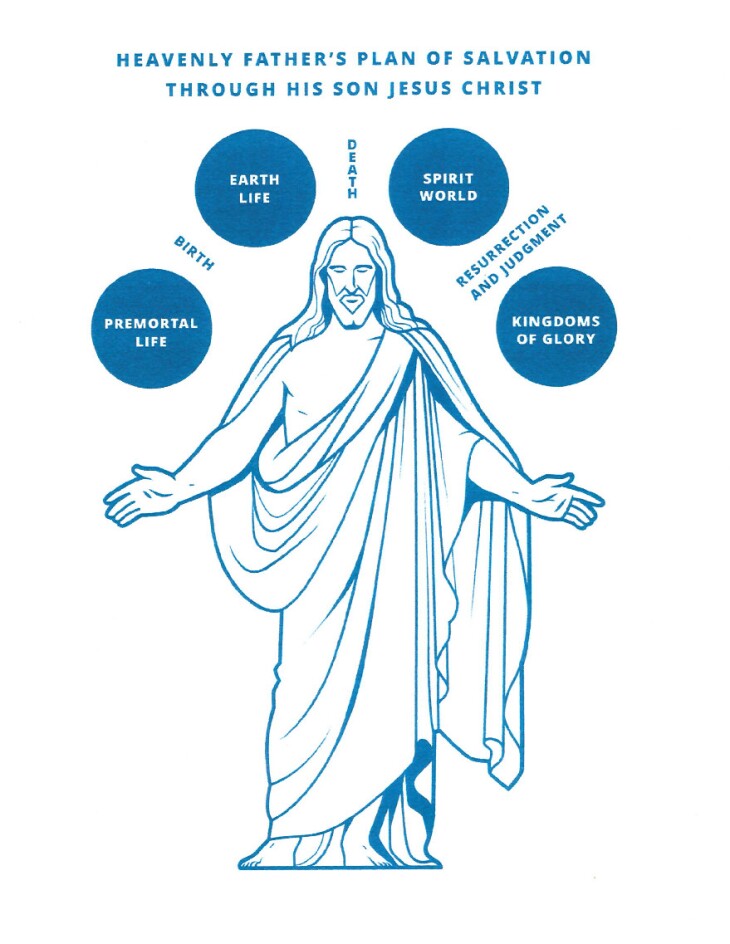
    Outside of the Church of Jesus Christ of Latter-day Saints, what does Christianity believe about the after-life? Generally speaking, Christianity believes that we are born on earth, live our lives, die, are judged, and assigned to either heaven or hell.

    I heard something on an awesome podcast called Unshaken Saints recently that I’d never realized. What the host of the podcast pointed out was that Christianity has it right. Christianity is just missing the beginning and the end.

    As I stated, Christianity believes in life on earth, then judgement, then heaven or hell.

    The truth is that life doesn’t start here on earth. This is the beginning that Christianity is missing. We lived long before we came to earth. There are many truths that stem from our understanding of our premortal existence. One of the most important truths that premortality provides us is an understanding of agency. We chose to come here. This life wasn’t thrust upon us. This is the missing beginning.

    The truth after death (the end) is that we are temporarily assigned to either “spirit prison” or “paradise,” but this isn’t our final resting place. After our temporary assignment to prison or paradise, we receive our final judgement that the scriptures speak of. This is when we come before God and Jesus Christ, Jesus Christ as our advocate to the Father and our judge before God. This is where we either accept Jesus Christ and the mercy He has given us and are reconciled to God, then assigned our glory by the mercy of God and His Son, Jesus Christ; or we reject Jesus Christ and are cast out to outer darkness. We must willfully reject God, Jesus Christ, and the mercy we are given to be cast off. This is the hell that Christianity understands.

    There will be glory assigned to all of God’s children. How can that be? It can be because He loves us that much, so much that He gave His only Begotten Son to save us.

    Christianity thinks the final judgement is immediately after we die. The beauty of the Plan of Salvation is the realization that everyone will have an opportunity to accept Jesus Christ. Everyone will be taught and be given a fair chance. Spirits in “prison” will learn what they missed on earth. No one will be left out. Children are alive in Christ (Moroni 8:12). No one will be lost.

    This is what Christianity misses. The beginning and the end. Premortality and the final judgement. If you cut off the beginning and the end of the Plan of Salvation, you have life on earth and spirit prison or paradise. That’s missing half the picture. We lived before we came here. We were loved by a loving Father in heaven before we came here. At the end, we will be judged for our actions, all we did on earth, our heart’s intent, our good deeds and bad, what we provided in this speck of time that will send us on an eternal trajectory. The beginning and the end. That’s what Christianity misses by rejecting further revelation by God’s prophets.

    What does this do to Christianity?

    Christianity believes we started here on earth. What does that do to our agency? We didn’t choose to come here. We didn’t know God before we came, who is He to us? This is what Joseph Smith spoke of when he talked about the First Vision. He said he learned that God and Jesus Christ knew him by name. For me, that knowledge is so engrained in my soul and being, it’s something I know, that God knows me. The Christianity Joseph Smith knew prior to the First Vision led him to be surprised that God could know him. I’m grateful for the truth God provided Joseph Smith when he appeared to him in a grove.

    Back to what Christianity believes – we come to this earth by no choice of our own, sent by a God we don’t know or understand. We come to this earth to suffer by the sweat of our brow, a fallen world, a cruel world, a challenge we don’t understand, a challenge we didn’t choose. Then God judges us and casts 90% of us off. Most are cast off because they never knew God or Jesus Christ, no fault of their own.

    This is what Christianity believes.

    The podcast provided another analogy that made me think about how this misunderstanding of the Plan of Salvation limits Christianity.

    There are two young men sitting outside of a Bishop’s office. One of the boys doesn’t want to be there. He doesn’t understand why he’s there. All he knows about the Bishop is that he’s a wrathful, unkind, harsh man. This young man fears the Bishop.

    The other young man knows the Bishop. He knows him to be just and kind. He knows the Bishop loves him and only wants what’s best for the him.

    As the first boy waits, he feels like he is in prison. He is dreading the upcoming confrontation with this unkind bishop.

    What does the second young man experience? Is he not in a paradise? He knows he’s soon to meet a friend. That friend is going to give him a treat, congratulate him on how he’s been doing, give him a hug and tell him he loves him. This second young man welcomes the meeting with the Bishop.

    The lack of knowledge in Christianity represents the first young man. Christianity doesn’t know God. By removing the premortal existence, life with a loving Father before life on earth, a Plan to come to earth and progress, a chance to learn of Him after this life, and then to be judged after being given all the necessary information, Christianity only sees a confusing, wrathful God, who has unfairly judged them.

    The Plan of Salvation is a beautiful truth that Christianity is missing. Far from being completely ignorant, Christianity is really close. But this closeness, without the full truth, is extremely limiting.

    ALL of us on earth chose to come to earth. All of us already chose Jesus Christ.

    This is a powerful truth. I wish the rest of Christianity could see, understand, and accept the further light and knowledge that makes this life understandable and worth living.

  • Joseph Smith’s Long Night

    Joseph Smith’s Long Night

    Two thoughts from reading A Marvelous Work and a Wonder about Joseph Smith –

    From his story of Moroni coming to his bedroom three times throughout the night:

    Joseph Smith is up all night having visions. In the morning he goes to work the farm and his dad can tell he’s out of sorts and sends him home. On his way home he literally collapses with exhaustion.

    It occurred to me – wouldn’t it have been convenient for Joseph Smith to have gotten this instruction at any other time besides in the middle of the night when he had to do hard heavy labor in the morning?  Didn’t God know Joseph Smith was going to collapse on his way back home? Didn’t God care?

    God rarely asks us to do easy things. Things aren’t meant to be convenient. Things are meant to make us grow.

    Another thing, the collapse led directly to Moroni returning and Joseph being told to return to his father. Do you think when Joseph collapsed with exhaustion he might have wondered, “Why did he have to come in the middle of the night?” Joseph didn’t know the end from the beginning. He was directed to his father who believed Joseph when he said he saw an angel and  his father told him to immediately go follow the commands he was given.

    Which leads to another thought I had.

    What kind of fascinating teenager was Joseph Smith? Today, a teenager says, “I don’t feel good I can’t go to school” and parents are skeptical. Joseph Smith, in a situation where many teenagers would be trying to avoid intense manual labor, told his father he saw an angel “that commanded me to *cough not farm today, I mean, go get some plates from a hill *cough take a nap, I mean, yeah.”

    And that father, instead of thinking, “My lazy teenage son was up too late playing video games (or whatever teenagers did in the 1800s) and now he doesn’t want to work,” thought instead, yes, that was a vision from God, I believe you, go do what the angel told you to do.

    Jokes aside, the point I’m trying to make is that Joseph Smith must have been a fascinating young man. His father believed him. I wonder if, when he came back without the plates, his father wondered if he’d been duped into letting his son have an afternoon nap on a hill. This appeared to not be the case. Joseph’s family believed him from the beginning. For four years when he visited the hill annually. For months when he had nothing to show for the plates he had recovered. It was some time before he started to provide real evidence, a translation. Before the translation started, his entire family just had to take his word for it.

    Again, what kind of extraordinary person was a 14-year-old Joseph Smith that his father immediately believed he did see an angel, he was commanded to do something, he was not making it up. I believe he must have been a very honest young man. I believe he was young, still a rough stone, but destined to eventually become a prophet of God.