Tag: doctrine

  • Repentance

    Repentance

    3 Nephi 11:32 reads: 

    “And this is my doctrine, and it is the doctrine which the Father hath given unto me; and I bear record of the Father, and the Father beareth record of me, and the Holy Ghost beareth record of the Father and me; and I bear record that the Father commandeth all men everywhere to repent and believe in me.” 

    3 Nephi 11:37-38 reads:

    “And again I say unto you, ye must repent, and become as a little child, and be baptized in my name, or ye can in nowise receive these things. 

    And again I say unto you, ye must repent, and be baptized in my name, and become as a little child, or ye can in nowise inherit the kingdom of God.” 

    These were some of the first recorded words Jesus Christ spoke to His other flock in the Americas (John 10:16).

    Hugh Nibley says, 

    “Who is righteous in the Book of Mormon? There’s a very simple definition of righteousness in the Book of Mormon, as in the book of Ezekiel. One is righteous because he is repentant, and a person who is not repenting is a person who is not righteous. That’s all there is to it, because we’re all wicked and we all need to repent all the time. “Say nothing but repentance to this generation” (D&C 6:9). The first word of the Lord to the Nephites was, “This is my doctrine…and I bear record that the Father commandeth all men, everywhere to repent…” (3 Nephi 11:32). You have to do that. And as Ezekiel tells us, if a person has been righteous all his life but he’s not repenting any more, he’s wicked (see Ezekiel 18:20-32). Of course, he may have been wicked all of his life, and if he’s repenting now, he’s righteous. It makes no difference. So, always repent, always keep repenting. “But behold, all nations, kindreds, tongues, and people shall dwell safely in the Holy One of Israel if it so be that they will repent” (1 Nephi 22:28).

    I’ve thought a lot about that Hugh Nibley quote since I read it. 

    Can it be that simple? Is it that black and white? 

    Good person = someone repenting 

    Bad person = someone not repenting 

    Does this mean deathbed confessions are adequate? Does this mean if you confess your sins and repent the day before you die that you are righteous? 

    Yes and no. 

    I believe Hugh Nibley’s point is powerful. Repentance=righteousness. Unrepentance=unrighteousness.  

    There’s another part of this equation. Repentance=change. 

    I think back on the eight years I was inactive from church. One of the most distinct aspects of that time period was not praying. I never prayed. Praying made me feel guilty. Since I was not praying, naturally I was also not repenting. At the time I couldn’t repent. Not only due to the fact that I wasn’t praying, but also because I wasn’t ready. I wasn’t going to stop doing the things I was doing. I couldn’t repent and then go continue to do what I was doing. I hope I’ve never taken for granted the Atonement of Jesus Christ. I know I do. But I try so hard not to. 

    As I’ve been back at church these last 10 years, I haven’t missed a day of repentance. I repent at least once and sometimes two or three or four times a day. My nightly prayers have a consistent feature, no matter what – asking for forgiveness for the mistakes I’ve made. I often try to think back through my day and think of the mistakes I made and the things I could have done better. 

    Repentance causes change. If I repented during the years of my inappropriate behavior, it would have been insincere, or it would have led to change. I wouldn’t have been trying to change. My repentance started when I was ready to change. That isn’t to say I should have waited as long as I did. But I do believe Heavenly Father has an unimaginable amount of patience with us. I think we’ll one day marvel at how much love and patience He possesses.  

    Repentance has a negative connotation. It shouldn’t. Repentance makes us better. As Ivy put it one day when I asked her, “Why do we want to be like Jesus?” 

    “Because He is nice.” Repentance makes us nicer. Repentance makes us better. It isn’t a negative thing at all.  

    Are there nice people that don’t “repent.” Of course. But repentance is bigger than that. It’s a humility. It’s recognizing our faults. It’s recognizing we have nothing without all that God has given us. It is a desire to change and be even better than we were the day before. 

    So are deathbed confessions valid? That’s not for me to decide. I know repentance results in change. Ultimately God will decide. It’s not for us to judge. And that’s the most important point to make. When someone shows up to church for the first time, someone who has made a million mistakes and a million bad life choices; when that person shows up to church, you love them. You love and accept and forgive. Leave the rest for God to decide. A person coming to church and trying to change should be shown as much love as a church congregation can muster.

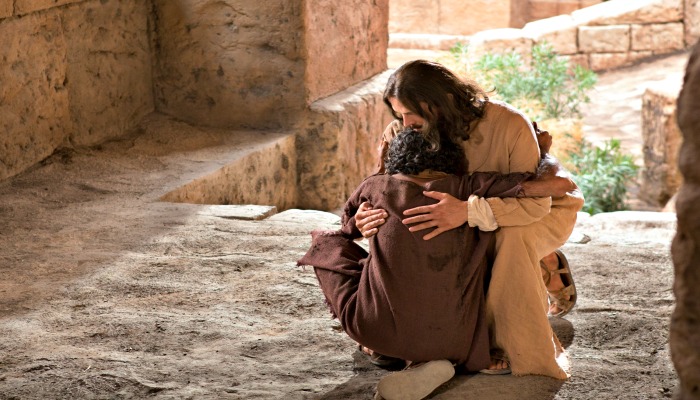
    The miracle of the Atonement is that it is eternal – backwards and forwards. Forever. Christ is always there waiting for us when we’re ready. When we’re ready to start repenting, then we are ready to start changing, and then we can start to be ready to go see Him again. Hopefully, through so much repentance, we can become like Him. That’s the ultimate goal.  

  • Doctrine vs. Practice

    Doctrine vs. Practice

    I want to go over something I’ve always had a hard time understanding. 

    What is a doctrine? What are the core doctrines of the Church of Jesus Christ of Latter-day Saints? What is the difference between a doctrine and a practice?

    Doctrines and practices are much different, though they often get confused.

    The simplest way I learned to differentiate a doctrine from a practice is this simple rule: A doctrine is eternal, it never changes. Practices can be changed.

    According to the First Presidency, there are three guidelines to follow when determining if something is a doctrine or just a practice:

    1. Doctrine is eternal, never changing.
    2. The First Presidency and Quorum of the Twelve is unified on a doctrinal subject.
    3. Doctrines are salvific, it is pertinent to our salvation.

    It’s important to remember that these criteria don’t necessarily confirm something is doctrine. Just because the 15 members of the First Presidency and Quorum of the Twelve are unified on the subject DOES NOT necessarily make it a doctrine.

    Let’s look at a couple examples.

    The sacrament that we take each week is a practice. It has changed in multiple ways over time, throughout history. For example, it used to be the practice of the church to use wine for the sacrament. We now use water. This is just one example of how the sacrament has changed over time.

    The doctrine associated with the sacrament would be the Atonement of Jesus Christ. The Atonement of Jesus Christ is eternal and never changing. It is a doctrine. 

    Priesthood is a doctrine but who holds it is a practice. The priesthood itself is eternal. It is God’s power on the earth. In 2018 we saw a change in who can hold the priesthood when the required age changed from 12 years to 11 years. Another example is when the sons of Aaron were the only holders of the priesthood before it was opened up to the Gentiles in this dispensation. This makes who holds the priesthood a principle.

    I know what you’re thinking. Does that mean women can/should/will one day hold the priesthood independent of any man? I don’t know. I won’t delve into that anymore at this time. I will just say, it will take a revelation from God for that to happen.

    In conclusion, I would like to share the 9 basic doctrines of the Church of Jesus Christ. These doctrines are:

    9 core doctrines:

    1. Godhead
    2. Plan of Salvation
    3. Atonement of Jesus Christ
    4. Dispensation, Apostasy, and Restoration
    5. Prophets and Revelation
    6. Priesthood and Priesthood Keys
    7. Ordinances and Covenants
    8. Marriage and Family
    9. Commandments
  • The God You Know

    The God You Know

    When I started writing the post Unity, Peace, and Love, I actually had another point I intended to make. As often happens when I write, my point got sidetracked (I hope by the Spirit) and I ended up going a completely different direction than originally intended. The point I was sidetracked from, I still liked, and think is important, so I decided to write it anyway. Hopefully the Spirit will guide this post as well.

    In Unity, Peace, and Love I talked about a video that shocked me, the video of someone strutting up to a rameumptom to pray. The idea of a follower of God shoving people out of his way to pray was so bizarre to me. I wrote in the aforementioned post what I think ended up being a better point about this. But what really came to mind the first time I watched that video is how corrupt religion can become if people don’t know who they worship.

    In my original post about the rameumpton, I wrote about the God a friend of mine knew. His God was vengeful, exclusive, and selective. This friend believed that I was going to hell despite my best efforts. I assured that friend that I believed he was going to heaven. Do I worship a different God?

    Let me be clear, I believe we’re all trying to worship the same God. I don’t mean to make the same argument that many Christians make against members of the Church of Jesus Christ of Latter-day Saints, that I’m not Christian because I don’t worship the same Jesus Christ. Just because we have different understandings of the person doesn’t completely diminish our worship. My efforts in worshiping Christ, even if others deem it a “different” or “inaccurate” Jesus Christ, is still worship.

    The problem comes when our understanding of who we worship completely alters our understanding and our behavior. The idea that someone could shove someone on their way to prayer was so bizarre to me. But what if the God someone understands has no body, passions, and is unknowable? What if someone thinks God is a selective and vengeful God that needs to be feared?Why not shove someone on their way to prayer? This shoving behavior isn’t as bad as a God who destroys people on a whim, a God who sent us here so 99% of us could be damned to eternal torment. Surely shoving someone isn’t that bad if our example is that God.

    I wrote the above before I finished Alma chapter 21 so I’d forgotten about the next part about the Zoramites, their rameumptom, and their recited prayer.

    Verse 15 of chapter 21, after the depiction of a Zoramite shoving someone out of his way on his way to prayer, reads:

    “Holy, holy God; we believe that thou art God, and we believe that thou art holy, and that thou wast a spirit, and that thou art a spirit, and that thou wilt be a spirit forever.”

    Interesting their beliefs line up with my thinking about how not knowing God corrupts our behaviors not only religiously, but in life. Here we have a recited prayer and the confusion on God’s character destroying a society.

    The culmination of the Zoramites corruption was not in their recited prayers or confusion in God, though. The culmination is found in verse 16 which reads:

    “Holy God, we believe that thou has separated us from our brethren; and we do not believe in the tradition of our brethren, which was handed down to them by the childishness of their fathers; but we believe that thou has elected us to be thy holy children; and also thou has made it known unto us that there shall be no Christ” (emphasis added).

    All their confusion, twisting of doctrine, and beliefs ultimately led to a denial of Christ. We will know the modern religions have truly fallen when they stop believing in He who keeps this all together.

    In an April 2023 General Conference talk, Mark A. Bragg reminded us of the Joseph Smith quote, “If men do not comprehend the character of God, they do not comprehend themselves.”

    This is where modern revelation and especially the Lectures on Faith (See here, here, and especially here for more on those) becomes so important. We must understand the character of perfection and love that Heavenly Father and Jesus Christ possess so that we can aspire to those characteristics. An unknowable God gives us an unknowable standard. Knowing God is perfect love, and we can do our best to be like Him, gives us the ability to do our best to emulate His love.

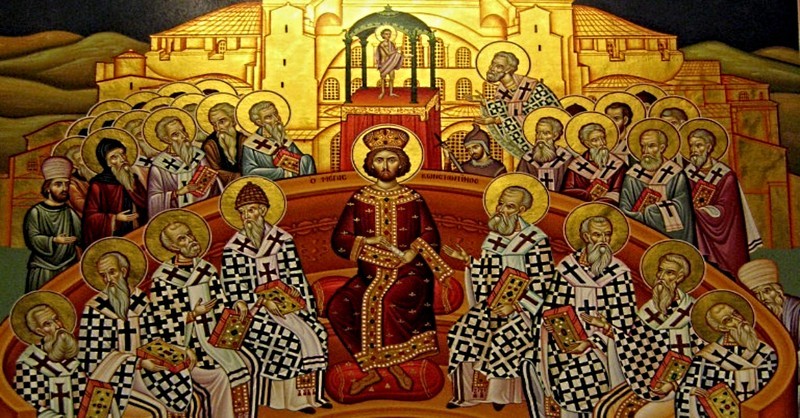
  • How did the Trinity come to be? – The Nicene Creed Post 1

    How did the Trinity come to be? – The Nicene Creed Post 1

    Most of my blog posts are personal experiences with little research. They’re mostly just stream-of-thought writing. That’s what I prefer.

    Every once in a while, I want to write about a topic I know nothing about, which results in some (or a lot) of research. My Adam-God Theory post is one that comes to mind.

    I’ve long wanted to write a post about how the Trinity came to be. To prove this, years ago I gave my thoughts on the Trinity in this post.

    And wrote about how I know the Godhead to be true in this post.

    This has been a topic pretty consistently on my mind for a long time.

    Quick definition so we can all follow along (because this isn’t going to be an advanced or complicated post), the Trinity refers to the belief that God the Father, Jesus Christ, and the Holy Ghost are all one being. Most of Christianity believes in the Trinity. The Church of Jesus Christ of Latter-day Saints, through the experience of the prophet Joseph Smith, believe in the Godhead. The Godhead is the belief that God the Father, Jesus Christ, and the Holy Ghost are three distinct beings who are one in purpose (John 17:21-23).

    I’ve long wanted to learn more about how the Trinitarian belief came to be. I know it developed from the Nicene Creed. But if this is a falsehood perpetuated throughout history, how did it become so dominant? I’ve wanted to understand this history better. Part of the motivation to understand this better comes from the dominance of the Trinitarian viewpoint. When I’m trying to relate to other Christians, the Trinity vs Godhead question really becomes an issue.

    To know God you must know who He is. When I talk to a Christian, we both believe in Jesus Christ, but who is Jesus Christ? It’s OK to say we both believe in God and go from there, but sometimes not understanding who God is keeps me and other Christians from really being able to progress and learn from each other.

    Personally, I believe this is why this misunderstanding has been so perpetuated throughout history. Satan is cunning. He knows if we don’t know who our Father is, it becomes so much harder to worship Him.

    Is that an unfair statement for me to make? I can hear all the Catholics and Protestants and Lutherans and Baptists in an uproar when I state that a core belief of theirs has been perpetuated by Satan to confuse them. I understand that this is inflammatory. When I’m told by those same groups of people that my belief that God the Father and Jesus Christ are separate and distinct beings is a lie that Satan has deceived me with, it hurts. So I get it.

    This is why I want to understand where the belief in the Trinity comes from.

    When I read the Bible, it’s so abundantly clear to me. It doesn’t make any sense to me that people can read the Bible and conclude that Heavenly Father and Jesus Christ are one person. And yet, I’m in the minority, so clearly, there’s more to it.

    We all have our biases. I have always known Heavenly Father and Jesus Christ to be separate individuals. I have always known Christ to be my advocate with the Father. I have always known Heavenly Father to be my literal Heavenly Father. Seeing it any other way is hard. I get that others have always seen them as the same being. Others have read the scriptures with them being the same entity in mind. I get it.

    Which leads me to my point.

    As I studied this more, trying to understand it, the more confused I got. How this came to be is so confusing. I wanted to write a post simply explaining the history of the Nicene Creed and how the Trinitarian belief came to be and I’m realizing giving a “simple” explanation is going to take a lot more reading to understand.

    Some things stood out as I’ve studied this topic. I have a 62,000+ word document of research, quotes, and other information from my study of this topic.

    What stands out are the words I come across when reading how the Trinitarian belief came into existence.

    “Argument” – 13 times in my notes.

    “Debate” – 7 times in my notes.

    “Power” – 18 times in my notes.

    These are the words I kept coming across as I studied this topic.

    One word stands out that I haven’t come across thus far in all my reading. That word is “revelation.” In all that I’ve read it’s always “debate” and “power” and “trial” and “gain” and “politics.” No revelation

    I would love for a biblical and historical scholar to give me a crash course on the history of the creeds. For now, I continue to read, and study, and try to understand why the Christian world trusts a gospel principle that was handed down by power and politics, with little reference to the God they were trying to understand.

    I conclude this post without a conclusion because I don’t yet have one. It will be the first of many posts about the Nicene Creed and the Trinitarian belief.

  • Adam-God Theory

    Adam-God Theory

    I’ve heard of the “Adam-God Theory” but never looked into it. Until recently, I really didn’t know what exactly it referred to. Here is my research into the Adam-God theory for those interested and especially for those who may have concerns about this theory and its history in the restored Church of Jesus Christ.

    Before I begin, almost all my thoughts come from this link:

    https://www.fairlatterdaysaints.org/answers/Mormonism_and_doctrine/Repudiated_concepts/Adam-God_theory#Question:_What_is_the_Adam-God_Theory.3F

    It was a great resource on this topic and I recommend it if you want to learn more.

    If you want a quick, short video that sums up the whole history of the Adam-God theory, watch this video:

    Now, my thoughts.

    The Adam-God theory is the theory that Adam and God the Father are the same person. This theory was mentioned by Brigham Young.

    First – Adam is not God the Father. Adam is not who we pray to. This does not fit the teachings of the scriptures, does not fit modern revelation, is not a doctrine of the restored gospel. So why are we talking about it, you ask?

    Second – Yes, Brigham Young did make some bold statements about Adam being God. He also made countless statements contradicting that statement. Brigham Young was a convert and a prophet. Try to imagine the dichotomy of those positions. Try to imagine someone a few years into the faith trying to lead the entire church. Is it so shocking that there were erroneous statements made, especially when we consider and understand the personality and boldness of the prophet who led the saints across the rugged wilderness of the West?

    Third – Because Brigham Young made incorrect statements does not mean he was a false prophet. It means he was learning line upon line, and he made false statements. He has made statements to try to help us, the people of the church, reconcile some of his more questionable comments. For example, when speaking generally about who Adam was and proposing some thoughts about Adam, Brigham started by saying, “I propose to speak upon a subject that does not immediately concern yours or my welfare….I do not pretend to say that the items of doctrine and ideas I shall advance are necessary for the people to know, or that they should give themselves any trouble about them whatever.. (Brigham Young, Oct 8, 1851). If it does not concern our welfare, don’t get too hung up on it. The church was young and growing when Brigham was prophet. God has always worked through us, mortals, to fulfill His works. This has always resulted in fallibility. Brigham Young was a prophet, even if he made mistakes in the thousands of public discourses he gave during his learning period as a prophet/convert.

    Fourth – Because prophets are fallible does not mean we cannot trust and follow them. As The Church has grown out of its infancy, it has strengthened itself in countless ways. One of those strengths has become the checks and balances of the church organization. The First Presidency and Quorum of the Twelve Apostles must be unanimous in any declaration of doctrine. President Nelson speaks hundreds of times a year. Not every word from his mouth (in my opinion) is scripture. It is guidance and direction from God’s anointed prophet, yes, but not scripture. But when President Nelson, the First Presidency, and the Quorum of the Twelve sign their names to a declaration, it becomes binding guidance on doctrine, church policy, etc. Such was the case with “The Family: A Proclamation to the World” for example.

    Now, the statement made by Brigham that when Adam and Eve came to the Garden of Eden they already had celestial, resurrected bodies is interesting. I more think they came with perfect bodies as they came directly from the Father and hadn’t yet been corrupted by the fall, not that they were necessarily resurrected bodies yet. Celestial, maybe, resurrected, I don’t think so. That’s all I will say on this matter, though, to support my point earlier that things that distract from our salvation should be discussed with caution. I haven’t done enough research, pondering, or praying to comment on this with much confidence and would hate for my children 150 years from now to claim I believed Adam was already resurrected when put in the Garden of Eden. See how these small comments can be blown out of proportion? Grateful I’m not a prophet.

    Another thought – the eternal nature of the plan of happiness is not something we can begin to comprehend. If it ultimately distracts us from our current efforts towards salvation, we should tread with ultimate caution. Such is the thinking about if Adam lived on another planet before he came here and countless other thought experiments that might distract from what is important, which is, Jesus Christ performed the ultimate atoning sacrifice for my sins. He died so that I can live. He suffered so I can be forgiven and can live with God, my Father, again. All other questions, while interesting and can expand our minds and thinking, if they distract from the ultimate source of our salvation – the Plan of Salvation and Christ’s personal role in it for us – should be avoided.

    Those are my thoughts on this from my research. Here are some final items to really, I hope, put this theory and any issues involved with it, to rest.

    As mentioned, Brigham contradicted himself many times on the idea that Adam was God. While he mentioned the idea a couple times in public, there are many other instances of Brigham Young speaking where he clearly separated Adam and God the Father as two separate individuals.

    BYU professor Stephen E. Robinson sums it up well:

    “Yet another way in which anti-Mormon critics often misrepresent LDS doctrine is in the presentation of anomalies as though they were the doctrine of the Church. Anomalies occur in every field of human endeavor, even in science. An anomaly is something unexpected that cannot be explained by the existing laws or theories, but which does not constitute evidence for changing the laws and theories. An anomaly is a glitch…. A classic example of an anomaly in the LDS tradition is the so-called “Adam-God theory.” During the latter half of the nineteenth century Brigham Young made some remarks about the relationship between Adam and God that the Latter-day Saints have never been able to understand. The reported statements conflict with LDS teachings before and after Brigham Young, as well as with statements of President Young himself during the same period of time. So how do Latter-day Saints deal with the phenomenon? We don’t; we simply set it aside. It is an anomaly. On occasion my colleagues and I at Brigham Young University have tried to figure out what Brigham Young might have actually said and what it might have meant, but the attempts have always failed. The reported statements simply do not compute—we cannot make sense out of them. This is not a matter of believing it or disbelieving it; we simply don’t know what “it” is. If Brigham Young were here we could ask him what he actually said and what he meant by it, but he is not here…. For the Latter-day Saints, however, the point is moot, since whatever Brigham Young said, true or false, was never presented to the Church for a sustaining vote. It was not then and is not now a doctrine of the Church, and…the Church has merely set the phenomenon aside as an anomaly.”

    From the link above previously mentioned:

    “As far as can be determined, none of Brigham Young’s successors in the presidency of the Church continued this teaching in public, and by the presidency of Joseph F. Smith (1901–18) there were active moves to censure small groups that taught Adam-God.

    One of the earliest statements from the Church rejecting Adam-God teachings was made by Charles W. Penrose in 1902:

    The Church of Jesus Christ of Latter-day Saints has never formulated or adopted any theory concerning the subject treated upon by President Young as to Adam.

    In October 1976 general conference, Spencer W. Kimball declared the Church’s official position on Adam-God:

    We warn you against the dissemination of doctrines which are not according to the Scriptures and which are alleged to have been taught by some of the General Authorities of past generations. Such, for instance, is the Adam-God theory. We denounce that theory and hope that everyone will be cautioned against this and other kinds of false doctrine.‘”

    Other statements by future general authorities refuting Brigham Young’s opinions:

    Bruce R. McConkie – “What I am saying is that Brigham Young, contradicted Brigham Young, and the issue becomes one of which Brigham Young we will believe. The answer is we will believe the expressions that accord with the teachings of the Standard Works.”

    And Brigham Young himself – “I am more afraid that this people have so much confidence in their leaders that they will not inquire for themselves of God whether they are led by Him. … Let every man and woman know, by the whisperings of the Spirit of God to themselves, whether their leaders are walking in the path the Lord dictates, or not.”

    Finally, while some might consider everything said here to be a sign that the church changes and is “wrong,” I would completely refute that. The church is changing. The church is growing. The church is living.

    Doctrine and Covenants 1:30 is Christ speaking and reads “And also those to whom these commandments were given, might have power to lay the foundation of this church, and to bring it forth out of obscurity and out of darkness, the only true and living church upon the face of the whole earth, with which I, the Lord, am well pleased, speaking unto the church collectively and not individually.”

    While so many would criticize the Church of Jesus Christ of Latter-day Saints for changing, the Lord describes it as living. The only living church on the face of the earth. This is a power of Christ’s church- not a weakness.