Tag: freedom

  • A Miracle that Changed the World

    A Miracle that Changed the World

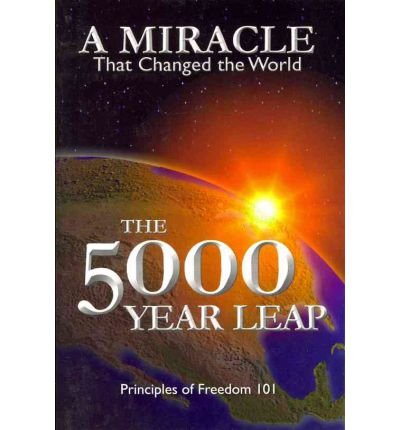
    These are thoughts from a book I read recently called A Miracle that Changed the World. It was an awesome book that laid out just how spectacular the establishing of America was. This was a section of the book I had some thoughts on. I’m quoting sections of the book with my thoughts.

    p. 52:

    The Tide of Reform

    “Many Americas became extremely self-conscious about their lack of “public virtue” because of non-involvement in the affairs of government. They began to acknowledge their obsession with self-interest, the neglect of public affairs, and their disdain for the needs of the community as a whole. Gradually, a spirit of “sacrifice and reform” became manifest in all thirteen colonies.”

    This occurred in America in the couple of years leading up to the Declaration of Independence being signed. Is it any coincidence that a spirit of sacrifice, public virtue, and selflessness preceded the greatest revolution in the history of the world and the rise of the greatest nation ever to exist on earth? God needed a self-sacrificing and humble people to inherit the new world. When they exhibited these qualities, they became His chosen people to enact this major event. This led to a revolution and the freedom from tyranny that allowed the explosion of religious freedom that God planned, that couldn’t have happened under the rule of a monarchy. It started with sacrifice, service, and humility.

    “In the eyes of the Whigs, the two or three years before the Declaration of Independence always appears to be the great period of the Revolution, the time of greatest denial and cohesion, when men ceased to extort and abuse one another, when families and communities seemed peculiarly united, when the courts were wonderfully free of that constant bickering over land and credit that had dominated their colonial life.”

    Two things especially stand out to me from that statement –

    1. “families and communities seemed peculiarly united.”
      • From the Family Proclamation: “We call upon responsible citizens and officers of government everywhere to promote those measures designed to maintain and strengthen the family as the fundamental unit of society.”
      • As the fundamental unit of society, strong families make for strong society. No wonder Satan has so adamantly attacked the family. Look at divorce rates, look at what has happened to the American family. The dismantling of families is the the beginning of the downfall of a great society, and we’re seeing it happen right before our eyes.
    2. “the courts were wonderfully free of that constant bickering…”
      • Could the 13 original colonies have broken from the greatest world power at that time, colonies v. Greatest World Power, if they were busy bickering amongst themselves? It took unity for the freedom of America to be established.
      • D&C 38:27: “be one; and if ye are not one ye are not mine.”

    This is what we need – Americans to become self-conscious about how selfish we’ve become. This is the eternal principle of unity. America needed to be united under one cause and one heart before they could break free from tyranny. God wants us to be one. What has happened to that unity?

    I read in a Doctrine and Covenants commentary how early church members, going back to the very earliest days of the church, were advised to avoid courts. It was said that if a dispute couldn’t be resolved by arbitration, then there was discord and discontent too strong amongst the parties, and they needed to evaluate what they truly valued. One early church leader, Oliver Cowdery, was chastised for becoming too involved in the courts, and it ultimately began to descent towards his excommunication.

    “When Oliver moved to Missouri in 1837, he sought to alleviate personal debts by starting a legal career. Witnesses testified that Oliver had urged people to sue others in court who “fired guns in town,” who broke “the Sabbath day,” he “frequently solicited for business in collecting debts,” and “urge[d] on lawsuits with others.””

    There can’t be unity where there is constant bickering and lawsuits. Those needed to be removed from public standards before the 13 colonies could think to stand up against Britain.

    The book continues:

    “How the Moral Reform Accelerated the Revolution

    “Many Americans became so impressed with the improvement in the quality of life as a result of the reform movement that they were afraid they might lose it if they did not hurriedly separate from the corrupting influence of British manners. They attributed this corruption to the monarchal aristocracy of England. Even Americans such as John Jay, Robert Morris, and Robert Livingston were beginning to see that the people were exhibiting a potential capacity for virtue and morality which would guarantee the success of a free, self-governing society. Therefore, it became popular to express the sentiment that the sooner they became independent the better” (emphasis added).

    The underlined portion is the part that stood out to me. Imagine if society today could be said to have such a high standard of virtue and morality. This is what guaranteed the success of the United States: A virtuous and morally upright people. This is why they could self-govern themselves, because they self-governed in righteousness. Imagine describing our society like that today – excess of virtue and morality.

    The definition of virtue is “behavior showing high moral standards.”

    The definition of morality is “principles concerning the distinction between right and wrong or good and bad behavior.”

    We couldn’t be farther from such a standard. We’ve gone so far off the path that we have reversed morality so that right is wrong and wrong is right. We have molded morality to be what we want it to be. The early Americans who established this nation were moral and upright in all their dealings, which allowed them the honor of being the people to establish the most free, most righteous, and most powerful nation in history. Freedom and righteousness are power.

    Another motivating factor for the colonies wanting freedom from England was to avoid developing all the negative attributes of the British.

    “British influence was already taking its toll. One alarmed American wrote, “Elegance, luxury and effeminacy begin to be established.” David Ramsay declared that if Americans had not revolted “our frugality, industry, and simplicity of manners, would have been lost in an imitation of British extravagance, idleness and false refinements” (emphasis added).

    America has gotten closer to extravagance, idleness, and false refinements than frugality (look at our national debt), industry (look at our bail outs), and simplicity (look at social media).

    It’s time for unity in America. It’s time for virtue and morality. It’s time to protect and re-establish the importance of the family. It’s time to return to frugality, industry, and simplicity. If America can return to these values, maybe it stands a chance to stay a chosen nation and be protected from the tribulations that are to come.
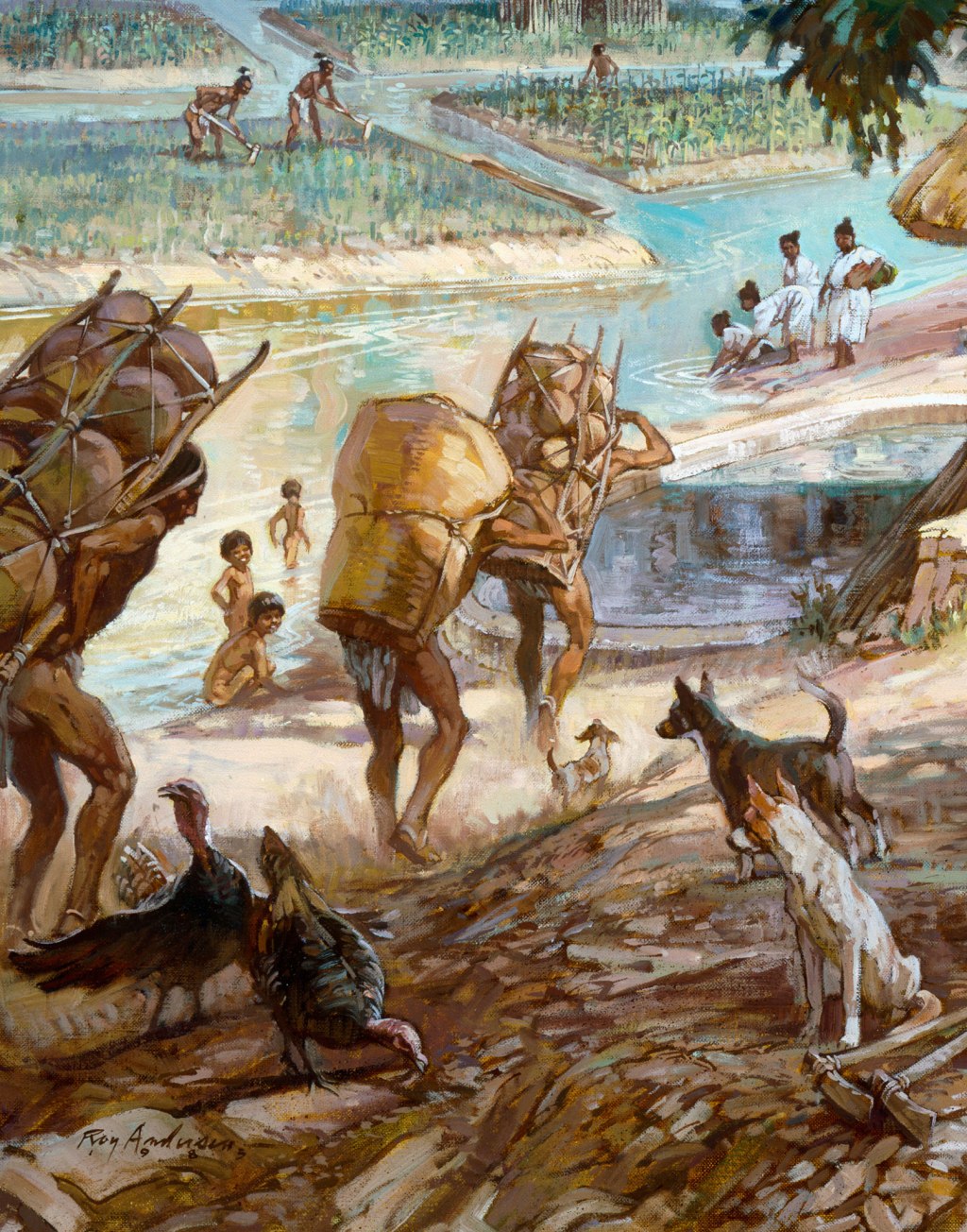

  • Burdens Made Light

    Burdens Made Light

    Mosiah 23:23 reads:

    “For behold, I will show unto you that they were brought into bondage, and none could deliver them but the Lord their God, yea, even the God of Abraham and Isaac and of Jacob.”

    “They” in this verse was referring to the followers of Alma. Some time earlier in the Book of Mormon story, Alma recruited a group of people who were baptized and covenanted to follow Jesus Christ. This group of people then fled from the rule of their wicked king, Noah.

    Before Alma’s people could flee, though, a prophesy was made by a man named Abinadi.

    Mosiah 12:2, Abinadi speaking:

    “Yea, wo be unto this generation! And the Lord said unto me: Stretch forth thy hand and prophesy, saying: Thus saith the Lord, it shall come to pass that this generation, because of their iniquities, shall be brought into bondage [emphasis added], and shall be smitten on the cheek; yea, and shall be driven by men, and shall be slain; and the vultures of the air, and the dogs, yea, and the wild beasts, shall devour their flesh.”

    This epic part of the story in the Book of Mormon is long and complex but long story short – Alma and his people fled wicked King Noah. Then King Noah is attacked by the Lamanites and flees into the wilderness where he is eventually burned and killed. His son, Limhi, takes over as king of the people. Limhi’s people are brought into bondage.

    Some time later, the Lamanites stumble upon Alma’s people, and Alma’s people are also brought into bondage.

    Remember, Alma’s people at this point had repented of their sins, been baptized, and turned to Christ with all their hearts. Remember Abinadi’s words, “this generation…shall be brought into bondage.” When Abinadi spoke these words, he was prophesying in the name of the Lord. Can the Lord lie? The Lord cannot lie. When He speaks, it must be true, and it must come to pass.

    Despite their new covenants, prophesy still had to be fulfilled, and Alma and his people had to be brought into bondage.

    There are many important lessons we can learn from this story. In particular we can learn from the people of Alma. Despite their good choices, they were still brought into bondage. Making good choices, being good people, doing all the right things like keeping our temple covenants, serving others, going to church, taking the sacrament; none of these things exclude us from adversity. Just because we’re following Christ and doing everything right, doesn’t mean everything goes perfect for us. Bad things happen to good people.

    Why do bad things happen to good people? Because lessons are learned through trial.

    What lesson is learned here?

    Mosiah 24:13-14 is the Lord speaking to Alma and the people, amidst their trial:

    “Lift up your heads and be of good comfort, for I know of the covenant which ye have made unto me; and I will covenant with my people and deliver them out of bondage [emphasis added]. I will also ease the burdens which are put upon your shoulders, that even you cannot feel them upon your backs, even while you are in bondage; and this will I do that ye may stand as witnesses for me hereafter, and that ye may know of a surety that I, the Lord God, do visit my people in their afflictions.”

    The Lord could not lie. The people had to be brought into bondage. But, importantly, the Lord would be with them, He would make their burdens light. And also importantly, as Mormon said in verse 23: “I will show unto you that they were brought into bondage, and none could deliver them but the Lord their God, yeah, even the God of Abraham and Isaac and of Jacob.” Since the Lord could not lie, the people could know that when he covenanted to deliver them from bondage, it would happen. They were brought into bondage because the Lord said it would be, now He was saying He would deliver them. They knew they could trust the Lord’s word.

    Amidst our hardest trials and most difficult times, we can turn to the Lord, and know that He will support, protect, and redeem us. No matter how difficult it gets. You, reading this, have your trials been as bad as becoming slaves to a harsh and bloodthirsty people? Rely on the Lord, and don’t murmur against Him. Continue to do your best and trust Him.

    Limhi’s people were in bondage for an estimated 18 years while Alma’s people were in bondage for 1 year. Do you think it made the one year any easier for Alma’s people because the people they’d left got it at least 18 times worse? Of course not. In that time, they had made all the right choices and still had to give 365 days of servitude. But ultimately, because of their covenants with the Lord, He delivered them.

    Don’t forget: with God, your burdens will be made light. Follow Him.

  • Cigarettes, Coffee, Alcohol

    Cigarettes, Coffee, Alcohol

    Imagine if someone walked up to you, handed you a small stick, and said, “Here, put this in your mouth and inhale. You’ll need to do this every day from now on or else you’ll be irritable and unhappy. You have to do it outside because most people HATE the smell. Also, that smell will linger on your clothes and hair all the time, and again, people hate it. Oh, and it’s going to kill you.”

    Can you imagine ever getting near that thing? Who would take it? It blows my mind that people still smoke.

    Here’s another one, someone walks up to you and hands you a cup, “Drink this. It’s a dark hot liquid that people have convinced themselves tastes good. You’ll need this every morning for the rest of your life or else you won’t be able to function or concentrate in the morning or throughout the day. You’ll need more and more of it as you become dependent on it. First, you’ll only need one cup in the morning. Then you’ll need one in the afternoon. Then you might need two or three cups just to get through the morning and 5-6 cups to get through the day.”

    Who would drink that?

    Here’s another one, someone walks up to you and gives you a big cup, “Drink this. It will taste horrible, it will burn your throat. Then you’ll start to feel woozy and exhilarated. It will last a short time and then you’ll feel like crap. Drink more and your brain will shut down. The next day you will feel worse than you’ve ever felt. You’ll feel like your insides are melting, and they kind of are. What you were drinking was poison. There’s a chance you’ll become dependent on this drink and it will be the only way your brain can feel like it’s having a good time. You’ll need more and more to feel that exhilaration you had the first time, causing you to slowly poison yourself to death.”

    Who would drink that?

    I could go on and on.

    I’m grateful for the word of wisdom. I’m grateful that I got to figure out for myself that I don’t like being addicted to substances. I admire those who never have to find out, and encourage them with all my heart to keep it that way. I’m grateful that I survived some of my addictions.

    I’m grateful for who helped me get through some addictions. Hint – He’s the same person who has given me everything.

  • Black and White and Adam and Eve

    Black and White and Adam and Eve

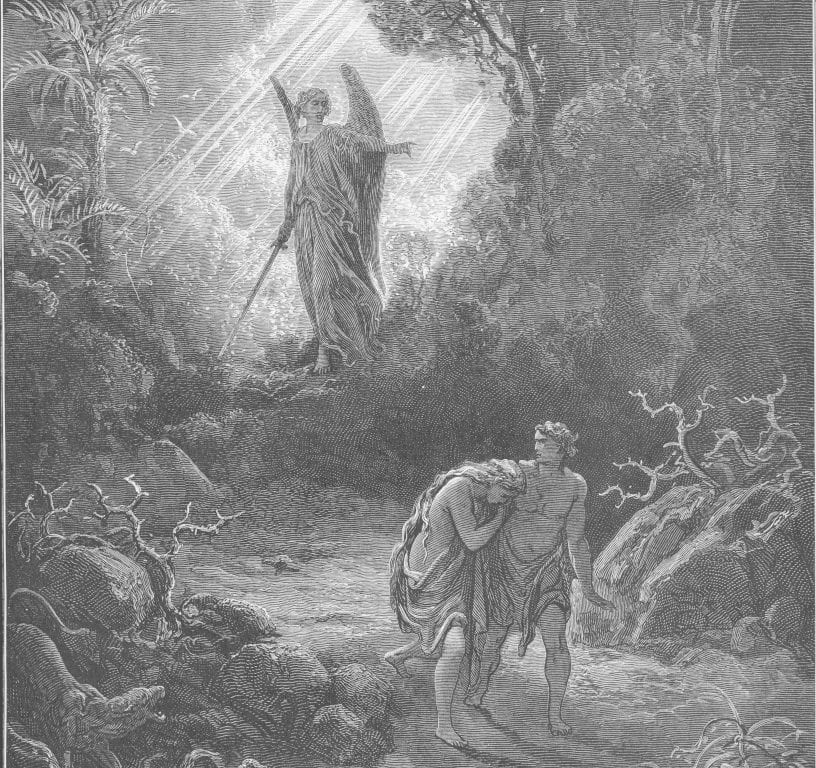
    In the Garden of Eden Adam and Eve were given two commandments.

    1. Multiply and replenish the earth.
    2. Do not eat of the Tree of the Knowledge of Good and Evil.

    In the church we are familiar with this dichotomy. Commandment one could not be completed without disobeying commandment two. What were Adam and Eve to do?

    I recently read a classic short story called The Invisible Collection from Out of the Best Books Volume 1 (p. 329). This short story was in a section titled “Good Versus Evil.”

    In this short story, an art shop owner/dealer learns of a patron of his art shop, which his father and grandfather ran before him, that had been a client for nearly 60 years. He decides to go visit this client to see his collection and see if he might be able to purchase some of it back from him. The client had been collecting for 6 decades and the pieces he bought for cents were now worth a fortune. This story was set in Germany after the war. Inflation was ravaging the country.

    The art dealer visited the modest home of this art collector, only to learn that the art collector that had purchased hundreds of paintings, drawings, and art pieces from his shop was blind. This art collector hadn’t always been blind, he had become blind after the war. Our main character, the art shop owner, learned that this now very old man still daily pulled out the many portfolios he had collected and went through each piece one by one. He used his memory to see every detail he had spent countless hours admiring when he still had his vision. His art collection, even blind, was his greatest treasure.

    When our shop owner arrived at the home, he was immediately pulled aside by the wife and daughter of this old man. They told him the truth before he could cry out in astonishment in front of the old man. In order to survie they had been selling the art pieces for years. The husband of a second daughter of the old art collector had been killed in the war and she was left with 4 young children to feed. The family was barely getting by, barely surviving. They sold these priceless art items to survive. They replaced the real art with papers to fool the old man. They never told the old man because, understandably, they didn’t want to break his heart.

    This story really made me think.

    Lying is bad, right? And yet, in this story, the family of the old man had to lie, didn’t they? Or did they?

    Multiply and replenish the earth, but don’t eat from that tree. Many things in this life are not black and white. There isn’t a “right” or “wrong” answer to every question. There’s a lot of gray area in this life. That’s the point, though. God wants us to learn in this life to be wise stewards. He wants us to learn to make decisions for ourselves, to learn and grow from our choices.

    “nevertheless, thou mayest choose for thyself, for it is given unto thee”

    Moses 3:17

    God is teaching us to be rulers in this life. God wants us to learn good from evil. He wants us to learn to follow the promptings of the Spirit (truth) and learn to follow that guidance. He wants us to take many options and make the best choice. He wants us to learn how to evaluate what is best to do, then do it.

    Being worthy is receiving something, putting it into your life, and acting upon it. As we prove ourselves worthy God gives us bit by bit more, and we grow step by step. That is what God is teaching us in this life. Worthiness, righteousness, freedom of choice, and stewardship.

    So, in this light, that we’re daily being tutored by God for greater purposes, how are our daily choices?

  • Drugs

    Drugs

    *Author’s note:  I asked Beth to proofread this before sharing.  I put off posting it for weeks because of my hesitation in sharing something like this about my past.  Beth’s response, “Why wouldn’t you share it?  It’s what got you here.”

    “Cocaine takes your soul.”  A statement I heard a while back on a podcast.

    I’ve long wanted to write a “drugs” post, but I haven’t known how to approach it. It was a big step for me to start sharing publicly about how I used to drink.  Now I use my past experiences with drinking to understand the struggles others can have because I’ve been there.  It makes me really uncomfortable to share something like, “I used to do drugs.”  Vulnerability, uncertainty at how people I love will take this information, Ivy reading this one day… Admitting something like that was never something I thought I’d do.  But Beth’s comment was right.  Those choices led to where I am today, so why not share it?  If I’ve truly changed, why do those past decisions matter that much?  If I truly believe Christ has washed away my sins through His Atonement, what am I hiding?  Maybe somebody can benefit from my experience. 

    So, before I continue, let’s get this part out of the way: All my LDS friends and family take your moment to *gasp.  All my college friends and family take your laugh (that some of my friends and family never knew this about me).

    I bounced back and forth with writing a generic, boring post about how drugs are bad.  Really, we’ve heard that before.  What can really make a difference, I think, is my personal experience with drugs.  In the Church (of Jesus Christ of Latter-day Saints), along with other churches, I think talking about past drinking or drug use is pretty taboo.  It’s like many other topics I want to write about and haven’t yet addressed.  Where I come from, how I was raised, I kind of adhere to the ‘pretend like it doesn’t exist’ camp.  Drugs?  How about we not discuss it. 

    But then recently my 13-year-old brother mentioned a kid coming to his soccer practice clearly high.  First thought, “My youngest brother is exposed to weed already????”  Then I realized, he’s 13, of course he’s exposed to it.  I know a lot of kids that started experimenting with drugs at 13.  It’s crazy to think my youngest brother is 13.  It’s crazier more to realize it when he talks about the drug use around him.  Drug use is happening.  In the world we live in today, it’s more prevalent than ever.  If we stick our head in the ground, refuse to talk to our kids about it, and pretend like it’s not happening, someone else is talking to them about it.  News flash parents:  Your most sheltered latter-day saint babies have seen, heard of, been around, and maybe even experienced drug use.

    If I was seeing it in 2003 (I’m old), you better believe 13-year-olds are seeing it in 2021.  Recently I drove down a street in Las Vegas near my old home.  A street I’d driven down many times.  I did a double take when I passed what I can only describe as a big, bright, pot emporium.  Drugs are becoming mainstream.  A scary thought.

    So what are my experiences with drugs?

    First let me say, I was lucky that drugs never quite became like alcohol for me.  I don’t think drugs ever controlled me the way alcohol did.  I think part of that is luck in never trying the wrong substance.  There was a time when I was on a precarious cliff, one wrong step could have led to debilitating and life destroying addiction. 

    I’m going to try my best to be as ambiguous as possible about my drug use for obvious reasons.  By that I mean, I’m not going to tell you what drugs I have done (it’s not many).  But sometimes I may be clear about drugs I haven’t done.  For example, I never tried cocaine.  I had to say that since you’ve probably been wondering that since you read the first line. 

    What’s my experience?

    From a very young age I was aggressively opposed to any substance I believed was bad.  Legend has it I used to pour out my mom’s Coca Cola’s.  Growing up I always said I would never drink alcohol.  When asked I would say it was due to my faith and the Word of Wisdom.  The Word of Wisdom, for those who don’t know, is guidance provided by the Lord to Joseph Smith in 1833 about what should and should not be put into the body.  Over the years the Word of Wisdom, as followed by many members of the Church of Jesus Christ of Latter-day Saints, has adapted and changed.  This is a natural occurrence.  Joseph Smith wasn’t yet warned about vape pens and methamphetamines in the 1830s.  I encourage everyone who wants to learn more to read Doctrine and Covenants Section 89.

    My excuse for not drinking or partaking in drugs was always the Word of Wisdom.  Like I said, from a very young age I remember taking that guidance very seriously.  As I grew up, and my church activity waned, that excuse changed to, “I’m an athlete.”  In high school “no thanks” seldomly worked.  You needed a reason.  Similar to Happy Hours across the country today, most of the time you can’t just say no.

    So what happened when I had neither?  What happened when my church activity was zero and I was no longer an athlete after high school?  It’s amazing how soon after losing those two identities that I waivered on this principle I had stuck so firmly to.

    I still remember my first sip of alcohol.  It was a big moment.  We laugh at the joke that meth addiction starts with one puff or one sip, but doesn’t it?  Of course, there are exceptions, but would someone who has never had a sip of alcohol try a harder, more dangerous substance?  Usually not. 

    What happened after I’d taken one sip?  Well, my excuses of church and basketball were no longer existent, I no longer had my shield against peer pressure.  It’s no wonder when I went off to college for the first time I started drinking, then trying other stuff. 

    I was never a big drug user, as previously stated.  Most of what I tried wouldn’t even be considered drugs by most people today.  That’s the problem though, isn’t it?  Drugs are drugs.  Marijuana is a drug.  It is habit forming, it changes your focus, it changes what you care about, and ultimately it changes you. 

    I had some extremely, extremely scary experiences with drugs.  The last time for a particular substance I said would be the last time I’d try anything.  Being stuck in your mind is a terrifying thing, there is no escape.  These substances are mind-altering.  Sometimes they’re mind entrapping. 

    This is the point I want to get across and I think is important.  It’s the point I make to anyone who asks about certain drugs or drug use.  You almost never know what you’re putting into your body and it’s often from a sketchy source.  What happens when you can’t escape your mind and you think something will never end?  I had a friend once tell me he considered killing himself one time during a particularly bad drug experience.  My thought was, “why would you put that in your body????”  Then, years later I had that something in my body. If it wasn’t for very trusted and caring friends being around me to calm me down, who knows what could have happened. Never before in my life had jumping off a balcony crossed my mind. It did that day. Drugs are not a joke.  This is the message, more than anything I’d like to get across.

    I consider myself lucky that I avoided most of the more dangerous and addictive substances out there.  I never touched a cigarette.  I was too afraid it would become a habit.  That fear kept me from putting myself in a dangerous position with many other drugs.  I was always afraid of man-made, synthetic substances.  I was raised to believe that man was conspiring against my freedom (D&C 89:4) and I believe that might have saved my life.

    How am I with drugs today?

    When I had my accident, they tried to prescribe me some sort of Oxy something or another pain medication.  I refused.  I got over the counter Advil and avoided taking that as much as I could.  I saw too many friends almost kill themselves over those pills.  I hope I can avoid ever touching one.

    Today I’ve cut out drugs, alcohol, caffeine, and juice.  Yes, juice.  I feel happier and healthier for it.  I see coworkers come into the office and walk like zombies to the coffee machine first thing in the morning.  I’ve never had that crutch and I never will.

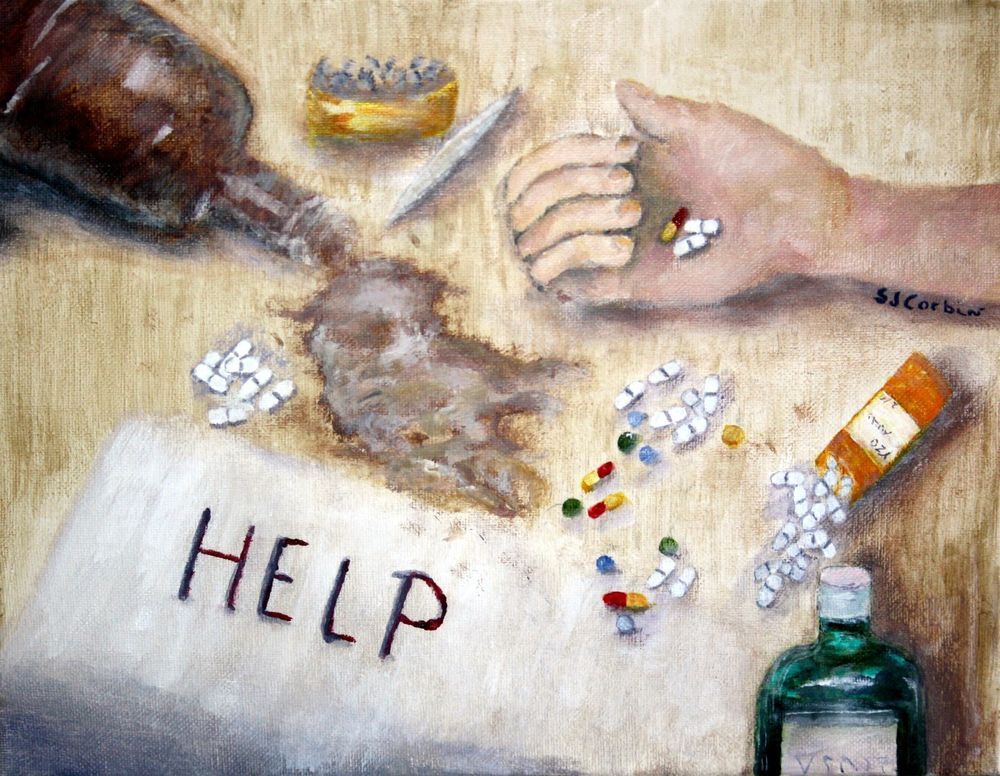
    People talk about the Word of Wisdom like it takes away your freedom.  My experience tells me that drugs and alcohol, and yes, even caffeine take away our freedom, not expand it.  How many people can’t start their day without coffee?  How many people can’t start their weekend without liquor?  How many people are enslaved by substance abuse?

    I am so grateful for my upbringing and the protection I had against these dangerous substances in my life.  Even when I dabbled, I escaped the direst consequences.  I was lucky.  Why chance it?  I’m happier today than I’ve ever been now that I depend on no substance for that happiness.  The Word of Wisdom is a protection and despite my slip-ups through my growth, it did protect me, and I’m grateful for it.