Tag: grace

  • Lighten Up by Chieko N. Okazki

    Lighten Up by Chieko N. Okazki

    These are the highlights of the book Lighten Up that I read in 2021.

    “…” usually indicates the next part of the quote was later in the paragraph.

    Quotation marks indicate the author is quoting someone else.

    A line starting without a capitalized letter indicates my highlight starts in the middle of a sentence.

    This is a book written for members of the Church of Jesus Christ of Latter-day Saints about going easier on themselves, and lightening up.

    Rejoicing in Diversity (Chapter 1-4)

    Chapter 1 Lighten Up!

    The greatest bridge of all is the culture of the gospel.

    Love is not just a nice feeling about someone. It is the pure and joyful pulse of the universe, and being in tune with it means you are in tune with the forces that bind together the stars on one hand and the atoms on the other.

    According to the measurements we usually use, for the most part Jesus did not make people’s lives physically better.

    We are the rainbow, but it is Christ who is the light.

    Chapter 2 Principles and Practices

    We should never compare ourselves spiritually to someone else.

    Sometimes we think we can’t be united unless we’re all the same – doing the same things, talking the same way, understanding a gospel idea the same way. I think the Apostle Paul has a very different opinion.

    Let us be careful not to snicker at jokes that demean and belittle others because of religious, cultural, racial, national, or gender differences.

    (on 300 families surveyed that were considered “Effective Mormon Families” by their stake presidents) 99 percent of these families always paid their tithing; 93 percent said they always accepted Church callings; nearly all of them were sealed in the temple;…When the interviewers asked if they usually had family prayer, 73 percent of them said yes; 66 percent usually held family home evening; 24 percent went to the temple regularly, and 28 percent had regular family scripture study…lots of leeway on practices. Yet all of these families were, in the opinion of their stake presidents, effective and successful. Isn’t that encouraging?

    (effective families continued) “You don’t have to come from a strong LDS family yourself to have one. Forty-nine percent of the husbands and 39 percent of the wives had not graduated from seminary. Only 21 percent of the husbands had been on missions. Twenty percent of the fathers and 18 percent of the mothers were not baptized at age eight. Between 15 and 18 percent were baptized after the age of twelve.

    “At some point, sometimes before marriage, sometimes as a couple, these people decided that their own children would be raised up in a gospel environment…. [And] they followed it up with action.”

    What’s the principle? Teach your children the gospel.

    Lighten up about yourself – and about other people.

    “Ideals are stars to steer by. They are not a stick to beat yourselves with.”

    If we focus on principles instead of practices, we free ourselves from the unwarranted and unnecessary burden of guilt that often ensues when our practices do not match those of everyone else. We also free ourselves from the even more terrible burden of judging others because their practices don’t match ours.

    “The one great stumbling block to our progress in faith is rule-keeping that does not spring from an honest heart…Jesus Christ never condemned the honest heart. His wrath was kindled against the hypocritically empty rule-keeping of the Pharisees.”

    If I know how you feel about Jesus Christ, I am much less worried with how you feel about many other things.

    Chapter 3 Walk in My Zori

    We cannot replay God for his blessings.

    Whatever your season is, enjoy it. Don’t try to concentrate on the tasks of another season.

    A mission…wisdom of our leaders…it is a full-time assignment that deserves and receives the missionary’s complete concentration. 

    Meet the season of your life wholeheartedly.

    Our marriage was like that – a team effort – and It might not have worked so well if we had spent much time thinking about who the leader was.

    I knew that I must not let this time of physical weakness become a time of spiritual weakness as well.

    (Lessons of the zori) One: Mutual obligation to each other…Two: relishing each season of life in turn without trying to rush through them all…Three: knowing that progress comes by teamwork and by each person in a marriage taking turns…Four: there is a time to bear heavy responsibilities and a time to let those responsibilities shift to someone else.

    My great task in this life is the task the Savior has given all of us: “Learn of me.”

    Chapter 4 Limitations: A Fine Line

    We waste tremendous energy when we fret about our limitations instead of getting on with those portions of our life that are under our control.

    (On consecrating what we have and what we are to the Lord’s work, a woman who said she “took my blackness with me…and that was part of what I consecrated. A woman cried saying she never had the privilege of doing this for a black woman before and she replied) “That’s one of the things I can do for you that no one else in the temple today could do.’”

    Magnifying our callings doesn’t mean multiplying our tasks.

    (The earth is ours. Why? Because we’ve deserved it? Because we’ve earned it?) No, because it is our Father’s delight to give it to us: “And it pleaseth God that he had given all these things unto [you]; for unto this end were they made to be used, with judgement…”

    When we can thank God for trials, tribulations, irritations, and afflictions, something happens to transform them into blessings.

    (Being grateful for fleas, concentration camp where guards let them be so they could read their Bible) “My mind rushed back to our first hour in this place. I remembered Betsie’s bowed head, remembered her thanks to God for creatures I cold see no use for” (The Hiding Place, pp. 2018-9.).

    I could have chosen to feel frightened and let the children and parents feel that.

    “And if [you] come unto me, I will show unto [you your] weakness. I give unto [you] weakness that [you] may be humble; and my grace is sufficient for all who humble themselves before me; for if [you] humble [yourself] before me, and have faith in me, then will I make weak things become strong” (Ether 12:27).

    Defining Ourselves (Chapters 5-9)

    Chapter 5 “For Such a Time as This”

    We, like Esther, have come to our place for such a time as this…”we wrestle not against flesh and blood, but against principalities, against powers, against the rulers of the darkness of this world, against spiritual wickedness in high places”

    (Story of Elizabeth Francis Yeates conversion) “When I had read it all,” she wrote, “I said aloud ‘praise the Lord. I have found the right way at last.’”…”I could see no other way but to repent of my sins and to be baptized. I knew my people would bitterly oppose it when they knew it, and that my former friends would treat me coldly but it was worse than I ever thought.” That one sentence, “It was worse than I ever thought,” contains an agony of heartbreak.

    She did not falter. Her last moment of hesitation had come on the very brink of her baptism when she looked down into the dark river at midnight, December 4, 1855. (The ceremony was performed in secret because of the risk of persecution.) She wrote, “[I] felt as though I could not possibly go in it, but a Voice seemed to say ‘There is no other way.’” In faith, she took that step. “It seemed after that,” she wrote, “that every thing had changed. The scales had fallen from my eyes, and the gospel plan was glorious, and I covenanted with my Heavenly Father that however dark the clouds may be, if friends turned to be foes that by His help I would serve Him.

    “And so I discovered that it is not on our forgiveness any more than on our goodness that the world’s healing hinges, but on His. When He tells us to love our enemies, He gives, along with the command, the love itself (The Hiding Place, p. 239).

    “The Holy Ghost filled me with the awareness that my mother had been handicapped in mortal life. She had an emotional handicap, the source of which remains a secret to me. But she is handicapped no longer. And neither am I” (“Forgiving My Mother,” Ensign, August 1990, p. 49).

    Joy comes from serving others and delighting in our sisterhood – in ministering to rather than administering for each other.

    You, in whatever callings you have throughout your own life, will face many choices between serving the program and serving an individual. I believe that if we truly serve individuals in the Lord’s way, we’ll have less trouble with the program. There’s a wonderful story about President McKay that illustrates the distinction. Irene Bates tells the story, which involved her husband, Bill, the first British president of Manchester Stake in England during the 1960s. (The story goes – It was normal for stake presidents and two bishops to be invited to General Conference with all traveling expenses paid. Instructions came to have all bishops and branch presidents come. A stake president named Bill was sure this was an error, but eventually gave the names of all the bishops and branch presidents in his stake. There was one branch president who was overjoyed for the chance to go to General Conference. He and his wife opened up their home in their little town to have church. The local paper featured a story about the trip. Word came down that it was a mistake. The stake president was distraught. He called the president of the British Mission who provided the prophet, David O. McKay’s, direct number. The stake president “looked at the number for a long moment, then said, ‘I’ve got to do it.’” He phoned President McKay and laid the whole situation before him. His response: “You’re quite right, President Bates. It would be very wrong to do that to that good man. We must have them all come. Please do me a favor and let me call President Tanner.” Bill came out of the office with tears streaming down his face.

    Chapter 6 “A House of Glory”

    Each of us wants to be friends with time,
    Comfortable waiting for toast to pop,

    The trick is to find out
    whether a minute is worth more

    Crammed or empty.
    And, either way, to get on with it.

    Heavenly Father doesn’t save up all his spiritual experiences just for sacrament meeting or the temple.

    And that’s because you’re a temple – a living, breathing, walking temple on two legs with a spirit that’s in motion, seeing the needs of many.

    I know that I am nothing; as to my strength I am weak; therefore I will not boast of myself, but I will boast of my God, for in his strength I can do all things.

    Chapter 7 Motherhood: Less Guilt, More Joy

    How grateful the entire house of Israel could be that Moses’ mother did not insist on being Moses’ only mother.

    Our agency is eternal.

    (speaking of her sons) it was far more important to us that they pay their tithing, attend their meetings, and administer the sacrament worthily than it was for their hair to be a certain length.

    “They have their agency.”

    (her son) instantly identifies and summarily rejects attempts to make him feel guilty about not being married. How foolish I would be to pick up the guilt my son has properly rejected and bind it on my own shoulders, to create a burden where none exists!

    (about mothers) guilt is a burden they need not pick up.

    Chapter 8 Defining Ourselves

    Now, the point I want to make is this: Ed was trying to be the best son, the best son-in-law, and the best Mormon he could be. I was trying to be the best daughter, daughter-in-law, and Mormon I could be. Those were three role definitions apiece we were trying to work out with our families and the Church – not to mention trying to be the best husband and wife to each other we could be. How we succeeded had a large impact on our self-esteem. But there came a point where we had to choose. Ed couldn’t be the best son – in terms of Japanese culture and in terms of what his mother wanted – and also be the best Mormon he could be. I couldn’t be the best daughter-in-law – in terms of what his mother wanted – and still be the best Mormon I could be. Being a good daughter-in-law was important to me, but being a good Mormon was more important. Being a good son was important to Ed, but being a good Mormon was more important. So he had to establish that definition of himself without knowing if his mother would ever come to terms with it. 

    Do you feel that newness? Do you feel that strong connection to Jesus and the love that he has for you? If you do, it makes it easy to choose being a good member of the Church first.

    Minimize the areas of conflict.

    You want your family to see that you’re a better, happier person as a result of belonging to the Church.

    Chapter 9 Three Ideas for a Brighter Life

    But it was the fear of making a mistake that paralyzed him, traumatized him, and made him dissolve in tears…. Does that happen to us sometimes?

    Old proverb – “He who makes no mistakes does not usually make anything.”

    Sin involves two characteristics: knowing the law and willfully breaking the law

    D&C 80:3 “it mattereth not, for ye cannot go amiss.”

    The Japanese word for this self-motivated goodness is kigatsuku.

    Embracing Charity (Chapters 10-13)

    Chapter 10 The Pure Spirit of Charity

    (On teaching and knowing the first day what child would be difficult) I learned that I must go immediately to that child and return to him or her often during the day – to give a hug, to ruffle up his hair, to pat her shoulder. If I would do that, by day’s end, whatever in me sensed a difficult difference about that child had dissolved, and we had created the special bond that had come spontaneously with the others.

    (Her husband while Mission President in Japan, when a woman criticized him for helping to setup a tent) “My title may be president, but that only means that I am the Lord’s servant here in Japan.”

    Chapter 11 Surrounded by Samaritans

    We all know why children behave this way. They want to feel special and important – and Satan’s counterfeit way of achieving that goal, even in little children, is to make someone else feel unimportant, unspecial, wrong.

    (dream told by Jude Inmpey of the Aba area of Nigeria) “He dreamed he was at a major social event where an organ was being played, but the sound from the organ was painful. Upon investigation, he found that the organist was playing only on the white keys. The interpretation came to him sometime later at a Church gathering: ‘The Church has for many years played the white keys on the keyboard,’ he said, ‘and now they’re playing both the white and the black, and the music is much sweeter.’”

    But I think of growing up on a plantation in Mahukona. I think of the Hawaiian women in that tiny Mormon branch who welcomed a Japanese Buddhist girl who edged shyly in the door. They made room for her beside their own children, taught her to sing the hymns, and loved her – not because she was going to be the first counselor in the Relief Society general presidency fifty years later, but because she was there and because they had loving hearts.

    Chapter 12 The Power of Charity

    What I’m suggesting is that our expectations need to communicate confidence and joy, rather than anxiety and pressure.

    (Question she and her husband asked themselves when talking about goals for their sons) “If we continue with these same goals and priorities for Ken, will they help him reach his eternal potential?”

    He (Christ) talks about his Father who, in a parched desert land, sends rain “on the just and on the unjust” and permits his sun “to rise on the evil and on the good.” Then he says, “Be ye therefore perfect, even as your Father…is perfect.”  How is our Father perfect? In not withholding the blessings of this sun and rain – which I think are symbols for his love – for anyone.

    love doesn’t make distinctions about whether someone is evil or good, deserving or not deserving. Love will spill over in blessing, simply because that’s the nature of love.

    We only imperfectly grasp his (God’s) immense patience.

    the need we have to achieve perfection. There is no waste. And there is no haste. We will all have all the time we need. We have a loving Father who makes sure we will receive the experiences we need to achieve perfection. 

    we definitely don’t need to inspect other people.

    The reason “charity never faileth” is because we aren’t in charge of the supply department.

    Chapter 13 “Neither Do I Condemn Thee…”

    Neither do I condemn thee (John 8)

    For I am convinced that neither death nor life, neither angels nor demons, neither the present nor the future, nor any powers, neither height nor depth, no anything else in all creation, will be able to separate us from the love of God that is in Christ Jesus our Lord.” (Romans 8)

    Seeking the Light of Christ (Chapters 14-Epilogue)

    Chapter 14 Opening the Door to Christ

    The gospel is not a system that distrusts or despises the world.

    Illness and adversity are not punishments for being alive; they are natural accompaniments of life.

    If one great constant in the universe is the unfailing love of the Savior, the other great constant is his unfailing respect for human agency.

    He wants to hear real prayers, honest prayers.

    But who are we trying to kid? Jesus has just seen the stove where the spaghetti boiled over, and it was pretty obvious that wasn’t the only thing that had ever boiled over on the stove. He heard what you muttered when you picked up that one sock, just as you’ve been doing for the past eight years. He caught that worry about the dentist bill that flashed across your mind when you were putting toothpaste on your brush. He doesn’t want polite platitudes.  He wants you! All of you! He wants to be the center of your total life – the worried you, the mad you, and the sad you as well as the inspired, happy, obedient, loving you. 

    (From a missionary after saying a no substance prayer and wondering why God wouldn’t help her) “This time, I didn’t say a prayer – I prayed.”

    don’t think anything is too small for the Savior’s loving attention.

    Chapter 15 Spiritual Preparation

    But a life centered in the future is not really the kind of life that makes living today worthwhile.

    the gospel brings peace. Even when it stretches us and makes us work hard, it brings peace.

    (After listing all the “shoulds” in the church, or things we’re told we should do) You should do what works for you.

    many of the good women of the world (in whom there is often such an inner sense of spirituality) will be drawn to the Church in large numbers. – Spencer W. Kimball

    Chapter 16 “Learn of Me”

    There are two things I want us to remember about light: First, light doesn’t compete with darkness. It dispels darkness. And second, Christ’s burden is light.

    For all of us – whether we are converts or were born in the Church – there comes a moment when the gospel becomes real to us in a way that it hasn’t been before. These are moments of a reality beyond realness. They make a light go on permanently, a light that never goes off unless a line goes down or a switch gets turned off somewhere. If that’s the light that we share together when we feast on the scriptures and learn of Christ, then it is a light that dispels the darkness in our lives.

    One of the inevitable effects of true spirituality is light-heartedness, a generosity in happiness. 

    Jesus is our yokemate. When we take his yoke upon us, he’s pulling on the other half of the yoke. There aren’t many loads that are too heavy to pull if Jesus is pulling beside us.

    (Paraphrase of Matthew 7:9-10) “What Relief Society president is there among you, who, if a sister ask for comfort, will give her a lecture? Or, if she ask for more spiritually nourishing lessons, will give her guilt instead?

    To have faith in his identity is only half the principle. To have faith in his ability and in his power to cleanse and to save, that is the other half.

    We must have faith in Christ – not only that he is the Savior, but that he is our Savior.

    Stephen Robinson told another story that impressed me. His seven-year-old daughter Sarah asked for a bicycle. She was the only child on the block without one. Brother Robinson didn’t have enough money to buy her a bicycle at the time, so he sidestepped the issue by telling her, “You save all your pennies, and pretty soon you’ll have enough for a bike.” A couple of weeks later, he saw her do a job for Janet, then add the two pennies she earned to some others in a little jar with a slit in the lid. She showed him the pennies in the bottom and said, “You promised me that if I saved all my pennies, pretty soon I’d have enough for a bike. And, Daddy, I’ve saved every single one of them.”

    “My heart melted,” he says. “She was doing everything in her power to follow my instructions.” She didn’t know – though he did – that she would eventually have enough pennies for a bicycle, but by then she would be in high school.  So he took her shopping and they spent all afternoon looking at bicycles:

    Finally we found it – the perfect bicycle, the one she new in the premortal existence. She got up on that bike, and she was thrilled. She then saw the price tag, reached down, and turned it over. When she saw how much it cost, her face fell and she started to cry. She said, “Oh, Dad, I’ll never have enough for a bicycle.”

    So I said, “Sarah, how much do you have?”

    She answered, “Sixty-one cents.”

    “I’ll tell you what,” I said. “You give me everything you’ve got and a hug and a kiss, and the bike is yours.” Well, she’s never been stupid. She gave me a hug and a kiss. She gave me the sixty-one cents. Then I had to drive home very slowly because she wouldn’t get off the bike. She rode home on the sidewalk, and…I drove along slowly beside her. 

    We all want something desperately – but it isn’t a bicycle. We want the celestial kingdom. We want to be with our Father in Heaven. And no matter how hard we try, we come up short. The Savior proposes, “I’ll tell you what. All right, you’re not perfect. How much do you have? What can you do? Where are you now? Give me all you’ve got, and I’ll pay the rest. Give me a hug and a kiss; that is enter into a personal relationship with me, and I will do what remains undone.”

    There is good news and bad news here. The bad news is that he still requires our best effort. We must try, we must work – we must do all that we can.  But the good news is that having done all we can, it is enough (“Believing Christ,” pp 51-52.)

    Chapter 17 Inviting the Dragon

    Epilogue: Strength in Every Season
  • Story of Compassion

    Story of Compassion

    *This is from a true story I read 4 years ago that I can’t find the source for now.

    There is a story of a person named Om whose mother was killed when he was a young child. After his mother was killed, Om was shipped off to another country. There he was held and kept by the very people who killed his mother.

    Om lived in captivity like this for twenty years, mistreated, and kept by those who murdered his mother. At the age of twenty-four he was shipped back to his home and allowed to be free. Twenty years he was with the people who killed his mom and held him against his will.

    One of those captors tried to befriend Om. This person’s name was Marc. Marc wasn’t directly responsible for Om’s suffering. Marc wasn’t the one who killed Om’s mother. But Marc was still one of them. Marc was the enemy.

    The people directly responsible for the murder of Om’s mother told Marc to be careful around Om. Om hated them all and would kill Marc the first chance he got. 

    Over time Marc started to befriend Om and Om did not attempt to kill Marc.

    While in captivity, Om developed a close relationship with a young child. This friendship was one of the few joys Om had in his difficult life.

    One day Marc slipped and startled the young child that Om was so fond of.

    Three female chimpanzees charged at Marc over his mishap and started to bite and attack him.

    As Marc was being attacked, he saw Om charge toward them. Om was furious. Surely Marc was going to pay for startling Om’s precious young one. Om’s time of revenge had finally come. He was going to kill Marc.

    To Marc’s surprise, Om fought off the three female chimpanzees and kept them at bay while Marc crawled to safety. Marc made it to a hospital and barely survived.

    Here was Om, whose mother had been taken from him and his life destroyed by the people Marc represented. Om could easily view Marc as the ultimate evil. And yet, over time, they had become, if not friends, at least friendly.

    Om stands for Old Man.

    You’ve probably figured out by now that Om is a chimpanzee.

    What can we learn from Om?

    We humans consider ourselves so smart, so intelligent, far removed from the beastly chimpanzee. Here is a creature, an animal, a beast, who could show so much forgiveness that he would save a man who represented the destruction of his life.

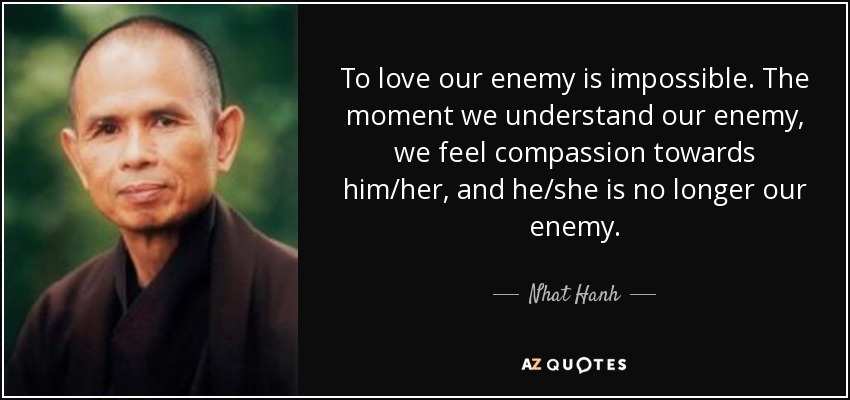
    We humans might immediately point to the lack of intelligence in Om as the reason behind his forgiveness. “If he really understood the situation, as we humans do, he wouldn’t be so quick to forgive.”

    What if the opposite is true? What if it is a sign of Om’s intelligence that he was able to forgive?

    Om showed compassion and forgiveness.

    While we are human and chimpanzees are beast, we can learn something from Om.

    The next time you find it difficult to love, or forgive, or understand, remember Om, a chimpanzee capable of great compassion.

  • Your True Identity

    Your True Identity

    *I originally wrote this in 2022.

    I’d like to discuss Grace and our Identity.

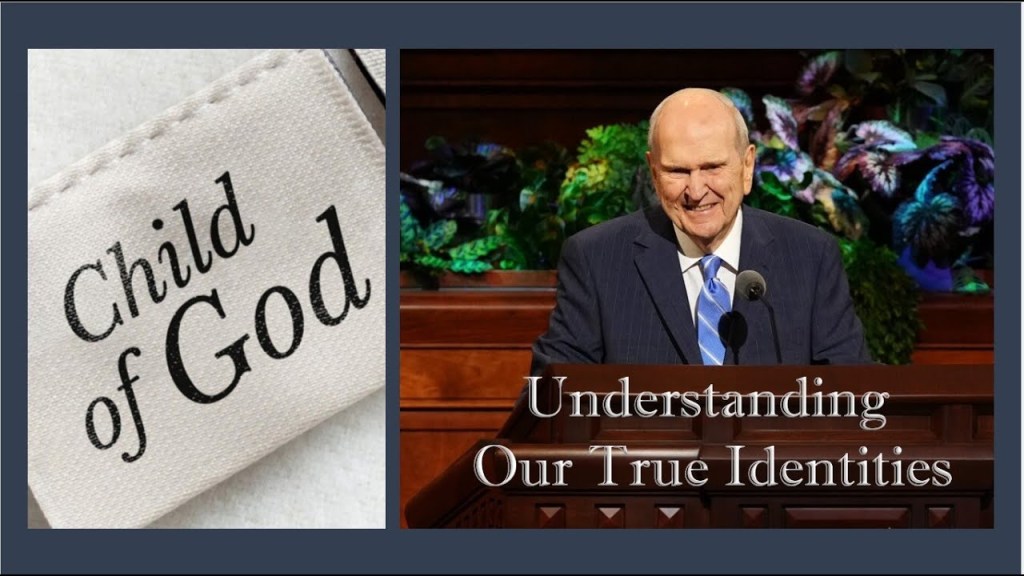
    In a recent address to young adults of the Church of Jesus Christ of Latter-day Saints, the prophet of the Lord, President Russell M. Nelson, talked about the three defining identities of a member of Christ’s church. Those identities were:

    1. Child of God
    2. Child of the covenant
    3. Disciple of Jesus Christ

    The grace portion of what I’d like to discuss, like President Nelson’s identities, will focus on members of Christ’s church. This doesn’t mean what I’m saying here doesn’t apply to all. I believe it does. Whether someone believes in God or not, the first identity of all God’s children is true. Every soul on this earth is a child of God, whether they believe it (or like it) or not. The other two identities are not excluded from anyone. Anyone can be a child of the covenant by aligning themselves with God. Anyone can be a disciple of Jesus Christ. These must be choices.

    Now that I’ve established that this is for everyone, let’s talk more about President Nelson’s message of identity. President Nelson emphasized that if the Lord spoke directly to us, the first thing He’d want us to understand is who we are; thus, the identities. It’s my testimony that the Lord was reminding us of this, through His mouthpiece, the prophet.

    President Nelson said:

    “Tonight, I plead with you not to replace these three paramount and unchanging identifiers with any others, because doing so could stymie your progress or pigeonhole you in a stereotype that could potentially thwart your eternal progression.

    There are various labels that may be very important to you, of course. Please do not misunderstand me. I am not saying that other designations and identifiers are not significant. I am simply saying that no identifier should displace, replace or take priority over these three enduring designations …”

    The world would so quickly have us forget who we truly are, and our true potential. The multitude of designations we can apply to ourselves pale in comparison to “Child of God.” Can you imagine being a prince of a nation, and calling yourself a peasant? Can you imagine being the president of a university and calling yourself a student? Can you imagine being the captain of the team, and calling yourself a bench warmer? That is what many of us do every day when we give ourselves any title but “Child of God.” Wear your title with pride. Your Father is God of the entire universe. He is King, He is Ruler, and you are His Child.

    “Make no mistake about it: Your potential is divine. With your diligent seeking, God will give you glimpses of who you may become. … As you embrace these truths, our Heavenly Father will help you reach your ultimate goal of living eternally in His holy presence.”

    -Russell M. Nelson

    Let’s transition into Grace. I can’t say anything better here than Brad Wilcox said in his talk His Grace is Sufficient, so please read the talk to remind yourself how patient and loving and kind our Savior is. I believe this may be the most powerful address ever given, especially for our day. I mean that literally. His Grace is Sufficient is so filled with eternal and significant truths, you could quote the whole thing. I will quote much of it here.

    I believe there is an epidemic in the Church of people not feeling good enough. I believe this aligns with President Nelson’s message of forgetting our identity. I think it also aligns with a misunderstanding that Satan has perpetuated, a misunderstanding of Grace and the Atonement of Jesus Christ.

    Brad Wilcox said, “Too many are giving up on the Church because they are tired of constantly feeling like they are falling short.”

    He then gave an example:

    “There are young women who know they are daughters of a Heavenly Father who loves them, and they love Him. Then they graduate from high school, and the values they memorized are put to the test. They slip up. They let things go too far, and suddenly they think it is all over. These young women don’t understand grace.”

    I would add – these young women don’t understand who they are. Slipping up doesn’t take away any of your three identities. Because you make a mistake, are you no longer God’s daughter? Because you slip up, are you no longer a daughter of the covenant? Because you’re not perfect, are you not a disciple of Jesus Christ? If that were the case, Christ would never have disciples! Be less hard on ourselves. And remember who we are.

    Few paragraphs in a talk have applied more perfectly to me:

    “There are young men who grow up their whole lives singing, “I hope they call me on a mission,” and then they do actually grow a foot or two and flake out completely. They get their Eagles, graduate from high school, and go away to college. Then suddenly these young men find out how easy it is to not be trustworthy, loyal, helpful, friendly, courteous, kind, obedient, cheerful, thrifty, brave, clean, or reverent. They mess up. They say, “I’ll never do it again,” and then they do it. They say, “I’ll never do it again,” and then they do it. They say, “This is stupid. I will never do it again.” And then they do it. The guilt is almost unbearable. They don’t dare talk to a bishop. Instead, they hide. They say, “I can’t do this Mormon thing. I’ve tried, and the expectations are just way too high.” So they quit. These young men don’t understand grace.”

    For me, it was a process of making mistakes, and then deciding I didn’t need to ask for forgiveness. The guilt of asking for forgiveness wasn’t worth it. I just moved on and stopped asking. But my soul was crying out. What saved me was my testimony of Jesus Christ and His Church, the Church of Jesus Christ of Latter-day Saints. Without that testimony of His restored Gospel, I would have never returned. It wasn’t worth feeling the guilt. But once I did return and reminded myself of the fruits of repentance and the pure joy of forgiveness, I could never go back. I continued to make mistakes and I continued to fall short. I continue to fall short. But that day when I cried tears of joy in a church parking lot, I felt Christ so palpably and so near, I knew I could never go back. I knew I had to keep trying. My soul had been starved for so long and once I felt the grace of Jesus Christ, which I only had to ask for, returning into my very being, I couldn’t go back.

    I plead for all of God’s children, all of you, my brothers and sisters, to not give up. Ask for that forgiveness, endure the guilt, and feel the overwhelming joy.

    Brother Wilcox in continuing to describe me, “…guilt is almost unbearable. They don’t dare talk to a bishop. Instead, they hide. They say, “I can’t do this Mormon thing. I’ve tried, and the expectations are just way too high.” So they quit. These young men don’t understand grace.”

    I definitely didn’t understand grace until I’d felt it’s full magnitude. Don’t give up on who you are. Don’t give up on who you can become. Don’t forget your true identity. “In all of these cases there should never be just two options: perfection or giving up. When learning the piano, are the only options performing at Carnegie Hall or quitting? No. Growth and development take time. Learning takes time. When we understand grace, we understand that God is long-suffering, that change is a process, and that repentance is a pattern in our lives. When we understand grace, we understand that the blessings of Christ’s Atonement are continuous and His strength is perfect in our weakness (see 2 Corinthians 12:9). When we understand grace, we can, as it says in the Doctrine and Covenants, “continue in patience until [we] are perfected” (D&C 67:13).”

    “Grace is not a booster engine that kicks in once our fuel supply is exhausted. Rather, it is our constant energy source.”

    Let Christ be your constant energy source. Don’t give up.

    “I testify that God’s grace is sufficient. Jesus’ grace is sufficient. It is enough. It is all we need. Oh, young people, don’t quit. Keep trying. Don’t look for escapes and excuses. Look for the Lord and His perfect strength. Don’t search for someone to blame. Search for someone to help you. Seek Christ, and, as you do, I promise you will feel the enabling power we call His amazing grace… I believe in you. I’m pulling for you… And Jesus is pulling with you.”

    -Brad Wilcox

    What has Christ done for us? What has God given us? President Nelson reminded us:

    “In short, They have offered you everything! Heavenly Father’s plan for His children allows us to live where and how He lives and ultimately to become more and more like Him. His plan literally makes the richest blessings of all eternity available to us, including the potential for us to become ‘joint-heirs with Christ’ (Romans 8:17).”

    “God will do “everything He can, short of violating your agency, to help you not miss out on the greatest blessings in all eternity.”

    Don’t give up. Don’t be discouraged. Never forget your divine heritage and what it affords you. You are a child of God! A joint heir with our Savior, the King, Jesus Christ. Don’t ever replace your identity with something temporary, that only this world gives. Satan abandoned his identity and now he wants nothing more but to deceive you into abandoning yours. Don’t do it!

    I bear my testimony that Christ’s Grace is Sufficient. He died for me, and He died for you. He did it all. There’s nothing we can do to screw it up if we just turn to Him. There’s nothing we can possibly do to make God abandon us. He loves us with a love we can’t comprehend.

    One day we’ll stand before Him, our Father, and we’ll remember. We’ll remember what love truly is, and we’ll remember who we are. Remember today and move towards that glorious light of living with Him, our Savior, and our families through eternity.

  • Suzerain and Vassal: The Father and the Son

    Suzerain and Vassal: The Father and the Son

    Mosiah 15:1-2 reads:

    1 And now Abinadi said unto them: I would that ye should understand that God himself shall come down among the children of men, and shall redeem his people.

    2 And because he dwelleth in flesh he shall be called the Son of God, and having subjected the flesh to the will of the Father, being the Father and the Son…

    How can Christ be both the father and the son? It’s a question that has troubled Christianity since before it was called Christianity. How can there be the one true God (Jehovah) and yet Jesus Christ (Jehovah) pray to His father who is in heaven?

    How can Christ be both the father and the son? Well, how are you, reading this a father (or mother) and a son (or daughter)? Sometimes we might overcomplicate the simplest things.

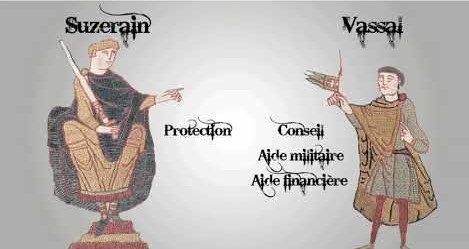
    In the ancient near east there existed a system wherein covenants could be made. That system could be described as a Suzerain Vassal covenant or treaty. In this sort of agreement one of the parties would be greater or more powerful than the other. The suzerain would be the powerful entity. The vassal would be the subservient, or lesser, or learning entity. In this sort of treaty, the vassal would pay tribute or show some form of loyalty to its suzerain. In return, the suzerain would provide protection or some other sort of benefit to its vassal. There could only be one suzerain/vassal connection. Meaning, a vassal couldn’t have two suzerains. This would basically be treason. You can only serve one lord.

    From this article on the suzerain/vassal covenant relationship:

    “The covenant Yahweh established with Israel at Mount Sinai exhibits striking parallels with Hittite suzerain/vassal treaties, which had six basic features: 1) a preamble that identifies the suzerain; 2) a historical prologue that recounts the previous relationship between the parties; 3) covenant stipulations to which the vassal must agree; 4) provisions for periodic reading and safekeeping of the covenant; 5) witnesses to the covenant; and 6) blessings and curses should the vassal either keep or fail to keep the covenant. The Sinaitic covenant contains all six of these characteristics.”

    In his book, The Last Days: Types and Shadows from the Bible and the Book of Mormon, Avraham Gileadi states:

    “the idea of Israel’s suzerain or Lord [Jehovah] assuming vassal or servant status in order to answer to his suzerain [God the Father] for his people’s rebelliousness introduces the concept of a God higher than Israel’s God. That is, Jehovah, the God of Israel, is a “Son” to God the “Father” (3 Nephi 11:7,11,32; compare 15:4-5). That concept does not appear explicitly in the Old Testament. Many Jews, therefore, insist that God is but “one” (Hebrew ehad; Deuteronomy 6:4); other than the Lord, they assume, no God exists (see Isaiah 44:6,8; 45:21-22). However, the idea of “the Father” and “the Son” makes perfect sense in light of ancient Near Eastern suzerain (Lord)–vassal (servant) covenant relationships.

         “Abinadi (and every prophet who teaches God’s redemption of humanity) here enlightens us. Abinadi says that God, who redeems his people, is both “the Father and the Son” (Mosiah 15:1-3; compare Alma 11;38-39; Ether 3:14). That abstruse statement seems at first glance to contradict the careful distinction between the Father and the Son that other scriptures teach. But when viewed from the ancient Near Eastern suzerain (lord)–vassal (servant) covenant relationship, we gain insight on how the Lord can serve as a suzerain or Father to his people Israel, but also can serve as a vassal or Son to his Father or suzerain. To Israel, the Lord is Father, and they become his sons or vassals. To God the Father, the Lord is the Son, subjecting his will to the Father in order to merit Israel’s salvation (Mosiah 15:2,7).

         “Moreover, as the literal and loyal Son of a divine Father–as the Son of a righteous [covenant suzerain “Father”]–the Lord is not subject to death unless he himself consents to die (See the type of Isaac’s consenting to let Abraham sacrifice him–Genesis 22:9) Even if he does die, the Father must come to the aid of his vassal and deliver his Son from death. In ancient Near Eastern literatures there is the concept of the god who dies only to revive and assume the throne of a senior deity. Thus “God breaketh he bands of death . . . giving the Son power to make intercession for the children of men” (Mosiah 15:8). What the Father does for the Son, the Son does for his sons and daughters: when “the Son reigneth, and hath power over the dead . . . he bringeth to pass the resurrection of the dead” (Mosiah 15:20).

         “Moreover, the moment one introduces the idea of the Father and the Son, one also introduces the concept of spiritual progression. That constitutes as much a part of the “good news,” or gospel, as does redemption from death itself (see Mosiah 15:10-19). Inherent in a Father/suzerain–Son/vassal relationship with God is the assuming of divine attributes–becoming God-like…”

    So we see that this Near Eastern tradition of suzerain and vassal treaties and covenants perfectly aligns with how we relate to Jesus Christ. He is our suzerain, making us His children. God is His suzerain. Through our covenant relationship with Christ, we receive protection from both Christ and His Father and our Father, God the Father.

    Another interesting thought from that note is how Christ conquered death. It was by His relationship with the Father that He was able to conquer death. He in turn allows us the same opportunity when we link ourselves to His will and power. Christ received His divine identity from His Father. We can receive our divine identity through Jesus Christ’s Atonement and conquering of death. This is why we only come to the Father through the Son. Christ is our protector, our Suzerain. As we serve Him, we receive that protection as His vassals.

    In addition, another way that Christ is our father is through the resurrection. It is due to Christ’s atonement and resurrection that we are able to be resurrected. This makes Christ the father of our bodies. For we wouldn’t have our bodies without His resurrection and the gift that we can be resurrected into our bodies. God the Father is still the father of our spirits. Whether that be through adoption, some measure of creation, or some other way, we’ll one day know.

    A last note I wanted to make that I liked from this article:

    “The basis of the covenant was Yahweh’s gracious acts toward Israel, not their obedience to him.”

    Our covenant relationship with Christ is a reminder that His grace saves us. It doesn’t matter how obedient we are. We needed His grace to save us. As our Suzerain, His covenant with us is based so much more on how He loves us and all He is willing to do for us than anything we can do for Him. We can never properly repay Christ for all He’s done for us. He is the Suzerain. He has the power to save us.

    This is the good news of the Gospel. Because Christ conquered all, we can become like Him, and in turn, become like our Father in Heaven.

  • Forgiveness

    Forgiveness

    Forgiveness can be so hard. There’s a reason Christ emphasized it so differently from normal human traditions. Human thinking is, “I can’t forgive them that many times.” God’s response is, “how many times have I forgiven you?”

    That point is brought home in Matthew chapter 18. In verses 21-23, Peter asks that question we’re all tempted to ask. How many times must I forgive? Seven? Surely seven is good. It’s 4 more times than the Hebrew law dictated at the time. Christ’s famous response,

    “I say not unto thee, until seven times; but, until seventy times seven.”

    Christ expounded upon this with the parable of the servant who owed a king a large sum. When brought forward to pay the sizeable debt, the servant fell down before the king and begged for patience. In great mercy, the king waived the debt.

    That same servant then went out and grabbed another servant, demanding that a tiny amount be paid back. The second servant asked for patience and the same servant who had just been shown so much mercy had the second servant thrown into prison.

    When the king heard this he “was wroth, and delivered him to the tormentors, till he should pay all that was due to him” (Matthew 18:34).

    It seems so easy here on earth not to forgive others. What does it hurt us to not forgive? How does that person who wronged me deserve my forgiveness?There is a story from the book Return from Tomorrow. A holocaust survivor is found in a concentration camp. When he is liberated by the soldiers, he is put to work helping with the sick and dying around him. He is energetic and relatively healthy. The soldiers finally say to him, “you must have been lucky. You haven’t been here long, huh?” The man tells them how many years he’d been at the concentration camp; a long time. They marvel at his health. How can it be?

    The man tells them that early in the war, his wife and children were murdered before his eyes. He desperately wanted to hate these men, hate this war, hate this world, hate God. He had every reason to. But, the survivor made a decision. He decided he would not carry that hate with him. He decided he wouldn’t poison himself with hate. Forgiveness saved his life.

    Elder David E. Sorensen said, “When someone has hurt us or those we care about, that pain can almost be overwhelming. It can feel as if the pain or the injustice is the most important thing in the world and that we have no choice but to seek vengeance. But Christ, the Prince of Peace, teaches us a better way. It can be very difficult to forgive someone the harm they’ve done us, but when we do, we open ourselves up to a better future. No longer does someone else’s wrongdoing control our course. When we forgive others, it frees us to choose how we will live our own lives. Forgiveness means that problems of the past no longer dictate our destinies, and we can focus on the future with God’s love in our hearts.”

    We may think not forgiving others is harmless, but hate is poison. Holding onto grievances and refusing to forgive only poisons ourselves.

    In the book, Surprised by Hope, N. T. Wright said: “If you lock up the piano because you don’t want to play to somebody else, how can God play to you?“

    Reading back on the story of the king and the foolish servant who would be forgiven his great debt then demand payment from another. We read that and scoff at the hypocrisy. Yet we all have this same hypocrisy in us. And God is our king, having forgiven us all, and wroth when we can’t extend the same favor to our fellow brothers and sisters.

    Verse 35 concludes that story:

    So likewise shall my heavenly Father do also unto you, if ye from your hearts forgive not every one his brother their trespasses.

    Going along with what Elder Sorensen said, from this link: “I think it is helpful to recognize that offences and injuries are always bottled in our past. So, forgiveness requires us to deal with our past – not our present or future. We have to let go of our past in order to fill up the present and bless the future. When we fail to deal properly with our past, we are like someone whose elastic belt is caught on a barbed wire fence; we can make very little forward progress until we unhook ourselves from our pain and injustice in our past.”

    That quote is perfect in explaining how that man from the concentration camp survived. That man, if he hated, would have been stuck in the past, attached to a barbed wire. Never being able to progress to his future. Instead, he chose to forgive, free himself, and save himself. That is the true power of forgiveness.

    We have all been wronged. We have all wronged others. Some of us have been wronged worse than others. But life isn’t a ledger book. Life isn’t a tally of who has been wronged the most. There is always someone that has been wronged worse than you have. The book The Shack talks about this eternal idea of “being wronged.” If you refuse to forgive someone, and that someone refuses to forgive their father who made them that way, and their father refuses to forgive his father who made him that way: on and on for eternity. Grievances go back to the beginning of time. Forgiveness ends the vicious cycle of hate. 

    Forgive our trespasses as we forgive those who trespass against us.

    There was a point in my life when I realized I’d been carrying around poison for far too long. There was a day I realized I had to forgive some people from my past so that I could move forward. I reached out to some people I hadn’t spoken to for so long. It helped me. I felt that feeling, of getting a weight off your shoulders. For me, it was more a feeling of getting poison out of my system. I thought I’d forgiven. It wasn’t until I actually said it, to the person that needed to hear it, and apologized for my part in pain that was caused, that I realized the burden I’d been carrying for so long.

    We all must forgive.

    Again, I know that sometimes such heinous wrongs are committed that some people feel they have the right to shout, “But I’ve never hurt someone like they hurt me!”

    In those moments think about the person from the concentration camp who refused to hate. He chose to forgive. It saved his life. He had more reason to hate than just about anyone ever has. He chose not to. There’s always someone that deserves to hate more. Choose to love instead.

    Let go of the hate you harbor and forgive. Do you want to come before God and Him to ask, “how can I forgive you, when you never forgave?”

    We all do wrong, and we all get wronged. Remove yourself from the past and progress.

    A forgiveness post would be lacking if it didn’t mention where all forgiveness originates. Always remember, there is only one person who can truly break the vicious cycle of pain and hate. Jesus Christ is the ultimate giver of grace and mercy. If you feel you truly can’t forgive, lean on Him. He felt the pain, He felt all of it, and He has forgiven us. He’s forgiven all of us. He died so that we can experience the true feeling of freedom that He allows. His blood paid our debt, all of it. As we rely on Him, we will find the forgiveness our hearts desperately need.