Tag: Heavenly Father

  • Satan is Jesus’s Older Brother

    Satan is Jesus’s Older Brother

    Stay with me.

    Before I go down this path let me acknowledge some things:

    1. We don’t understand how time works in eternity. It’s likely everything I’m about to say is nonsense from the eternal perspective. Still, have some fun with me. I know I got your attention with that title.
      • It’s very possible that God “adopted” billions of intelligences at the same time. Meaning, It didn’t go Satan, then Jesus, then Moses, then you, then me, etc. It’s probably not that simple. Anyways…

    Now that’s out of the way, I think there is a fun thought experiment/argument to be had that despite Jesus Christ having the title of “Firstborn”, Satan might be “older” than Jesus.

    Everything in this world symbolizes Jesus Christ. Everything points to Him (Moses 6:63, 2 Nephi 11:4). 

    There are some individuals from history that are clear types and shadows of Jesus Christ.

    Examples:

    1. Joseph of Egypt
      • Savior of his people and all of Egypt
    2. Moses
      • Liberator of Israel
    3. Nephi
      • Led his people to the Promised Land
    4. David
      • King of Israel
    5. Isaac
      • Inheritor of all that Abraham had and father of Israel (Jacob)
    6. Jacob (Israel)
      • Father of the covenant people of Earth
    7. Joseph Smith
      • Restorer of the Gospel on Earth (through Jesus Christ, of course)
    8. Peter
      • Leader of Christ’s church after Christ’s ascension
    9. Abel
      • In the likeness of his father, hearkened to the voice of the Lord
    10. Ephraim
      • Received the birthright, descendents are responsible for the gathering of Israel

    All of these men represent Jesus Christ in different but very clear and obvious ways. 

    What do all these men have in common? None of them are the oldest in their family. None of them are the firstborn.

    Interesting, right?

    “Well, but, the scriptures say Jesus Christ is the firstborn of God. Clear as day,” said a hypothetical someone arguing against my point.

    What if “firstborn” has meaning closer to heir, covenant son, preeminent one?

    Psalm 89:27 speaking of David, King of Israel, reads:

    “I will make him my firstborn, higher than the kings of the earth.”

    David was the youngest son in his family.

    In Genesis 22:2 God says to Abraham:

    “Take now thy son, thine only son Isaac, whom thou lovest…”  

    But Isaac wasn’t Abraham’s only son. He also had Ishmael. Maybe Isaac was his covenant son. 

    Jeremiah 31:9 reads:

    “For I am a father to Israel, and Ephraim is my firstborn.”

    None of Ephraim, David, or Isaac were the firstborn. Yet they were each described as such in varying ways.

    Now Jesus’s words about Himself:

    “I was in the beginning with the Father, and am the Firstborn” (D&C 93).

    This is a captivating feature of scripture. There is a repeated theme of an older brother rejecting His younger brother who receives stewardship over him. 

    Cain opposed Abel.

    Ishmael yielded to Isaac.

    Esau opposeed Jacob.

    Joseph of Egypt was rejected by his older brothers.

    David was initially overlooked by his older brothers.

    Are these older brothers representative of Satan, the way the younger brother is representative of Jesus?

    Sound familiar? (Satan’s Story and Satan’s Story Continued)

    Maybe all these examples are meant to teach us something. It’s hard to be an older brother and yield leadership to your younger brother. What if Satan had taken another route and humbly accepted Jesus Christ? What if he accepted Jesus Christ’s position as “firstborn of the Father”, the chosen one, God’s beloved? What if Cain didn’t oppose Abel? Where would Cain be now?

    Also, what if Joseph of Egypt’s brothers accepted his position of power over them from the beginning? Joseph wouldn’t have been able to complete his earthly mission of saving all of Egypt. Sometimes, maybe, we need opposition (2 Nephi 11).

    But what happens when older brothers do humbly yield to their younger brother? Joseph Smith’s older brothers were legendarily supportive of his calling as God’s prophet. Esau famously humbled himself and reconciled with Jacob. Moses’s older brother Aaron appears to have accepted Moses’s role as prophet most of the time. Amazing things happen when older brothers can humble themselves.

    What if Laman and Lemuel could have humbled themselves before Nephi? Think of the love, peace, and prosperity that could have existed among the Nephites in the Americas. But then we wouldn’t have had all the lessons the Book of Mormon teaches us about opposition.

    God’s plan is perfect.

    It’s fascinating to look at scripture from a broader perspective, look for patterns, and try to grasp all that God wants us to learn and understand.

    While I prefaced this post saying it could be somewhat silly of an exercise, I stand by it. I think it’s a good exercise to review the scriptures in out-of-the-box ways and try to see the patterns God may be trying to teach us.

    Wherever in the birth order Jesus Christ and Satan landed, we know they were “older.” We know that God chose Jesus Christ to be His Son, the Redeemer of the world, the Savior of mankind. We know God doesn’t make mistakes. I’m grateful for what the scriptures teach me about Jesus Christ and that they can constantly strengthen my testimony of Him and all that He did for me.

  • Abraham’s Faith

    Abraham’s Faith

    I had a thought (shocker).

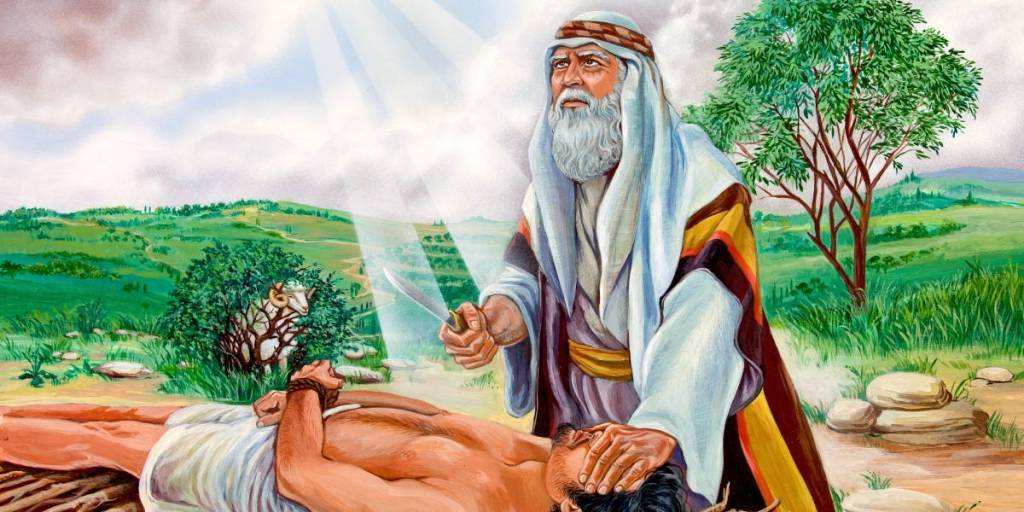
    I shared last week about Abraham’s shared experience of almost being sacrificed by his father.

    Here’s another way to look at it.

    We marvel at the faith of Abraham to sacrifice his son. He didn’t know that God would stop him moments before he went through with it. For all Abraham knew, his son would be dead, gone. And yet, he was still willing to do what God asked him to do.

    We marvel at this faith to do the impossible.

    What about God, when it came to sacrificing His only Son? Well, we would say, God knew the end. He knew His Son would conquer death and be resurrected. He knew His Son’s death would only be temporary. He’s God. He has nothing to worry about. Abraham was just a man. Abraham had no such knowledge.

    Or did he? 

    Faith is the “assurance of things hoped for, the evidence of things not seen” (Hebrews 11:1). Faith, by its nature, is to not have a perfect knowledge of things. Was Abraham’s faith so perfect that he did know, just like God knew with Jesus Christ, that everything would be ok?

    Abraham had a promise from God. God promised Abraham that his seed would be as numerous as the stars in the heavens and the sands of the sea. Abraham had some understanding of the eternities. It didn’t matter to him when the promises of God would be fulfilled. He trusted God. He had a perfect knowledge that God would keep his promises. 

    Now. The gut-wrenching, heart-tearing, indescribable and impossible act of losing your son. The pain. What about that? Abraham had faith that God would even make that right. Abraham had faith that God would only allow him to do what ultimately he needed to do to become who he could become. Abraham trusted God enough to do anything. Why? I think because he knew God loved him. Abraham didn’t have faith that God loved him, didn’t hope that God loved him, didn’t believe that God loved him. He knew. 

    Maybe faith proceeds knowledge.

    If we truly understand God’s love for us, His children, we can do anything, and endure anything.

    Abraham didn’t know the exact result of the sacrifice of his son. But he did know that God kept His promises. And hew knew that God loved him. And whatever the result, it would all work out for their benefit, glory, and growth in the long run. 

    That is faith.

  • Monumental Moment

    Monumental Moment

    I’ve written about seemingly small moments in my life that made a huge difference on the trajectory of my future. I’ve mentioned a postcard. I’ve also mentioned a seemingly inconsequential invitation to join a basketball team (from that same link). I’d like to elaborate on that basketball invitation story.

    I was so nervous my first time coming back to church that I made my roommate come with me so I didn’t have to go alone. It had been years since I’d been at church.

    I only remember one thing about that first day back at church, and it was after sacrament meeting ended. I’d just sat through my first sacrament meeting in I’m not sure how many years. I was self-conscious, uncomfortable, ready to leave, when the person in front of me turned around in his seat.

    “Hey, do you play basketball?” He asked.

    I remember being blown away. I remember thinking, “Wow! The spirit is powerful here! How did he know???”

    I’ve thought back on that moment. Yes, the spirit was powerful that day. But not in a mystical, this stranger in front of me received a supernatural message that I loved basketball, kind of way. The world would consider that a powerful spiritual experience. What actually happened was equally as powerful, yet more easily “understood” by worldly standards.

    The truth is, as I now suspect, the person who sent that postcard went the extra mile. When I asked about going to church, after telling me where they met and what time, she also reached out to the Bishop of that ward. In hindsignt, I’m pretty sure I was brought up in ward council, a meeting where leaders of a church ward discuss pressing matters.

    I’m sure I was mentioned. I’m sure Kelsie, the postcard giver, told the bishop I liked basketball. That person who turned around in their chair to ask if I liked basketball was in that meeting. I’m sure he was looking for me.

    Is this any less miraculous?

    Is it any less of a miracle that an individual, who had never spoken to me before had heard of me and knew I needed friendship extended in my direction? A complete stranger stepped out of his comfort zone and said hi to a stranger and asked a seemingly random question. A complete stranger didn’t care if I was the worst basketball player in the world, he still asked me to join a city league team with him. 

    As a basketball player, that last part is significant. I would hesitate to ask someone I’d never seen play basketball to join my team. How do I know that person can dribble a basketball? How do I know whether or not that person knows how to play team basketball? How do I know whether or not that person is a nightmare on the basketball court?

    The invitation that day was about more than basketball. That invitation came from an individual who had heard about me, a wayward soul trying to come back, and followed a spiritual prompting to invite me to play on a basketball team- basketball skills be darned.

    That person’s name was David Lake and I owe him a great debt. I have thanked him for that moment. Such a tiny moment. I know he didn’t think about it much after doing it. That was just the kind of person he was. In that moment, a stranger knew me, cared about me, and invited me. 

    That moment made all the difference in my life.

    It’s amazing how a seemingly tiny moment can change the trajectory of a life. Where am I if not for that monumental moment? Did I come to church the next week? Did I meet my wife? Do I have Ivy, Sage, Wren – my own eternal family? 

    There are some moments that carry more weight than others, no matter how seemingly inconsequential.

    My invitation to anyone reading- the next time you’re at the grocery store, or the dog park, or the gym, or at work, and that strange thought comes to your mind while you’re conversing with someone, “Invite them.” Do it. You don’t know the profound blessing that can change a person’s life because you decide to step out of your comfort zone and invite a stranger.

    If you have been blessed by the Gospel of Jesus Christ, share it. Invite others. It’s the least you can do to thank your Heavenly Father for this gift He has given you.

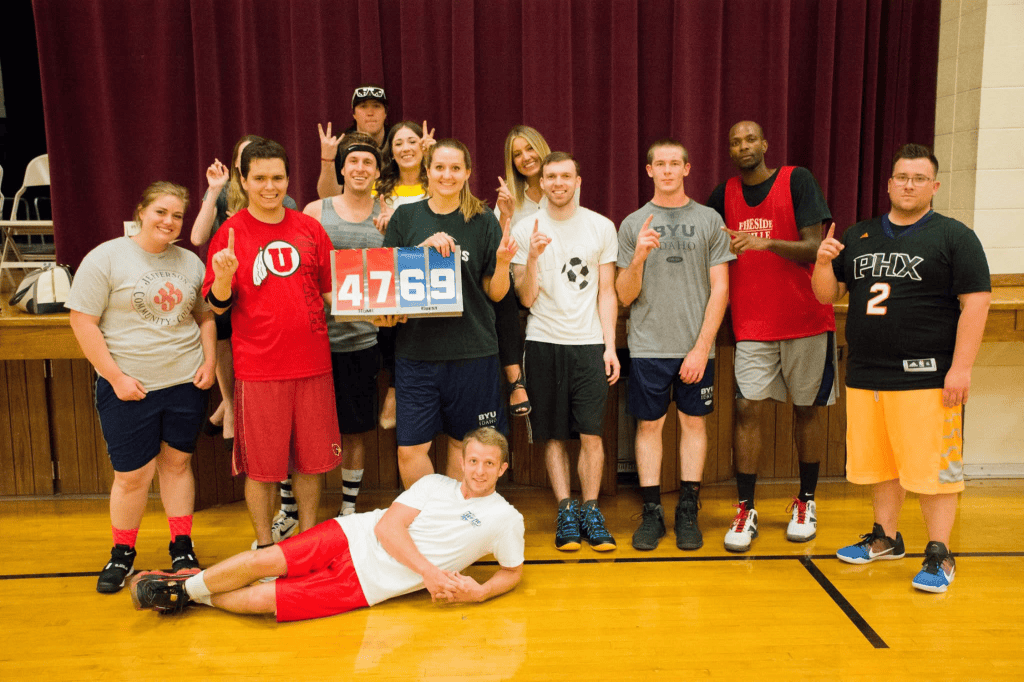
    Beth and I were laughing how roommate Chris is in this picture but I’m not. David Lake prominently placed.
    Beth and I actually met through church basketball. Crazy huh? As you’ll see in this picture, couldn’t be seen too close to her, would be too obvious.
    A future wife, future best friend I still coach with, many lifelong friends, and saving Bishop all in one picture. That’s a miracle.
  • Do Miracles Exist Today? 

    Do Miracles Exist Today? 

    In his talk, “Has the Day of Miracles Ceased?”, Elder Donald L. Hallstrom provides some interesting thoughts on miracles.

    Elder Hallstrom discusses what defines a miracle. In his talk he says,

    “Often we describe a miracle as being healed without a full explanation by medical science or as avoiding catastrophic danger by heeding a clear prompting. However, defining a miracle as “a beneficial event brought about through divine power that mortals do not understand” (encyclopedia of Mormonism 1992) gives an expanded perspective into matters more eternal in nature. This definition also allows us to contemplate the vital role of faith in the receipt of a miracle.” 

    This led me to think about miracles. Often as I read the New Testament I wonder, where are the modern day miracles? Where are people having devils cast out, cripples walking, the blind seeing? Have miracles ceased? Elder Hallstrom’s talk is a reminder of something important: Miracles have not ceased.

    What a fascinating thing that during the age of constant miracles, we think miracles have ceased. Glasses make those with terrible eyesight see. Lasers are used to treat poor eyesight. Giant tubes with propellers fly people across contintents. Emergency personnel have extraordinary equipment to save lives.  We travel at unbelievable speeds, seeing the whole world in days. We talk to and see someone on the other end of the globe like it’s no big deal. Have miracles ceased? We are surrounded by miracles.

    These obvious miracles through technological advancements can sometimes distract from something even more profound. That is that every single breath we take is a miracle. When is the last time you pondered child-birth? Really thought about it. Two people love each other, unite with each other, and then a child grows from nothing in the belly of a woman who carries that child. That child has a mixture of DNA from their parents. That child enters the world and within months is breathing, eating, walking, and talking. We call it “the miracle of child birth” but when is the last time you really thought about it? What a miracle this life is. We’re surrounded by miracles, every moment is a miracle.

    Which leads to this thought: Faith proceeds the miracle. Why? Because faith sees the miracle. Faith is the recognition of the miracle. There is no miracle without the faith.

    “A beneficial event brought about through divine power that mortals do not understand.”  What do we really understand about our ultimate benefit? 

    In his talk, Elder Hallstrom talks about the family of a man who survived a hiking accident. All rational medicine and scientific data said he should have been dead. Elder Hallstrom said, 

    “I had a profound impression—a spiritual witness—that Holly and each of the five beautiful children who sat in the living room around their parents have such faith that they could have accepted whatever the outcome might have been that day and they still would have spiritually prospered.”

    Is that not the miracle? That something so tragic could occur and a family could become stronger and grow and become better from a heart-wrenching trial?

    What if that man survived because of the faith of his wife and children? What if he could have died and it wouldn’t have impacted any of their faiths? What greater miracle than this: Hope and peace.

    Miracles come after the faith – why? Because faith makes the miracle. The miracles aren’t that someone is healed but that whether or not they were healed, it would be for their ultimate benefit. Do we have faith not to be healed and to trust God in all things?

    “Neither at any time hath any wrought miracles until after their faith” (Ether 12:18).

    Faith IS the miracle. And miracles are recognized by our faith.   

    Stop and look around you. This life is a miracle. Thank God every day for it.  

  • Simplified Husbandship

    Simplified Husbandship

    These are the highlights I typed up for myself from a book called Simplified Husbandship | Simplified Fathership by Richard M. Eyre. I typed this up mostly for myself to refer back to.

    This is only on the simplified husbandship portion of the book. These are the quotes, summaries, and most important points I found from the book.

    “To become a better husband –

    change yourself

    not your wife.”

    “The home should be the center of growth, happiness, of excitement. If your home isn’t a happier place now than it was a year ago, you’re not progressing.”

    “A marriage of oneness should have a Venn diagram that is as circular as possible in the middle. When the marriage doesn’t have enough oneness, the middle is like a football.”

    “This type of marriage, like a football, is erratic and hard to predict. There is no telling where it will bounce.”

    “The best way for a husband to pursue this kind of oneness lies not in efforts to change his wife or even in efforts to change the marriage relationship. His best chance lies in changing himself.”

    Partnership-Plan-Pray

    Communication – “Oneness is an impossibility between two who share only part of what they feel.” This one really hits home for me. I’m not a great communicator.

    Inspiration – “The third partner should be the Lord.”

    One strategy for partnership –

    Wife handles the “inside partnership” of inside-the-home things such as home, children, personal kingdom, etc.

    Husband handles the “outside partnership” of outside-the-home things such as money, providing necessities, involvement in outside causes like church and civic, etc.

    In the above example, the wife would be general manager of inside partnership and husband participating partner and vice versa.

    Each night before prayer each gives a brief report on their stewardship, and receives comments, questions, or insight from the participating partner. Both participate, but one is in charge of each.

    During scheduling, attempt is made to find an hour where roles are reversed. Husband spends time with the children on the inside and wife shifts to outside activities, church, civic, or personal. (This seems extremely structured, to the point that it might border on unrealistic, practically speaking. But I still like the premise).

    Partnership – “day planning” – evening prayer.

    Each has a role and the Lord is the supervising partner.

    Partnership meeting is simple and shouldn’t take more than 10 minutes. The results:

    1. Each learns more about the arena where he or she did not spend the day (and becomes more appreciative of what the other is doing).
    2. Each gives input and ideas for the other’s benefit.
    3. Each thinks about what he or she will do the next day in both the general and the limited role.
    4. The prayer becomes far more specific and meaningful (because it is about things just discussed).
    5. Both sleep better when the next day is clear and challenging rather than hazy and uncertain.

    Things I personally could talk about with the outside responsibilities:

    1. Schedule for work / coaching / gym / church calling / projects
      • Go over my daily items
    2. Investments and status
    3. Finances – budget (handled by Beth, could be a part of her report).

    Once a month dinner date, reviewing the month. Review the past month and set goals for the month ahead.

    Once a year “honey-moon” vacation to review the last year and the year ahead.

    Principles:

    1. Total communication and openness
    2. Complementary roles (separate but shared responsibility)
    3. Shared goals and plans
    4. Adding the Lord to your partnership through earnest, regular prayer together

    “If exaltation is the goal, marriage partnerships must fold together in purpose and communication until they become one. We often imagine that temple marriages differ from civil marriages in quantity (they last longer), but, in fact, their quantity will be great only if their quality is great, only if oneness is obtained.”

    “Agreeing to disagree on some things is fine among friends and business partners but not between marriage partners striving for oneness.”

    “Partners are separated when they compete in any context other than fun.”

    “Emerson said, “Marriages do not fail, people fail. All marriages do is show those failures up.””

    Partnership-Plan-Pray Summary:

    • My wife is my partner in all I do.
    • We share everything, including our deepest feelings.
    • We plan our time together and share objectives for our lives inside and outside our home.
    • We pray together regularly, and preceding the prayer is a discussion of our partnership.

    Protect-Pamper-‘Preciate

    “A woman’s ego is no weaker than a man’s, but hers works in a slightly different way. Hers usually is best fed when she is cared for, complimented, appreciated, protected – even pampered a bit – not with the patronizing implication that she is weaker, less able, but with the implication that she is more special, important, and genuinely valued. A wife who receives sincere compliments, who is appreciated, who feels needed and cherished and protected, seems to gain a soft strength, a kind of clear-headed fulfillment that raises her toward her full potential in many areas.”

    “It’s the old notion of “out-giving” that can make marriages even more beautiful. Have you ever watched what happens to a basketball team when one player is so unselfish that he is always looking for a teammate to get the ball to? Other players respond in kind. The ball moves faster; everyone gets better shots. The teamwork of marriage can be similar.”

    Me – This is similar to the advice I received early in my marriage. When I confided in someone about my frustrations with doing household chores, that someone asked me point blank, “Why are you doing chores?” They asked if it was to one-up or get an edge on my wife. They asked how the Savior served. They pointed out that this life is meant for us to become like the Savior. The Savior never asked for anything in return when he served others. If I’m cleaning the house or doing something so that I’m owed something or appreciated by my wife, what’s the point? It’s not service, it’s a way to get an advantage. They said to love and serve my wife for that simple purpose. Because I love her and I want her to be happy, and for no other reason. My life and marriage are better when I realize and remember this.

    “It is not the addition of responsibility and children that destroy romance. It is the subtraction of courtship, of chivalry, of living to make the other person happy.”

    Protect-Pamper-‘Preciate Summary:

    • I love my wife deeply and understand her need to feel cherished and loved. 
    • I feel tenderness toward her and want to find meaningful ways to compliment her, to be chivalrous and protective of her. 
    • I watch her closely and notice the time she needs the “lift” of a tender kiss, a word of sincere appreciation, a helping hand, a date.” 

    Patriarch-Priesthood

    A wife is asked, “What would you do if your husband were to ask you to do something you didn’t agree with, not something unrighteous, but something you didn’t want to do?” 

    She responds, “I would tell him I didn’t want to, and we would discuss it.” 

    “Yes, and most things you would work out and agree on. But let’s say in this instance you still didn’t agree. You thought it was the wrong decision, but he still wanted it. What would you do?  

    She says, “I wouldn’t do it.” 

    “That’s what I want to talk to you about. You would have two options in that situation. One, to refuse. Or two, to say, ‘Yes, you know my feelings, but if you still feel it is right, I will accept your decision.’ If you take the first option you get into a power struggle and minimize his chance to change or repent if he is wrong (his ego, if you defy him, will lock him into his wrong choice). If you take the second option, you show trust and giving, and you maximize his chance to change if his decision is wrong. (The other side of the husband’s ego is the one which feels the responsibility to protect and be fair with his wife who puts her confidence in him.)” 

    The husband is then asked, “Would you ever do that? Demand that your wife do something she did not agree with? If you do, you will sooner or later destroy your relationship. If you force decisions on her, you abuse her trust and become a tyrant. That is what you do if you demand.” 

    If either the husband or wife remembers this, it will work. If the wife respects the priesthood, the husband will use it well. If the husband counsels and communicates rather than demands, the wife will respect the husband and they will be one, with the priesthood belonging to both together. 

    I would add that this example works the other way around as well. If the wife decides on something and doesn’t respect the disagreement of the husband and the husband refuses to compromise, it becomes a problem.

    “In a baseball game the pitcher throws the ball, the catcher catches it. The roles are equal but different. They could rotate, the catcher throwing every other pitch, but they would do less well in the game. In the patriarchal order, the husband holds the priesthood and the wife shares it. The “head of the home” (the husband’s role) and the “heart of the home” (the wife’s role) are equal but different in that both draw on the great, inherent strengths of each.”

    To be a strong priesthood leader in a home:

    1. Take the lead in planning the week together each Sunday. 
    1. Use the priesthood more in the home (for blessings, etc.). 
    1. Have a short personal interview with each child on Sunday evening. 
    1. Hold a good family prayer each morning and a “partnership prayer” with your wife each night.  

    Patriarch-Priesthood Summary:

    • My wife shares the priesthood with me, and we are equal partners. But I hold that authority and I have the righteous strength that helps her feel secure and fulfilled in her support. 
    • I take the lead in planning and goal-setting, in family prayer, and in personal interviews with each of the children. 
    • I realize that there is no intervening link in the priesthood chain between myself and the Lord. As a father I am entitled to direct inspiration for my wife and children. I ask for that inspiration and receive it. 
    • use the priesthood often in my home for personal blessings and to keep the Lord’s Spirit present.  

    Priority 

    “Lack of commitment is Satan’s key tool in destroying relationships. Without commitment, little problems and disagreements can become final ones.” 

    A “planning” husband: “In addition to planning with my wife, I consciously ‘prioritize’ my wife in my personal planning. When I plan my week, I think about her first, and the fist thing I put on my calendar is our Friday night date. Then I ask her about her schedule and try to work out when she might need me. I try to plan at least one little surprise for her each week.” 

    A less planning husband, “I just watch Pattie and try to notice when she needs a little pick up. Also, and I don’t always remember this, I try to make my last thought of the day, just before I got to sleep, be of Patti. I think, ‘What can I do for Pattie tomorrow?…It’s fun to try to think of her for a moment each night just as I doze off.” 

    Priority Summary:  

    • My wife comes first in my plans, my schedule, my priorities. 
    • When I have decisions to make, my first thought is always how they will affect her. 
    • I consciously try to find “little things” to do for her on a regular basis.  

    Becoming these things 

    “Most husbands, busy with jobs, callings, and concerns of all varieties, cannot be constantly thinking of their roles as husbands. Therefore, becoming these four qualities to the point where you live them naturally is the only practical, workable way to improve your husbandship.” 

    “Self-programming” is the idea of making these qualities subconscious, so they don’t have to constantly be thought about. The point is to become these husband qualities.  

    Methods of self-programming 

    1. Running 
    1. Meditation 
    • The same kind of self-programming can be done in meditation. Simply sit comfortably in a quiet place, close your eyes and quiet your mind as best you can. Then begin – “I put my wife first,” etc. 
    1. Shaving 
    1. The last thought of the day. 
    • The quiet night, with no light or distraction, is a good time to say, “I am the patriarch of my home. I lead righteously through the priesthood. Last week I gave a priesthood blessing to little Nell. I watch for opportunities to use the priesthood.” And so on. 

    “Each method of self-programming can be strengthened by prayer. We have great power to change ourselves, but our Heavenly Father is the true changing force.”