Tag: Heavenly Father

  • Plan of Salvation and What Christianity is Missing

    Plan of Salvation and What Christianity is Missing

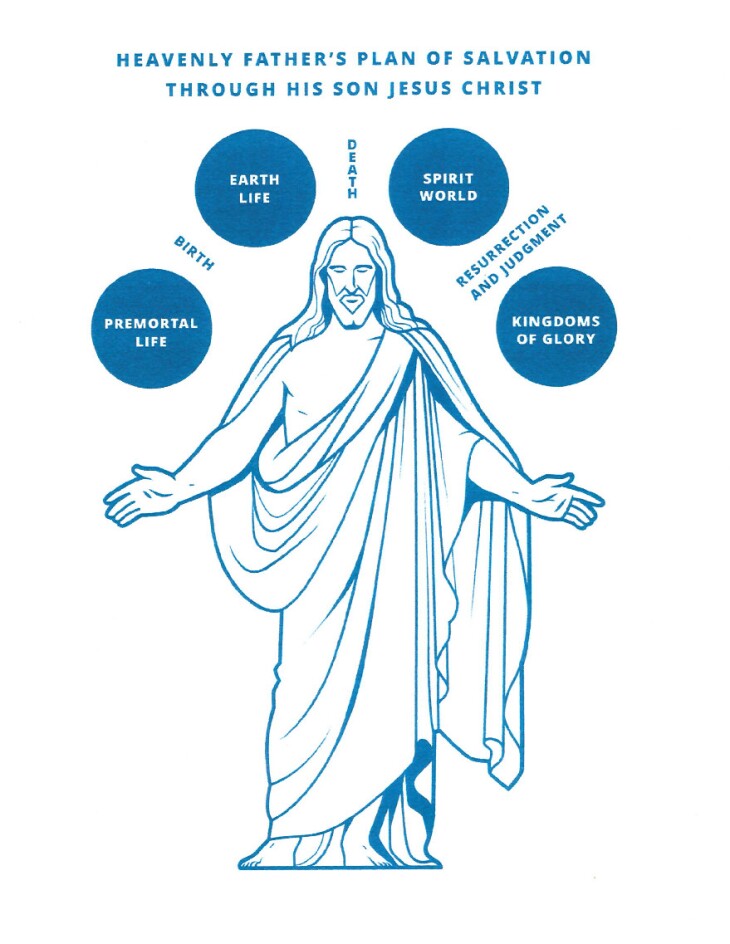
    Outside of the Church of Jesus Christ of Latter-day Saints, what does Christianity believe about the after-life? Generally speaking, Christianity believes that we are born on earth, live our lives, die, are judged, and assigned to either heaven or hell.

    I heard something on an awesome podcast called Unshaken Saints recently that I’d never realized. What the host of the podcast pointed out was that Christianity has it right. Christianity is just missing the beginning and the end.

    As I stated, Christianity believes in life on earth, then judgement, then heaven or hell.

    The truth is that life doesn’t start here on earth. This is the beginning that Christianity is missing. We lived long before we came to earth. There are many truths that stem from our understanding of our premortal existence. One of the most important truths that premortality provides us is an understanding of agency. We chose to come here. This life wasn’t thrust upon us. This is the missing beginning.

    The truth after death (the end) is that we are temporarily assigned to either “spirit prison” or “paradise,” but this isn’t our final resting place. After our temporary assignment to prison or paradise, we receive our final judgement that the scriptures speak of. This is when we come before God and Jesus Christ, Jesus Christ as our advocate to the Father and our judge before God. This is where we either accept Jesus Christ and the mercy He has given us and are reconciled to God, then assigned our glory by the mercy of God and His Son, Jesus Christ; or we reject Jesus Christ and are cast out to outer darkness. We must willfully reject God, Jesus Christ, and the mercy we are given to be cast off. This is the hell that Christianity understands.

    There will be glory assigned to all of God’s children. How can that be? It can be because He loves us that much, so much that He gave His only Begotten Son to save us.

    Christianity thinks the final judgement is immediately after we die. The beauty of the Plan of Salvation is the realization that everyone will have an opportunity to accept Jesus Christ. Everyone will be taught and be given a fair chance. Spirits in “prison” will learn what they missed on earth. No one will be left out. Children are alive in Christ (Moroni 8:12). No one will be lost.

    This is what Christianity misses. The beginning and the end. Premortality and the final judgement. If you cut off the beginning and the end of the Plan of Salvation, you have life on earth and spirit prison or paradise. That’s missing half the picture. We lived before we came here. We were loved by a loving Father in heaven before we came here. At the end, we will be judged for our actions, all we did on earth, our heart’s intent, our good deeds and bad, what we provided in this speck of time that will send us on an eternal trajectory. The beginning and the end. That’s what Christianity misses by rejecting further revelation by God’s prophets.

    What does this do to Christianity?

    Christianity believes we started here on earth. What does that do to our agency? We didn’t choose to come here. We didn’t know God before we came, who is He to us? This is what Joseph Smith spoke of when he talked about the First Vision. He said he learned that God and Jesus Christ knew him by name. For me, that knowledge is so engrained in my soul and being, it’s something I know, that God knows me. The Christianity Joseph Smith knew prior to the First Vision led him to be surprised that God could know him. I’m grateful for the truth God provided Joseph Smith when he appeared to him in a grove.

    Back to what Christianity believes – we come to this earth by no choice of our own, sent by a God we don’t know or understand. We come to this earth to suffer by the sweat of our brow, a fallen world, a cruel world, a challenge we don’t understand, a challenge we didn’t choose. Then God judges us and casts 90% of us off. Most are cast off because they never knew God or Jesus Christ, no fault of their own.

    This is what Christianity believes.

    The podcast provided another analogy that made me think about how this misunderstanding of the Plan of Salvation limits Christianity.

    There are two young men sitting outside of a Bishop’s office. One of the boys doesn’t want to be there. He doesn’t understand why he’s there. All he knows about the Bishop is that he’s a wrathful, unkind, harsh man. This young man fears the Bishop.

    The other young man knows the Bishop. He knows him to be just and kind. He knows the Bishop loves him and only wants what’s best for the him.

    As the first boy waits, he feels like he is in prison. He is dreading the upcoming confrontation with this unkind bishop.

    What does the second young man experience? Is he not in a paradise? He knows he’s soon to meet a friend. That friend is going to give him a treat, congratulate him on how he’s been doing, give him a hug and tell him he loves him. This second young man welcomes the meeting with the Bishop.

    The lack of knowledge in Christianity represents the first young man. Christianity doesn’t know God. By removing the premortal existence, life with a loving Father before life on earth, a Plan to come to earth and progress, a chance to learn of Him after this life, and then to be judged after being given all the necessary information, Christianity only sees a confusing, wrathful God, who has unfairly judged them.

    The Plan of Salvation is a beautiful truth that Christianity is missing. Far from being completely ignorant, Christianity is really close. But this closeness, without the full truth, is extremely limiting.

    ALL of us on earth chose to come to earth. All of us already chose Jesus Christ.

    This is a powerful truth. I wish the rest of Christianity could see, understand, and accept the further light and knowledge that makes this life understandable and worth living.

  • Speed of God

    Speed of God

    I recently read a book called ­Project Hail Mary. It’s by the same guy who wrote The Martian. This book has the space travel and physics concept of time dilation involved. I’m an ignoramus when it comes to the physics of this so I’m not going to say anything smart here. Time dilation is the idea that if you’re moving at a fast enough speed, you will age slower than someone moving at a normal or slower speed. See a movie like Interstellar for example. This is related to Einstein’s theory of relativity.

    To think about someone moving at a speed that makes them age slower than others – time dilation – is a beyond complext concept. The book had a comment like, “I’m glad the universe thought to have time slow down as you approached the speed of light.” That made me think, it’s amazing the universe is like this.

    Before I continue, I just wanted to share, this is the beginnings of a thought on how the physics of this complex phenomena might explain something about God, our relationship to Him, and our position to Him in the cosmos. In doing this, because I’m so ignorant on the topic and don’t fully understand it, I’m sure I’ll get something wrong that someone who better understands the science of this topic can point out. That’s fine. I take comfort in the fact that the people out there that adequately understand this concept are roughly 1 per 1 billion so probably unlikely to read my blog.

    This is more a mental exercise for myself.

    So… the faster you move, the slower you age. What is age for us? It is our mind and bodies degrading.

    God is the center of the universe. We all revolve around God. As we move closer to God, we move closer to the center.

    I’ve written about God and time before, here for example.

    Time is definitely different and potentially nonexistent for God. We talk about 1000 years for us being a day for God, in a way for us to try to understand God’s “time” (see Psalm 90:4 and 2 Peter 3:8, and especially D&C 130:4-11).

    God is light. God is in the center. So that would be why 1000 years for us is like a day for God. Time moves slower for Him because He’s at the center. Of course, God doesn’t age, He has a resurrected, perfected, and celestial body, but time moves slower for Him because He moves infinitely faster than the speed of light. He moves at the speed of everything – past, present, and future.

    So at a higher speed or revolution, less time is experienced. God’s mind, power, and faith move at a rate impossible for us to comprehend. Maybe that’s what makes Him in everything, alpha and omega, the beginning and the end. His higher speed puts Him on a higher plane. If we come closer to God, we would have to come closer to His speed and His plane, His level. If we do that, then time would slow down for us. We would be able to comprehend more. We would “age” slower. We would become like Him.

    By the way, this sent me down a wormhole (pun intended) of Youtube videos on time dilation, wormholes, the general theory of relativity, “nothing,” the twin paradox, space, and a plethora of other topics. This all led me to believe, while I can’t properly put into words my exact theory, that there is something to the above. There is something to God being the center. There is something to Christ being “light” which we know we can’t, in this life, move at the speed of. There is something to this physics and God thing. That makes sense given that God would be the master physicist as the Creator of the Universe.

    I’ll leave these musing at this point. Basically, long story short, there is something to God being on Kolob and us and our solar system revolving around Him. More on this as I explore this thought more.

  • How did the Trinity come to be? – The Nicene Creed Post 1

    How did the Trinity come to be? – The Nicene Creed Post 1

    Most of my blog posts are personal experiences with little research. They’re mostly just stream-of-thought writing. That’s what I prefer.

    Every once in a while, I want to write about a topic I know nothing about, which results in some (or a lot) of research. My Adam-God Theory post is one that comes to mind.

    I’ve long wanted to write a post about how the Trinity came to be. To prove this, years ago I gave my thoughts on the Trinity in this post.

    And wrote about how I know the Godhead to be true in this post.

    This has been a topic pretty consistently on my mind for a long time.

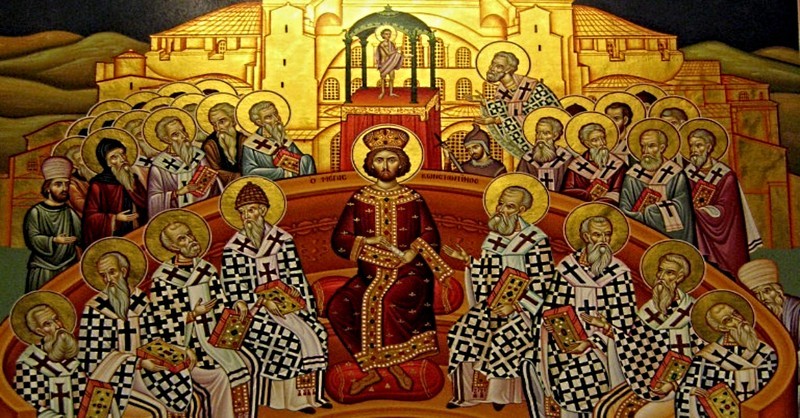
    Quick definition so we can all follow along (because this isn’t going to be an advanced or complicated post), the Trinity refers to the belief that God the Father, Jesus Christ, and the Holy Ghost are all one being. Most of Christianity believes in the Trinity. The Church of Jesus Christ of Latter-day Saints, through the experience of the prophet Joseph Smith, believe in the Godhead. The Godhead is the belief that God the Father, Jesus Christ, and the Holy Ghost are three distinct beings who are one in purpose (John 17:21-23).

    I’ve long wanted to learn more about how the Trinitarian belief came to be. I know it developed from the Nicene Creed. But if this is a falsehood perpetuated throughout history, how did it become so dominant? I’ve wanted to understand this history better. Part of the motivation to understand this better comes from the dominance of the Trinitarian viewpoint. When I’m trying to relate to other Christians, the Trinity vs Godhead question really becomes an issue.

    To know God you must know who He is. When I talk to a Christian, we both believe in Jesus Christ, but who is Jesus Christ? It’s OK to say we both believe in God and go from there, but sometimes not understanding who God is keeps me and other Christians from really being able to progress and learn from each other.

    Personally, I believe this is why this misunderstanding has been so perpetuated throughout history. Satan is cunning. He knows if we don’t know who our Father is, it becomes so much harder to worship Him.

    Is that an unfair statement for me to make? I can hear all the Catholics and Protestants and Lutherans and Baptists in an uproar when I state that a core belief of theirs has been perpetuated by Satan to confuse them. I understand that this is inflammatory. When I’m told by those same groups of people that my belief that God the Father and Jesus Christ are separate and distinct beings is a lie that Satan has deceived me with, it hurts. So I get it.

    This is why I want to understand where the belief in the Trinity comes from.

    When I read the Bible, it’s so abundantly clear to me. It doesn’t make any sense to me that people can read the Bible and conclude that Heavenly Father and Jesus Christ are one person. And yet, I’m in the minority, so clearly, there’s more to it.

    We all have our biases. I have always known Heavenly Father and Jesus Christ to be separate individuals. I have always known Christ to be my advocate with the Father. I have always known Heavenly Father to be my literal Heavenly Father. Seeing it any other way is hard. I get that others have always seen them as the same being. Others have read the scriptures with them being the same entity in mind. I get it.

    Which leads me to my point.

    As I studied this more, trying to understand it, the more confused I got. How this came to be is so confusing. I wanted to write a post simply explaining the history of the Nicene Creed and how the Trinitarian belief came to be and I’m realizing giving a “simple” explanation is going to take a lot more reading to understand.

    Some things stood out as I’ve studied this topic. I have a 62,000+ word document of research, quotes, and other information from my study of this topic.

    What stands out are the words I come across when reading how the Trinitarian belief came into existence.

    “Argument” – 13 times in my notes.

    “Debate” – 7 times in my notes.

    “Power” – 18 times in my notes.

    These are the words I kept coming across as I studied this topic.

    One word stands out that I haven’t come across thus far in all my reading. That word is “revelation.” In all that I’ve read it’s always “debate” and “power” and “trial” and “gain” and “politics.” No revelation

    I would love for a biblical and historical scholar to give me a crash course on the history of the creeds. For now, I continue to read, and study, and try to understand why the Christian world trusts a gospel principle that was handed down by power and politics, with little reference to the God they were trying to understand.

    I conclude this post without a conclusion because I don’t yet have one. It will be the first of many posts about the Nicene Creed and the Trinitarian belief.

  • Does God get Impatient?

    Does God get Impatient?

    Sometimes I have heard the comment when discussing scripture that God “lost his patience.” In this way of thinking, enough was enough for God. The Lord of Lords and King of Kings had come to the end of His straw. His patience was lost.

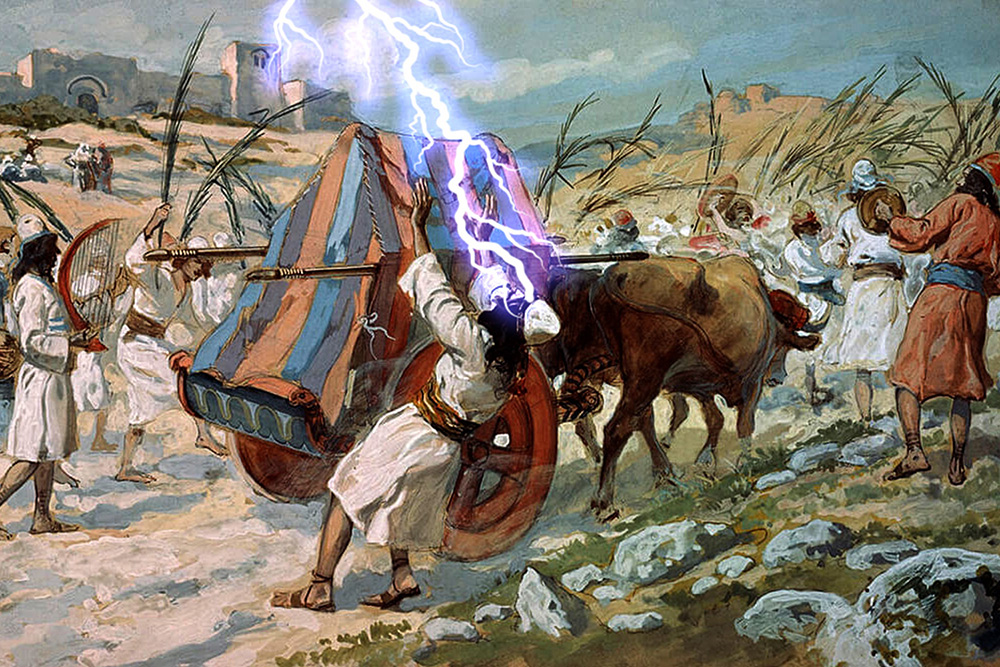
    There are countless examples we can look to where a perceived loss of patience occurred. In these examples, our human eyes see a loss of patience. Examples include the times the Lord told Moses He was going to destroy the Israelites (Exodus 32, Deuteronomy 9:12-14) or Uzzah touching the ark (2 Samuel 6:6-7).

    Does God change His mind?

    Various Google searches of “Is God impatient” come up with many titles like “God is patient – until He isn’t.” I propose that this is not the right way to think about God. I lose patience with my toddler, often. We all lose patience, often. Does God “lose patience” with me? I don’t think so.

    Remember the omniscient thing? Omniscience=all knowing. If God knows the beginning from the end, how can He lose patience? He knows what’s coming.

    From this link during some of those Google searches:

    “God is never said to be patient about things or circumstances. Why? It is because He knows all things. He knows the beginning from the end. He does not have any need of that kind of patience. When we speak of the patience of God, we are not talking about enduring hard times; we are talking about being longsuffering toward people.”

    David Hocking

    Patience, like time, is a human thing. It doesn’t apply to God. We apply it to Him in our attempt to understand Him. But how can God be “patient” if He already knows everything?

    So why are these examples, where it seems like the Lord changes His mind, included in the scriptures? Why is the account of the Lord saying He was going to destroy the Israelites and raise up a seed through Moses, only to “change His mind” included in the Bible?

    The question, “Why is it in the Bible” is almost always answered, “to teach us about Christ.”

    Let’s look at the Moses example.

    Moses is talking to Jehovah when he pleads on behalf of the children of Israel. He is interceding on their behalf. Who does Moses represent here? – Jesus Christ, our advocate with the Father. So, in this case, Moses was being a type of Christ and Christ was assuming the role of God the Father. We were learning from this scripture that Christ is our advocate with the Father, the same way Moses was the advocate for the Israelites with Jehovah.

    We must be careful in applying our human traits to God. God is not us. He works on a completely different plane. We can’t comprehend His ways and it’s important, because of our lack of understanding, we don’t lessen His power and perfection in our finite minds.

    God doesn’t lose patience with circumstances. He can’t. He knows all the circumstances. He knows the beginning. He knows the end. God doesn’t lose patience with us. He can’t. He is perfect in everything, including His love for us. He can want the best from us, He can want us to be better, He can want us to make better choices. But He DOES NOT lose patience with us. He is longsuffering. He is loving. He is perfect.

  • What is a Place?

    What is a Place?

    Prepare for one of my more “out there” posts. You’ve been warned. Here we go.

    I often hear statements like, “When we die, we may not be in the same place as our family but…”

    For those who don’t know the doctrines of the Church of Jesus Christ of Latter-day Saints on the kingdoms of heaven, this will be something I’ll likely write about another time. In the meantime, read this link.

    We know that here on earth, time is much different than in heaven. In the afterlife, time will be a completely different concept. Our understanding of time is completely impacted by our mortal experience. There’s a good chance in the next life there will be no “time.” This is a difficult concept to wrap our mortal brains around, but I believe it to be true.

    I think the next life might have a similar application for “place.” Here on earth, we have such a finite understanding of “places.”  You’re here or you’re there. Then how can God be everywhere?

    I wonder if our understanding of “place” will be much altered in the next existence, just like time. Space and time; I’m sure a quantum physicist can speak on this topic with much more eloquence.

    The point I’m trying to make is, here on earth we get hung up on many things. Who will be married to who in heaven? Where will I be? What will I be doing? How will I spend my “time”? On and on our questions go. It’s natural for us to ask these questions. A constant topic of my writing is the wish that people would ask these questions more.

    These questions are good, but here’s another one: what if the next existence is so out of our realm of understanding that these questions don’t even make sense?

    Where will I be?

    Where will my family be?

    Back to that original statement I hear often: “I may not be in the same kingdom (place) as my relative, but I will still be able to see them.” 

    What if this is a wholly incorrect way of thinking about it? Yes, there will be kingdoms. What if this concept of kingdoms is a way for God to help us try to understand the next life? What if the kingdoms of heaven are analogous to our state of mind?

    This applies, I think, to the Telestial Kingdom which we are told is as numerous as the stars. Will each person really have a star as their own “place?” I don’t know. Maybe. Maybe it’s a state of mind. The Telestial Kingdom could be our state of mind, our paradise, our new home – as numerous as the stars which are as numerous as different states of mind.

    This state of mind idea also applies to visits and how those of a higher kingdom can visit those of a lower. Where will my family be and can I visit them? Do I want to be in the Celestial Kingdom if my family is in the Terrestrial Kingdom? If our “kingdom” is a state of mind or a state of consciousness, this explains how easily we could visit other “places.” Someone with a certain level of consciousness could easily visit, temporarily, a lower plain or consciousness to be with loved ones. But a lower state of consciousness can’t just raise its level to the higher “kingdom.” If they could, then they would join that kingdom.

    I know. Now I’m in full matrix, take the red pill and raise your “consciousness” talk, but hear it out, read it again, consider it. Maybe there’s something there to ponder.

    We know that only those who wish to obtain the highest glory will attain it. God will not force individuals to be “somewhere” “better” if they don’t want to be there. The greatest sinner doesn’t want to be in the presence of God. They would rather be outside of His presence than endure the glory that He is and feel how short they fall. The pain of being without God is less than being in front of Him and knowing what you could have been, and what you refused to be.

    What if hell is a state of mind and being, not a place?

    This thought came completely new to me from a (questionable) book called Ye Are Gods. But all books can open our minds or thinking or teach us something:

    “Each degree of glory is merely a state of consciousness in the mind of each individual, from those who live in the filth of the gutters and the slums to those who travel a highway of light. Celestial glory is a state of consciousness or awareness and understanding. It is man’s heritage to look unto his Father and to claim his divine birthright.”

    Hopefully I’m not being blasphemous here. I think this is an interesting thought experiment. I think this is a curious idea.

    I need to ponder upon this more, but I believe I’m touching the iceberg of some truth here. This is not doctrine or anything church official I’ve read, just my thoughts. If you ever ask yourself these questions, I would love to hear yours.