Tag: jesus christ

  • Are Women more Faithful than Men?

    Are Women more Faithful than Men?

    Why are women more faithful than men?

    I’ve often wondered this. Others may disagree, but in my experience, generally, it is true. Why is it that women are more faithful than men?

    There are countless examples of faithful men in the scriptures. There are also examples of faithful women in the scriptures, though less countless. Where the LDS church does have countless examples of women with great faith is in our pioneer stories. There are so many.

    Some of the examples of faithful women in the scriptures include Elizabeth, the mother of John the Baptist, Mary, the mother of Christ, and Mary Magdalene. I think often it is mothers that convert while fathers fight.

    From what I’ve seen today, in modern times, women have more faith than men. Women are more open to spiritual experiences.

    I think this is somewhat due to the “natural man.” In my opinion, man is much more natural than woman.

    I also think it has to do with Christ’s admonition, “be ye as little children” (Matthew 18:3).

    Don’t women possess more of the good qualities of children than most men? Women are generally more humble, meek, kind, caring, and gentle than men. I think few would disagree with this. Women possess more quantities of all the positive attributes of little children that most men lack. It doesn’t make men necessarily bad. I think it does create a gulf between us (males) and God, though.

    If men can learn to be what we are with a positive light, and attain the meekness and humility of little children, we draw closer to God. I think this is what the Priesthood is meant to help us to do. We are to learn to be humble with authority. Learn to be meek with power.

    What was Christ but complete humility with complete power?

    The Priesthood of God can not be wrought with unrighteous dominion (Doctrine and Covenants 121:37).

    We must be as little children. Meek and humble, and let our faith be as the women who surround us, who often far surpass our ability to trust, believe, hope, and have faith.

  • Maybe (The Story of the Chinese Farmer)

    Maybe (The Story of the Chinese Farmer)

    “There once was a farmer whose horse ran away. Upon hearing the news, his neighbors came to visit. ‘Such bad fortune,’ they said, full of sympathy.

    “‘Maybe,’ the farmer replied.

    “The next morning the horse returned, bringing with it three other wild horses. ‘What great fortune!’ The neighbors exclaimed.

    “‘Maybe,’ replied the old man.

    “The following day, the farmer’s son tried to ride one of the untamed horses. He was thrown off and broke his leg. The son would forever limp. ‘What terrible fortune!’ The neighbors cried.

    “‘Maybe,’ answered the farmer.

    “The next morning the army came through the farmer’s village to draft young able-bodied men for the war. Seeing his son’s limp, they passed him by. The neighbors congratulated the farmer. ‘What wonderful fortune!’ They said.

    “‘Maybe,’ said the farmer.”

    So, it’s hard to know which experiences will turn out to be fortuitous and which will be unfortunate.

    Another story to consider.

    A dog is at the vet. It is there with its wonderful owner. The dog knows his owner loves him very much. The dog’s owner provides food and shelter to him every day. His owner takes him for walks every day and loves him so much. His owner would never do anything to harm him.

    At the vet, the dog is due to get shots.

    The owner knows the importance of these shots. The owner knows the dog needs the shots to keep him healthy. The owner knows the shots are for her dog’s ultimate benefit.

    While the dog is getting shots, all he can think is, “why oh why is my owner letting them do this to me? It hurts so bad! Why is she letting this happen?” The dog looks at his owner and cries and cries. He’s in so much pain. “Why is she standing there ignoring my pain? Why isn’t she doing anything? Doesn’t she love me?”

    The gap between the dog’s understanding and his owner’s understanding is vast. If the owner tried to explain to her dog germ theory and why he needed his shots, he wouldn’t understand any of it.

    The gap between God and us must be infinitely more expansive than the gap between our understanding and that of our pets.

    We don’t know completely why bad things happen to good people. We don’t know why some live while some die.

    The restored gospel of Jesus Christ tells us some key information. This information doesn’t completely answer the question of why bad things happen to good people, but it does add important information.

    We all chose to come here.

    We all knew it would be hard.

    Some knew they would experience unimaginable pain.

    We all chose to come here.

    The good news of the Gospel of Jesus Christ is that no pain, no hardship, no difficulty, no tragedy, is without meaning or purpose. It’s all for one great design: to make us better and stronger. Even as I say that, “to make us better and stronger” those words fall flat. Someone experiencing immense pain doesn’t care that they’ll be stronger in the end. Saying “to make us better and stronger” is akin to telling the dog, it’s going to be ok. Our understanding is limited. That doesn’t take away from the fact that everything that happens here is meant for our ultimate good. Everything here is to help us to reach our full potential.

    Do you think that dog understands those shots will help him live longer? Could we possibly understand if God tried to explain to us the mysteries of the universe and how that unimaginable pain can be for our benefit?

    Does this make unimaginable pain easier to endure? I think it does. I’m not in the throes of pain at the moment, though.

    When I thought I might die, and I thought how desperately I would miss my wife and my one month old daughter, when I thought about how I wouldn’t get to teach her to talk, shoot a basketball, or ride a bike, my heart hurt. But then I knew something amazing. I knew that, even if I had to leave my daughter and my wife, I’d see them again. Life is one eternal round with God and nothing would be lost. I knew that if I had to leave, it was for my ultimate benefit, and the benefit of my family. I had to trust God in that moment. That brought me peace.

    Could the farmer’s son have realized that breaking his leg and being limp for the rest of his life would actually save his life? He couldn’t know it. But someone did.

    When bad things happen, take comfort. Trust Him.

    How do we know what is a blessing and what isn’t? We don’t. Someone does. Trust Him.

  • Suzerain and Vassal: The Father and the Son

    Suzerain and Vassal: The Father and the Son

    Mosiah 15:1-2 reads:

    1 And now Abinadi said unto them: I would that ye should understand that God himself shall come down among the children of men, and shall redeem his people.

    2 And because he dwelleth in flesh he shall be called the Son of God, and having subjected the flesh to the will of the Father, being the Father and the Son…

    How can Christ be both the father and the son? It’s a question that has troubled Christianity since before it was called Christianity. How can there be the one true God (Jehovah) and yet Jesus Christ (Jehovah) pray to His father who is in heaven?

    How can Christ be both the father and the son? Well, how are you, reading this a father (or mother) and a son (or daughter)? Sometimes we might overcomplicate the simplest things.

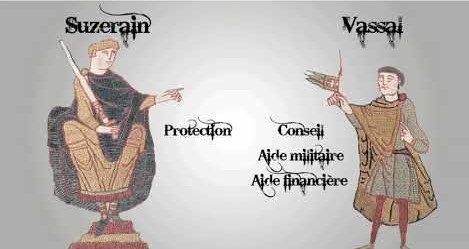
    In the ancient near east there existed a system wherein covenants could be made. That system could be described as a Suzerain Vassal covenant or treaty. In this sort of agreement one of the parties would be greater or more powerful than the other. The suzerain would be the powerful entity. The vassal would be the subservient, or lesser, or learning entity. In this sort of treaty, the vassal would pay tribute or show some form of loyalty to its suzerain. In return, the suzerain would provide protection or some other sort of benefit to its vassal. There could only be one suzerain/vassal connection. Meaning, a vassal couldn’t have two suzerains. This would basically be treason. You can only serve one lord.

    From this article on the suzerain/vassal covenant relationship:

    “The covenant Yahweh established with Israel at Mount Sinai exhibits striking parallels with Hittite suzerain/vassal treaties, which had six basic features: 1) a preamble that identifies the suzerain; 2) a historical prologue that recounts the previous relationship between the parties; 3) covenant stipulations to which the vassal must agree; 4) provisions for periodic reading and safekeeping of the covenant; 5) witnesses to the covenant; and 6) blessings and curses should the vassal either keep or fail to keep the covenant. The Sinaitic covenant contains all six of these characteristics.”

    In his book, The Last Days: Types and Shadows from the Bible and the Book of Mormon, Avraham Gileadi states:

    “the idea of Israel’s suzerain or Lord [Jehovah] assuming vassal or servant status in order to answer to his suzerain [God the Father] for his people’s rebelliousness introduces the concept of a God higher than Israel’s God. That is, Jehovah, the God of Israel, is a “Son” to God the “Father” (3 Nephi 11:7,11,32; compare 15:4-5). That concept does not appear explicitly in the Old Testament. Many Jews, therefore, insist that God is but “one” (Hebrew ehad; Deuteronomy 6:4); other than the Lord, they assume, no God exists (see Isaiah 44:6,8; 45:21-22). However, the idea of “the Father” and “the Son” makes perfect sense in light of ancient Near Eastern suzerain (Lord)–vassal (servant) covenant relationships.

         “Abinadi (and every prophet who teaches God’s redemption of humanity) here enlightens us. Abinadi says that God, who redeems his people, is both “the Father and the Son” (Mosiah 15:1-3; compare Alma 11;38-39; Ether 3:14). That abstruse statement seems at first glance to contradict the careful distinction between the Father and the Son that other scriptures teach. But when viewed from the ancient Near Eastern suzerain (lord)–vassal (servant) covenant relationship, we gain insight on how the Lord can serve as a suzerain or Father to his people Israel, but also can serve as a vassal or Son to his Father or suzerain. To Israel, the Lord is Father, and they become his sons or vassals. To God the Father, the Lord is the Son, subjecting his will to the Father in order to merit Israel’s salvation (Mosiah 15:2,7).

         “Moreover, as the literal and loyal Son of a divine Father–as the Son of a righteous [covenant suzerain “Father”]–the Lord is not subject to death unless he himself consents to die (See the type of Isaac’s consenting to let Abraham sacrifice him–Genesis 22:9) Even if he does die, the Father must come to the aid of his vassal and deliver his Son from death. In ancient Near Eastern literatures there is the concept of the god who dies only to revive and assume the throne of a senior deity. Thus “God breaketh he bands of death . . . giving the Son power to make intercession for the children of men” (Mosiah 15:8). What the Father does for the Son, the Son does for his sons and daughters: when “the Son reigneth, and hath power over the dead . . . he bringeth to pass the resurrection of the dead” (Mosiah 15:20).

         “Moreover, the moment one introduces the idea of the Father and the Son, one also introduces the concept of spiritual progression. That constitutes as much a part of the “good news,” or gospel, as does redemption from death itself (see Mosiah 15:10-19). Inherent in a Father/suzerain–Son/vassal relationship with God is the assuming of divine attributes–becoming God-like…”

    So we see that this Near Eastern tradition of suzerain and vassal treaties and covenants perfectly aligns with how we relate to Jesus Christ. He is our suzerain, making us His children. God is His suzerain. Through our covenant relationship with Christ, we receive protection from both Christ and His Father and our Father, God the Father.

    Another interesting thought from that note is how Christ conquered death. It was by His relationship with the Father that He was able to conquer death. He in turn allows us the same opportunity when we link ourselves to His will and power. Christ received His divine identity from His Father. We can receive our divine identity through Jesus Christ’s Atonement and conquering of death. This is why we only come to the Father through the Son. Christ is our protector, our Suzerain. As we serve Him, we receive that protection as His vassals.

    In addition, another way that Christ is our father is through the resurrection. It is due to Christ’s atonement and resurrection that we are able to be resurrected. This makes Christ the father of our bodies. For we wouldn’t have our bodies without His resurrection and the gift that we can be resurrected into our bodies. God the Father is still the father of our spirits. Whether that be through adoption, some measure of creation, or some other way, we’ll one day know.

    A last note I wanted to make that I liked from this article:

    “The basis of the covenant was Yahweh’s gracious acts toward Israel, not their obedience to him.”

    Our covenant relationship with Christ is a reminder that His grace saves us. It doesn’t matter how obedient we are. We needed His grace to save us. As our Suzerain, His covenant with us is based so much more on how He loves us and all He is willing to do for us than anything we can do for Him. We can never properly repay Christ for all He’s done for us. He is the Suzerain. He has the power to save us.

    This is the good news of the Gospel. Because Christ conquered all, we can become like Him, and in turn, become like our Father in Heaven.

  • Attack on Mormons

    Attack on Mormons

    Legend has it my grandfather has a hidden room in his home for the day that followers of Christ are rounded up like Jews were in Europe during World War II. I spent much time trying to find that room without luck. I’m still not convinced it doesn’t exist.

    Beth and I recently finished a TV show called Under the Banner of Heaven. If anyone wants to see every anti-Mormon falsehood spouted in 7 hour+ long episodes, I highly recommend it.

    A story made headlines recently. A highly recruited quarterback from Utah was visiting an Oregon football game. He left the game when the student section started chanting “f- the Mormons.”

    The play “The Book of Mormon.”

    Southpark parodies.

    Imagine another religion being treated this way. Can you picture the outrage if a student section chanted “f- the Jews” for example? I felt wrong just typing that.

    And yet the Church of Jesus Christ of Latter-day Saints is not shielded from this. Why is that?

    Under the Banner of Heaven being my most recent exposure to anti-Mormon media, that’s where I’ll focus this post, with my point at the end. Stay with me. Even if you haven’t seen the show (and despite what I said above, I DON’T recommend it) this will still be pertinent.

    An article was written in the Atlantic about the show. That article can be found HERE.

    If you’re interested, you should read the whole article. It’s well written and helped me understand the underlying feelings I had about this show.

    Here are some highlights from that article that I agree with:

    “[It] felt like seeing my religious life in a funhouse mirror, each detail-from the sacred to the mundane-twisted and stretched and distorted to appear frightening and strange.”

    When talking about the absurd use of the phrase “Heavenly Father” in the show, “But I gave up after a few episodes [counting the weird usages of “Heavenly Father], once I realized what was going on. To say that I have never met a Mormon in my life who talks like this would be to miss the point. These lines were not intended as shibboleths for Mormon viewers-they are there to serve a stereotype, to exoticize a people and flatten their faith tradition.”

    “Under the Banner of Heaven is one of the most openly hostile treatments of a minority religious group to appear in popular American entertainment this century. It is also an unqualified hit.”

    I could go on about the flawed and insulting nature of this show.

    Elder Bednar, an apostle for our church, was asked his thoughts on the show. He responded, “We don’t like it, but we don’t spend all of our time responding to it. We have a mission to fulfill.”

    The writer of the Atlantic article stated he initially felt good about Bednar’s response. Then on further thought:

    “But almost immediately, I doubted myself. Wasn’t I just taking the same path of least resistance – above-the-fray politeness, studious nonconfrontation – that Latter-day Saints always seem to take when faced with stuff like this?”

    This is exactly the struggle I deal with. I am in a constant “polite, studious nonconfrontation”-like attitude. It’s how I was raised. I was pretty heated by the end of the final episode. Episodes 1-6 I was just “bluh.” A feeling of, “whatever. They’re making us look weird, the show is weird.” Then that turned into the show is upsetting me. I found myself having an unsettled feeling after each episode that I couldn’t quite pinpoint. Truly, it wasn’t until reading the Atlantic article that full outrage started to settle inside me. How could a show treat my religion like this? Where would it be acceptable to treat any other religion like this? What’s next?

    It was to the point that I didn’t mention to friends I was watching this show because I didn’t want them to watch it. This included close friends that know me and my religion and (I hope) would see through much of the nonsense of the show.

    I hesitated to share because maybe this fear of others seeing my religion as cooky exists inside me. I know what my religion is. It’s precious to me. It’s sacred. It has provided every blessing in my life, I can’t spit upon and laugh at my Church, it’s too important to me.

    So, Bednar’s statement. I like it, in that, it’s how I would respond. Forgive. Turn the other cheek. Don’t get emotional. Don’t get upset. Above all else, don’t let them see you’re upset. But then, at what point do you stop being a cultural punching bag? Is there a point where you stand up for the church and religion that you love? After all, I know this to be Jesus Christ’s Church. Is a show like this really insulting Him? That causes real outrage inside me that I’m willing to speak out about. Spit on me, spit on my faith, spit on my church and my religion. Don’t spit on Him. Maybe that’s ultimately what got me upset. The idea being perpetuated through this show that it was Christ’s church that caused some extremist men to kill a woman and her daughter. I feel for Brenda’s family, her sister, who rightly pointed out that this show unfairly portrays her murder.

    And as the article points out, where is the apology? Where is the script before the show plays saying “Mormons are not an extremist, murdering people. This is a dramatization.”

    In an age where Disney has to apologize before The Lady and the Tramp, Under the Banner of Heaven needs no disclaimer apology for this? Remember that football player at the Oregon game, Oregon apologized for their student section’s behavior.

    As the article points out, we are moving backwards. Rather, we are being pushed backwards. Saints rarely live peacefully in a wicked world.

    What other religion could be ridiculed, spit upon, and disrespected in this way, without public outcry and support, besides the Church of Jesus Christ of Latter-day Saints?

    In our forgiveness, we laugh it off and shrug. But a dangerous thing is happening out there. As Satan does in any dispensation where there are Saints to God, he is stirring up the masses against us.

    This leads to my point.

    The attack of this show on a religion seems like a small enough matter. “Who really cares” some might say, as I did, initially. It does matter. The attack on religion, on faith, on Christ is increasing daily. It seems dramatic to even consider the idea that Latter-day Saints could be rounded up like what happened 80 years ago. We can trick ourselves into thinking we’ve gotten better as a world and as society since then.

    Media attack on faith and on Christ are widespread and increasing. It’s not just the Church of Jesus Christ being attacked when shows and plays and TV openly mock it, it’s all followers of Christ and ultimately Christ Himself.

    This attack is going to increase, and we need to be aware of it. I hope that all my friends and especially those who don’t believe in God realize how important this is to be aware of. Believers need the support of nonbelievers in our defense. Otherwise, this world becomes a scary world for those of faith.

    Maybe it’s time for a return trip to my grandparent’s home to search out that hidden room. I hope it’s not.


  • The Need for God in the Newborn Days

    The Need for God in the Newborn Days

    Having a newborn is pretty difficult. Understatement? The challenges are diverse and wide-ranging. I don’t believe this is a coincidence.

    As Beth and I were driving to the hospital for her to bring a baby into the world – we prayed.

    As we waited to get checked into the hospital – I prayed.

    As we sat in our first room and Beth’s pain started to increase – I prayed harder.

    As we were moved into the delivery room and the miracle began – I prayed constantly.

    As I held my new daughter – I prayed, holding back tears of gratitude.

    As we took the new member of our family to our hospital room – I prayed.

    As we struggled to stay awake and care for her new needs – I prayed.

    As we drove home – I prayed.

    As we started the first weeks of no sleep, stress, anxiety, and responsibility. As we tried to feed Sage, as we changed her multiple times throughout the night, as we walked around bleary eyed, as she slept on my chest, as she cried in my arms – I pray constantly for help and strength.

    As Beth becomes a zombie from lack of sleep – I pray.

    As I fall asleep holding Sage – I pray.

    As Ivy adjusts to a new sister, the responsibility, and the change to her little world – I pray for her.

    As Beth works to breastfeed every 3 hours and continues not to sleep – I pray for her.

    As I go back to work, Beth having extreme trepidation – I pray, and I assure her it will be ok.

    We’re being looked after.

    As Beth texts me, “You must have said a good prayer for us for today. I can’t believe I feel as good as I do right now.” – I pray with so much gratitude.

    I know we’re being looked after.

    Having and bringing home a newborn is stressful and a momentous responsibility. I don’t think that is a coincidence. I think it’s meant to remind us how much we need Him. I’m grateful for how difficult it is to bring a new baby home because it brings me closer to my Heavenly Father. I have to rely on Him, because I know my strength is nothing, and I know I can’t do it without Him.

    I’m grateful for these challenges because they remind me how much I need Him.

    I’m grateful to know He is there.

    I’m grateful to know we are watched over.