Tag: jesus christ

  • A Corny Video but Compelling Witness

    A Corny Video but Compelling Witness

    I came across this extremely corny 8-minute video that I had to share.

    It depicts a somewhat realistic interaction between two high schoolers that is then transported (classic short video trope) into a courtroom debate.

    I’m poking fun at the video because it really is quite cringy. But I love it. Which is why I’m sharing it.

    This video made me think of this post I wrote recently:

    Is the Book of Mormon true? Yes.

    The other day I overheard someone talking about how they don’t believe in God. I didn’t talk to them. But later I daydreamed about what I could have said. I daydreamed about walking up to them and telling them I know God exists. I imagined this imaginary person asking ‘How do you know?’ I would then explain about the Book of Mormon, and that because of it, I can know that God exists. This imaginary person would then ask, ‘How do you know the Book of Mormon is true?’ At which point I could try to explain in less than 1000 words as even my imaginary friend starts to gloss over and not understand/comprehend/care about what I’m saying.

    That’s what this short video made me think of. This video made me think of all the people I wish I could convince that the Book of Mormon is true. And along with that, all the people I wish I could convince that this matters, and it’s important.

    A quick recap from the video and from myself because I can’t help myself –

    Joseph Smith dictated the Book of Mormon without notes or source materials, nothing in front of him, in 65 working days. Today tens of thousands of people his same age stress and fret over 10-page term papers with sources included. The Book of Mormon is 531 pages.

    So he was a literary genius? Quite the contrary, could hardly write an understandable letter.

    So he faked for decades being an illiterate farm boy while dictating the greatest fictional literary work of all time? Uhm, okay. “This would require a beyond creative, theological genius to compile a book that radiates with the spirit.”

    Not to mention the things no one in his day knew about that have since come to light. Things it would have been impossible for him to know.

    As this video says, it’s not about proving the Book of Mormon is true with facts.

    It isn’t fiction. But I can’t prove that to anyone (as much as I think I actually can…). You have to read it then you have to ask God. And then if you get your answer, what next?

    A reminder of what the Book of Mormon asks us to do – prove it. Then be baptized and remember Jesus Christ, the redeemer of this world.  

    Moroni 10:3-5:

    Behold, I would exhort you that when ye shall read these things, if it be wisdom in God that ye should read them, that ye would remember how merciful the Lord hath been unto the children of men, from the creation of Adam even down until the time that ye shall receive these things, and ponder it in your hearts.

    And when ye shall receive these things, I would exhort you that ye would ask God, the Eternal Father, in the name of Christ, if these things are not true; and if ye shall ask with a sincere heart, with real intent, having faith in Christ, he will manifest the truth of it unto you, by the power of the Holy Ghost.

    And by the power of the Holy Ghost ye may know the truth of all things.

    Mosiah 18:8-10:

    And it came to pass that he said unto them: Behold, here are the waters of Mormon (for thus were they called) and now, as ye are desirous to come into the fold of God, and to be called his people, and are willing to bear one another’s burdens, that they may be light;

    Yea, and are willing to mourn with those that mourn; yea, and comfort those that stand in need of comfort, and to stand as witnesses of God at all times and in all things, and in all places that ye may be in, even until death, that ye may be redeemed of God, and be numbered with those of the first resurrection, that ye may have eternal life—

    10 Now I say unto you, if this be the desire of your hearts, what have you against being baptized in the name of the Lord, as a witness before him that ye have entered into a covenant with him, that ye will serve him and keep his commandments, that he may pour out his Spirit more abundantly upon you?

    If this book is true, what else matters!?!?

    Family = eternity.

    Jesus Christ = resurrection and eternal life.

    Heavenly Father = our Father, we are sons and daughters of God.

    If the Book of Mormon is true these things are true! Don’t day to day issues seem smaller when you realize you will live forever, with your family, as a divine being alongside THE divine beings?

    What a message.

    Read the book. Prove for yourself.

  • One Eternal Round

    One Eternal Round

    I started making some bad decisions in high school. These decisions nearly derailed my life.

    During that time I was becoming friendly with a girl. She knew about some of my bad decision-making.

    One night when we were hanging out I told her I would never get married anywhere but a temple. This interested her. Why, she wondered, would someone like me, who seemingly cared nothing for this religion that I was raised with, care about a temple marriage?

    I explained to her that I believed my church was true. If my church was true, then it held the authority to marry couples for eternity. That church, therefore, sealed families for eternity. I told her if I married someone I didn’t want it to end after we died. If I were to ever get married, I wanted it to be for eternity.

    When I was in college my decision making had gotten increasingly worse.

    On a night I don’t remember, it was later told to me that I bore my testimony to a girl at a party. I don’t remember any of this. Apparently, religion came up and I told her I knew the Church of Jesus Christ of Latter-day Saints was Jesus Christ’s church on the earth.

    This girl asked the obvious question, “If you know it’s true, why are you doing the things you’re doing?”

    I’m told I said that even though I wasn’t living the standards of the church, I couldn’t deny what I knew to be true.

    That testimony that I don’t remember had a big impact on that girl.

    Years later that first girl from high school sent me a postcard. That girl from high school had gotten baptized. Her postcard was one of a few critical moments that helped me come back to church and changed my life.

    A month after that postcard, in the midst of my difficult journey back to church, I stumbled upon a Facebook message that had gotten blocked and I’d never seen. It was from years prior. It was from the girl at the college party, the girl I bore a drunken testimony to.

    She told me she’d gotten baptized. She told me she had never let me know how big an impact that testimony had on her ultimately getting baptized. I visited her and her budding family. She was sealed in the temple. She had an eternal family. She was happy. It gave me strength to continue on the path of repentance that was so, so hard.

    The girl from high school got married in the temple and now has three kids. She has an eternal family. She is happy.

    A patriarchal blessing is extremely sacred. I share a short line from my blessing with the utmost reverence:

    “Trouble not yourself over lost days, for you are an eternal being”

    I can’t tell you how comforting those words were when I was trying to find strength to stay faithful, and how important those words continue to be to me.

    It is all one eternal round to God (D&C 3:2). He knew I would stumble. What did He do when I stumbled? Put two people in my path that I could somehow, inexplicably, impact at my lowest, during my most degraded behaviors.

    What did He do?

    He put those two people back in my path when they could help me back. He put two people back into my life to help me remember what I always knew, what I was getting dangerously close to forgetting. He put two people in my path to remind me who I was. I am nothing special of myself, but I am a son of God. That is special.

    I marvel at the workings of God. That He loves us so much that He gave us a world so we could leave our Heavenly home, just as children leave their homes here on earth to go out and learn, and grow, and fall. He gave us an earth to fall. But He allowed us a way back.

    I know there is a way back.

    I know that Jesus Christ allows that way back.

    I know that God planned for everything. We are His work and His glory.

    I can never deny what I know.

  • What Really Happened with Noah’s Curse of Ham/Canaan?

    What Really Happened with Noah’s Curse of Ham/Canaan?

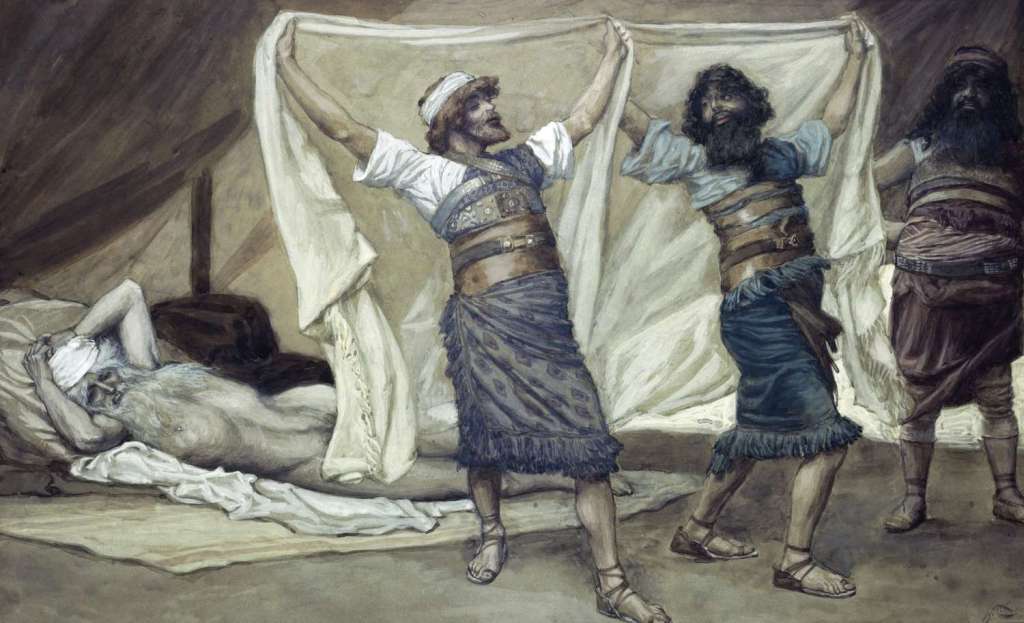
    There’s a story from the Bible that’s never sat right with me. The Bible tells of Noah and his three sons after the flood. As the story goes, Noah planted a vineyard after the flood waters receded. He then drank of the fruit of the vine, got drunk, and passed out naked.

    Ham, finding his father naked, brought his brothers Shem and Japheth in, presumably to mock and make fun of their father.

    This disrespect to Noah is undeniable. What Ham did in this story was wrong.

    But did it warrant this?

    (Genesis 9:24-27 my additions in parentheses):

    24 And Noah awoke from his wine, and knew what his younger son (Ham) had done unto him.

    25 And he said, Cursed be Canaan (Ham’s son, Noah’s grandson); a servant of servants shall he be unto his brethren.

    26 And he said, Blessed be the Lord God of Shem (Noah’s other son); and Canaan shall be his servant.

    27 God shall enlarge Japheth (Noah’s other son), and he shall dwell in the tents of Shem; and Canaan shall be his servant.

    Was Ham’s sin so egregious that his son and their descendants deserved to be “servant of servants” to his brothers?

    Ham did something wrong, but this seems extreme.

    Bible scholars will say Ham violated the edict to honor his father. True. But all his descendants cursed for the rest of time? This is the part I’ve never understood. Seems too harsh a punishment for something that borders on immature and insensitive at worst.

    Which leads to something I read from Hugh Nibley. I read this in a lecture Hugh Nibley gave and he was citing some information he read. (Reference to this story is also in the Book of Jasher).

    “A very early Christian writing tells how Noah’s descendants waged bitter war among themselves after his death, to see who should possess his kingship; finally one of the blood of Ham prevailed, and from this the Egyptians, Babylonians, and Persians derive their priesthood and kingship. “From the race of Ham,” says the text, “came one through the magical (as opposed to the holy) succession named Nimrod, who was a giant against the Lord.”

    First of all, note the vague “before the Lord” of the King James Version (Genesis 10:9) conceals the true meaning, rendered “against the Lord” by the Rabbinical and early Christian writers).”

    Hugh Nibley continues (my emphasis bolded):

    “Nimrod claimed his kingship on the ground of victory over his enemies. His priesthood, however, he claimed by virtue of possessing “the garment of Adam.” The legends of the Jews assure us that it was by virtue of owning this garment that Nimrod was able to claim power to rule over the whole earth, and that he sat in his tower while men came and worshiped him.”

    Doesn’t this give Lord of the Rings vibes? A man in a tower making the peoples of the earth come to worship him. I had to say that, anyways…

    Let’s recap quickly the genealogy of Nimrod:

    Noah begot Ham. Ham had four sons – Canaan, Cush, Mizraim, and Phut. Nimrod was a son of Cush. Remember that Canaan is the one specifically mentioned in the curse of Noah in Genesis 9.

    But let’s continue with Hugh Nibley (emphasis bolded again):

    “The Apocryphal writers, Jewish and Christian, have a good deal to say about this garment. (“the garment of Adam” mentioned above). To quote one of them: “the garments of skin which God made for Adam and his wife, when they went out of the garden, were given . . . after the death of Adam . . . to Enoch”; hence they passed to Methuselah, and then to Noah, from whom Ham stole them as the people were leaving the ark. Ham’s grandson Nimrod obtained them from his father Cush. As for the legitimate inheritance of this clothing, a very old fragment recently discovered says that Michael (AKA Adam, the original owner of the garment) “disrobed Enoch of his earthly garments, and put on him his angelic clothing,” taking him into the presence of God.

    This idea is interesting. When Enoch and his city were taken up to God (Genesis 5:24), he apparently received new “angelic” clothing. This clothing must have been Terrestrial while the garment of Adam given to him from God was Tellestial, as that was the world he was entering. This would mean the garment of Adam, which was handed down to Enoch, would have been held until…

    “This garment of Enoch was supposed to be the very garment of skins that John the Baptist wore, called by the early Christians “the garment of Elias.” An Arabic “Life of John the Baptist” says that Gabriel (AKA Noah, which makes sense, it was stolen from him originally) brought it to John from heaven as “the garment of Elijah”. “It went back,” says John Chrysostom, “to the beginning of the world, to the times before which Adam required covering. Thus it was the symbol of repentance. . . .”

    So let’s recap. The garment belonged to Adam and was handed down to Enoch until it was taken from him when he went to Heaven. It was then given to Noah who may have had it stolen by his son Ham. It was lost to time until the angel Gabriel (Noah) returned to give it to John the Baptist. The part I want to focus on, if you haven’t guessed, is Ham stealing the garment from his father Noah.

    “Incidentally, the story of the stolen garment as told by the old rabbis, including the great Eleazer, calls for an entirely different rendering of the strange story in Genesis 9 from the version in our King James Bible. They seemed to think that the erwath of Genesis 9:22 did not mean “nakedness” at all, but should be given its primary root meaning of “skin covering.” Read thus, we are to understand that Ham took the garment of his father while he was sleeping and showed it to his brethren, Shem and Japheth, who took a pattern or copy of it (salmah) or else a woven garment like it (simlah) which they put upon their own shoulders, returning the skin garment to their father. Upon awaking, Noah recognized the priesthood of two sons but cursed the son who tried to rob him of his garment.”

    Does Ham’s taking of the garment of his father, trying to strip him of it, remind you of anyone?

    “Behold, here am I, send me, I will be thy son, and I will redeem all mankind, that one soul shall not be lost, and surely I will do it; wherefore give me thine honor”.

    Moses 4:1

    -Satan

    Now read Genesis 9:22-23 considering this rabbinical story:

    22 And Ham, the father of Canaan, saw the nakedness of his father, and told his two brethren without.

    23 And Shem and Japheth took a garment, and laid it upon both their shoulders, and went backward, and covered the nakedness of their father; and their faces were backward, and they saw not their father’s nakedness.

    It seems plausible that what Ham did wasn’t simple mockery. It seems he might have stolen something from his father. Shem and Japheth, wanting to be like their father, try to replicate the garment Ham stole. But unlike Ham, they return it to Noah.

    Of course there are some unanswered questions with this theory – how did Ham get it back and hand it down to his sons if it was returned to Noah? Why was it Caanan cursed and not Cush or Ham himself? Still, there is something here that seems to add to this story of why Ham and all his descendants were cursed.

    Let’s continue to theorize..

    If this garment that Ham stole was the original garment of Adam, and signified the power, priesthood, and patriarchy of Noah, doesn’t that make more sense why he would have cursed Ham and his descendants? Noah might have sensed what Heavenly Father sensed (knew) when Satan demanded his honor. Ham might have desired power over those around him. This adds some new potential context to Noah’s great-grandson Nimrod’s story:

    “Nimrod claimed his kingship on the ground of victory over his enemies. His priesthood, however, he claimed by virtue of possessing “the garment of Adam.” The legends of the Jews assure us that it was by virtue of owning this garment that Nimrod was able to claim power to rule over the whole earth, and that he sat in his tower while men came and worshiped him.”

    The parallels to Satan continue.

    The rabbis (through Hugh Nibley) continue:

    “By an extremely common type of substitution, the simlah of Genesis 9:23 could very easily stand for an original tsimlah, a copy, imitation, pattern, or by an equally common type of transposition for Salmah, a garment or mantle, as in Micah 2:8. Even as it stands simlah means only a woven garment and can hardly refer to the original skin article. This is, apparently, the source of the widespread legend that Ham stole the garment of Noah and claimed to possess the priesthood by virtue of his illegal insignia. Ham’s descendants, Cush and Nimrod–both Africans, though Nimrod in his wandering moved to Asia–made the same claim. It is interesting that according to certain ancient scriptures which the Latter-day Saints claim have been restored by revelation in our own age, Pharaoh (who represents the Afro-Asian line of Cush-Nimrod) was blessed as to the kingship but cursed as to the priesthood, and he offered Abraham the privilege of wearing his own royal insignia in hope that Abraham would return the compliment by allowing Pharaoh to wear his priestly ones” (Abraham 1:26-27).

    I would suggest the possibility that Pharaoh wasn’t just trying to get Abraham to return the favor by letting him where his royal insignia. Maybe Pharaoh was trying to get Abraham to worship him in his counterfeit insignia of the priesthood. Abraham ultimately sought after the true priesthood, not the counterfeit.

    It continues…

    “According to a very old tradition, Pharaoh coveted the priesthood of Moses exactly as his ancestor Nimrod did that of Abraham, and it was said that the Pharaohs of Egypt dressed in a skin garment “to show that their origin was older than time itself. (Note, Abraham’s refusal to make the exchange was the real reason for his being expelled from Egypt, according to apocryphal writers.)

    Whatever the details, the priests and kings of antiquity certainly wore such garments, and the skin garment was often imitated in woven materials (see footnote below), in fact, the skin garment was itself held to be a substitute for a still older garment made of the leaves of the ficus religiosus.”

    Footnote (pertinent sentences to this discussion bolded):

    In later times the Egyptian priest wore “no real leopard-skin but a close-fitting coat of fine linen in the form of a leopard-skin,” H.R. Hall, “The Bronze Statuette of Khonserdaisu in the British Museum,” JEA 16 (1930): 1, cf. T.J.C. Baly, “Notes on the Ritual of Opening the Mouth,” 178. The Syrian Christians said that the garment given to Adam was of cotton, the “skin” of the tree, Eisler, Iesous Basileus, 2;34; this doctrine, they say, was known only to Moses, “who called cotton ‘skin’ because among trees it takes the place of skin”‘ hence the idea that John the Baptist took his clothes from trees. The Jews retained traces of the older garment in their phylacteries and in the Sisith, the four strings that every Jew once had on the edge of his garment, Ferris J. Stephens, “The Ancient Significance of Sisith,” JBL 50 (1931):59-70. Compare the Irham of the Moslems in John L. Burckhardt, Travels in Arabia, 2 vols. (London: Colburn & Bently, 1831), 1:104-05; 163-64.

    I provided this extra information from the mentioned footnote because I found it interesting and it added more context. But back to the point –

    It seems there is more to this story in Genesis 9.

    What actually happened with Ham and Noah?

    Was Noah’s nakedness symbolic?

    Was there a cloak or some sort of clothing that held significance that was stolen?

    We currently don’t know the answers to these questions but I find the questions fascinating.

    For now I hope anyone reading enjoyed where these thoughts took them, as I enjoyed the exercise. Possibly there’s more to know and understand about this story of Noah and his sons. There might be a great significance to the priesthood power that the ancients so desired, a significance we’re only scratching the surface of.

    One day we’ll know the answers to these questions.

  • My Ignorance and Further Light and Knowledge

    My Ignorance and Further Light and Knowledge

    I have an embarrassing story I’m going to share. I’m not that embarrassed by it or else I wouldn’t share. Though, part of the reason I’m not embarrassed by it is probably due to how I’ve progressed from the ignorance I had at that point.

    Early on when I was coming back to church I started meeting with the missionaries and an individual who was curious about the church. One day after months of meeting together and discussing the Book of Mormon, he sat us down for a serious chat. The friend that had been meeting with us for months informed us that it wasn’t true. That’s a story for another day.

    There was a moment that has stuck with me that I haven’t forgotten. This friend, and he is a friend to this day, talked about the unity of the Christian faith. He talked about how LDS doctrine was way off, and most of Christianity, outside of us, agreed on the most important things.

    I wholeheartedly disagreed with this and still do. I see little unity in Christianity. See my post two weeks ago, A Kingdom Divided.

    This is the embarrassing part. At that time, I believed that Godhead vs. Trinity beliefs were roughly split 50/50 in Christianity. I thought for every Trinity leaning Christian sect there was a Godhead leaning sect. This was pure ignorance on my part. I had no idea that there were basically only two sects of Christianity that believed in the Godhead, and the rest followed the Trinitarian belief.

    To illustrate the divided nature of Christianity, I used the worst example. Based out of my ignorance, I stated that the issue of the Godhead vs. the Trinity was a perfect example of an important disagreement between Christianity. This friend who was essentially a Bible scholar looked at me like I was growing a second head. It was like he suddenly realized I had no idea what I was talking about and I lost all credibility.

    He said, “You know the LDS church is one of the only Christian churches that believes in the Godhead right?”

    I really didn’t. Now I did. Of course, it’s actually not that straight forward. While the belief that Heavenly Father, Jesus Christ, and the Holy Spirit are three separate and distinct beings is a minority belief, there are still many, many sects that believe in the Godhead.

    There was something important I learned from this experience, though. I’ll never know enough. There will always be things I don’t know. There will always be things I’m ignorant of. There will always be someone smarter than me. There will always be someone who understands history and the Bible and Christianity better than me.

    That said, if that “smarter,” “more learned,” or “Biblical scholar” doesn’t have the additional light and knowledge of the restored Gospel of Jesus Christ, whether they realize it or not, I will always have more than them. Even if I might not be what the world would call more learned on the subject, I’ve been introduced to truth and light from Heaven. Those that are biblical scholars are studying a dead text. The Bible is important, and wonderful, and a guider, but it is dead. It is no longer living. The Church of Jesus Christ of Latter-day Saints, Christ’s restored church , is a living church. Further revelation and knowledge will always beat studying an ancient and sometimes misunderstood text.

    I have confidence in what I know. But I am not cocky in my understanding. I know there is so much I don’t know. I know I can’t Bible bash with the best of them.

    What I can do, and I hope I do, is rely on the Holy Spirit, the living spirit of revelation, to help me to teach others the truth I know. I may not know everything, but the Holy Spirit does. As long as I have Him with me, and preach and teach with His guidance, I can be confident. I can be confident not in what I know, but in what the Spirit knows and what He can reveal to me.

    I’m grateful for that embarrassing moment. It taught me to never be cocky. It taught me who I need to rely on.

    Ultimately, you can battle over interpretations of Bible verses until you’re blue in the face. The truth is, Christianity is the thing that Christ preached against more than anything – separated, disjointed, contentious. Christianity doesn’t agree because Christianity no longer relies on the Holy Spirit for revelation and truth.

    This led to mass confusion and misunderstanding in Christianity. The things “Christianity” are often the most consistent on (like the Trinity) were decisions made by men who had rejected God and His guidance.

    We need God to reveal truth to us. If we push Him out, He’ll let us fumble about. We’ve seen Christianity fumble about since it rejected Christ’s apostles and started to have their debates and creeds.

    The more I study the Nicene Creed and how the Trinitarian belief came about, the more confused I get. It’s something I hope to write about. But honestly, not sure I ever will because it’s such an ambiguous and ridiculous process that led to this “unanimous” belief.

    We need answers from heaven or we are lost. Christ’s church isn’t dead. It is living. Without that living church, we are lost.

  • Ministering

    Ministering

    Alma 35:7

    “And it came to pass that Alma and his brethren did minister unto them.”

    This is referring to the poor people of the Zoramites who had been forced to leave their homes and their city because they believed in Jesus Christ. These poor Zoramites were welcomed to the city of Jershon by the Ammonites, a recently converted group of Lamanites. I’ve written about the corruption of the Zoramites before.

    The Zoramites were so mad at these poor members of their society that they had already banished that they told the Ammonites in Jershon to not allow these poor individuals to live in their city. The people of Ammon, being decent human beings, ignored the demand from the wealthy Zoramites to cast out these poor people again.

    This is where the verse quoted, verse 7, comes in.

    Alma and his brethren ministered to these poor Zoramites. It was Alma and his brethren who preached to the poor Zoramites which ultimately led to them being cast from their homes. The people of Ammon also ministered to these people.

    Doesn’t this seem like an obvious thing? To take care of an innocent group of already poor people who were forced to leave their homes?

    If there was any question whether the teachings of the rich Zoramites were corrupt and had their roots in an evil nature, this behavior seems to confirm this fact. By their fruits you shall know them.

    And what’s up with the rich Zoramites that made them leave? It wasn’t enough that they forced these people out, making them pack up and go with what little they had to another town? They had to follow these people and try to get another town to not allow them to be there? How petty is this? This makes me think of some who leave the Church. Isn’t it enough to just leave? Do you have to follow the Church around bashing it, hating it, trying to destroy it?

    It is said that adherence of the sabbath day is what separated the Jews from the rest of the world and today respecting and keeping holy the sabbath day should be a mark of Christians, though that has unfortunately changed. That was the sign in ancient sign. What is the sign today?

    What sets apart Christ’s true church? It should be ministering to the one. Christ’s church should have a clear focus on ministering to one another, and to others.

    Christ’s church is not vindictive, it is loving. Christ’s church is not exclusive, it is inclusive. Christ’s church should be a community of saints supporting each other in every physical, emotional, and spiritual way possible. Christ’s church should be like Christ’s ministry. It should be a church of ministering to the one and to the all.

    The Ammonites are an extraordinary example of ministering. “And [they] did minister unto them.” Even with the threat of war, they still ministered. Even with the threat of murder, they ministered.

    What is our excuse as members of the Church of Jesus Christ if we aren’t ministering to each other? The Church of Jesus Christ has an organized, cohesive, important program of ministering. If we aren’t doing our part to minister to one another then we aren’t doing our part in separating ourselves from the world.

    I’m grateful that Christ’s church has an organized emphasis on ministering. I’m grateful I get to be a part of it. I’m grateful that Jesus Christ was the example of a perfect minister.