Tag: joseph smith

  • Text to a Friend

    Text to a Friend

    I want to share an exchange with one of my oldest theological friends. I invited this friend to hear me speak in church. My topic was Ephesians 1:10 which reads:

    “That in the dispensation of the fulness of times he might gather together in one all things in Christ, both which are in heaven, and which are on earth; even in him”

    I may share that talk sometime in the future.

    My friend was invited to the talk and like the consistent and reliable friend he has been now for years whether across state lines or in the state of Arizona, showed up. I went about ten different directions before I settled on where I would go with my talk. The direction I finally settled on was one in which I knew this friend would disagree. I knew because it was a topic we had regularly disagreed on.

    Afterwards, this friend gave me expected thoughts regarding his side of things and how they relate to my talk. He was pointing out where he disagreed. This is why we have such good conversations! I already knew his points as we’d had the discussion before.

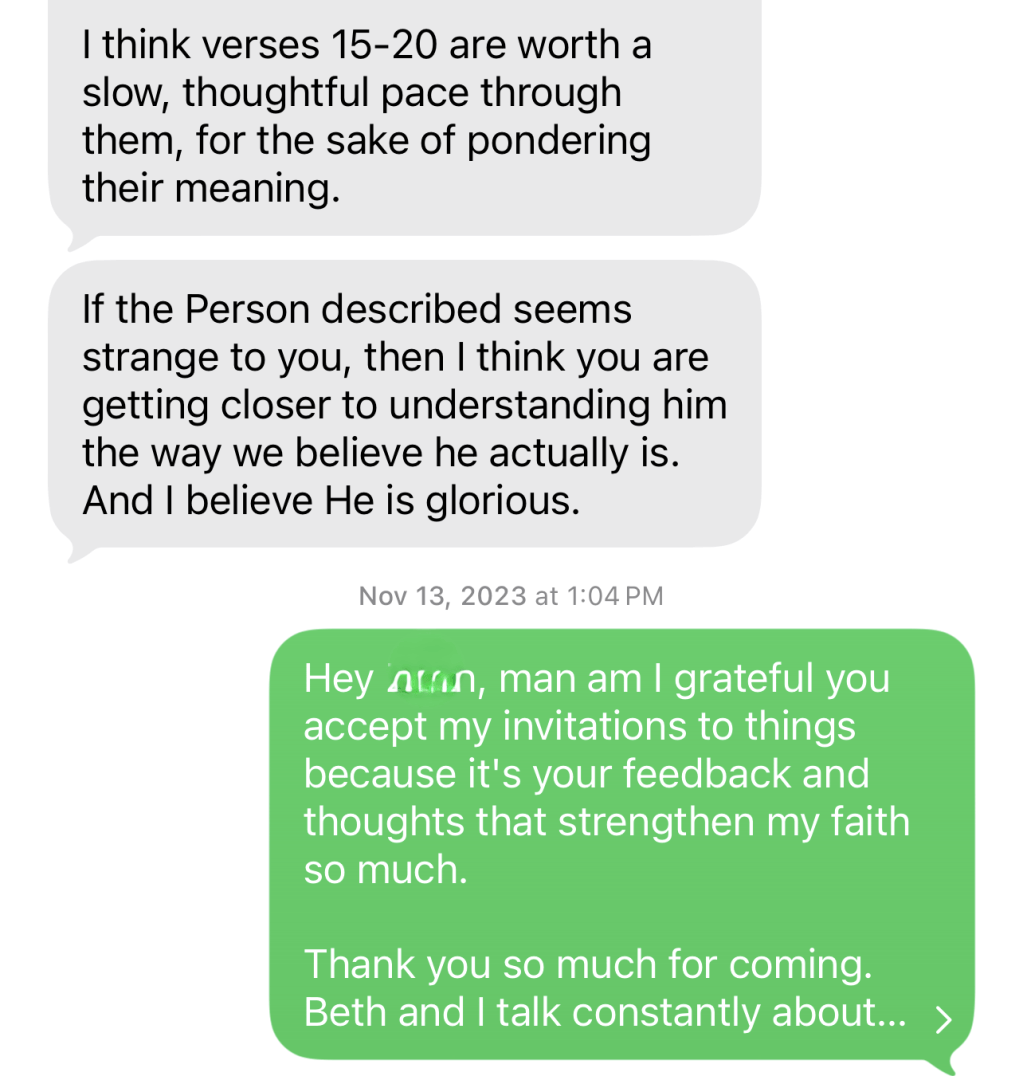
    It resulted in a text I got to send to him that I would like to share (yes, this was one text):

    “Hey, man am I grateful you accept my invitations to things because it’s your feedback and thoughts that strengthen my faith so much.

    Thank you so much for coming. Beth and I talk constantly about how we can’t trust people to keep commitments and do things they say they’ll do. You and [your wife] are one of two couples in our life (outside of family) that when you say you’re going to do something or be somewhere we know you will be. Thank you for that.

    I knew exactly what thoughts you’d have on my talk and I welcome them. I knew it would be somewhat, maybe inflammatory, to you, as I know it touched on things we’ve disagreed on from the beginning. I am glad that you appear to have not been offended by my words. Our disagreement really comes down to one thing, I think. And that’s if the Book of Mormon is true.

    I appreciated the exercise you gave me. As I did it, I came out more convinced that Jesus Christ is the literal Son of God, as the scriptures say. That’s the thing. You read the Bible and see God and Jesus Christ in one way. I see it, without a doubt in my mind, another way. Nothing will change that.

    But why do I see it another way? How can something so clear to you, and something so clear to me, be the opposite?

    As I said in my testimony, it comes down to a prophet. How can I know Jesus Christ is who He is? Because a prophet told me. How do I know he’s a prophet? He would have had to do something miraculous.

    I’ve concluded the Book of Mormon is the miracle God provided so I could know Joseph Smith was who he said he was. And if he was who he said he was, then Jesus Christ is who Joseph Smith said He is: the Son of God, on God’s right hand, as the scriptures say.

    It’s here that I finally thank you for giving me this great gift. It was years ago that you said you couldn’t accept the Book of Mormon because there was no proof the way there was with the Bible – archaeological and otherwise. I have spent the past years seeking “proof” that the Book of Mormon is what Joseph Smith claimed it to be. My list now is well over 400 items (*that was true in 2023 when this was written, now well over 800 individual items) and I am excited to share it with you one day.

    I have you to thank for that. You have built my testimony in a miraculous way and I thank our Heavenly Father, and you for that.

    Of course, “proof” is an interesting word. Despite all the records, eye witnesses, evidences, and testimonies, many still deny Jesus Christ existed, the Bible is the Word of God, etc. My “proof” may not do it for you. But when I review my list, there is not a shred of doubt in my mind that the power of God provided us the Book of Mormon. My faith has become knowledge.

    Until this life ends and we get to review everything, you will never understand how fruitful you have been to building my faith and testimony. Thank you, friend.

    Jesus Christ is the center of everything. He is my King, my Savior, my Redeemer. He is my advocate with the Father. Without Him I have nothing. Without Him I am nothing. I know we see Him differently. That doesn’t change who He is and what He’s done for us. Maybe one of us will change our minds one day. But ultimately, as long as we believe Jesus Christ is our Savior and King, one day we’ll both stand before Him and we’ll know. And it won’t matter who was right or who was wrong. Only He will matter. What a day that will be! Man, I look forward to it!”

    I share this because I think it’s important. The point of Christ is to bring us together. Though we disagree on many, many doctrinal points, this friend and I have fostered a relationship of discussion, debate, and disagreement, always founded on love and respect.

    I am truly grateful for how this person has strengthened me in Christ. That’s what this life is about. There can be good reason there is disagreement in the world – it can be for us to learn how to coexist with those we disagree with. We all have unique experiences in this life. Every moment shapes us and every experience we have changes the way we view the world. It’s through these experiences and listening to the viewpoints of others, someone who has had a vastly different life than we have had, that we can grow and become better.

    The world needs a little more of this.
  • Incommensurable

    Incommensurable

    I was listening to a podcast about the incommensurability of Joseph Smith being able to describe what the translation process for the Book of Mormon was like.  

    Incommensurable is like indescribable, without relation to anything, unquantifiable.  

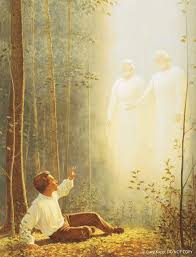
    Joseph Smith had many experiences, including the First Vision, that were incommensurable and therefore difficult for him to describe.

    I’ve written 330+ posts at this point. In many of them, I’m trying to describe incommensurable things. I’m trying to describe my testimony. I’m trying to describe my experiences. I’m trying to describe a change that has happened inside me. I’m trying to describe things I know to be true. These things, without the reader feeling my emotions, my heart, my chest, my mind, without being in my skin, words can’t describe many of the things I try to write and share. 

    I wish I could hand the testimony I have of the Book of Mormon and of Jesus Christ’s sacrifice for me into the heart of every person I ever meet, if only for a moment (I want it back!). But I can’t. I wish I could give to someone how I know the Book of Mormon is true. I’ve tried before. I can’t. 

    I wish I could describe so that you, the reader, could understand what I felt when I left the Bishop’s office and knew, just knew with all my heart, that Christ was going to forgive me for everything I had done. I wish I could describe the feeling that washed over me. I wish you could feel my tears. I wish you could feel that experience. 

    Many of you have in your own way. Some of you haven’t.

    Tears come to my eyes just thinking back on some of these moments in my life.

    Incommensurable.  

    I want to state something clearly, since I can’t use words to properly describe my testimony and knowledge of my Savior. Here are facts to review. 

    I have changed. 

    I am a father. 

    I am a different person than I was 5, 10, or 15 years ago. I am far, far, far from perfect. Embarassingly far from perfect. Shamefully far from perfect. I recognize that. But –

    If you see anything good in me, it’s because of Jesus Christ.

    If you think I have any admirable qualities, it’s because of Jesus Christ. 

    If you think I’m any sort of decent father, it’s because of Jesus Christ. 

    If you think I’m any sort of decent person, it’s because of Jesus Christ.

    Everything good I am and everything good I can be is because of Him. 

    I am not a father without Him. I am not a son without Him. I am not a friend without Him. 

    Everything good I am, is because of Him. 

    For those that haven’t had revelatory experience of knowing that Christ is your Savior, and feeling what He has done for you, I invite you to sit and ponder all your mistakes. Ponder the pain you’ve caused others. Ponder all the bad. Realize He forgives you because He loves you. Then ponder all the good you’ve ever done. All the help you’ve ever provided. All the smiles you’ve caused. Consider all that is good about you, and thank Him. Whether you realize it or not, it’s because of Him.  

  • Amos and Joseph Smith

    Amos and Joseph Smith

    The book of Amos in the Old Testament is an underrated book of scripture which I believe is extremely important to the Church of Jesus Christ of Latter-day Saints.

    In 2021 I was reading through the entire Old Testament for the first time and got to Amos. I’d like to share some things I learned from this book that I seldom hear talked about.

    Amos 3:7 is a scripture often quoted by latter-day saints. It reads:

    “Surely the Lord God will do nothing, but he revealeth his secret unto his servants the prophets.”

    This has obvious significance to the message of the restored Gospel of Jesus Christ. God reveals nothing, save it is revealed to a prophet.

    As I’ve read this short book of only 9 chapters, other significant scriptures have stood out. 

    An example is chapter 7. It is well-known that God chooses the most meek and humble of the earth to be His mouthpiece on the earth. This is a common theme in the Old Testament. It is common for herders and fisherman (symbolic much?), and others of little means to be called to God’s service.

    Chapter 7 starts with Amos relating a vision he had wherein he was called to prophesy to Israel of their sins and upcoming destruction if they did not repent. 

    Verse 9 of chapter 7 reads:

    “And the high places of Isaac shall be desolate, and the sanctuaries of Israel shall be laid waste; and I will rise against the house of Jeroboam with the sword.”

    This prophesy, naturally, led to a scorned priest going to the king and tattling. The modern day equivalent of going to the teacher and whining about a classmate. 

    “Then Amaziah the priest of Beth-el sent to Jeroboam king of Israel, saying, Amos hath conspired against thee in the midst of the house of Israel: the land is not able to bear all his words.”

    Boo-hoo Amaziah.

    boo hoo Memes & GIFs - Imgflip

    Amos’s reply is a classic prophet response.

    “Then answered Amos, and said to Amaziah, I was no prophet, neither was I a prophet’s son; but I was an herdman, and a gatherer of sycamore fruit.”

    Amos is basically saying, ‘Who am I to lead an insurrection against the king?  What is my motivation? Yesterday I was minding my own business herding sheep. The Lord has commanded me to say these words and so I must say them.’ Amos is pointing out that he is a humble shepherd. Someone of little consequence.

    The footnote to the word prophet in this verse is what really jumped out to me. The footnote referred to Joseph Smith-History 1:22-23 which reads:

    22 I soon found, however, that my telling the story had excited a great deal of prejudice against me among professors of religion, and was the cause of great persecution, which continued to increase; and though I was an obscure boy, only between fourteen and fifteen years of age, and my circumstances in life such as to make a boy of no consequence in the world, yet men of high standing would take notice sufficient to excite the public mind against me, and create a bitter persecution; and this was common among all the sects—all united to persecute me.

    23 It caused me serious reflection then, and often has since, how very strange it was that an obscure boy, of a little over fourteen years of age, and one, too, who was doomed to the necessity of obtaining a scanty maintenance by his daily labor, should be thought a character of sufficient importance to attract the attention of the great ones of the most popular sects of the day, and in a manner to create in them a spirit of the most bitter persecution and reviling. But strange or not, so it was, and it was often the cause of great sorrow to myself.

    Here we find something of simple but important significance. The pattern continues. Just as Joseph Smith, a boy of little confidence and almost no education was vilely attacked for his claims, claims that, as he said, should have made these men of God want to bring him close and set him straight to help him, instead lead to persecution and hatred. Such it is when corrupt men are brought before light and truth.

    Just as Joseph Smith was attacked for his claims, so was Amos. A humble herdman, minding his own business, but one day called upon by God.

    Profound teachings can be found throughout the scriptures. All of the written word of God should be pondered by us as latter-day saints. We can find truths everywhere. This pattern is one that adds to my testimony that Joseph Smith was a prophet. I’m grateful that like Amos, Joseph Smith fought the persecution he received to bring forth the word of God. Just as Amos thousands of years earlier had to do the same.

  • Faith in Man or Faith in God

    Faith in Man or Faith in God

    Since I’m posting this on Thanksgiving day I think I’m obligated to say I’m grateful for the Book of Mormon, how it makes me a better person, how it makes my home a happier place, what it teaches me about Jesus Christ, and the hope it gives me for an eternal future.

    I will make a simple argument here.

    My thesis:

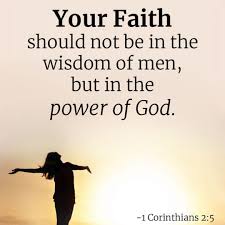
    Anyone who has read the Book of Mormon and believes it is a made-up story written by a man has more faith in the brilliance of a man than in the Glory of God. It is easier for that person to believe there is a man with otherworldly abilities than that God still speaks to humans.

    Explanation –

    Things that can’t be denied by any logical or thinking person:

    1. The Book of Mormon exists. You can go get a copy now and read it.
    2. The Book of Mormon was brought into existence in our day, for us to read, somehow.

    If the above two points are true, then we can move on.

    Next statements of truth:

    1. Since the Book of Mormon exists, we must determine who played a role in creating it.

    This leads us to only a couple options as far as I can tell. There may be other sub-options, but I think this mostly covers it. I’ve added sub points to each option to add important perspective:

    1. Joseph Smith wrote it by his own mind and creativity.
      • Joseph Smith had a third-grade education.
      • There are many witnesses attesting to Joseph Smith’s involvement in the creation of the Book of Mormon.
      • If historical accounts are to be believed, Joseph Smith dictated it word for word without notes or reference materials.
    2. Someone else wrote the Book of Mormon
      • This is hard to believe given countless eye-witness testimonies of Joseph Smith’s involvement in the creation of this book. It takes some creative gymnastics to determine how this could be true.
    3. Joseph Smith wrote it with the assistance of somebody very learned, ex: Sydney Rigdon.
      • This would require some sort of explanation on why no one else ever came forward to claim writing such a brilliant book.
      • With any minor research we find much evidence to show Sydney Rigdon didn’t meet or know Joseph Smith until the Book of Mormon was published.
    4. Joseph Smith translated the Book of Mormon by the power of God.
      • This would be taking the supposed creator of the book at his word.

    I believe any basic research into this subject proves Joseph Smith’s direct involvement in the creation of the Book of Mormon. Whether that be through point 1 or point 4 will now be briefly discussed. If points 2 or 3 are to believed, then a vast and complex conspiracy has been going on for 200 years. For 200 years, no proof has come forth to show that anyone but Joseph Smith created the Book of Mormon. No one has come forward. No information has leaked.

    If we come down to points 1 or 4, let’s address point 1, that Joseph Smith wrote the Book of Mormon by his own mind and creativity.

    Let’s first just disregard the fact that he wrote it in 65 working days because I feel detractors will just say, “That’s not true” even though the historical account appears to support if not prove this. Let’s say Joseph Smith wrote it with as much time, editing, and re-editing as he needed (which many testimonies argue against, but for the sake of this argument, let’s say he did take months or years to write it before he turned 25 years old).

    Those arguing Joseph Smith created the Book of Mormon from his own mind admit a man with little to no formal education, little to no access to any historical books or other reference materials, wrote a detailed account of a company leaving Jerusalem and travelling to the Americas. Instead of elaborating more on this, I will quote a challenge issued by Hugh Nibley to his students at BYU:

    “Since Joseph Smith was younger than most of you and not nearly so experienced or well educated at the time he copyrighted the Book of Mormon, it should not be too much to ask you to hand in by the end of the semester (which will give you more time than he had) a paper of, say, five to six hundred pages in length.  Call it a sacred book if you will, and give it the form of a history.  Tell of a community of wandering Jews in ancient times; have all sorts of characters in your story, and involve them in all sorts of public and private vicissitudes [daily activities]; give them names — hundreds of them — pretending that they are real Hebrew and Egyptian names of circa 600 B.C.; be lavish with cultural and technical details — manners and customs, arts and industries, political and religious institutions, rites, and traditions, include long and complicated military and economic histories; have your narrative cover a thousand years.

    Keep a number of interrelated local histories going at once; feel free to introduce religious controversy and philosophical discussion, but always in a plausible setting; observe the appropriate literary conventions and explain the derivation and transmission of your varied historical materials.  Above all, do not ever contradict yourself!  For now we come to the really hard part of this little assignment.  You and I know that you are making this all up — we have our little joke — but just the same you are going to be required to have your paper published when you finish it, not as fiction or romance, but as a true history!  After you have handed it in you may make no changes in it. . . .

    What is more, you are to invite any and all scholars to read and criticize your work freely, explaining to them that it is a sacred book on a par with the Bible.  If they seem over-skeptical, you might tell them that you translated the book from original records by the aid of the Urim and Thummim — they will love that!  Further to allay their misgivings, you might tell them that the original manuscript was on golden plates, and that you got the plates from an angel.  Now go to work and good luck!” (The Prophetic Book of Mormon, F.A.R.M.S., 221-222)

    I will add Alan C. Miner’s addition to this challenge, stating, “It shouldn’t be hard, living as we do in the computer world of the internet”:

    “Because your story is supposed to be a religious record, include in your paper over 500 different descriptive titles for deity, all within a proper religious context that will not only explain these titles in relation to what we have in the Bible, but give added meaning and understanding to the text of the Bible and to your own story.  And while you are at it, have most all the proper names of people, places and things have intrinsic and symbolic meaning.  Because this is supposedly an ancient Hebrew record, give hundreds of ancient parallelistic Hebrew literary forms.  In fact, have the whole text written in parallelistic patterns.  Incorporate thousands of phrases from the Bible so that these intertextual usages give added meaning to both the Bible and the Book of Mormon.  Make sure that the biblical sources are from all different parts of the Bible, and for that added touch, use some extra-biblical texts.  But don’t limit yourself to just your own patterns of language, or that of the KJV Bible, also use Early Modern English terms that were dated near 1611 when the KJV Bible was first published and became the bible of the masses.  Weave in an underlying theme of covenants with the Lord, both culturally and scripturally using covenant terms and practices used in ancient times.  In fact, it would be a good idea to make every part of your narrative not only covenant-related, but Christ related as well. For one final challenge you must dictate your story to a scribe without the aid of a written script.  While you may be allowed to tell your scribe to adjust the spelling of proper names, you must leave your script as you dictate it, and never ask your scribe to tell you where you left off after lunch or the end of a day.  On his own, your scribe can adjust capitalization, punctuation, the spelling of traditional words, and some simple grammar, but that is all.  Dictate parts of your story in non-chronological order, and be sure to credit these parts of your story to different writers, varying your manner of using words so that a distinct separation of language style can be detected.”

    What Joseph Smith wrote has been critiqued, criticized, evaluated, and been under a microscope for nearly 200 years. With additional evidence from archaeology, what we know about the Middle East and Jerusalem, and what we know about the Americas, the Book of Mormon is more validated, not disproven, despite what detractors may argue.

    I hope this goes to illustrate how impossible this act would be. It would be miracle of extraordinary human skill, intelligence, and foresight (knowing things that hadn’t yet been discovered yet, like chiasmus).

    Those who believe Joseph Smith wrote the book of Mormon through his own brilliance have more faith in the genius of a man than faith in the idea that God assisted in the matter. Put simply, you either have faith in the brilliance of Joseph Smith or in the Glory of God.

    Those who believe Joseph Smith did not translate the Book of Mormon through the gift, power, and love of God “deny the power thereof” (2 Timothy 3:5, Joseph Smith History 1:19).

    You must come to terms with this truth.  Either Joseph Smith was above and beyond the most brilliant man in the history of mankind.

    Or. 

    God loves His children and instituted a great work through Joseph Smith.

    What does it say if you more easily believe in Joseph Smith than in God?

    I am grateful for the Book of Mormon.

  • Pondering on Death, Eternity, Growth, and Mortality

    Pondering on Death, Eternity, Growth, and Mortality

    Emma Smith, the wife of the prophet, was once given a promise that is worth pondering.

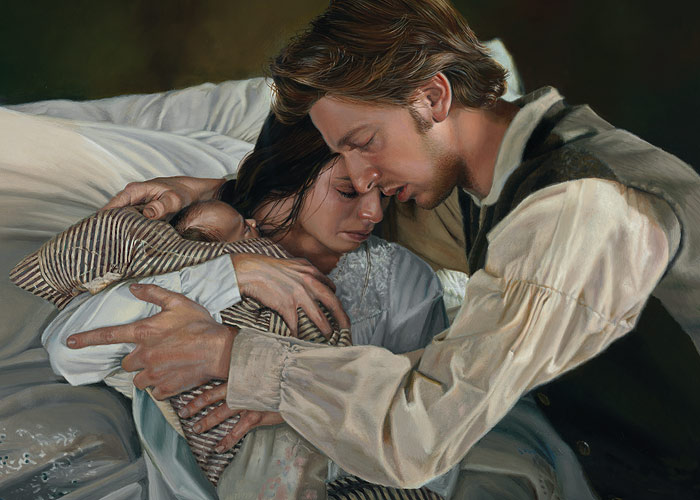
    Emma had a 14-month-old child die.

    As a father of three, the thought is unimaginable. Reading through the list of Smith children that died in infanthood is heartbreaking.

    According to Alexander Smith, Emma’s son who made it to adulthood, shortly before her death in 1879 she had a vision where Joseph Smith visited her and promised her she would raise all her children who had not lived to adulthood after her mortality ended.

    What are the implications of this?

    I believe what can be gleaned from this is powerful, comforting, and gives a look into the truly magnificent love and power of a Father in Heaven. I believe the truths restored by Joseph Smith to be awe-inspiring. I believe the truths revealed by Joseph Smith should be awe-inspiring if he truly was a prophet of God. I believe that to be truth.

    I’ve read near-death experiences that describe young children playing in heaven. I still wonder about, and don’t comprehend, age, mortality, “childhood and adulthood”, maturity, time, and the importance of our bodies.

    Those categories: age, mortality, childhood and adulthood, maturity, time, and our bodies seem like a wide-ranging and somewhat unrelated group of topics.

    But what was shared with Emma Smith makes those topics intertwined.

    What is age? In mortality, I am 30 years older than my children. But in the eternities their spirits are eternal, they never had a beginning. Who I am to say that I am any more “mature” than my two sweet daughters? My two young girls teach me and inspire me daily. I believe I came to earth before them to guide them, lead them, watch over them – a great and marvelous calling and responsibility – but they’re also here to guide, lead, and watch over me. It’s the great circular of life (not to be confused with, though very similar to, the Circle of Life in the Lion King).

    In this sense, what is childhood and adulthood?

    It is one eternal round.

    But that experience – of me raising my children and the humility that brings – and my children being raised – and the humility that takes – clearly has significance and importance to our eternal progression. This explains why Emma was given this promise that she would one day raise the children she lost. She missed that opportunity, but in God’s Plan, nothing is truly missed. It’s all one eternal round. It all comes back. This should be a great comfort to anyone who has lost any loved ones, to anyone who’s felt they missed any mortal opportunity – to raise children, get married, or have any mortal experience – this should be a great comfort to all.

    Another significant message to take from this vision given to Emma is the importance of the family unit. Just because Emma’s children died as infants didn’t mean they weren’t her children. They would always be her children. She would always be their mother. The family unit is important. The family unit is eternal.

    I’ve touched on age, mortality, childhood and adulthood, maturity, and time – 5 of the 6 seemingly random topics. What of our bodies?

    Our bodies have eternal significance and their growth has eternal significance. We can not be like our Father in Heaven until we are resurrected and have bodies like His. I’ve been pondering on this a lot lately. The elements are eternal. Element can not be destroyed. When God created Adam and Eve’s bodies from the dust of the earth, He was taking eternal element and making a tabernacle for them. Our eternal spirits are housed in eternal element. There is something extraordinary and significant about our bodies. We cannot be properly resurrected beings, we cannot be like our Heavenly Father, without attaining our bodies.

    After our resurrection we will attain our bodies for the rest of eternity and therefore be more like our Father.

    Finally, the biggest thing to take away from Emma’s experience is how ignorant we are of the complete workings of God. We can rest assured that a perfect and all-loving Father in heaven will make ALL things right. Every last item that is a concern to us – death, raising children, marriage, relationships, family – all of it will be understood and made right in a perfect way.

    I have no doubt that my Heavenly Father, and your Heavenly Father, loves all of us in such a deep and incomprehensible way. I have faith in His love and His character. I have faith in His Plan. I know all our concerns are but the concerns of a child wanting a chocolate bar at a store. The child can’t see the grand scheme and can’t see how the world can be right while leaving the store without a chocolate bar. One day our eyes will be opened and we will see that the chocolate bar wasn’t as important as we thought, for our Father had created a plan to give us all the chocolate our heart could desire.

    If we follow Him and trust Him, it all will be made right.