Tag: joseph smith

  • Why Polygamy?

    Why Polygamy?

    The question is often asked: Why did God command Joseph Smith to enact the practice of polygamy, or multiple wives.

    The answer is sometimes given that it was for God to raise up righteous seed. to increase the number of children born in the gospel covenant in order to “raise up seed unto [the Lord]” (Jacob 2:30). I will come back to this.

    Another reason that isn’t often spoken of. Joseph Smith’s calling as a prophet was to restore all things. Not some things. Not most things.  All things.

    If a Priesthood power was had or executed in this earth, it was Joseph Smith’s duty to restore it in this, the dispensation of the fullness of times.

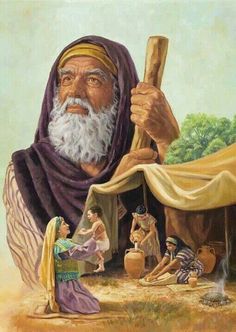
    To many people distraught at the idea of polygamy I would ask, “Do you believe in the Bible? Do you believe in Abraham, the great Patriarch?” How can a practice so wholeheartedly be condemned in the 19th century but be acceptable to you in the past? God is eternal. He doesn’t care about 2000 BC or the 1830s. To Him it is all one eternal round.

    It’s amazing that the staunchest denouncers of plural marriage never speak of Abraham, Isaac, and Jacob. The same Abraham, Isaac, and Jacob whom they pronounce with vigor, “I believe in the God of Abraham, Isaac, and Jacob.” Israel, whom the 12 tribes of Israel come from, exist because of this practice so condemned by modern critics.

    I want to touch back on the “righteous seed” theory. Some I think at least slightly scoff at the idea. It’s such a broad concept that most simple human minds can’t see such a big picture. Couldn’t God raise children to Him in a different way? He’s God, right?

    Maybe.

    But God has always worked through us, here on earth, to do, build, create, and work. He doesn’t magically insert tens of thousands of people because He needs them here. He commands and we either react with faith or with stubbornness.

    I’d like to give a real-life example of this principle of raising seed unto Him.

    I am a descendant of polygamy. Me. Someone you know is here because of this practice. Where would I be if not for this practice? I would have either been born to another family, outside of the covenant, outside of this Church, or I’d still be in line waiting to come to earth.

    I’m grateful for the practice of polygamy. I know it was difficult. I know it was a great test of faith. It was an incredible trial for those who had to live it. Those who endured it faithfully, like my great-great-great grandfather, Benjamin F. Johnson, have blessed me and the life of countless others. I’m grateful to him.

    It is pretty well documented how much Joseph Smith struggled with the principle. He all but avoided it for many years. Do you think Joseph Smith who was already persecuted and hated, driven from state to state, wanted to institute something that would make his enemies more hateful? Do you think he wanted to institute something that gave his enemies more anger and vitriol towards him and the Church? It was hard enough. It was not easy for Joseph Smith to institute polygamy.  Ultimately, he had to learn obedience to all of God’s commands. Even the hard ones. Even the ones he didn’t understand.

    We don’t know exactly why God instituted the practice of polygamy, anciently or modernly. We can guess, we can hypothesize. But like many other principles or workings of God, it comes down to faith. I wouldn’t be here without the faith of someone else who accepted something difficult. It’s a small act of faith on my part to accept and show gratitude for their great faith in times past.
  • Chosen by God

    Chosen by God

    I had a thought that never occurred to me before while reading Doctrine and Covenants 138, as obvious as this thought is.

    I believe it’s correct that some of the ancient prophets, Adam down to Joseph Smith and beyond, have resurrected bodies and are in heaven teaching. For some reason I’d only ever thought about them teaching those who had already been on earth and died. For the first time it occurred to me that they might also be teaching those who haven’t come to earth yet.

    This seems to be affirmed by the words of modern prophets, from Doctrine and Covenants Student Manuals:

    “President Joseph F. Smith was shown that many choice servants of this dispensation were also among those noble spirits. The Lord held them in the spirit world where they were taught and prepared to come forth and lay the foundations of His latter-day work. The Prophet Joseph Smith once said that “every man who has a calling to minister to the inhabitants of the world was ordained to that very purpose in the Grand Council of heaven before this world was” (Teachings, p 365).

    “President (Joseph F.) Smith also observed that, in addition to these leaders, there were “many others” who “received their first lessons in the world of spirits and were prepared to come forth in the due time of the Lord to labor in his vineyard for the salvation of the souls of men” (D&C 138:56). This refers to the doctrine of foreordination, which teaches that “in the premortal spirit world, God appointed certain spirits to fulfill specific missions during their mortal lives. … Foreordination does not guarantee that individuals will receive certain callings or responsibilities. Such opportunities come in this life as a result of the righteous exercise of agency, just as foreordination came as a result of righteousness in the premortal existence.”

    “President Russell M. Nelson taught: “Your spirit is an eternal entity. … Your Heavenly Father has known you for a very long time. You, as His son or daughter, were chosen by Him to come to earth at this precise time, to be a leader in His great work on earth. You were chosen not for your bodily characteristics but for your spiritual attributes, such as bravery, courage, integrity of heart, a thirst for truth, a hunger for wisdom, and a desire to serve others. You developed some of these attributes premortally. Others you can develop on earth as you persistently seek them.”

    These are things I’ve known, and thought about, but an encouraging and empowering reminder when the world fights back so aggressively against spiritual things.

    We were chosen before we came. We were potentially tutored by the very greatest prophets and teachers the world has ever seen. The tutoring from great prophets pales in comparison to the reminder that we were chosen by God, the eternal Father. God of Heaven and Earth. Creator of all things. When we remember He chose us for a purpose, and we’re on the Earth now for that purpose, the oppositions of the world should seem silly.

    If I was lucky enough to receive training from a great prophet and was chosen by God before coming here, anything is possible.

  • Plan of Salvation and What Christianity is Missing

    Plan of Salvation and What Christianity is Missing

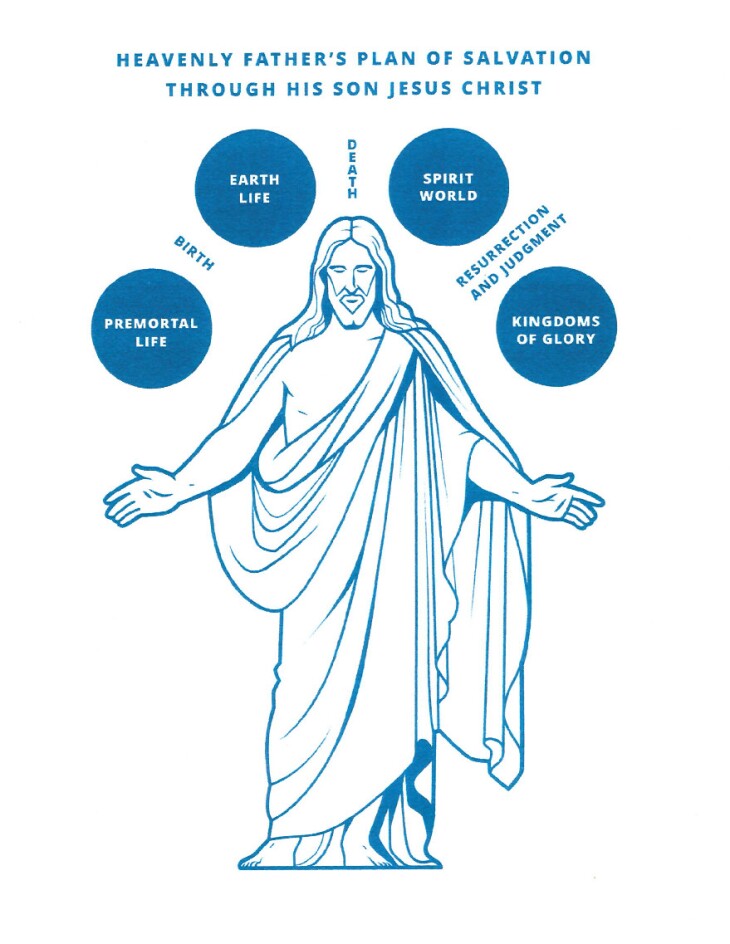
    Outside of the Church of Jesus Christ of Latter-day Saints, what does Christianity believe about the after-life? Generally speaking, Christianity believes that we are born on earth, live our lives, die, are judged, and assigned to either heaven or hell.

    I heard something on an awesome podcast called Unshaken Saints recently that I’d never realized. What the host of the podcast pointed out was that Christianity has it right. Christianity is just missing the beginning and the end.

    As I stated, Christianity believes in life on earth, then judgement, then heaven or hell.

    The truth is that life doesn’t start here on earth. This is the beginning that Christianity is missing. We lived long before we came to earth. There are many truths that stem from our understanding of our premortal existence. One of the most important truths that premortality provides us is an understanding of agency. We chose to come here. This life wasn’t thrust upon us. This is the missing beginning.

    The truth after death (the end) is that we are temporarily assigned to either “spirit prison” or “paradise,” but this isn’t our final resting place. After our temporary assignment to prison or paradise, we receive our final judgement that the scriptures speak of. This is when we come before God and Jesus Christ, Jesus Christ as our advocate to the Father and our judge before God. This is where we either accept Jesus Christ and the mercy He has given us and are reconciled to God, then assigned our glory by the mercy of God and His Son, Jesus Christ; or we reject Jesus Christ and are cast out to outer darkness. We must willfully reject God, Jesus Christ, and the mercy we are given to be cast off. This is the hell that Christianity understands.

    There will be glory assigned to all of God’s children. How can that be? It can be because He loves us that much, so much that He gave His only Begotten Son to save us.

    Christianity thinks the final judgement is immediately after we die. The beauty of the Plan of Salvation is the realization that everyone will have an opportunity to accept Jesus Christ. Everyone will be taught and be given a fair chance. Spirits in “prison” will learn what they missed on earth. No one will be left out. Children are alive in Christ (Moroni 8:12). No one will be lost.

    This is what Christianity misses. The beginning and the end. Premortality and the final judgement. If you cut off the beginning and the end of the Plan of Salvation, you have life on earth and spirit prison or paradise. That’s missing half the picture. We lived before we came here. We were loved by a loving Father in heaven before we came here. At the end, we will be judged for our actions, all we did on earth, our heart’s intent, our good deeds and bad, what we provided in this speck of time that will send us on an eternal trajectory. The beginning and the end. That’s what Christianity misses by rejecting further revelation by God’s prophets.

    What does this do to Christianity?

    Christianity believes we started here on earth. What does that do to our agency? We didn’t choose to come here. We didn’t know God before we came, who is He to us? This is what Joseph Smith spoke of when he talked about the First Vision. He said he learned that God and Jesus Christ knew him by name. For me, that knowledge is so engrained in my soul and being, it’s something I know, that God knows me. The Christianity Joseph Smith knew prior to the First Vision led him to be surprised that God could know him. I’m grateful for the truth God provided Joseph Smith when he appeared to him in a grove.

    Back to what Christianity believes – we come to this earth by no choice of our own, sent by a God we don’t know or understand. We come to this earth to suffer by the sweat of our brow, a fallen world, a cruel world, a challenge we don’t understand, a challenge we didn’t choose. Then God judges us and casts 90% of us off. Most are cast off because they never knew God or Jesus Christ, no fault of their own.

    This is what Christianity believes.

    The podcast provided another analogy that made me think about how this misunderstanding of the Plan of Salvation limits Christianity.

    There are two young men sitting outside of a Bishop’s office. One of the boys doesn’t want to be there. He doesn’t understand why he’s there. All he knows about the Bishop is that he’s a wrathful, unkind, harsh man. This young man fears the Bishop.

    The other young man knows the Bishop. He knows him to be just and kind. He knows the Bishop loves him and only wants what’s best for the him.

    As the first boy waits, he feels like he is in prison. He is dreading the upcoming confrontation with this unkind bishop.

    What does the second young man experience? Is he not in a paradise? He knows he’s soon to meet a friend. That friend is going to give him a treat, congratulate him on how he’s been doing, give him a hug and tell him he loves him. This second young man welcomes the meeting with the Bishop.

    The lack of knowledge in Christianity represents the first young man. Christianity doesn’t know God. By removing the premortal existence, life with a loving Father before life on earth, a Plan to come to earth and progress, a chance to learn of Him after this life, and then to be judged after being given all the necessary information, Christianity only sees a confusing, wrathful God, who has unfairly judged them.

    The Plan of Salvation is a beautiful truth that Christianity is missing. Far from being completely ignorant, Christianity is really close. But this closeness, without the full truth, is extremely limiting.

    ALL of us on earth chose to come to earth. All of us already chose Jesus Christ.

    This is a powerful truth. I wish the rest of Christianity could see, understand, and accept the further light and knowledge that makes this life understandable and worth living.

  • The God You Know

    The God You Know

    When I started writing the post Unity, Peace, and Love, I actually had another point I intended to make. As often happens when I write, my point got sidetracked (I hope by the Spirit) and I ended up going a completely different direction than originally intended. The point I was sidetracked from, I still liked, and think is important, so I decided to write it anyway. Hopefully the Spirit will guide this post as well.

    In Unity, Peace, and Love I talked about a video that shocked me, the video of someone strutting up to a rameumptom to pray. The idea of a follower of God shoving people out of his way to pray was so bizarre to me. I wrote in the aforementioned post what I think ended up being a better point about this. But what really came to mind the first time I watched that video is how corrupt religion can become if people don’t know who they worship.

    In my original post about the rameumpton, I wrote about the God a friend of mine knew. His God was vengeful, exclusive, and selective. This friend believed that I was going to hell despite my best efforts. I assured that friend that I believed he was going to heaven. Do I worship a different God?

    Let me be clear, I believe we’re all trying to worship the same God. I don’t mean to make the same argument that many Christians make against members of the Church of Jesus Christ of Latter-day Saints, that I’m not Christian because I don’t worship the same Jesus Christ. Just because we have different understandings of the person doesn’t completely diminish our worship. My efforts in worshiping Christ, even if others deem it a “different” or “inaccurate” Jesus Christ, is still worship.

    The problem comes when our understanding of who we worship completely alters our understanding and our behavior. The idea that someone could shove someone on their way to prayer was so bizarre to me. But what if the God someone understands has no body, passions, and is unknowable? What if someone thinks God is a selective and vengeful God that needs to be feared?Why not shove someone on their way to prayer? This shoving behavior isn’t as bad as a God who destroys people on a whim, a God who sent us here so 99% of us could be damned to eternal torment. Surely shoving someone isn’t that bad if our example is that God.

    I wrote the above before I finished Alma chapter 21 so I’d forgotten about the next part about the Zoramites, their rameumptom, and their recited prayer.

    Verse 15 of chapter 21, after the depiction of a Zoramite shoving someone out of his way on his way to prayer, reads:

    “Holy, holy God; we believe that thou art God, and we believe that thou art holy, and that thou wast a spirit, and that thou art a spirit, and that thou wilt be a spirit forever.”

    Interesting their beliefs line up with my thinking about how not knowing God corrupts our behaviors not only religiously, but in life. Here we have a recited prayer and the confusion on God’s character destroying a society.

    The culmination of the Zoramites corruption was not in their recited prayers or confusion in God, though. The culmination is found in verse 16 which reads:

    “Holy God, we believe that thou has separated us from our brethren; and we do not believe in the tradition of our brethren, which was handed down to them by the childishness of their fathers; but we believe that thou has elected us to be thy holy children; and also thou has made it known unto us that there shall be no Christ” (emphasis added).

    All their confusion, twisting of doctrine, and beliefs ultimately led to a denial of Christ. We will know the modern religions have truly fallen when they stop believing in He who keeps this all together.

    In an April 2023 General Conference talk, Mark A. Bragg reminded us of the Joseph Smith quote, “If men do not comprehend the character of God, they do not comprehend themselves.”

    This is where modern revelation and especially the Lectures on Faith (See here, here, and especially here for more on those) becomes so important. We must understand the character of perfection and love that Heavenly Father and Jesus Christ possess so that we can aspire to those characteristics. An unknowable God gives us an unknowable standard. Knowing God is perfect love, and we can do our best to be like Him, gives us the ability to do our best to emulate His love.

  • Eternal Souls

    Eternal Souls

    In the past couple days, I’ve heard multiple people use the phrase “eternal soul.” One time was in an episode of one of Ivy and I’s favorite shows, Impractical Jokers. One of the Jokers, Sal, sold his soul to Murr for a pair of shoes. They flippantly threw out the phrase. Now, they were clearly joking. Still, it intrigued me that they would use that phrase, “eternal soul.” Did they consider what they were saying?

    I can’t remember the other place I heard it said. Some TV show or video or something. What I remember is that it was again said without seriousness. Just a flippant, cultural phrase people throw out.

    Another phrase like “eternal soul” that gets said is “immortal soul.”

    Do people realize what they’re saying when they say these words? It gets thrown around so casually. Yet, if you asked any of these people, “Is your soul immortal?” They’d probably reply with “I don’t know” or “I hope so” or “I have a soul?”

    People often think of only one end of eternity. The part that gets attention is the forward looking, far out, never ending part of eternity. What people forget is that eternity goes the other direction. Eternity means no beginning, as well as no end. As Joseph Smith taught, if something has a beginning, it can also have an end. Our souls have no end. The implication of the word eternal is clear.

    I think people throw these words out jokingly without thinking about the full power and implication of this phrase that, deep in our souls, we all know is true.

    We are eternal. We had no beginning, and we have no end.

    We do have immortal and eternal souls.

    It’s not a joke. It’s a serious fact.

    Anyone throwing this phrase around should stop and ask themselves: Do I believe I have an eternal soul and what does that mean for me?