Tag: judgement

  • Plan of Salvation and What Christianity is Missing

    Plan of Salvation and What Christianity is Missing

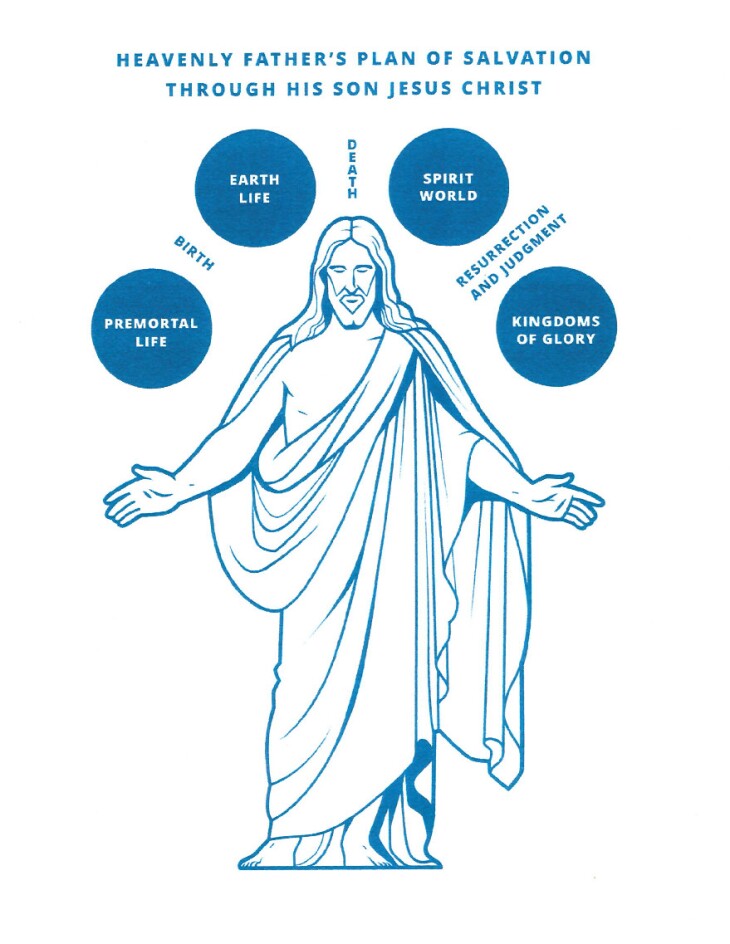
    Outside of the Church of Jesus Christ of Latter-day Saints, what does Christianity believe about the after-life? Generally speaking, Christianity believes that we are born on earth, live our lives, die, are judged, and assigned to either heaven or hell.

    I heard something on an awesome podcast called Unshaken Saints recently that I’d never realized. What the host of the podcast pointed out was that Christianity has it right. Christianity is just missing the beginning and the end.

    As I stated, Christianity believes in life on earth, then judgement, then heaven or hell.

    The truth is that life doesn’t start here on earth. This is the beginning that Christianity is missing. We lived long before we came to earth. There are many truths that stem from our understanding of our premortal existence. One of the most important truths that premortality provides us is an understanding of agency. We chose to come here. This life wasn’t thrust upon us. This is the missing beginning.

    The truth after death (the end) is that we are temporarily assigned to either “spirit prison” or “paradise,” but this isn’t our final resting place. After our temporary assignment to prison or paradise, we receive our final judgement that the scriptures speak of. This is when we come before God and Jesus Christ, Jesus Christ as our advocate to the Father and our judge before God. This is where we either accept Jesus Christ and the mercy He has given us and are reconciled to God, then assigned our glory by the mercy of God and His Son, Jesus Christ; or we reject Jesus Christ and are cast out to outer darkness. We must willfully reject God, Jesus Christ, and the mercy we are given to be cast off. This is the hell that Christianity understands.

    There will be glory assigned to all of God’s children. How can that be? It can be because He loves us that much, so much that He gave His only Begotten Son to save us.

    Christianity thinks the final judgement is immediately after we die. The beauty of the Plan of Salvation is the realization that everyone will have an opportunity to accept Jesus Christ. Everyone will be taught and be given a fair chance. Spirits in “prison” will learn what they missed on earth. No one will be left out. Children are alive in Christ (Moroni 8:12). No one will be lost.

    This is what Christianity misses. The beginning and the end. Premortality and the final judgement. If you cut off the beginning and the end of the Plan of Salvation, you have life on earth and spirit prison or paradise. That’s missing half the picture. We lived before we came here. We were loved by a loving Father in heaven before we came here. At the end, we will be judged for our actions, all we did on earth, our heart’s intent, our good deeds and bad, what we provided in this speck of time that will send us on an eternal trajectory. The beginning and the end. That’s what Christianity misses by rejecting further revelation by God’s prophets.

    What does this do to Christianity?

    Christianity believes we started here on earth. What does that do to our agency? We didn’t choose to come here. We didn’t know God before we came, who is He to us? This is what Joseph Smith spoke of when he talked about the First Vision. He said he learned that God and Jesus Christ knew him by name. For me, that knowledge is so engrained in my soul and being, it’s something I know, that God knows me. The Christianity Joseph Smith knew prior to the First Vision led him to be surprised that God could know him. I’m grateful for the truth God provided Joseph Smith when he appeared to him in a grove.

    Back to what Christianity believes – we come to this earth by no choice of our own, sent by a God we don’t know or understand. We come to this earth to suffer by the sweat of our brow, a fallen world, a cruel world, a challenge we don’t understand, a challenge we didn’t choose. Then God judges us and casts 90% of us off. Most are cast off because they never knew God or Jesus Christ, no fault of their own.

    This is what Christianity believes.

    The podcast provided another analogy that made me think about how this misunderstanding of the Plan of Salvation limits Christianity.

    There are two young men sitting outside of a Bishop’s office. One of the boys doesn’t want to be there. He doesn’t understand why he’s there. All he knows about the Bishop is that he’s a wrathful, unkind, harsh man. This young man fears the Bishop.

    The other young man knows the Bishop. He knows him to be just and kind. He knows the Bishop loves him and only wants what’s best for the him.

    As the first boy waits, he feels like he is in prison. He is dreading the upcoming confrontation with this unkind bishop.

    What does the second young man experience? Is he not in a paradise? He knows he’s soon to meet a friend. That friend is going to give him a treat, congratulate him on how he’s been doing, give him a hug and tell him he loves him. This second young man welcomes the meeting with the Bishop.

    The lack of knowledge in Christianity represents the first young man. Christianity doesn’t know God. By removing the premortal existence, life with a loving Father before life on earth, a Plan to come to earth and progress, a chance to learn of Him after this life, and then to be judged after being given all the necessary information, Christianity only sees a confusing, wrathful God, who has unfairly judged them.

    The Plan of Salvation is a beautiful truth that Christianity is missing. Far from being completely ignorant, Christianity is really close. But this closeness, without the full truth, is extremely limiting.

    ALL of us on earth chose to come to earth. All of us already chose Jesus Christ.

    This is a powerful truth. I wish the rest of Christianity could see, understand, and accept the further light and knowledge that makes this life understandable and worth living.


  • The Higher Law and the End of Blood Sacrifice

    The Higher Law and the End of Blood Sacrifice

    Christ fulfilled the law. This was why blood sacrifices were done with after His last and great sacrifice. But what does this mean, practically?

    The Israelites practiced God’s law which was a law of reparations. You take out the eye of an enemy maliciously, you take out his eye. Someone kills your brother, you kill him. The problem with this is obvious. Blood begets blood and when does it end?

    This is why the Israelites practiced the law of sacrifice. They took an animal, that had nothing to do with bloodshed, or theft, or lying, and instead of continuing the constant cycle of reparations, they sacrificed the blood of the animal. This is obviously what Christ represented when He died on the cross. He paid the price for all our sins, because we are incapable of paying such a price.

    This is why Christ preached a higher law. No longer was it an eye for an eye but it was turn the other cheek. No longer was it sue for damages but give your second coat. Christ’s point was that after He died for our sins, animal sacrifices would be done away with, there was no more putting your sins off on a goat. Christ was teaching the end of strife. Someone wrongs you, forgive them and move on. This put an end to the vicious cycle of payback and recompense.

    Who was the greatest example ever of this? Jesus Christ never asked us to do something He didn’t do first, when He was up on the cross, and forgave those who had scourged, beaten, and crucified Him.

    But of course, justice still had to be paid for a wrong done. That’s where Christ came in, paying the ultimate and last sacrifice with His blood. So, we flawed human beings, who sometimes commit wrong without even meaning to, can be forgiven. This is the miracle of what Christ did for us, the miracle of His atonement, the miracle of His forgiveness, and the miracle of the higher law.

  • Be Ye Therefore Perfect

    Be Ye Therefore Perfect

    There is a message recently brought to my attention in Matthew chapters 5-7. We all know the sermon on the mount. Don’t just not kill, also don’t even be angry. Don’t just not commit adultery, don’t even lust. Be ye therefore perfect.

    What comes next though? I haven’t before considered how the next chapters lead to a great message, a culmination of how we should behave and how we should try to be.

    What does the Sermon on the Mount transition into? What is the theme of chapter 6?

    Matthew 6:1 –

    “Take heed that ye do not your alms before men, to be seen of them: otherwise ye have no reward of your Father which is in heaven.”

    Matthew 6:20 –

    “But lay up for yourselves treasures in heaven, where neither moth nor rust doth corrupt, and where thieves do not break through nor steal.”

    Matthew 6:38 (JST) –

    “Wherefore, seek not the things of this world but seek ye first to build up the kingdom of God, and to establish his righteousness”

    Matthew 6 is all about our motives. In chapter 5 you seek to be perfect by your behavior. Chapter 6 asks, “why are you seeking to be perfect?” Is it for the glory of the world? Is it for more temporal possessions and blessings? Chapter 6 looks at your heart and asks your intention. We should want to be perfect because we love God and we love others. We should want to be perfect because it’s right. Perfection shouldn’t be about us or what it does for us. We should want to be perfect because Christ was perfect, perfect love, and our example. Chapter 6 tells us to look heavenward in all things.

    Which leads us to chapter 7. What does chapter 7 teach us?

    The message of chapter 7 is summed up by verse 1 (JST) –

    “Judge not unrighteously, that ye be not judged; but judge righteous judgement.”

    You’ve worked hard to fix your bad habits, to be loving, to treat others as you want to be treated. You’ve then addressed why you’re doing these things. Your heart is pure, you love others because it’s the right thing to do you. You look heavenward. Chapter 7 is about understanding that not everyone is at the same point on their own journey to perfection. Just because someone is working along their path, and in your mortal eyes may seem to be “behind” you, they’re not. Judge not others. They’re working their way down the path of perfection just as you are.

    That said, we still judge others righteously. Righteous judgement is loving judgement.

    Matthew 7:9 (JST) –

    “Go ye into the world, saying unto all, Repent, for the kingdom of heaven has come nigh unto you.”

    D&C 6:9 –

    “Say nothing but repentance unto this generation.”

    D&C 15:6 –

    “the thing which will be of the most worth unto you will be to declare repentance unto this people.”

    D&C 16:6 –

    “the thing which will be of the most worth unto you will be to declare repentance unto this people.”

    D&C 14:8 –

    “And it shall come to pass, that if you shall ask the Father in my name, in faith believing, you shall receive the Holy Ghost, which giveth utterance, that you may stand as a witness of the things of which you shall both hear and see, and also that you may declare repentance unto this generation.”

    What Christ’s apostles at the meridian of time were told to preach was the same thing those who were instrumental in the restoration of the Gospel of Jesus Christ were told to preach. It’s the same thing we’re supposed to preach today.

    Repentance.

    That’s what brings us and those around us closer to Christ.

    So, work on yourself first, Matthew chapter 5. Work on your motives second, Matthew chapter 6. Then, preach repentance to those on a different part of the path than you. Preach repentance with love and understanding. Never forgetting that you’re on the path too, trying to be your best. That’s all we can ask of each other. Do your best.

    From the book 40 Years And Marching On, an article by John W. Welch (p. 228) he says:

    “First is the acknowledgment that all people are at different stages in the eternal journey toward the glory of God, which is intelligence.”

    This is the message of the Sermon on the Mount. It’s not a one-part lesson, it’s 3 parts. Be perfect – be perfect for the right reasons – accept that others are not perfect (yet).

  • Forgiveness

    Forgiveness

    Forgiveness can be so hard. There’s a reason Christ emphasized it so differently from normal human traditions. Human thinking is, “I can’t forgive them that many times.” God’s response is, “how many times have I forgiven you?”

    That point is brought home in Matthew chapter 18. In verses 21-23, Peter asks that question we’re all tempted to ask. How many times must I forgive? Seven? Surely seven is good. It’s 4 more times than the Hebrew law dictated at the time. Christ’s famous response,

    “I say not unto thee, until seven times; but, until seventy times seven.”

    Christ expounded upon this with the parable of the servant who owed a king a large sum. When brought forward to pay the sizeable debt, the servant fell down before the king and begged for patience. In great mercy, the king waived the debt.

    That same servant then went out and grabbed another servant, demanding that a tiny amount be paid back. The second servant asked for patience and the same servant who had just been shown so much mercy had the second servant thrown into prison.

    When the king heard this he “was wroth, and delivered him to the tormentors, till he should pay all that was due to him” (Matthew 18:34).

    It seems so easy here on earth not to forgive others. What does it hurt us to not forgive? How does that person who wronged me deserve my forgiveness?There is a story from the book Return from Tomorrow. A holocaust survivor is found in a concentration camp. When he is liberated by the soldiers, he is put to work helping with the sick and dying around him. He is energetic and relatively healthy. The soldiers finally say to him, “you must have been lucky. You haven’t been here long, huh?” The man tells them how many years he’d been at the concentration camp; a long time. They marvel at his health. How can it be?

    The man tells them that early in the war, his wife and children were murdered before his eyes. He desperately wanted to hate these men, hate this war, hate this world, hate God. He had every reason to. But, the survivor made a decision. He decided he would not carry that hate with him. He decided he wouldn’t poison himself with hate. Forgiveness saved his life.

    Elder David E. Sorensen said, “When someone has hurt us or those we care about, that pain can almost be overwhelming. It can feel as if the pain or the injustice is the most important thing in the world and that we have no choice but to seek vengeance. But Christ, the Prince of Peace, teaches us a better way. It can be very difficult to forgive someone the harm they’ve done us, but when we do, we open ourselves up to a better future. No longer does someone else’s wrongdoing control our course. When we forgive others, it frees us to choose how we will live our own lives. Forgiveness means that problems of the past no longer dictate our destinies, and we can focus on the future with God’s love in our hearts.”

    We may think not forgiving others is harmless, but hate is poison. Holding onto grievances and refusing to forgive only poisons ourselves.

    In the book, Surprised by Hope, N. T. Wright said: “If you lock up the piano because you don’t want to play to somebody else, how can God play to you?“

    Reading back on the story of the king and the foolish servant who would be forgiven his great debt then demand payment from another. We read that and scoff at the hypocrisy. Yet we all have this same hypocrisy in us. And God is our king, having forgiven us all, and wroth when we can’t extend the same favor to our fellow brothers and sisters.

    Verse 35 concludes that story:

    So likewise shall my heavenly Father do also unto you, if ye from your hearts forgive not every one his brother their trespasses.

    Going along with what Elder Sorensen said, from this link: “I think it is helpful to recognize that offences and injuries are always bottled in our past. So, forgiveness requires us to deal with our past – not our present or future. We have to let go of our past in order to fill up the present and bless the future. When we fail to deal properly with our past, we are like someone whose elastic belt is caught on a barbed wire fence; we can make very little forward progress until we unhook ourselves from our pain and injustice in our past.”

    That quote is perfect in explaining how that man from the concentration camp survived. That man, if he hated, would have been stuck in the past, attached to a barbed wire. Never being able to progress to his future. Instead, he chose to forgive, free himself, and save himself. That is the true power of forgiveness.

    We have all been wronged. We have all wronged others. Some of us have been wronged worse than others. But life isn’t a ledger book. Life isn’t a tally of who has been wronged the most. There is always someone that has been wronged worse than you have. The book The Shack talks about this eternal idea of “being wronged.” If you refuse to forgive someone, and that someone refuses to forgive their father who made them that way, and their father refuses to forgive his father who made him that way: on and on for eternity. Grievances go back to the beginning of time. Forgiveness ends the vicious cycle of hate. 

    Forgive our trespasses as we forgive those who trespass against us.

    There was a point in my life when I realized I’d been carrying around poison for far too long. There was a day I realized I had to forgive some people from my past so that I could move forward. I reached out to some people I hadn’t spoken to for so long. It helped me. I felt that feeling, of getting a weight off your shoulders. For me, it was more a feeling of getting poison out of my system. I thought I’d forgiven. It wasn’t until I actually said it, to the person that needed to hear it, and apologized for my part in pain that was caused, that I realized the burden I’d been carrying for so long.

    We all must forgive.

    Again, I know that sometimes such heinous wrongs are committed that some people feel they have the right to shout, “But I’ve never hurt someone like they hurt me!”

    In those moments think about the person from the concentration camp who refused to hate. He chose to forgive. It saved his life. He had more reason to hate than just about anyone ever has. He chose not to. There’s always someone that deserves to hate more. Choose to love instead.

    Let go of the hate you harbor and forgive. Do you want to come before God and Him to ask, “how can I forgive you, when you never forgave?”

    We all do wrong, and we all get wronged. Remove yourself from the past and progress.

    A forgiveness post would be lacking if it didn’t mention where all forgiveness originates. Always remember, there is only one person who can truly break the vicious cycle of pain and hate. Jesus Christ is the ultimate giver of grace and mercy. If you feel you truly can’t forgive, lean on Him. He felt the pain, He felt all of it, and He has forgiven us. He’s forgiven all of us. He died so that we can experience the true feeling of freedom that He allows. His blood paid our debt, all of it. As we rely on Him, we will find the forgiveness our hearts desperately need.

  • Letter to a Sinner

    Letter to a Sinner

    I write this with as much humility as possible.  Fully knowing and understanding my weaknesses have given me perspective.  It is my faults and errors that make me feel like I can write this letter. 

    I remember when I came back to church I was asked to not take the sacrament for three weeks.  It was one of the more difficult things I had to do, although it doesn’t sound like much.  I think it was the moment I realized I had changed.  Something that in the past might not have affected me too much, really hurt.  It was difficult coming back and immediately feeling like maybe I’m not enough.  Maybe I could have gone the route of resentment.  Instead I realized how much I didn’t want to have to go through that again.

    I don’t in any way imply I’m better than someone who can’t take the sacrament and does feel resentment.  We all have our own paths.  Mine was of being completely away, coming back, and realizing I deserved my three weeks.  Some are never officially away so that state of probation seems unfair or not right.  I understand that.

    This is my letter to the sinner.  A reminder, that includes all of us.  This is the sinner who has made mistakes.  This particular sinner might come from a perfect family and part of their struggle is feeling like they don’t fit in in the one place they should feel welcome.  This sinner might feel judged by the very people that should love them the most.  It doesn’t matter if those family, friends, and caring loved ones are right or wrong.  It matters how the sinner interprets things.  We all live our own experiences and encounter the world in different ways.  We must, to the best our abilities, see the world in perfect light and perfect truth.

    Here is my letter to a hypothetical sinner:

    You will never be like the “perfect” people you see around you.  You won’t.  Your path has been set.  Your path has been set partly by different “luck,” different experiences.  Partly by your choices.  My life was set by very bad choices.  But now that I’ve come out of the other side, my joy is greater than I could have ever imagined.  You won’t be “perfect”, but you’ll be who Heavenly Father sees you can be.  You won’t be “better” than those who never made the mistakes you made, but you might be stronger.  Your path will lead you somewhere wholly different.  And if you decide you want to come through to the other side: to truly know your Savior, to know forgiveness, to know what being welcomed home feels like even if you don’t think you’ll ever deserve it – if you come to that other side with that relationship with your Savior, your testimony will be welded in steel, as hard as diamond.  You’ll have gone through the refiner’s fire and come out united with He who gives all strength.  This is no excuse to continue to sin.  You know the light.  You’ve seen and felt the light.  I knew the light and I turned from it.  I hope to help anyone not make the same mistake.

    You will make mistakes.  You will sin.  But no matter what, you have to remember Jesus Christ.  Because while the world will judge you and you’ll have to struggle with that, He will judge you with a perfect love and comprehension.  Remember that those around you are trying to judge you with love.  They’re trying to love you righteously.  Jesus Christ doesn’t try.  He is perfect love.  Don’t forget it.  Don’t forget that those around you whose points of view you can’t understand, they’re trying to be like Jesus Christ.  They may be falling short.  But that’s not for you to judge.  Just as they can’t judge you, you can’t judge their intentions or efforts.  Just love and do your best. 

    I’m sorry you have to go through trials.  But do not lose sight of Jesus Christ.  Do not.  He is the only person true peace can come from.  Whatever you do, whatever mistakes you make, do not forget HIM.  He won’t forget you.  I promise.

    At this point I must apologize.  Throughout this letter I’ve referred to you as “the sinner.”  I know that phrase hurt the whole way through.  I know it because I’ve felt it.  I did it throughout the whole letter to get to this point.  I want to remind you, “sinner” is not who you are.  It will never be who you are.  We all sin but that’s not what God and Jesus Christ see in us.  No matter how many mistakes we make.  No matter how many slip ups or downright wrong things you do, you are not a sinner.  You are a child of Heavenly Father.  You are growing.  You are learning.  I reiterate something I said earlier, this does not excuse your sin.  Sin is wrong, you know that.  Christ will see your sin.  What means much more to Him is your repentance.  He doesn’t see who you were but who you will be. 

    “God cares a lot more about who we are and who we are becoming than about who we once were. He cares that we keep trying.”

    Elder Dale G. Renlund in April 2015 Conference talk “Latter-day Saints Keep on Trying”