Tag: learning

  • The Mis-Education of the Negro

    The Mis-Education of the Negro

    I read a book recommended by CJ (thanks CJ) that I’ve wanted to write something about ever since reading. It was such an interesting and powerful book. It proposed some thoughts I’d never considered and really opened my mind to a different way of thinking about a particular part of American history.

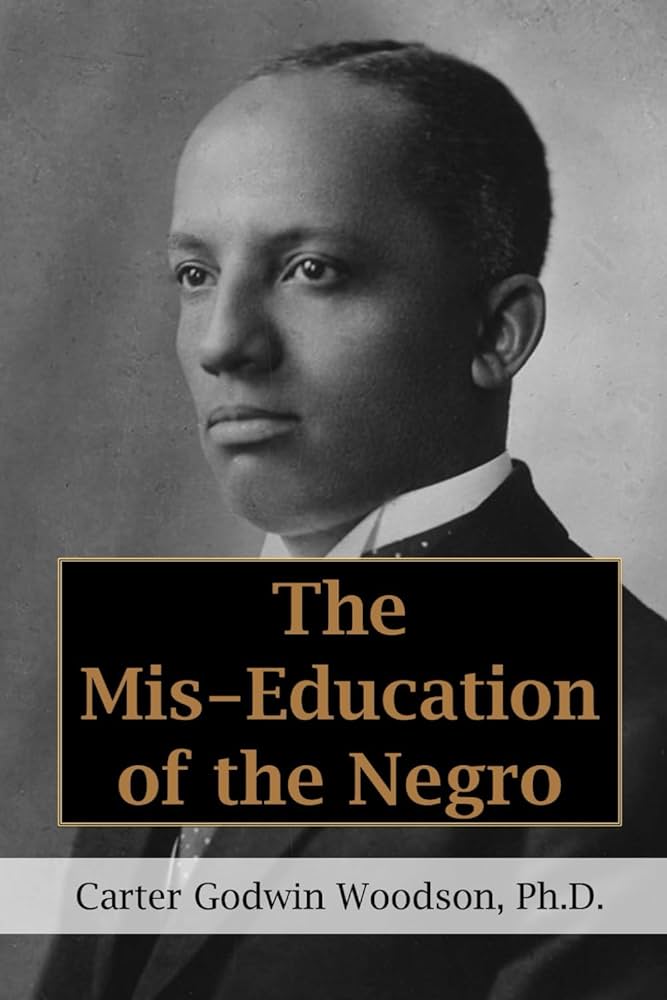
    The book is titled The Mis-Education of the Negro, written in 1933. When I started the book, I immediately texted CJ and said there was too much in the book and that we should start a podcast series exploring the topics. He jokingly agreed to do a podcast. As I continued to read, I noted 40 topics, each I thought would make for a worthwhile discussion.

    CJ and I are at a combined 6 children 4 years old and younger, so a podcast is definitely on hold.

    I read this book a couple years ago.

    Discussing race is difficult. I’ve debated posting this for some time. Not that I’m saying anything controversial or crazy. Just that I don’t like to think too much about race. But our race is important. It makes who we are.

    Sometimes commenting on race as a white person feels like a lose-lose situation. I’m either so positive about other races that it seems like pandering to the point of insincerity or like I’m trying to make up for something, or I’m not positive enough and come across at best not understanding and at worst a racist.

    I think this is why talking about race in America is so difficult. I’ve written about it before and it still is one of the most difficult things I’ve written. 

    And yet, I continue to hear from my black brothers and sisters say that the best place to start is to just be open about discussing it. Which led me to put this post together. Nothing profound. Just my thoughts on a good book.

    I should mention that the book was written in 1933 which led me to continuously ask, is it still that bad? I think many of the disappointing and sad truths the book lays out have improved. Not yet perfect, but improved.

    I want to list some of the topics I noted as interesting from the book. Then I’ll elaborate on one of them.

    1. The “equality” of black and white people. Are black and white people the same? No, we are different in so many ways. From upbringing, culture, background, experience, etc. And that’s ok.
    2. Black people being nominally free but economically enslaved.
    3. Has education for black people gotten better or worse since 1933? I assume it must have improved, but it was a thought this book made me consider.
    4. This is something I feel like people my age have started talking about more- why didn’t we learn how to do taxes instead of the Nina, the Pinta, and the Sante Maria? – The question I asked from reading this book, what is education good for? Why do we care about random historical facts from Europe? To be clear, I appreciate as much as anyone the importance of understanding history and where we came from. But shouldn’t I also know how to file my taxes and apply for a job? Also, on that note of “where we come from.” I remember a lot of history being taught about Europe. I don’t remember a ton being taught about Africa, Asia, or South America.
    5. The opportunities that are afforded whites because more white people own businesses, etc. compared to black people. I think this was much more prevalent in the 1930’s compared to today.
    6. I really struggled with reading this book because I passionately hate the word in the title of the book. Underlining it over and over throughout the book drove me crazy. I almost put the book down many times because I hated how a group of people was being, I felt, unfairly characterized.
    7. Competing churches taking away from impoverished areas.
    8. Why do we study the domineering, warring nations and not the peaceful, productive nations?  The answer is obvious- the winners of wars write history. But philosophically something to consider.
    9. Interesting point mentioned about former slaves avoiding using art to portray their experiences. There were so few books or art pieces made by former slaves depicting that struggle. I think we see that more embraced today with hip hop. Artists like Tupac, Ice Cube, and Kendrick Lemar come to mind as individuals that fully embrace the struggles they have experienced in life and have made great art out of it.

    I heard this not from this book but 3+3 and 2+4 are the same. Different, but still the same.

    The point I’d like to discuss a little more is point one. The author of this book pointed out that we’re so obsessed with making everyone equal that we disregard that people are different. He points out that maybe black people and white people shouldn’t be taught exactly the same. We come from different backgrounds and different life experiences. Something that resonates with me and helps me learn may not resonate or help someone else with a different culture from mine.

    Still, I think this idea is interesting. Generally speaking, a black person has a different life experience from a white person. I’m not talking about just upbringing, I’m talking about the way we see the world, I’m talking about the way we interact with the world, I’m talking about the way the world interacts with us. Black people and white people can be different. That’s not bad though. We’re not different in an inferior / superior way, just different. Good and bad. Different.

    From the book:

    “The differences of races, moreover, is no evidence of superiority or of inferiority. This merely indicates that each race has certain gifts which the others do not possess. It is by the development of these gifts that every race must justify its right to exist.”

    It makes me think about what is happening with gender. Women and men are different, and that’s ok. We all have our own skills and talents that make us who we are. The fact that I’m a man makes me different from my wife. My wife has many skills and talents I’ll never possess. Recently I heard it put this way – 3+3 and 2+4 are the same. Different, but equal.

    That said, the most important thing is that we remember we are all sons and daughters of God. White and black doesn’t mean anything to God. What matters to God is what’s in our hearts. We are all individuals. That’s ok. We should all be treated equally, of course. But we should remember that we are unique. Our uniqueness is great.

    If you want to read a book that makes you consider race and the history of education for black people, this is a great book to read. I encourage all of us to study these ideas so we can better love and understand each other.
  • Books in 2023

    Books in 2023

    My books read have an inverse correlation to how many children I have. 58 in 2020, 45 in 2021, 26 in 2022, 21 in 2023, and in 2024 I’m on pace to finish 15. I miss reading 50 books in a year, but I have the best distractions.

    This is the third year I’ve made a list of all the books I read. Click to see lists for 2021 and 2022.

    2023’s book list comes with even more of a disclaimer than usual. You may have noticed I’m posting 2023’s list at the end of 2024. It’s been at least a year since I’ve read most of these books. This made it difficult to remember the finer details of the individual books. Add the fact that I packed all these books away so I can’t review my highlights, and I struggled a bit remembering each individual book.

    Still, it might mean the list even better represents what books I liked because the list will partially indicate the most memorable books from last year.

    So, here is the order of my most enjoyable reads from 2023.

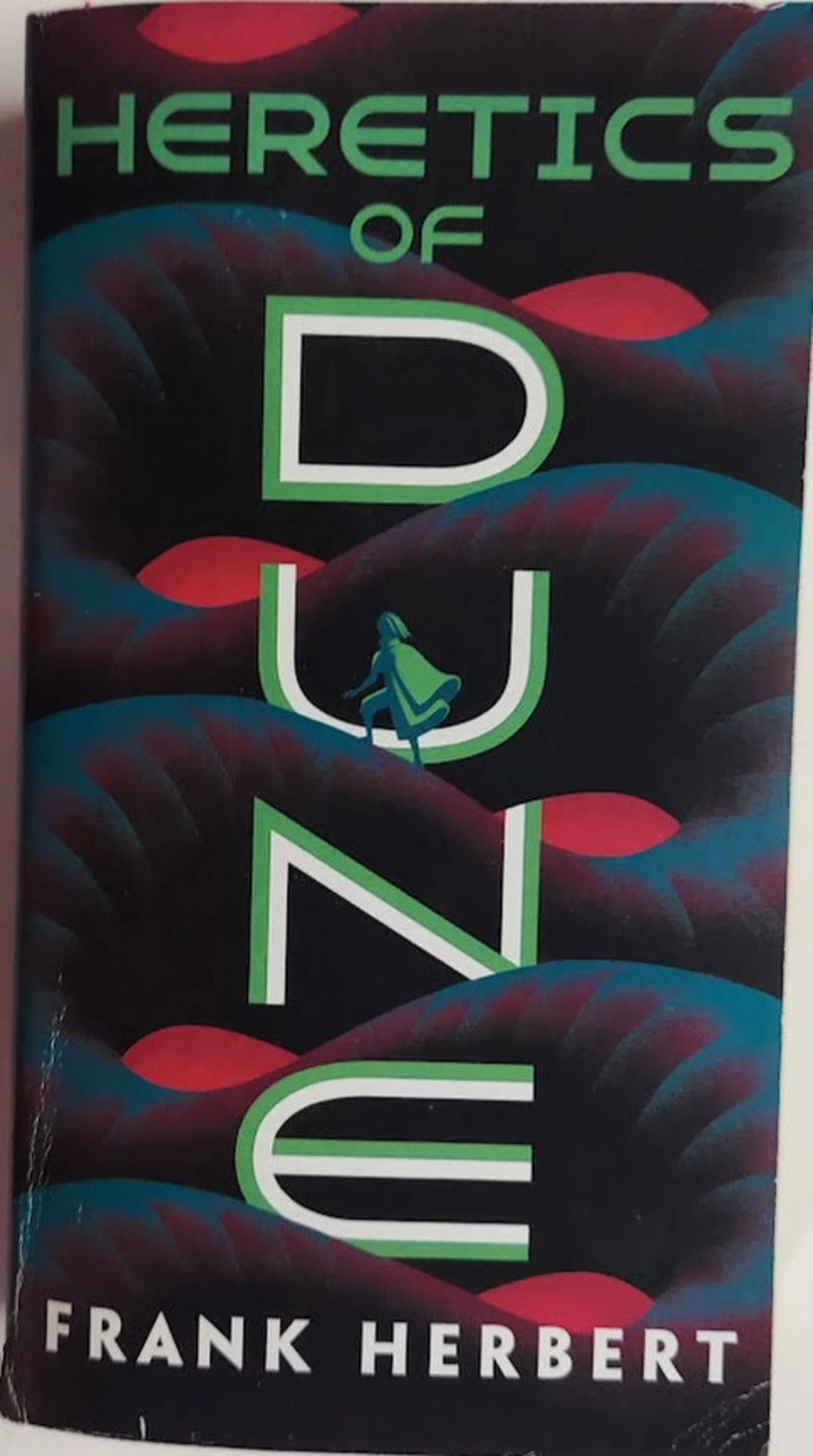
    1. Heretics of Dune by Frank Herbert
      • The fifth book in the Dune series, I must show respect for what Frank Herbert created in the Dune universe by ranking this book this high. I love this series. I loved this book. I love his universe. I love his writing. Best series I’ve read since Harry Potter, hands down.
    2. The Silkworm by Robert Galbraith (aka J.K. Rowling)
      • I loved this book, the second book in the Strike detective novel series. JK Rowling is the greatest author of our generation. This list doesn’t even have a Harry Potter book on it and yet Harry Potter was mentioned in the top two books. Anyways…
    3. Mandy’s Promise by Frank Leach
      • This book has a special place in my heart as it was written by my grandpa. Re-reading the synopsis of the book gave me chills because it really was a great story. I loved this book.
    4. The Man Who Broke into Auschwitz by Denis Avey
      • This was a phenomenal book. I just read the Wikipedia page on it and learned some of the story might have been embellished. Well, yeah, welcome to story-telling. It’s an extraordinary tale of a man who tried to get into Auschwitz and eventually survived being an Allied prisoner of the Second World War.
    5. Ancient America and the Book of Mormon by Thomas Stuart Ferguson and Milton R Hunter
    6. Outliers by Malcom Gladwell
      • This book was great, really made me think about how our situations and often some luck impact our potential growth and abilities. Must read for someone wanting to understand the outliers or overperformers in our society.
    7. Hugh Nibley’s semester one on the Book of Mormon
      • This is a transcription of all lectures from a Book of Mormon class Hugh Nibley taught from 1988-1990 at BYU. Don’t ask me how I found it, but I did, and I immediately downloaded and saved all of them. These are insightful, his understanding of history is off the charts, so many extraordinary insights that grew my testimony in the Book of Mormon and God’s hand in the history of all things. If you want a copy, let me know and I’ll send it to you. Invaluable.
    8. Career of Evil by Robert Galbraith
      • Book three of the Strike detective series. This book is ranked a little lower than Silkworm because it dragged a little more with a lot more developing characters and drawn-out suspicion. The end was well-worth the wait though.
    9. Songs of the Morning Stars by Sarah Hinze
      • This is a collection of stories about children visiting their families before they were born. Legend has it my dad dreamt of all of us before we came. He knew all our genders. So this one hits close to home.
    10. Thinking, Fast and Slow by Daniel Kahneman
      • This book was about how our minds work and about our fast or slow reactions or decisions. It explores thinking and ways to improve our decision-making.
    11. Go Forward with Faith by Sheri L. Dew
    12. Room by Emma Donoghue
      • I actually started this book once years ago and never finished it. That was back when I sometimes didn’t finish books. I enjoyed it this time. This is the story of a young boy born in captivity. Fascinating thought experiment about life, freedom, and experience. Also became a movie.
    13. Doctrine and Covenants Commentary by Hyrum M Smith and Janne M Sjodahl
      • This book was a 1200-page church history grind, but extremely rewarding to finish.
    14. Malachi and the Great and Dreadful Day by Mark E. Petersen
      • Malachi is a lesser-known prophet which means there is less content for the author to provide but also more I didn’t know about Malachi to be learned. I enjoyed this book. Other books I’ve read in the series included Moses (#24 from 2021) and Joshua (#22 from 2022).
    15. Book of Lost Tales Vol 3 Lays of Beleriand by J.R.R. Tolkien
      • By book three it felt like I was reading the same legends over again, with extra commentary about where words came from that didn’t super interest me. I still love reading Tolkien’s tales but didn’t love these as much.
    16. Liberty and Tyranny: A Conservative Manifesto by Mark. R. Levin
      • Without revealing too much about my political beliefs, I enjoyed this book.
    17. The Shaping of Middle-Earth (Vol 4) by Christopher Tolkien
      • See above commentary on Vol 3, lots of repetition, still fun to read Tolkien’s legend.
    18. Way to Be by Gordon B. Hinckley
      • Gordon B. Hinckley had a way of speaking and it comes out in this book. It was full of witty and funny stories amidst spiritual guidance and advice from a prophet of God.
    19. Gospel Symbolism by Joseph Fielding McConkie
      • I don’t remember this book super well, but it was all about the significance of symbolism in the scriptures and in the temple.
    20. Tao Te Ching by Lao-Tzu
      • “The Way.” This book was like reading Proverbs from the Bible: insightful but dry. Most interesting thought I got from this book was to make me consider the strength of babies.
    21. Mormonism and the Negro by John J. Stewart
      • This book was full of outdated and inaccurate information.
  • Yelling Coaches

    Yelling Coaches

    I grew up with a lot of yelling coaches. There’s one in particular I still have nightmares about. He was a coach who communicated in only one way: yelling as loudly as possible. I always had the feeling he hated me. As an adult, looking back, I haven’t gained a new perspective on this. It hasn’t become one of those, “He yelled at me to make me stronger, and he really did care about me.” No. I still think he hated me.

    I didn’t respond well to yelling.

    One of my concerns when I started coaching basketball 5 seasons ago was how I would handle yelling. As I mentioned in How do we speak to others, I have an inherent aversion to yelling. I didn’t want to yell period, let alone at my girls. I was worried how the girls I coached would respond to me if I wasn’t willing to yell at them. Would they respect me? Could I discipline them?

    What I’ve found, and I’m grateful to report, is that in my experience you don’t need to yell at anyone to get them to respect you. A quiet, private chastisement or loving criticism is 1000 times more effective than yelling or publicly embarrassing a player.

    There was one game I’ll never forget. We were beating the team badly in the second half, but it hadn’t always been that way. It was a close game through the first half. But as the second half got going, their coach started to get flustered. The coach was yelling at the refs and their players constantly. It was a classic case of a coach losing their cool as the game stayed close. This was obvious from my seat. As the coach yelled at the refs more, their players lost focus and started complaining about the officiating as well. Then the coach started turning their frustration on the players, yelling at them after turnovers or mistakes. I saw their team quickly devolve. Players were throwing their hands up in frustration. After every play, they were looking to their coach to make sure they weren’t about to be yelled at. It reminded me so much of my time playing for my yelling coach.

    That was the reason our lead extended in the second half until we were blowing them out. I always wonder how a coach can expect their players to stay calm and composed if the coach themselves is unable to do so.

    At one point in that game, when the opposing coach was yelling at one of their players, a player on my team who was sitting next to me on the bench looked up at me and said, “Thank you.”  I replied, “What?” and she said, “Thank you for not being like that coach and yelling at us.” That was about the best coaching compliment I’ve ever received.

    I explained to that player my coaching philosophy. Yelling doesn’t help. All yelling does is put everyone on edge.

    That same player, at the end of the season, gave me a card with a note that read, “Thank you so much for this season. I loved playing with you as a coach, thank you so much for being the coach. I hope you have a great time with your wife and Ivy” (this was before Sage).

    If you’re wondering why and how coaching is rewarding, there it is.

    So, do I yell? The season from this example (3 seasons ago now), I actually had to apologize to my team on a couple occasions. There were a couple games where I wasn’t proud of how I acted on the bench. I lost my cool, exhibited frustration on the bench, and sometimes yelled. One time I snapped at a player in the heat of a game. I felt really bad about that. I pulled that player aside afterward and apologized. At practice after a game where I got frustrated and started yelling, I explained to the team my philosophy: how can you stay composed if I don’t? I told them I was disappointed in my behavior and planned to be better.

    I hope that taught those kids something about accountability. If I don’t hold myself accountable, how should I expect to hold them accountable? I doubt they’d ever had a coach admit to being wrong. I wonder, how can we expect these athletes to respect someone who doesn’t admit when they’re wrong?

    One more story from this last season, our first at Notre Dame Prep. We had a really good team this year. We were 15-0 with two games to go. I knew this second to last game would be our toughest test. At halftime, my worries were justified as we were down two points. Throughout the first half I had to constantly reign myself in to keep myself from losing it on my players. They weren’t playing like themselves and I was disappointed. It was only after that I realized they were doing their best, but the lure of that undefeated season had really gotten into their heads. As I was walking from our bench to our locker room, I was prepared go crazy on my team under the guise of lighting a fire under them. If you’ve played serious sports, all these coaching tropes probably sound familiar.

    As I walked from our bench, I received wise words from Cameron. He said, “Before you go in there, remember that these girls have never been down at halftime.” He clearly saw in my face what was about to happen in that locker room. I’m glad he did. He saved me from what would have been a mistake. He was right. These girls didn’t need to get more flustered by not only being down at halftime but then getting yelled at in the locker room. How could I expect them to be composed if I wasn’t? Instead, I put a smile on my face, walked in, and told the girls how awesome it was to be in a close game for once. I then got into the things we needed to do better.

    Now, our team had some stern halftimes throughout the season. As a coach, you’re perpetually trying to lift your team higher, no matter how much you’re winning by. But, what would I have taught those girls if, in the one game they were losing, I walked in and blew a gasket? I would have taught them the worst possible thing – that habits, and effort, and sportsmanship, and accountability were not as important as winning and losing. That is not a lesson I want to instill in any young person.

    As for yelling productively, another fear I had, that didn’t end up being a problem. I used to wonder if I could coach when I don’t like to raise my voice at all. I quickly learned, that in the intensity of a game, I can’t help but raise my voice – to the players on the court, so the ref can hear a question I have, in the huddle over a crowd. This is what I consider productive yelling. My fear of not being able to yell during a game is lost. If anything, I need to tone it down. Those games can get exciting and intense and sometimes I’m tempted to run to half-court in the middle of a play to call a timeout because the ref won’t look at me (that happened).

    Productive yelling is good. Yelling to try to demean a player or to get their respect is not. Especially when that yelling is insulting or embarrassing, which it often is. I didn’t respond well to yelling when I played and it’s my experience that a lot of kids don’t.

    Winning is fun, but it’s not our primary goal as a coaching staff. These girls will all go on to have jobs, be professionals, get married, have kids, and do all the things that make this life rewarding and challenging. Our primary goal as a coaching staff is to prepare our student-athletes to be prepared for life. Basketball will pass. But learning to keep your cool under pressure, have confidence, do your best, and treat and speak to people with respect will better them for life.

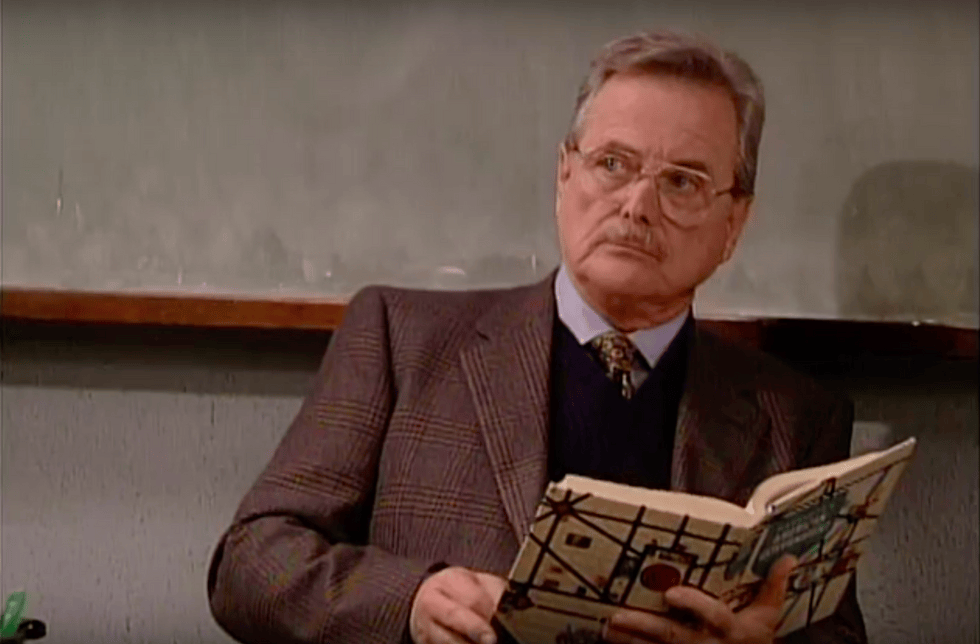
  • “Education is not about obscure facts and little test scores” – Mr. Feeny

    “Education is not about obscure facts and little test scores” – Mr. Feeny

    “Education is not about obscure facts and little test scores. Education is about the overall effect of years of slow absorption of concepts, philosophies, approaches to problem-solving. The whole process is so grand and all-encompassing that it really can’t be threatened by the occasional late-night no-hitter. It is important that a boy spend time with his father.”

    Oh, the wisdom of Mr. Feeny.

    I’ve had some good teachers in my life. I consider Mr. Feeny to be one of them, even though he’s a fictional character.

    Quick recap of this classic Boy Meets World episode. Alan (Cory’s father) pulls Cory out of bed late at night to watch a no-hitter in progress in a Phillies baseball game. The next day Cory sleeps through a test. Alan goes to speak to Mr. Feeny to ask if Cory could have a makeup test. Mr. Feeny denies his request.

    It is later in the episode, during a late-night stargazing, apple juice session that Cory sits down with Mr. Feeny and Mr. Feeny gives the above quote.

    Education is not about one moment. It’s about a billion small moments.

    I often reflect back on that quote. I have read more in 2020 (the year I wrote this post) than any previous year. I don’t feel any smarter today than I did a year ago, I don’t think. But that’s not how knowledge-gaining works. It doesn’t happen over the course of a day or a week or even a year. Learning is an ongoing process. I hope to look back on the year 2020 and appreciate that it helped me learn things that would help me learn more and grow for the rest of my life.

    I look forward to learning into eternity.

    It is important that a boy (or girl) spend time with his (or her) father (or mother). What is the value of time with a father, a mother, someone who loves you? I believe it’s invaluable.

    The episode continues and both Mr. Feeny and Alan come to Cory separately and tell Cory that the other was right in their decision. Alan tells Cory Mr. Feeny was right to not let him retake the test and that Alan shouldn’t have pulled Cory out of bed. Obviously, the quote above indicates that Mr. Feeny approved of Alan’s pulling Cory out of bed to spend time with his son, despite not letting Cory re-take the test.

    Later, Cory is talking to his mom and he asks her how two people could both think the other was right, while seemingly disagreeing with one another. The lesson here is that the world is not black and white. There are many judgment calls where there is no perfect decision. There are many decisions that depend on your intent.

    Cory’s dad was not wrong for wanting to spend time with his son. His desire was good and admirable. Mr. Feeny agreed with that.

    Mr. Feeny had a standard he had long set that he would take no excuses from students as to why they failed a test. He couldn’t back down from that standard. His standard was set so he would always hold his students accountable and not let them down. Mr. Feeny had a good reason for denying Alan’s request.

    Both were right. Both agreed with the other’s reasoning.

    The conversation between Mr. Feeny and Cory’s dad was contentious. It ended with Mr. Feeny saying, “this conversation is over.” Both men ended up telling Cory the other was right. Why is that? Respect, introspection, understanding of the reasoning behind another’s viewpoint.

    We could do with much more of this in the world today.

  • Another Toddler Experience

    Another Toddler Experience

    I hope parents learn from their toddlers. I learn from Ivy all the time. Here is a simple example.

    Today we were all sitting on the couch. Sage was cradled in my left arm. Beth was sitting to my right with Ivy in her lap. Bengie, our aging dog, was between us.

    Ivy was doing peaceful mother-daughter stuff with Beth. Seemed boring to me. Plus, I was getting bored with what I was doing on my computer. So I reached over and poked Ivy. It was intended to be a tickle, normally Ivy’s favorite. But in that moment of peace, she did NOT like it. She scowled at me and turned away.

    I apologized for an improper time to play. Ivy and Beth continued to peacefully interact.

    A few minutes later, Ivy reached out and smacked Bengie. He understandably got annoyed by this intrusion on his peace and snapped back. This upset Ivy. Wanting to utilize a learning opportunity, I said to Ivy, “Ivy, don’t smack Bengie if you don’t want him to do that. He’s just laying there and you bothered him.” I continued, “How would you feel if I did that to you?…”

    Oh.

    I realized what I was saying. I had just done that to her. It was just moments later that she did the same thing to Bengie. I was close to missing that simple and obvious realization.

    I put my hand on Ivy’s head and said, “That’s probably why you did that to Bengie, huh?”

    A learning experience.

    I’m not sure how much Ivy learned from it, but I did. I was reminded that Ivy is watching, replicating, repeating, and behaving in the ways she sees me act. When she disrupts Bengie’s peace, well, I’d just disrupted her peace. When she loses her temper, she’s seen me lose my temper. When she gets upset, she’s seen me get upset.

    Obviously, Ivy is her own person and has her own emotions and actions. But it’s amazing to see how much she copies me. If she does something I’m disappointed in, it’s beneficial for me as a parent to stop and wonder, “is this something she learned from me?”

    I fear sometimes that parents don’t take enough responsibility for how we mold our children. Again, toddlers get angry and frustrated and do completely irrational things that they aren’t copying from us. But sometimes, a lot of the time, their behavior can be traced directly to something they saw us do.

    When we realize this, our every movement, word, and reaction around our children becomes something important.