Tag: learning

  • Adam-God Theory

    Adam-God Theory

    I’ve heard of the “Adam-God Theory” but never looked into it. Until recently, I really didn’t know what exactly it referred to. Here is my research into the Adam-God theory for those interested and especially for those who may have concerns about this theory and its history in the restored Church of Jesus Christ.

    Before I begin, almost all my thoughts come from this link:

    https://www.fairlatterdaysaints.org/answers/Mormonism_and_doctrine/Repudiated_concepts/Adam-God_theory#Question:_What_is_the_Adam-God_Theory.3F

    It was a great resource on this topic and I recommend it if you want to learn more.

    If you want a quick, short video that sums up the whole history of the Adam-God theory, watch this video:

    Now, my thoughts.

    The Adam-God theory is the theory that Adam and God the Father are the same person. This theory was mentioned by Brigham Young.

    First – Adam is not God the Father. Adam is not who we pray to. This does not fit the teachings of the scriptures, does not fit modern revelation, is not a doctrine of the restored gospel. So why are we talking about it, you ask?

    Second – Yes, Brigham Young did make some bold statements about Adam being God. He also made countless statements contradicting that statement. Brigham Young was a convert and a prophet. Try to imagine the dichotomy of those positions. Try to imagine someone a few years into the faith trying to lead the entire church. Is it so shocking that there were erroneous statements made, especially when we consider and understand the personality and boldness of the prophet who led the saints across the rugged wilderness of the West?

    Third – Because Brigham Young made incorrect statements does not mean he was a false prophet. It means he was learning line upon line, and he made false statements. He has made statements to try to help us, the people of the church, reconcile some of his more questionable comments. For example, when speaking generally about who Adam was and proposing some thoughts about Adam, Brigham started by saying, “I propose to speak upon a subject that does not immediately concern yours or my welfare….I do not pretend to say that the items of doctrine and ideas I shall advance are necessary for the people to know, or that they should give themselves any trouble about them whatever.. (Brigham Young, Oct 8, 1851). If it does not concern our welfare, don’t get too hung up on it. The church was young and growing when Brigham was prophet. God has always worked through us, mortals, to fulfill His works. This has always resulted in fallibility. Brigham Young was a prophet, even if he made mistakes in the thousands of public discourses he gave during his learning period as a prophet/convert.

    Fourth – Because prophets are fallible does not mean we cannot trust and follow them. As The Church has grown out of its infancy, it has strengthened itself in countless ways. One of those strengths has become the checks and balances of the church organization. The First Presidency and Quorum of the Twelve Apostles must be unanimous in any declaration of doctrine. President Nelson speaks hundreds of times a year. Not every word from his mouth (in my opinion) is scripture. It is guidance and direction from God’s anointed prophet, yes, but not scripture. But when President Nelson, the First Presidency, and the Quorum of the Twelve sign their names to a declaration, it becomes binding guidance on doctrine, church policy, etc. Such was the case with “The Family: A Proclamation to the World” for example.

    Now, the statement made by Brigham that when Adam and Eve came to the Garden of Eden they already had celestial, resurrected bodies is interesting. I more think they came with perfect bodies as they came directly from the Father and hadn’t yet been corrupted by the fall, not that they were necessarily resurrected bodies yet. Celestial, maybe, resurrected, I don’t think so. That’s all I will say on this matter, though, to support my point earlier that things that distract from our salvation should be discussed with caution. I haven’t done enough research, pondering, or praying to comment on this with much confidence and would hate for my children 150 years from now to claim I believed Adam was already resurrected when put in the Garden of Eden. See how these small comments can be blown out of proportion? Grateful I’m not a prophet.

    Another thought – the eternal nature of the plan of happiness is not something we can begin to comprehend. If it ultimately distracts us from our current efforts towards salvation, we should tread with ultimate caution. Such is the thinking about if Adam lived on another planet before he came here and countless other thought experiments that might distract from what is important, which is, Jesus Christ performed the ultimate atoning sacrifice for my sins. He died so that I can live. He suffered so I can be forgiven and can live with God, my Father, again. All other questions, while interesting and can expand our minds and thinking, if they distract from the ultimate source of our salvation – the Plan of Salvation and Christ’s personal role in it for us – should be avoided.

    Those are my thoughts on this from my research. Here are some final items to really, I hope, put this theory and any issues involved with it, to rest.

    As mentioned, Brigham contradicted himself many times on the idea that Adam was God. While he mentioned the idea a couple times in public, there are many other instances of Brigham Young speaking where he clearly separated Adam and God the Father as two separate individuals.

    BYU professor Stephen E. Robinson sums it up well:

    “Yet another way in which anti-Mormon critics often misrepresent LDS doctrine is in the presentation of anomalies as though they were the doctrine of the Church. Anomalies occur in every field of human endeavor, even in science. An anomaly is something unexpected that cannot be explained by the existing laws or theories, but which does not constitute evidence for changing the laws and theories. An anomaly is a glitch…. A classic example of an anomaly in the LDS tradition is the so-called “Adam-God theory.” During the latter half of the nineteenth century Brigham Young made some remarks about the relationship between Adam and God that the Latter-day Saints have never been able to understand. The reported statements conflict with LDS teachings before and after Brigham Young, as well as with statements of President Young himself during the same period of time. So how do Latter-day Saints deal with the phenomenon? We don’t; we simply set it aside. It is an anomaly. On occasion my colleagues and I at Brigham Young University have tried to figure out what Brigham Young might have actually said and what it might have meant, but the attempts have always failed. The reported statements simply do not compute—we cannot make sense out of them. This is not a matter of believing it or disbelieving it; we simply don’t know what “it” is. If Brigham Young were here we could ask him what he actually said and what he meant by it, but he is not here…. For the Latter-day Saints, however, the point is moot, since whatever Brigham Young said, true or false, was never presented to the Church for a sustaining vote. It was not then and is not now a doctrine of the Church, and…the Church has merely set the phenomenon aside as an anomaly.”

    From the link above previously mentioned:

    “As far as can be determined, none of Brigham Young’s successors in the presidency of the Church continued this teaching in public, and by the presidency of Joseph F. Smith (1901–18) there were active moves to censure small groups that taught Adam-God.

    One of the earliest statements from the Church rejecting Adam-God teachings was made by Charles W. Penrose in 1902:

    The Church of Jesus Christ of Latter-day Saints has never formulated or adopted any theory concerning the subject treated upon by President Young as to Adam.

    In October 1976 general conference, Spencer W. Kimball declared the Church’s official position on Adam-God:

    We warn you against the dissemination of doctrines which are not according to the Scriptures and which are alleged to have been taught by some of the General Authorities of past generations. Such, for instance, is the Adam-God theory. We denounce that theory and hope that everyone will be cautioned against this and other kinds of false doctrine.‘”

    Other statements by future general authorities refuting Brigham Young’s opinions:

    Bruce R. McConkie – “What I am saying is that Brigham Young, contradicted Brigham Young, and the issue becomes one of which Brigham Young we will believe. The answer is we will believe the expressions that accord with the teachings of the Standard Works.”

    And Brigham Young himself – “I am more afraid that this people have so much confidence in their leaders that they will not inquire for themselves of God whether they are led by Him. … Let every man and woman know, by the whisperings of the Spirit of God to themselves, whether their leaders are walking in the path the Lord dictates, or not.”

    Finally, while some might consider everything said here to be a sign that the church changes and is “wrong,” I would completely refute that. The church is changing. The church is growing. The church is living.

    Doctrine and Covenants 1:30 is Christ speaking and reads “And also those to whom these commandments were given, might have power to lay the foundation of this church, and to bring it forth out of obscurity and out of darkness, the only true and living church upon the face of the whole earth, with which I, the Lord, am well pleased, speaking unto the church collectively and not individually.”

    While so many would criticize the Church of Jesus Christ of Latter-day Saints for changing, the Lord describes it as living. The only living church on the face of the earth. This is a power of Christ’s church- not a weakness.
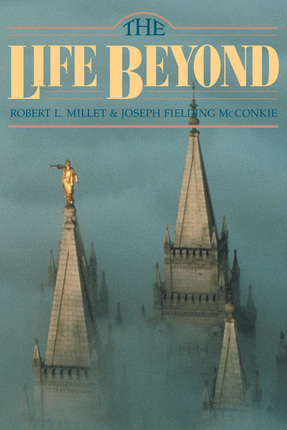

  • The Life Beyond

    The Life Beyond

    The Life Beyond by Robert L. Millett and Joseph Fielding McConkie Copyright 1986.

    I recently was asked by two friends who have different religious beliefs from me, what do you believe happens to a person when they die?

    This is the great question right?  One of the 3 great questions.

    1. Where did I come from?
    2. Why I am I here?
    3. Where am I going?

    What a world we’d live in if every conversation we ever had started with that question:

    Hi, my name is Brayden.  Say, what do you think happens to us when we die?

    Wouldn’t that be great!  Less discussion about politics, sports, and tv.  What amazing conversations could come about from that question.

    It amazes me how many people in the world float through life without knowing any sort of answer to these questions.  It’s no wonder we’re in a world that seems untethered from any understanding, sense of reality, or sense of meaning.  What’s worse than all those who don’t know the answer to these questions is those that don’t even ask the question.  It baffles my mind that so many live on this earth, day by day, moment by moment, without daily stopping to ponder: why am I here?

    I believe the reason for this attitude by many people and much of society is due to a feeling that there is no answer.  No one can know so why ask?  I believe every person has asked these questions at some point.  They eventually determine it’s unknowable and move on.  I believe this cuts us off from growth.  How can we grow to our full potential if we have no understanding of our true potential?  How can we reach our true potential if we believe this whole life is for no purpose or reason?  How can we reach our full potential if we don’t even know if there’s something after all this?  In that case, what’s the point?

    That’s why when this question comes up I internally jump for joy.  I know many skeptics, doubters – ye with little faith – still say, “you can’t really know.”  I don’t care.  I know!  I know where I come from.  I know why I’m here.  I know where I’m going.

    It’s one of my greatest wishes that every person on this earth knew the same.  I believe it would make people happier.  I believe it would make the world a better place.  It’s why I’m writing this.  To share what I know.

    The Life Beyond is a book I recently finished by one of my favorite scholars.  Robert Millet was a panelist on the youtube video series I’ve used to study the lectures on faith.  I’ve seen Joseph Fielding McConkie on many of the books I intend to read.

    This book details everything we know about The Life Beyond.  Through scripture, modern revelation, prophets, and all other light and knowledge we’ve received, they go into great detail about what happens after we die.

    Could there be a more important book?

    Can you believe this book exists?  Can you believe you’re not reading it right now?

    Hundreds of millions stumble around in darkness, with fear of death and wonderment about life.  Here is scripture, from God, light and knowledge, revelation, that answers the most important questions in this life.

    For those with little understanding of the Gospel of Jesus Christ, this book would be like feeding a steak to a newborn.  Milk before meat.  I understand that.  Still, why isn’t everyone reading it?  If anyone reading this has ever asked, why am I here?  I invite you to read this book.  Then ask questions.  It can change your life.

    To conclude I’ll share one excerpt from the book that I enjoyed. 

    “The Family Unit Beyond the Veil

    Paul said, ‘I bow my knees,’ as do we all, ‘unto the Father of our Lord Jesus Christ, of whom the whole family in heaven and earth is named” (Ephesians 3:14-15).  In a manifestation to Brigham Young after his death, Joseph Smith told his successor to be sure to instruct the Saints to keep the Spirit of the Lord, promising that if they would do so, ‘they will find themselves just as they were organized by our Father in Heaven before they came into the world.  Our Father in Heaven organized the human family, but they are all disorganized and in confusion.’  Brigham also said that Joseph showed him the pattern, ‘how they were in the beginning.’  He said that he could not describe it but that there must yet be ‘a perfect chain from Father Adam to his latest posterity.’

    During an illness, Jedediah M. Grant visited the spirit world two nights in succession.  He reported a perfect order and government that existed there, saying that the ‘righteous gathered together,’ that there were ‘no wicked spirits among them,’ and that they were ‘organized in family capacities.’  ‘To my astonishment,’ he said, ‘when I looked at families, there was a deficiency in some, there was a lack, for I saw families that would not be permitted to come and dwell together, because they had not honored their calling here.’” (Emphasis added)

    What a marvel it is we have these truths and how lucky we are.  May we all fulfill our callings here, and start by asking, why am I here?

  • Books in 2021

    Books in 2021

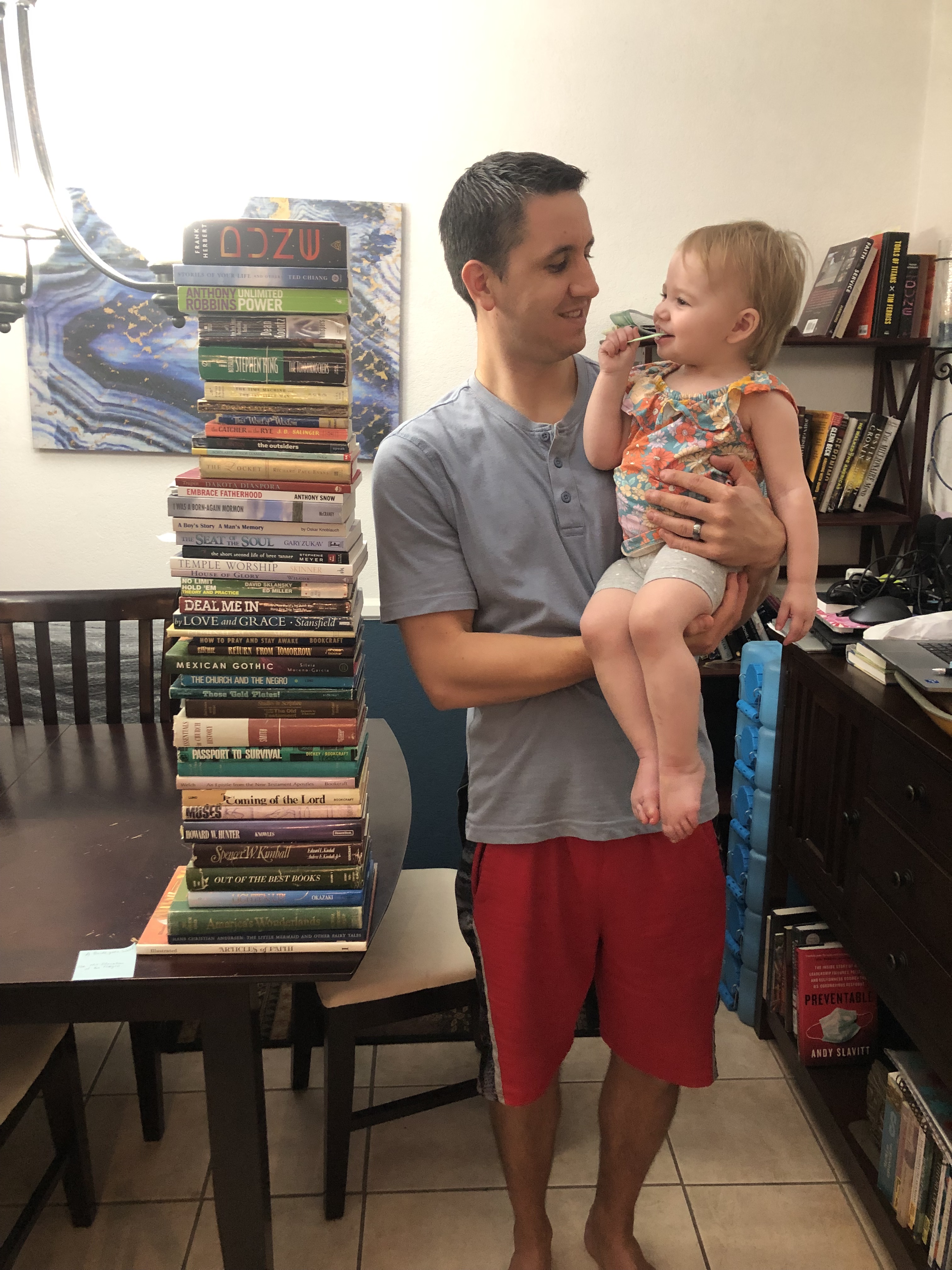
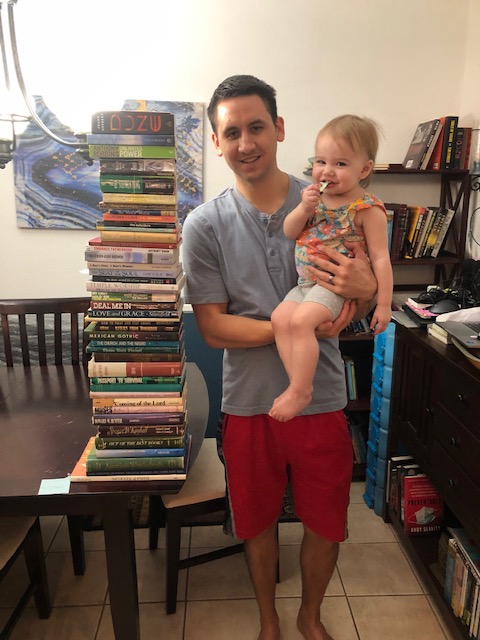
    This is a list of every book I read in 2021 and the order I ranked them in from favorite to least favorite.  I get something out of every book I read.  I learned long ago that if I allow myself to not finish one book, I won’t finish any.  For those reasons, when I start a book, I’m committed to finishing it.  I don’t care how dry or boring it may be.

    It’s difficult to rank such a wide variety of books. I don’t overthink it too much. This is mostly a list of most enjoyable and most rewarding reads. That said, every book offers something, even if it might just be a laugh.

    I included a one sentence thought about each book.  This proved difficult because I could say so much about every book.  To get around the one sentence rule, I used many commas and run-on sentences. My list, my rules. I find it amusing posting a list of of books read in such an illiterate fashion.

    I enjoyed all these books because they each taught me something. That’s the great thing about books. 

    * Represents a book I recommended or gave to someone to read.

    Here’s my list:

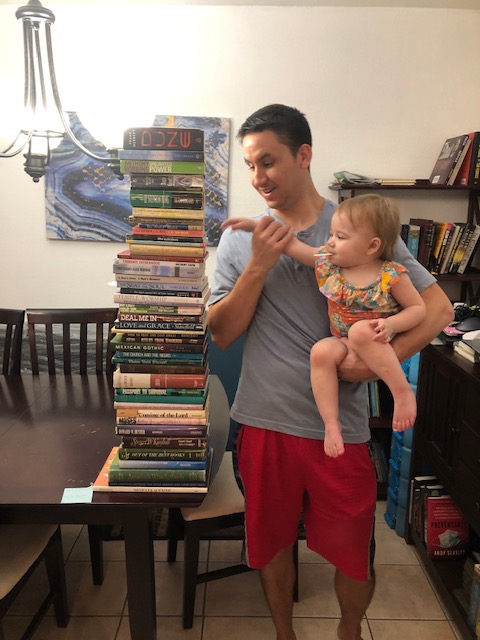
    1. Dune*
      • The movie and book did not disappoint, what a fantastic world created by Frank Herbert.
    2. Stories of your Life and Others*
      • This is a book of short stories, one of which inspired the movie Arrival, the “Arrival” short story, actually called “Story of Your Life,” wasn’t even one of my favorite short stories, I ranked it 6th out of the 8 short stories, I can’t say enough about how phenomenal this book was, looking over it again makes me want to read it right now. 
    3. Unlimited Power*
      • This was a difficult read due to all the exercises and activities done throughout but has resulted in multiple beneficial changes to my daily life so needs to be near the top.
    4. Out of the Best Books Volume 1
      • I never expected to love this book so much, it’s a collection of classic short stories and poems, I learned I’m not huge on poems but highly recommend this for the short stories.
    5. The Eternal Man
      • Second or third reading of this book, love this book, the truths in it speak to my eternal soul every time.
    6. A Boy’s Story a Man’s Memory
      • I met Oscar at a church activity where he spoke about his book, the man emanated love and humility, his story is extraordinary and had me in tears more often than I’ll admit.
    7. Edgar Cayce Mystery Man of Miracles
      • Reading about this man’s fascinating life opens the eyes to the gifts God has potentially given some of His children here on earth.
    8. The Time Machine and the Invisible Man
      • These two classics were in one book so I’m putting them together, I think I preferred the Invisible Man for the roller coaster of where that story went, both great stories.
    9. The Short Second Life of Bree Tanner
      • Make fun of me all you want, Stephanie Meyer is an amazing author and I enjoyed this book enough for it to be in my top ten for the year. 
    10. The Tommyknockers*
      • This book proved to be too long for CJ Matthews, classic Stephen King, super long, I read three quarters of this a long time ago but never finished it, the ending made it worth re-reading. 
    11. Whispers
      • Classic Dean Koontz, this was my second time reading this, there’s a reason it’s right next to a Stephen King book, Koontz and King are so similar and yet so different. 
    12. The Locket
      • This book is the perfect example of how expectations set the tone for a book, I had zero expectations for this book, and ended up liking it a lot.
    13. The Outsiders
      • Much better than Catcher in the Rye in my opinion, the movie was pretty good too. 
    14. Robinson Crusoe
      • This was a youth version so it was a condensed and quick version of the story, but I really loved it.
    15. Return from Tomorrow (just because I read it twice)
      • I love this book but it’s the second time I’ve read it recently, so it dropped a little (from #11 on last year’s list). 
    16. Those Gold Plates!
      • This is a defense of the Book of Mormon, it discusses other records that were kept on metal plates anciently that have only recently been found (book written 1979), and provides information that would have been impossible for Joseph Smith to know in the 1800s yet were somehow in the Book of Mormon, this was another book that strengthened my testimony of the Book of Mormon and Joseph Smith.            
    17. The Little Mermaid and other Fairy Tales
      • Clearly there’s something about reading some good old fashioned classic books that is good for the soul (see #4 and #14).
    18. Embrace Fatherhood
      • This was written by a friend and gave a unique perspective on fatherhood that I enjoyed reading.
    19. Mexican Gothic
      • I’m still not sure exactly how I feel about this book, it was entertaining, but not super entertaining, it was a page turner, it wasn’t a super page turner, but it was one of the more unique books I read this year.
    20. Lighten Up
      • Here starts the group of nonfiction books, nonfiction is great for learning and growth but I think most would agree fiction is more enjoyable, thus their position on my list, anyways, I really liked this book and I think it was one I needed to read at the time I read it.
    21. Spencer W. Kimball
      • Spencer W. Kimball and Howard W. Hunter meld a bit in my mind, I love Spencer W. Kimball for his missionary focus during his time as our prophet.
    22. Howard W. Hunter
      • I love reading about the lives of these most faithful men.
    23. The Mis-Education of the Negro
      • This was given to me by CJ and it taught me a lot about the history of education (and mis-education) for black people in America. 
    24. Moses Man of Miracles
      • Speaking about learning of great, faithful men (See #21 and #22), these are a series of books, with other books of great prophets, really enjoyed this book from Mark E. Petersen about Moses. 
    25. The Coming of the Lord
      • A book written by Gerald N. Lund in 1971, I don’t remember much of the details of this book, but it was all about the signs of the Second Coming of Christ.
    26. Essentials in Church History
      • This was DENSE, but this 685 page (yes you read that right) book taught me a lot about the history of the Church of Jesus Christ of Latter-day Saints.   
    27. Pearl of Great Price Commentary
      • This was a deep and dense commentary on what I feel is one of our more underrated books of scripture, the Pearl of Great Price.
    28. A Bride goes West
      • A fictional book detailing the life of a woman helping to pioneer the west. 
    29. By Love and Grace
      • I could not remember this book at all until I pulled it off the book shelf, that normally would give it huge deduction points in my list, but once I saw the book and opened the front cover, memories of this book washed over me, so I had to move it up the list, a book about a man who finds love and faith, gets falsely accused of murder, it was actually a super awesome book.
    30. Catcher in the Rye
      • Kind of terrifies me that our high school students are reading this book of debauchery.
    31. Dakota Diaspora
      • I may have to read this again as I don’t remember much about it, but reading the back cover reminds me what a fascinating story it was, a woman tells the story of her Jewish parents who left Russia to settle in North Dakoda in the 1800s, really interesting story and a way of life I can’t even imagine. 
    32. Temple Worship
      • When you read temple books in succession, they kind of meld together, this is the case with this book and next on the list, House of Glory, Temple Worship was written by Andrew C. Skinner in 2007, it’s a little deeper than House of Glory and had pictures!
    33. House of Glory
      • Compared to Temple Worship this book was more temporal information on temples if I remember right, it was written by S. Michael Wilcox in 1995.
    34. How to Pray and not Fall Asleep
      • This was literally a how-to book on praying better.
    35. An Epistle from the New Testament Apostles
      • This was a cool concept, it put all the epistles from the New Testament into thematic categories as if they were a single letter. 
    36. This Word of Wisdom
      • This tiny book was written in 1958 and was all about the Word of Wisdom.
    37. America’s Wonderlands
      • This was a coffee table book with pictures and information about America’s national parks. 
    38. Articles of Faith Volume 1
      • This is another coffee table book, a big, beautifully illustrated book about the articles of faith, part 1 of 3 I believe.
    39. Studies in Scripture Volume 3 the Old Testament
      • You know when a book is so good for you but man is it dense and difficult to read, yeah, commentary on Genesis through 2 Samuel falls into that category.
    40. The Seat of the Soul
      • Dude, this book was wild, I quickly went from “wow I’m really getting a lot out of this” to abruptly thinking, “what the heck, we’re talking about dolphin souls,” this book was a wild ride, and fun fact, it appeared my grandma had the same experience because right as my marking of the book started to greatly decrease so did hers, and I don’t think she ended up finishing this book, which is understandable with the out there direction it headed. 
    41. The Church and the Negro
      • Here enters my flawed books, this book had some outdated and inappropriate information.
    42. I was a Born Again Mormon
      • I don’t want to be too disparaging of a book, so I won’t say much about this, let’s just say I disagreed with a lot.
    43. Deal Me In
      • Old book I’ve had for a long time and read before, biographies of professional poker players in the early 2000s.
    44. No Limit Hold em Theory and Practice
      • Dusted off one of my old poker books to explore some strategic game theory ways of thinking.
    45. Passport to Survival
      • This is so low due to the dry nature of the content, not due to lack of good content, this book had all sorts of recipes and ways to extend food storage and survive in an emergency. 

    Additional reading:

    1. To Young Men Only – old church pamphlet.
    2. Book of Mormon
      • Checking back on time stamps of my notes tells me I read 2 Nephi 6-Mosiah 2. I’m reading the book of Mormon alongside a cultural commentary and adding notes throughout.
    3. Doctrine & Covenants
      • Read from Section 100 to 133 alongside two student manuals to add comments and additional information throughout.
    4. Finished Old Testament
      • Ezekiel-Malachi alongside Enduring Word Bible commentary to add notes throughout.
    5. Come Follow Me lesson each week
    6. Started the New Testament
      • Started in Matthew chapter 1 and reading alongside New Testament Student Manual.

    Bonus footage for getting this far

  • Do I Learn from Ivy?

    Do I Learn from Ivy?

    Sometimes I find myself praying for God to change Ivy.  Not big changes, stuff like, “help her to not be grumpy,” “make her sleep well,” “help her to be happy.”

    Then something hit me that I of course knew but needed to come face to face with. Ivy is just going through her motions.  It’s more important for me to learn to control mine. 

    Ivy can be grumpy, mean, crying, not sleeping, screaming, and causing all other sorts of havoc.  That’s not what matters.  What matters is my patience, my learning, my growth.

    I’ll say it again, Ivy’s going through her motions, and I’m learning to control mine.

    There will come a point when she will be responsible for her actions and will be accountable for her behavior.  How can I expect her to be great at controlling her behavior as she gets older if I haven’t mastered my own behavior yet?  She will learn from my (and Beth’s) example.  It makes me think of the Macklemore song called Growing Up where he says,

    “I’ll be patient, one more month

    You’ll wrap your fingers round my thumb

    Times are changing, I know

    But who am I if I’m the person you become

    If I’m still growing up”

    (Side note, as writing this I almostttt lost my patience as I pulled a piece of paper out of Ivy’s mouth and kept her from deleting everything I just typed.  The joys of fatherhood 😊)

    Back to my point, Ivy does what she does and is what she is, innocent and perfect.  I’m the one that needs to change.

    So, when I find myself mistakenly saying, “Heavenly Father, please comfort Ivy and make her know she is safe and watched over so she can sleep tonight,” instead I say, “Heavenly Father, give me the strength, energy, and patience, that even if Ivy doesn’t sleep a wink tonight, I can help her know she is watched over, I can make her feel comforted, and I can have complete patience with her as she helps me to grow.”

    I am eternally grateful for fatherhood and all it is teaching me.

  • Devastation of Ignorance

    Devastation of Ignorance

    Recently I was trying to do something I had no idea how to do.  Let’s call it HTML coding.  The point I need to stress here is I was starting at point 0.  I’d done little to no coding and didn’t understand HTML, and still don’t.

    It’s not my job to know HTML so it was fine, it was just something I had to figure out.

    I was doing some research and trying to understand the format needed for what I was trying to create.  Looking at the code I made some assumptions.  For example, I thought a symbol at the beginning indicated “this is the start” and a symbol at the end indicated “this is the end.”

    I spent a lot of time struggling with this.  As I thought I was figuring something out, I’d test it, and realize I was getting farther away.  I couldn’t figure out what I was doing wrong.

    I finally engaged someone I worked with.  This person knew almost nothing about HTML.  If I was a 0 this person was a 1.  He also knew very little about HTML but he immediately recognized something.  The part at the beginning that I thought indicated the start wasn’t needed at all.  It could be removed.

    I removed the beginning and it looked exactly how I needed it to.

    He knew little, but the little he knew made a huge difference.

    I realized something from this.  I saw how devastating ignorance can be.  If I knew just a little, I could have completed this task very quickly.  Instead, I spent a lot of time going in circles.

    Why is knowledge so important?  Because ignorance kills.

    I think we see this principle amplified in our society today.  We are surrounded by misinformation and while we’re in the age of technology and information is at our fingertips, false information is as easily accessible as true information.

    What this makes me appreciate is the truth and knowledge of God.  There is no misinformation with Him.  There is no ignorance.  God knows our yesterday, today, and tomorrow.  He is all truth.

    I’m glad that what we learn here goes with us.  I’m glad the knowledge we gain here stays with us and helps us.  This is one of my favorite principles of the gospel.