Tag: life

  • Yelling Coaches

    Yelling Coaches

    I grew up with a lot of yelling coaches. There’s one in particular I still have nightmares about. He was a coach who communicated in only one way: yelling as loudly as possible. I always had the feeling he hated me. As an adult, looking back, I haven’t gained a new perspective on this. It hasn’t become one of those, “He yelled at me to make me stronger, and he really did care about me.” No. I still think he hated me.

    I didn’t respond well to yelling.

    One of my concerns when I started coaching basketball 5 seasons ago was how I would handle yelling. As I mentioned in How do we speak to others, I have an inherent aversion to yelling. I didn’t want to yell period, let alone at my girls. I was worried how the girls I coached would respond to me if I wasn’t willing to yell at them. Would they respect me? Could I discipline them?

    What I’ve found, and I’m grateful to report, is that in my experience you don’t need to yell at anyone to get them to respect you. A quiet, private chastisement or loving criticism is 1000 times more effective than yelling or publicly embarrassing a player.

    There was one game I’ll never forget. We were beating the team badly in the second half, but it hadn’t always been that way. It was a close game through the first half. But as the second half got going, their coach started to get flustered. The coach was yelling at the refs and their players constantly. It was a classic case of a coach losing their cool as the game stayed close. This was obvious from my seat. As the coach yelled at the refs more, their players lost focus and started complaining about the officiating as well. Then the coach started turning their frustration on the players, yelling at them after turnovers or mistakes. I saw their team quickly devolve. Players were throwing their hands up in frustration. After every play, they were looking to their coach to make sure they weren’t about to be yelled at. It reminded me so much of my time playing for my yelling coach.

    That was the reason our lead extended in the second half until we were blowing them out. I always wonder how a coach can expect their players to stay calm and composed if the coach themselves is unable to do so.

    At one point in that game, when the opposing coach was yelling at one of their players, a player on my team who was sitting next to me on the bench looked up at me and said, “Thank you.”  I replied, “What?” and she said, “Thank you for not being like that coach and yelling at us.” That was about the best coaching compliment I’ve ever received.

    I explained to that player my coaching philosophy. Yelling doesn’t help. All yelling does is put everyone on edge.

    That same player, at the end of the season, gave me a card with a note that read, “Thank you so much for this season. I loved playing with you as a coach, thank you so much for being the coach. I hope you have a great time with your wife and Ivy” (this was before Sage).

    If you’re wondering why and how coaching is rewarding, there it is.

    So, do I yell? The season from this example (3 seasons ago now), I actually had to apologize to my team on a couple occasions. There were a couple games where I wasn’t proud of how I acted on the bench. I lost my cool, exhibited frustration on the bench, and sometimes yelled. One time I snapped at a player in the heat of a game. I felt really bad about that. I pulled that player aside afterward and apologized. At practice after a game where I got frustrated and started yelling, I explained to the team my philosophy: how can you stay composed if I don’t? I told them I was disappointed in my behavior and planned to be better.

    I hope that taught those kids something about accountability. If I don’t hold myself accountable, how should I expect to hold them accountable? I doubt they’d ever had a coach admit to being wrong. I wonder, how can we expect these athletes to respect someone who doesn’t admit when they’re wrong?

    One more story from this last season, our first at Notre Dame Prep. We had a really good team this year. We were 15-0 with two games to go. I knew this second to last game would be our toughest test. At halftime, my worries were justified as we were down two points. Throughout the first half I had to constantly reign myself in to keep myself from losing it on my players. They weren’t playing like themselves and I was disappointed. It was only after that I realized they were doing their best, but the lure of that undefeated season had really gotten into their heads. As I was walking from our bench to our locker room, I was prepared go crazy on my team under the guise of lighting a fire under them. If you’ve played serious sports, all these coaching tropes probably sound familiar.

    As I walked from our bench, I received wise words from Cameron. He said, “Before you go in there, remember that these girls have never been down at halftime.” He clearly saw in my face what was about to happen in that locker room. I’m glad he did. He saved me from what would have been a mistake. He was right. These girls didn’t need to get more flustered by not only being down at halftime but then getting yelled at in the locker room. How could I expect them to be composed if I wasn’t? Instead, I put a smile on my face, walked in, and told the girls how awesome it was to be in a close game for once. I then got into the things we needed to do better.

    Now, our team had some stern halftimes throughout the season. As a coach, you’re perpetually trying to lift your team higher, no matter how much you’re winning by. But, what would I have taught those girls if, in the one game they were losing, I walked in and blew a gasket? I would have taught them the worst possible thing – that habits, and effort, and sportsmanship, and accountability were not as important as winning and losing. That is not a lesson I want to instill in any young person.

    As for yelling productively, another fear I had, that didn’t end up being a problem. I used to wonder if I could coach when I don’t like to raise my voice at all. I quickly learned, that in the intensity of a game, I can’t help but raise my voice – to the players on the court, so the ref can hear a question I have, in the huddle over a crowd. This is what I consider productive yelling. My fear of not being able to yell during a game is lost. If anything, I need to tone it down. Those games can get exciting and intense and sometimes I’m tempted to run to half-court in the middle of a play to call a timeout because the ref won’t look at me (that happened).

    Productive yelling is good. Yelling to try to demean a player or to get their respect is not. Especially when that yelling is insulting or embarrassing, which it often is. I didn’t respond well to yelling when I played and it’s my experience that a lot of kids don’t.

    Winning is fun, but it’s not our primary goal as a coaching staff. These girls will all go on to have jobs, be professionals, get married, have kids, and do all the things that make this life rewarding and challenging. Our primary goal as a coaching staff is to prepare our student-athletes to be prepared for life. Basketball will pass. But learning to keep your cool under pressure, have confidence, do your best, and treat and speak to people with respect will better them for life.

  • Plan of Salvation and What Christianity is Missing

    Plan of Salvation and What Christianity is Missing

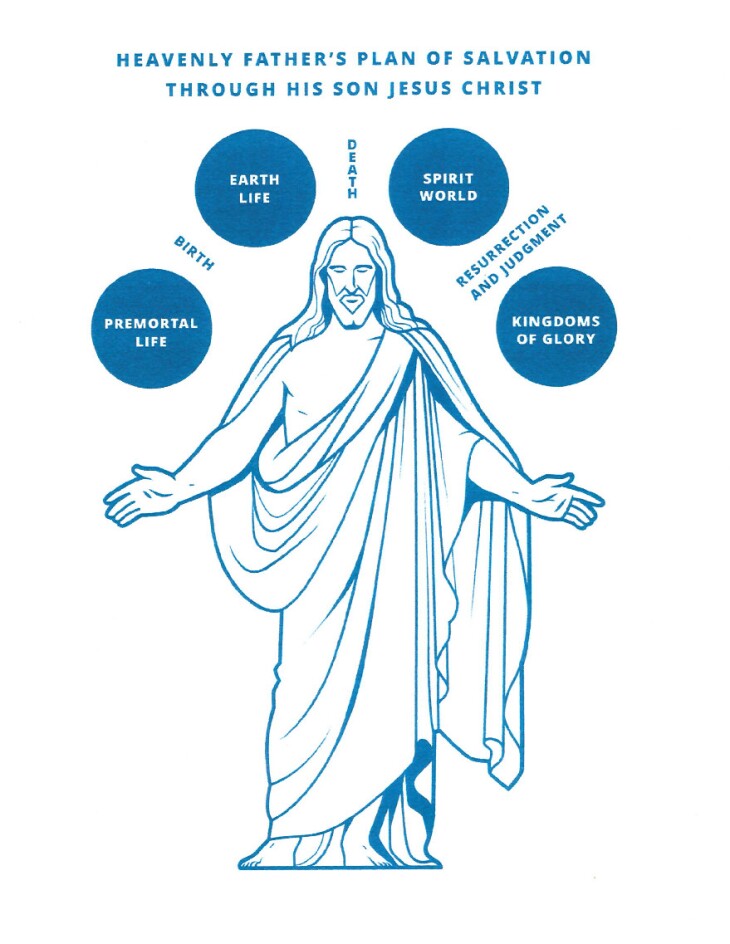
    Outside of the Church of Jesus Christ of Latter-day Saints, what does Christianity believe about the after-life? Generally speaking, Christianity believes that we are born on earth, live our lives, die, are judged, and assigned to either heaven or hell.

    I heard something on an awesome podcast called Unshaken Saints recently that I’d never realized. What the host of the podcast pointed out was that Christianity has it right. Christianity is just missing the beginning and the end.

    As I stated, Christianity believes in life on earth, then judgement, then heaven or hell.

    The truth is that life doesn’t start here on earth. This is the beginning that Christianity is missing. We lived long before we came to earth. There are many truths that stem from our understanding of our premortal existence. One of the most important truths that premortality provides us is an understanding of agency. We chose to come here. This life wasn’t thrust upon us. This is the missing beginning.

    The truth after death (the end) is that we are temporarily assigned to either “spirit prison” or “paradise,” but this isn’t our final resting place. After our temporary assignment to prison or paradise, we receive our final judgement that the scriptures speak of. This is when we come before God and Jesus Christ, Jesus Christ as our advocate to the Father and our judge before God. This is where we either accept Jesus Christ and the mercy He has given us and are reconciled to God, then assigned our glory by the mercy of God and His Son, Jesus Christ; or we reject Jesus Christ and are cast out to outer darkness. We must willfully reject God, Jesus Christ, and the mercy we are given to be cast off. This is the hell that Christianity understands.

    There will be glory assigned to all of God’s children. How can that be? It can be because He loves us that much, so much that He gave His only Begotten Son to save us.

    Christianity thinks the final judgement is immediately after we die. The beauty of the Plan of Salvation is the realization that everyone will have an opportunity to accept Jesus Christ. Everyone will be taught and be given a fair chance. Spirits in “prison” will learn what they missed on earth. No one will be left out. Children are alive in Christ (Moroni 8:12). No one will be lost.

    This is what Christianity misses. The beginning and the end. Premortality and the final judgement. If you cut off the beginning and the end of the Plan of Salvation, you have life on earth and spirit prison or paradise. That’s missing half the picture. We lived before we came here. We were loved by a loving Father in heaven before we came here. At the end, we will be judged for our actions, all we did on earth, our heart’s intent, our good deeds and bad, what we provided in this speck of time that will send us on an eternal trajectory. The beginning and the end. That’s what Christianity misses by rejecting further revelation by God’s prophets.

    What does this do to Christianity?

    Christianity believes we started here on earth. What does that do to our agency? We didn’t choose to come here. We didn’t know God before we came, who is He to us? This is what Joseph Smith spoke of when he talked about the First Vision. He said he learned that God and Jesus Christ knew him by name. For me, that knowledge is so engrained in my soul and being, it’s something I know, that God knows me. The Christianity Joseph Smith knew prior to the First Vision led him to be surprised that God could know him. I’m grateful for the truth God provided Joseph Smith when he appeared to him in a grove.

    Back to what Christianity believes – we come to this earth by no choice of our own, sent by a God we don’t know or understand. We come to this earth to suffer by the sweat of our brow, a fallen world, a cruel world, a challenge we don’t understand, a challenge we didn’t choose. Then God judges us and casts 90% of us off. Most are cast off because they never knew God or Jesus Christ, no fault of their own.

    This is what Christianity believes.

    The podcast provided another analogy that made me think about how this misunderstanding of the Plan of Salvation limits Christianity.

    There are two young men sitting outside of a Bishop’s office. One of the boys doesn’t want to be there. He doesn’t understand why he’s there. All he knows about the Bishop is that he’s a wrathful, unkind, harsh man. This young man fears the Bishop.

    The other young man knows the Bishop. He knows him to be just and kind. He knows the Bishop loves him and only wants what’s best for the him.

    As the first boy waits, he feels like he is in prison. He is dreading the upcoming confrontation with this unkind bishop.

    What does the second young man experience? Is he not in a paradise? He knows he’s soon to meet a friend. That friend is going to give him a treat, congratulate him on how he’s been doing, give him a hug and tell him he loves him. This second young man welcomes the meeting with the Bishop.

    The lack of knowledge in Christianity represents the first young man. Christianity doesn’t know God. By removing the premortal existence, life with a loving Father before life on earth, a Plan to come to earth and progress, a chance to learn of Him after this life, and then to be judged after being given all the necessary information, Christianity only sees a confusing, wrathful God, who has unfairly judged them.

    The Plan of Salvation is a beautiful truth that Christianity is missing. Far from being completely ignorant, Christianity is really close. But this closeness, without the full truth, is extremely limiting.

    ALL of us on earth chose to come to earth. All of us already chose Jesus Christ.

    This is a powerful truth. I wish the rest of Christianity could see, understand, and accept the further light and knowledge that makes this life understandable and worth living.

  • Faith of an Atheist – Bouncing Atoms

    Faith of an Atheist – Bouncing Atoms

    What does an atheist have faith in?

    We all have faith. We have faith that we eat, and the food will sustain our body. We have faith that we drink, and the water sustains our body. We have faith that we breathe, and air sustains our body. We have faith that we will move, and it happens. Every act of our lives is an act of faith.

    As Lectures on Faith Lecture First says: “without [faith], both mind and body would be in a state of inactivity, and all their exertions would cease, both physical and mental.”

    Whether you believe in a Creator or not, this fact remains: all have faith. The only question is: what is your faith in?

    I previously wrote about the faith of an atheist HERE. That post talks about the hope of an atheist. What about the faith?

    If we all live by faith, what does an atheist have faith in?

    The only thing I can think that an atheist has faith in is their self.

    When you remove God from the equation, what else is there? There is you, your mind, your thoughts, your supremacy. Not only that, if there is no God, then this all just happened by chance. You are a product of random chance, with no meaning. You are an object with atoms inside of you bouncing around causing you to do things. If this is all by chance, there is no free will. If there is no God and we are all happenstance, if we are all a great coincidence, then we are Gods, and there are no Gods. There is nothing. There is no point.

    A lack of a belief in God is a lack of belief in anything. If this life is not about a bigger plan then it’s all pointless.

  • The Greatest Gift Man can Receive in Mortality

    The Greatest Gift Man can Receive in Mortality

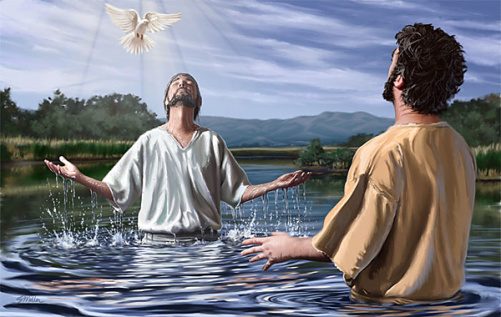
    The Holy Ghost is the Holy Spirit; he is the Holy Spirit promised the saints at baptism, or in other words the Holy Spirit of Promise, this exalted name-title signifying that the promised receipt of the Holy Spirit, as on the day of Pentecost, is the greatest gift man can receive in mortality.

    Bruce R. McConkie

    I recently read this quote and the truth of the statement hit me.  This seemed a fitting thought after last week’s post talking about the gift the gospel has been in my life. I believe that quote is a powerful reminder for those of us who have been blessed with this great gift.  The gospel is a blessing in part due to this great gift, the gift of the Holy Ghost. 

    I can’t wait to teach Ivy of this most extraordinary gift and to watch her receive it for herself.  I know the Holy Ghost is a guiding force and has blessed my life more than I will ever understand while on this earth.  One day I will know.

    I’m grateful for this constant companion (D&C 121:46), this friend, this comforter.  I am never alone when the Holy Ghost is within me.  What a blessing that gift is.  The greatest in this life.

    WORD FOR THE DAY-03JAN17 | Living Waters
  • What to do with all the Love

    What to do with all the Love

    I was meditating and thanking God for all He has given me in this life.  It was the day after Thanksgiving.  I had just watched Ivy with so much love around her, as detailed in Love has Afforded Me Much.  Ivy was surrounded by aunts, uncles, grandparents, great-grandparents, cousins, second cousins, great uncles, great aunts and the list goes on.  She was receiving so much love.

    That visual again brought me to realizing and remembering that was me 30 years ago.  I was the one having love poured out on me.  It brought me to a repeated thought: what did I do to deserve this?

    What did I do to deserve the family I was born into?  Now, how lucky I am to be one half of the uniting of two families – the Quackenbushes and the Cannons.  How blessed will Ivy be from a life of love from those two extended families she’s been born into? 

    How blessed have I been from being born into the Leaches and the Quackenbushes? An un-quantifiable amount of blessed.

    Where does that blessing come from?  Where does it stem from?  What was the catalyst of this blessed, love-filled life I’ve been given?  The catalyst, the starting point, is the restored Gospel of Jesus Christ.  Three of my four grandparents converted to the church.  My fourth grandparent came from a faithful family back to the days of Joseph Smith.  I am forever grateful for my grandparents and the generations of love and family they’ve created.

    A similar story can be said from Beth’s side of the family, the Cannons and Vauterlauses.

    The thought that occurred to me while meditating, to add to how Love has Afforded me Much, was this: I started to pray to God to please bless all those who didn’t have all the love Ivy had on Thanksgiving Day.  All those who don’t have great family dynamics, who feel lonely, who feel lost, who feel afraid; I asked God to let them feel His love.  I asked Him to spare no angels in pouring out blessings on those who don’t feel loved in this world.

    Then it occurred to me.  Love has Afforded me Much.  God has given me a surplus of love.  A love I can’t quantify.  It’s my responsibility to share that excess of love I’ve been blessed with, with God’s children, my brothers and sisters across the globe.  I pray that I can share the love that’s been given to me with those around me.

    I believe the greatest thing I can do to share that love, the greatest thing any one of us can do that have been given (Luke 12:48) so (D&C 82:3) much (Boyd K. Packer), is to share the source of that love.  The source of that love is Jesus Christ, His Gospel, His Church.  It is our responsibility to share with others what has blessed us so.

    Love is important.  Supporting someone, listening to someone, loving someone, these are all noble.  But what of generational love?  What of the love that permeates through families – of children, grandchildren, and great grandchildren?  That’s what my grandparents created.  That love started with missionaries sharing the gospel of Jesus Christ with three of my grandparents, and with the gospel being shared to one of my Great Great Grandparents by Joseph Smith.

    I am grateful for this Church.  I am grateful for the blessing it has been to me and my family.  I am grateful to my Heavenly Father for allowing me this greatest of all blessings.  I feel a noble responsibility, a beautiful weight to share it with others.  My wish is that the world can accept Jesus Christ and experience the love he has to share. 

    I love Jesus Christ, and I am forever grateful to Him.