In Teaching in Heaven I talked about the struggle of sharing the gospel with friends and loved ones who have such a different starting point in religious background and understanding from what I have. I talked about how this can be frustrating at times. This is a follow up to that post. This is more a reminder for myself than anything.
When I was Ward Mission Leader, I worked with a missionary who once said, “Be disappointed, but don’t get discouraged.” This is a saying I’ve tried to remember and sometimes could be easier said than done. When that frustration builds that those around me having zero interest in something so important to me, I get frustrated. When nobody seems to want to talk about things that have eternal significance, I have to work to be disappointed but not discouraged. It was explained that disappointment is temporary and can be combatted, but once you get discouraged, that is constant, and hard to shake. It is difficult to recover from discouragement.
I believe it’s important while we’re here to share ourselves and to share our stories. We have all been given some level of light that we can share, and we can only share that light if we share ourselves. This isn’t restricted to those in the Church of Jesus Christ. This is about everyone. We’re all here for a reason and all have something to share.
We don’t put a candle under a bushel. We let it burn bright (Matthew 5:15-16).
While everyone needs to share themselves, for those who are members of the Church of Jesus Christ, it’s important to remember what we have to share. It’s important we share the light we’ve been given that has eternal significance. And then, after sharing your light, don’t be discouraged. Share and love and give and know that these moments of sharing will be immensely important. Don’t let yourself forget that one day when we all remember why we were here, every person you shared the light of Christ with will want to thank you for sharing that light. And how great will be your joy in the kingdom of your Father with those people (D&C 18:15-16).
So when the world tells you to be shy about your religion, to be reserved about your religion, to not share these important things, remember what Christ said. The world will love you not for you share things not of this world. The world hated Him, because He wasn’t of the world (John 17:14-16). Step above the world as often as you can and share those parts of you, your testimony, that will make someone greet you with a hug of love when this life is over.
That’s what this life is all about, after all. Share your light. Don’t cover your candle.
Be disappointed in the world and the distractions that take so many away from true joy, but don’t be discouraged.
One day Christ will say to you, “I always knew you.” That, and bringing others unto Him will be worth all the disappointment this world can give.
Share yourself. Share your story. Share your light.
I had a dream last night. In it I was going down a stream. I had the feeling of leaving civilization for the wilderness. I came to a cliff. I climbed to the top and on the precipice there was a small and shabby tent erected. I went inside and there was an old prophet. I spoke with him.
A new prophet came. The new prophet was well dressed and well-kept, not like the old prophet living in a tiny tent on the edge of a cliff. The new prophet was respected, and I knew he came from a comfortable home. He was well regarded by society and lived comfortably in the world. He was told he had to take the place of the old prophet and live there in the wilderness, in a tent.
When I woke up from this dream, I had a feeling it was important, but I couldn’t figure out why.
What was this dream telling me?
I write down all my dreams. But this one felt important.
Was Russell M. Nelson the new prophet? Was he of the world? Was he flawed? What was the dream telling me?
As I meditated in the morning, I continued to ponder this question. On my drive into the office, I prayed to know if there was something I was supposed to glean from this dream. I asked specifically that if there was something important that I was supposed to learn to please allow my reading for the day to guide my mind to understanding.
I’m in Mosiah chapter 3 and Doctrine and Covenants section 133 respectively in my daily scripture study. A few hours later I was reading verse 71, exactly where I’d left off the day prior, of section 133, which reads:
“Behold, and lo, there are none to deliver you; for ye obeyed not my voice when I called to you out of the heavens; ye believed not my servants, and when they were sent unto you ye received them not.”
Alongside D&C I’m reading a commentary. The commentary for verse 71 said:
Why Are the Prophets Rejected?
President Spencer W. Kimball commented:
“Various excuses have been used over the centuries to dismiss these divine messengers. There has been denial because the prophet came from an obscure place. ‘Can there any good thing come out of Nazareth?’ (John 1:46.) Jesus was also met with the question, ‘Is not this the carpenter’s son?’ (Matt. 13:55.) By one means or another, the swiftest method of rejection of the holy prophets has been to find a pretext, however false or absurd, to dismiss the man so that his message could also be dismissed. Prophets who were not glib, but slow of speech, were esteemed as naught.…
“We wonder how often hearers first rejected the prophets because they despised them, and finally despised the prophets even more because they had rejected them. Even so, why else is the record of rejection so complete? The cares of the world are so many and so entangling, even very good people are diverted from following the truth because they care too much for the things of the world.…
“Sometimes people let their hearts get so set upon things and the honors of this world that they cannot learn the lessons they most need to learn. Simple truths are often rejected in favor of the much less-demanding philosophies of men, and this is another cause for the rejection of the prophets.
“But while there are various excuses for rejection, there’s a certain cause for this sad record. It must not be passed over: the cares of the world, the honors of the world, and looking beyond the mark are all determined by a persuasive few who presume to speak for all.…
“The holy prophets have not only refused to follow erroneous human trends, but have pointed out these errors. No wonder the response to the prophets has not always been one of indifference. So often the prophets have been rejected because they first rejected the wrong ways of their own society.
“These excuses for rejection of the prophets are poor excuses. The trouble with using obscurity as a test of validity is that God has so often chosen to bring forth his work out of obscurity. He has even said it would be so. (See D&C 1:30.) Christianity did not go from Rome to Galilee; it was the other way around. In our day the routing is from Palmyra to Paris, not the reverse. Just because something is in our midst does not mean that we have been in the midst of it. We can daily drive by a museum or an art gallery but know nothing of what is inside.
“The trouble with rejection because of personal familiarity with the prophets is that the prophets are always somebody’s son or somebody’s neighbor. They are chosen from among the people, not transported from another planet, dramatic as that would be!…
“Of course, rejection of the holy prophets comes because the hearts of people are hardened, as people are shaped by their society. Yet even when the hardening is swift, it can also be subtle. Who, for instance, a scant twenty years ago would have foreseen the massive use of abortion in society today? Like all the diseased doctrines of the devil, the practice is pleasing unto the carnal mind.
“Prophets have a way of jarring the carnal mind. Too often the holy prophets are wrongly perceived as harsh and as anxious to make a record in order to say, ‘I told you so.’ Those prophets I have known are the most loving of men. It is because of their love and integrity that they cannot modify the Lord’s message merely to make people feel comfortable. They are too kind to be so cruel. I am so grateful that prophets do not crave popularity.” (In Conference Report, Apr. 1978, pp. 115–16; or Ensign, May 1978, pp. 76–77.)
It wasn’t until the very end of that statement from Spencer W. Kimball that it hit me, and I remembered – I asked for guidance in what I read today to help with my dream. I dreamed of prophets, now I was reading a long commentary from a prophet about why prophets are rejected.
I thought back on my dream. I had correctly believed that Russell M. Nelson was the “new prophet.” What I incorrectly interpreted was that Russell M. Nelson was “of the world” or wrong in some way. My dream gave me a feeling that he was flawed. That he was attached to the comfortable home and respectful world he lived in.
After reading that comment from Spencer W. Kimball, I realized there was no flaw in Russell M. Nelson.
The attacks on prophets are starting to escalate in our current society. See the recent backlash against Jeffrey R. Holland as an example.
The eternal and correct view of prophets on gender, marriage, and the importance of the family is under attack. Prophets will not deny truth. They will continue to speak truth even as they are rejected by the world.
Nobody embodies a “loving man” more than Jeffrey R. Holland. If you’ve ever watched one of his tear-filled and tear-jerking General Conference addresses, you know that the man emanates love for us, for followers of Jesus Christ and for all of God’s children.
“Those prophets I have known are the most loving of men. It is because of their love and integrity that they cannot modify the Lord’s message merely to make people feel comfortable.”
No statement has ever fit Jeffrey R. Holland more accurately.
I started making connections between my dream and what it was trying to tell me, so I went back and re-read where I was at in Mosiah 3:18, 19 (the verses I read before D&C that day). It reads:
18 “For behold he judgeth, and his judgment is just; and the infant perisheth not that dieth in his infancy; but men drink damnation to their own souls except they humble themselves and become as little children, and believe that salvation was, and is, and is to come, in and through the atoning blood of Christ, the Lord Omnipotent.
19 “For the natural man is an enemy to God, and has been from the fall of Adam, and will be, forever and ever, unless he yields to the enticings of the Holy Spirit, and putteth off the natural man and becometh a saint through the atonement of Christ the Lord, and becometh as a child, submissive, meek, humble, patient, full of love, willing to submit to all things which the Lord seeth fit to inflict upon him, even as a child doth submit to his father.”
“And the infant perisheth not that dieth in infancy.”
“but men drink damnation to their own souls except they humble themselves and become as little children.”
“For the natural man is an enemy to God.”
“And becometh as a child.”
“even as a child doth submit to his father.”
“Who, for instance, a scant twenty years ago would have foreseen the massive use of abortion in society today? Like all the diseased doctrines of the devil, the practice is pleasing unto the carnal mind. Prophets have a way of jarring the carnal mind.”
I think my dream was reminding me what I already know to be true. We are in the time where our society has fully rejected the prophets. The attack on them is going to increase. Russell M. Nelson has been a respected heart surgeon, kind, gentle, grandfatherly figure. I believe we are quickly approaching the time that he will be cast into the wilderness and hated by a world that has always hated prophets. I believe this is what my dream was telling me.
Those of us with faith in Jesus Christ and His anointed servants must keep firm in our faith in Him, and in His servants. Don’t be shaken by the attacks on His chosen servants. If you do, your faith in Him (Jesus Christ) can be shaken next. Trust in whom He has chosen. Follow them as you follow Him. The Lord’s prophets will not lead us astray. Russell M. Nelson is the Lord’s anointed and he is our prophet. As the world turns on Jesus Christ’s prophet, we must support and protect him from a world that will hate what he and our Lord stand for.
For more on this topic, I read this blog post that elaborates on the dangers of choosing what we do and do not want to believe from prophets. Click the image below to read the post:
I dusted off this post I wrote 3 months before Ivy was born, but never shared. Seemed inspired to post it after just sharing about how much I learn from Ivy every day.
Matthew 18:1-5
1At the same time came the disciples unto Jesus, saying, Who is the greatest in the kingdom of heaven?
2 And Jesus called a little child unto him, and set him in the midst of them,
3 And said, Verily I say unto you, Except ye be converted, and become as little children, ye shall not enter into the kingdom of heaven.
4 Whosoever therefore shall humble himself as this little child, the same is greatest in the kingdom of heaven.
5 And whoso shall receive one such little child in my name receiveth me.
As the birth of my daughter approaches, I think more about children and why we’re admonished to be like them. I’ve been thinking a lot about the divine nature of children. We are so blessed to have children in our life. We have been given the extraordinary privilege of welcoming and guiding a life into mortality. What a gift this is.
I think the divine nature of children should impact every parent. I don’t have my own child yet (3 months and counting!), but I grew up with many siblings. I know the struggle it is to always appreciate a child. Kids can be so obnoxious! I know throughout day-to-day life it can be difficult sometimes to remember how precious our children really are, how much of a gift children are to us.
I think if parents stopped and considered the responsibility of raising a life, teaching and nurturing a young mind and spirit, it should add an intense reverence to everything we say and do around kids.
I cringe when I see adults swear around young kids. It makes me uncomfortable. Kids soak up everything we say and do. A moment in the life of a busy adult that seems insignificant can be a defining moment in a child’s life. If all parents took a moment to understand that, to ponder it, and to appreciate the impact they have on their kids, I think the world would be a much better place. Parents have the ability to teach kindness and sensitivity. These are things kids pick up on.
If parents took a moment to consider the responsibility of teaching one of God’s children, that should be another sobering moment for all adults. God has given you the opportunity as a parent to cultivate and protect a spirit, His child. What greater responsibility is there in the world?
In 3 Nephi 26 verses 14 and 16 we read:
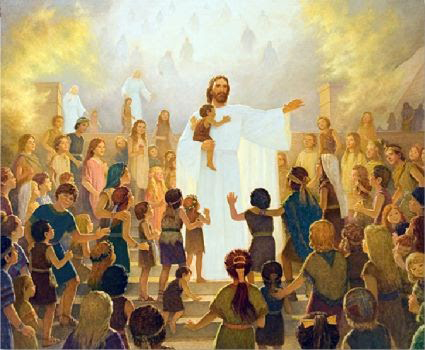
14 “And it came to pass that he (Christ) did teach and minister unto the children of the multitude… and he did loose their tongues, and they did speak unto their fathers great and marvelous things, even greater than he had revealed unto the people; and he loosed their tongues that they could utter.”
16 “…and they both saw and heard these children; yea, even babes did open their mouths and utter marvelous things; and the things which they did utter were forbidden that there should not any man write them.”
I’ve been pondering on this significant moment in scripture. Christ is in the Americas ministering to His people and their young children are present. What we’re told is something so spectacular it’s difficult to comprehend. We read that the children did speak “even greater (things) than (Jesus Christ) had revealed unto the people.”
Think about that for a moment. Here was Christ, the supreme creator, Son of God, our Lord and Savior, ministering and teaching the people. He loosed the tongues of young children and they spoke things greater than Jesus Christ Himself had revealed. Verse 16 goes on to tell us the things the babes spoke were so sacred that they were forbidden to write their words. This is similar to the prayer of Jesus Christ to the Father. These children were saying such sacred things it could not be written.
I believe something important was being shown to the ancient Nephites. Perhaps more than opening the mouths of babes, the Lord was opening the eyes and ears of their astonished parents. Those parents had been granted the extraordinary gift of a glimpse into eternity and of beholding the identity and premortal stature of their children. Would that not forever change the way the parents saw and treated their children?
I like this variation of a quote attributed to Johann Wolfgang von Goethe: “The way you see [a child] is the way you treat them, and the way you treat them is [who] they [will] become.” To remember a child’s true identity helps us to guide them to their divine destiny.
I hope we always remember how precious children are. Even when they’re at their peak of obnoxious-ness, let’s remember that they are gifts. They are special. Most of all, we’re supposed to be like them.
I’m excited to have a daughter soon and be able to marvel daily at the gift God has given me and how lucky I am for the blessings He continues to give me.
Lectures 3 and 4 are about the unchanging attributes of God and why understanding those attributes is necessary for our faith.
The points made in the video were so good I’m going to just list the character traits and attributes of God given in these lectures and then give points from the video. All the points from the video I believe inspire some thought-provoking ideas.
Character of God:
He was God before the world was created and continued to be God after.
He is merciful, gracious, slow to anger, abundant in goodness, He was from everlasting, and will be to everlasting.
He is unchanging, there is no variableness with Him, His course is one eternal round.
He is a God of truth and cannot lie.
He is no respecter of persons.
He is love.
Attributes of God:
Knowledge
Faith or power
Justice
Judgement
Mercy
Truth
It is obvious why these two lectures go hand in hand as there is a lot of overlap between the character and attributes of God.
I’ll now go over some interesting thoughts from the video.
Pretty obvious but worth saying, this is not a finite list of attributes. It’s meant to help our minds to understand who God is so we can put complete faith in Him.
Unfortunately, this has become less true in our day, but most of us don’t have a problem believing in God, it’s what He’s like where we have an issue – and so much disagreement.
The first attribute listed is mercy. One of the first attributes of God Nephi mentions in the Book of Mormon is mercy. In Moroni’s last chapter, the concluding chapter of the book of Mormon, mercy is mentioned again.
1 Nephi 1:14And it came to pass that when my father had read and seen many great and marvelous things, he did exclaim many things unto the Lord; such as: Great and marvelous are thy works, O Lord God Almighty! Thy throne is high in the heavens, and thy power, and goodness, and mercy are over all the inhabitants of the earth; and, because thou art merciful, thou wilt not suffer those who come unto thee that they shall perish!
Moroni 10:3Behold, I would exhort you that when ye shall read these things, if it be wisdom in God that ye should read them, that ye would remember how merciful the Lord hath been unto the children of men, from the creation of Adam even down until the time that ye shall receive these things, and ponder it in your hearts.
It is important for us to understand the mercy of God.
If we have the idea that God is easy to anger it makes it harder for us to have faith in Him. In the parable of the talents, why did the servant bury his talent? Because he was afraid.
The fifth and sixth attributes can be combined. God is a God of love because He is no respecter of persons. He loves us all.
God doesn’t stop loving people when they sin. The difference is God is not able to bless people when they sin.
Where there is doubt faith cannot exist. Questions are different from doubts.
I’ll conclude with a statement directly from lecture 4:16 because I think it is extra relevant to us today.
“And lastly, but not less important to the exercise of faith in God, is the idea of the existence of the attribute truth, in him. For, without the idea of the existence of this attribute the mind of man could have nothing upon which it could rest with certainty: all would be confusion and doubt; but with the idea of the existence of this attribute in the Deity, in the mind, all the teachings, instructions, promises and blessings become realities, and the mind is enabled to lay hold of them with certainty and confidence.”
We see the fruits of this today. If no one knows for sure what truth is we become so shaken and confused, thrown about by any wind, blown about on the sea like a boat without paddle. That’s how we are today when we try to understand truth without putting our faith in the truth of God. One expert disagrees with another expert. No one knows how to fix anything. It is all confusion. We don’t know who to listen to or who to trust. Trust God. His attribute of truth allows us to put our complete confidence in Him and know He will never lead us astray.
To read the lectures yourself you can find them HERE.
For the videos about the lectures you can go HERE.
It’s amazing to read the Book of Mormon and compare those people to our day. One story from the Book of Mormon that recently stood out to me was the story of the Zoramites and the rameumptom.
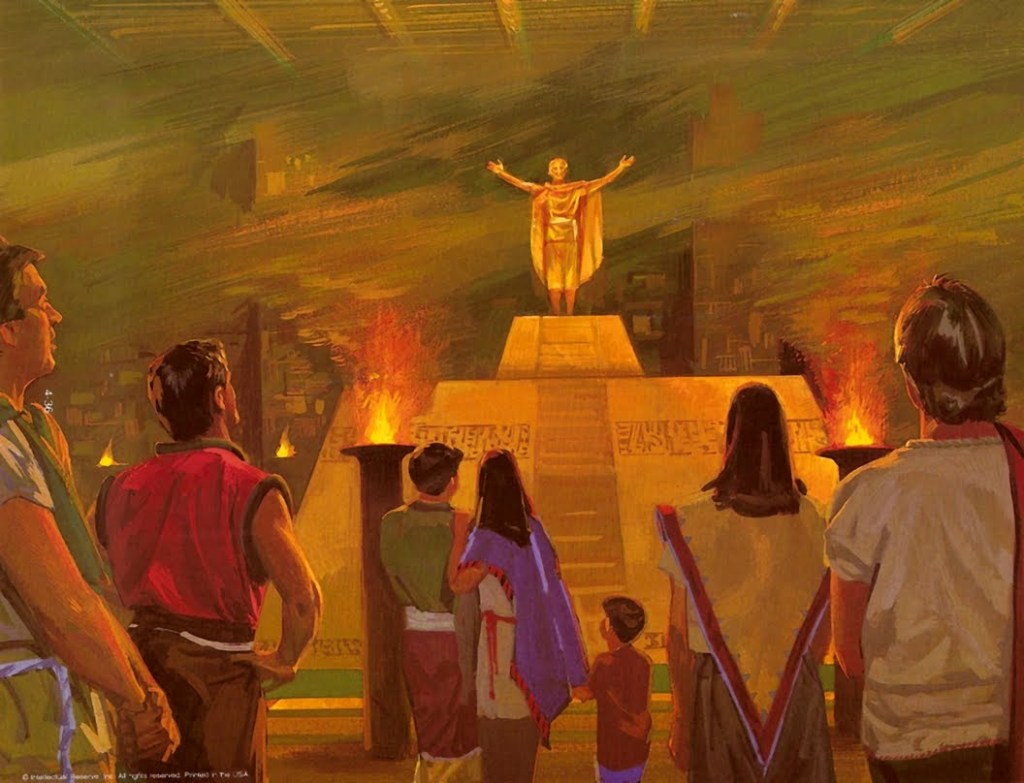
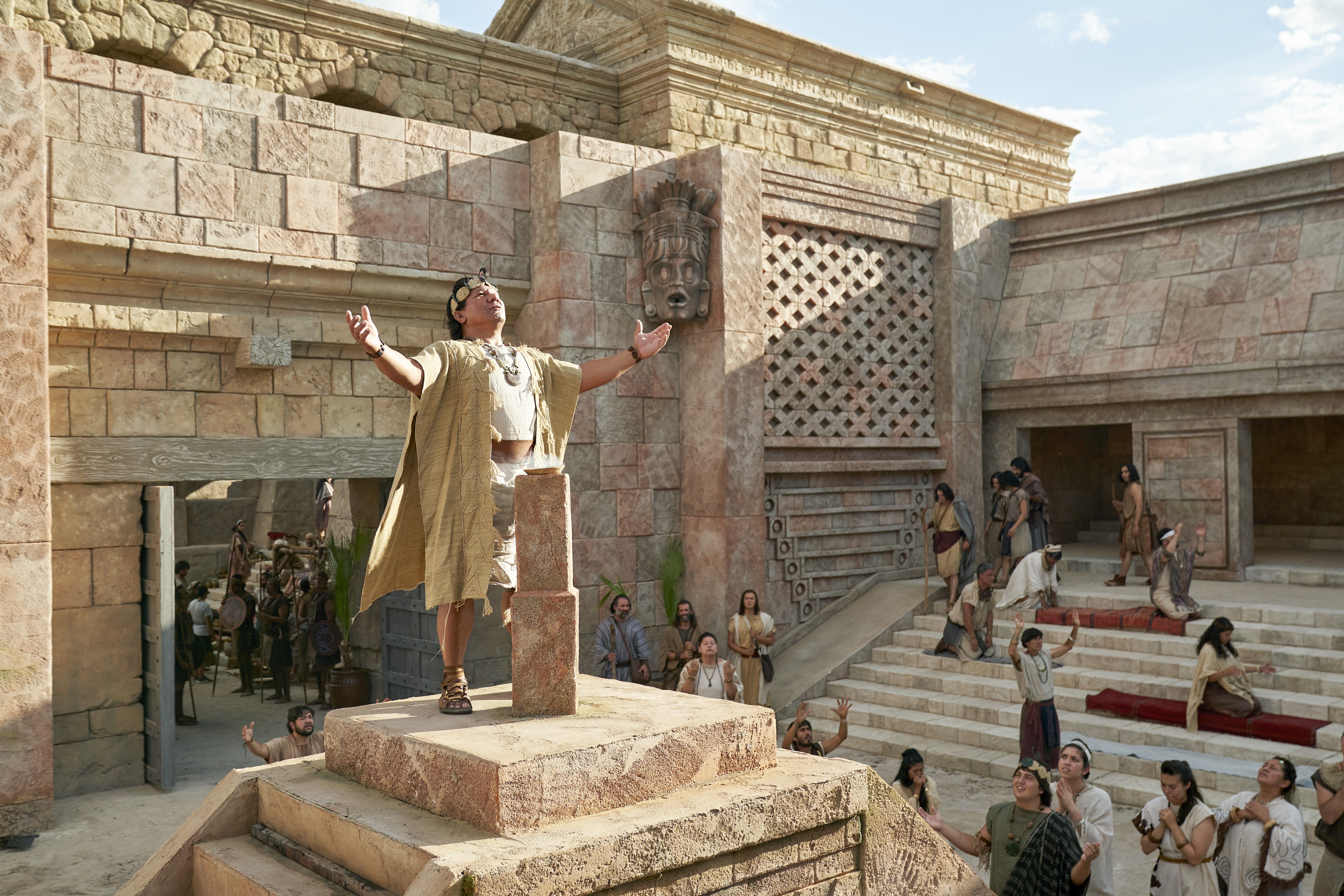
The Zoramites were a people who corrupted religion in many ways. They built a large tower. This tower was called a rameumptom and it was used for prayer. People would go to the top of the tower and loudly proclaim a rehearsed prayer. In the prayer they would thank God that He chose them. They would thank God that He had enlightened them and saved them while He would damn all the others to hell for their false beliefs. They would say their prayer, leave the tower, and go about their week without another thought towards God. They would use their week to serve no one but themselves.
Let’s compare the many false beliefs of the Zoramites to our society today.
First, praying on the rameumptom. What good deed is done today without proclaiming it to the world? We’re all guilty of it. Social media is our modern day rameumptom. It is where we proudly shout our greatest deeds for the world to see. Prayer and good deeds should be done in private. Let not thy left hand know what thy right hand doeth.
Second, the Zoramites had a temple that only the rich were able to go to. Churches today have become much more about prestige and power than about humility and kindness.
Third, rehearsed prayer. The Zoramites used a rehearsed, scripted prayer to talk to God. There are many problems with this. It takes any effort from the procedure. The prayer has no thought or feeling to it, it’s like reading in class. There’s no genuine questions, no genuine requests, no genuine gratitude. It is a script. We see this in many churches today.
Fourth, prayer without action. This is a byproduct of rehearsed prayer. What does prayer without effort lead to? Life without effort. The Zoramites loudly spoke their prayers from their tower, stepped down, and that was the extent of their worship. They wouldn’t speak to God again until the next week when they would give their five minute rehearsed prayer and move on with their life. This is the worship of our society today. With all God has given us we can’t even give Him a day of worship in return. Most don’t go to church at all. Many who do go, go on Sunday, listen for an hour, and the rest of the week don’t do a selfless act. Christ was our example. He taught us to pray always, serve others, and love others. If we aren’t doing that, we aren’t of Him, no matter how loud our prayer.
Fifth, the Zoramites thanked God that they were chosen by Him. They thanked Him for enlightening them and turning them away from the foolish traditions of their fathers and neighbors. They were selected by God and would be saved. All others were fools who would burn in hell. Sound familiar? Many churches today believe you will only be saved if you follow their beliefs or belong to their church. What kind of selective God is this? It spits in the face of a loving, caring Heavenly Father who is no respecter of persons. This is a blasphemous and poisonous teaching that goes back to the pride and selective nature of churches. God loves all His children and will provide a way for all of them to attain as much glory as they desire. The doctrine of Jesus Christ taught by the Church of Jesus Christ of Latter-day Saints teaches that there are many mansions in heaven and God’s wonderful plan has provided a way for a vast majority, almost all of His children to go to Heaven. All that repent, follow His commandments, and believe in His Son will find a place worthy of their righteous hearts. This is truth.
I have a close friend of a different Christian faith. We have many good religious conversations. One day the topic of heaven came up. He told me that surely I didn’t believe he would go to heaven as he wasn’t a member of the Church of Jesus Christ of Latter-day Saints, my church. This made me so sad. I told him with complete sincerity and 100% certainty that I knew he was going to heaven. Whether he joined the Church (my church) or not, I knew he was a good person. I knew he loved Jesus Christ. I knew he tried every day to seek Christ and to do good. I knew he sought God with all his heart. I knew he was kind and liked to help people. I know, without a doubt in my mind, that there is a place in heaven for him. I know this because I know God. I know he loves all of us. I told this to my friend, and I’ll never forget the look on his face. A little shock, a little awe. I know that he believes I am going to hell, he has told me so. He believes I have been fooled and I will have to pay for my ignorance.
I know that God loves him, and I know that God loves me. I know that Jesus Christ is the perfect judge. We will be judged perfectly. Even those who are fooled will be given mercy and love from God. That’s the God I know. I feel sad for those who don’t know that same God.
False teachings have corrupted and destroyed religion. False teachings have turned many away from the truth and light that religion should provide.
I have an invitation to anyone who read this and thought “I do hate how churches say everyone who doesn’t do this or that is going to hell,” or “I’ve never understood rehearsed prayers,” or “I can’t stand the hypocritical church goers who are the meanest people during the week.” My invitation is to come and see. Come and learn of the Gospel of Jesus Christ. Come and learn what Christ intended for us. Come and learn true principles and ordinances of Christ’s gospel. Come serve with us, come worship with us, come pray with us, come be with us. The Church of Jesus Christ of Latter-day Saints is not perfect, not yet. Not until Christ returns. We can still be hypocrites but we’re trying. Christ’s Gospel is perfect and we’re working toward it. Come and see.



 No Coincidences