Tag: morals

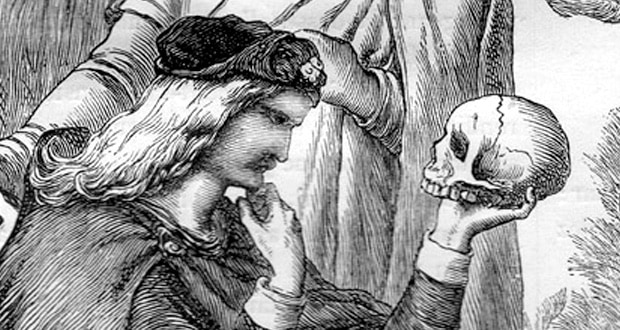
  • Romney as Hamlet

    Romney as Hamlet

    This was an assignment for a class I took. I liked what I came up with so much, I decided to turn it into a blog post!

    I’m merging two topics I’m not super familiar with in this post: Shakespeare and politics. It was only when re-reading this in preparation for posting (written over 2 years ago) that I looked up the fate of Mitt Romney and learned he didn’t run for a new term in the Senate.

    The assignment was to compare Hamlet to a political figure. This is what I came up with.

    When I started to consider the comparison between Mitt Romney and Hamlet, more and more parallels started to come up. The easy starting point is political family and affluence. Mitt Romney’s father was a well-known politician. In a way, similar to Hamlet, Mitt Romney was brought up in a prominent and politically royal family.

    The second parallel pertains to Hamlet and Mitt Romney’s individual commitment to their morals and principles. You can say what you want about Hamlet’s actions and trajectory. He believed his father was killed and he was out to make it right. Mitt Romney, similarly, did what he thought was right when it came to his political decisions. Hamlet made decisions based on his principles that ultimately hurt him in the end. He deemed doing what he felt was right with vengeance more important than his own welfare. Similarly, Mitt Romney voted politically based on his principles, even if that was at his own expense. In sticking to his principles, Hamlet betrayed his uncle, the crown, and the “system.” That’s precisely how Romney has been portrayed by many Republicans, as betraying his “team” or party.

    Romney has ultimately been villainized for his voting. Despite many begging for politicians to step out of the political mode, vote and do what they think is right, and be a good person, when Mitt Romney did that, the Republican party vilified him. They called him a betrayer and a madman. Very akin to Hamlet being perceived as a madman, walking the halls, being crazy, really due to a desire for justice.

    It occurred to me that ultimately how you view Hamlet is completely colored by one question: did he, or didn’t he really see his dead father and know that his uncle killed his father? If Hamlet saw his dead father and knew for a fact that his father was assassinated by his uncle, then his actions are justified. With this view, Hamlet is a hero throughout, even if a tragic hero. If, on the other hand, Hamlet from the start was a crazy person, having visions and believing his dead father spoke to him from the grave, then he may have unjustly attacked his uncle throughout.

    If you are a devout Donald Trump supporter and/or Republican, you may feel Mitt Romney betrayed the party, that he is simply disloyal. If emotions are separated from the party and perceived betrayal of Donald Trump, then Mitt Romney only did what he thought was right. Your perception of both Hamlet and Mitt Romney is tinted by your preconceived notions.

    Hamlet was called crazy, which I’ve mentioned. In the end, Hamlet was honored and respected. He was, in my opinion, correctly represented by Horatio in the end. Despite his flaws, Hamlet was given a respected funeral and high honors. We haven’t gotten there yet with Mitt Romney. I believe history will look back kindly on Mitt Romney. I believe 50 years from now people may look back and wonder why someone who just tried to do what they thought was right was vilified. To further this comparison, Donald Trump could be considered Claudius. Mitt Romney betrayed him, doing what he thought was right. Hamlet, deeming Claudius’s actions unforgivable, worked against him throughout the play.

    On a final, unrelated note, this was my first time watching or reading Hamlet. I knew very little about the play beforehand. Beth and I were extremely tickled by “Get thee to a nunnery.” Too funny. #InsideHamletJokes.
  • Fences or Guardrails?

    Fences or Guardrails?

    I read a book I probably wouldn’t admit willingly reading, except that a cool experience and message came out of it, so here we are.

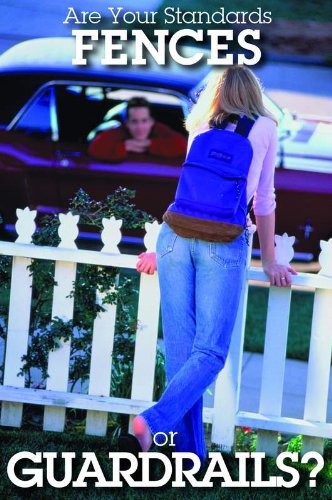
    That book was called Are Your Standards Fences or Guardrails by John Bytheway. There’s nothing wrong with this book. It’s just… a book I would be embarrassed to read as a kid as much as I was embarrassed to be reading it as an adult. I mean, just look at the cover, I think that says it all. It’s a super uplifting and positive book to help teenagers live morally and with high standards in an increasingly low standard world. If I start a book I’m going to finish it. As with any book, something will be learned from it. This book had a particularly cool experience come from it.

    The cool experience that came from reading this book developed out of a realization that Beth brought to my attention.

    I’ve gotten many of the books I’m currently reading from my grandparents. Many still have the sticker on the inside cover that reads, “Mr. & Mrs. Leach.”  As I was reading this book and wondering, ‘Why am I reading this?’ I noticed, like I often do, where the touch of my grandma was. This book was full of ear-marked pages.

    I mentioned it to Beth. “Here’s evidence of Grandma.”

    Beth asked what year the book was published and I told her.

    Beth wondered out loud, “2003…. So, who would she have had in mind while reading this?”

    My first thought was nobody. Her kids were already grown up with kids of their own by 2003. Then I slowly connected the dots. 2003….I would have been 13…. Oh… Grandma was likely thinking about me (along with others) while she read this. 

    It added some reverence to this book. Here I was approaching 20 years after my grandma read this book with me in mind and I was reading it with my daughter (only Ivy was born when I was reading this) and younger siblings in mind. It’s amazing how life changes. It’s amazing how we change. Every page my grandma ear-marked was for good reason. She had reason to worry about me at that time. At that time, I was on my way to breaking every guideline from that book.

    Here I am 20 years later having the same worries about the younger generation.

    It’s partly why I write all these silly posts. Maybe one day my daughter will read them and have an idea of who I was in 2020, and 2022, and 2025. Because by the time she’s reading this in 2033 I’ll be well on my way to grumpy, old, so-out-of-touch father.

    ***TANGENT*** I already feel that way this weekend playing catchphrase with my 19 year-old cousin and her friend. Did you know a 19-year-old doesn’t remember 9-11? That hit me like a slap to the face, woah! The most impactful and memorable day of my life was not experienced by a generation that is now approaching or already in their 20s! That’s crazy. That same cousin has never seen an episode of Boy Meets World. It’s a crazy thing getting older.

    Anyways, this was less about the book and more about what it made me realize. Life is so fluid. I remember being 15 and being convinced I knew everything. Now I’m in my 30s and realize I know almost nothing.

    Life moves and changes so quickly. It’s an amazing thing. I don’t know what closing or profound thought I have to finish this post. I guess I’ll close with this:  to my 12 year-old daughter in 2033, know I once thought I knew everything and it took many years of stupidity to realize how little I know. It took me a long time to realize the adults around me that I thought were hypocritical, or judgemental, or out of touch, or just trying to keep me from having fun really only ever had my best interests in mind.

    To my two girls: I love you and the adults around you love you. All we’ll ever want is the best for you and to protect you. I promise you that.