Tag: old testament

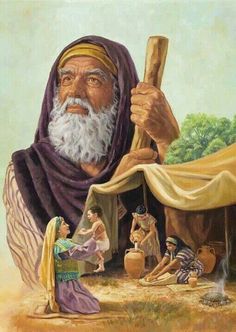
  • Abraham’s Faith

    Abraham’s Faith

    I had a thought (shocker).

    I shared last week about Abraham’s shared experience of almost being sacrificed by his father.

    Here’s another way to look at it.

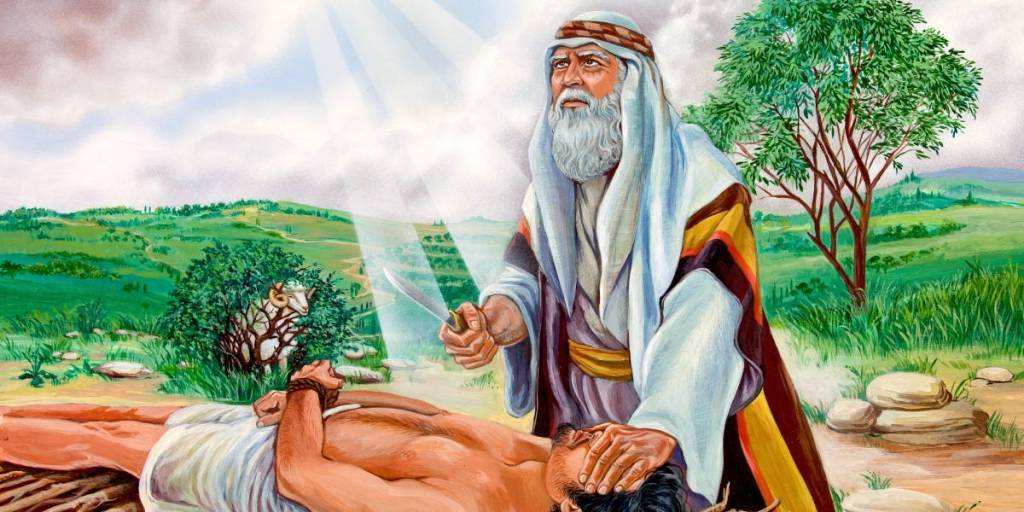
    We marvel at the faith of Abraham to sacrifice his son. He didn’t know that God would stop him moments before he went through with it. For all Abraham knew, his son would be dead, gone. And yet, he was still willing to do what God asked him to do.

    We marvel at this faith to do the impossible.

    What about God, when it came to sacrificing His only Son? Well, we would say, God knew the end. He knew His Son would conquer death and be resurrected. He knew His Son’s death would only be temporary. He’s God. He has nothing to worry about. Abraham was just a man. Abraham had no such knowledge.

    Or did he? 

    Faith is the “assurance of things hoped for, the evidence of things not seen” (Hebrews 11:1). Faith, by its nature, is to not have a perfect knowledge of things. Was Abraham’s faith so perfect that he did know, just like God knew with Jesus Christ, that everything would be ok?

    Abraham had a promise from God. God promised Abraham that his seed would be as numerous as the stars in the heavens and the sands of the sea. Abraham had some understanding of the eternities. It didn’t matter to him when the promises of God would be fulfilled. He trusted God. He had a perfect knowledge that God would keep his promises. 

    Now. The gut-wrenching, heart-tearing, indescribable and impossible act of losing your son. The pain. What about that? Abraham had faith that God would even make that right. Abraham had faith that God would only allow him to do what ultimately he needed to do to become who he could become. Abraham trusted God enough to do anything. Why? I think because he knew God loved him. Abraham didn’t have faith that God loved him, didn’t hope that God loved him, didn’t believe that God loved him. He knew. 

    Maybe faith proceeds knowledge.

    If we truly understand God’s love for us, His children, we can do anything, and endure anything.

    Abraham didn’t know the exact result of the sacrifice of his son. But he did know that God kept His promises. And hew knew that God loved him. And whatever the result, it would all work out for their benefit, glory, and growth in the long run. 

    That is faith.

  • Amos and Joseph Smith

    Amos and Joseph Smith

    The book of Amos in the Old Testament is an underrated book of scripture which I believe is extremely important to the Church of Jesus Christ of Latter-day Saints.

    In 2021 I was reading through the entire Old Testament for the first time and got to Amos. I’d like to share some things I learned from this book that I seldom hear talked about.

    Amos 3:7 is a scripture often quoted by latter-day saints. It reads:

    “Surely the Lord God will do nothing, but he revealeth his secret unto his servants the prophets.”

    This has obvious significance to the message of the restored Gospel of Jesus Christ. God reveals nothing, save it is revealed to a prophet.

    As I’ve read this short book of only 9 chapters, other significant scriptures have stood out. 

    An example is chapter 7. It is well-known that God chooses the most meek and humble of the earth to be His mouthpiece on the earth. This is a common theme in the Old Testament. It is common for herders and fisherman (symbolic much?), and others of little means to be called to God’s service.

    Chapter 7 starts with Amos relating a vision he had wherein he was called to prophesy to Israel of their sins and upcoming destruction if they did not repent. 

    Verse 9 of chapter 7 reads:

    “And the high places of Isaac shall be desolate, and the sanctuaries of Israel shall be laid waste; and I will rise against the house of Jeroboam with the sword.”

    This prophesy, naturally, led to a scorned priest going to the king and tattling. The modern day equivalent of going to the teacher and whining about a classmate. 

    “Then Amaziah the priest of Beth-el sent to Jeroboam king of Israel, saying, Amos hath conspired against thee in the midst of the house of Israel: the land is not able to bear all his words.”

    Boo-hoo Amaziah.

    boo hoo Memes & GIFs - Imgflip

    Amos’s reply is a classic prophet response.

    “Then answered Amos, and said to Amaziah, I was no prophet, neither was I a prophet’s son; but I was an herdman, and a gatherer of sycamore fruit.”

    Amos is basically saying, ‘Who am I to lead an insurrection against the king?  What is my motivation? Yesterday I was minding my own business herding sheep. The Lord has commanded me to say these words and so I must say them.’ Amos is pointing out that he is a humble shepherd. Someone of little consequence.

    The footnote to the word prophet in this verse is what really jumped out to me. The footnote referred to Joseph Smith-History 1:22-23 which reads:

    22 I soon found, however, that my telling the story had excited a great deal of prejudice against me among professors of religion, and was the cause of great persecution, which continued to increase; and though I was an obscure boy, only between fourteen and fifteen years of age, and my circumstances in life such as to make a boy of no consequence in the world, yet men of high standing would take notice sufficient to excite the public mind against me, and create a bitter persecution; and this was common among all the sects—all united to persecute me.

    23 It caused me serious reflection then, and often has since, how very strange it was that an obscure boy, of a little over fourteen years of age, and one, too, who was doomed to the necessity of obtaining a scanty maintenance by his daily labor, should be thought a character of sufficient importance to attract the attention of the great ones of the most popular sects of the day, and in a manner to create in them a spirit of the most bitter persecution and reviling. But strange or not, so it was, and it was often the cause of great sorrow to myself.

    Here we find something of simple but important significance. The pattern continues. Just as Joseph Smith, a boy of little confidence and almost no education was vilely attacked for his claims, claims that, as he said, should have made these men of God want to bring him close and set him straight to help him, instead lead to persecution and hatred. Such it is when corrupt men are brought before light and truth.

    Just as Joseph Smith was attacked for his claims, so was Amos. A humble herdman, minding his own business, but one day called upon by God.

    Profound teachings can be found throughout the scriptures. All of the written word of God should be pondered by us as latter-day saints. We can find truths everywhere. This pattern is one that adds to my testimony that Joseph Smith was a prophet. I’m grateful that like Amos, Joseph Smith fought the persecution he received to bring forth the word of God. Just as Amos thousands of years earlier had to do the same.

  • Me and Moses

    Me and Moses

    Before you start reading, I will be comparing my WEAKNESS to Moses’s weakness. Don’t worry, I’m not comparing myself to Moses in a good way.

    I liked that title for this blog post because it gives off a good ‘ole image of Moses and I getting ready to go do some fishin’ or somethin’.

    There is never a moment I feel more like Moses than when I’m asked to speak in public, especially in church.

    I’m referring to Exodus 4:10:

    10 And Moses said unto the Lord, O my Lord, I am not eloquent, neither heretofore, nor since thou hast spoken unto thy servant: but I am slow of speech, and of a slow tongue.

    When I first thought about coming back to church in ~2011 there was one overwhelming obstacle in my path: what if I’m asked to speak??? I know to many this seems absurd. But I hope it goes to illustrate how big a fear this was (and still is) for me. I have memories of being a deacon (12–13-year-old) in church and dreading a Sunday School class I learned would be spent reading scripture out loud. It filled my entire body with fear. It made me lock up. It made my throat tight. It made me gulp over and over. It made me sweat. I would start to feel like I might throw up.

    Some of you think you have a fear of public speaking.

    Now do you get how big a fear this was and still is?

    I know others have it worse than me.

    When I did finally come back to church in ~2015, I had to make a decision early on. That decision was that I would not let my fear of speaking hold me back. God had brought me back and I had experiences to share and people to help. Not only that, but I had to learn to lessen the control fear had on my life.

    I decided when I was asked to speak in church, I would accept. That was until that first text came in one morning asking me to give the opening prayer in church that day. I froze. Instead of responding to the text, I called a mentor (I miss you Jessie) and talked it through. He reminded me that if I said no today, when would it stop? By the time I responded to the bishopric member who asked me to give the prayer, he had already reassigned it to someone else. I was off the hook that day, but I promised myself the next time I was asked to speak, I would accept without hesitation, before I could let the fear and excuses set in.

    Little did I know how much that next call would try my faith.

    I was in the middle of studying for a work certification. I’d already failed the test once and this next test was extremely important. I’d been studying for weeks. The test was a couple weeks away when I got the call. I was asked if I could speak in church in two weeks. The excuses flooded my mind: I have this test I’m studying for, I can’t write a talk, and besides, the added stress…! I can’t, I’ll have to accept next time.

    Then I remembered the promise I made myself. 

    “Yes, I will speak.”

    That taught me an important lesson. If we let our fears control us, they will. There are always excuses why NOT to do something that makes us uncomfortable. I spoke two weeks later in church. Beth still talks about that day, hearing me speak, as being the first day I caught her attention.

    From that day forward if I was asked to bless the sacrament, give an announcement in church, say the prayer, teach a lesson, or speak, I always answered yes without hesitation. It petrified me every time. I remember one day I gave someone the Holy Ghost which entailed laying my hands on a friend’s head and giving her a priesthood blessing in front of our entire church. That same day I also blessed the sacrament in front of the whole church, and I gave a talk in front of the whole church.

    Any one of those things in a given day would have given me nightmares.

    Before sacrament, I started to feel sick to my stomach. I thought I was going to be physically ill. I went to an empty classroom, I knelt, and I prayed for help.

    “Please, Heavenly Father, please, just help me get through this. I need you.”

    That may have been the day I solidified my knowledge that I can’t do anything without God, I’m nothing without Him.

    When I gave that blessing to the friend, bestowing the Holy Ghost upon her, I walked up with knees shaking. I thought I was going to, at a minimum fall over, and possibly faint. My throat was dry, and it hurt. I’ll never forget the feeling when I put my hands on her head, with the whole congregation, heads bowed, waiting for me to speak.

    I’ll never forget feeling like a cold bucket of water was poured over my head. From my head down to my toes I felt a tingling. Calm overcame me.

    My grandpa used to say his favorite thing in the world was to give a priesthood blessing because it was the closest he ever felt to God. He said he could feel God in those moments speaking through him.

    That’s what I experienced that day.

    I wrote this on a day that I was speaking in church. I still get kind of sick to my stomach. I still get extremely nervous. I still have to fight back the panic.

    Sometimes people tell me they can’t tell I’m nervous when I speak. I appreciate that, but sometimes I just wish everyone knew. There’s power in putting it out there.

    For others who have this fear, and I know there are many, my biggest advice is to put it out there. Don’t shy away from your fear. When I’m extra nervous, I might just say, “I’m really nervous right now.” Then I feel like I’ve removed the question from those watching and from myself worrying about it. I’ve found this to really help when public speaking.

    I’m grateful for my fear of speaking. It’s assured me, and is a constant reminder, that I can’t do anything without God.

    For those wondering, on the day I wrote this, I did end up speaking and it did go OK. I was supposed to speak for 10 minutes and spoke for 22 due to an excess of time being available. I feel that with practice anything can become more comfortable, and that’s definitely the case with me and public speaking.

    I’ve now taken to challenging myself a little more, to see just how far I can take this reliance on God. The last time I was asked to speak in church I intentionally put zero preparation into my talk. I was asked to speak last minute, a couple days beforehand, due to someone canceling, and the topic was “personal revelation,” so I thought it was a fitting time to try it.

    I got up before the church with little idea of what I was going to share. As I looked around at the congregation, I knew what I wanted to share.

    I’m grateful for the opportunity to speak in church. I’m grateful to be able to share my thoughts and experiences. This fear is a constant reminder that I need God, and I’m grateful for this weakness. Every time I’m asked to speak I’m reminded how weak and silly I am. We can look at all our weaknesses this way, as a reminder of how much we need Him. I know as we do this we come closer to God and better appreciate all He has done and continues to do for us.
  • Will Hitler be Forgiven?

    Will Hitler be Forgiven?

    Before I share this, I will state the obvious. Hitler the man did heinous, horrible acts. He caused as much pain and heartache as any soul ever has on this earth. In writing this silly thought experiment I in no way intend to make light of the horrible choices of others. I believe I will have a hard time forgiving some of the acts I see during life reviews at the great judgment. Forgiveness, thankfully, won’t be for me to decide. I don’t know who will be forgiven for what. I know some will need to ask for forgiveness and likely won’t. I know some will receive forgiveness that we can’t comprehend. I trust in God. Now onto my silly post. Please don’t take the main character too seriously.

    I had a thought while I was in the shower, and it stemmed from this question – will Hitler be forgiven? The mere mention of the idea is enough to get me canceled. 

    The beauty of the plan of salvation and something only the Church of Jesus Christ proposes an answer to, is that God will save all His children and how that could be accomplished.

    The thought I had in answer to this question was – maybe Hitler will be forgiven, only God knows. If someone like Hitler could be forgiven, what change would need to take place in a soul like that for that to happen?

    We see momentous changes in mortality. We can see transformations over small courses of time. Think of someone you’ve seen change over the course of 5, 10, or 50 years. A lot of changes can happen to a spirit over the course of 50 years. Now imagine 1000, 5000, and 10,000 years. How about 3 billion years? Those numbers are hard to imagine. What amount of change could happen in a millennium? A lot, I imagine.

    On the other hand, that amount of time can also show the great weaknesses of a character. A lot of change can happen in a billion years and if there are any flaws in character, cracks become gulfs. Eternity is a long time so luckily we have a long time to change. But if we aren’t working toward perfection, our flaws will grow.

    I have read comments in near-death experiences about the malleability of the soul during mortality compared to after death. I’ve read analogies that compare the soul while here on earth to wet cement while the soul post-death being like settled cement. I believe that’s what makes mortality so critical. Our lack of knowledge and need for faith one way or the other, in a way I don’t understand, allows us to change in ways not possible once this life is over.

    The beauty of the plan of salvation is that God will save all His children that want to be saved. That’s the critical part. The desire to be saved. That’s also something becoming increasingly scarce in our society, the ability to forgive.

    Christ and God will know and understand all, and they will be forgiving beyond all measure.

    Which leads to the question, if we’re going to use Hitler as our abstract understanding of evil: will Hitler want to be saved? Will Hitler want to stand before God and Jesus Christ, Jesus Christ, the one who had to suffer for Hitler’s sins, who had to suffer for all the pain Hitler caused? Will Hitler want to stand before Jesus Christ? Will he have the humility to seek that forgiveness? If the evils of Satan touched his heart and soul as deeply as they seemed to – desire for power, hate, etc., will Hitler want to stand before them?

    Will Satan want to be forgiven? No. He won’t. Envy, evil, and hatred have poisoned his once angelic soul (Isaiah 14:12).

    No one can be forgiven if they willingly continue to deny Christ and ”crucify” Him anew.

    Will Hitler have the humility to bow before Christ and beg His forgiveness?

    I can’t imagine that level of change. It’s hard for me to picture that from someone who did such horrible things and strayed so far from the light. That is millenniums of change which is change my mind can’t fathom.

    What I also can’t imagine is how I can ever be made perfect. Me, with all my flaws, judgements, unkindnesses, shortcomings, deceits, greed, and selfishness. How can I be made perfect? I believe it will take a long time.

    Maybe Hitler will change and be forgiven for his sins. I believe if that’s possible it will take time.

    If we love the gospel plan and Heavenly Father and Jesus Christ’s ability to forgive us for our mistakes, we have to accept that they will forgive others too.

    The gospel plan is beautiful. For one and all.

    None of us deserve the redeeming love and a sacrifice willingly given of a God. Jesus Christ, spit upon and bleeding, shed his mortal blood and gave up his immortal spirit so we can live again. I am grateful for what He did for me and I recognize every day that I don’t deserve it. It makes me love Him all the more.

    Forgiveness isn’t something that should be taken lightly. It is serious.

    But when I stand before Him, and I humbly kneel, I believe He will forgive me. And for that moment, I’ll give anything.

  • Why Polygamy?

    Why Polygamy?

    The question is often asked: Why did God command Joseph Smith to enact the practice of polygamy, or multiple wives.

    The answer is sometimes given that it was for God to raise up righteous seed. to increase the number of children born in the gospel covenant in order to “raise up seed unto [the Lord]” (Jacob 2:30). I will come back to this.

    Another reason that isn’t often spoken of. Joseph Smith’s calling as a prophet was to restore all things. Not some things. Not most things.  All things.

    If a Priesthood power was had or executed in this earth, it was Joseph Smith’s duty to restore it in this, the dispensation of the fullness of times.

    To many people distraught at the idea of polygamy I would ask, “Do you believe in the Bible? Do you believe in Abraham, the great Patriarch?” How can a practice so wholeheartedly be condemned in the 19th century but be acceptable to you in the past? God is eternal. He doesn’t care about 2000 BC or the 1830s. To Him it is all one eternal round.

    It’s amazing that the staunchest denouncers of plural marriage never speak of Abraham, Isaac, and Jacob. The same Abraham, Isaac, and Jacob whom they pronounce with vigor, “I believe in the God of Abraham, Isaac, and Jacob.” Israel, whom the 12 tribes of Israel come from, exist because of this practice so condemned by modern critics.

    I want to touch back on the “righteous seed” theory. Some I think at least slightly scoff at the idea. It’s such a broad concept that most simple human minds can’t see such a big picture. Couldn’t God raise children to Him in a different way? He’s God, right?

    Maybe.

    But God has always worked through us, here on earth, to do, build, create, and work. He doesn’t magically insert tens of thousands of people because He needs them here. He commands and we either react with faith or with stubbornness.

    I’d like to give a real-life example of this principle of raising seed unto Him.

    I am a descendant of polygamy. Me. Someone you know is here because of this practice. Where would I be if not for this practice? I would have either been born to another family, outside of the covenant, outside of this Church, or I’d still be in line waiting to come to earth.

    I’m grateful for the practice of polygamy. I know it was difficult. I know it was a great test of faith. It was an incredible trial for those who had to live it. Those who endured it faithfully, like my great-great-great grandfather, Benjamin F. Johnson, have blessed me and the life of countless others. I’m grateful to him.

    It is pretty well documented how much Joseph Smith struggled with the principle. He all but avoided it for many years. Do you think Joseph Smith who was already persecuted and hated, driven from state to state, wanted to institute something that would make his enemies more hateful? Do you think he wanted to institute something that gave his enemies more anger and vitriol towards him and the Church? It was hard enough. It was not easy for Joseph Smith to institute polygamy.  Ultimately, he had to learn obedience to all of God’s commands. Even the hard ones. Even the ones he didn’t understand.

    We don’t know exactly why God instituted the practice of polygamy, anciently or modernly. We can guess, we can hypothesize. But like many other principles or workings of God, it comes down to faith. I wouldn’t be here without the faith of someone else who accepted something difficult. It’s a small act of faith on my part to accept and show gratitude for their great faith in times past.