Tag: old testament

  • Suzerain and Vassal: The Father and the Son

    Suzerain and Vassal: The Father and the Son

    Mosiah 15:1-2 reads:

    1 And now Abinadi said unto them: I would that ye should understand that God himself shall come down among the children of men, and shall redeem his people.

    2 And because he dwelleth in flesh he shall be called the Son of God, and having subjected the flesh to the will of the Father, being the Father and the Son…

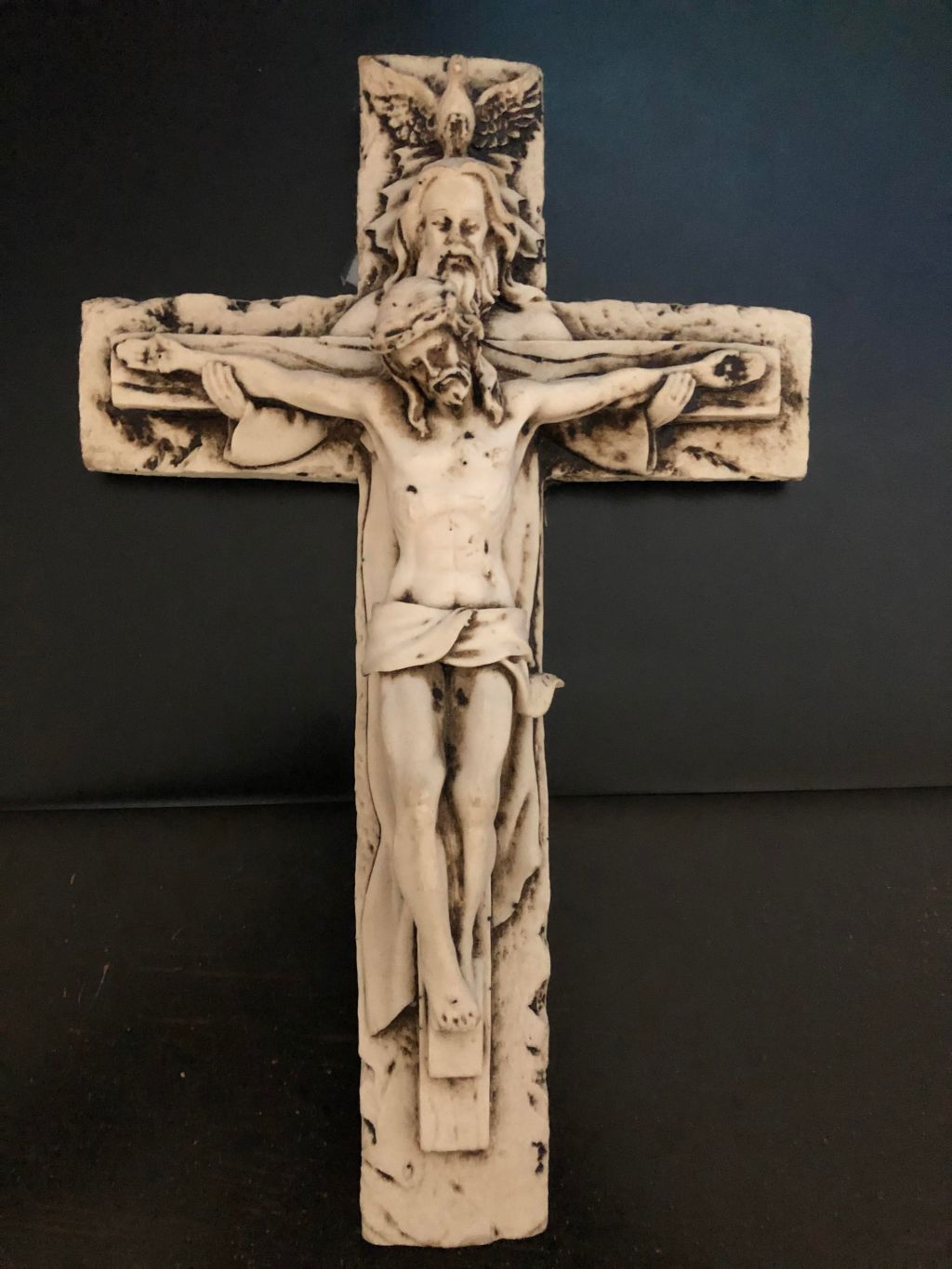
    How can Christ be both the father and the son? It’s a question that has troubled Christianity since before it was called Christianity. How can there be the one true God (Jehovah) and yet Jesus Christ (Jehovah) pray to His father who is in heaven?

    How can Christ be both the father and the son? Well, how are you, reading this a father (or mother) and a son (or daughter)? Sometimes we might overcomplicate the simplest things.

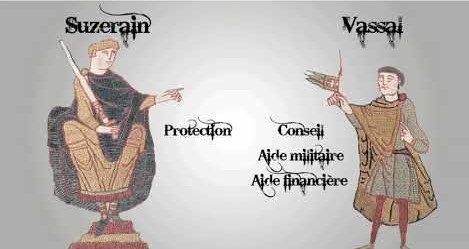
    In the ancient near east there existed a system wherein covenants could be made. That system could be described as a Suzerain Vassal covenant or treaty. In this sort of agreement one of the parties would be greater or more powerful than the other. The suzerain would be the powerful entity. The vassal would be the subservient, or lesser, or learning entity. In this sort of treaty, the vassal would pay tribute or show some form of loyalty to its suzerain. In return, the suzerain would provide protection or some other sort of benefit to its vassal. There could only be one suzerain/vassal connection. Meaning, a vassal couldn’t have two suzerains. This would basically be treason. You can only serve one lord.

    From this article on the suzerain/vassal covenant relationship:

    “The covenant Yahweh established with Israel at Mount Sinai exhibits striking parallels with Hittite suzerain/vassal treaties, which had six basic features: 1) a preamble that identifies the suzerain; 2) a historical prologue that recounts the previous relationship between the parties; 3) covenant stipulations to which the vassal must agree; 4) provisions for periodic reading and safekeeping of the covenant; 5) witnesses to the covenant; and 6) blessings and curses should the vassal either keep or fail to keep the covenant. The Sinaitic covenant contains all six of these characteristics.”

    In his book, The Last Days: Types and Shadows from the Bible and the Book of Mormon, Avraham Gileadi states:

    “the idea of Israel’s suzerain or Lord [Jehovah] assuming vassal or servant status in order to answer to his suzerain [God the Father] for his people’s rebelliousness introduces the concept of a God higher than Israel’s God. That is, Jehovah, the God of Israel, is a “Son” to God the “Father” (3 Nephi 11:7,11,32; compare 15:4-5). That concept does not appear explicitly in the Old Testament. Many Jews, therefore, insist that God is but “one” (Hebrew ehad; Deuteronomy 6:4); other than the Lord, they assume, no God exists (see Isaiah 44:6,8; 45:21-22). However, the idea of “the Father” and “the Son” makes perfect sense in light of ancient Near Eastern suzerain (Lord)–vassal (servant) covenant relationships.

         “Abinadi (and every prophet who teaches God’s redemption of humanity) here enlightens us. Abinadi says that God, who redeems his people, is both “the Father and the Son” (Mosiah 15:1-3; compare Alma 11;38-39; Ether 3:14). That abstruse statement seems at first glance to contradict the careful distinction between the Father and the Son that other scriptures teach. But when viewed from the ancient Near Eastern suzerain (lord)–vassal (servant) covenant relationship, we gain insight on how the Lord can serve as a suzerain or Father to his people Israel, but also can serve as a vassal or Son to his Father or suzerain. To Israel, the Lord is Father, and they become his sons or vassals. To God the Father, the Lord is the Son, subjecting his will to the Father in order to merit Israel’s salvation (Mosiah 15:2,7).

         “Moreover, as the literal and loyal Son of a divine Father–as the Son of a righteous [covenant suzerain “Father”]–the Lord is not subject to death unless he himself consents to die (See the type of Isaac’s consenting to let Abraham sacrifice him–Genesis 22:9) Even if he does die, the Father must come to the aid of his vassal and deliver his Son from death. In ancient Near Eastern literatures there is the concept of the god who dies only to revive and assume the throne of a senior deity. Thus “God breaketh he bands of death . . . giving the Son power to make intercession for the children of men” (Mosiah 15:8). What the Father does for the Son, the Son does for his sons and daughters: when “the Son reigneth, and hath power over the dead . . . he bringeth to pass the resurrection of the dead” (Mosiah 15:20).

         “Moreover, the moment one introduces the idea of the Father and the Son, one also introduces the concept of spiritual progression. That constitutes as much a part of the “good news,” or gospel, as does redemption from death itself (see Mosiah 15:10-19). Inherent in a Father/suzerain–Son/vassal relationship with God is the assuming of divine attributes–becoming God-like…”

    So we see that this Near Eastern tradition of suzerain and vassal treaties and covenants perfectly aligns with how we relate to Jesus Christ. He is our suzerain, making us His children. God is His suzerain. Through our covenant relationship with Christ, we receive protection from both Christ and His Father and our Father, God the Father.

    Another interesting thought from that note is how Christ conquered death. It was by His relationship with the Father that He was able to conquer death. He in turn allows us the same opportunity when we link ourselves to His will and power. Christ received His divine identity from His Father. We can receive our divine identity through Jesus Christ’s Atonement and conquering of death. This is why we only come to the Father through the Son. Christ is our protector, our Suzerain. As we serve Him, we receive that protection as His vassals.

    In addition, another way that Christ is our father is through the resurrection. It is due to Christ’s atonement and resurrection that we are able to be resurrected. This makes Christ the father of our bodies. For we wouldn’t have our bodies without His resurrection and the gift that we can be resurrected into our bodies. God the Father is still the father of our spirits. Whether that be through adoption, some measure of creation, or some other way, we’ll one day know.

    A last note I wanted to make that I liked from this article:

    “The basis of the covenant was Yahweh’s gracious acts toward Israel, not their obedience to him.”

    Our covenant relationship with Christ is a reminder that His grace saves us. It doesn’t matter how obedient we are. We needed His grace to save us. As our Suzerain, His covenant with us is based so much more on how He loves us and all He is willing to do for us than anything we can do for Him. We can never properly repay Christ for all He’s done for us. He is the Suzerain. He has the power to save us.

    This is the good news of the Gospel. Because Christ conquered all, we can become like Him, and in turn, become like our Father in Heaven.
  • Inheritance and Lehi’s Blessing

    Inheritance and Lehi’s Blessing

    I have always been confused by the blessings of Lehi to his posterity in the 4th chapter of 2 Nephi in the Book of Mormon.  For one, there is the obvious blessing that is missing: Nephi’s.  For another, there seem to be mixed messages.  Laman and Lemuel have a blessing, but it may be removed?  What does Sam get?  Who is the actual new leader- Nephi or Laman?

    In an article titled Lehi’s Last Will and Testament: A Legal Approach, John Welch goes into great detail on the legality and custom of Lehi’s blessing, and answers all of the above questions. I’d encourage anyone interested to read his whole article. It strengthened my testimony of the authenticity of the Book of Mormon and reminds us of the real world that Nephi was a part of.

    I want to go over some highlights from John Welch’s article that explain Lehi’s blessing in its cultural context. Credit also goes to Alan C. Miner who put together the points I found most relevant to the above questions.

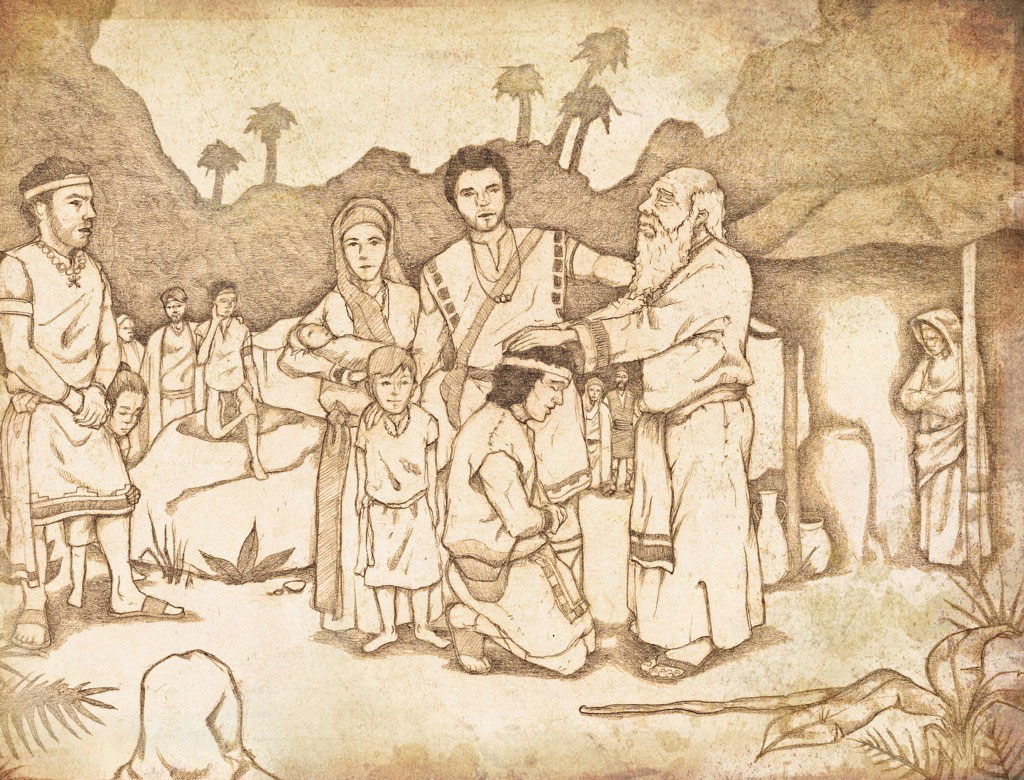
    Inheritance and succession was an important aspect of near eastern culture. It was a way of “preserving and transmitting the family estate from one generation to the next” (John Welch). Typically, the eldest son of the father’s first wife inherited his estate. The leadership of the family was also an important inheritance given. Faulk points out, “a father was free to choose a younger son as his successor, if he found the eldest unworthy of the office.” Sound like this fits Laman and Lemuel much? The father passed this leadership of the family on often through a special blessing (Deuteronomy 21:17), like we see in 2nd Nephi chapter 4.

    There are many examples of this spiritual or ruling leadership being given to a younger son including:

    1. Abel
    2. Seth
    3. Jacob (Israel)
    4. Ephraim
    5. David
    6. Solomon

    In each of these cases older sons were passed over as the spiritual leaders of the family.

    So, we have property inheritance and ruling inheritance. There was a third category sometimes handed down from the father: priestly duties. This is what happened with Lehi giving Jacob the priestly authority in the Book of Mormon. Another example of this was Jacob/Israel’s blessing in the Old Testament. Israel blessed Judah with the ruling authority (Genesis 49:10), Joseph of Egypt receiving a double portion through Ephraim and Manasseh (Genesis 48:22), and Levi inherited some priestly rights to the priesthood.

    As time passed in ancient Jerusalem, it became common custom for the eldest son to automatically receive a double portion of the inheritance. As noted, there were times that younger sons received different portions, or rights to rule, or increased inheritance. This was the exception, not the rule.

    This basic background information brings us to our fascinating story in the Book of Mormon. We have an eldest son, Laman, who was the eldest son of, what appears to be, a relatively well-off citizen of Jerusalem. This family leaves behind their land and property, to venture off to a promised land, a promised land Laman seldom showed faith in attaining. This family spends years in the wilderness, potentially months on a ship, and eventually land in the promised land. This elder brother is now over the moon with joy and enthusiasm. He will inherit all that his father has and be the leader and now king of a new nation.

    But what about Nephi? It was Nephi from the start that helped the family in the wilderness. It was Nephi that went back and got the plates so they could remember God and how to read and write. It was Nephi who built a ship to get them to the promised land. Nephi led the family, physically and spiritually to the promised land. He was the natural leader of the family and deserved to inherit the leadership, and kingship, of this great new nation.

    Lehi has a bit of a conundrum. How was Lehi going to handle Laman’s expectation to receive a double portion from his father? How was Lehi to handle the expectation from Laman that, as the oldest son, it was his RIGHT to inherit everything, despite his lack of leadership throughout the journey. Especially when Nephi had been declared a “ruler and a teacher” (1 Nephi 2:22, 3:29) by God Himself.

    This brings us to our blessing, and to the answer to the questions I always had.

    Lehi needed to appease Laman while attaching appropriate contingencies to his blessing. The main contingency was that Laman’s blessing would be applicable as long as he hearkened unto Nephi. This same admonition was given to Lemuel, Sam, and the sons of Ishmael. If they refused to follow Nephi, their blessings would be null and void.

    So Lehi employed three ways to diminish Laman’s blessing and role as the firstborn son. In diminishing Laman’s role Lehi enhanced Nephi’s. This leads us to the questions:

    First, why was Sam’s portion linked with Nephi’s? Why were there no Samites?

    Combining Sam’s inheritance with Nephi’s was similar to Joseph of Egypt’s blessing being doubled through his sons, Ephraim and Manasseh. Sam’s share of the land was linked to Nephi’s and therefore Nephi’s portion was doubled through Sam’s faithfulness, loyalty, and devotion he would show to Nephi as he always had.

    Welch discusses a second way Lehi diminished Laman’s blessing as found in 2 Nephi 4:5-9, “He [Lehi] blessed his firstborn’s children to the effect that their sins and cursings would be answered upon the heads of their parents. This could not have been flattering to Laman.”

    The third way Laman’s authority and blessing was reduced, Lehi referred to Jacob three times as his “firstborn…in the wilderness” and applied the priestly duties to him. By naming Jacob as another version of the “firstborn,” Lehi subtly took away from Laman’s claims as the firstborn son. As we remember, the custom in ancient Jerusalem was for Laman to receive the inheritance by default because he was the firstborn son. But, with Jacob also receiving a form of the title, “first born son,” Laman lost some claim on this exclusive title.

    Laman was warned that if he was disobedient, to God and to Nephi, that his blessing would be revoked. Lehi was, in a way, willing to give Laman the cursory “honor” of the blessing while putting many safeguards in place to keep Laman from actually ruling.

    This background context gives us additional insight into how the Nephites (followers of Nephi) and Lamanites (followers of Laman) could so quickly devolve into war and contention. The peace was kept as long as Lehi, the official patriarch, was around. Custom in Jerusalem was to love and respect the father (Exodus 20:12). But as soon as Lehi died, it was chaos. Laman was never one to heed faith or blessings, so the warnings from his now passed father were of no concern to him. He wanted to rule.

    To conclude, Alan C. Miner states, “Thus, John Welch has provided a plausible cultural background and answer as to why there were no “Samites.”  His words also give testimony to the fact that the ancient world of which Lehi and Nephi were proposed to be a part of in the pages of the Book of Mormon was a very real world.” The confusing nature of the blessing adds to the authenticity of the Book of Mormon.  Lehi’s blessing is consistent with the pattern an ancient Israelite may use in blessing his children. 

    I bear testimony that the Book of Mormon is a true historical account of families that originated in Jerusalem and eventually settled in the Americas. The more I read and study the book the more obvious it becomes. God has given us a second witness of the divinity of Jesus Christ, and I’m grateful for it. I’m grateful for a book that has been tested for 200 years and still holds up. I’m grateful to know God is still invested in us and our lives. I’m grateful for the Book of Mormon, Joseph Smith, and the Church of Jesus Christ of Latter-day Saints.

  • We are Scripture

    We are Scripture

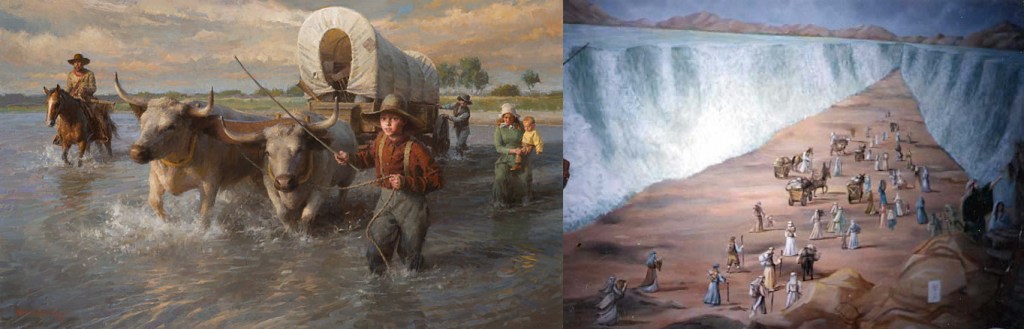
    As I read the historical background of Section 136 of the Doctrine and Covenants, I’m struck by the realization of how much the pioneers of the 1840s parallel the children of Israel leaving Egypt.

    The pioneers were leaving persecution, and in many ways bondage, just as the children of Israel.

    The pioneers had a humble leader, being inspired of God.  Brigham Young said, “What I know, I have received from the heavens…Men talk about what has been accomplished under my direction, and attribute it to my wisdom and ability; but it is all by the power of God, and by intelligence received from him.”

    The pioneers were on a covenant path.  The destination was not as important as the journey.  Section 136 is all about the pioneers learning to trust and follow God, whatever happened.  This has many parallels with the children of Israel, from manna coming to heaven to their rejection of the full covenants with God along their way.

    The pioneers were going to settle a new promised land.  The children of Israel were going to settle the Lord’s city.

    The comparisons go on and on.

    As I’ve been writing this, I have said: the pioneers compared to the children of Israel.  It’s important to realize that the pioneers were the modern children of Israel.  It is no coincidence that their story so perfectly parallels the Exodus from Egypt.  God works in patterns.  This is proof of His work.

    Brigham Young, when worries came from the pioneers about them being behind schedule in their goal to have crops planted, is quoted as saying, if the Saints “had done all [they] could,” he would feel “just as well satisfied as if [they] had a thousand acres planted with grain.  The Lord would do the rest.”

    Ultimately, the pioneers settled Utah.  Salt Lake City has become a bustling and powerful city of the world.  The desert has blossomed as the rose, (Isaiah 35:1) just as Jerusalem became a powerful city in ancient times.

    I believe we often read the scriptures and forget that we are scripture.  Very little differentiates us from the followers of God 2000 or 4000 years ago.  Different places, different time, new technology; but we are still following God, trying our best to keep His covenants, and trying our best to come closer to Him.

    If scripture verses were written about you, what would be written?

    With this understanding comes an important realization.  History repeats itself.  I believe we can read of the ancient Jews condemning their Christ to death on the cross and scoff at the idea.  We are ~170 years removed from our “time in the wilderness,” our pioneer days.  If Christ came before Zion today, would we know Him?

    I hope we would, but sometimes I worry for Zion.  We know Zion will become complacent in the last days.  It’s important that we stay vigilant in our devotion to God and to our covenants with Him.  Otherwise we risk the same fate that befell Jerusalem so many years ago.

  • The Power of Repetition

    The Power of Repetition

    If you were born after the year ~1987 and I just write the words:

    “We just got a letter.”

    “We just got a letter.”

    What happens in your mind?

    How about:

    “DARE to keep off drugs…”

    You know that painful feeling of getting a song stuck in your head?

    Ivy has started watching Blues Clues.  Don’t know how I feel about Josh as he’s not Steve.  The first thing I noticed with this new show was:

    “We just got annnn email! We just got annnn email!”  If you’ve heard it you understand the multiple n’s.

    I was just at my desk staring out the window and I couldn’t get that doggon song out of my head.  Then, I thought of better days and started singing in my mind, “We just got a letter…” and it came to me just like that.  I could hear it; I could feel it.

    It made me think about the power of repetition.  Can you believe if I hear, “we just got a letter” 20 years later, I STILL sing that exact song?  Why is that?  Repetition.  I must have heard it 100, 1000 times growing up, and I don’t even recall being a HUGE Blues Clues watcher.  (I say that in the context of how Blues Clues took over the world in the 90s).

    As I often do, I applied this to a gospel principle.  Why is it SO important that we pray and study the scriptures daily?  Repetition.  I could read the Old Testament every day for the rest of my life and still learn from it.  Nothing sticks with us humans unless we do it over…and over…and over… and over.

    That is the way we learn and grow: repetition.  Now if someone could work on a really catchy Book of Mormon jingle, I could get that book memorized.

  • The Trinity

    The Trinity

    I’m not going to cite a bunch of scriptures supporting my point.  In my experience that does nothing because individual scriptures can be interpreted in a million different ways.  Any scripture I give that seems clear as day to me to show God the Father, Jesus Christ, and the Holy Ghost as three distinct personages is quickly explained away and followed up with another scripture that someone believes shows they are one being. 

    Instead of trying to convince anyone of this doctrine, I more want to give my thoughts on it.  I also want to briefly discuss the importance of this doctrine and why I believe it has been so adamantly fought over throughout the centuries. 

    First, the “they are one” controversy with the many scriptural references is so easy for me to understand.  They are one in intent and purpose, so they are one.  Christ, when praying to His Father said, “let them be one, Father, as you and I are one.” (John 17:21-23)  Why would Christ say this?  Given the doctrine of the trinity, was Christ praying that his apostles would morph together into one super spiritual being?  No, it doesn’t make sense.  What Christ was praying for was literal.  “Let them be one, as you and I are one” – in intent, purpose.

    Second, what sense does a unified being make?  I know we are human, and we don’t understand much of anything about the true nature of Heaven, of eternity, of what is next.  I have faith in a lot, but I understand little.  Maybe the next life is filled with multiple personality Gods and beings that I’m meant to worship.  Maybe God can split into three personages.  Maybe He did this to make us understand some deep, important principle.  Maybe?  Or maybe every person who counseled over this principle (the famous Nicene Creed) and ultimately came to a decision we follow hundreds of years later didn’t understand.  God isn’t setting out to confuse us.  He doesn’t want us to NOT comprehend Him.  He wants us to know how much He loves us.  He wants us to know He SENT His only begotten son, who also loves us.  He wants us to know the Holy Spirit can be a constant companion to us.  He doesn’t want to confuse us.  He isn’t throwing out stumbling blocks all along the way to make things more difficult.  This life isn’t intended to be a maze of confusion that we may be lucky to determine what God wants us to know.  He wants us to seek Him and to seek truth.  He WANTS us to understand.  God the Father, Jesus Christ, and the Holy Spirit are three separate, distinct beings.  I don’t know this (yet), but I have faith and hope that it’s true.

    The Godhead: One In Purpose – ToGather Saints

    Joseph Smith saw them.  That’s why that moment was so significant.  They didn’t speak to Him from the clouds.  They appeared in their bodies.  To show him, “you are like us, and we are like you.”  They have bodies of flesh and blood.  Christ really came here, His Father’s Son, to attain a body and die for us.  That principle is pure and beautiful.

    Have you ever wondered why Christ ate fish and bread with the apostles after his resurrection?  Why was that account included in the scriptures?  The scriptures are full of important information, obviously.  Why was this seemingly unimportant detail included?  Not because Christ was trying to make His apostles comfortable.  It was included because it was important.  Christ was showing that He had a body.  Just as we, when we are resurrected, will be resurrected with our bodies. 

    This brings me to the third point, exactly why this doctrine was fought so hard against for all of history.  Satan is cunning.  Satan knows what is and isn’t important to our salvation.  With the fervor and aggression Satan has fought this doctrine with, it seems obvious to me how important it is.  This doctrine is so important because the corruption of it distances us from our Heavenly Father.  That is Satan’s great purpose.  What greater way to distance us from our Father than corrupting His image into some unknowable, un-understandable, un-comprehendible being?  It is the opposite of what God is.  He knows us, He understands us, He comprehends us, and he wants us to understand Him.  This bizarre trinity He’s been morphed into makes it so hard to communicate with Him.  How do you communicate a triple being you can’t imagine?  Not the same, personal way you can communicate with your own father.  Not the way your loving Heavenly Father wants you to communicate with Him.  A father that sent His only begotten Son to save the rest of His spirit children. 

    I wish I could be more eloquent on this topic.  Of all topics I wish I had a poet’s or philosopher’s eloquence for, this is it.  Because it’s important.  But I’m not a poet or a philosopher.  My words fall short of what I want to portray.  I wish so much that everyone could know Heavenly Father the way I feel and know Him.  He and Christ are so important to me.  Combining them in one takes away one of the most important persons in my life.

    This truth is eternal, and this truth is important. 

    To learn more about the truth of the Godhead, visit here:

    https://www.churchofjesuschrist.org/comeuntochrist/article/do-members-of-the-church-of-jesus-christ-believe-in-the-trinity