These things are all amazing. These are all fruits of the gospel.
But.
Why are they amazing?
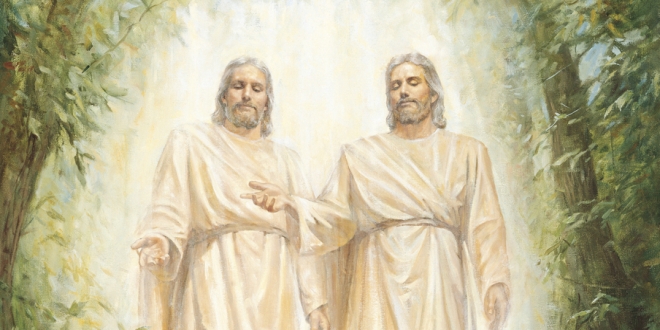
After seeing a great vision of eternity, of all the heavens, of the glory, love, and light we will all receive in the next life, after this vision, Joseph Smith and Sydney Rigdon wrote this:
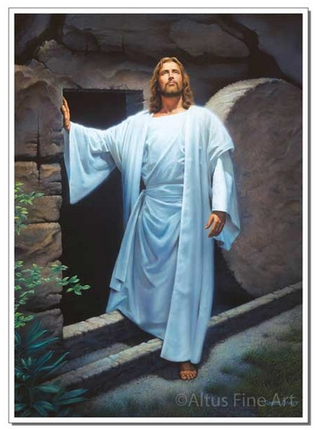
“And now, after the many testimonies which have been given of him, this is the testimony, last of all, which we give of him: That he lives!
For we saw him, even on the right hand of God; and we heard the voice bearing record that he is the Only Begotten of the Father.” (Doctrine and Covenants 76:22)
How I wish I could scream this to the world. Jesus Christ lives! He died for you, for each of us. He died so you need not fear death, trials, or tribulations. You needn’t fear anything. He died for your reassurance. He died for your comfort. He died for your sins. He died for you.
All those things mentioned at the start are amazing, glorious, and wonderful because they point to one thing: Him. Jesus Christ. The Savior of the world. Without Him all of it would be for nothing. Temples, prophets, scripture, what good are they? They are only good for what they point us to. The light and love of this world. Jesus Christ.
I wish the world could see this. I wish the world could see that all these things are just tools pointing to someone far greater.
Ultimately the gospel of Jesus Christ brings comfort. The Plan of Salvation brings peace. The Plan of Happiness makes this life a joy. How could this life be anything less when you know the bigger picture?
I don’t fear trials because I know they help me grow.
I don’t fear tribulations because I know they benefit me for eternity.
I don’t fear death because I know where I’m going if I continue to look to Christ.
I wrote this months ago. Now I’m coming off a situation that has been a trial and tribulation. I believe I can say with a little more confidence today that I don’t fear death.
It can be naïve to say I welcome trials and tribulations when life is wonderful and peaceful. I appreciate that my life is wonderful and peaceful because of the Gospel and the peace it preemptively brings me before trials. It’s easy to say these things when everything is going well. I’m glad I can say them when things are hard as well.
Despite current challenges, I feel so blessed.
Of course, I don’t want tests and trials, but I know when they come, they are for a great purpose. I hope when opportunities come for my faith to be tested it can feel like an open book test. I hope I can face trials in life as if I have the answers, which I believe I do. It’s easy to say until a true tragedy hits my life. I don’t hope for a true tragedy, but I hope for the strength and faith to endure tragedy if it comes.
Coming off the accident I had, I still don’t feel like I’ve gone through a tremendous trial. It has been challenging, but not overly. I don’t feel like it has been that difficult at all. I don’t know how much of that is the fact that the challenge wasn’t actually difficult or due to all the support I have around me, especially the support of God.
These are all the benefits of the Gospel of Jesus Christ. I wish the world had this same peace I have been profoundly blessed to be given.
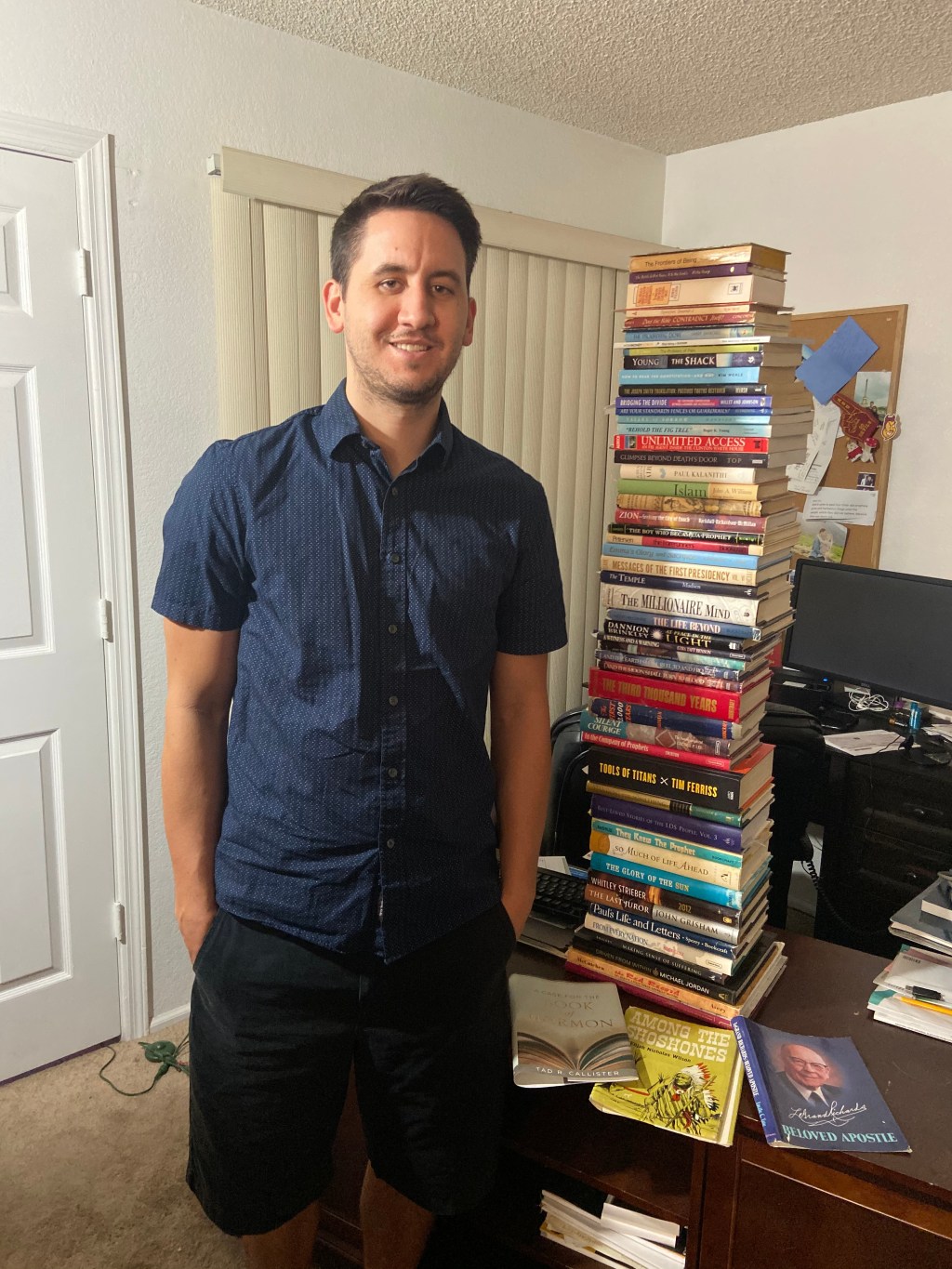
This is a list of every book I read in 2020 and the order I ranked them in from favorite to least favorite. I get something out of every book I read. I learned long ago that if I allow myself to not finish one book, I won’t finish any. For those reasons, when I start a book, I’m committed to finishing it. I don’t care how dry or boring it may be.
It was extremely difficult to rank these books. For one, how do you rank nonfiction verse fiction? Take a fictional John Grisham crime novel like The Last Juror and compare it to a nonfiction biography of the Prophet Joseph Smith for example. How do you compare the two? To avoid overthinking it I simply went through my list of books read and from what I remembered, put each on the list. Every book’s placement on the list is from my initial remembering of how much I *enjoyed reading it.
*enjoyed for me is going to be vastly different from most people. Precious Truths Restored, which was a top five favorite book of the year for me, is there because I learned so much from it and have referred to it constantly throughout the year since I finished it. I doubt the average person would even get through it. I loved it.
I included a one sentence thought about each book. This proved difficult because I could say so much about every book. To get around the one sentence rule, I used many commas and run-on sentences. My list, my rules.
I enjoyed all these books because they each taught me something. That’s the great thing about books. Here’s my list:
The First 2000 Years by Cleon Skousen
When I told a church-going friend I finished this book he looked at me incredulously, I guess my taste in books is unique.
*A Case for the Book of Mormon by Tad R. Callister
This book will forever be my reference for a scholarly defense of the Book of Mormon.
*The Mourning Dove by Larry Barkdull
I made Beth read this, super short, super memorable, loved this book.
Tools of Titans by Tim Ferriss
I gained so much from this book, almost every one of the nearly 800 pages was marked, made me a Tim Ferriss fan for life.
Helped me tremendously in understanding the dangers of the different translations of the Bible, appreciating the Joseph Smith Translation of the Bible, and understanding how we have the various Bibles we have today.
Bridging the Divide: The Continuing Conversation Between a Mormon and an Evangelical by Gregory C. V. Johnson and Robert L. Millet
Inspirational book of two people from different faiths finding joy in a discussion spanning many years that brings them both closer to God, reminded me of a relationship I have with a friend I enjoy discussing scripture with.
*Best Loved Stories of the LDS People Vol 3 compiled by Jay A. Parry, Linda Ririe Gundry, Jack M. Lyon
The reason this ranked so high among so many other church history-esc books is I felt like I enjoyed a majority of the short stories, I gave it to my sister to read and she also enjoyed it.
The Third Thousand Years by W. Cleon Skousen
This was the sequel to my favorite book of the year, it’s lower on the list because I feel like we generally know more about the third thousand years, so I felt like I got less out of it personally, still great though.
*Among the Shoshones by Elijah Nicholas Wilson
Given to my sister-in-law to read, amazingly simple read that repeatedly had me saying out loud, “What the heck?”
The Forerunners by Mark E. Petersen
This did a great job of explaining Joseph Smith’s role in the restoration and went into some detail about the pattern of forerunners being sent by God to start a great work on earth, John the Baptist and Joseph Smith being the most famous examples.
Return from Tomorrow by George G. Ritchie with Elizabeth Sherrill
One of the first ever Near-Death Experience books written, NDE books have a special place in my heart as it was an NDE book that helped me come back to church.
The Red Record by David McCutchen
This was fascinating, it took legends of an ancient civilization you’ve never heard of, used oral records to go back thousands of years depicting their first legends of crossing an icy bridge to come to what would be the northern part of North America.
And the Moon Shall Turn to Blood by Anthony E. Larson
This series of books blew my mind and led me to discussing it with people that didn’t have any interest discussing the topic, this fact instantly gets it higher on the list.
And the Earth Shall Reel to and Fro by Anthony E. Larson
Part two to the above book, grouped the trilogy together on my list, these books use catastrophism as a basis of belief about what happened in the history of the world and what will happen in the future.
And There Shall be a New Heaven and a New Earth by Anthony E. Larson
Part three of the trilogy, I enjoyed the first one the most and was slightly less interested as I got to the third book, but they were kind of like one book in three parts.
All I need to Know I learned in Kindergarten by Robert Fulghum
A collection of short stories that were all extremely entertaining, quick and easy read.
I love short anecdotes or stories which is why this is just below All I need to Know I Learned in Kindergarten because that’s one of the best books I’ve read that does that, this one did a good job as well on more spiritual and deep topics.
Another near-death experience book, I really want to read Dannion Brinkley’s first book Saved by the Light now.
2012 The War for Souls by Whitley Strieber
Awesomely creative book, so good I read it twice, no really, it wasn’t until the end that I realized I’d read 90% of the book years ago and never finished.
How Money Works by Steve Siebold and Tom Mathews
A gift to me, I think this book advanced my knowledge of how money works ten fold, this should be required reading in high school.
The Last Juror by John Grisham
Some authors have mastered how to get their readers to keep flipping pages no matter what, John Grisham is one of those writers.
The Life Beyond by Joseph Fielding McConkie and Robert L. Millet
This book uses modern revelation to answer questions about what happens when we die, I’m amazed the world doesn’t flock to a book that answers the most important question in this life.
Behold the Fig Tree by Roger K. Young
Any book that prepares me for what to expect leading up to the Millennium jumps up the list, see #13-15 for other examples.
The Shack by William P. Young
Book turned popular motion picture, I may have liked the movie even more.
A fictional account of an early settled western town, gun slinging stories have always fascinated me.
Silent Courage by George P. Lee
A really good book was tainted when I learned what became of George P. Lee, was interesting reading about the life in a culture completely unique from my own.
Millionaire Mind by Thomas J. Stanley
My only complaint about this book was the repetitiveness of points, though I still got a lot from it.
First-hand accounts about the prophet Joseph Smith from those who knew him.
From Every Nation by Derin Head Rodriguez
Awesome book about the first foreign general authorities, amazing to see the distinct similarities a bunch of men from all over the world had that led to their growth in faith and devotion to Jesus Christ.
How to Read the Constitution and Why by Kim Wehle
Should be required reading in any school, important for American students to understand the constitution better, especially now.
Unlimited Access by Gary Aldrich
This book was interesting, an honest look from an FBI agent on the security of the white house while he was in charge of security at the white house.
When Breath Becomes Air by Paul Kalanithi
A really neat look at life from someone who was experiencing his own mortality.
Made me understand the sacrifice of the Apostle Paul in a deeper way.
The Boy who Became a Prophet by Mabel Harmer
Ranked on the lower end because I don’t remember a ton from it, though any book on Joseph Smith has proved rewarding.
In the Company of Prophets by D. Arthur Haycock
An interesting view on modern-day prophets from the perspective of someone who knew them as well as anyone.
Making Sense of Suffering by Peter Kreeft
Like #47 The Problem of Pain, except more at my reading level.
It was on Fire when I sat on it by Robert Fulghum
Didn’t like nearly as much as #16, but still enjoyed a lot.
*Translating the Anthon Transcript by Stan and Polly Johnson
Lowered due to the chance the information in the book wasn’t fully accurate/true, I very much enjoyed learning about this though, and gave to a friend to read.
Zion Seeking the City of Enoch by Larry Barkdull
Larry Barkdull also wrote one of my favorite books of the year (#3), this was an awesome, fictional account of someone trying to join Enoch in the beginning stages of starting his perfected society.
Frontiers of Being by Duncan B. Blewett
Extremely deep and dense, some parts difficult to get through, used some of what I read in this book when officiating my sister’s wedding, fun fact, looked it up online and there’s a “new” copy for sale for $1,008.00.
Valley of Sorrow by Alexander B. Morrison
Great book, taught me a lot, not a topic I know much about or am passionate about but definitely learned a lot and opened my mind to some different views on mental health.
Glimpses Beyond Death’s Door by Brent Top
I think I struggled with feeling like I was reading an analysis of a bunch of other books that I actually wanted to read, this was surprising given my love for the topic, see #7 and #18.
A witness and a Warning: Modern Day Prophet Testifies of the Book of Mormon by Ezra Taft Benson.
Since I already know the Book of Mormon is true this found me nodding my head in agreement throughout.
Was really excited for this book, quickly realized I wasn’t intellectually ready to read a philosophical book by C.S. Lewis.
Driven from Within by Michael Jordan
Interesting look at Michael Jordan looking simultaneously at his basketball career and how it fueled his creative side which created a billion dollar shoe industry.
Does the Bible Contradict Itself? by W. Arndt
A defense of the Bible, didn’t love reading cover to cover which the author kind of said not to do, but will possibly be a book I refer back to often in my life.
Statements on Communism and the Constitution of the United States by David O. McKay
Don’t remember a ton about this, I know it was short, I mostly remember thinking, “they used to be extremely afraid of communism.”
Hidden Treasures from the Scriptures: The Battle is not yours it is the Lord’ by Alisha Geary
Had an interesting theme about how to get through adversity, short book.
Are Your Standards Fences or Guardrails? By John Bytheway
While it’s sort of silly I even read this as I was approaching 30, and I ranked it low, I actually got a lot out of it, especially useful as I was becoming a parent and thinking about the standards I’d like Ivy to have.
Messages of the First Presidency Vol. 6 compiled by James R. Clark
I enjoyed it but it was dry, and the average person is not going to get through this book.
Emma’s Glory and Sacrifice by Gracia N. Jones
Great book but kind of felt like the attempt to tie it to Emma was a stretch throughout simply due to how few records we have left behind in her own words.
Islam by John A. Williams
Just really difficult to read without more of a foundation in the faith, felt like I constantly didn’t know enough to keep up with what was being discussed.
So Much of Life Ahead by Dean Hughes
This was an OK book, but it was part 6 in a series and I just decided to read it.
The Plain Truth about Christmas by Herbert W. Armstrong
Can’t believe I read this, best thing about it was how short it was, entertaining though I guess.
*Recommended or gave this book to someone to read.
Additional reading:
Plan of Salvation pamphlet (should be read by everyone once a year to be reminded of why we’re here).
A main theme throughout the Lectures on Faith is God’s perfect attributes. Logically, for us to be able to have any faith in God He must be perfect. We must know that we can trust God and, in turn, His Son, Jesus Christ.
The major theme I took away from Lecture 2 specifically is how we have attained faith throughout history. Lecture 2 presents the profound idea that our faith in God is always dependent, or comes initially, from the faith of another. Consider this, if no one in your life ever mentioned any sort of higher being, any sort of God, any sort of creator, would you come up with the thought on your own? You think about God because He is someone we have been taught about since Adam.
Even if your parents aren’t the ones who teach you about God, you learn about God from someone. I would venture to say that in the world today every single person on the face of it has heard of the concept of a supreme being. Why is this? Where does our innate belief/consideration of God come from?
Lecture 2 points out that there was an unbroken chain of testimony that started from Adam and was handed down through Abraham. If you read Genesis carefully and do the math you will see that ancient prophets handed the knowledge of God down for generations. It continues today.
Adam knew God in the Garden of Eden. When he left the Garden Adam still knew God. We know Adam’s sons knew God. Abel provided sacrifices to God. Cain spoke to God even after murdering his brother. This shows us that God spoke to men even after the fall and continued to speak to them as they continued to fall into transgression. There is something significant here that I’d never considered. Abel first got his knowledge of God from his father, Adam, as did Cain. After they were told about God by Adam, then they had to develop their own faith in God. They had to learn, trust, and depend on Him, or not.
The important thing to remember from this: we all start our faith by leaning on the faith of another. We possess dependent faith. This leads to another profound truth: God possesses independent faith. God’s faith is not reliant on any outside source. As discussed in lecture one, God’s faith is perfect.
I’ve been studying the lectures alongside a video series that I will link at the bottom. There were many amazing thoughts and ideas presented in that video, related to this second Lecture on Faith.
Faith is faith until it happens, then it is knowledge. Since God has perfect faith, He doesn’t need to wait for something to happen for Him to know it. He knows it is going to happen. His faith is perfect therefore His knowledge is perfect. It’s simple when you think about it in these terms, but it’s so critical. It’s why we can have perfect faith in Him, BECAUSE we know His faith is perfect.
IMPORTANT: God is not still progressing. This is important for us to understand. God is not still learning. If He was, we couldn’t have perfect faith in Him.
This leads to a question: isn’t life boring for God if He has mastered everything?
In the video they gave an awesome analogy. Imagine you’re an accountant. You master every aspect of accounting there is. You have a perfect knowledge and ability in accounting. Would you get bored with accounting? Probably. So, what would you then do? You would teach others how to also master accounting. God is the master accountant. He has attained all knowledge on life, faith, eternity, creation – so what does He do? He teaches us. What a thought! We are being tutored by the God of the universe. That’s what makes this life so important. When we consider that we are learning and being personally groomed by God Himself, what power it adds to our existence here!
This leads to another important thought. What was Christ’s ultimate message while here? I think it would be service. Love through service. Give through service. Charity. Without charity you are nothing (1 Corinthians 13:2, Moroni 7:44) Why did Christ teach this ever-important principle? Because His Father, our Father, God is the ultimate server. He is doing everything He does to teach us. We truly are “His work and His glory” (Moses 1:39).
I want to conclude with two last realizations:
The scriptures help develop our faith by teaching us of God. This is important.
Faith comes by hearing the word of God through the testimony of the servants of God, that testimony is always attended by the spirit.
You aren’t told to have a testimony. You’re not made to know Jesus is the Christ. These are things you must come to a knowledge of through the spirit. Think about it. Christ, in His whole ministry, never told anyone He was the Son of God. He always let them come to that conclusion on their own. One example is Peter who He told, “blessed art thou for flesh and blood hath not revealed it unto thee, but my Father which is in heaven” (Matthew 16:17). Another example is Christ to the woman at the well (John 4). Christ didn’t go telling people who He was. It had to be revealed by the spirit. This is why signs come by faith, and not the other way around (D&C 63:7-12).
Our hearts must be open for us to receive the testimony of Jesus Christ. 2 Nephi 33:1 “When a man speaketh by the power of the Holy Ghost the power of the Holy Ghost carrieth it UNTO the hearts of the children of men.” Not INTO but UNTO. It’s then on the heart of the individual to accept or reject the testimony. The system is in place. The system has been in place for God’s children to develop faith in Him from the beginning. Once the testimony is carried to the heart It’s then on the agency of the individual to receive or reject that testimony.
God has perfect faith. We are here to develop our faith so that we can be like Him. He is the great accountant, and we are his protégés. It is His hope, His glory that we can become like Him. As we develop our faith here it will benefit us for the rest of eternity. I know I say it a lot, but, what a thought.
It’s unclear who officially wrote the Lectures on Faith, though they were approved of and taught by Joseph Smith. At a minimum, the concepts and theology of them comes from revelation given to Joseph Smith. Yet another example and evidence of his calling as a prophet.
I write here my notes and thoughts on these videos and the lectures. There are seven Lectures. The 10 video series I’ve been watching spans almost 5 hours and reviews each of the Lectures. In writing this it will help me put together my thoughts and understanding on what Joseph Smith tried to teach us about faith. Through this process I know my faith will grow by studying these principles. What Joseph Smith taught about faith is beyond profound, it is revelatory. I will need to study his words and all supplemental material for the rest of my life to get a grasp of the profound and eternal nature of faith. I look forward to reading over my notes here many times to refresh my mind and expand my knowledge on the subject.
Video 1 was an introduction to the Lectures. Video 2 was all about Lecture 1 – Faith Defined.
First, what are the Lectures on Faith? They are principles put together by Joseph Smith to help early elders to share the gospel.
Lecture 2 Links the principles of faith and the doctrine of revelation. The power of human testimony is the medium with which the gospel is passed from generation to generation.
Lectures 3 and 4 The character and attributes of God. If we don’t understand the attributes of God, we can’t have confidence to exercise proper faith in Him.
Lecture 5 The Godhead, nature of the members of the Godhead.
Lecture 6 The Law of Sacrifice.
Lecture 7 The fruits of faith.
What is the plan for the Lectures on Faith?
Teach what faith is.
Teach how to obtain faith.
What happens if you obtain faith?
Bob Millet
My favorite part from the first video was this suggestion from Bob Millet, one of the panelists. His suggestion was this: read the Lectures on Faith 20 times then you can start to study them.
Now that I have an overview on what all 7 lectures will cover and teach, I can get into Lecture 1.
Lecture 1: Faith Defined
Obvious question to start, what is faith?
Faith is the first principle in revealed religion and the foundation of righteousness. Faith is the substance of things hoped for but not seen (Hebrews 11:1). The lecture starts broad – faith is the belief that something will come to pass. Then it gets more religious in tone: “the principle of action in all intelligent beings.”
Faith is a principle of action. Faith implies works, it implies activity, both physical and mental. Just as faith is the moving action in all things temporal, so it is with spiritual (paragraph 12).
By faith God formed the earth. I think this is the most profound point from Lecture 1. That it is God’s faith that is His power. Take faith from God and He would cease to exist (paragraph 16). I know to many this seems like outright blasphemy. But before rejecting the idea without thought, consider what is being said. Faith is a principle of power. It is the power by which God formed the earth. Take away His faith, take away His power, He ceases to be God. Luckily for us God’s power cannot be taken away.
God’s faith and knowledge are equivalent. It is God’s perfect faith that allows His perfect knowledge. Consider: faith is believing in something that you haven’t yet seen. Since God’s faith is perfect what He has faith in will be, it will exist. We mortals look at faith as weak, unproven, unscientific. It is God’s trust in the Plan of Salvation that makes Him create worlds. It is God’s perfect faith that created those worlds. It is God’s perfect faith that makes Him the Almighty.
Again, faith is the power of God. If faith is that important, it adds a whole new meaning, explanation, and understanding to this life. Why do we move through life as if through a misty darkness, unsure of everything? Why the veil that covers our eyes and fogs our minds to so much that we used to know? Why don’t we know where we come from? Why don’t we know where we’re going? Why doesn’t God send angels down to tell us which church is true? Why doesn’t God allow profound miracles to occur before unbelievers’ eyes so they can KNOW that He exists? The reason God doesn’t do these things is due to the importance of faith. We are here to learn faith, develop faith, grow faith; because it is that important. God does not want to take that opportunity of growth and development away from us. He won’t. He knows how critical it is.
Faith, then, is the first great governing principle which has power, dominion, and authority over all things: by it they exist, by it they are upheld, by it they are changed, or by it they remain, agreeably to the will of God. Without it, there is no power, and without power there could be no creation, nor existence!” (Paragraph 24).
I believe a careful reading of different scriptural records gives us a picture of Satan’s progression and tells us how he ultimately ended up cast down. There will be a lot of scriptural references here (duh). If you follow the story something becomes pretty clear about Satan. There’s a major revelation I learned about Satan that I never understood, and I don’t think many church members know.
Before I start I want to mention, my interest in studying Satan is the opposite of my interest in studying Christ, but helps with the same purpose. I think it’s good to study Satan to see how he fell and to avoid the behavior he exhibited that led him there. Through his story you see examples of pride, unrighteous ambition, anger, envy, jealousy, bitterness, selfishness, along with many other negative attributes. All of Satan’s attributes are the direct opposite to the traits of Jesus Christ. Ultimately Satan became a being of darkness. He rejected all light. Many around us reject light and I think as we understand Satan and understand his motivations (to tempt, enslave, and control us) we are better suited to withstand him. With that, we begin.
Satan’s story starts in the Book of Moses chapter 4:1-2:
1 And I, the Lord God, spake unto Moses, saying: That Satan, whom thou hast commanded in the name of mine Only Begotten, is the same which was from the beginning, and he came before me, saying—Behold, here am I, send me, I will be thy son, and I will redeem all mankind, that one soul shall not be lost, and surely I will do it; wherefore give me thine honor.
2 But, behold, my Beloved Son, which was my Beloved and Chosen from the beginning, said unto me—Father, thy will be done, and the glory be thine forever.
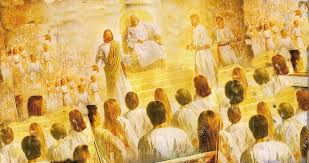
Here we see what I believe is well known to Latter-day Saints. Heavenly Father asked, “who will I send?”
Satan came forth and responded, “Behold, here am I, send me, I will be thy son, and I will redeem all mankind, that one soul shall not be lost, and surely I will do it; wherefore give me thine honor.”
Christ said, “Father, thy will be done, and the glory be thine forever.”
We know what happens here, though it isn’t said in these two verses. Christ is chosen by the Father.
Now we’re going to jump to a new book of scripture to continue Satan’s story. Abraham 3:24-28 reads:
24 And there stood one among them that was like unto God, and he said unto those who were with him: We will go down, for there is space there, and we will take of these materials, and we will make an earth whereon these may dwell;
25 And we will prove them herewith, to see if they will do all things whatsoever the Lord their God shall command them;
26 And they who keep their first estate shall be added upon; and they who keep not their first estate shall not have glory in the same kingdom with those who keep their first estate; and they who keep their second estate shall have glory added upon their heads for ever and ever.
27 And the Lord said: Whom shall I send? And one answered like unto the Son of Man: Here am I, send me. And another answered and said: Here am I, send me. And the Lord said: I will send the first.
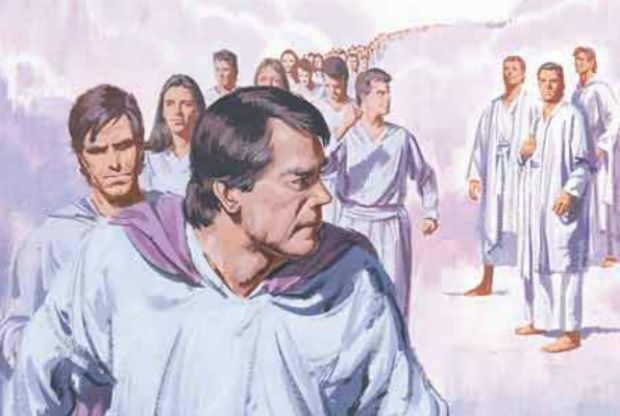
28 And the second was angry, and kept not his first estate; and, at that day, many followed after him.
In verse 24 – “one among them that was like unto God” – clearly refers to Jesus Christ. He is speaking to “those who were with him.” He goes on to talk about the first and second estates of man, of us. Verse 27 is where it gets important.
Verse 27 – The Lord (Jesus Christ) said, “Whom shall I send?” Note that Christ is following the same pattern He learned from His Father. “And one answered like unto the Son of Man.” This is Adam, the first man, or Michael as he was known in the premortal existence. Adam said, “Here am I, send me.”
Still in verse 27 – “And another answered and said: Here am I, send me.” – This will prove to be Satan.
“And the Lord said: I will send the first.”
Now the critical verse 28:
“And the second was angry, and kept not his first estate; and, at that day, many followed after him.”
So, it is clearly put forth here. I always thought Satan rebelled at Christ being chosen by the Father, and maybe he did in his heart. If you read Moses chapter 4 straight through that is how it seems. But when you read this story sequentially, we see what actually happened. Christ was chosen by the Father. Christ is essentially now leading the “project” under the direction of Heavenly Father. He is standing with others helping in the work. He follows the Father’s pattern and asks who will be the first man. Here Christ chooses Adam over Satan.
This adds a dimension to my understanding of Satan. A couple things of note. First, we know from the beginning Satan wanted the glory and wanted all of God’s children to return to heaven (see Moses 4:1). When he is passed over, he doesn’t openly rebel yet. When Christ is choosing who will be the first man, it’s possible Satan still saw a way to foil God’s plan and have all the honor given to him. He would go down as the first man and he would refuse to fall. If Satan went as the first man and refused to fall, man could never choose and therefore could never sin. If man couldn’t sin, there would be no need for a redeemer, there would be no choice, repentance, or progression. Satan would bring everyone back to heaven and in so doing destroy their agency. I think this was his plan.
Christ wisely chooses Adam to be the father of all and lead the human race into mortality.
It’s at this point we see Satan has had enough. He’s been passed over once by the Father. Now the one who took what he believed to be his rightful spot is choosing to pass him over as well.
Verse 28: “And the second (Satan) was angry, and kept not his first estate; and, at that day, many followed after him. – Emphasis added.
Here we see Satan’s rebellion. Here we see he leads “many” away. Before we continue with Satan’s story, I feel it’s important to remind you: Congratulations! If you’re reading this, you kept your first estate and are in the process of keeping your second estate. Keep it up and you’re promised to “have glory added upon (your) head for ever and ever” (Abraham 3:26).
Back to Satan.
Our story picks back up in Revelations chapter 12. I’ll be using the Joseph Smith Translation as it makes everything so much clearer.
The first part of Revelations 12:4 reads:
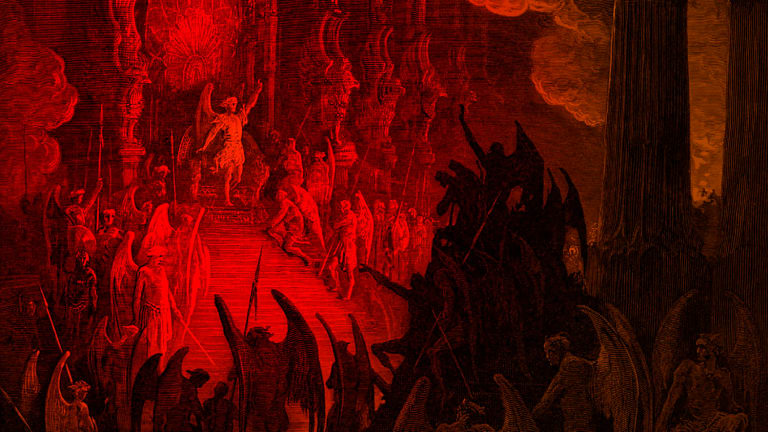
“And there appeared another sign in heaven; and behold, a great red dragon, having seven heads and ten horns, and seven crowns upon his heads. And his tail drew the third part of the stars of heaven, and did cast them to the earth.”
The great red dragon is obviously Satan, and here we see he drew away one third of the children of God after him. He and his followers were cast down to earth.
Revelations 12:6
“And there was war in heaven; Michael and his angels fought against the dragon; and the dragon and his angels fought against Michael;“
Michael (Adam) and his angels fought against Satan and his angels.
Verse 7 tells us that Michael and his angels (who might be us!?) prevailed.
Revelations 12:8
“Neither was there place found in heaven for the great dragon, who was cast out; that old serpent called the devil, and also called Satan, which deceiveth the whole world; he was cast out into the earth; and his angels were cast out with him.”
Here we see the official result. There was no more place found in heaven for Satan, his followers, and their rebellion against Christ, which meant rebellion against God. Satan’s plan was foiled. He was not chosen to be the redeemer of man and he was not chosen to be the first man where he could foil God’s Plan of Salvation. He was cast down, in bitterness.
In conclusion, it doesn’t appear Satan rebelled at the outset. He was conniving and always looking for another way to enslave us, God’s children. I mentioned it earlier but every person on this earth already chose Christ. We were not fooled by Satan. We are here.
How did Satan get one third to follow him? I think if we carefully consider this question we can come up with some likely possibilities. There were many in the premortal existence that maybe didn’t properly prepare for this life, our second estate. When the time came to be tested, those who didn’t prepare would be fearful. We knew that some would fail to reach the Celestial Kingdom, and those among the host of heaven who had not used their agency to prepare well for mortal life were likely cognizant of that fact. From there it would be easy for Satan to convince some that they would fail, and they should therefore follow him.
Secondly, I believe Satan’s focus in the premortal life would have been to doubt Jesus Christ and his ability to redeem us. I believe Satan would have told many that Christ would fail, and then what? They would all fail and never be able to return home. I believe Satan likely attacked Christ. This would also be an attack on the ability to repent. Satan would have told those who didn’t use their agency well premortally that they wouldn’t use their agency well in life, that they wouldn’t repent, and change, and improve, and would ultimately fail. It’s the same tactic Satan uses today.
I invite everyone to hold firmly in your heart, remember, you chose Christ already. You were valiant already. You were brave already. You may have already fought Satan in heaven with Michael. You won. You are still fighting Satan today and you can still win. Remember that he is the father of lies, and Christ is our salvation. Look to Christ, keep your faith in him, keep repenting, keep changing, keep looking to Christ and we will all return to Him again.
I know that Satan is never giving up, just like he never gave up in the premortal life. Just like in the premortal life we will prevail. We have Christ on our side. With Jesus Christ and Heavenly Father on our team, we cannot lose.

 No Coincidences