Tag: prophet

  • Books in 2020

    Books in 2020

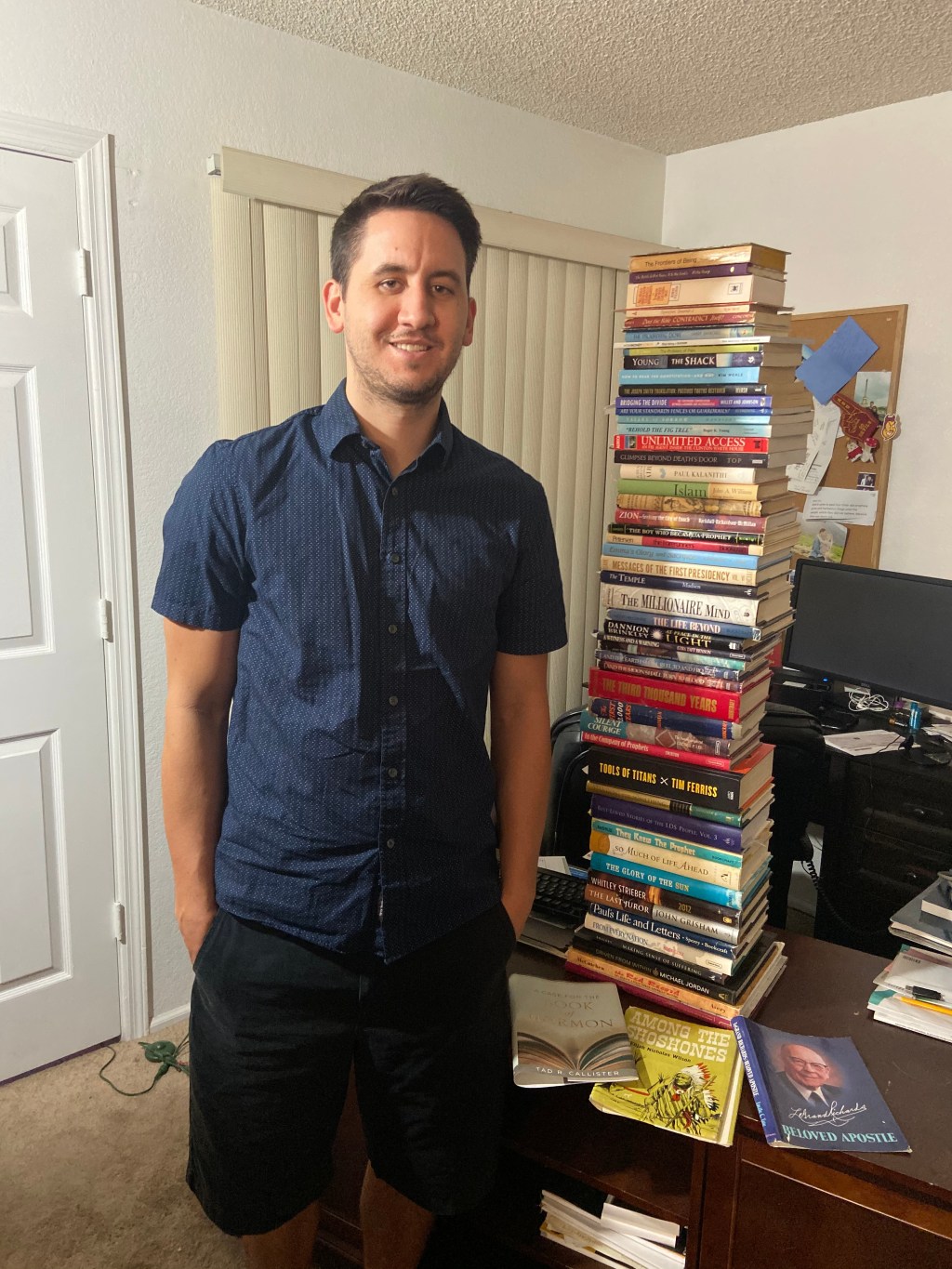
    This is a list of every book I read in 2020 and the order I ranked them in from favorite to least favorite.  I get something out of every book I read.  I learned long ago that if I allow myself to not finish one book, I won’t finish any.  For those reasons, when I start a book, I’m committed to finishing it.  I don’t care how dry or boring it may be.

    It was extremely difficult to rank these books.  For one, how do you rank nonfiction verse fiction?  Take a fictional John Grisham crime novel like The Last Juror and compare it to a nonfiction biography of the Prophet Joseph Smith for example.  How do you compare the two?  To avoid overthinking it I simply went through my list of books read and from what I remembered, put each on the list.  Every book’s placement on the list is from my initial remembering of how much I *enjoyed reading it.

                    *enjoyed for me is going to be vastly different from most people.  Precious Truths Restored, which was a top five favorite book of the year for me, is there because I learned so much from it and have referred to it constantly throughout the year since I finished it.  I doubt the average person would even get through it.  I loved it.

    I included a one sentence thought about each book.  This proved difficult because I could say so much about every book.  To get around the one sentence rule, I used many commas and run-on sentences. My list, my rules.

    I enjoyed all these books because they each taught me something. That’s the great thing about books.  Here’s my list:

    1. The First 2000 Years by Cleon Skousen
      • When I told a church-going friend I finished this book he looked at me incredulously, I guess my taste in books is unique.
    2. *A Case for the Book of Mormon by Tad R. Callister
      • This book will forever be my reference for a scholarly defense of the Book of Mormon.
    3. *The Mourning Dove by Larry Barkdull
      • I made Beth read this, super short, super memorable, loved this book.
    4. Tools of Titans by Tim Ferriss
      • I gained so much from this book, almost every one of the nearly 800 pages was marked, made me a Tim Ferriss fan for life. 
    5. The Joseph Smith Translation Precious Truths Restored by W. Jeffrey Marsh
      • Helped me tremendously in understanding the dangers of the different translations of the Bible, appreciating the Joseph Smith Translation of the Bible, and understanding how we have the various Bibles we have today.
    6. Bridging the Divide: The Continuing Conversation Between a Mormon and an Evangelical by Gregory C. V. Johnson and Robert L. Millet
      • Inspirational book of two people from different faiths finding joy in a discussion spanning many years that brings them both closer to God, reminded me of a relationship I have with a friend I enjoy discussing scripture with.
    7. *Best Loved Stories of the LDS People Vol 3 compiled by Jay A. Parry, Linda Ririe Gundry, Jack M. Lyon
      • The reason this ranked so high among so many other church history-esc books is I felt like I enjoyed a majority of the short stories, I gave it to my sister to read and she also enjoyed it.
    8. The Third Thousand Years by W. Cleon Skousen
      • This was the sequel to my favorite book of the year, it’s lower on the list because I feel like we generally know more about the third thousand years, so I felt like I got less out of it personally, still great though.
    9. *Among the Shoshones by Elijah Nicholas Wilson
      • Given to my sister-in-law to read, amazingly simple read that repeatedly had me saying out loud, “What the heck?”
    10. The Forerunners by Mark E. Petersen
      • This did a great job of explaining Joseph Smith’s role in the restoration and went into some detail about the pattern of forerunners being sent by God to start a great work on earth, John the Baptist and Joseph Smith being the most famous examples. 
    11. Return from Tomorrow by George G. Ritchie with Elizabeth Sherrill
      • One of the first ever Near-Death Experience books written, NDE books have a special place in my heart as it was an NDE book that helped me come back to church.
    12. The Red Record by David McCutchen
      • This was fascinating, it took legends of an ancient civilization you’ve never heard of, used oral records to go back thousands of years depicting their first legends of crossing an icy bridge to come to what would be the northern part of North America.
    13. And the Moon Shall Turn to Blood by Anthony E. Larson
      • This series of books blew my mind and led me to discussing it with people that didn’t have any interest discussing the topic, this fact instantly gets it higher on the list.
    14. And the Earth Shall Reel to and Fro by Anthony E. Larson
      • Part two to the above book, grouped the trilogy together on my list, these books use catastrophism as a basis of belief about what happened in the history of the world and what will happen in the future.
    15. And There Shall be a New Heaven and a New Earth by Anthony E. Larson
      • Part three of the trilogy, I enjoyed the first one the most and was slightly less interested as I got to the third book, but they were kind of like one book in three parts.
    16. All I need to Know I learned in Kindergarten by Robert Fulghum
      • A collection of short stories that were all extremely entertaining, quick and easy read.
    17. The Glory of the Sun by Sterling W. Sill
      • I love short anecdotes or stories which is why this is just below All I need to Know I Learned in Kindergarten because that’s one of the best books I’ve read that does that, this one did a good job as well on more spiritual and deep topics. 
    18. At Peace in the Light by Dannion Brinkley with Paul Perry
      • Another near-death experience book, I really want to read Dannion Brinkley’s first book Saved by the Light now.
    19. 2012 The War for Souls by Whitley Strieber
      • Awesomely creative book, so good I read it twice, no really, it wasn’t until the end that I realized I’d read 90% of the book years ago and never finished.
    20. How Money Works by Steve Siebold and Tom Mathews
      • A gift to me, I think this book advanced my knowledge of how money works ten fold, this should be required reading in high school.
    21. The Last Juror by John Grisham
      • Some authors have mastered how to get their readers to keep flipping pages no matter what, John Grisham is one of those writers.
    22. The Life Beyond by Joseph Fielding McConkie and Robert L. Millet
      • This book uses modern revelation to answer questions about what happens when we die, I’m amazed the world doesn’t flock to a book that answers the most important question in this life.
    23. Behold the Fig Tree by Roger K. Young
      • Any book that prepares me for what to expect leading up to the Millennium jumps up the list, see #13-15 for other examples.
    24. The Shack by William P. Young
      • Book turned popular motion picture, I may have liked the movie even more.
    25. Mama’s Boarding House by John D. Fitzgerald
      • A fictional account of an early settled western town, gun slinging stories have always fascinated me.
    26. Silent Courage by George P. Lee
      • A really good book was tainted when I learned what became of George P. Lee, was interesting reading about the life in a culture completely unique from my own.
    27. Millionaire Mind by Thomas J. Stanley
      • My only complaint about this book was the repetitiveness of points, though I still got a lot from it.
    28. They Knew the Prophet compiled by Hyrum L Andrus and Helen Mae Andrus
      • First-hand accounts about the prophet Joseph Smith from those who knew him.
    29. From Every Nation by Derin Head Rodriguez
      • Awesome book about the first foreign general authorities, amazing to see the distinct similarities a bunch of men from all over the world had that led to their growth in faith and devotion to Jesus Christ.
    30. How to Read the Constitution and Why by Kim Wehle
      • Should be required reading in any school, important for American students to understand the constitution better, especially now.
    31. Unlimited Access by Gary Aldrich
      • This book was interesting, an honest look from an FBI agent on the security of the white house while he was in charge of security at the white house.
    32. When Breath Becomes Air by Paul Kalanithi
      • A really neat look at life from someone who was experiencing his own mortality.
    33. Paul’s Life and Letters by Sidney B. Sperry
      • Made me understand the sacrifice of the Apostle Paul in a deeper way.
    34. The Boy who Became a Prophet by Mabel Harmer
      • Ranked on the lower end because I don’t remember a ton from it, though any book on Joseph Smith has proved rewarding.
    35. In the Company of Prophets by D. Arthur Haycock
      • An interesting view on modern-day prophets from the perspective of someone who knew them as well as anyone.
    36. Making Sense of Suffering by Peter Kreeft
      • Like #47 The Problem of Pain, except more at my reading level.
    37. It was on Fire when I sat on it by Robert Fulghum
      • Didn’t like nearly as much as #16, but still enjoyed a lot.
    38. *Translating the Anthon Transcript by Stan and Polly Johnson
      • Lowered due to the chance the information in the book wasn’t fully accurate/true, I very much enjoyed learning about this though, and gave to a friend to read.
    39. Zion Seeking the City of Enoch by Larry Barkdull
      • Larry Barkdull also wrote one of my favorite books of the year (#3), this was an awesome, fictional account of someone trying to join Enoch in the beginning stages of starting his perfected society. 
    40. Frontiers of Being by Duncan B. Blewett
      • Extremely deep and dense, some parts difficult to get through, used some of what I read in this book when officiating my sister’s wedding, fun fact, looked it up online and there’s a “new” copy for sale for $1,008.00.
    41. Valley of Sorrow by Alexander B. Morrison
      • Great book, taught me a lot, not a topic I know much about or am passionate about but definitely learned a lot and opened my mind to some different views on mental health.
    42. Glimpses Beyond Death’s Door by Brent Top
      • I think I struggled with feeling like I was reading an analysis of a bunch of other books that I actually wanted to read, this was surprising given my love for the topic, see #7 and #18.
    43. A witness and a Warning: Modern Day Prophet Testifies of the Book of Mormon by Ezra Taft Benson.
      • Since I already know the Book of Mormon is true this found me nodding my head in agreement throughout.
    44. *LeGrand Richards: Beloved Apostle by Lucile Christenson Tate
      • Gave to my brother to read, it’s inspiring to read about the life of someone with such spectacular faith. 
    45. The Temple: Where Heaven Meets Earth by Truman G. Madsen
      • Classic book teaching the importance of the temple.
    46. Standing for Something by Gordon B. Hinckley
      • Classic GBH.
    47. The Problem of Pain by C.S. Lewis
      • Was really excited for this book, quickly realized I wasn’t intellectually ready to read a philosophical book by C.S. Lewis.
    48. Driven from Within by Michael Jordan
      • Interesting look at Michael Jordan looking simultaneously at his basketball career and how it fueled his creative side which created a billion dollar shoe industry.
    49. Does the Bible Contradict Itself? by W. Arndt
      • A defense of the Bible, didn’t love reading cover to cover which the author kind of said not to do, but will possibly be a book I refer back to often in my life.
    50. Statements on Communism and the Constitution of the United States by David O. McKay
      • Don’t remember a ton about this, I know it was short, I mostly remember thinking, “they used to be extremely afraid of communism.”
    51. Hidden Treasures from the Scriptures: The Battle is not yours it is the Lord’ by Alisha Geary
      • Had an interesting theme about how to get through adversity, short book.
    52. Are Your Standards Fences or Guardrails? By John Bytheway
      • While it’s sort of silly I even read this as I was approaching 30, and I ranked it low, I actually got a lot out of it, especially useful as I was becoming a parent and thinking about the standards I’d like Ivy to have.
    53. Messages of the First Presidency Vol. 6 compiled by James R. Clark
      • I enjoyed it but it was dry, and the average person is not going to get through this book.
    54. Emma’s Glory and Sacrifice by Gracia N. Jones
      • Great book but kind of felt like the attempt to tie it to Emma was a stretch throughout simply due to how few records we have left behind in her own words.
    55. Islam by John A. Williams
      • Just really difficult to read without more of a foundation in the faith, felt like I constantly didn’t know enough to keep up with what was being discussed.
    56. So Much of Life Ahead by Dean Hughes
      • This was an OK book, but it was part 6 in a series and I just decided to read it.
    57. The Plain Truth about Christmas by Herbert W. Armstrong
      • Can’t believe I read this, best thing about it was how short it was, entertaining though I guess.

    *Recommended or gave this book to someone to read.

    Additional reading:

    1. Plan of Salvation pamphlet (should be read by everyone once a year to be reminded of why we’re here).
    2. Book of Mormon
    3. Doctrine & Covenants (Through Section 99)
    4. Old Testament (Finished Ezekiel)
    5. Come Follow Me lesson each week
  • Lectures on Faith – Lecture 2: The Object of Faith

    Lectures on Faith – Lecture 2: The Object of Faith

    A main theme throughout the Lectures on Faith is God’s perfect attributes.  Logically, for us to be able to have any faith in God He must be perfect.  We must know that we can trust God and, in turn, His Son, Jesus Christ. 

    The major theme I took away from Lecture 2 specifically is how we have attained faith throughout history.  Lecture 2 presents the profound idea that our faith in God is always dependent, or comes initially, from the faith of another.  Consider this, if no one in your life ever mentioned any sort of higher being, any sort of God, any sort of creator, would you come up with the thought on your own?  You think about God because He is someone we have been taught about since Adam.

    Even if your parents aren’t the ones who teach you about God, you learn about God from someone.  I would venture to say that in the world today every single person on the face of it has heard of the concept of a supreme being.  Why is this?  Where does our innate belief/consideration of God come from?

    Lecture 2 points out that there was an unbroken chain of testimony that started from Adam and was handed down through Abraham.  If you read Genesis carefully and do the math you will see that ancient prophets handed the knowledge of God down for generations.  It continues today.

    Adam knew God in the Garden of Eden.  When he left the Garden Adam still knew God.  We know Adam’s sons knew God.  Abel provided sacrifices to God.  Cain spoke to God even after murdering his brother.  This shows us that God spoke to men even after the fall and continued to speak to them as they continued to fall into transgression.  There is something significant here that I’d never considered.  Abel first got his knowledge of God from his father, Adam, as did Cain.  After they were told about God by Adam, then they had to develop their own faith in God.  They had to learn, trust, and depend on Him, or not. 

    The important thing to remember from this: we all start our faith by leaning on the faith of another.  We possess dependent faith.  This leads to another profound truth: God possesses independent faith.  God’s faith is not reliant on any outside source.  As discussed in lecture one, God’s faith is perfect.

    I’ve been studying the lectures alongside a video series that I will link at the bottom.  There were many amazing thoughts and ideas presented in that video, related to this second Lecture on Faith.

    Faith is faith until it happens, then it is knowledge. Since God has perfect faith, He doesn’t need to wait for something to happen for Him to know it.  He knows it is going to happen.  His faith is perfect therefore His knowledge is perfect.  It’s simple when you think about it in these terms, but it’s so critical.  It’s why we can have perfect faith in Him, BECAUSE we know His faith is perfect.

    IMPORTANT:  God is not still progressing.  This is important for us to understand.  God is not still learning.  If He was, we couldn’t have perfect faith in Him.

    God is Perfect - Ottawa Church of Christ

    This leads to a question: isn’t life boring for God if He has mastered everything?

    In the video they gave an awesome analogy.  Imagine you’re an accountant.  You master every aspect of accounting there is.  You have a perfect knowledge and ability in accounting.  Would you get bored with accounting?  Probably.  So, what would you then do?  You would teach others how to also master accounting.  God is the master accountant.  He has attained all knowledge on life, faith, eternity, creation – so what does He do?  He teaches us.  What a thought!  We are being tutored by the God of the universe.  That’s what makes this life so important.  When we consider that we are learning and being personally groomed by God Himself, what power it adds to our existence here!

    This leads to another important thought.  What was Christ’s ultimate message while here?  I think it would be service.  Love through service.  Give through service.  Charity.  Without charity you are nothing (1 Corinthians 13:2, Moroni 7:44)  Why did Christ teach this ever-important principle?  Because His Father, our Father, God is the ultimate server.  He is doing everything He does to teach us.  We truly are “His work and His glory” (Moses 1:39).

    I want to conclude with two last realizations: 

    1. The scriptures help develop our faith by teaching us of God.  This is important.
    2. Faith comes by hearing the word of God through the testimony of the servants of God, that testimony is always attended by the spirit.

    You aren’t told to have a testimony.  You’re not made to know Jesus is the Christ.  These are things you must come to a knowledge of through the spirit.  Think about it.  Christ, in His whole ministry, never told anyone He was the Son of God.  He always let them come to that conclusion on their own.  One example is Peter who He told, “blessed art thou for flesh and blood hath not revealed it unto thee, but my Father which is in heaven” (Matthew 16:17).   Another example is Christ to the woman at the well (John 4).  Christ didn’t go telling people who He was.  It had to be revealed by the spirit.  This is why signs come by faith, and not the other way around (D&C 63:7-12).

    Our hearts must be open for us to receive the testimony of Jesus Christ.  2 Nephi 33:1 “When a man speaketh by the power of the Holy Ghost the power of the Holy Ghost carrieth it UNTO the hearts of the children of men.”  Not INTO but UNTO.  It’s then on the heart of the individual to accept or reject the testimony.  The system is in place.  The system has been in place for God’s children to develop faith in Him from the beginning.  Once the testimony is carried to the heart It’s then on the agency of the individual to receive or reject that testimony. 

    God has perfect faith.  We are here to develop our faith so that we can be like Him.  He is the great accountant, and we are his protégés.  It is His hope, His glory that we can become like Him.  As we develop our faith here it will benefit us for the rest of eternity.  I know I say it a lot, but, what a thought.

    Video 3 (Lecture on Faith 2):  https://www.youtube.com/watch?v=F-o59d9ioGA&list=PLc5yYrpPFm2umksQf3jgULxoV4YIXTd2h&index=3

    Lecture on Faith 2: http://lecturesonfaith.com/2/

  • Listen, Learn, Love

    Listen, Learn, Love

    I recently listened to an episode from a podcast called Listen, Learn Love.  This podcast has opened up my ways of thinking on a few topics.  The episode I listened to recently I basically want to summarize (steal) because the points made are so simple, so well-said, and so true. 

    Here is a link to the website for the podcast if you want to learn more: https://www.listenlearnandlove.org/

    The episode I recently listened to that I’m writing thoughts on here is episode 2 and can be found if you search for podcast “Listen, Learn, and Love.”

    The podcast is hosted by Richard Ostler.  He is a former Young Single Adult Ward Bishop.  He has now done 334 episodes of his podcast which “was created out of the desire to better understand our LGBTQ+ brothers and sisters.  We believe in God and in His decree to love one another.” – from the mission statement on the website. 

    Episode 2 does not focus on the LGBTQ+ topic which I feel is an extremely important topic in the church.  Still, this episode is also important and I learned a lot from it.

    The topic was faith-crisis.  Whether minor or major, any faith crisis is difficult to go through.  When I was returning to church my uncle said something that has stuck with me.  He said he wouldn’t wish the losing of faith on his worst enemy.  You can lose cars, homes, family, money, everything in this world, but losing your faith is the hardest thing that a person can possibly go through.

    As I continue to write I will be presenting many ideas that came directly from Brother Ostler.  Please listen to the episode.  For ease of writing, I won’t reference Brother Ostler in everything I’ll continue to say. Just know most of these thoughts came directly from him, and I hope to re-state them without taking too much away from them.

    In my writing, I often refer to “The Church.” When I say this I am referring to the Church of Jesus Christ of Latter-day Saints.  Something I’d never considered is how important it is to clarify what we mean when we say, “The Church.” The Latter-day Saint Church could mean different things to different people.

    A couple categories for “The Church” are

    1. The Gospel of Jesus Christ.
      • This was described beautifully by Brother Ostler as a pristine, clear-watered pool.  No murkiness.  The Gospel of Jesus Christ is perfect in every way. This hasn’t been completely revealed yet.
    2. The restored Church of Jesus Christ.
      • It has the restored priesthood and priesthood keys. Ideally, this would be perfect.  I think we sometimes confuse this category with the next category I’ll mention.  The restored Church of Jesus Christ should be perfect.  The problem is, as we know, Christ must use fallible men and women to run His church.
    3. The institutional church.
      • This is where we get into a flawed organization. The institutional church has many people, programs, and policies that are meant to implement the Gospel of Jesus Christ.  The institutional church is run by men and women and therefore has flaws.  Christ guides the institutional church, but people make mistakes. Brother Ostler points out in the podcast that as a YSA Bishop he was a part of the institutional church and he knew he made mistakes as a Bishop, a leader in the church.

    Much of the hurt that comes into the souls of God’s children is caused by the institutional church.  It is critical to not confuse “The Church” the institution with the pure and perfect Gospel of Jesus Christ.

    A faith crisis is a serious event that can happen to anybody. You can’t always read and pray a faith crisis away.  We are here to develop faith and while here our faith will be tested.  Sometimes to the very brink.  It’s important to get our roots in the correct place.  Is your faith in a bishop?  It shouldn’t be, it should be in Jesus Christ.  The best bishop in the world can let you down.  Jesus Christ can not.

    The fourth article of faith: “We believe that the first principles and ordinances of the gospel are: FIRST, faith in the Lord Jesus Christ. 

    The Articles of Faith can be read here.  I invite everyone to read and focus on the first four articles of faith in the Restored Church of Jesus Christ.  You’ll notice not only is Jesus Christ’s name in the name of the Church, but that He is referenced three times in the first four articles. 

    Our foundation must be on Christ.

    Brother Ostler talked about the Policy Statement of 2015 and how it created a “mini faith crisis” for him.  These were changes made by the institutional church and have since been reversed.  He talked about how difficult that was for him, personally.  He is not the first person I’ve heard that was impacted in a sad, difficult way by those changes.  He emphasized that the brethren (leaders of the church) were doing their best.  Brother Ostler referred to dominoes, and how the policy statements started to make dominoes fall in his faith.  What saved Brother Ostler’s faith was that all his dominoes didn’t fall.  As he stated so perfectly, some of his dominoes had roots to the center of the earth and couldn’t be shaken.  He referenced Jesus Christ, priesthood blessings, and temples as the foundation of his faith.

    The 2015 Policy Statement is a good example of what separates the institutional church from the Gospel of Jesus Christ. The institutional church can and does make mistakes. Jesus Christ does not reverse. Jesus Christ does not change.

    We must change the way we discuss faith crises.  There are too many people who leave the church because they don’t feel heard.  The idea that you can read or pray away a faith crisis is inaccurate and often leads individuals to feel like the “Church” is avoiding their concerns.  We have to listen, as the Savior did, to those with concerns.  Ask questions.  Having a faith crisis does not mean someone is sinning.  It can mean that, but it doesn’t always.  Brother Ostler is a perfect example.  His self-described “mini faith crisis” came while he was a YSA bishop spending dozens of hours each week in service to others.  He was reading, praying, and serving as much as anyone could at that time.  Imagine telling a bishop he needs to pray more, or read more, or do more to fix your problem.  One could rightfully be turned off by this suggestion.

    We must stop considering a faith crisis as a dirty topic that we must avoid.  Thousands are having one at this moment.  Those with unshaken faith must support and lift those who have a hard time. We must address questions head on and strengthen our faith together. We must strengthen each other. We are family. The Gospel of Jesus Christ is meant for everyone. 

    Now I’d like to share some of my personal story.  I returned to church in 2016.  I narrowly missed being an active member of the church when the policy statements came out.  I know this was a hard time for the church.  I know many people left.  I know many people, like Brother Ostler, were shaken by the announcement. 

    I’ve often thought about my faith.  I feel fortunate and blessed to have never experienced a personal faith crisis.  Even in my time away from the church, I never doubted that Jesus Christ died for me.  I never doubted Joseph Smith was a prophet.  I never doubted the restored Church of Jesus Christ.  I never doubted the Church of Jesus Christ of Latter-day Saints.  While I was living completely opposite to some of the teachings the church, I still knew it was true.  I know I caused many head scratches from those who witnessed my verbal devotion while clearly ignoring all the precepts of the church.

    I said my faith has always been a blessing to me.  I believe it has.  When I was living opposite to the principles of the gospel it felt like a curse.  I’m sure I will need to answer for that one day.  If I knew it so much to be true, I believe I’ll be more accountable for my behavior.  Maybe that’s what gives me so much faith in Jesus Christ.  I know how important His Atonement is to me personally.  I have too many spots on my garments.  Without Him I am a damned soul. 

    Maybe that’s difficult for others who have never grievously sinned.  It’s easy to appreciate a lifeboat when you’re sinking in the ocean.  What if you’re safe on shore, do you still have the same appreciation for the lifeboat?  I’m not implying those who have lived just, kind, good lives start to finish are in anyway unappreciative of the sacrifice Jesus Christ made for them.  I’m truly amazed by those I see that have been faithful and true for all of their mortal journey.  I can only speak for myself.  I was not true for all of my journey and it makes me worship and love my Savior so intensely. 

    I wonder what would have happened if I was in church in 2015.  Would I have struggled?  Would I have left?

    I don’t know the answer to many questions.

    A book I read recently repeated the idea that we (humanity) know so much; space travel, geography, math, science.  Ask someone to give some thoughts about nature or history and everyone can provide some insight.  Ask someone to provide some thoughts about who they are, and they will struggle.  We often know and understand ourselves least of all the things in the world. I take comfort in knowing there are two individuals who know me infinitely better than I currently know myself.

    I want to give advice to anyone currently in a faith crisis.  Fight.  Don’t lose your faith.  Please.  It’s the most valuable thing on this earth.  You can lose your family, money, cars, your home, and you can lose your faith.  I hope we all fight for our faith.  Focus your faith on what is most important.  All your questions – ask them.  Doubt.  Wonder.  Have concern.  Voice your concerns.  But don’t forget where faith should lie.  Jesus Christ is the only name whereby men can be saved (Acts 4:12).

    Sometimes people will hurt, disappoint, or let you down. Sometimes those people may be leaders you trust. We all hurt and disappoint people we love. We must hope that we will receive mercy for the hurt we cause, and therefore should show mercy to those who hurt us. The great giver of all mercy is Jesus Christ. He loves each of us. He wants each of us to do whatever we can to come closer to Him. Stay close to Him and He will never let you down.

    Find those experiences in your memory that remind you that Jesus Christ guides His church.  Read the Book of Mormon and ask yourself if it could be false.  Then ask yourself, if it is false, how can it so perfectly testify of Jesus Christ?

    Find your foundation in sure things.  The pure faith in Christ.  Then fight for that faith.  We hope the Church of Jesus Christ of Latter-day Saints can be a faith building organization for all.  We hope that the covenants we make can strengthen our faith and the faith of those around us.  But at all costs, do not mix the pure, perfect, pristine waters of the Gospel of Jesus Christ with the sometimes-murky institution run by us here on earth.

  • Faith and Signs

    Faith and Signs

    3 Nephi chapter 2 is a fascinating and important part of the Book of Mormon.  It’s especially important to our day.  There’s a chance our moment in history could be parallel to this time in the Book of Mormon record.

    The start of chapter 2 tells us that despite many signs, wonders, and prophesied events coming about, the people continued to harden their hearts and scoff at the idea of a being like Jesus Christ, the Son of God, ever visiting them.   

    Verse 8 reads:

    “Now the Nephites began to reckon their time from this period when the sign was given, or from the coming of Christ; therefore, nine years had passed away.”

    There are two important points I want to make here.

    First, many miraculous signs happened.  This resulted in an extremely short-lived conversion. 

    3 Nephi 1:22 in part reads:

    “the more part of the people did believe, and were converted unto the Lord.”

    A mere 3 years (3 years!) and we have 3 Nephi 2:1:

    “the people began to forget those signs and wonders which they had heard, and began to be less and less astonished at a sign or a wonder from heaven, insomuch that they began to be hard in their hearts, and blind in their minds..”

    We see here how an outward sign can have a bolstering effect on faith, but ultimately signs create temporary faith.  The people didn’t do the necessary work to grow, strengthen, and develop their faith.  Within 3 years those signs were a distant memory.  Their day to day deeds and thoughts were what shaped them.  Those who continued to pray, look for Christ, and study the words of the prophets looked forward to a miraculous day.  Those who saw a sign and only momentarily changed their thinking or habits soon fell back into their disbelieving and hard-hearted ways.

    Terrance Szink says, “the conversion was the result of an outward sign and required no work on the part of the people.  They had seen the sign but, for the most part, they did not sustain their faith.”

    Faith must be practiced daily. If not, it will die like a flower without water.  We are entering a time just like this time in the Book of Mormon.  We are entering a time when signs will become common.  Miraculous events will happen around us.  How many around us will harden their hearts and not see what is right in front of them? 

    There will come a time when Biblical prophesies will start to be more obvious.  There are already signs around us that have been prophesied for centuries.  These signs will become more obvious.  This will only temporarily make people look to God, if it does at all.  Soon people will scoff at believers. People will speak of science and coincidence.  Many will say Christ is not coming because He doesn’t come in their expected timing.  Christ will come exactly when He intends to.

    The second point I want to make is more just an interesting thought.

    How funny is it that a vast majority of the people in the Book of Mormon quickly forgot the signs they’d seen? Yet, as a whole, the people changed how they kept track of time.  They started to speak of years in terms of the time since the sign appeared.  How ironic is that?  These people that didn’t believe the sign still acknowledged it was important enough that they changed how they tracked time.

    It’s reminiscent of today.  As a society we use the year 2020 as the time since Christ’s birth.  Yet, how many people among us today don’t even believe in Jesus Christ?  How many don’t believe He was the Son of God? He was important enough for us to mark our calendar by Him but not important enough to actually believe in Him.

    I believe many will have to answer for this hypocrisy one day.  The signs of Christ are obvious.  The impact He had on the world are so profound, and yet many still deny.  One day we will all have to stand before God and either accept Jesus Christ as our Savior, or reject Him.  I hope on that day our hearts are not hardened and we don’t deny the grace and love that will be right before us.

  • Lectures on Faith

    Lectures on Faith

    Lectures on Faith – Introduction and Lecture 1: Faith Defined.

    I’ve been watching a series of videos on the Lectures on Faith as supplemental material to my study of the Lectures.

    If you’re not familiar with the lectures on faith, you can read them all here:

    https://lecturesonfaith.com/

    It’s unclear who officially wrote the Lectures on Faith, though they were approved of and taught by Joseph Smith.  At a minimum, the concepts and theology of them comes from revelation given to Joseph Smith.  Yet another example and evidence of his calling as a prophet.

    I write here my notes and thoughts on these videos and the lectures.  There are seven Lectures.  The 10 video series I’ve been watching spans almost 5 hours and reviews each of the Lectures.  In writing this it will help me put together my thoughts and understanding on what Joseph Smith tried to teach us about faith.  Through this process I know my faith will grow by studying these principles.  What Joseph Smith taught about faith is beyond profound, it is revelatory. I will need to study his words and all supplemental material for the rest of my life to get a grasp of the profound and eternal nature of faith.  I look forward to reading over my notes here many times to refresh my mind and expand my knowledge on the subject.

    Video 1 was an introduction to the Lectures.  Video 2 was all about Lecture 1 – Faith Defined. 

    First, what are the Lectures on Faith?  They are principles put together by Joseph Smith to help early elders to share the gospel.

    What do the seven lectures cover? (from Video 1)

    Lecture 1 What is faith?

    Lecture 2 Links the principles of faith and the doctrine of revelation.  The power of human testimony is the medium with which the gospel is passed from generation to generation.

    Lectures 3 and 4 The character and attributes of God.  If we don’t understand the attributes of God, we can’t have confidence to exercise proper faith in Him.

    Lecture 5 The Godhead, nature of the members of the Godhead.

    Lecture 6 The Law of Sacrifice.

    Lecture 7 The fruits of faith.

    What is the plan for the Lectures on Faith?

    1. Teach what faith is.
    2. Teach how to obtain faith.
    3. What happens if you obtain faith?
    Lectures on Faith: The Exalted Nature of the Godhead (Part ...
    Bob Millet

    My favorite part from the first video was this suggestion from Bob Millet, one of the panelists. His suggestion was this: read the Lectures on Faith 20 times then you can start to study them.

    Now that I have an overview on what all 7 lectures will cover and teach, I can get into Lecture 1.

    Lecture 1: Faith Defined

    Obvious question to start, what is faith?

    Faith is the first principle in revealed religion and the foundation of righteousness.  Faith is the substance of things hoped for but not seen (Hebrews 11:1).  The lecture starts broad – faith is the belief that something will come to pass.  Then it gets more religious in tone: “the principle of action in all intelligent beings.”

    Faith is a principle of action.  Faith implies works, it implies activity, both physical and mental.  Just as faith is the moving action in all things temporal, so it is with spiritual (paragraph 12). 

    By faith God formed the earth.  I think this is the most profound point from Lecture 1.  That it is God’s faith that is His power.  Take faith from God and He would cease to exist (paragraph 16).  I know to many this seems like outright blasphemy.  But before rejecting the idea without thought, consider what is being said.  Faith is a principle of power.  It is the power by which God formed the earth.  Take away His faith, take away His power, He ceases to be God.  Luckily for us God’s power cannot be taken away.

    God’s faith and knowledge are equivalent.  It is God’s perfect faith that allows His perfect knowledge.  Consider: faith is believing in something that you haven’t yet seen.  Since God’s faith is perfect what He has faith in will be, it will exist.  We mortals look at faith as weak, unproven, unscientific.  It is God’s trust in the Plan of Salvation that makes Him create worlds. It is God’s perfect faith that created those worlds. It is God’s perfect faith that makes Him the Almighty.

    Again, faith is the power of God.  If faith is that important, it adds a whole new meaning, explanation, and understanding to this life.  Why do we move through life as if through a misty darkness, unsure of everything?  Why the veil that covers our eyes and fogs our minds to so much that we used to know?  Why don’t we know where we come from?  Why don’t we know where we’re going?  Why doesn’t God send angels down to tell us which church is true?  Why doesn’t God allow profound miracles to occur before unbelievers’ eyes so they can KNOW that He exists?  The reason God doesn’t do these things is due to the importance of faith.  We are here to learn faith, develop faith, grow faith; because it is that important.  God does not want to take that opportunity of growth and development away from us.  He won’t.  He knows how critical it is.

    Faith, then, is the first great governing principle which has power, dominion, and authority over all things: by it they exist, by it they are upheld, by it they are changed, or by it they remain, agreeably to the will of God.  Without it, there is no power, and without power there could be no creation, nor existence!” (Paragraph 24).

    Link to Lecture 1: https://lecturesonfaith.com/1/

    Link to Video 1 An Introduction on the Lectures: https://www.youtube.com/watch?v=MiV4dCY9OEA&list=PLc5yYrpPFm2umksQf3jgULxoV4YIXTd2h&index=1

    Link to Video 2 What is faith?: https://www.youtube.com/watch?v=S_EXFQK-KJE&list=PLc5yYrpPFm2umksQf3jgULxoV4YIXTd2h&index=2