Tag: prophets

  • Chosen by God

    Chosen by God

    I had a thought that never occurred to me before while reading Doctrine and Covenants 138, as obvious as this thought is.

    I believe it’s correct that some of the ancient prophets, Adam down to Joseph Smith and beyond, have resurrected bodies and are in heaven teaching. For some reason I’d only ever thought about them teaching those who had already been on earth and died. For the first time it occurred to me that they might also be teaching those who haven’t come to earth yet.

    This seems to be affirmed by the words of modern prophets, from Doctrine and Covenants Student Manuals:

    “President Joseph F. Smith was shown that many choice servants of this dispensation were also among those noble spirits. The Lord held them in the spirit world where they were taught and prepared to come forth and lay the foundations of His latter-day work. The Prophet Joseph Smith once said that “every man who has a calling to minister to the inhabitants of the world was ordained to that very purpose in the Grand Council of heaven before this world was” (Teachings, p 365).

    “President (Joseph F.) Smith also observed that, in addition to these leaders, there were “many others” who “received their first lessons in the world of spirits and were prepared to come forth in the due time of the Lord to labor in his vineyard for the salvation of the souls of men” (D&C 138:56). This refers to the doctrine of foreordination, which teaches that “in the premortal spirit world, God appointed certain spirits to fulfill specific missions during their mortal lives. … Foreordination does not guarantee that individuals will receive certain callings or responsibilities. Such opportunities come in this life as a result of the righteous exercise of agency, just as foreordination came as a result of righteousness in the premortal existence.”

    “President Russell M. Nelson taught: “Your spirit is an eternal entity. … Your Heavenly Father has known you for a very long time. You, as His son or daughter, were chosen by Him to come to earth at this precise time, to be a leader in His great work on earth. You were chosen not for your bodily characteristics but for your spiritual attributes, such as bravery, courage, integrity of heart, a thirst for truth, a hunger for wisdom, and a desire to serve others. You developed some of these attributes premortally. Others you can develop on earth as you persistently seek them.”

    These are things I’ve known, and thought about, but an encouraging and empowering reminder when the world fights back so aggressively against spiritual things.

    We were chosen before we came. We were potentially tutored by the very greatest prophets and teachers the world has ever seen. The tutoring from great prophets pales in comparison to the reminder that we were chosen by God, the eternal Father. God of Heaven and Earth. Creator of all things. When we remember He chose us for a purpose, and we’re on the Earth now for that purpose, the oppositions of the world should seem silly.

    If I was lucky enough to receive training from a great prophet and was chosen by God before coming here, anything is possible.

  • Agency and Mistakes: Was Brigham Young Wrong?

    Agency and Mistakes: Was Brigham Young Wrong?

    Let’s start with an assumption.

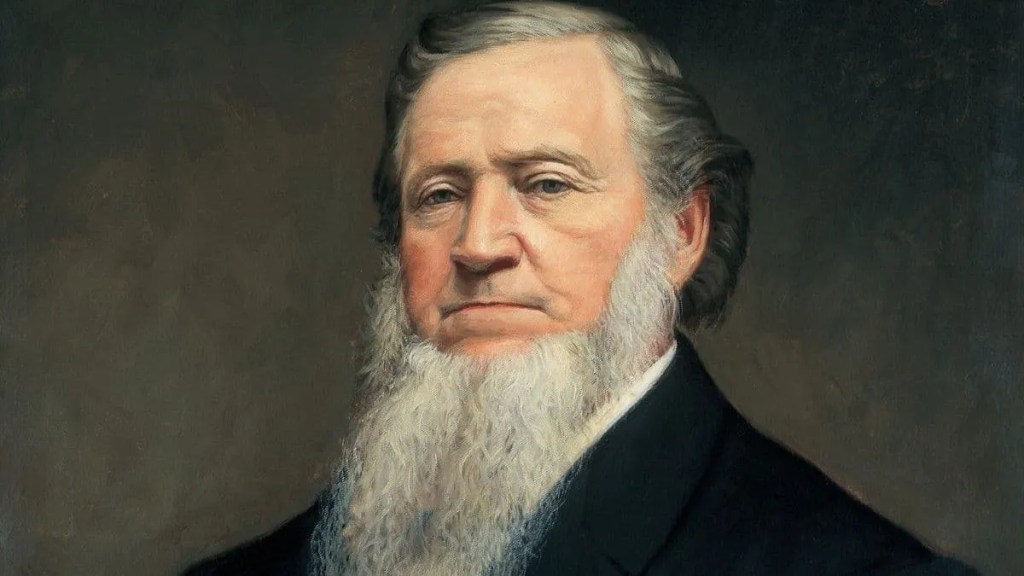
    What if Brigham Young incorrectly instituted the practice of the priesthood ban for black people?

    We always think in this way that God can do anything, however He wants to. Why didn’t He fix the priesthood ban for blacks issue immediately after Brigham Young if it was in fact a mistake by Brigham Young?

    We sometimes neglect to think that, if God were to fix things however He wants to, that would likely supersede our agency. This whole life is about us making choices. It would be a problem if God started correcting everything on this earth, especially with our many mistakes and shortcomings as mortals. It was never in God’s plan to supersede our agency, that was Lucifer’s plan.

    But let’s take a bigger perspective on this.

    What if God did correct this issue of black men not receiving the priesthood in the 1800s and early 1900s? What if He corrected it an eternity ago, when He created the Plan? God’s plan is perfect. God doesn’t always fix things the way we think He should fix things. In fact, He probably never fixes things the way we think they should be fixed. That’s what makes Him God and us tiny mortals trying with all our might to be like Him, but inevitably falling short.

    God’s Plan was established well before black men were denied the priesthood through Earth’s late 19th and early 20th centuries. His plan allows all those who would have faithfully accepted the priesthood while in this life to lose out on nothing. This is in precisely the same way His plan accounts for His countless children who didn’t have access to the saving ordinances of the Gospel in life, whether that be due to the gospel not being present on earth, never hearing about it, or a child dying before reaching the age of accountability. God’s plan is perfect. He’s already thought it through. I assume those who have an issue with the delay in the Church allowing black men to have the priesthood also have an issue with the tens of millions of infant deaths each year. In that case, your issue is with your faith in God, not in any church policy.

    I understand that these things are hard to understand while here. Some reading this may respond, “Yes, that’s precisely the issue I have: That many noble and worthy men weren’t allowed the priesthood and the millions of innocent children that die unfairly.” I understand this challenge. This is where faith comes in. I have faith in God, His Plan, His love, and that He will make all these things we don’t understand right. If we don’t have faith in those things, then yes, God is a monster that we should not worship. The God I know loves us and one day all these things will be understood.

    Something to us, here, simple and short-minded on earth, that looks like a huge mistake – it’s not a mistake to God. All those who couldn’t get the priesthood due to an incorrect policy will receive it.

    What if Brigham Young did make a mistake and what if the Church really would have collapsed if that mistake was corrected in the 1860s? THEN God’s church wouldn’t be on the earth. That seems like a real mistake. Again, God has thought these things through.

    We have an example of this principle in the policy change instituted by Wilford Woodruff banning plural marriage. In Official Declaration 1 of 1890, now in the Doctrine and Covenants, Wilford Woodruff says,

    “The question is this: Which is the wisest course for the Latter-day Saints to pursue—to continue to attempt to practice plural marriage, with the laws of the nation against it and the opposition of sixty millions of people, and at the cost of the confiscation and loss of all the Temples, and the stopping of all the ordinances therein, both for the living and the dead, and the imprisonment of the First Presidency and Twelve and the heads of families in the Church, and the confiscation of personal property of the people (all of which of themselves would stop the practice); or, after doing and suffering what we have through our adherence to this principle to cease the practice and submit to the law, and through doing so leave the Prophets, Apostles and fathers at home, so that they can instruct the people and attend to the duties of the Church, and also leave the Temples in the hands of the Saints, so that they can attend to the ordinances of the Gospel, both for the living and the dead?

    “The Lord showed me by vision and revelation exactly what would take place if we did not stop this practice. If we had not stopped it, you would have had no use for … any of the men in this temple at Logan; for all ordinances would be stopped throughout the land of Zion. Confusion would reign throughout Israel, and many men would be made prisoners. This trouble would have come upon the whole Church, and we should have been compelled to stop the practice. Now, the question is, whether it should be stopped in this manner, or in the way the Lord has manifested to us, and leave our Prophets and Apostles and fathers free men, and the temples in the hands of the people, so that the dead may be redeemed.”

    Sometimes we live with this thinking that God can do whatever so why doesn’t He? This, I think, is the basis of so many losing faith in Him. I look forward to the day when we are all reminded that we came to earth willingly, that we knew the Plan, and that we were eternally grateful for the opportunity to have freedom of choice and to learn right from wrong, away from Him (God), where it was completely up to us to make choices.

    Again, we fall into this thinking, I think, that God can do anything He wants however He wants. Maybe. But God still works through us. God still gives us our agency. God still lives by laws. God said He allows plural marriage in the case where he wants to raise a righteous generation unto Himself (Jacob 2). What would we have had God do if He needed to grow the church membership in one generation? Import a couple hundred thousand men and women from space? The answer is – God works with us. He works within the world He has given us.

    God allows us the bounds to make mistakes. Within those mistakes, God’s Plan works. I have faith in the truth of that. God takes our worst, and it becomes part of the Plan. He prefers our best, but He knows us better than we know ourselves.

    On the question of if Brigham Young did make a mistake – again, maybe the answer is yes, but I will refer again to the Official Declaration 1 – this was Wilford Woodruff speaking, “The Lord will never permit me or any other man who stands as President of this Church to lead you astray. It is not in the programme. It is not in the mind of God” (emphasis added).

    It is not in the program. It is not in the mind of God.  

    I believe in giving God all the power we actually try to take away from His power. God doesn’t watch things unfold her and go, “Oh crap, I need a righteous generation, let’s implement polygamy.”  Or, “Oh man, Brigham isn’t listening, this is bad.” This was worked out long ago. Just because we don’t like the way God did things makes it all the more likely He did it perfectly, because we are dumb, and so limited in our view. We cannot comprehend the workings of God.

    Did Brigham Young make a mistake? I don’t know.

    I know who didn’t make a mistake. That’s where I put my faith.

  • Infant baptisms, Salvation, and the Atonement of Jesus Christ

    Infant baptisms, Salvation, and the Atonement of Jesus Christ

    One of the great fallacies of Christian belief is what happens to people who die without being baptized, especially those who never, in mortal life, had an opportunity to be baptized.

    The Church of Jesus Christ of Latter-day Saints is sometimes accused of diminishing God through the beliefs He has revealed to us. For example, the idea that we can become like Him. Other Christian sects look at this as some sort of disrespect towards God. Like us trying to be like our Father is an insult to Him. We’re similarly criticized for diminishing Christ’s Atonement in the faith and works discussion.

    What of children who die without baptism? How many children have died without the opportunity to be baptized?

    We’re criticized for diminishing Christ’s Atonement.

    What’s more disrespectful to the price Christ paid for ALL of us than saying Christ’s Atonement doesn’t cover the billions of people – billions of babies and children, that have died without baptism? What a corrupt and sad view of the Atonement of Jesus Christ to say that it doesn’t protect innocent children who never could be baptized. He died for all of us.

    So, I would like to share beautiful truths as revealed by God to his prophets in this dispensation that pertain to little children, salvation, the resurrection, and Christ’s Atonement.

    The following are some frequently asked questions concerning the status of children who die before the age of accountability.

    Are they automatically saved? 

    Elder Bruce R. McConkie wrote: “To this question the answer is a thunderous yes, which echoes and re-echoes from one end of heaven to the other. Jesus taught it to his disciples. Mormon said it over and over again. Many of the prophets have spoken about it, and it is implicit in the whole plan of salvation. If it were not so the redemption would not be infinite in its application. And so, as we would expect, Joseph Smith’s Vision of the Celestial Kingdom contains this statement: ‘And I also beheld that all children who die before they arrive at the years of accountability are saved in the celestial kingdom of heaven.’ [D&C 137:10.]

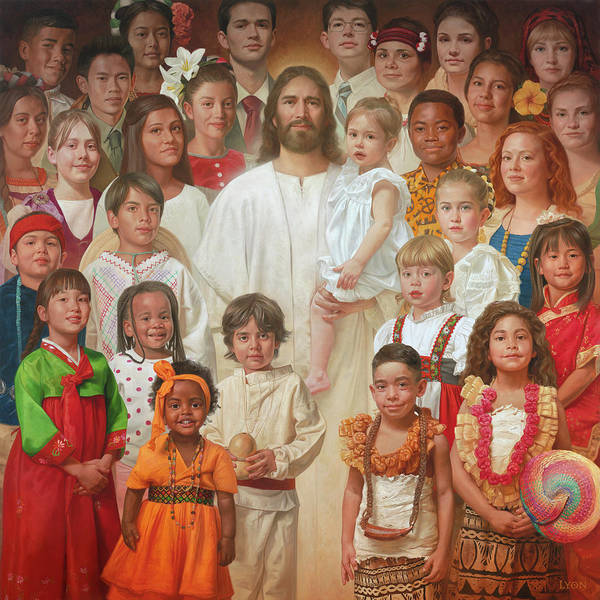
    “It is sometimes asked if this applies to children of all races, and of course the answer is that when the revelation says all children it means all children. There is no restriction as to race, kindred, or tongue. Little children are little children and they are all alive in Christ, and all are saved by him, through and because of the atonement. …

    “They are saved through the atonement and because they are free from sin. They come from God in purity; no sin or taint attaches to them in this life; and they return in purity to their Maker. Accountable persons must become pure through repentance and baptism and obedience. Those who are not accountable for sins never fall spiritually and need not be redeemed from a spiritual fall which they never experienced. Hence the expression that little children are alive in Christ.…

    “Truly it is one of the sweetest and most soul-satisfying doctrines of the gospel! It is also one of the great evidences of the divine mission of the Prophet Joseph Smith. In his day the fiery evangelists of Christendom were thundering from their pulpits that the road to hell is paved with the skulls of infants not a span long because careless parents had neglected to have their offspring baptized. Joseph Smith’s statements, as recorded in the Book of Mormon and latter-day revelation, came as a refreshing breeze of pure truth: little children shall be saved. Thanks be to God for the revelations of his mind where these innocent and pure souls are concerned!” (“The Salvation of Little Children,” Ensign, Apr. 1977, pp. 4, 7.)

    Even though little children will be saved, does that mean they will have eternal life?

    Elder McConkie explained: “Eternal life is life in the highest heaven of the celestial world; it is exaltation; it is the name of the kind of life God lives. It consists of a continuation of the family unity in eternity. … children will be saved in the celestial kingdom. Salvation means eternal life; the two terms are synonymous; they mean exactly the same thing. Joseph Smith said, ‘Salvation consists in the glory, authority, majesty, power and dominion which Jehovah possesses and in nothing else.’ (Lectures on Faith, pp. 63–67.) We have come to speak of this salvation as exaltation—which it is—but all of the scriptures in all of the standard works call it salvation. I know of only three passages in all our scriptures which use salvation to mean something other and less than exaltation.” (“Salvation of Little Children,” p. 5.)

    President Joseph Fielding Smith added:

    “The Lord will grant unto these children the privilege of all the sealing blessings which pertain to the exaltation.

    “We were all mature spirits before we were born, and the bodies of little children will grow after the resurrection to the full stature of the spirit, and all the blessings will be theirs through their obedience, the same as if they had lived to maturity and received them on the earth.

    “The Lord is just and will not deprive any person of a blessing, simply because he dies before that blessing can be received. It would be manifestly unfair to deprive a little child of the privilege of receiving all the blessings of exaltation in the world to come simply because it died in infancy.…

    “Children who die in childhood will not be deprived of any blessing. When they grow, after the resurrection, to the full maturity of the spirit, they will be entitled to all the blessings which they would have been entitled to had they been privileged to tarry here and receive them.” (Doctrines of Salvation, 2:54; see also Mosiah 15:25.)

    Why do some children die and others live? Are those who die better off than those who remain in mortality?

    Elder McConkie wrote:

    “We may rest assured that all things are controlled and governed by Him whose spirit children we are. He knows the end from the beginning, and he provides for each of us the testings and trials which He knows we need. President Joseph Fielding Smith once told me that we must assume that the Lord knows and arranges beforehand who shall be taken in infancy and who shall remain on earth to undergo whatever tests are needed in their cases. This accords with Joseph Smith’s statement: ‘The Lord takes many away, even in infancy, that they may escape the envy of man, and the sorrows and evils of this present world; they were too pure, too lovely, to live on earth.’ (Teachings, pp. 196–97.) It is implicit in the whole scheme of things that those of us who have arrived at the years of accountability need the tests and trials to which we are subject and that our problem is to overcome the world and attain that spotless and pure state which little children already possess.” (“Salvation of Little Children,” p. 6.)

    Will children who die before the years of accountability ever be tested in the way that other mortals are tested? 

    President Joseph Fielding Smith said: “Satan cannot tempt little children in this life, nor in the spirit world, nor after their resurrection. Little children who die before reaching the years of accountability will not be tempted.” (Doctrines of Salvation, 2:57; see also D&C 29:4745:58.)

    What will happen to children in the Resurrection?

    President Joseph F. Smith wrote: “Joseph Smith taught the doctrine that the infant child that was laid away in death would come up in the resurrection as a child; and, pointing to the mother of a lifeless child, he said to her: ‘You will have the joy, the pleasure, and satisfaction of nurturing this child, after its resurrection, until it reaches the full stature of its spirit.’ There is restitution, there is growth, there is development, after the resurrection from death. I love this truth. It speaks volumes of happiness, of joy and gratitude to my soul. Thank the Lord he has revealed these principles to us.” (Gospel Doctrine, pp. 455–56.)

    Thank the Lord He has revealed these principles to us. Amen.

  • What do we believe in?

    What do we believe in?

    My Aunt Lindsey often asks the question, “What do you know?” I usually respond, “Not much.”

    What do we really know? Anything?

    While reading Mosiah chapter 26, I came across an interesting commentary from Hugh Nibley, one of my favorite scholars. The commentary was on Mosiah 26:15 which reads:

    “Blessed art thou, Alma, and blessed are they who were baptized in the waters of Mormon. Thou art blessed because of thy exceeding faith in the words alone of my servant Abinadi” (emphasis added).

    In considering that phrase, “in the words alone of Abinadi”, Hugh Nibley asks, “Now what about childish faith? What about being gullible, etc.? Alma believed in the “words alone”? Alma saw no evidence, no proof, or anything like that? And it wasn’t the words of God; it was the words of Abinadi alone that he believed in? What’s going on here? Why is there merit in this?”

    He continues, “There is merit because Alma believed in his words alone. I would emphasize his. You are blessed because of the things you choose to believe-not by the act of believing, not just by faith. You weren’t blessed because you believed, but because you chose what to believe. Everybody chooses what to believe. The atheist is a very strong believer. He is the most passionate arguer you can possibly find, and the positivist. Where will you find greater faith and firm conviction than among economists? . . . You must believe in something, and everybody does. But the Lord said, blessed are you [Alma] because of the things you chose to believe; you chose to believe in the things that Abinadi taught.”

    I’ve written before about The Faith of an Atheist.

    What do we believe in?

    This is an interesting statement by Hugh Nibley. The idea that it isn’t our faith that is important. Everyone has faith in something. It is what we have faith in. What do we choose to believe? Do we choose to believe that this is all one dumb coincidence and we’re all here for no real reason? Or do we believe in a Savior who redeems us, a Father who loves us, and an eternity of potential?

    Like a lot of things, it’s really about agency. What do we choose to believe in? Alma chose to believe in something good, hopeful, eternal.

    People who leave the church – are they better for it? This is going to upset some people. But in my opinion, no, people aren’t better for leaving the Church. That’s not absolute, of course. Some who leave the church still donate constantly to good causes, serve others, love others, and use their time in helping others. More often than not, I don’t think that’s the case.

    Many who leave the church, instead of turning their focus to good, hopeful, and helpful things, spend the rest of their lives trying to bash, destroy, and talk negatively about the church. Why is that? If leaving the Church of Jesus Christ is a good thing, why doesn’t more good come from it instead of more negativity? Why is tearing down something, whatever your feelings on it, that brings others hope and joy, a good result?

    Is it easy to be a member of the Church of Jesus Christ? With the number of people my age deciding they don’t care for the Church, or any church, I’d say membership in the Church of Jesus Christ is not super easy. A lot of people say, “The church doesn’t do anything for me.” The Church isn’t about what it can do for you. It’s about what you can do for others. When you leave the Church, what do you do for others?

    Leaving the Church is complicated. I’m not trying to oversimplify it too much. But what I think gets lost sometimes is that leaving the Church is often a selfish choice. At least it was for me. I don’t want to have to get up early for church on Sunday. I don’t want to use my Saturday morning helping an elderly person move their belongings. I want to drink. I don’t have time for a church calling like teaching a class, working with the youth, or organizing group activities. I definitely don’t have time for ministering. Yeah, checking on a couple people every so often to make sure they’re doing OK, and really help them if they say they need something, don’t have time for that. I don’t want to pay 10% of what I earn anymore. The list goes on. Someone leaving the Church NEVER thinks this way (or won’t admit it). It’s about historicity or “what they feel” or feeling lied to or CES letter blah blah. I’m not trying to say that those things can’t be hard for people. They are, and I understand that. But often, it comes back to I, when the Church’s main goal is to help us see outside of ourselves.

    Now let’s be clear. Simply going to church isn’t enough. There are plenty of people who go to church on Sunday, leave, and call themselves stalwart disciples of Christ. You may be worse off than the nonbeliever in that case. It may be worse to believe and turn away the sick and needy than to choose not to believe.

    Does some small historical question, or some big historical question, distract you from a plan called “the Plan of Happiness”? Do you choose to worry about a statement by Brigham Young or some question about Joseph Smith? Do you disregard the miraculous book that was written, the testimony of a Savior of the world, an account of that Savior visiting His children in America? Do you ignore the hopeful and positive miracles because you have doubts?

    What do you choose to believe in?

  • Talk – How can I show faith in Jesus Christ more in my daily life?

    Talk – How can I show faith in Jesus Christ more in my daily life?

    I recently shared Beth’s amazing talk given on the natural man being an enemy to God. That can be read by clicking HERE.

    The following week I was asked to give a talk on the topic, “how can I show faith in Jesus Christ more in my daily life?” I thought I’d share that as well. My written talk was more of an outline, but here were my notes.

    Introduction

    Good morning!

    If you were here last week then you saw my wife already introduce us when she spoke.  For those that weren’t here, I am Brayden Quackenbush.  My wife goes by Beth, and we have a 1-year-old daughter named Ivy.

    Brother Patterson commented after Beth spoke last week, quote “Clearly you, like me, have married up.”  So of course, the Bishopric has asked me to speak today, more likely for you to see that principle of marrying up in action for yourself as opposed to any spiritual enlightenment I am meant to impart.  I hope along with demonstrating the marrying up principle, my talk can also provide some uplifting spiritual content for you today.

    Topic – faith

    The topic I was asked to speak on today is, “How can I show faith in Jesus Christ more in my daily life?”

    Let’s start with the what.  What is faith?

    Hebrews 11:1 – Now faith is the substance of things hoped for, the evidence of things not seen.

    Elder Dallin H. Oaks said QUOTE: “‘Faith without works is dead.’ But ‘Works without faith is even deader.’”

    How do we increase our faith?

    Read the scriptures every day.  Pray every day.  Go to church each week.  Serve others.  Go to the temple.

    For those of you that have zoned out – Okay, let’s take a quick pause.  I know I’ve lost most of you.  You’re thinking, great, he started his talk with 5 things I’ve heard 1 MILLION times.  And then you started zoning out.  Come back to me for a second.  I’ll say it again for those who REALLY zoned out.  Come back to me.

    I could go on and on with quotes about what faith is and give ideas you’ve heard over and over and over about how to increase your faith and be exemplary latter-day saints.  In my time back at church, I’ve learned that personal experiences are powerful.  Repetition is good.  There’s a reason we hear the same things over and over.  Read scriptures, pray daily, go to church, attend the temple.  Of course, these things are good and of course these things are important.

    How?

    But HOW do we really show more faith in Jesus Christ in our daily lives.  – This is an interesting question – how?  How is so independent of anyone else’s how. How isn’t a hypothetical.  It’s an action. Faith is a principle of action.  For that reason, I can’t tell YOU how to live with more faith in Jesus Christ.  What I can do is tell you what has helped me.

    It always benefits me to hear of others’ habits, stories, experiences and how they strengthened their faith.  I hope some of my thoughts can help someone here today.

    A little background about me – I spent 7 years of my life, from age 18-25 with zero church activity.  I was about as far from the church as I could be.

    It was wholesome books brought me back. Books that started making me ask the questions – why am I here?  Where am I going?

    The books that most impacted my journey back to church, and influenced my faith in Jesus Christ were Visions of Glory by John Pontius, Jesus the Christ by James E. Talmage, and of course, the Book of Mormon.

    To increase our faith, we must know in whom our faith resides.  That is Jesus Christ.  This is the first how I suggest, that helped me.  President Russell M. Nelson has repeatedly implored us to study the life of Jesus Christ, understand His ministry, understand His life, understand Him.  With more of an understanding of Him, more love for Him will naturally develop, and it will become easier to follow Him and act in faith.

    What other how’s have helped me in my daily life?

    I’ve mentioned I want to focus on faith being a principle of action.  If you have faith in Christ, it should move you towards action.

    For me, after knowing who my faith resides in, it’s helped to be conscious of what I want to accomplish.  Showing more faith in Christ daily needs to be a conscious goal.

    1. Daily affirmations
      • The cartoonist behind Dilbert, his name is Scott Adams, he talks about a habit he developed in his early 20s.  What he did was, every single day, he wrote 15 times a statement over and over.  For example, “I Scott Adams will become a famous cartoonist.”  This was before he’d ever written a comic.  Most of you have heard of Dilbert.  His second affirmation was “I Scott Adams will write a bestselling book.”  He also accomplished this goal.
      • Write what you want to accomplish in your relationship with Jesus Christ, your family, or your greatest desire.  The act of writing it each day will make it a focus in your life.
      • Examples could be:  I will love others.  I will be a loving father/mother.  I will increase my faith in Jesus Christ.  I will bring others unto Jesus Christ.  I will return to live with my Heavenly Father.
      • This makes this a focus every single day.  How did Scott Adams become a famous cartoonist?  Faith.  Now he wouldn’t say it, but that’s what he did.  He put something out there, he focused on it every single day for years and he made it a reality. 
      • Make your faith a focus in your life.
    2. This leads to another how – focus on your thoughts. 
      • A book I read recently stated that rock is sculpted one chip at a time.  Concrete is poured then molded.  People are formed one thought at a time.
      • I hope the daily affirmations example shows the power in our thoughts.
      • Guard every thought.  Any time a judgmental or unkind thought enters your mind, remove it.  Remove impatience.  Remove anger.  It is possible.  Our thoughts are ours to control.  Once you control the negative thoughts, move to loving thoughts.  Keeping your thoughts focused on God and Jesus Christ as much as possible will help.  
      • Matthew 22:37-39 “love the Lord thy God with all thy heart, and with all thy soul, and with all thy mind.  This is the first and great commandment.”
    3. The third thing that has helped me is to study the scriptures with a purpose.
      • I have a close friend who is not a member of this church.  He has read the Book of Mormon multiple times and doesn’t believe it’s divinely inspired.  He believes it was written by a man and not translated by a prophet of God.  I’ve read the Book of Mormon every day for 4 years alongside an online commentary noting every time I find something from Hugh Nibley or some other LDS scholar that can’t be explained by an uneducated farm boy writing the Book of Mormon.  The note in my phone now includes well over 100 notes that can’t be explained by an ignorant farm boy writing the Book of Mormon.  Each day I’m excited to find another unexplainable feature of the Book of Mormon.  That strategy has worked for me.  But I invite you to think about something that can make you interested and excited to read a little scripture each day.  By the way, if you’re interested in seeing my list of “proofs” I would love to share them.  It strengthens my testimony of this work and of the love Jesus Christ has for us in providing these “proofs” of the divine nature of the Book of Mormon to those who seek them.
    4. A fourth, and to me personally, the most important thing that has helped me with my faith is to feel the atonement of Jesus Christ.
      • Can you feel your love and appreciation for Christ and His gospel?  Really feel it, inside of you.  Feel the emotion of it.  For some, your conversion moment may be so long ago that you haven’t thought about it in a long time.  Remember what it was like to realize this was true.  Think about the comfort it brought you.  Remember the feeling of knowing that Christ died for you, and He allowed you all this.  Family, love, peace, eternity: It’s because of Him.  Close your eyes.  Remember that moment.  Feel that moment.  Do that often.
      • The best time to feel this appreciation for Jesus Christ is during the sacrament, it’s why we partake of the sacrament – to remember Him.
      • You need to feel, truly feel, what Christ has done for you.  I’ve had more of a challenge doing this during the sacrament since my daughter Ivy entered my life.  Sometimes I miss the quiet time of closing my eyes and thinking about what Christ did for me that day 2000 years ago.  But then recently I’ve found an amazing substitute.  During the sacrament I’ve found it extremely beneficial to stare at my daughter.  I think about not only what Christ did for me, but I remember that He gave her to me, He saved her, and He allows her to be mine forever.  If you aren’t brought to the verge of tears every so often when you partake of the sacrament or think about what Christ did for you, you NEED to think about it more.  Focus on it and feel it.
      • We’ll be taking the sacrament in a few minutes.  I invite you to focus on Christ.  Think where you’d be without Him.  Think about what He’s done for you eternally.  Eternal glory, forgiveness, love, peace for ALL eternity. Have you thought about the word eternity?  Forever.  That’s what He’s given you.  Feel it in your heart and thank Him with all your might, mind, and strength.
    5. The fifth important part of my faith has been to repent daily.  There is always something to repent for, no matter how good we think we are, we always fall short, and that’s ok.  Because of Him.

    That concludes my how’s of developing and strengthening faith daily, but I hope you can search out your own.

    Why?

    The last thing I’d like to talk about is the why.  Why do we need to develop more faith?  Why does our faith matter?

    When this work truly touches your heart, what do you do?

    In a book called Faith in the Service of about members of the Church of Jesus Christ of Latter-day Saints in the armed forces, a U.S. Air Force Chaplain gave the simple quote: “I am a convert to the gospel, and I am indebted to the missionaries who saved me spiritually.”

    Do you consider your membership of this church being spiritually saved?

    Elder Jeffrey R. Holland when speaking of the Apostle John’s great desire to remain on the earth said:

    “The Apostle John asked the Lord if he, John, might remain on the earth beyond the normal span of life for no other purpose than to bring more souls unto God.  In granting that wish, the Savior said that this was ‘a greater work’ and a nobler ‘desire’ even than that of desiring to come into the presence of the Lord ‘speedily.’”

    From the book Teachings of the Prophet Joseph Smith, “Like all prophets and apostles, the Prophet Joseph Smith understood the deep meaning of John’s request when he said, ‘After all that has been said, [our] greatest and most important duty is to preach the Gospel.’”

    I’ll ask again the question; do you consider your membership to this church as being spiritually and eternally saved?  You have been saved by Christ.  Then save others.  If you saw someone on the roadside bruised and bleeding, would you help them?  And yet we’re surrounded by masses of people missing what we have.  They’re not physically bruised and bleeding. Worse, they’re spiritually bruised and bleeding.  Reach out, share your faith, love, serve, share a Book of Mormon, have a real conversation, invite to church, invite to an activity.  Many people don’t want to be saved because they don’t know they’re drowning.  That’s fine.  You still cast out a life jacket.  The world is lonely, the world is sad, the world is divisive, the world is angry, the world is hurt.  And we have Jesus Christ in our lives.  To whom much is given much is expected.  And we, us, you, here in this room, you have been given as much or more than most individuals in all of human history.  Think about that for a moment.  Billions and billions of God’s children and you live now, in Arizona, in the United States, in a free country, with the saving ordinances of Jesus Christ in your life. You live with a knowledge of God as your father, you live in the dispensation of all times, the fullness, You are peaceful, you are happy. Many of us are prosperous spiritually as well as physically.  And more important than all the physical benefits of our existence – you know where you come from, why you’re here, and where you’re going.  To whom much is given.  Has anyone ever been so blessed as us in this room?

    When we feel how truly blessed we are, when this gospel and the love of Jesus Christ touches your heart, what do you do next?  You share it.

    Don’t be discouraged by the world we live in today.  Even Christ was rejected by many.  Many are called and few are chosen could also apply to the masses that don’t want to come unto Christ.  It is still our sacred duty and loving responsibility to share it.

    I hope that we can strengthen our faith in Christ through righteous habits.  Make it a conscious decision.  Guard our thoughts.  Study with purpose.  Feel the Atonement of Jesus Christ. Repent daily.  These have helped me.  I hope we all can find our own ways to show more faith in Jesus Christ.  And when we do, and our faith is strengthened, strengthen others.

    I say these things in the name of Jesus Christ, amen.