Tag: Science

  • What is Hell?

    What is Hell?

    Studies have shown that humans will prefer pain over boredom. We as humans need stimulation. When left in a room with the options being complete boredom or a painful electric shock, many will choose the electric shock just to feel something.

    You can watch this YouTube video for an interesting study on this:

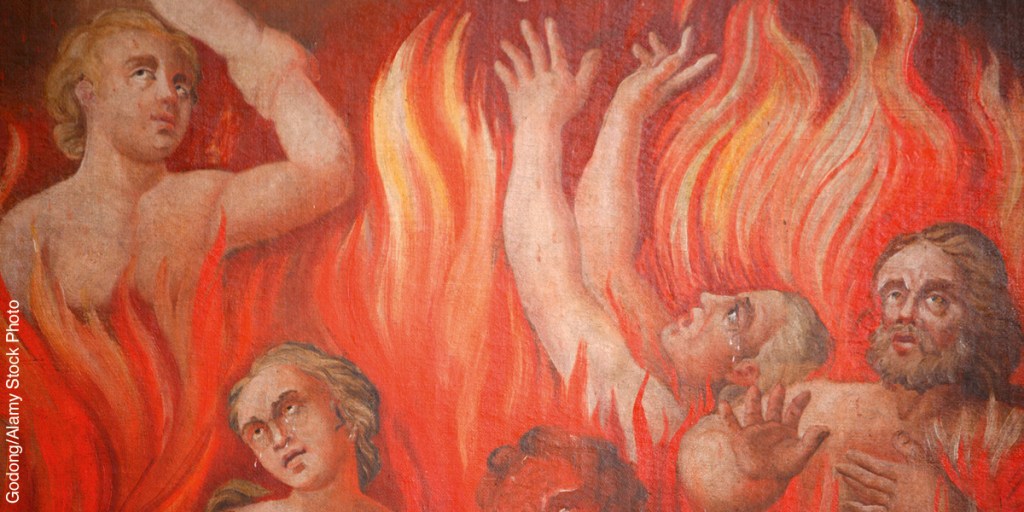
    There is this idea that perpetuates throughout Christianity that hell is fire and pain. I don’t think that’s actually the case. I think hell is boredom, stagnation, lack of growth, lack of purpose, selfishness to the point of looking only at oneself. I think hell is being stuck.

    Mark 9:43-44 reads:

    43 And if thy hand offend thee, cut it off: it is better for thee to enter into life maimed, than having two hands to go into hell, into the fire that never shall be quenched: 

    44 Where their worm dieth not, and the fire is not quenched.

    Doctrine and Covenants 76:43-44 reads:

    43 Who glorifies the Father, and saves all the works of his hands, except those sons of perdition who deny the Son after the Father has revealed him. 

    44 Wherefore, he saves all except them-they shall go away into everlasting punishment, which is endless punishment, which is eternal punishment, to reign with the devil and his angels in eternity, where their worm dieth not, and the fire is not quenched, which is their torment-

    The word translated “hell” in Mark 9:43 is the Greek word Gehenna. Gehenna was a garbage dump in ancient Jerusalem.

    “Gehenna was located on the south end of Jerusalem and had been a site for pagan child sacrifices during Old Testament times (2 Kings 23:10). During Jesus’ lifetime, Gehenna had a constant fire burning to dispose of the waste that was left there—from regular household trash to the carcasses of animals and convicted criminals (Jeremiah 7:31–33). Because of this, the Jews considered Gehenna to be a cursed place full of filth.” (See this link for more information).

    This is where we get the reference in Mark 9:44 “fire is not quenched.” Gehenna or hell was literally a place where fire never stopped, and I believe this is where the popular idea of hell being a place of fire comes from. I think the more critical point in those verses is the phrase, “Where their worm dieth not.” This is not referring to a literal worm, as I don’t believe the endless fire represent literal fire in hell. I believe the fire represents never ending torment.

    But what is this torment? Is it physical pain? Worse.

    As I mentioned earlier for that study, people would prefer any sensation to that of no sensation. I think the endless torment is being stuck for eternity.

    I read a book that once described what hell might be like. It considered hell to be like being a worm deep within mud. The worm squirms around, with no purpose or meaning. The worm can’t see, it can’t feel, it can’t think. It’s getting nowhere. It endlessly squirms in the mud.

    I believe the worm that dieth not is our eternal soul. What could be worse than an eternity of… nothing? What could be worse than being the equivalent of a worm squirming within mud, forever?

    Just the thought should terrify you.

    God has provided us a plan of growth and progression. He has provided us a way to become like Him. Those who reject Him will be stuck, forever. There will be no progressing for them. Their “worm dieth not.”

    I am grateful to God for all that He has given me and all that He has afforded me. I know that because He loves me He has allowed me to grow and progress in eternity. Not to be stuck and stagnant. Growth. I am grateful for that gift He has provided me. 
  • Ignorance and Spontaneous Generation

    Ignorance and Spontaneous Generation

    Do you know what spontaneous generation is?

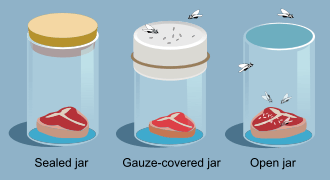
    Spontaneous generation is the outdated idea that living organisms can spontaneously come from other living organisms. For example, it used to be believed that a horse was how bees were created. People used to observe that a horse would die, and bees would “spontaneously generate” from the corpse. Crazy huh? Of course, now we know better. I wrote the below for a discussion post in my Science 301 class, Understanding Formal Processes.

    The once prevalent fallacy of spontaneous generation goes to show that we can be extremely wrong about simple and obvious things by relying on what our eyes tell us. When I initially started reading about spontaneous generation in Bondeson’s book, The Feejee Mermaid and Other Essays in Natural and Unnatural History, I could hardly believe that spontaneous generation was debated into the 1800s (Bondeson, 2014, p. 248). As I thought about it more, though, I understood how this theory took hold of observable logic and persisted for so long. An animal decays in the sun and maggots appear. Where did they come from? An obvious conclusion was the decaying flesh of the animal created the maggots.

    Scientific progress is filled with examples of people being sure of something that ends up being absurd. The relationship between observable scientific knowledge and the scientific method is that as the scientific method is improved upon, meaning, as theories and ways of experimenting on those theories improve, scientific knowledge grows in proportion. It’s interesting to note what Herman van Booerhave said of the brilliant mathematician Girolamo Cardano, that he was exceptional when correct in his theories but, “When he advocated erroneous theories, he surpassed them all in folly” (Bondeson, 2014, p. 197).

    Often, we see how outlandish proposed experiments can become. Take Paracelsus’s proposed experiment to create a human being by mixing excrements, semen, broth, and nutritious fluids (Bondeson, 2014, p. 196). While seemingly absurd, scientists have always been ridiculed for outlandish theories, and those theories only go the direction of proven or disproven by what Paracelsus proposed: an experiment. Even the most outlandish experiment using the scientific method is an improvement on assumptions based solely on simple observations.

    When I was in 7th grade my science teacher gave us a very simple assignment. The assignment was to take something, anything that we could test, and observe each day, make a hypothesis, then keep the data and see if our assumption was correct. Many of my classmates repeated a couple simple observations. I wanted to be more creative. I chose to check the thermostat in my home each day and monitor the fluctuations in temperature. My hypothesis was that as it got hotter outside during the summer, the temperature would go up in my home. This seemed an obvious assumption to a 7th grader.

    I was shocked when I learned, from checking the temperature every morning, that it was 72 degrees in my home every morning, no matter what. My hypothesis was foiled by the scientific progress of a simple thermostat. A device I always assumed to simply tell the temperature, I learned, was actually monitoring the temperature and turning on cool air as it got hot, or hot air as it got cool, to always keep our home at a consistent temperature. I learned from this how something that can seem obvious can be so wrong when ignorance exists. The ignorance here was a 7th grader who didn’t yet understand the simple workings of the things around him. We see in society every day how detrimental ignorance is. Ignorance exists in science, religion, everywhere around us. As we experiment and try new theories, our ignorance is lessened as we come to better understand the world around us.

    What seems so ridiculous now, spontaneous generation was an obvious observation given the tools available to science at the time. In a world that debates all things spiritual – the after-life, the soul, and all things we can’t see – science ridicules theories that can’t be proven. Because science can’t prove the existence of the soul, it says there is no soul. Like those who could observe that maggots spontaneously appeared but couldn’t know how because they didn’t have the tools and capacity to do so, one day all things we still don’t understand will be proven. This includes premortal existence, the soul, spirits, resurrection, and the after-life.

    There’s this secular belief that spiritual things inherently non-scientific. Those with faith understand that one day all these spiritual concepts will be proven through scientific methods. It will all be so clear to us one day, when our eyes are opened and we are given additional knowledge and understanding. What a day for science that day will be.

  • The Refiner’s Fire

    The Refiner’s Fire

    *I wrote this in March of 2022.

    One of Newton’s Laws of Motion states “For every action, there is an equal and opposite reaction.”

    In life, for every sorrow, there is equal and opposite capacity for joy. For all our abilities to cause pain and suffering, there is an equal and opposite capacity in us to provide joy and comfort to others.

    This brings up a thought: Without sorrow in general, we would lose the ability to provide an equal and opposite amount of joy. If there were no sorrow in the world, we couldn’t equally counter it with joy. This puts sorrow in a somewhat different light.

    Without our personal sorrows, we could not help others through their personal sorrows. This is why, among infinite other reasons, Jesus Christ’s sacrifice was so significant. He knows all the sorrow. He has experienced it. He can help us through all our sorrows.

    For some reason this week I’ve been studying Einstein’s General Theory of Relativity. The followoing thoughts and things I’m going to write probably won’t make sense. Scientifically, what I’m about to write may be nonsense. But they mean something to me, so I will try to elaborate.

    I read that Einstein came up with one of his theories when he was looking out a window at someone on a ladder. He wondered what would happen if that person fell off the ladder?

    While watching the short video The Refiner’s Fire, Ivy was in my lap. I was in a rocking chair. She was watching with me. I rocked while I held the phone, and we watched the video. My elbow was propped on the chair so as the chair moved, my body moved, and the phone moved. I wondered if Ivy was having to keep up with the phone, trying to trace it as it moved. I realized, probably not. Like me, she was moving with the chair that moved the phone. She was lying flat against my chest so as I moved, she moved, and the phone stayed right in her field of vision, in her eyes to see.

    Then, near the end of the video, Ivy, as toddlers are known to do, got impatient and sat up in my lap. Now she wasn’t flush with my chest. As I rocked and tried to hold the phone steady, she rocked back and forth, tossed about by the flow of the chair but no longer in sync with me in any way. In addition, I had to move the phone farther away, one to try to keep it steady, and two to keep Ivy from grabbing it.

    As I’ve studied Einstein’s theories I’ve been struck by the religious implications. Spacetime bends around the object with the most mass. That object pulls all smaller objects to it. They are drawn to it. Time and space literally bend to the will of the biggest object.

    God is our biggest object. He is the biggest object of the universe. He is, literally, a celestial body of such force that from many lightyears away our sun, our planet, and we are drawn to Him. He is the force that keeps us moving. He is the force that keeps us living.

    As I rocked in this chair, I realized the chair was God. He was the force I was rocking with. And as I was rocking with Him, it was easy to focus on whatever I needed to focus on. If I was flush with Him and in sync with Him, I could focus on that video easily as it rocked with Him. Ivy also, as she stayed flush with me, could focus on the bigger picture – represented by that video. But as she was dependent on me (flush with my body which was flush with the chair – remember God is the chair), when she lifted off me, it made it harder for her to see the picture. She’d disconnected from me and therefore disconnected with God. In addition, if I raised myself from the chair, I disconnected us both from the chair, from God, and we both lost the vision. We both got distracted, we both couldn’t follow the video, we both got tossed about by the swinging momentum, trying to stay flush with the chair (God) but having disconnected ourselves from Him.

    What does this teach me?

    1. In this moment, it is profoundly important for me to stay flush with God.  Ivy (and now Sage) are relying on me.
    2. It is profoundly important for me to teach Ivy, Sage, and our future daughter to become flush with God themselves, so they don’t need to rely on me. What happens when I’m not here?

    How does this tie into The Refiner’s Fire video that started this thought?

    We can create joy to counter sorrow. It is up to me to stay flush with God so that when Ivy, Sage, and my future daughter go through their refiner’s fires, they have somebody they can completely trust. In my life I have a great capacity to cause joy or sorrow. I think the greatest joy I can create in my daughters’ lives is teaching them that God loves them, they are His, He is watching them, and no matter what happens in their life, He will always be there for them. If I don’t teach this to my daughters, it would result in a great sorrow.

    Ivy, Sage, and future daughter will go through their refiner’s fires just as I did. They will need God in their lives at that time. We all need God as we go through the refiner’s fire. Then, when we come out properly molded, we can be flush with the chair (God) and help others as they stay flush with us, until they, themselves, can connect themselves to God. 

    It is our greatest responsibility, and the greatest joy we can provide, to teach others that God loves them. They are children of God with a divine inheritance. No matter what happens to them in this life, He is always there, and it will be okay in the end.

  • Be like Little Children

    Be like Little Children

    There is a Neil deGrasse Tyson video that I watched early on in my parenting journey that has helped me ever since. In the video, Tyson points out that when a child makes a mess, or destroys something, or does something seemingly with the only purpose being to drive a parent insane, they’re really just experimenting. Everything around a child is new to them. When a child throws their plate off the table for the tenth time, they’re doing their tenth experiment to see how that plate flies, where it lands, and how the food splatters.

    Children aren’t trying to make a mess. They’re trying to experiment. When you realize this fact you can also realize that being too harsh on a child making a mess sometimes discourages them from experimentation that can help their mind grow.

    It goes without saying that sometimes you need to draw the line: some experiments can be dangerous, and that eleventh plate throw doesn’t necessarily need to happen.

    I couldn’t find the exact Neil deGrasse Tyson video I saw those years ago, but these three videos share similar messages that I believe are extremely beneficial for parents to see, especially new parents.

    1 – The puddle

    2 – The egg and kids as scientists

    3 – Clean house

    “Except ye be converted, and become as little children, ye shall not enter into the kingdom of heaven” (Matthew 18:3).

    I think about this scripture often. There are so many traits of children. Which ones were Jesus Christ primarily referring to?

    Humility.

    Kindness.

    Trust.

    Faith.

    Joy.

    Enthusiasm.

    Curiosity.

    Forgiving.

    Energetic.

    I read this quote recently:

    “Your child is endlessly curious — maybe you’ll learn something, too. Your child is so enthusiastic — maybe some of that energy will rub off on you. Your child is forgiving — no matter what happens today, you can count on a 3-year-old to start tomorrow with a fresh outlook and ready smile. Your child sees the world with wonder.”

    I think that quote sums up what Christ meant when He said we should be like children.

    Curious.

    Enthusiastic.

    Forgiving.

    Fresh outlook.

    Ready smile.

    Wonder.

    In the midst of being a parent – the chaos of day-to-day life – sometimes it’s easy to forget the miracle that children are. I’m glad I have my kids to look at every day and see the wonder, the ready smiles, the fresh outlooks. The forgiveness, the enthusiasm, and the curiosity.

    As I sit here finishing writing this and Sage slowly walks around a coffee table with a little toy motorcycle, and sees me looking at her, and excitedly holds up the motorcycle and says “Look Daddy!” And Ivy, pretending to be Luna Lovegood, brings me, Harry Potter, a new “project” of French fries and dominos on a paper plate, and happily gives it to me, I’m reminded that I need to be a little more childlike today.

    I’ll put this away now so I can go be a child with my girls.

  • Hypocrisy in Intelligent Design and Evolution Debate

    Hypocrisy in Intelligent Design and Evolution Debate

    The theory of intelligent design is, simply put, the idea that this world is too perfectly designed for there to be no designer. The theory comes from what’s called the Watchmaker Analogy, put forth by William Paley in 1802. The idea is that if you walked into the woods and found a pocket watch, you would assume someone designed that pocket watch. Due to the complexity and clear design of the pocket watch, you would not assume it just appeared there by coincidence.

    Of course, it’s more complex than that. Before you say, “Well you would assume a designer because you’ve seen a pocket watch before,” well, sure. That’s not the point. The point is that things that appear to have been designed usually have a designer. If it makes you feel better, insert “clearly designed foreign object” instead of pocket watch.

    Intelligent design gets a tough rap in the scientific community. In scientific circles, they scoff at this idea. They say, scientifically, who is the designer? The ridicule continues from there.

    There is one argument from scientists against the theory of intelligent design that I’d like to discuss here. Scientists who believe in the theory of evolution and oppose intelligent design make this argument:

    They say that –

    “If there is an intelligent designer, why would that intelligent designer create things that seem to not have a purpose?”

    To be funny, and to lighten the mood, we will use the example of male nipples. Why would an intelligent designer give males nipples when they serve no purpose?

    Proponents of intelligent design would respond, “Just because we don’t know the purpose, doesn’t mean there is none.”

    This results in escalated scoffing from evolutionary scientists. They say, “That is unscientific. You can’t have it both ways. You can’t say something has an intelligent designer, then when asked why there would be pointless designs say we don’t know the purpose of those designs. That is unscientific as it is untestable and can’t be proven either way.”

    This goes back to what is “scientific” in terms of the scientific method, etc.

    The theory of evolution is that all species have evolved through a process called natural selection. There is ample evidence to appear that the theory of evolution is true. See my post What the Theory of Evolution is Missing. Natural selection is basically the idea that the strongest survive, they breed, and so the strongest traits in a species will survive and be passed on.

    Of course, it’s not that simple.

    So, here’s the thing.

    If an evolutionary proponent is asked, “Why did natural selection result in males with nipples? How did nipples help man survive?”

    The response would be, “Natural selection doesn’t guarantee everything is related to survival. There is some randomness.”

    What is the difference between the intelligent design defense and the evolution defense?

    What’s the difference between:

    • Intelligent designer
      • If we don’t understand the design, doesn’t mean there is no purpose.

    And

    • Evolution and natural selection
      • Not every trait is for the purpose of survival, there is some randomness.

    Where is the difference? These are both ‘you can’t have it both ways’ arguments.

    Is there something I’m missing here? Is this not, essentially, the same argument? Is this not the same thing?

    Ultimately, the root of criticism of the theory of intelligent design comes down to one thing: belief in God. That’s what it’s all about. A lot is thrown around about “unscientific” and blah blah. Please define “scientific.” Cool, thank you. Now I’ll find 10 different definitions of scientific from 10 different scientists.

      I’ve elaborated more on the “God issue” in science in this post. Science and religion will always be in an unwarranted battle until the true scientist – the one who set this all up, designed it, created it, organized it, and sent us here – comes down and explains it all to us. I welcome that day.